I’ve visited everything close to Orange, so now I’m going to the far attractions. This particular one was two hours’ drive away.
And let me tell you, getting the GPS to find you the shortest route there takes you on a strange drive, along plenty of little backroads. I’m not complaining, though, as it gives me views like this:
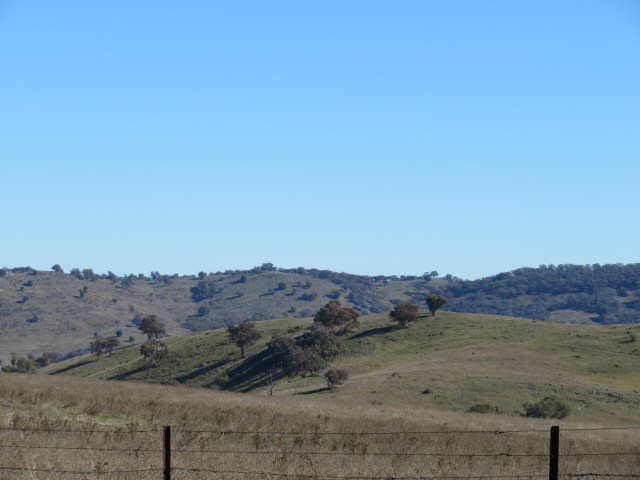
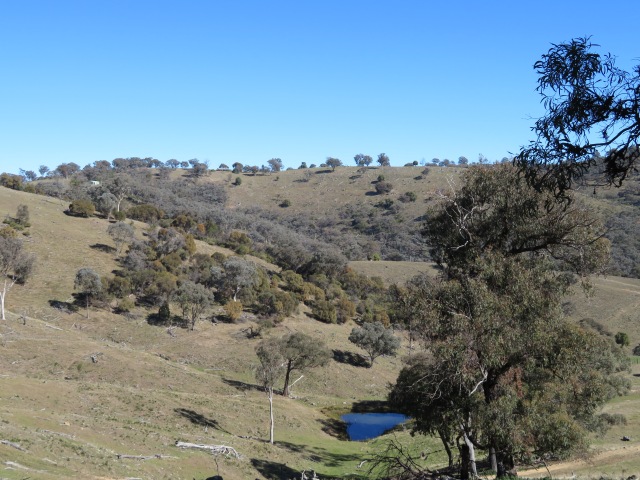
I also spotted some feral goats by the side of the road. But eventually, I made it to the Golden Gully, and found the start of the walking path:
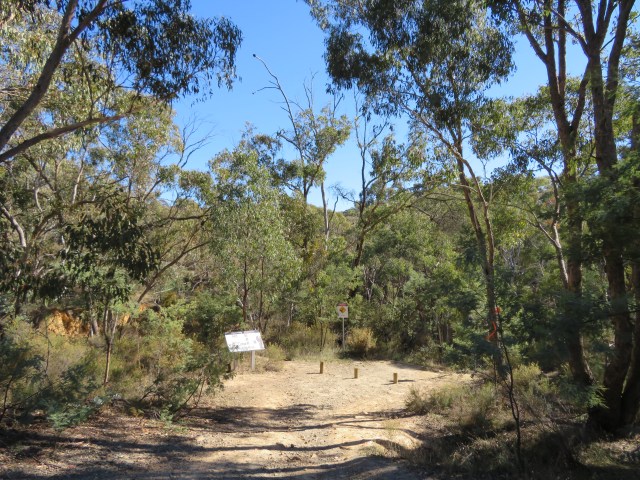
Golden Gully was named for the alluvial gold deposits, which were much more accessible than large reefs in the rock – people could just dig and wash, like you see in Deadwood. Shafts were dug only about ten feet or so down, and now the landscape is dotted with collapsed shafts and places where erosion has exposed them.
The Golden Gully:
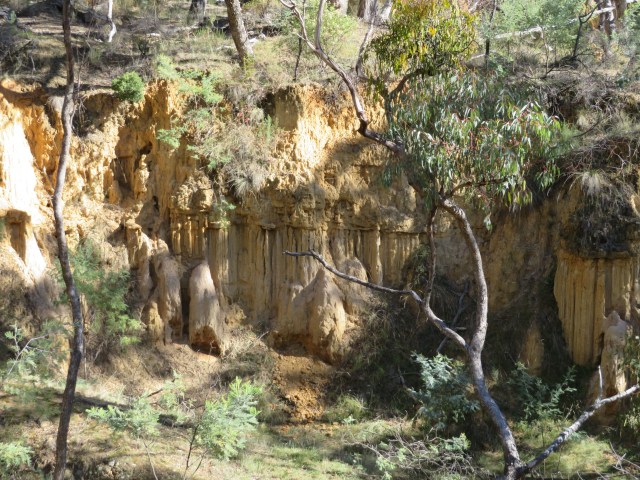
It could have been named for the colour of the rocks as much as for the gold.
The entrance:
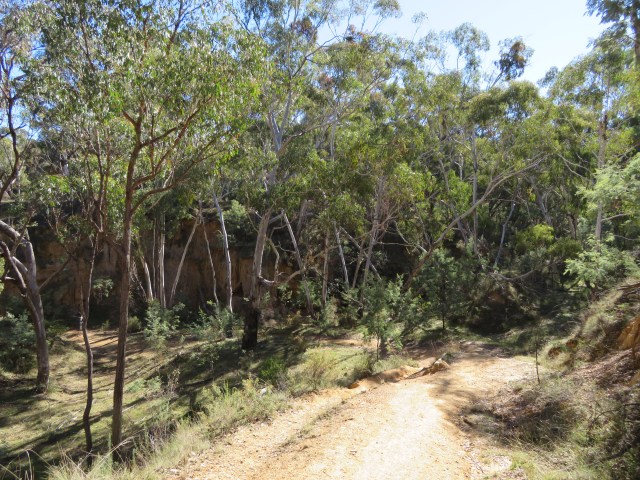
This place was thick with little birds. I recorded some birdsong for you guys:
I got a photo of a yellow robin:
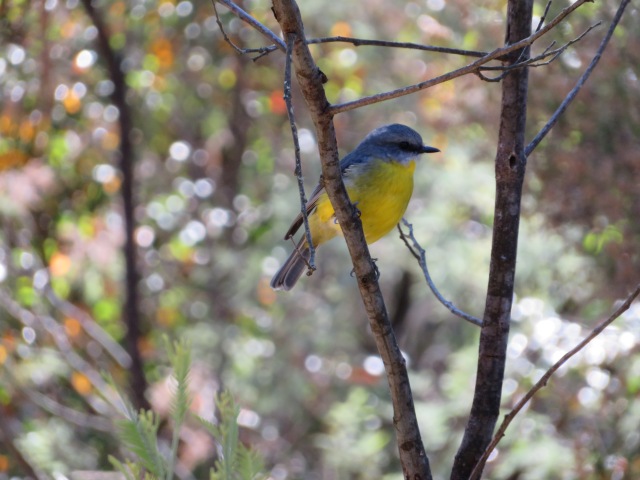
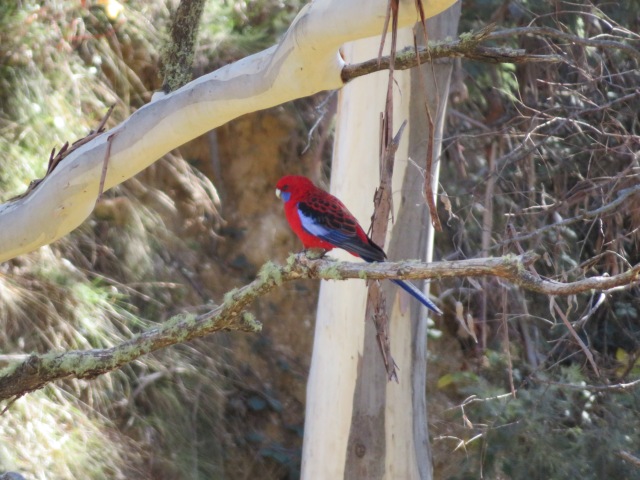
I love the way you can see its little claws holding on the branch. Next up is a crimson rosella:
I also got some video of one of these:
Nothing particularly remarkable, but I find it interesting that it doesn’t launch itself from the branch – just twisted almost upside-down and then let go.
There were plenty of brown or striated thornbills around (it’s hard to tell which species), but they were darting around so quickly it was hard to capture them on video. This is the best I got:
The white-throated treecreeper was more cooperative, because it would spend long minutes just hopping up the tree as it searched under the bark:
This one actually confused me – I was wondering if it was some kind of gerygone, but it turns out this is a grey shrike-thrush:
An Eastern Spinebill – the first one I’ve seen:
It’s really quite a pretty bird, isn’t it? And this a female fairy wren of some sort:
With the females, it’s hard to tell what species they belong to – they pretty much all look the same.
Then I descended into the gully. I could still hear the birds, but they seemed to be mainly in the trees above the gully – none of them seemed to be venturing down.
This arch was quite close to the entrance:
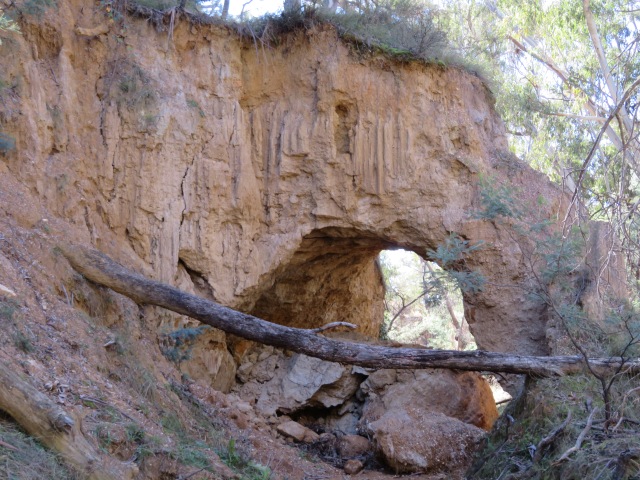
It’s interesting how you can see the earth that has collapsed out from the middle, in a little pile there.
The gully itself had some very interesting formations – jagged pillars closer to what I’d expect in a cave, rather than out in the open:
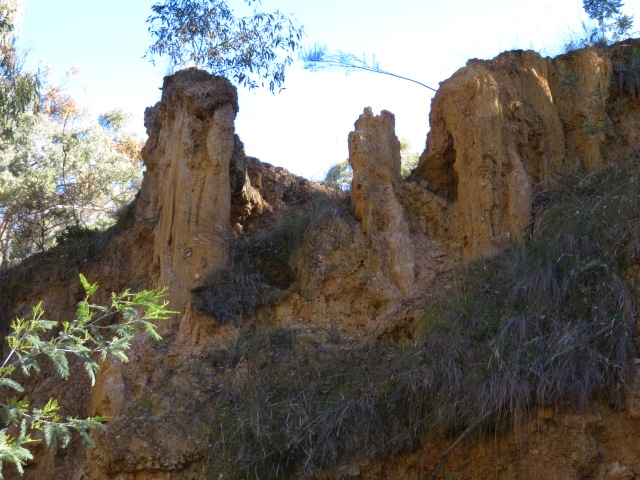
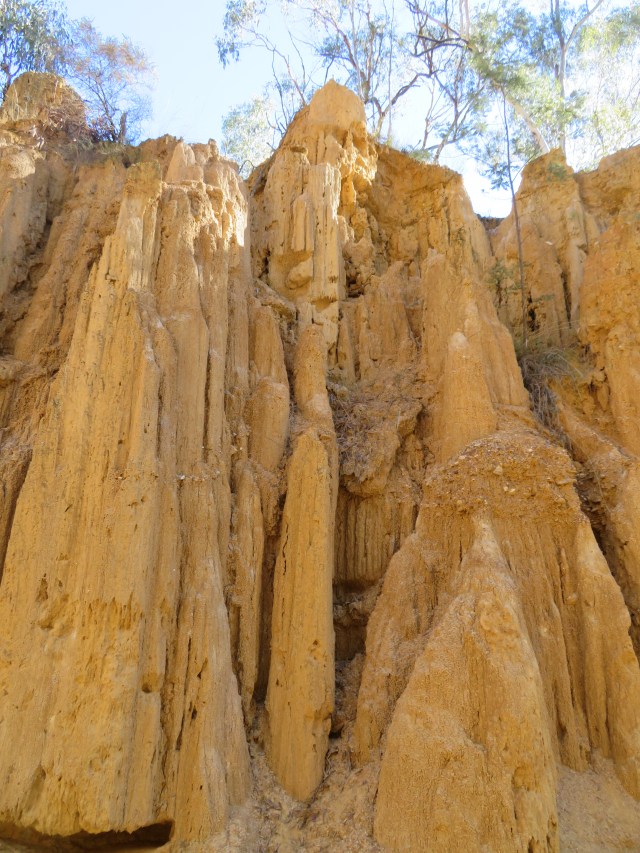
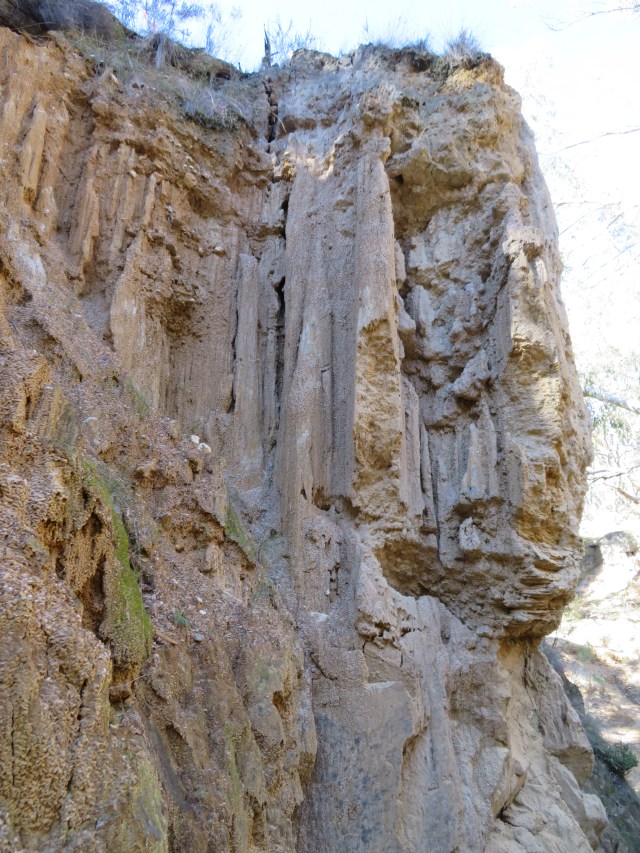
There were lots of little narrow paths turning off the main gully:
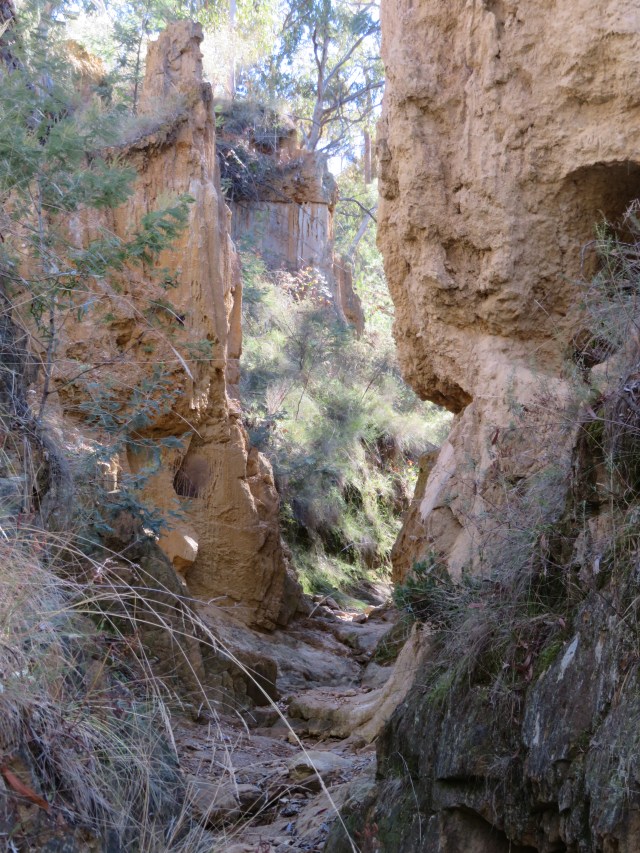
Many of them had some standing water, and I actually found two people who were looking for gold. One of them was panning, and the other was walking around with a metal detector.
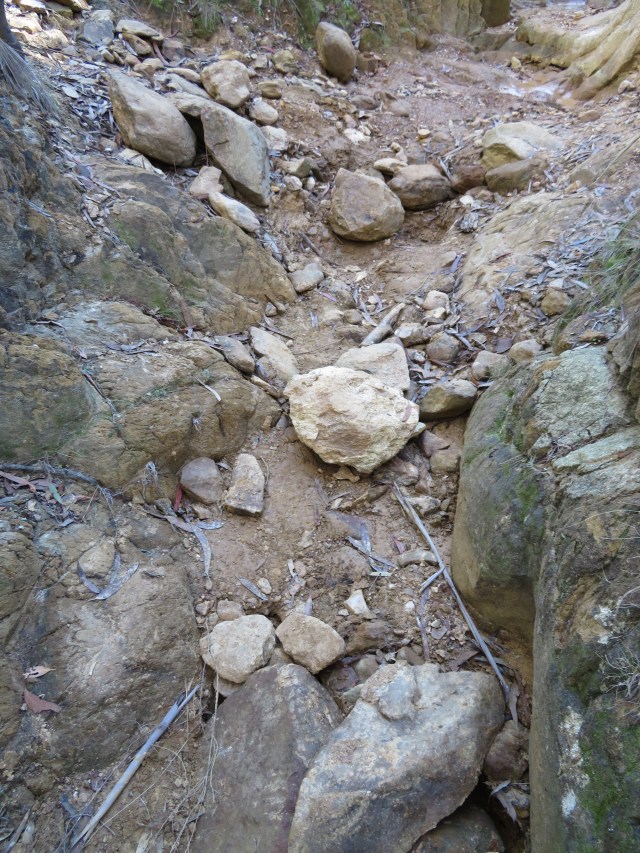
I had to watch my step – the path is basically a dry river bed, and isn’t exactly easy:
I also found this tree – you can see the roots reaching down into the gully:
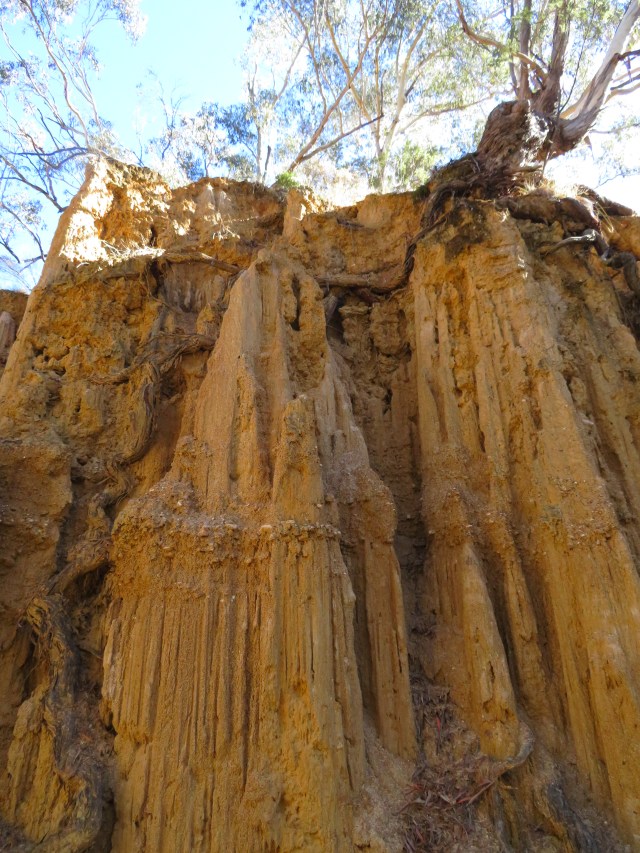
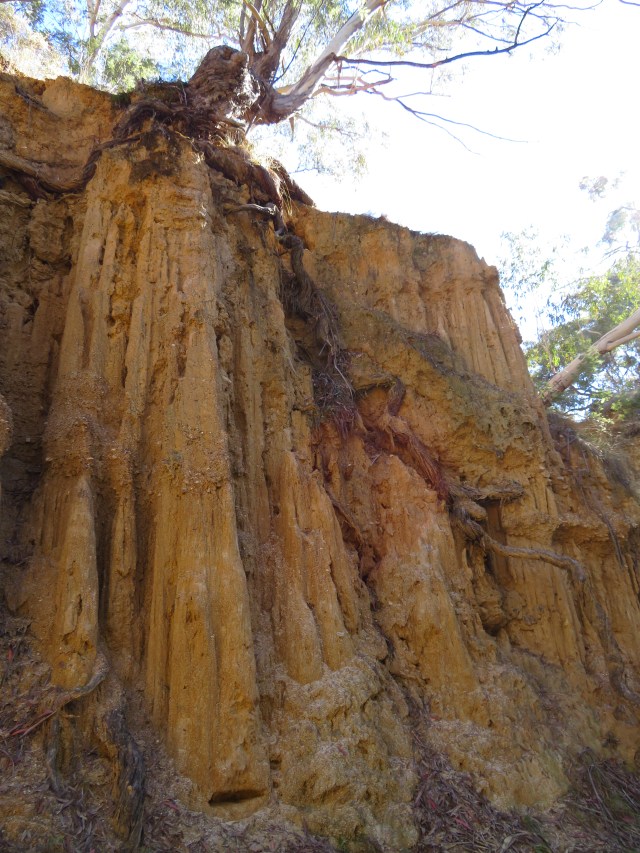
The roots are longer than the branches. Pretty crazy, huh?
A lot of holes in the rock were remnants of mining shafts:
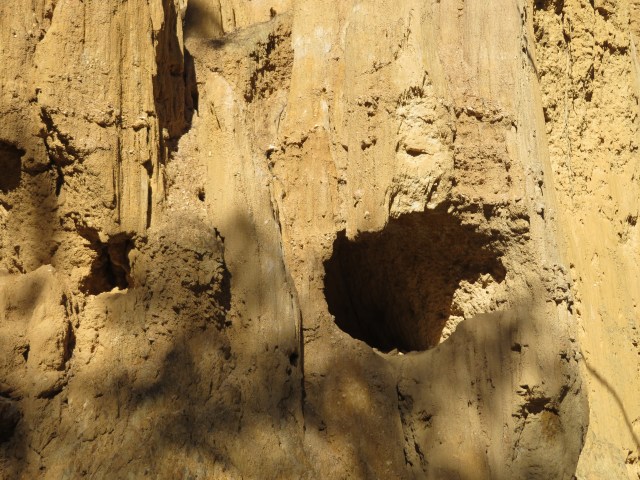
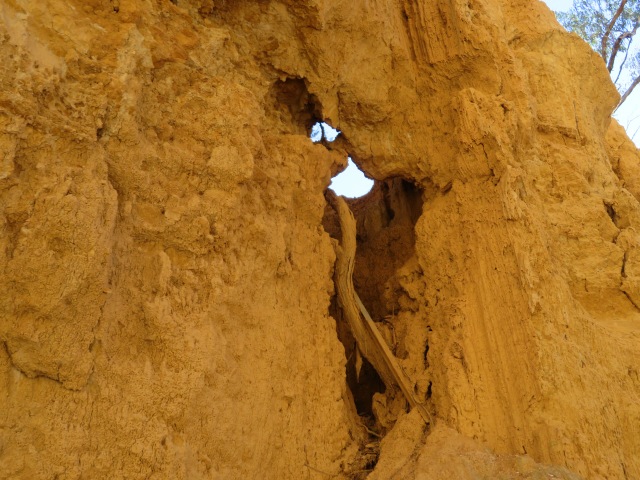
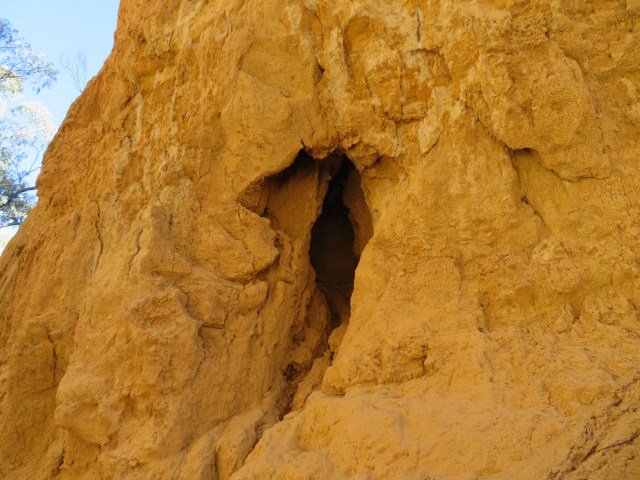
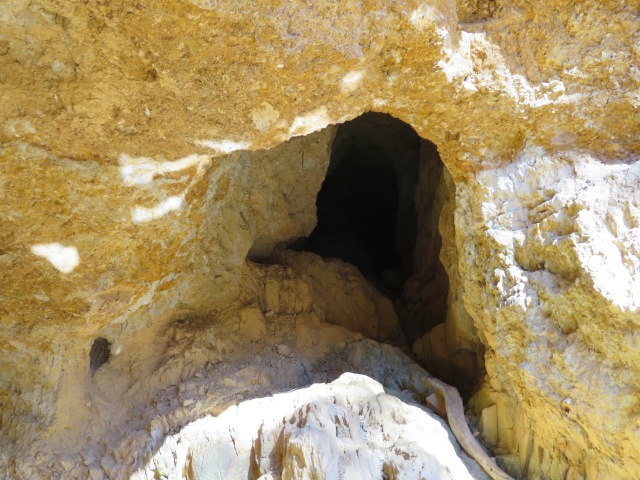
More than a hundred years can definitely take its toll, particularly in such soft rock (it felt like sandstone, very soft and crumbly).
The only animal I stumbled across in the gully was this dead wallaby:
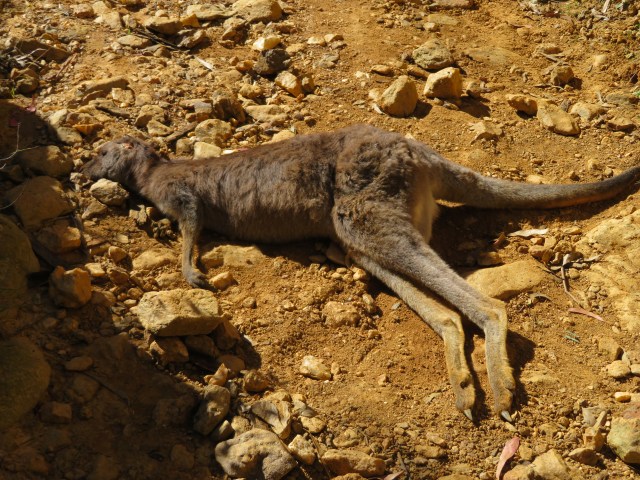
It was in pretty good shape – the flies had just eaten the ears. I suspect it may have toppled over the edge of the gully. Particularly because this was above it:
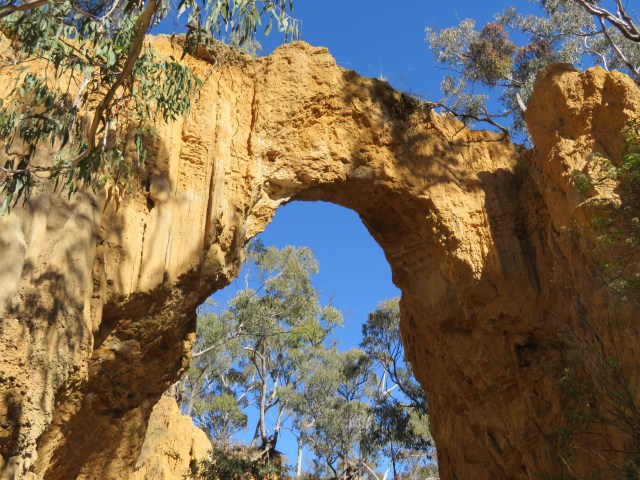
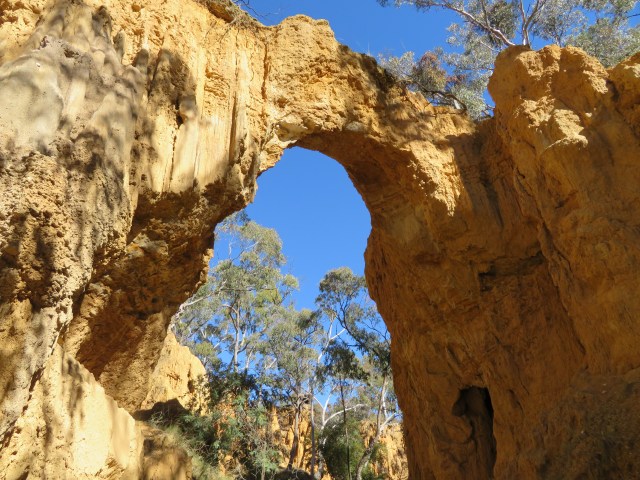
I took another photo as well, with more of the base:
Past that archway, I saw what I thought was a small cave:
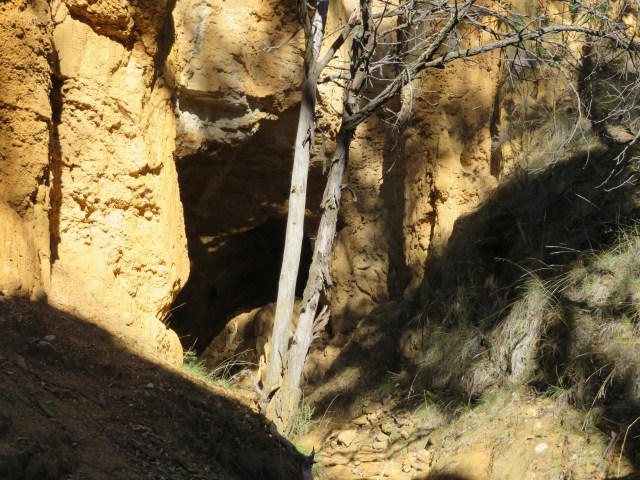
And took a closer look, in the hopes of finding birds or maybe bats inside it. Instead, I found this little tunnel to another part of the gully:
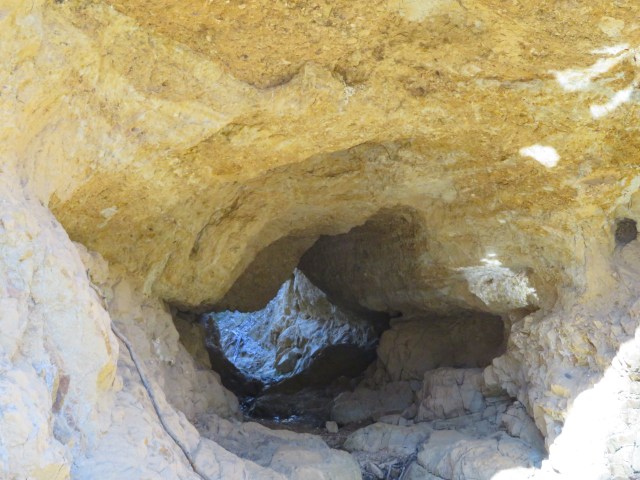
It’s hard to see, but there were trees beyond it. I didn’t actually go through it – there was water in the tunnel and it was hard to tell how deep it was. But the sun was at just the right angle to throw up a light show on the wall as the water rippled in the wind:
On the way back, I stopped off in historic Hill End. That’s exactly what they call it ‘historic Hill End’, and it definitely lives up to the name. I don’t think there’s a single building in that place that isn’t at least sixty years old. It was a gold mining town (for the Golden Gully and the surrounding area), but now it’s more of a tiny village, full of houses like this:
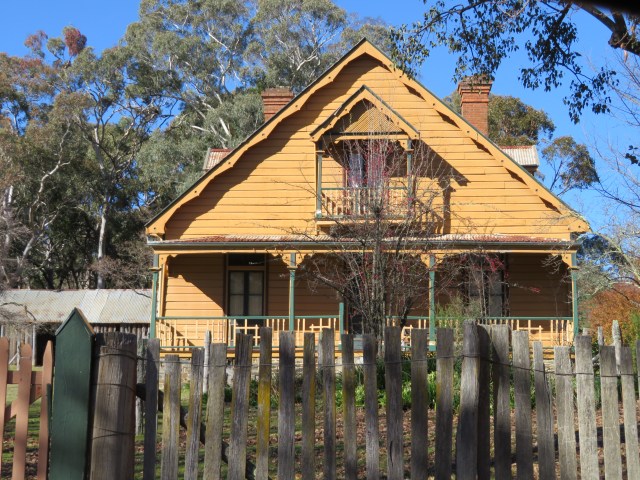
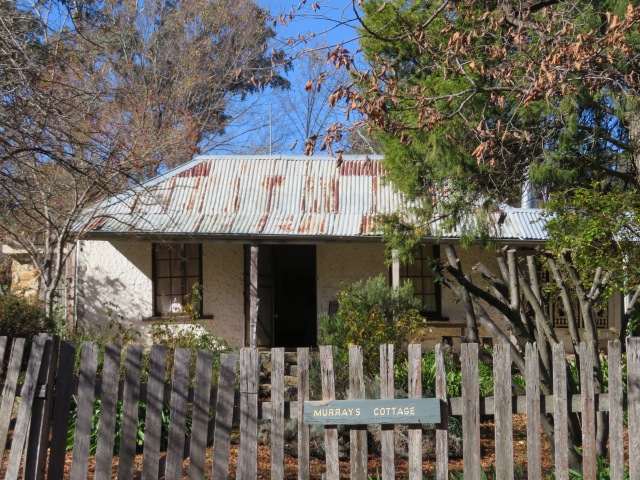
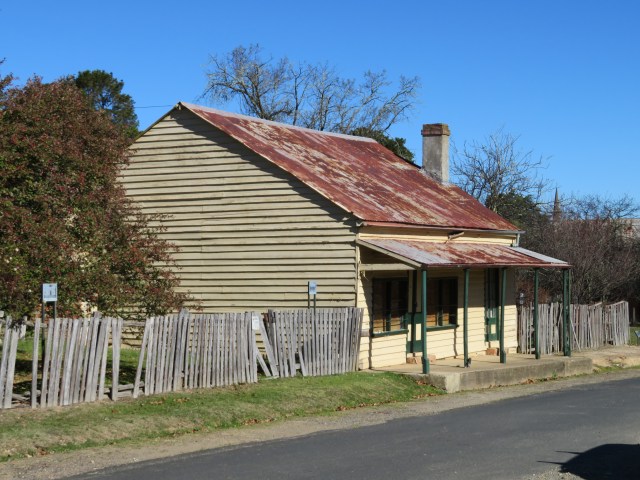
This used to be the clothing store:
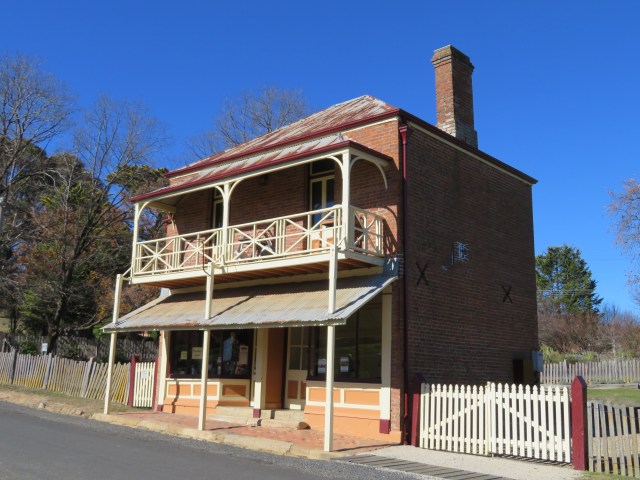
As you can see from the TV aerial and the little barbeque set-up on the verandah, it’s now someone’s house. I can admit that’s what I found most charming – don’t get me wrong, it’s good when old structures are preserved as relics, but I like when people are living in them, too. Somehow makes them more interesting.
The same store-turned-house, from the back:
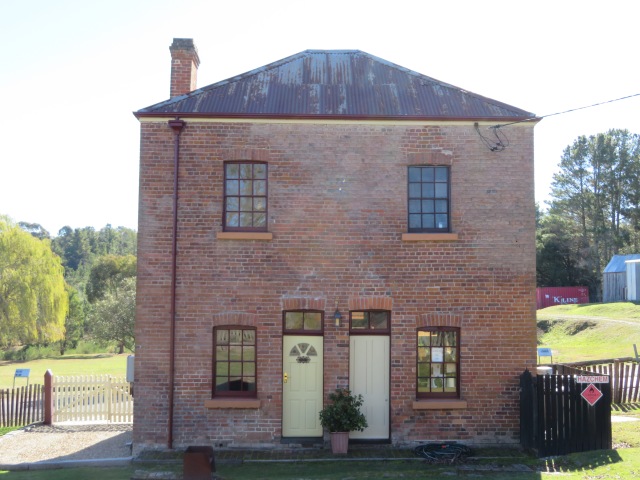
The former Hosie’s General Store:
They were lots of gutters that ran in front of the houses, and they were usually bridged by something like this:
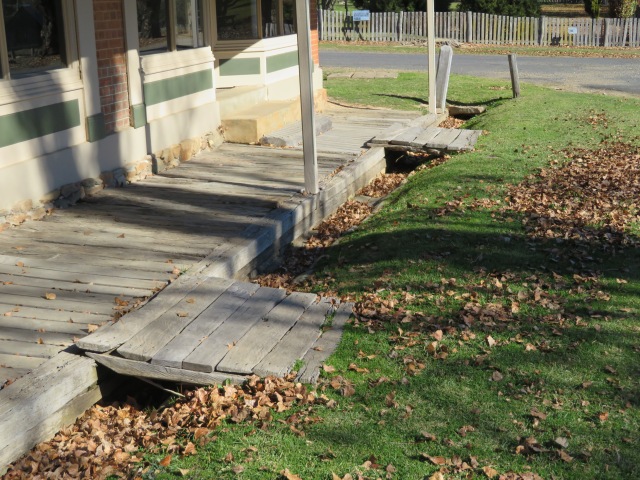
I have no idea why those tiny little bridges amuse me, but they do.
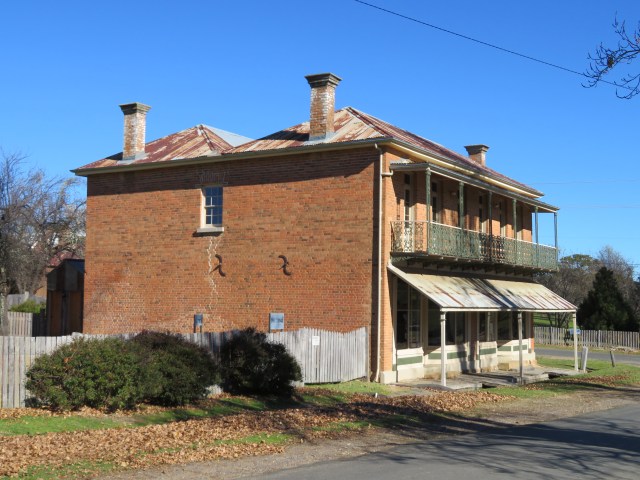
This used to be the site of dining and supper rooms, and an oyster salon:
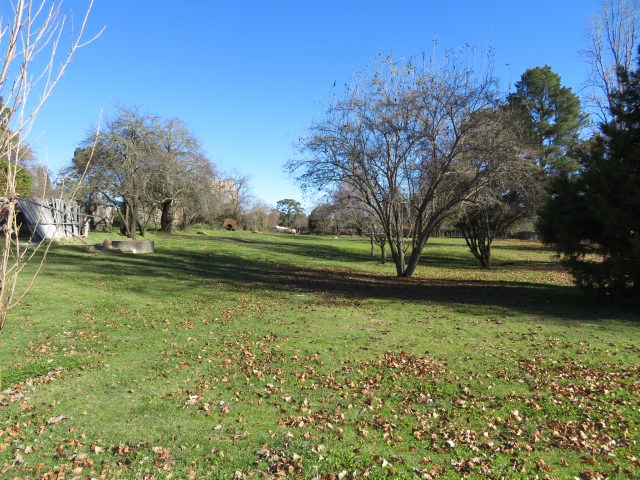
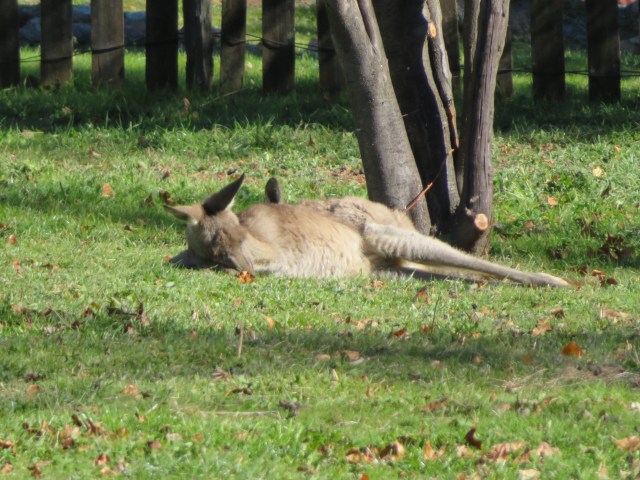
Yes, that’s right – an oyster salon. No, I didn’t drive over the mountains; they used to bring oysters up from Sydney and sell them here. I’m not sure how fresh they would be, though. There were plenty of kangaroos napping under the trees, and I took a photo of this one because it’s actually resting its head on its arms, like a person:
I heard a strange bird call that seemed to be coming from one of the trees here, and did some stealthy creeping around until I found an Australian wattlebird. I got some video, so you can hear the call, though the actual bird is hard to see through the branches:
This is the school:
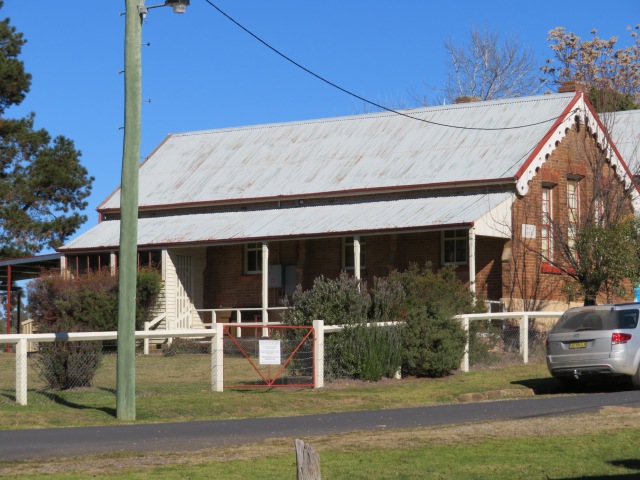
And not the old schoolhouse – like most of Hill End, this is still a school.
This wasn’t in use, though:
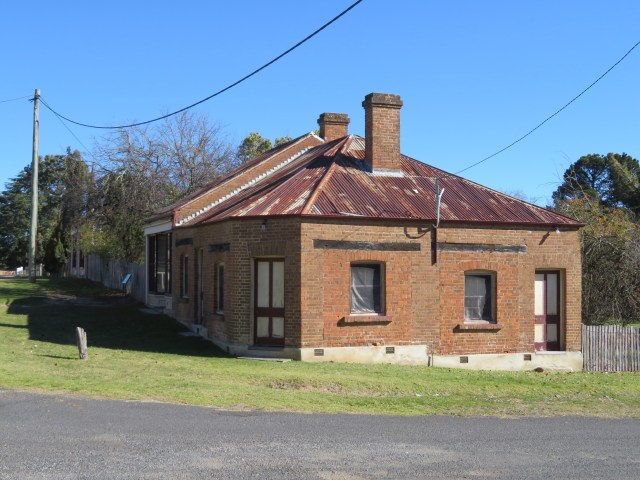
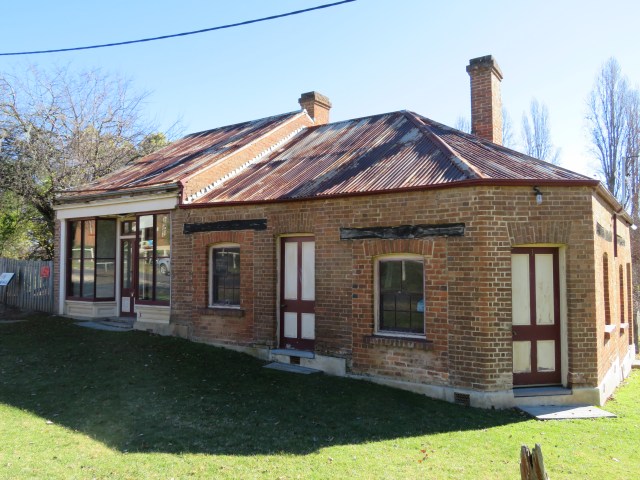
This is what remains of Holtermann’s Shopping Complex. This particular part was occupied by Bray’s Dispensary, Baptiste’s Paris hair cutting salon, and Wood’s Bakery.
This is Faraday Cottage:
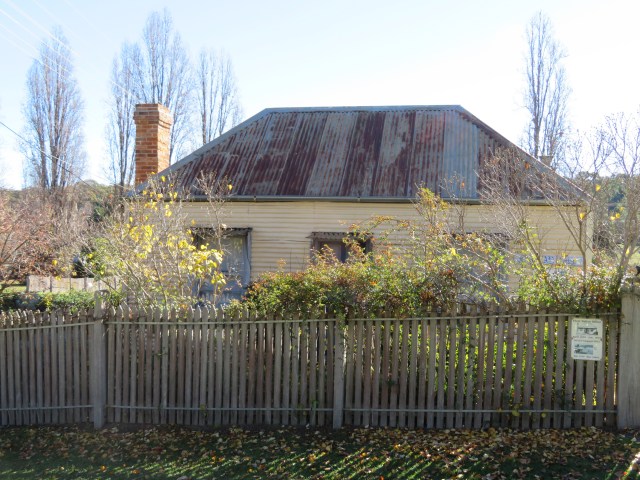
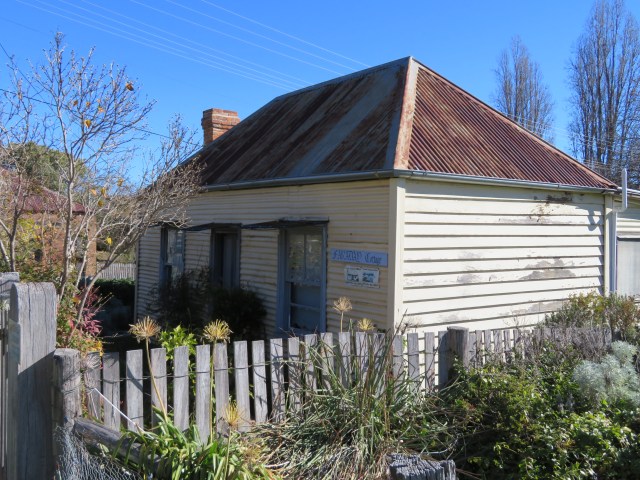
Originally the first police office, it was converted into a telegraph office in 1874, and is now someone’s home.
Part of Bowler’s Wheelwright and Blacksmith’s Shop:
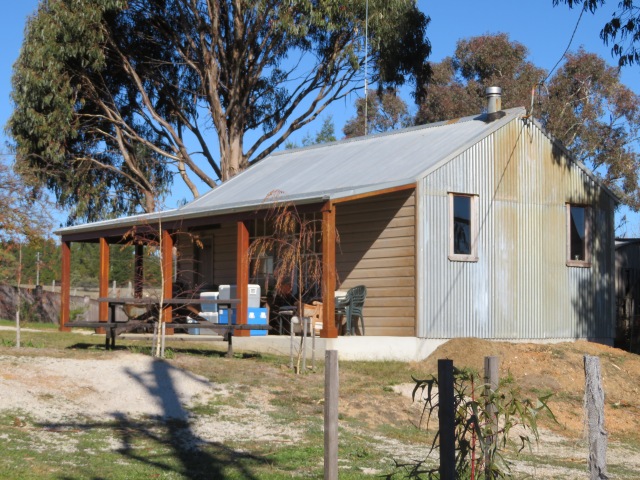
Three types of trees in one picture:
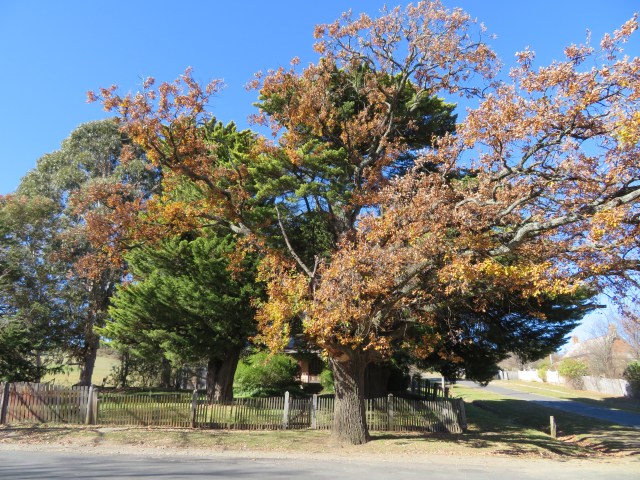
I took this photo just because I like the spectacle of it – the orange of the deciduous, and then the bright green against the more grey-green of the eucalyptus. The tree losing its leaves was also full of little birds, and it was rustling so much it sounded like rain. I managed to record a yellow-rumped thornbill:
And a brown gerygone:
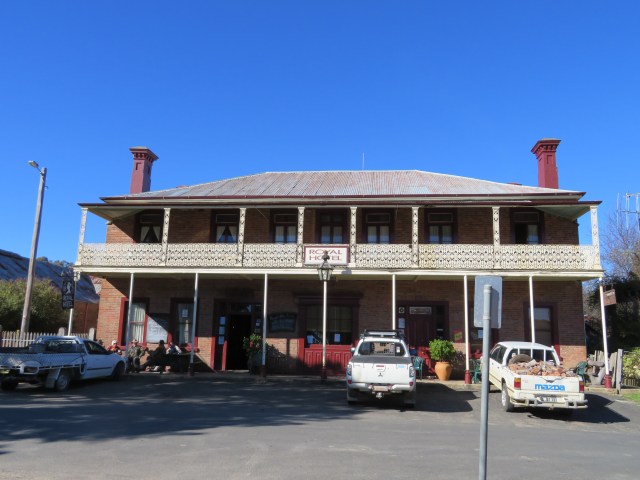
The Royal Hotel:
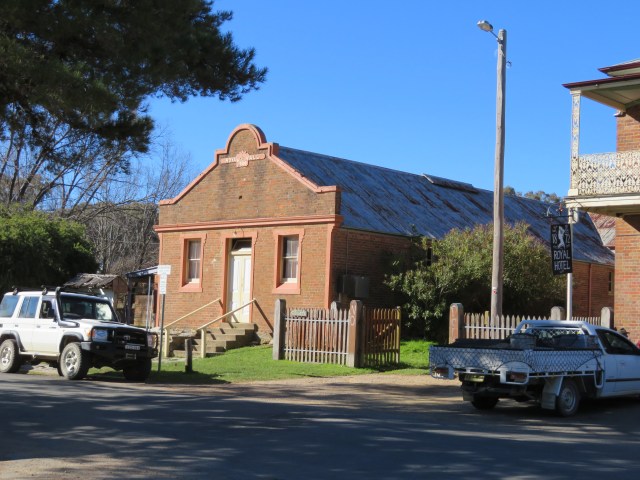
The Royal Hall (kind of a community centre), built in 1900:
As the sign says – the combined grocery and bakery:
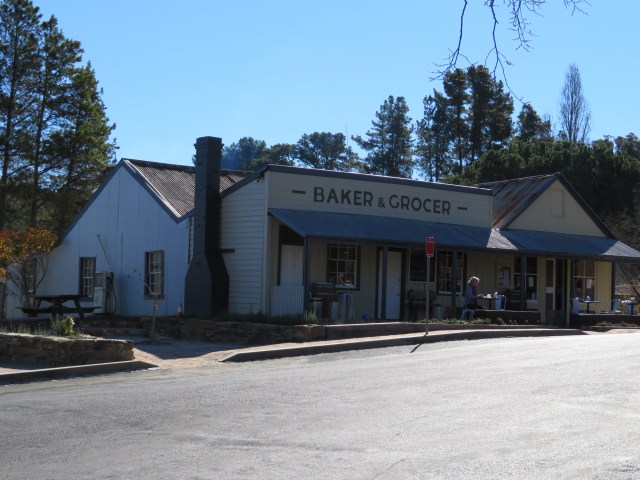
I bought a delicious steak and mushroom pie from these people, as my lunch. Then I set off back to Turtle Shell, but on the way through those little backroads, I spotted something:
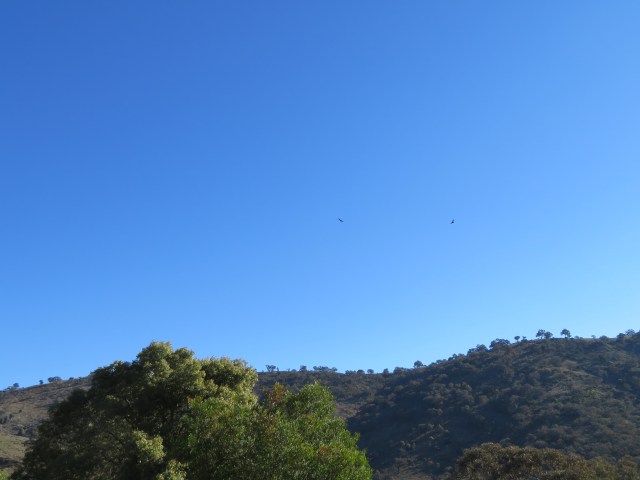
See those little dots in the sky? That is a pair of wedge-tailed eagles, slowly circling. I took some video:
That little dip towards the ground is me attempting to demonstrate how high they were. They’re huge birds.
 Jenny's Adventures
Love your work – those eagles are amazing
LikeLike
I was so glad I spotted them, and kind of amazed you can see them from so far away – they’re huge!
LikeLike
Gorgeous eagles! And loving the light show in Golden Gully. Those historical buildings are great – glad they’re still in use!
LikeLike
I was very pleased to spot the eagles – you can hear the car engine and the sound of the indicator, as I just pulled off the road real quick and whipped the camera out before I lost sight of them.
LikeLike