The Peak Hill gold mine isn’t operational anymore, but the open cut pit and some shafts are still there, so I went to check it out.
There’s a walking track to the mine, so I parked the car and set off – you really can’t miss the entrance:
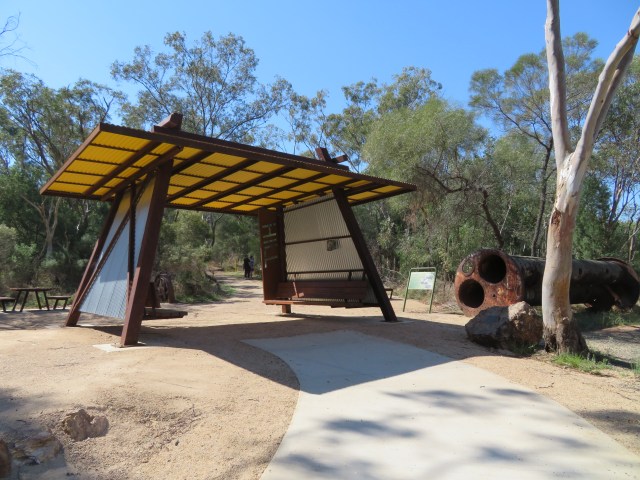
Gold was first discovered here in 1889, and the richest deposits were mined out via underground shafts. Mining ceased in 1917, as the shrinking gold deposits made it unprofitable to continue, but we do know that between 1904 and 1916, $400 000 worth of gold was mined from here.
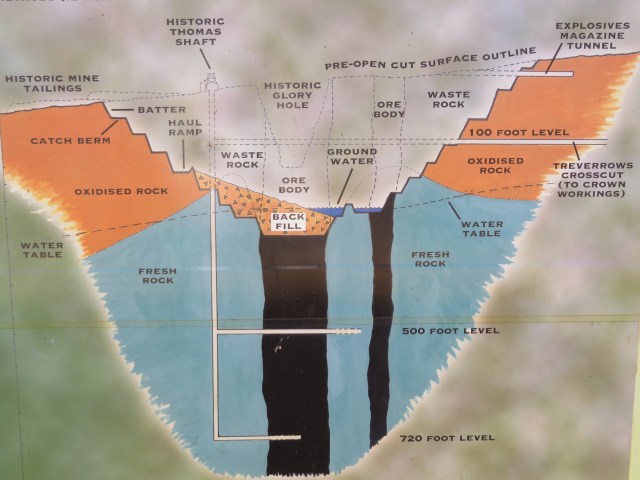
In 1996, mining resumed with the open-cut method, with a lot of drilling and blasting. There wasn’t much gold left at that point, though, and the mine closed in 2001. There’s still some gold beyond the level of the pits, but it’s not economically feasible to mine right now – it would cost much to dig it up than what the gold’s actually worth.
This is diagram of the mine, both modern and historic:
The open-cut mine:

It actually looks quite pretty, or at least I thought so. They also had a handy diagram of how the gold came to be in those deposits, so I thought I’d take pictures so everyone can be educated, not just me.

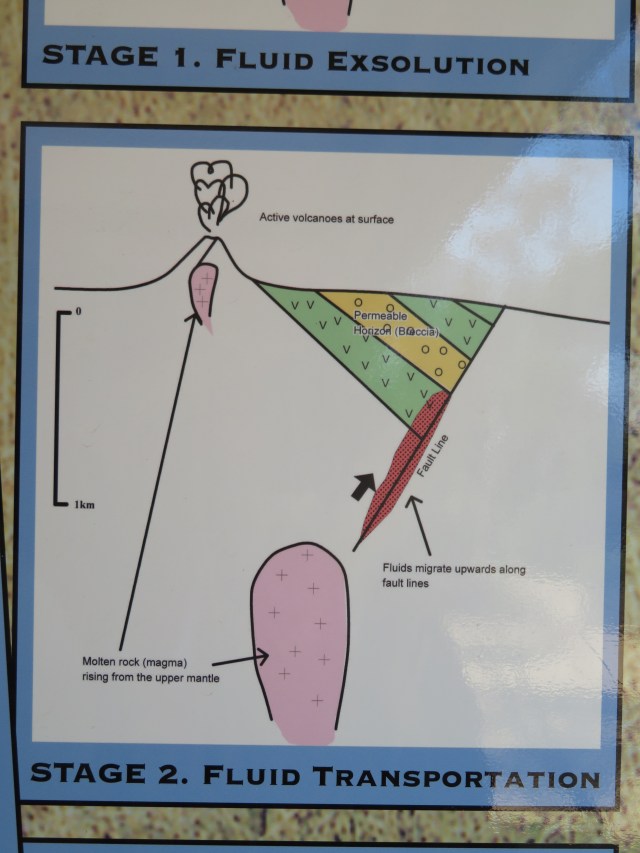
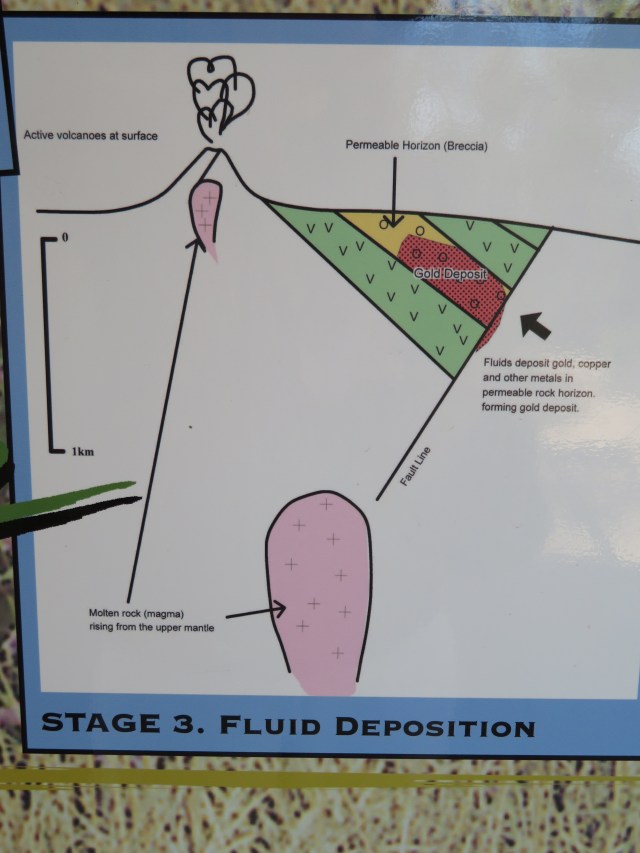
And in case you’re wondering, permeable horizon just means a layer of rock that the fluid can pass through.
The remains of the boiler:
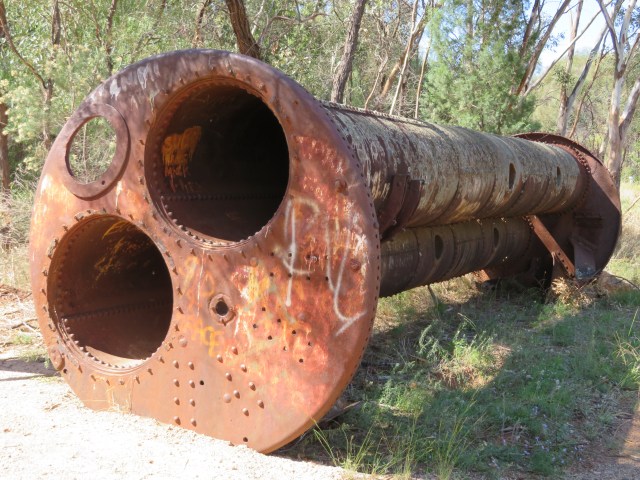
This would have been used to produce steam to power things around the mine, like the crushers.
This site was marked as the previous location of a house:
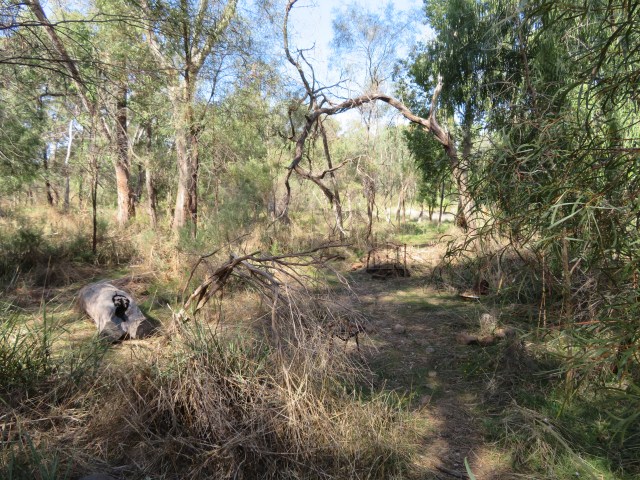
Apparently it was the house of Patrick (Paddy) Nolan and his family, until he died in 1969 when he fell into the old mine. The original house was made of corrugated iron, and only had four rooms, one of which was the kitchen. The floor was dirt, and all their water had to be carried in from the town.
I could see some old bricks and the remains of what I think is a bedframe:

Then I set off up the path:

I could hear a lot of birds as I went along:
But I didn’t see many of them – the bush was pretty thick, so if they were even a few feet off the path I would have had a hard time spotting them.
There were plenty of informative signs and diagrams along the way. This is one of a blast hole:
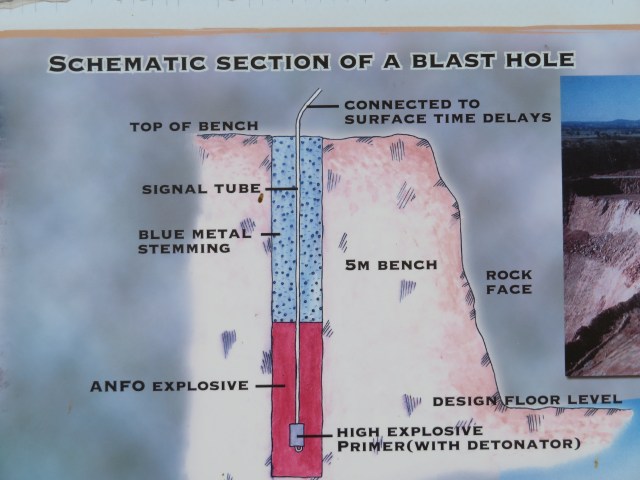
Most of it is pretty self-explanatory, but the ‘blue metal stemming’ was finely crushed blue metal to prevent the blast energy escaping up the hole.
Another view of the open-cut mine:
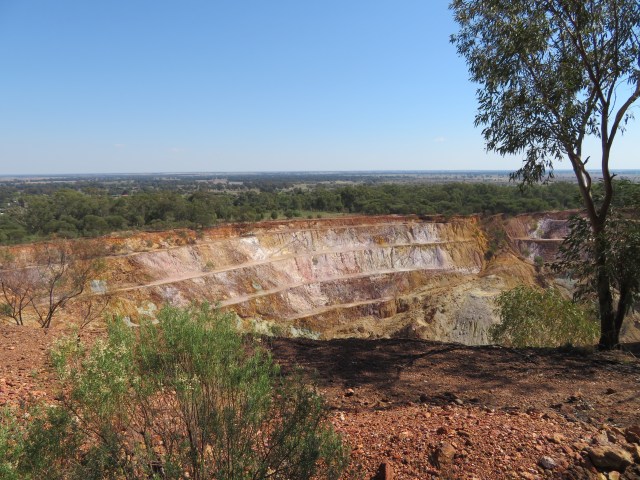
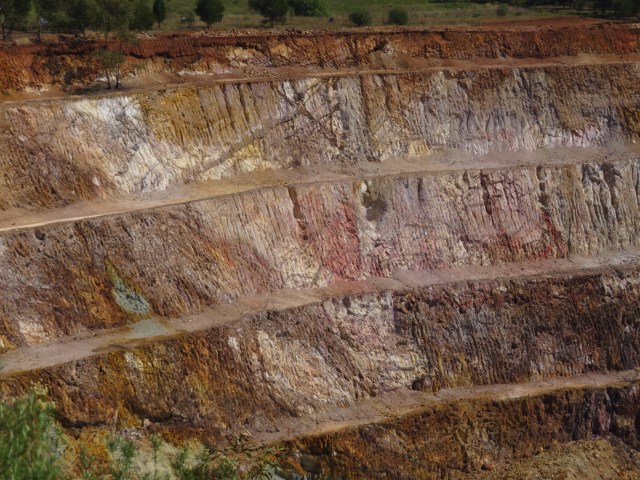
You can see where part of the wall has collapsed in the fifteen-plus years since the mine was active. I was also pretty impressed at the colours on this thing – it reminded me of those sandstone cliffs:
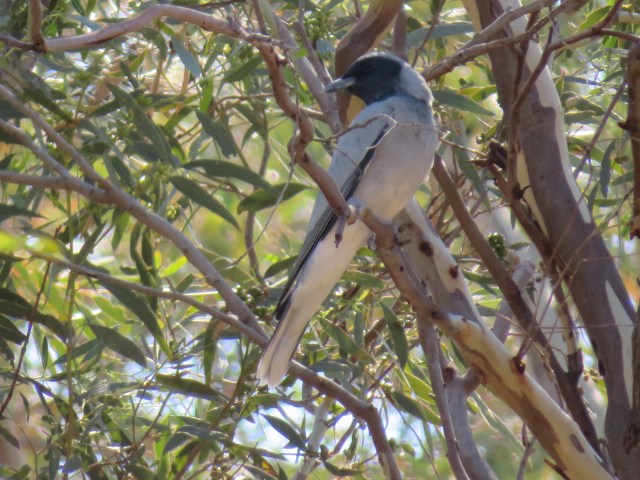
I managed to spot some birds around this area. This is a black-faced cuckoo shrike:
And a short video of a buff-rumped thornbill:
There were some grey fantails around as well, but I only got a few short glimpses of them, and nothing I managed to catch on film. There are multiple pits at the mine site – this is the second:

See how one side is collapsed? In this case, that happened while the mine was in operation – a large pod of solid rock was sitting on top of softer rock, and one night the wall, and the survey station on top of it, just fell into the pit when the softer rock gave way. No one was in it at the time, so no one got hurt. I can just imagine coming to work in the morning to see that; ‘It was like that when I got here, I swear!’
There were a bunch of dragonflies zipping around, and it must be the mating season for some of them, because of this:
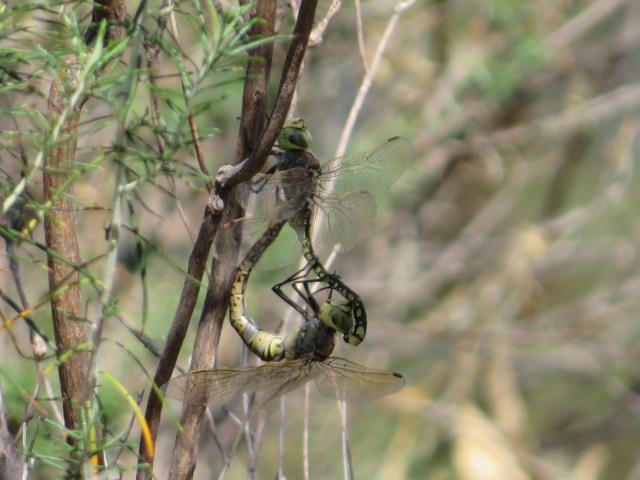
They’re either mating, or had a very unfortunate encounter with a spider web that stuck them together in a strange position. The balance of probability suggests the former.
I also had a good view of Peak Hill itself:
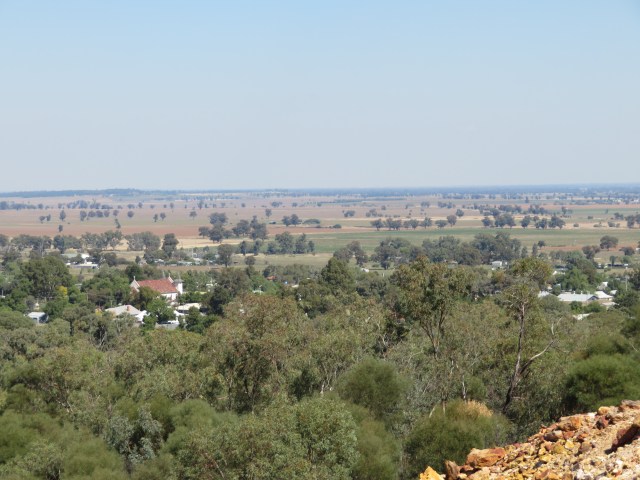
I could even see the grain silos:
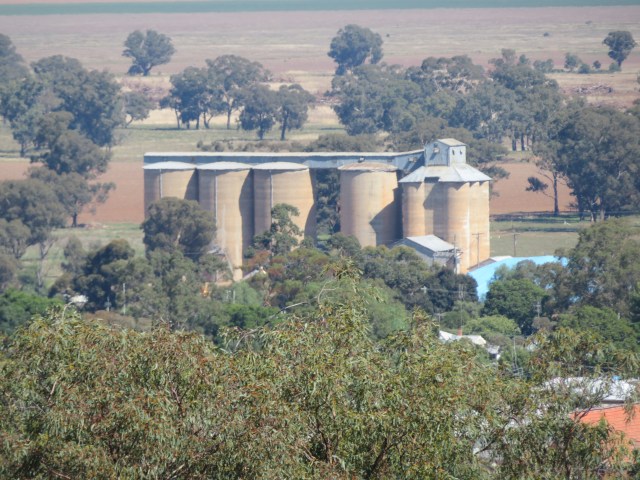
The one with the rusty roof was the first cement silo built in Australia, in 1918.
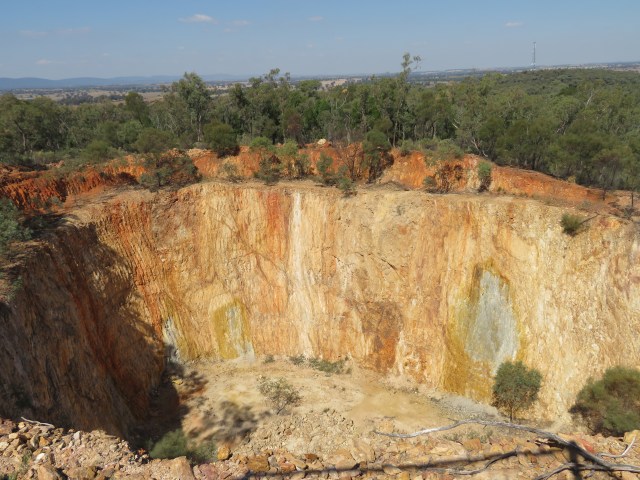
The third pit:
Then I took a bridge across some of the old shafts:
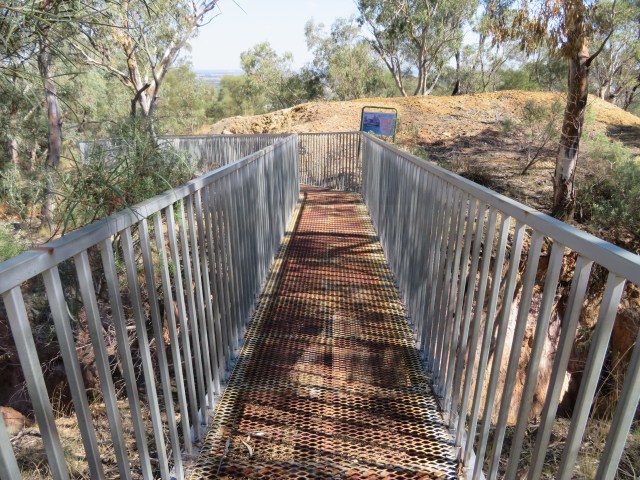
Either side of the bridge:


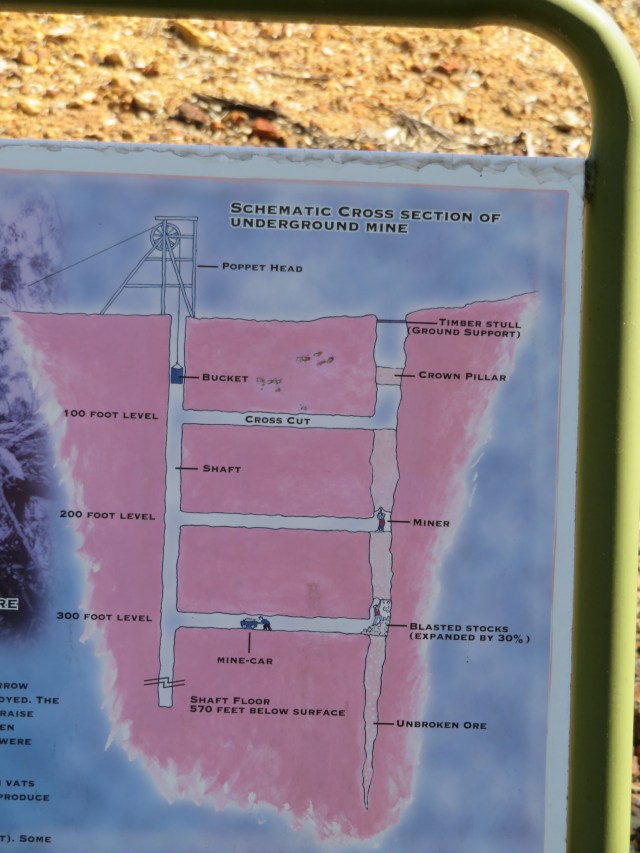
A cross-section of the underground mine:
Looking down into one of the shafts:
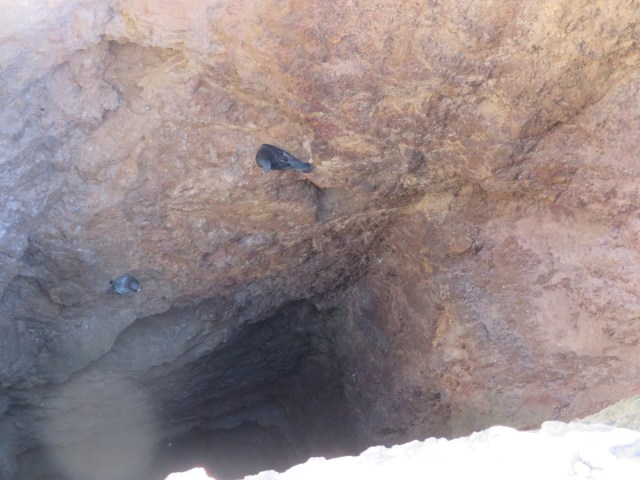
As you can see, there are quite a few rock pigeons around:

That one seemed quite puzzled by my camera – it would tilt its head from one to the other every time I took a picture. But I suppose the shafts would be pretty good places to nest – the walls are so sheer I doubt anything else can get in there.
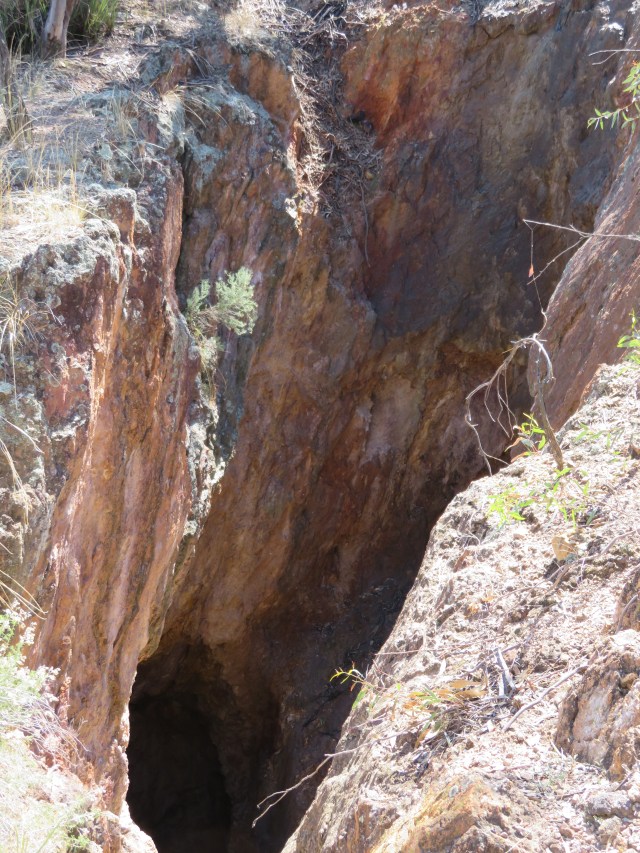
Another shaft:
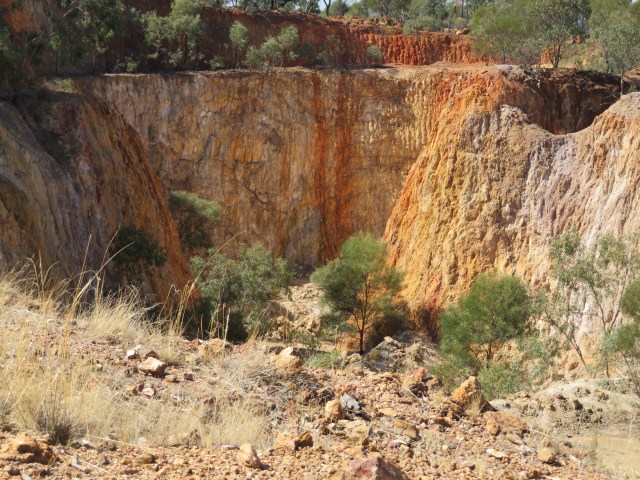
The third pit from a different angle, still with wild colours:
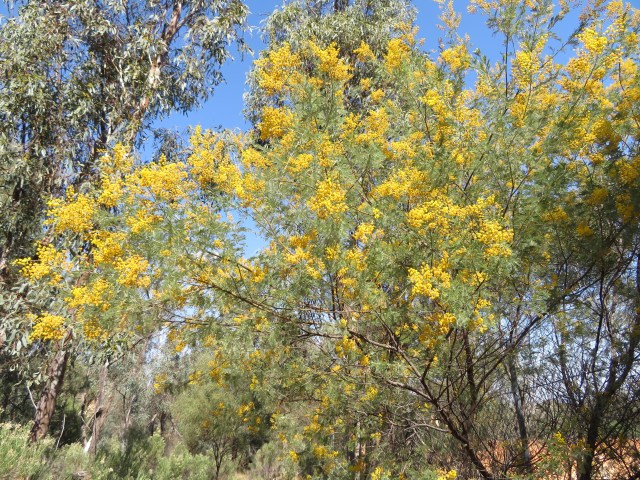
I passed this wattle tree and decided to take a photo – that yellow can be very bright against the eucalyptus forest:
The fourth pit:
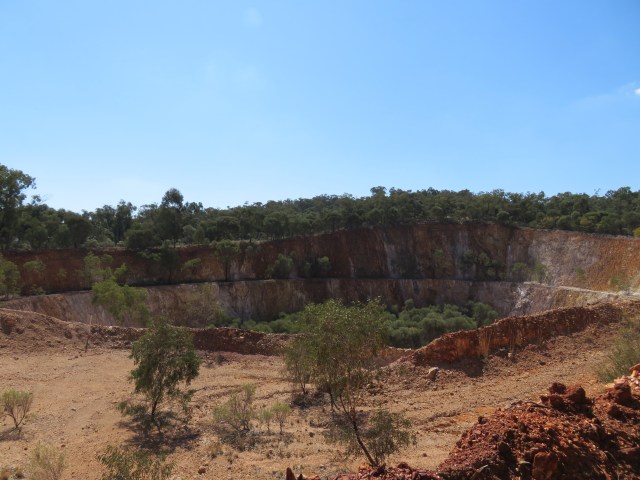
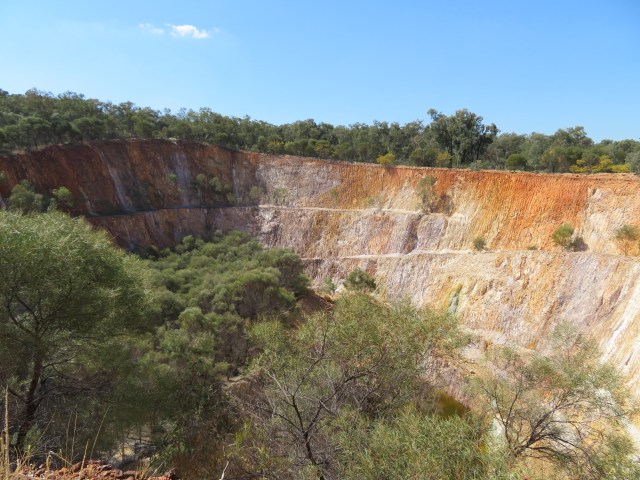
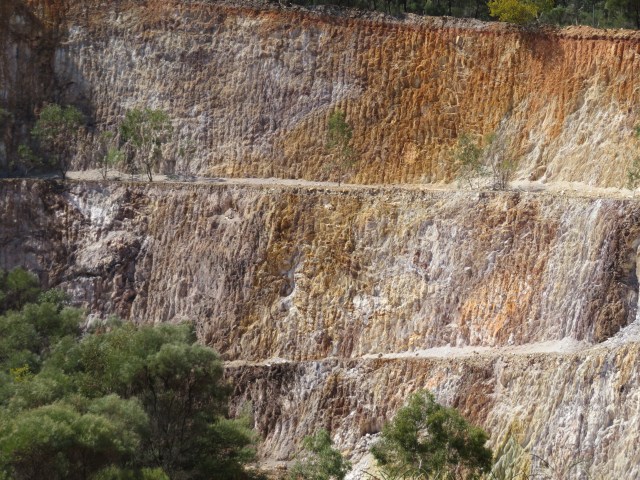
That one had a lot of trees in it – I guess when no one’s mined there for over a decade, seeds are going to start sprouting. Have another close-up of those insane walls:
Then it was time to leave Peak Hill. Originally, I was going to check out the Fish Fossil Hut, but was closed because a car had run into it and wrecked the place. You gotta admit, it’s a good excuse.
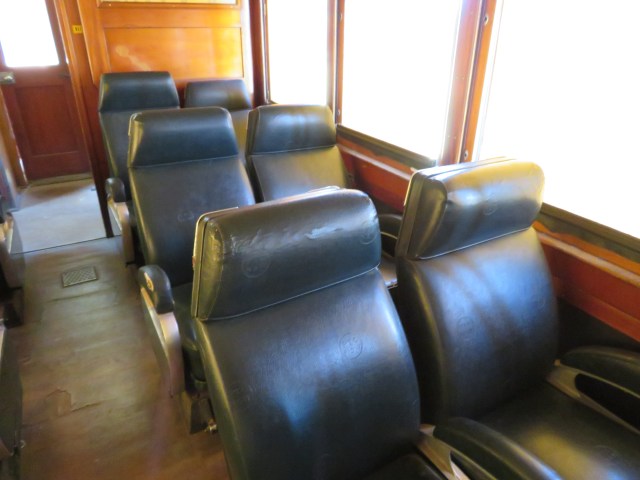
I stopped by in Parkes again to check out the Pioneer Museum, which I didn’t have a chance to last time. They had an impressive collection of machinery, including this old train car, that was in service from 1937-1989:
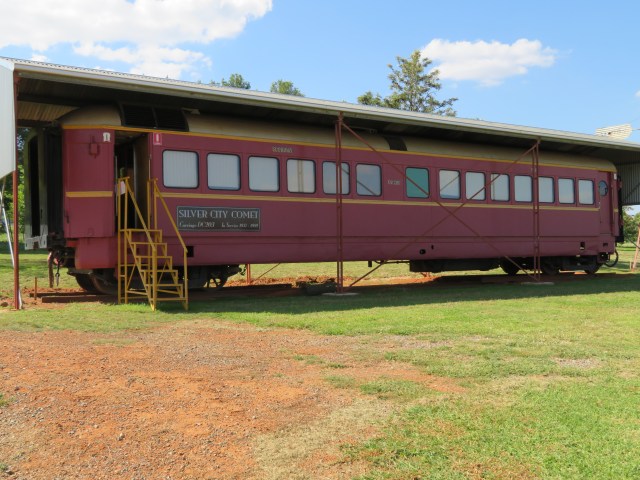
I find old train carriages fascinating for some reason. This was the economy area:
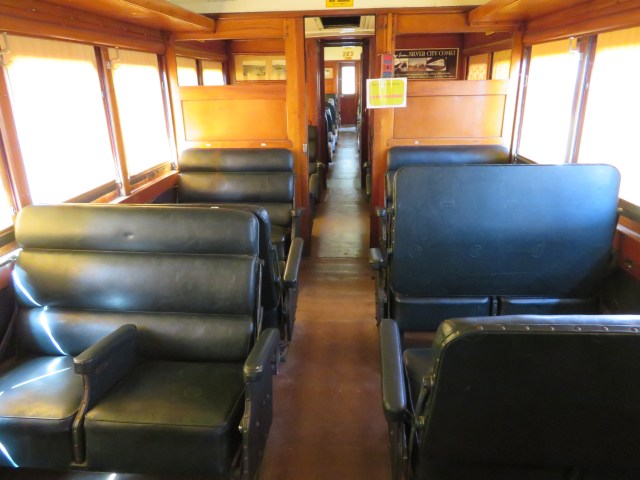
First class:
The alarm signal:

I love that the fine doesn’t exceed $20. Wouldn’t be much of a deterrent nowadays.
The tiny bathroom:
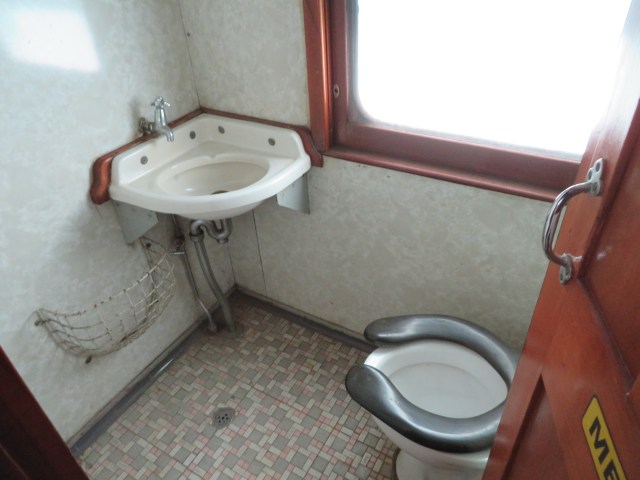
And this near the door:

Seems rather considerate, to have cold water on hand in case the passengers get thirsty. My next stop was the machinery shed.
This is ‘Orphan Annie’, and she was custom-built by two brothers in 1979:
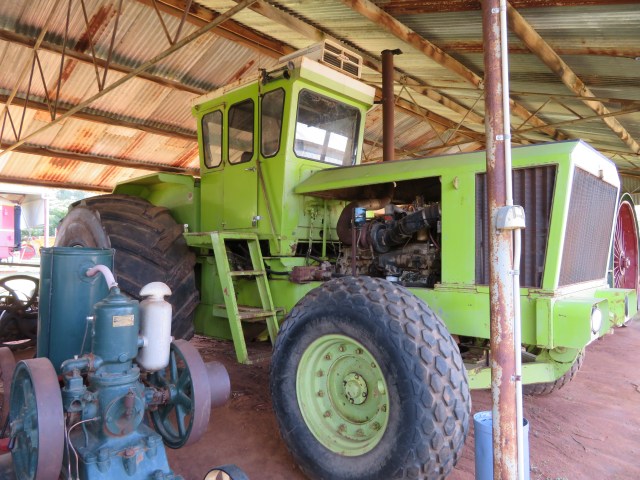
This thing was huge. You don’t really get a sense of the scale of it unless someone’s beside it:
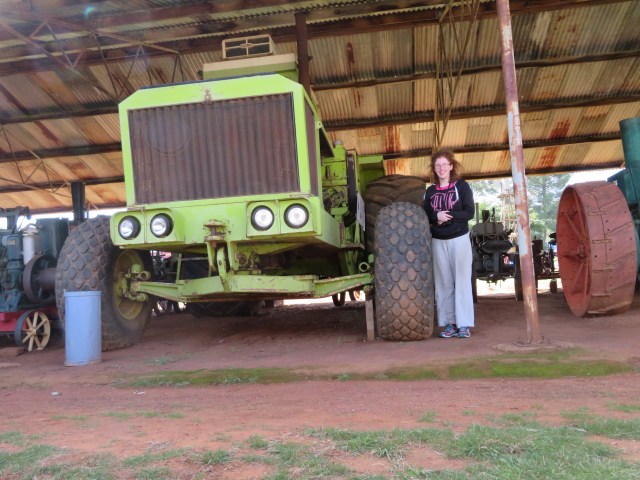
Yeah, that’s me next to the front tyre. The back tyres were actually taller than I was.
This was another biggie, made in 1912 in the US:
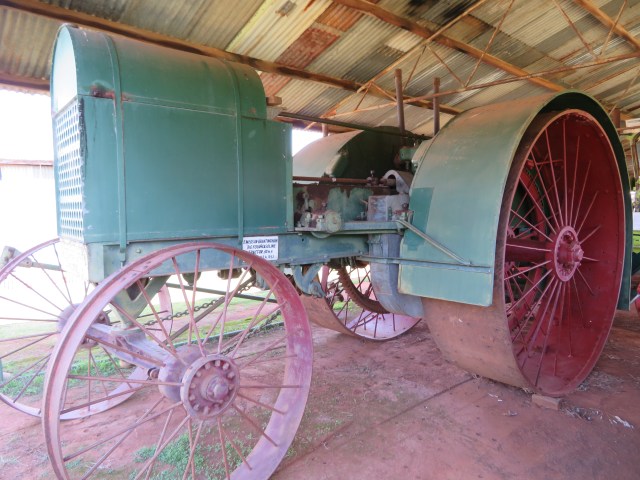
Again, here’s me for scale:
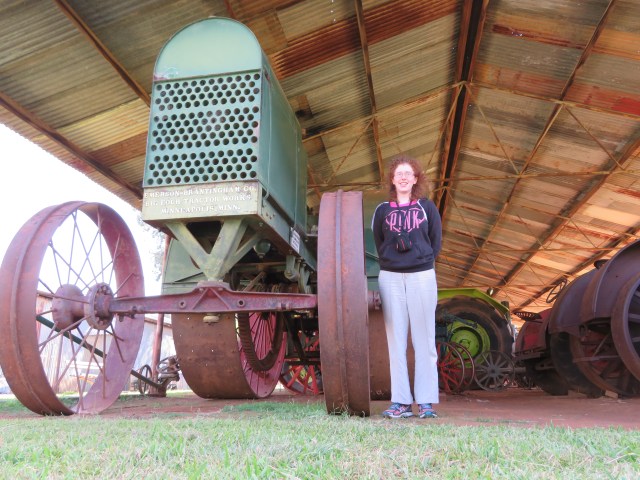
This one was much smaller – the Mogul tractor, built in 1914, and could only go 2mph:
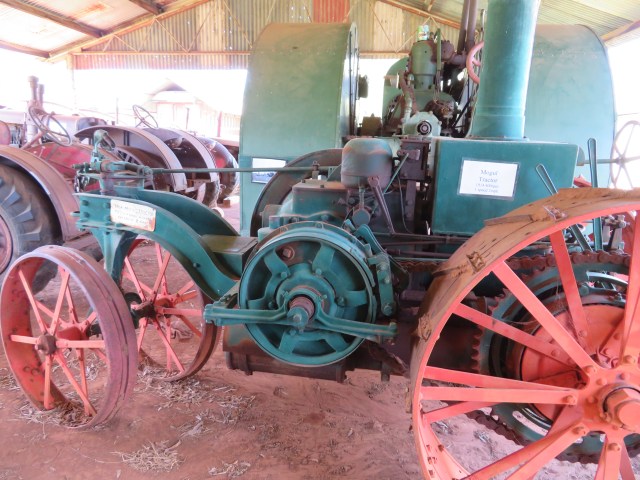
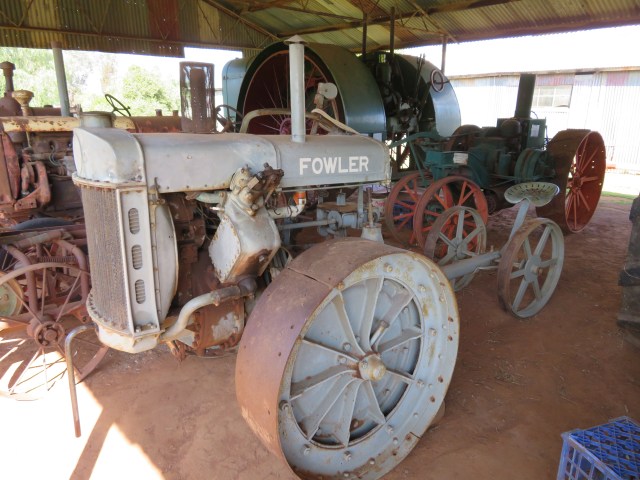
Now this is something special – the Fowler Rein-Drive:
For scale:
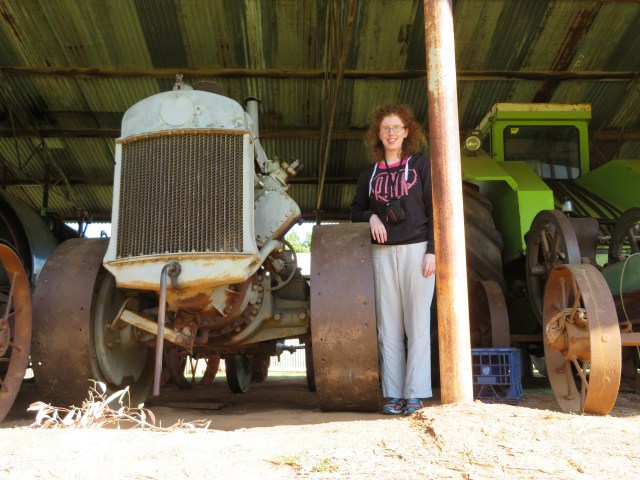
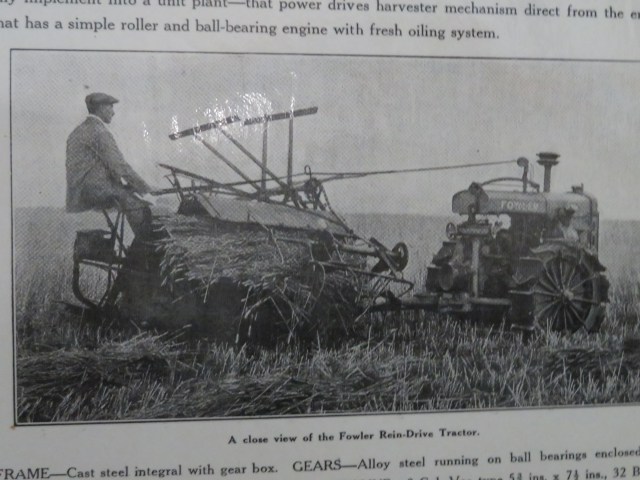
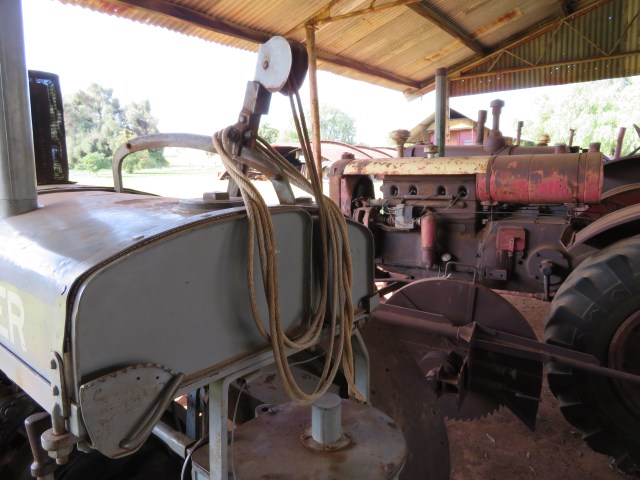
Not huge machines anymore, but still a decent size. Now, this tractor is special because it was steered and stopped by reins, just like horses. This one was built in the 1920s, and is believed to be the only one left in the world. Also, see how far back the seat is? That’s because the tractor was designed to be coupled to any existing horse-drawn machinery, which the driver would then sit on, like this:
The reins:
It looks pretty hilarious, huh? But the idea of making a tractor that could be coupled to horse-drawn machines was a pretty good one – I’m sure it enabled people to get some more use out of them instead of just throwing them away.
This was a two-stand shearing plant:
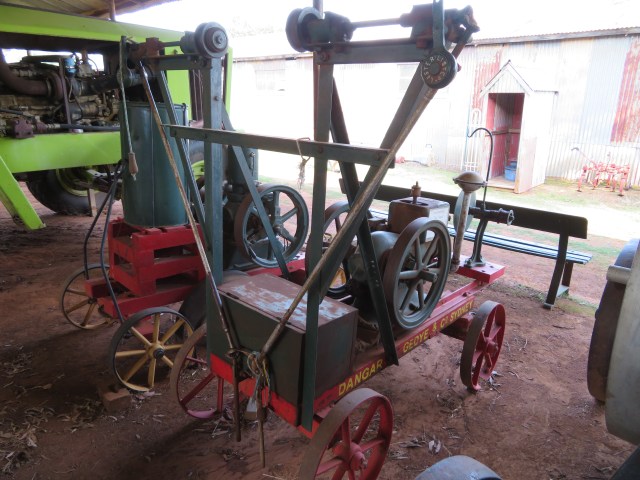
This could be planted anywhere in the shearing shed, and it would run off gasoline to power two sets of shears.
A 100-year-old cultivator:
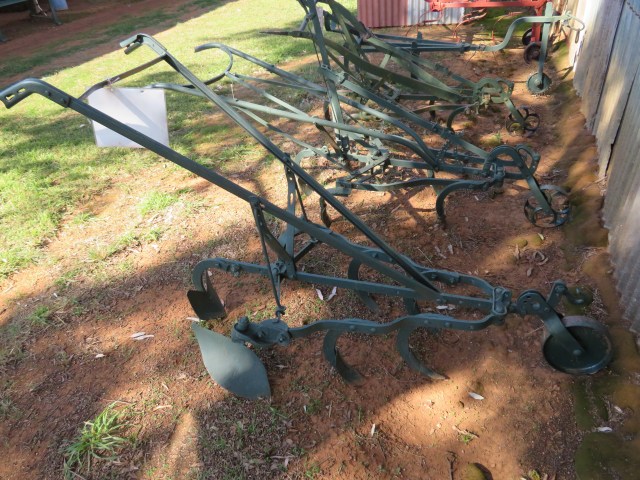
This was actually made by John Deere, the famous tractor-maker, and was designed to be pulled by one horse while someone walked behind it.
A wool press:
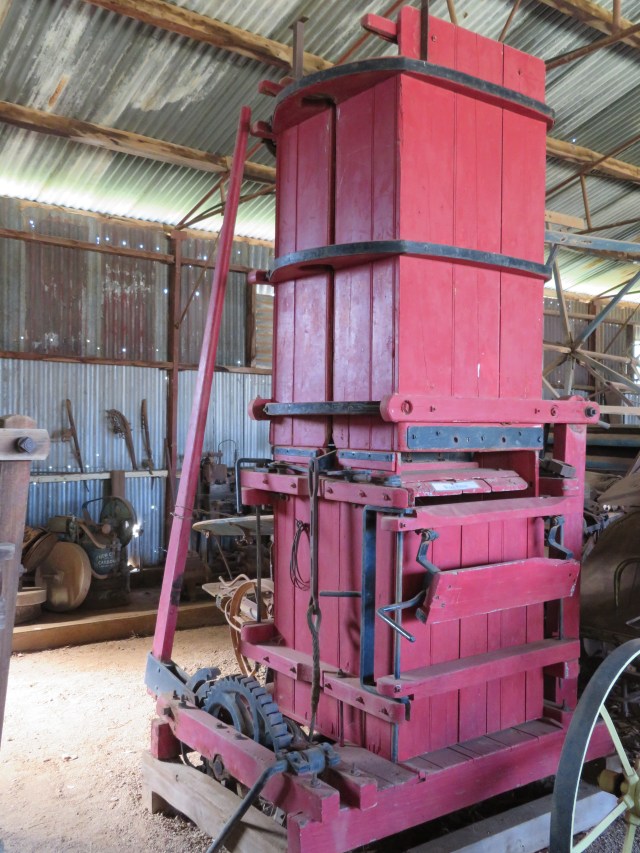
1923 Thorncroft Lorry:

I admit I took this picture just so you’ll know where this is from:
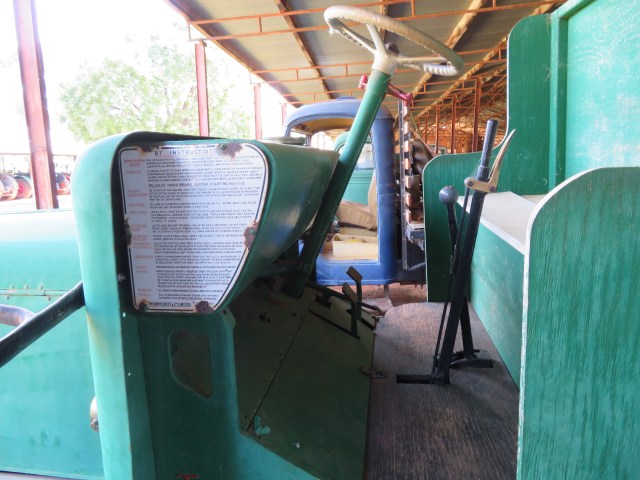
Yes, that writing on the side is exactly what you think it is:
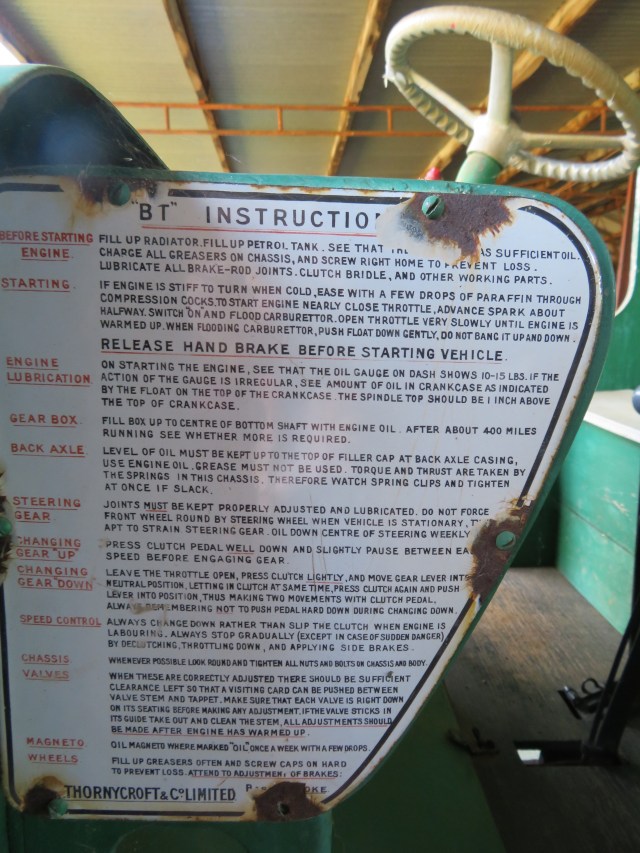
Instructions. I just find it funny that instructions for driving a car were written on its side, like it was a microwave or something. Though if you actually read the car manuals we have today, they’re actually not very different.
A blacksmith display:

Taken simply for those huge bellows – I mean, they’re bigger than the actual forge!
An old cash register:
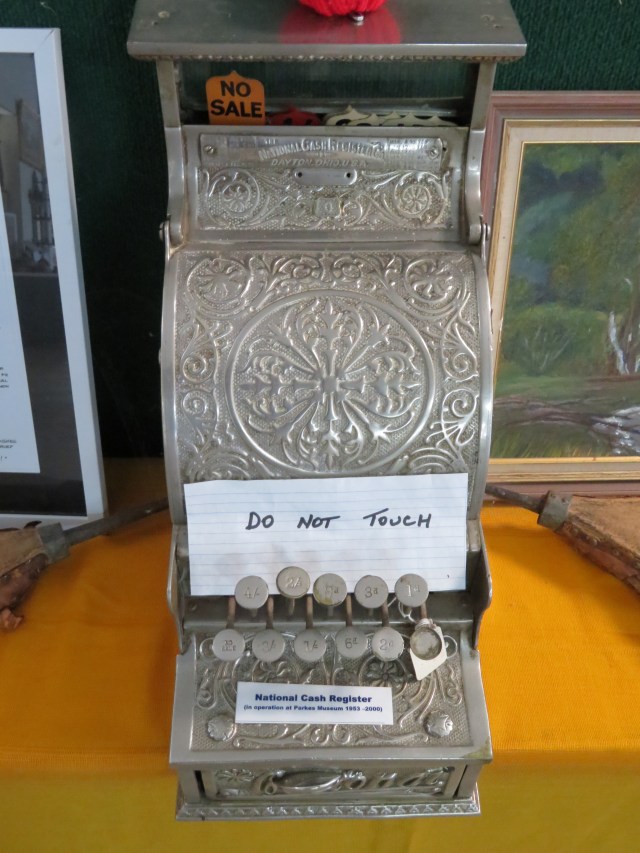
This was actually in operation until 2000. Check out the keys:
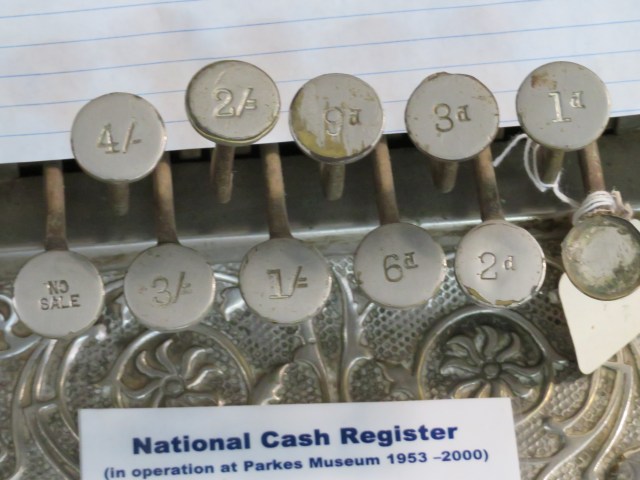
No number pad here – just multiples of various denominations. I wonder how many items had prices that were a combination of several keys – it must have been a pain compared to modern registers, but probably seemed really easy compared to adding it up on a piece of paper.
I also took a photo of The Farmer’s Will, because I thought it was funny:
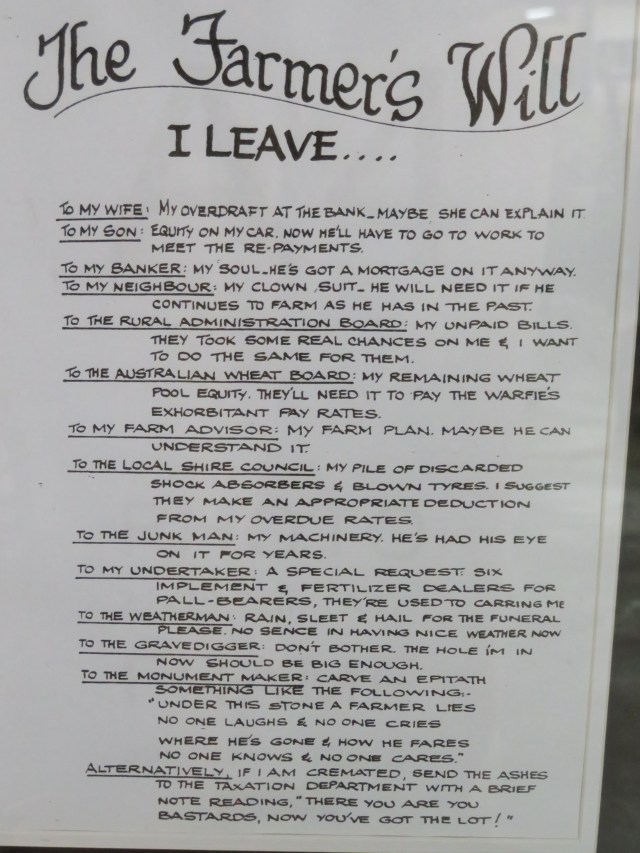
They had a bunch of working clocks in the museum as well, and I took a video of their strangely-soothing ticking:
One clock ticking gives you a sense of urgency, but a whole bunch of clocks together just sound kind of relaxing, like white noise.
There was a pretty impressive egg collection, so I took some photos – it is Easter, after all, we can say it’s seasonal:


A lot of them are birds I’ve seen in the wild – this is white-winged chough eggs, actually in one of their mud nests:
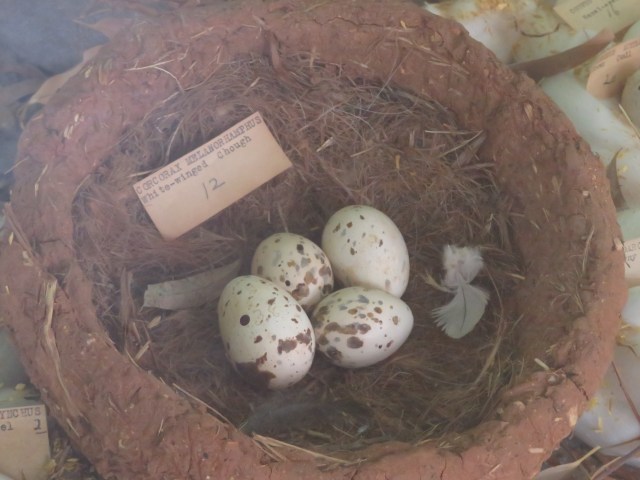
Yeah, they make nests out of sticks and mud. Which seems weird, until you remember that people used to build huts out of the same thing – it probably makes the nests very durable.
These are the eggs of a bird I’ve seen a lot – the grey fantail:
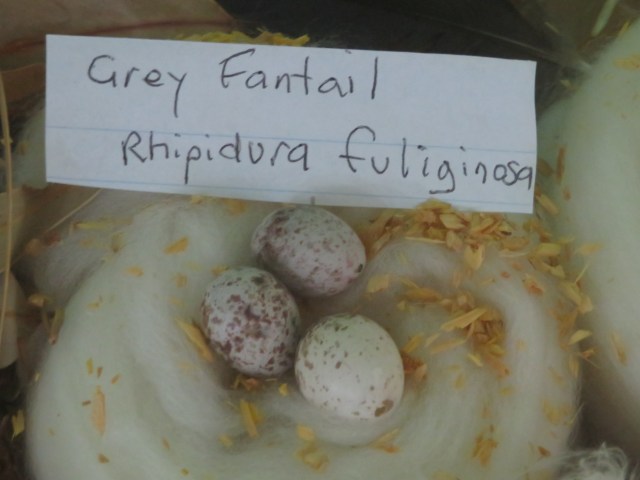
Ravens apparently have white eggs:
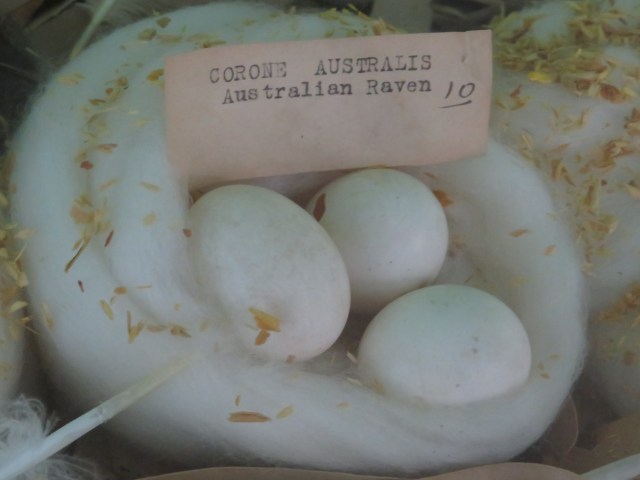
Cockatoo eggs:
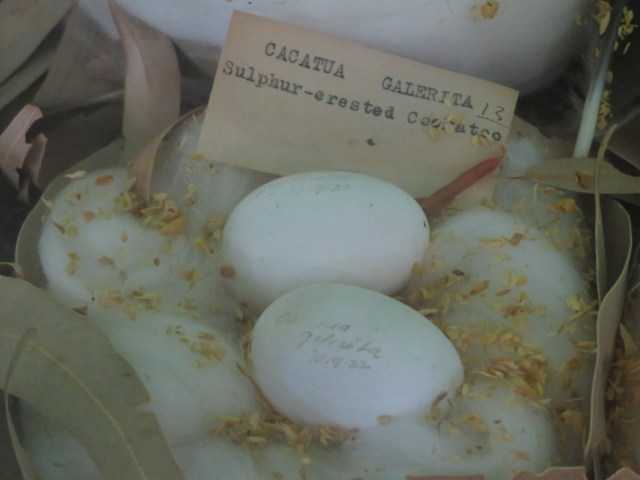
What surprised me is that these are actually smaller than chicken eggs. You tend to think of cockatoos as being bigger than chickens, though I suppose if they were put side by side, chickens probably have more body mass. Plus, they’ve been bred to lay big eggs, so that probably helps. It was only after the cockatoo that I started to see eggs larger than those you find in the supermarket:


They didn’t just have eggs – they had some stuffed birds as well:
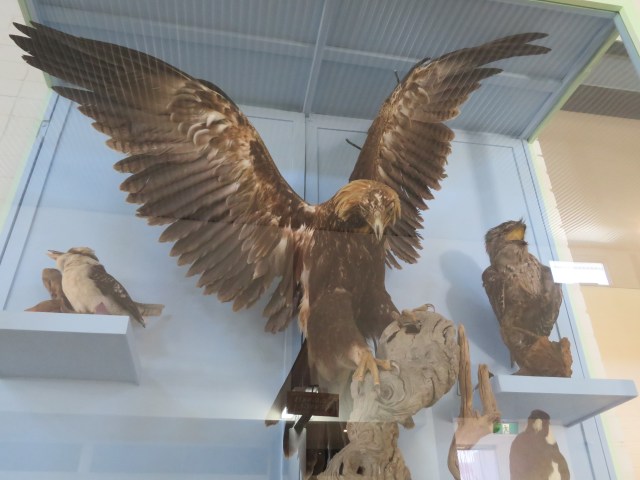
The wedge-tailed eagle is particularly impressive, but they also had this horrified-looking tawny frogmouth:
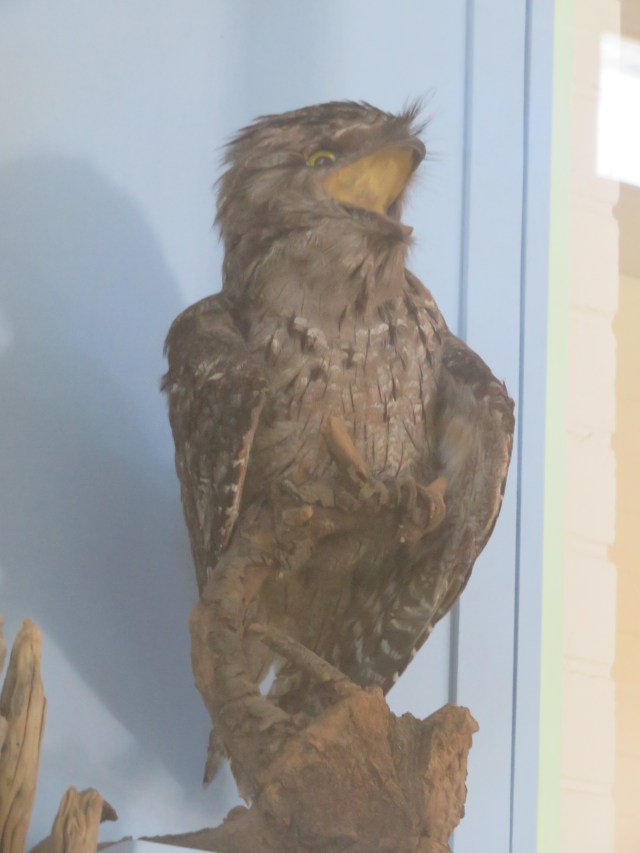
I get that they just stuff it in a way that makes it look dramatic, but it looks like it just walked in on its parents having sex.
Like any historical museum, there was a collection of old porcelain, and my favourite was this teapot:
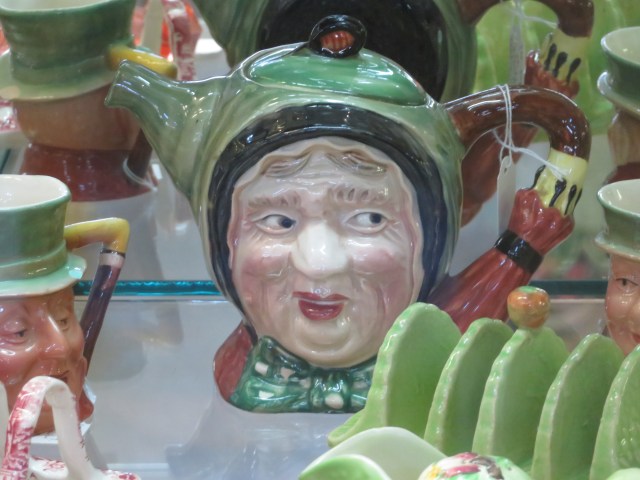
These are the cups:


I’m not sure who decided the world needed a tea set with faces on it, but I’m glad they followed their dreams. There was also a collection of cheese dishes:


I admit I took those photos because the only time I’ve seen cheese dishes is in Wallace and Gromit, when they’re having their Wensleydale.
Then I went back to Turtle Shell, though I stopped off at the car wash on the way back. I used a self-service bay for the first time, and now I don’t think I can go back – it’s amazing how much quicker washing your car is when you can use a high-pressure hose.
 Jenny's Adventures
Fantastic. Those tractors are huge. Love the rein tractor. And the Tea set. You should start drinking tea now – you can see it is so civilised!
Strange how a scar on the land can be so beautiful. The rock walls are stunning.
LikeLike
I loved the rein tractor as well – it just seems like such a funny idea.
LikeLike