Today, I went to the town of Parkes, named after Sir Henry Parkes, and their radio telescope.
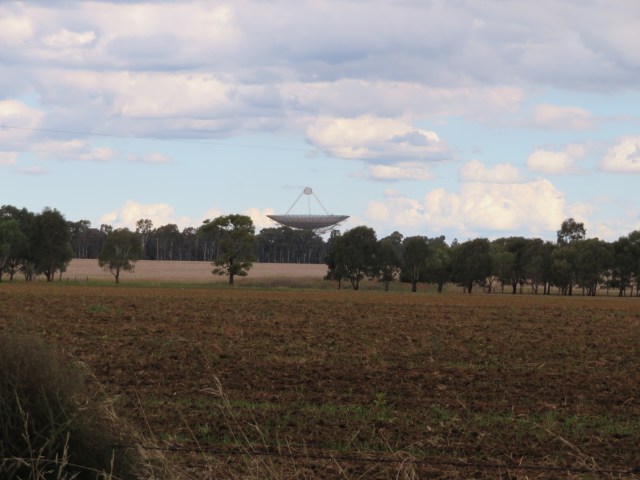
The telescope isn’t actually in town, of course – it’s about a half hour drive outside of it. You could see it from a long way off:
When you get to the entrance, there’s a sign telling you to turn off any radio devices like mobiles so they don’t interfere with the telescope. I did as I was told, then took a photo from the car park:
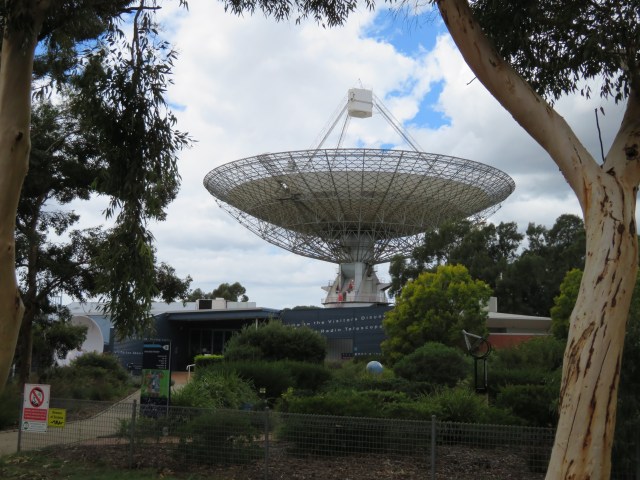
That’s a big telescope. It’s a 64m diameter parabolic dish, and was also the star of the movie ‘The Dish’, which focused on the Parkes Telescope’s role in beaming footage of the first moon landing to television stations worldwide. The movie also got a lot of things wrong, probably because they were trying to make it more dramatic or something. Personally, I think beaming back the first images of a human being walking on what is essentially an alien world is plenty dramatic all by itself, but what do I know?
The dish was built by CSIRO – Commonwealth Scientific and Industrial Research Organisation, basically an Australian team of super-scientists. They developed polymer bank notes (because they were harder to both damage and forge than paper), Aeroguard (originally developed during WWII to protect soldiers from malarial mosquitoes), and WLAN (wireless local area network – it used to be almost impossible to connect to the internet wirelessly if you were indoors, because the signal bounced around a lot and got confused. It’s called reverberation, and they fixed it, so if you’ve ever logged onto a wireless network indoors, you have these guys to thank).
This is the Whispering Dish:
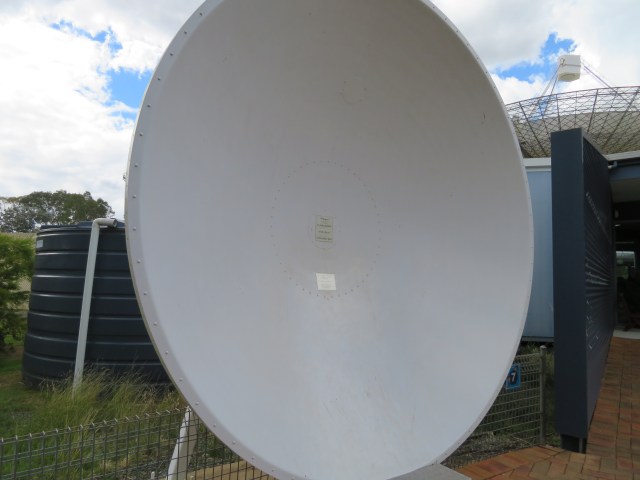
I’ll admit I had absolutely no idea why it was called that. With these unusual names, I normally have some kind of idea, even if it’s totally off, but with this I was drawing a blank. It turns out it has a partner on the opposite side of the garden, about twenty metres away, and if you whisper into one dish someone at the other dish can hear you.
A guy using the other dish:
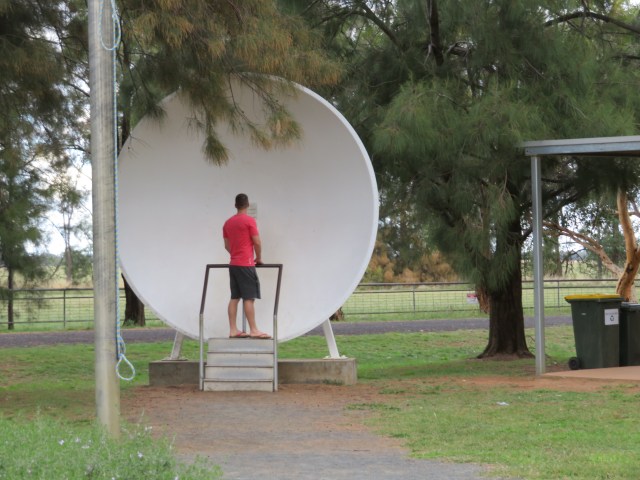
And it’s not just the two in front of the dishes – if you’re on the path in-between, you can hear their voices as if they were next to you. I now know what it’s like to be haunted.
It was cloudy, so I was prevented from reading this precision sundial:
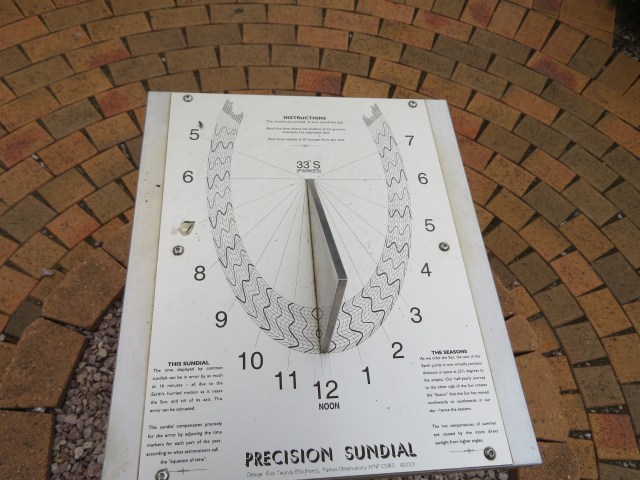
It’s called a precision sundial because it compensates for the tilt of Earth’s axis…somehow. It wasn’t really clearly explained. The horseshoe-like lines are the month, and you read the time where the shadow of the sundial intersects the date.
There were a bunch of birds in the garden, too, so I took some videos. First, the white-winged chough:
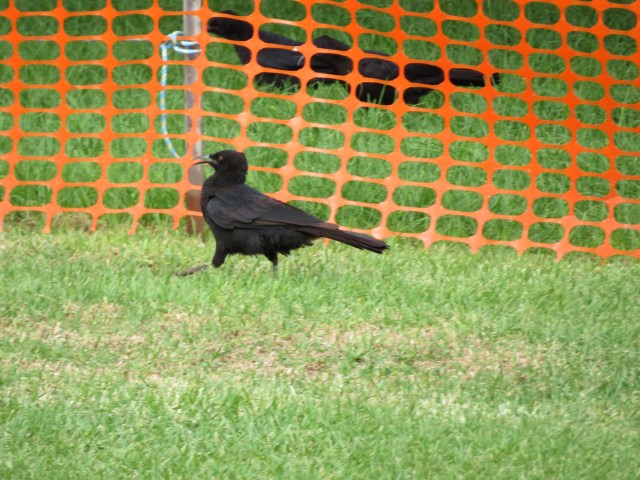
It’s only the tips of their wings that are white, so you don’t really see it unless their wings are open. I’ve thought this before, but they look a lot like crows – it’s only when you look close that you realise they’re not.
There were a lot of noisy miners flitting around, feeding on the bottlebrush, and I got a brief video of one of them:
I also found some apostlebirds pulling apart a tarp:
I have no idea why they’re doing this, but it’s clearly very important, because they seem very tense about it.
In front of the dish:
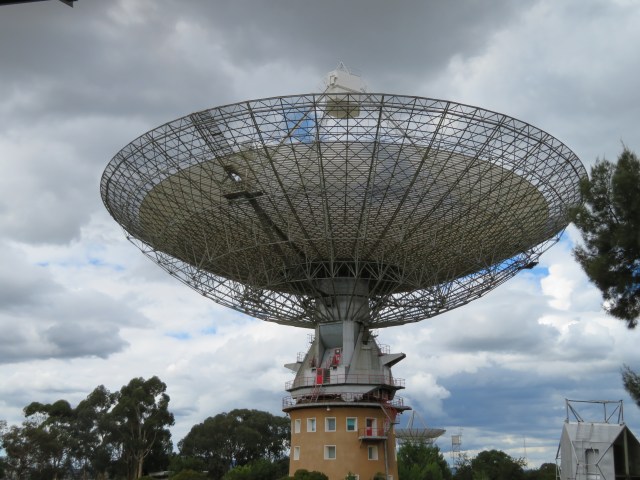
And it’s not alone – there’s a whole bunch of smaller dishes around it:

During the Apollo 11 mission, the telescope needed to track the position of the moon, which meant the telescope needed to be able to move. People were worried that if the power failed, the signal would be lost, so the telescope staff practiced moving the telescope with hand cranks. During the moonwalk, some staff were outside by the hand cranks, ready just in case the power failed.
The dish can catch the wind like a sail, so when the wind speed is over 35km/h, they’re supposed to position the dish facing straight upwards, so there’s no risk of damage. But during the Apollo 11 mission, it was being buffeted with 110km/h winds, and it had to stay online, because there wasn’t really any other telescope that could do the job.
I can just picture CSIRO talking to NASA; “If this breaks, you’re paying for a new one.”
But it wasn’t just a telescope in the middle of a field; they also had a little information centre and a café. I had a pie – beef and red wine, pretty delicious – and watched a short movie about astronomy. Well, it was more like three ten-minute movies airing one after the other in a little 3D theatre, but it was still fascinating.
The first one was about the history of telescopes, how they started with lens that focused light, but as they got bigger and bigger the glass couldn’t hold its own weight, so they switched to mirrors which would reflect a much larger field of light into the lens. Pretty clever, really.
The second one was about Mars, and the various attempts to explore it. Originally, they thought they might find life on Mars, because there were seasonal colour changes on the surface, and they thought it could be evidence of liquid water. But the first probe that they managed to get into the planet’s orbit sent back photos that didn’t look promising, and the next one with even better photos still didn’t look good. But in science, you need to poke it with a stick to be sure, so they started planning to send rovers.
The first rover lost contact as soon as it landed but it proved that a rover could land, and the next sent back the pictures we’re familiar with – the brown rocks and sand as far as can be seen. A lot of the pictures they showed were still pretty eerie, though, when you remember that it’s literally an alien landscape. Especially a photo that was obviously taken by turning the camera back the way the rover had come – it’s a picture of endless sand with two tyre tracks through it. Seemingly ordinary, until you think that’s the first thing that ever crossed that dune. That right now, we have a little machine trucking across the surface of a different planet, taking photos and sampling rocks and telling us that Mars might have been an Earth-like planet once – we’re just off by a few million (or billion) years.
Because according to the rovers, Mars probably had water at one point – there are formations in the landscape that we only see on Earth with water erosion, and while we can’t discount the possibility that on Mars they’re from something different, it’s still promising. And now they’re even thinking (from some satellite photos), that Mars might still have a few little pockets of water left. We’ll have to see.
The third movie was kind of trippy, because it was explaining the scale of planets and galaxies and the like, and I don’t think the human brain can really comprehend that kind of thing. At least, not without some kind of chemical enhancement (I’m thinking there’s a reason some scientific breakthroughs are done on drugs).
It started with the moon, explaining how even though it blots out the sun during a total solar eclipse, that’s just a perspective thing – the moon is much smaller than the Earth. The Earth in turn is miniscule compared to the gas giants like Jupiter and Saturn, and the sun is so incomprehensibly massive that a single solar flare can be larger than all the planets of our solar system put together. Yeah…
And then it went on to explain how, the way Earth is dwarfed by the sun, our sun is dwarfed by enormous, hyper-giant stars. And how they’re just tiny specks of light in the Milky Way galaxy, which contains 100 billion stars, and how galaxies turn to just tiny specks of light when you’re looking at the entire visible universe. Yeah, the ‘visible’ universe, because that’s just what we can detect with our telescopes. And some very smart people have done a lot of equations that basically say the visible universe is to the actual universe as a 20-cent coin is to the face of the Earth.
I actually find thinking about that kind of inspiring. I mean, we’re tiny specks in a tiny corner of a universe too big for us to really comprehend, but damn if we aren’t going to crack it open and make it tell us its secrets.
They also had a model of the moon:
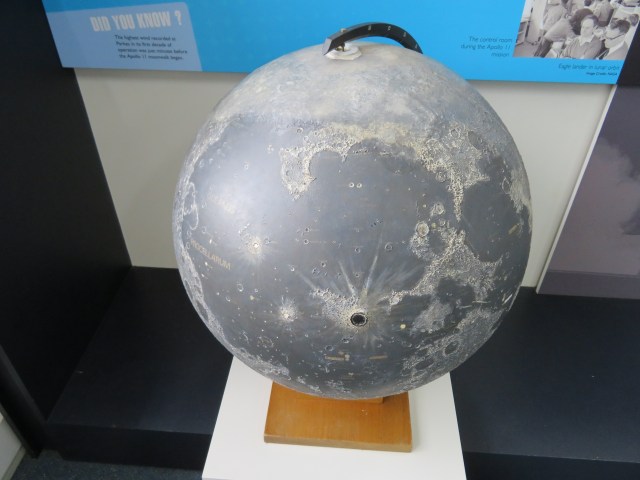
With various landing sites labelled:

The blurred one on the right is Apollo 11.
The old receiver cabin:
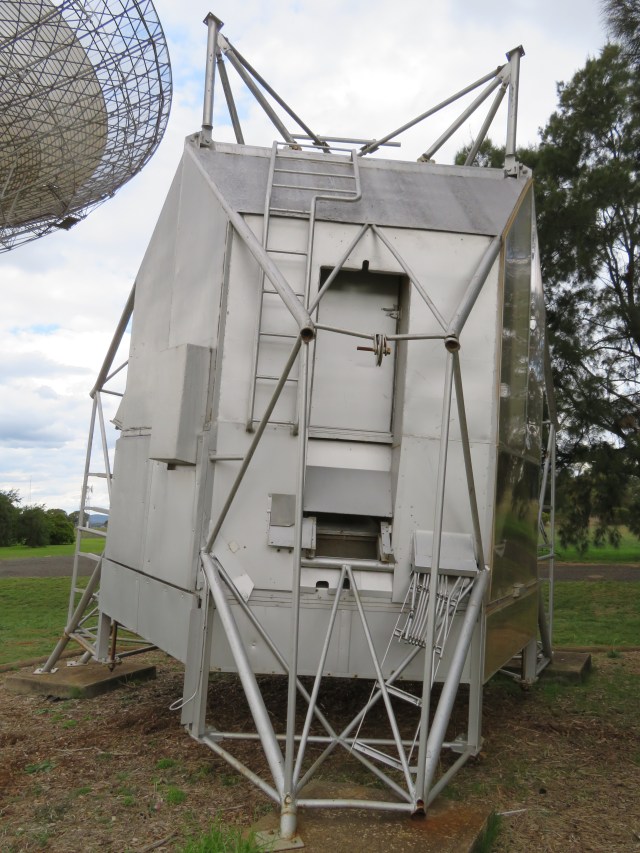
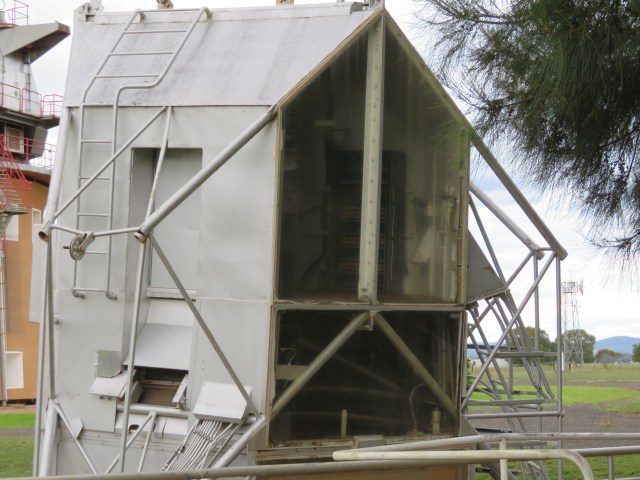
This is what sits above the dish, and houses the radio receivers that pick up signals from space. It was replaced in 1995 with a much larger one that houses three radio receivers instead of one.
On my way out, I found a memorial to Grote Reber in the garden, the first radio astronomer. After the discovery that our galaxy emits radio waves, Reber figured that a lot of the other stuff out there must emit radio waves as well, and in 1937, he built the first radio telescope to use a parabolic dish to reflect the signals – and he built it all with his own money, on his time off from work. His homemade parabolic antenna was nine metres in diameter, and the memorial is a scale model:
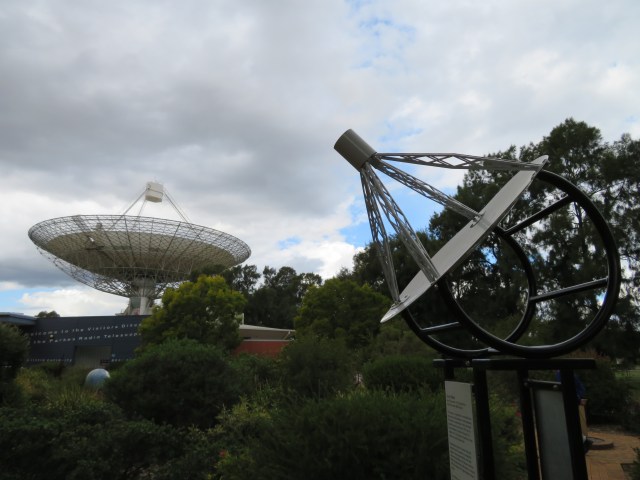
Standing in the shadow of what it wrought.
After I left the telescope, I ducked back into Parkes to check out their Elvis Museum and Motor Museum – both of them were tiny, but hilarious.
Elvis’ army uniform:
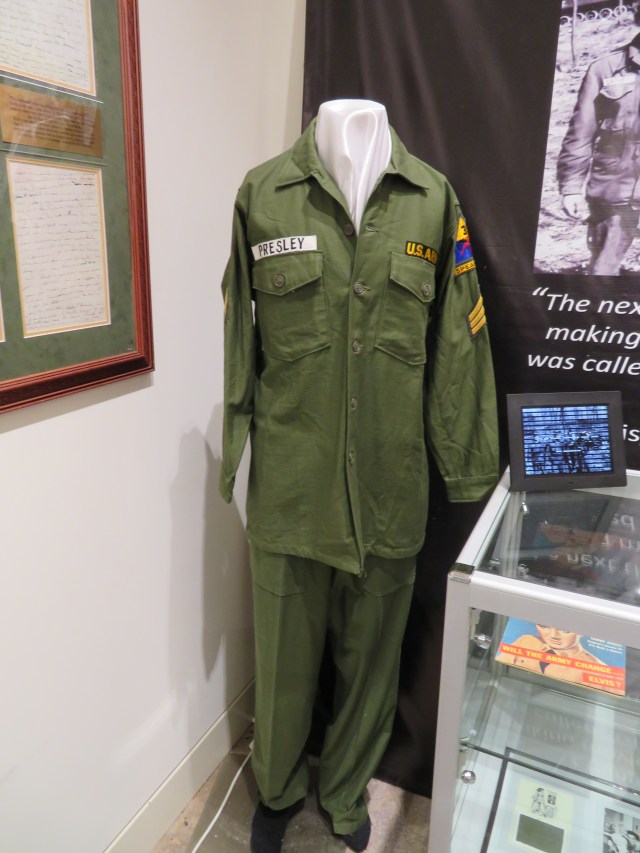
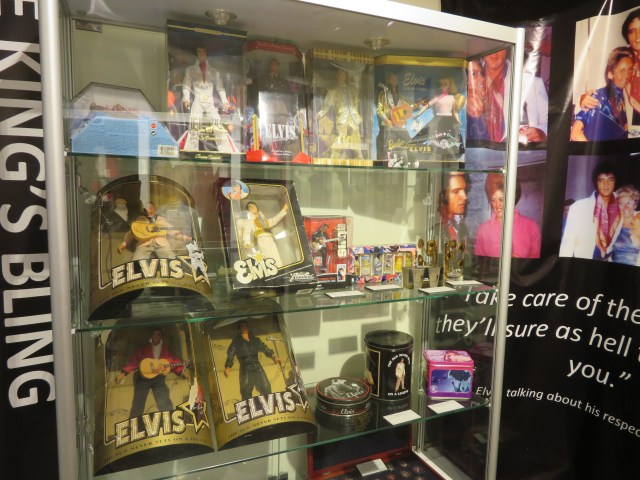
A collection of Elvis memorabilia:
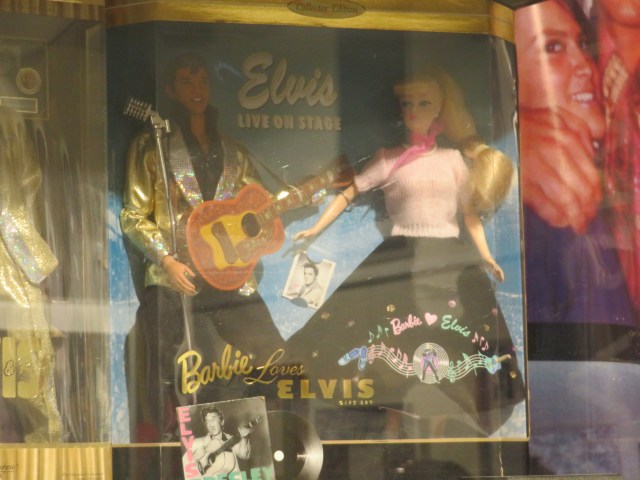
Including a Barbie:
Elvis Presley’s black onyx, liberty coin necklace:
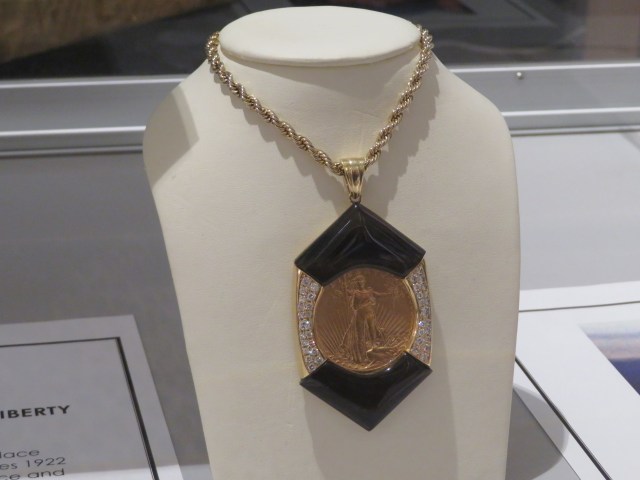
This was one of three owned by Elvis Presley – they were all 14k gold, with black onyx and a US 1922 twenty dollar walking liberty gold piece, and encrusted with diamonds. This also the only one of the trio on display – the other two have never been found.
The lounge from Elvis’ Mono Vale Drive home in California:

I admit I took this photo because it seems hilarious. I get collecting memorabilia, but a lounge?
Some of the police badges Elvis collected:


Apparently when Elvis Presley was young, he wanted to become a police officer, and made a habit of personally greeting the officers who worked security at his concerts.
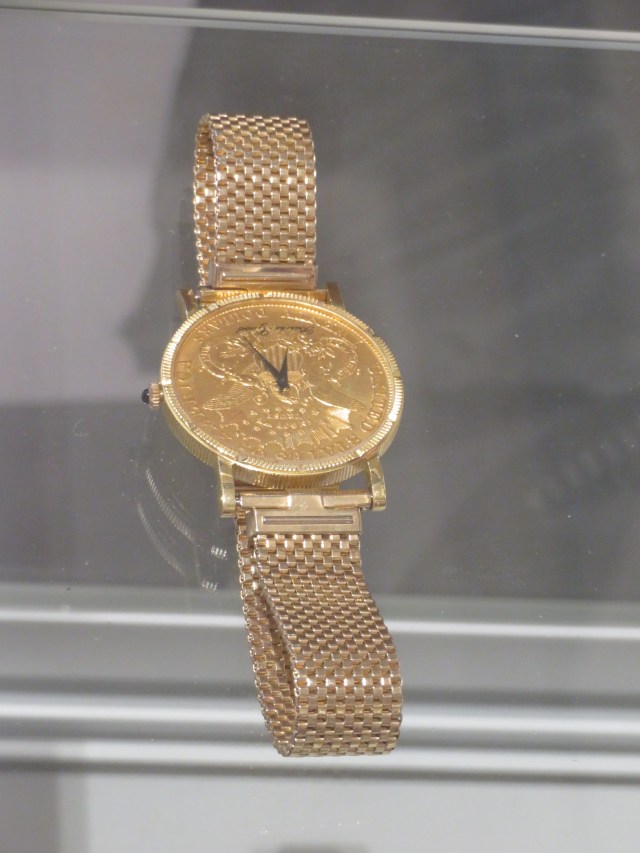
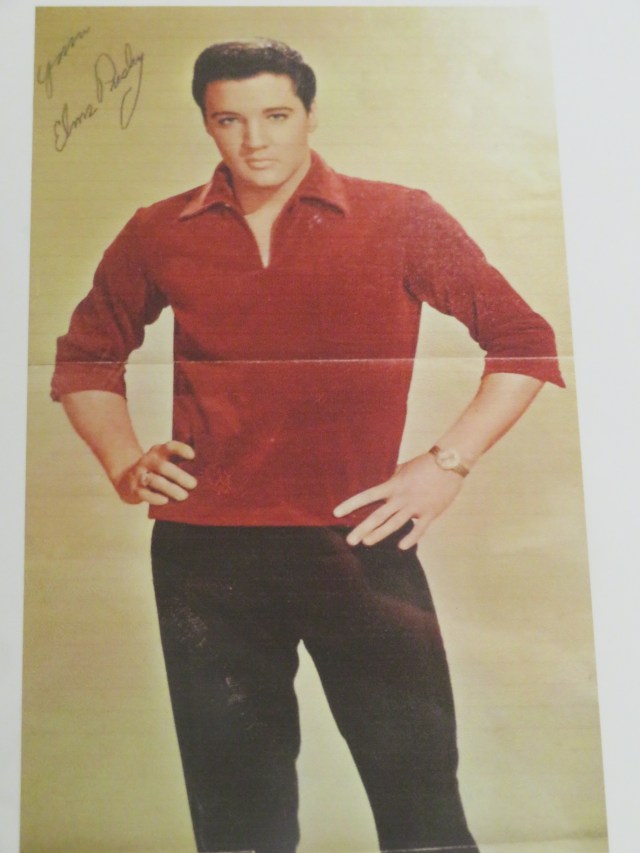
Gold watch Elvis wore in a photo shoot for Jailhouse Rock. It was later given to his friend, Marty Lacker:
A photo from the shoot:
The aviator glasses Elvis wore in ‘That’s The Way It Is’:
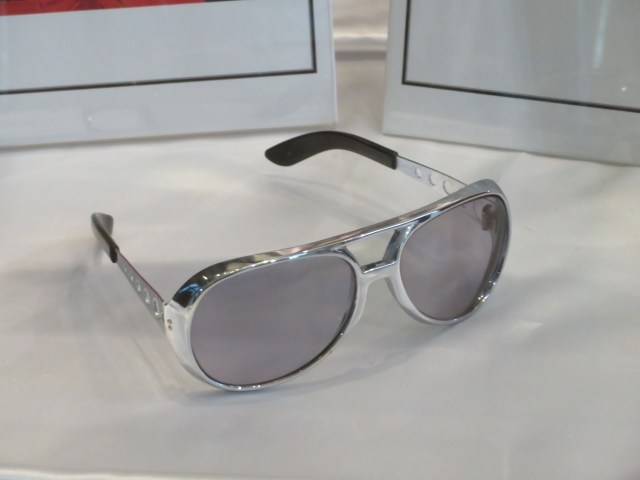
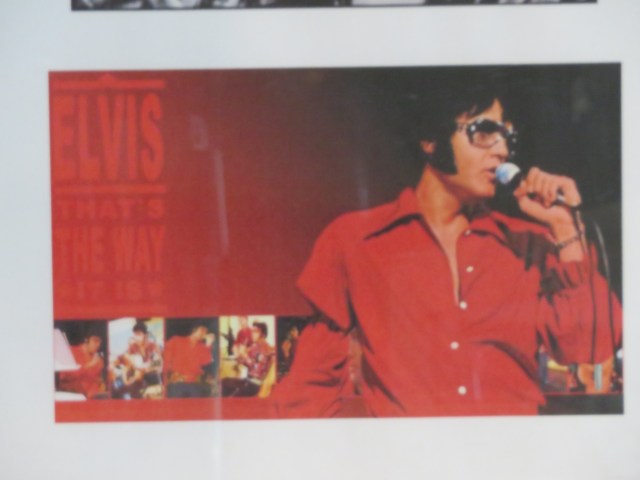
They contained his prescription lenses, and were returned to his optician for repair, where they remained for many years. You can see Elvis wearing them on this poster:
We all know Elvis as a legend of rock and roll, but another reason for his popularity might be how appreciative he was of his fans. The museum was full of stories from Elvis’ life, and he seemed pretty generous with both time and gifts. They even had a quote from him; “The fans want my shirt, they can have my shirt. They put it on my back.”
Then it was on to the motor museum. This is the ‘dead-easy’ tyre pump:
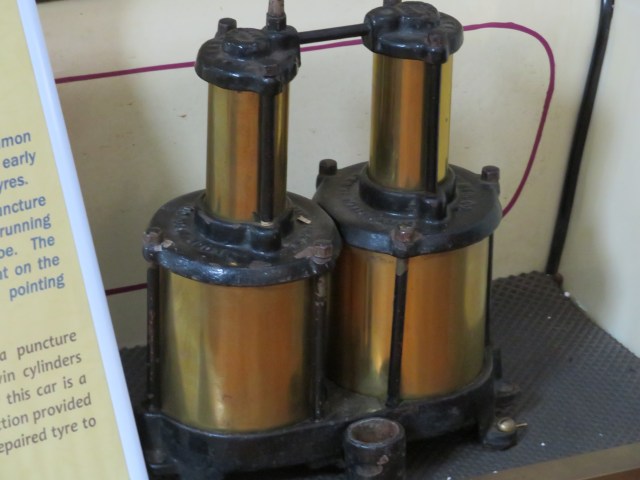
This was back when cast horseshoes puncturing tyres was a very common problem. The horseshoe would lie on the ground with the nails sticking up, and any tyre that contacted it would be very sorry. So tyre pumps sold very well.
1929 Austin 7 Meteor:

This is an Australian-designed body, and while it has a passenger door, there’s no driver-side door, just a panel you have to step over.
1917 Saxon S4T, one of only 5 in Australia:
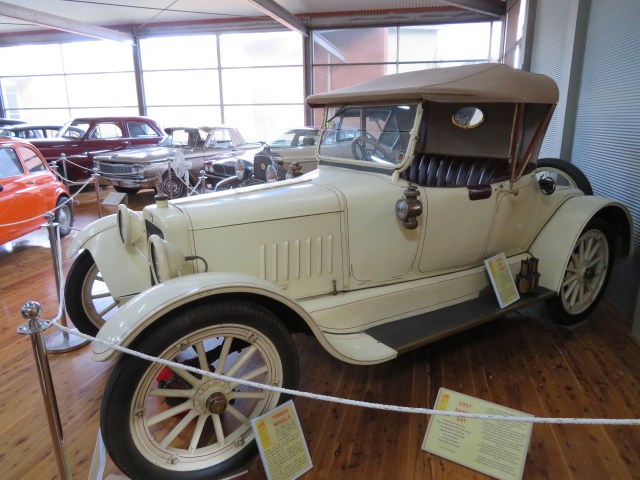
Check out the timber wheels:
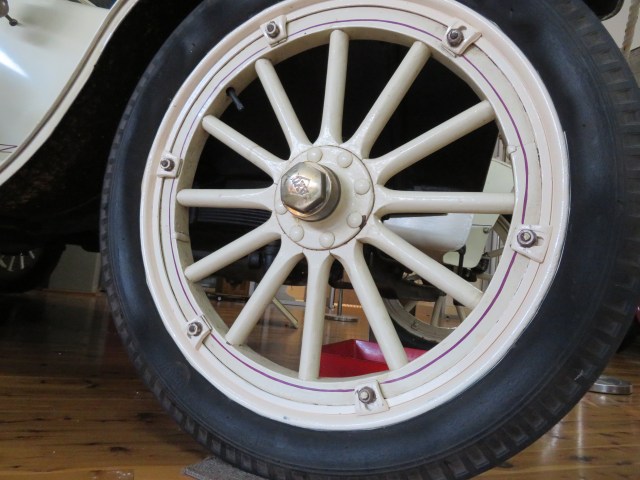
Not entirely wood, but still weird. But I suppose when the car’s top speed was 30-40km/h, the wheels didn’t need to be as strong.
1967 Fiat New 500:
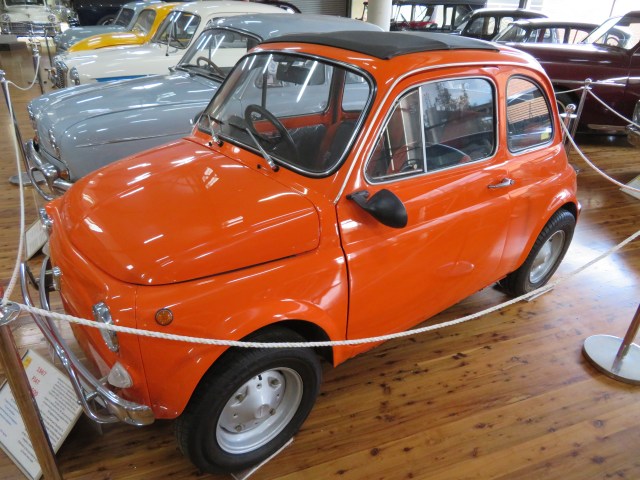
Pretty tiny, as you can see – there was a reason this was considered one of the first city cars. This one in particular has an interesting story. It was started in Australia by Lang and Bev Kidby, then shipped to Europe to drive through Russia to Italy. From Belgium, it was transported to America, where it was driven from New York to Alaska before returning to Australia, making 32 000 kilometres on the roads in 99 days. It’s believed to be the smallest car to complete a circumnavigation of the world.
1875 Singer Ordinary High Wheeler:
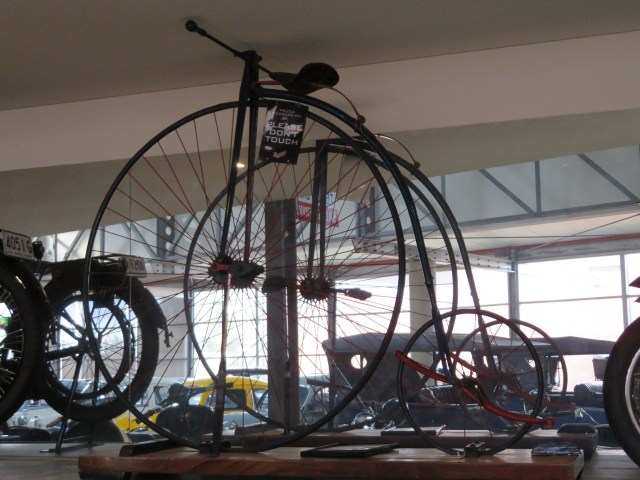
Yeah, I have no idea why it was called an ‘ordinary’ high wheeler – it doesn’t look anything like ordinary to me. It has a rear wheel brake operated by twisting the handle – the cable connected to the mechanism over the rear wheel would pull one side up, forcing the other side down against the wheel, thus slowing it down.
And they don’t have two of them, just a very shiny mirror behind it.
1917 Buick:
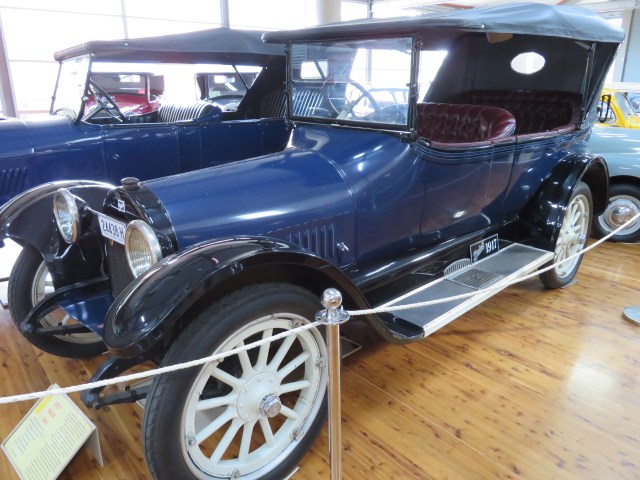
These were mainly bought up by the army, so not a lot have survived. This is also a relic from the start of the Australian Motor Vehicle industry, back when there was a high tax on importing completed cars so most companies imported chassis and produced motor bodies.
A look inside:
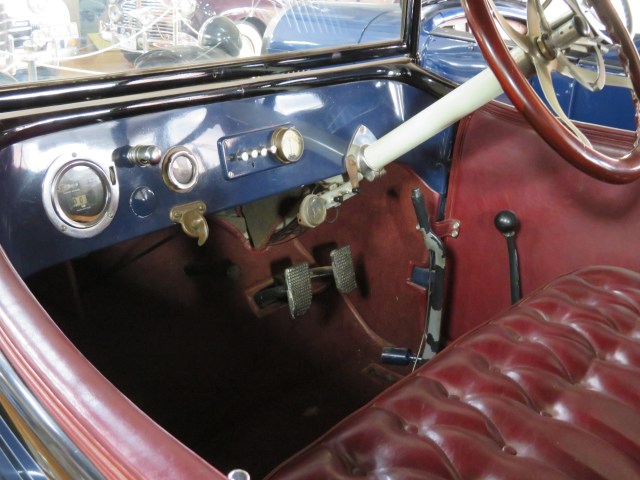
That tall parking brake and gearstick look kind of hilarious, don’t they?
1919 Oldsmobile:
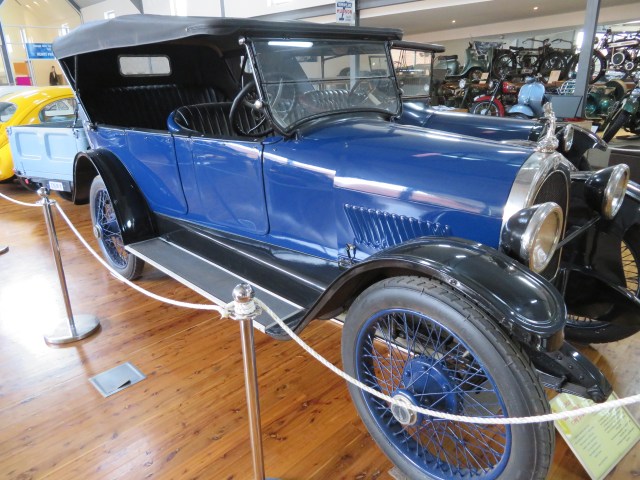
The ‘Oldsmobile’ name has become very fitting, hasn’t it? This is believed to be the only Oldsmobile in Australia – I guess they have to say ‘believed to be’, in case someone digs one out of their great-grandparents’ garage or something. It looks pretty similar to the Buick, but this one was slightly longer.
1921 Sunbeam:
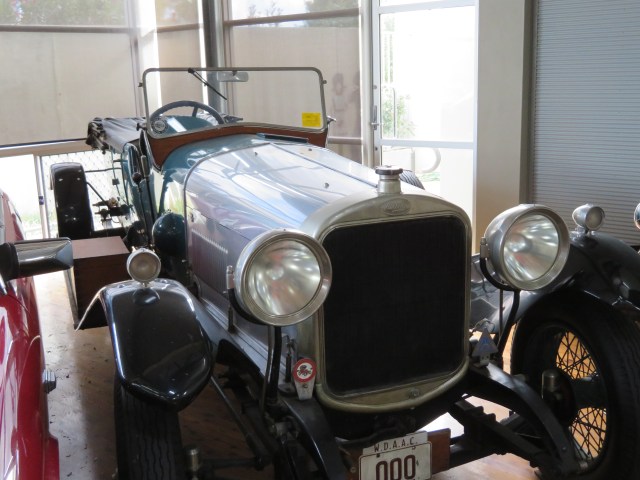
These guys became famous in 1912 when the 3L Sunbeams took 1st, 2nd and 3rd place in Coupe de l’Auto. They raced very well, and a lot of features we have in cars today were first tested by Sunbeam on race tracks.
1942 Willys MB Jeep:
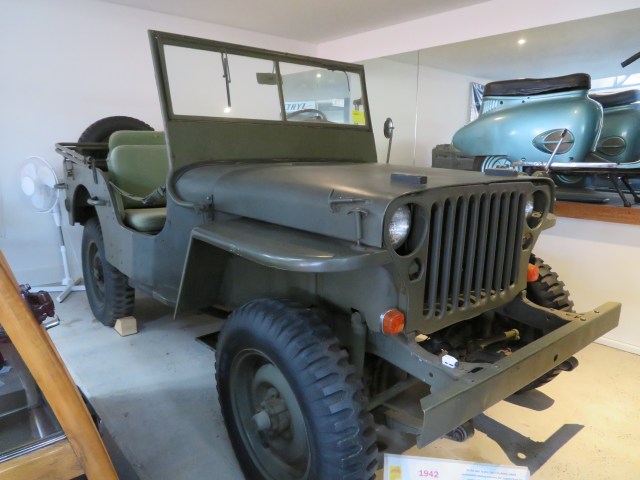
There’s a reason this seems familiar – these were the army vehicles for the era, so if you’ve seen a WWII movie, you’ve probably seen these jeeps.
Then I headed off back to Turtle Shell, stopping for a bit of shopping along the way – I had to pick up some more food, and a new cold water container for the fridge. You see, I have a very tiny fridge that won’t fit any water jug, not even the 1L ones – they’re either too wide or too tall. But you know what does fit? Plastic 1.25L soft drink bottles. But, given that they’re cheap, crappy plastic, I think it’s probably a bad idea to keep them around indefinitely, so every three months or so, I buy a new bottle of lemonade to replace the old one. Of course, I have to drink the lemonade first – it’s a terrible burden, but somehow I manage to carry on…
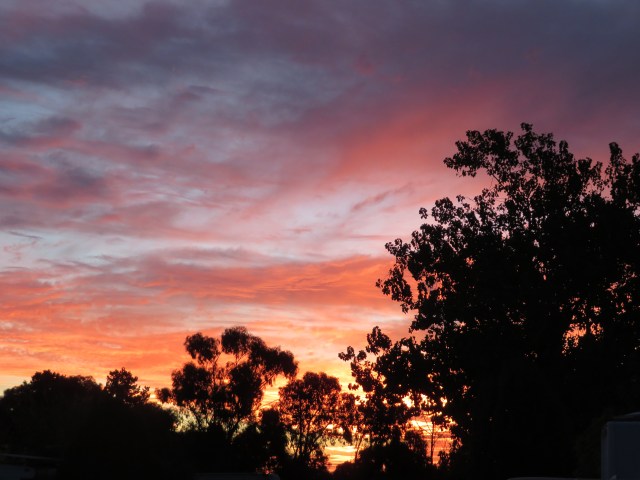
I got back to Turtle Shell just as it was getting dark, and took a picture of the sunset:
 Jenny's Adventures
Fascinating stuff! Who would have thunk an Elvis Museum would be in ruralish Australia!
LikeLike
It was definitely surprising!
LikeLike
Love “if we aren’t going to crack it open and make it tell us its secrets.” Go Science!
And I appreciate the burden you suffer, having to drink lemonade because the poor fridge design.
LikeLike
Go Science is right! And yes, I suffer, but somehow manage to endure it…
LikeLike