No, this isn’t an April Fools thing, I really went to see the spectacular sandstone caves in the Pilliga National Park.
It was hard to find – there were no obvious signposts off the highway. But as I’d had the foresight to check Google maps before I left, I knew the name of the road I was looking for. It was small and out-of-the-way, and I almost blew straight past it, but I found it! I followed a dirt trail (in 4WD mode), parked in a small circle of flattened sand, and followed this trail up into the hills:
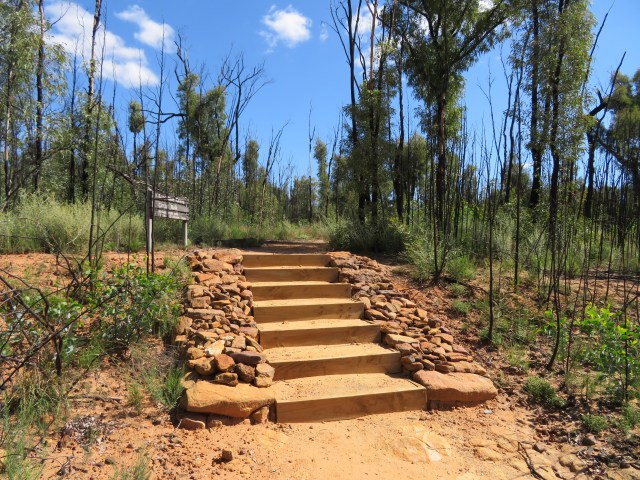
There had obviously been a fire through the area at some point, as a lot of the trees had blackened bark and were sprouting leaves all over themselves, the way they do after a trauma. The undergrowth was pretty thin as well – grass and some small flowers, but no bushes.
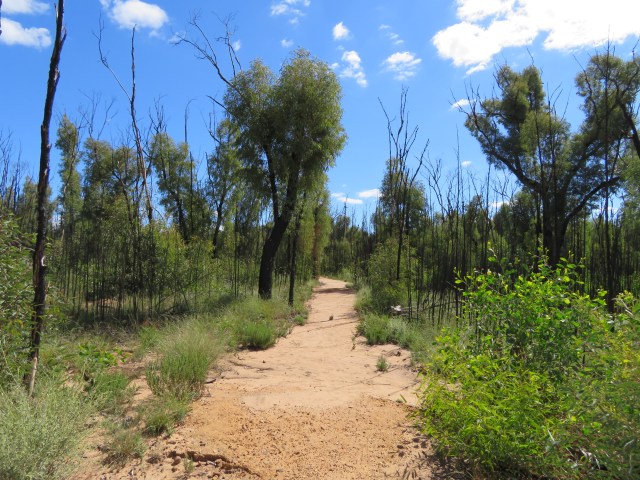
These purple flowers were everywhere:
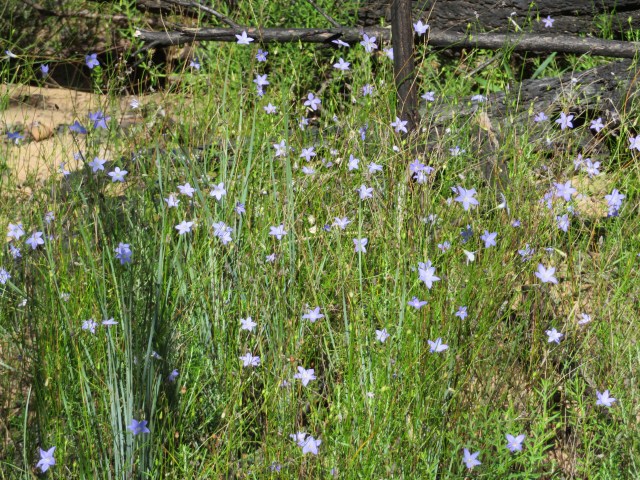
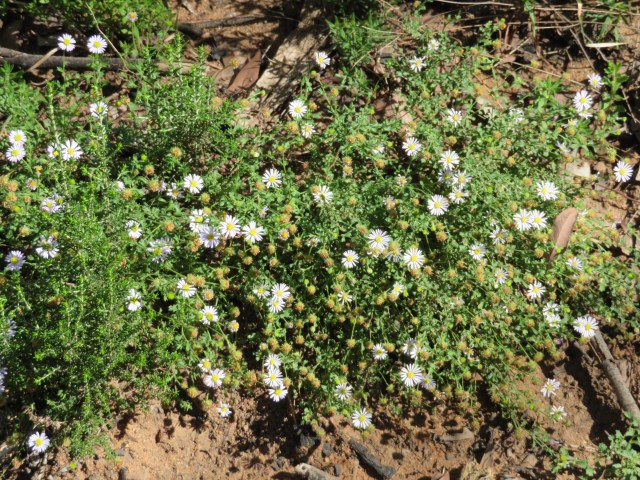
Though eventually they gave way to little white flowers:
There were lots of bees around as well, and I managed to get a video of one:
I laughed to myself for a bit at the way the bee’s weight causes the flower to drop like that. But it doesn’t seem to bother her; she keeps on going.
I had to cross over a few anthills, and spotted a little drama playing out:
I have no idea what’s actually stuck in there, but I like how one of them is trying desperately to get it out while all the others just scurry around her.
I also spotted a White’s Skink:
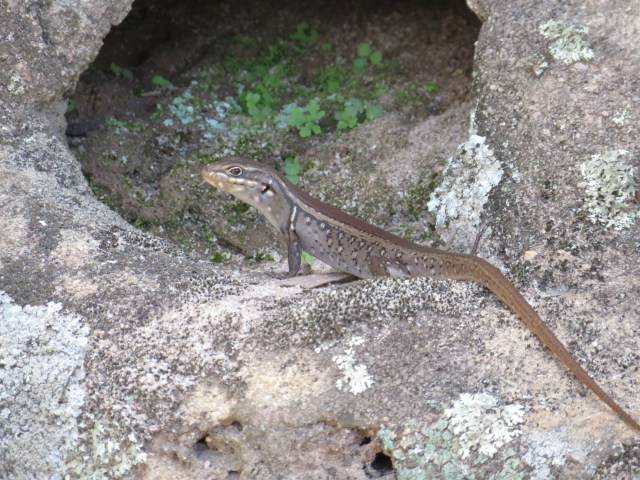
By now I was wandering through some scattered boulders – just the usual grey, lichen-spotted rocks, and I kind of figured they were granite. Until I saw this:
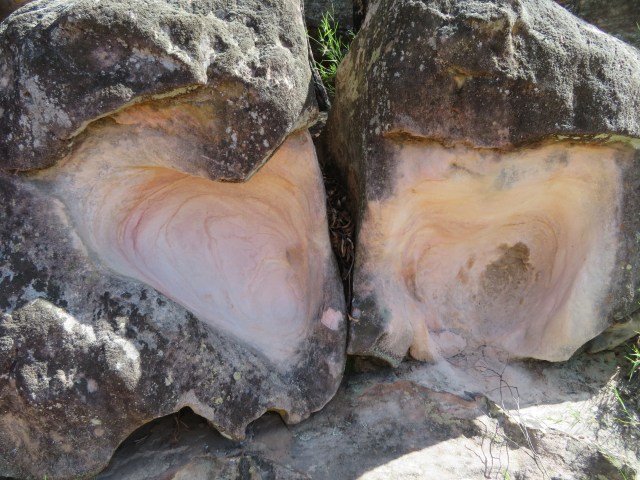
Sandstone caves, remember? But for some reason I thought there was just one big outcropping of sandstone, not that there would be chunks of it scattered everywhere – you don’t really think of sandstones boulders. Or at least, I didn’t. They kind of look like oyster shells, cracked open to see the opalescence inside.
Around the caves, the landscape was more like this:


Still with some blackened trees, but it seemed much more regenerated than at the entrance to the path. There’s more undergrowth, at least.
The sandstone cliff:
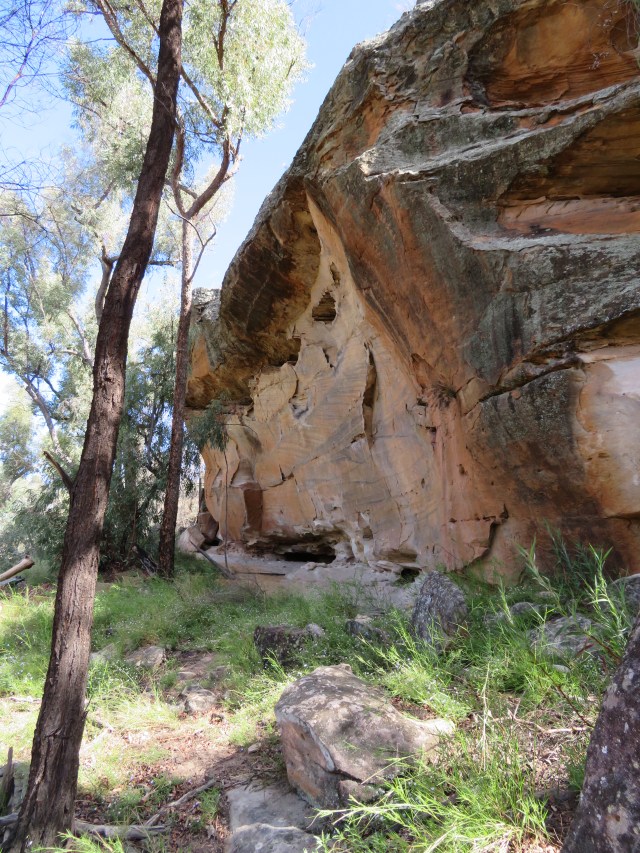
There’ll be a lot of pictures of these caves, mainly because they had such crazy formations and colours. It was the colours that really surprised me – you’ll see reds and blacks and pastel pinks and yellows and dark orange. A lot of the time I found myself thinking ‘that is fake, someone has put chalk all over the rock, caves are dark and grey and don’t look like a child’s finger-painting, who did this?’
But no, these are genuine caves, formed by moisture dissolving the salt and minerals in the rock, causing the particles to lose their binding ability. Wind and rain then erode the rock, causing the softer rock to go first, leaving the harder rock behind. These caves were a special place for the Gamilaroi people, and some relics still remain.
Now that you know all about the caves, we’ll start off easy, with a look at some of the tiny holes scattered throughout the rock:
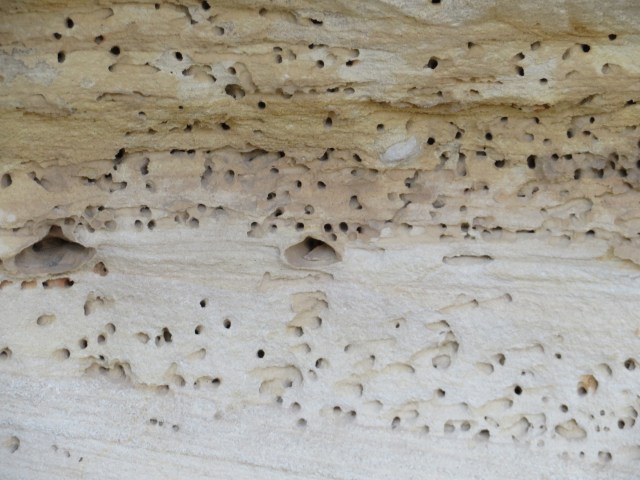
I’m not sure if these are made by insects, or it’s some weird thing moisture does to erode the stone. The latter seems unlikely, but the world is weird, so I’m not going to rule it out.
In some place, I could actually see the way the layers of sediment had stacked on top of each other:
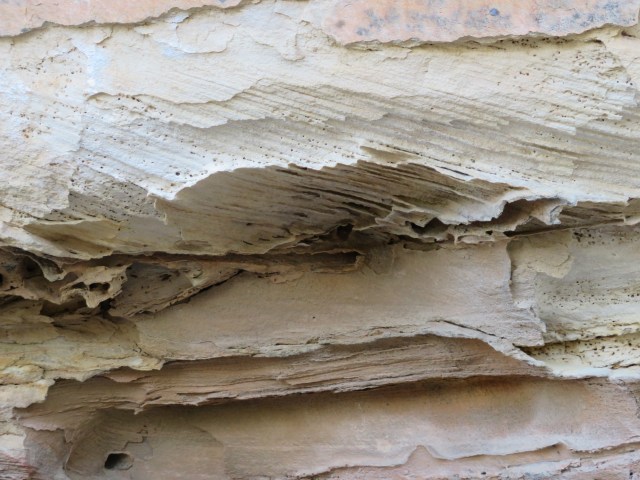
Geological movement means they’re no longer horizontal, but the layers look like stacked paper or cardboard.
Now, some of the crazy formations I promised:
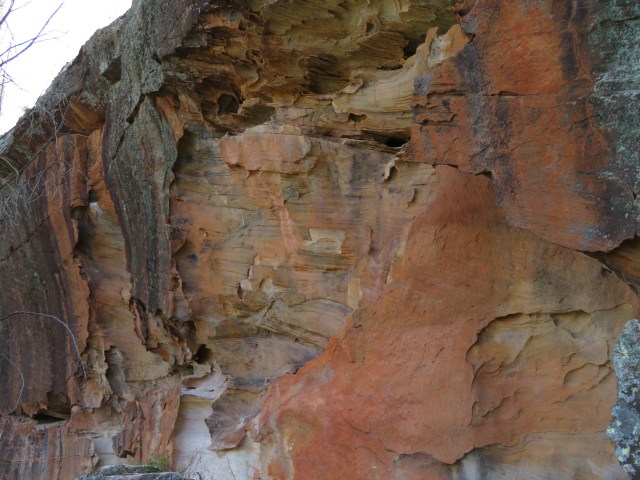
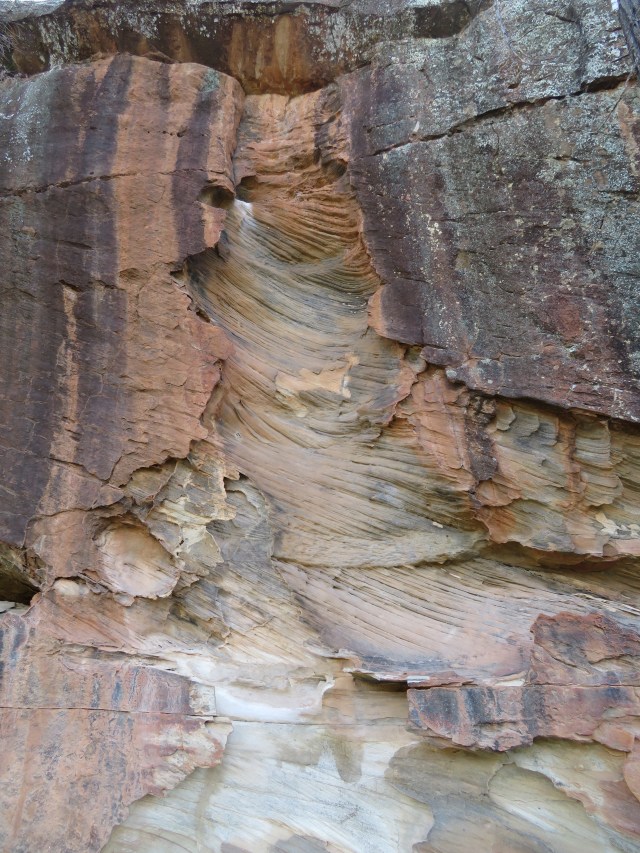
The last one also shows off the layers very nicely. It’s weird when you can see big scoops taken out of the rock, obviously where a lot of water ran down it.
I passed this tree that had obviously been killed by fire, but not in the usual way:
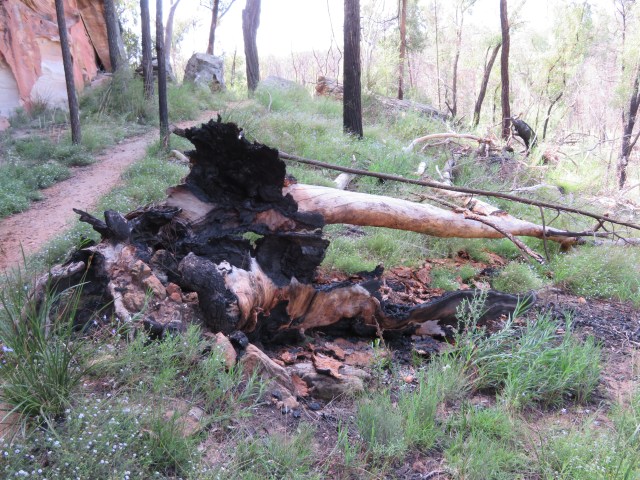
As you can see, it was actually starting to regenerate, but the base was so badly damaged it eventually just toppled over. When you think of trees being killed by fire, you think of them just burning to charcoal, not…that.
This cave was blocked off because it was extra special:
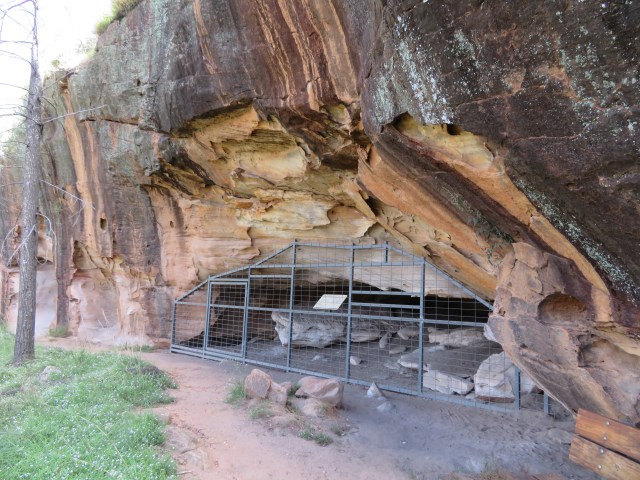
Those horizontal ‘windows’ in the bars are for bats – they roost seasonally in these caves. And this is why this cave is special:
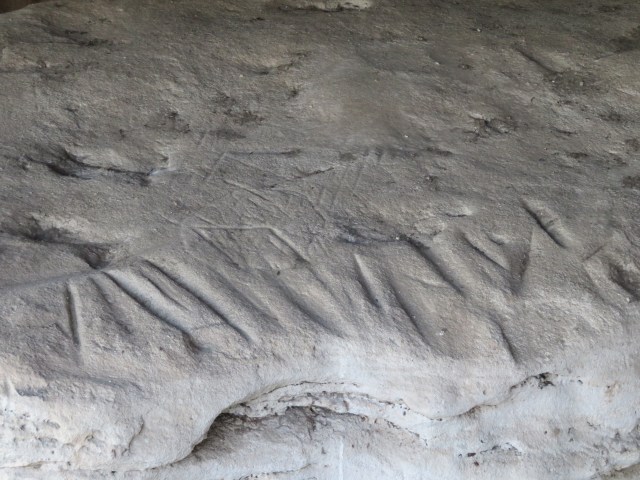
Those are grinding grooves, made by the Gamilaroi people sharpening stone axes against the sandstone. Over time, this wore grooves into the rock, and that’s what you’re looking at. Kind of freaky, huh?
More crazy sandstone – it almost looks like there are pillars holding it up:
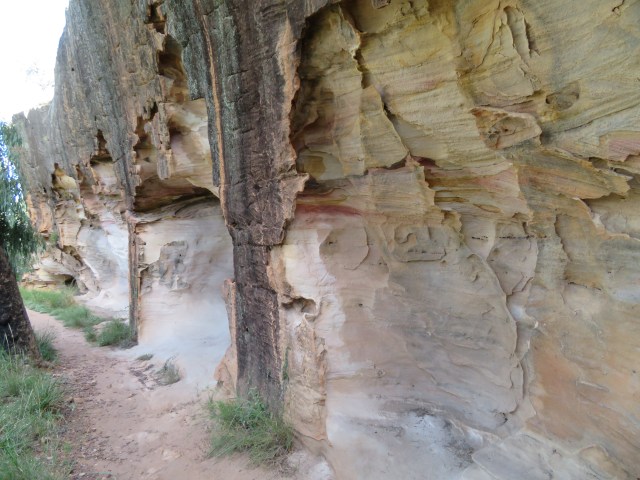
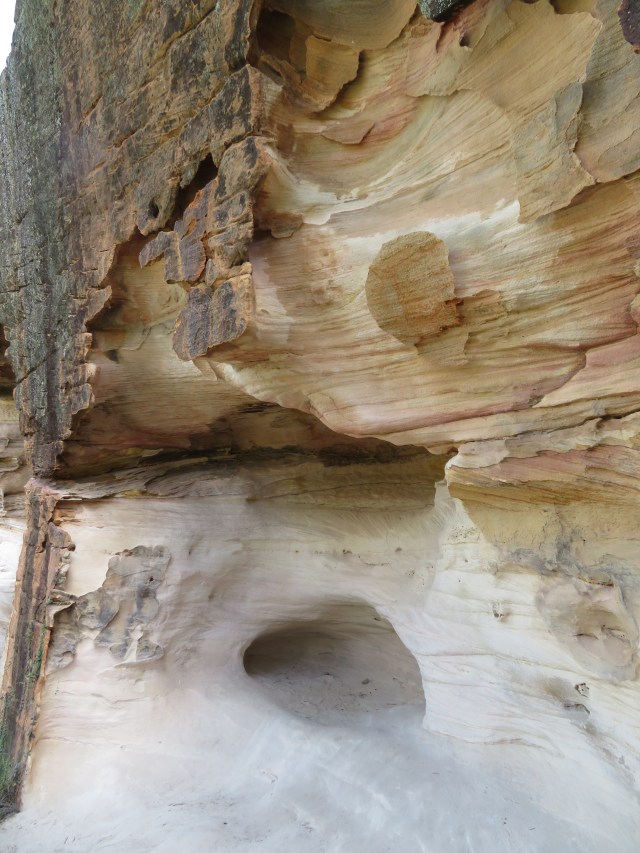
The one coming up next really shows the layers of the stone:
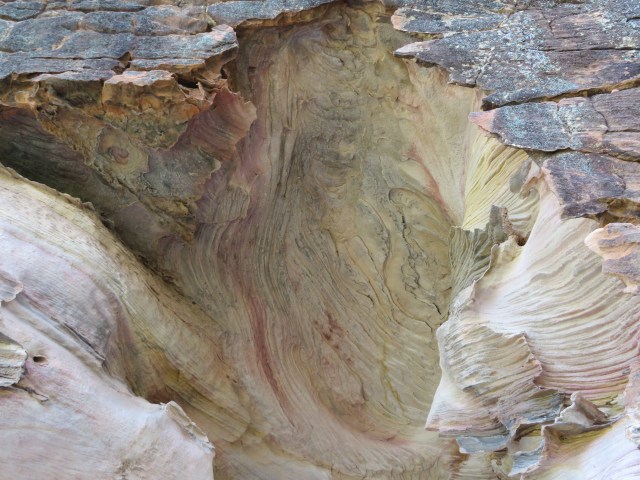
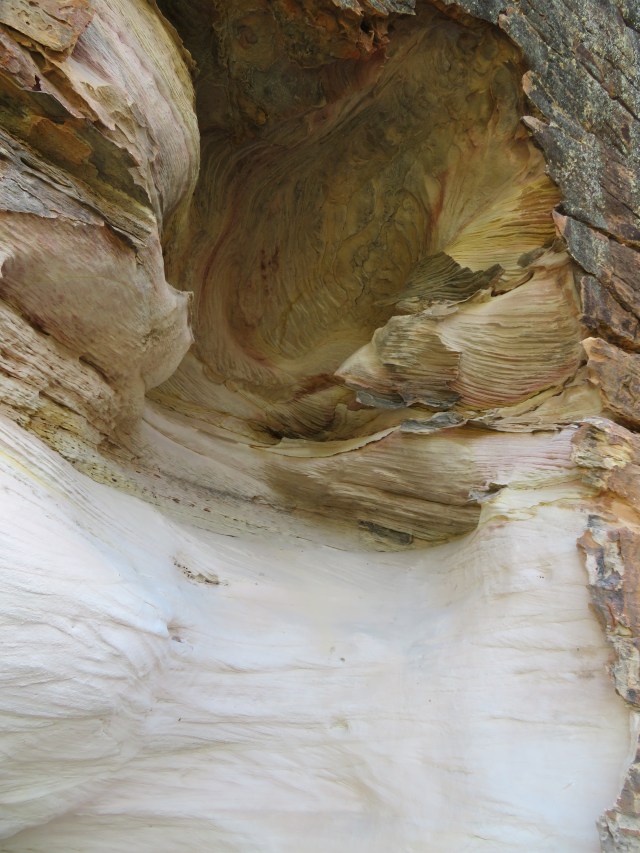
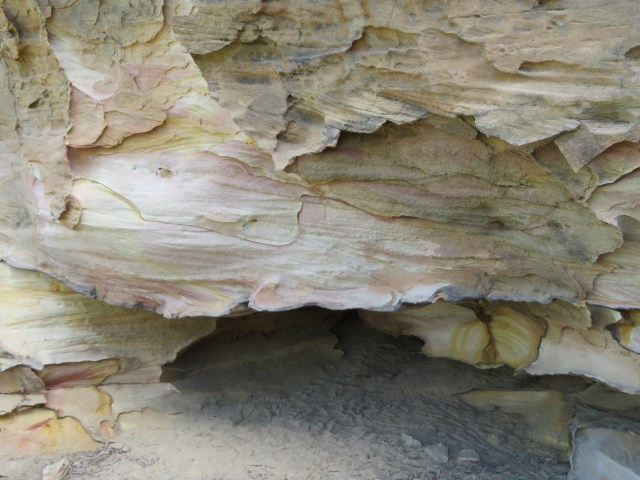
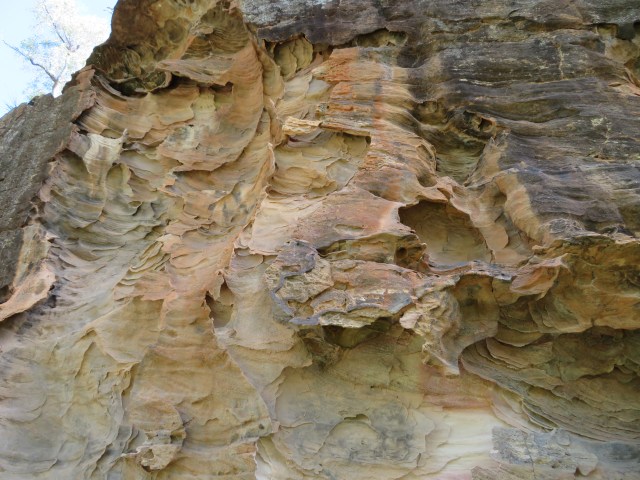
I thought this kind of looked like a pig’s head:
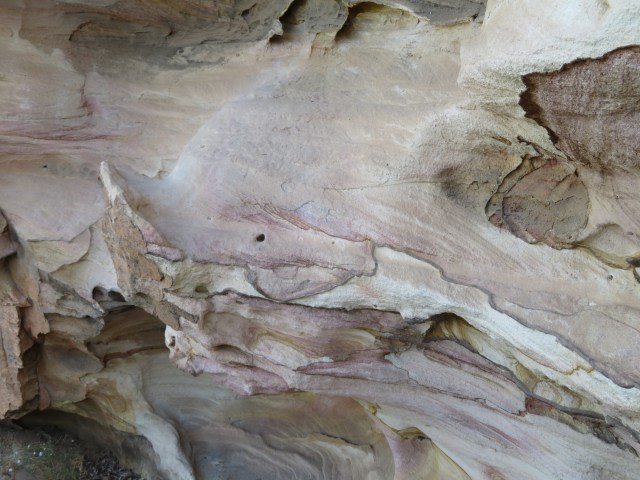
One of those ‘they coloured it with chalk moments’, because look at it:
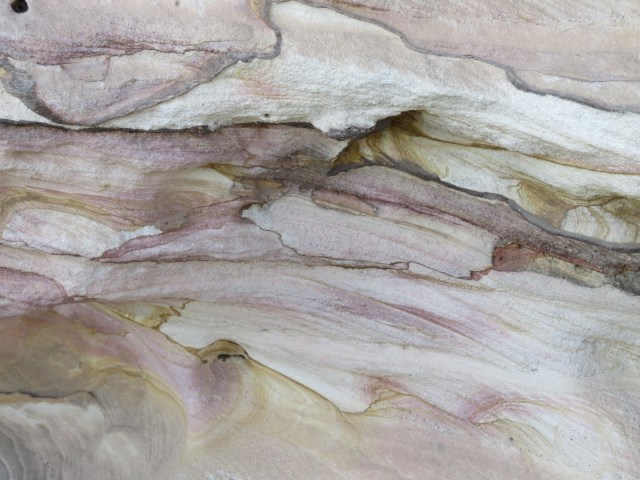
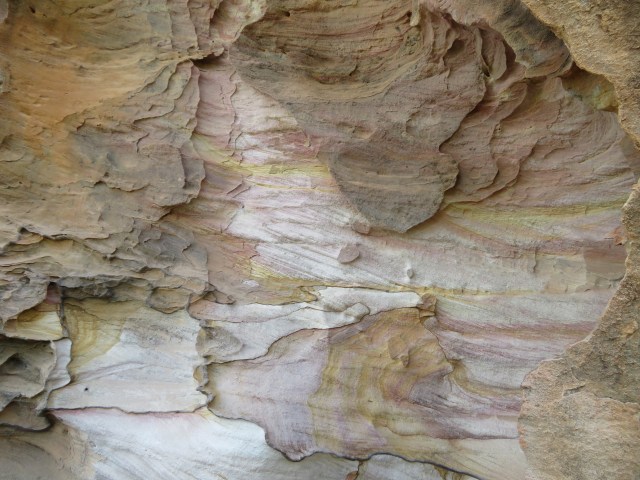
That isn’t rock, that’s a painting!
There were sections where a thin veneer of rock remained over a vertical hollow, like a chimney:
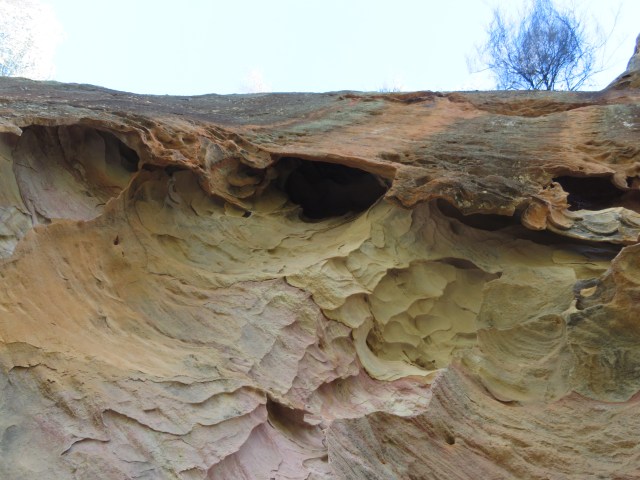
Beneath the cliff, where the stone is flaking away:
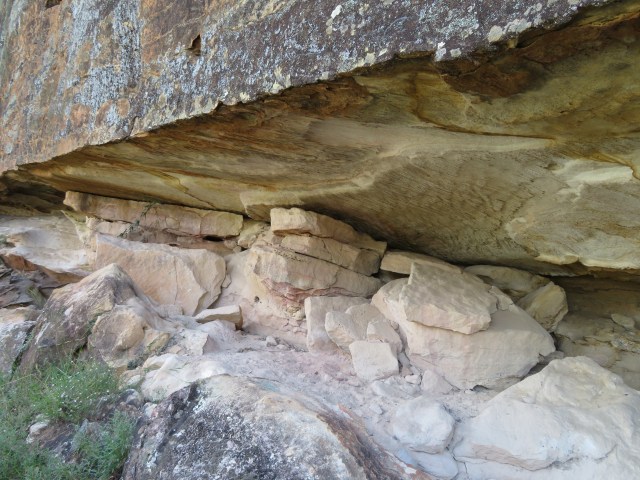
It looks unstable and dangerous, like it’s about to crack and fall over, but then you remember it probably took thousands of years to get to this point, and…I think it’s safe for a while yet.
A fissure way up high:
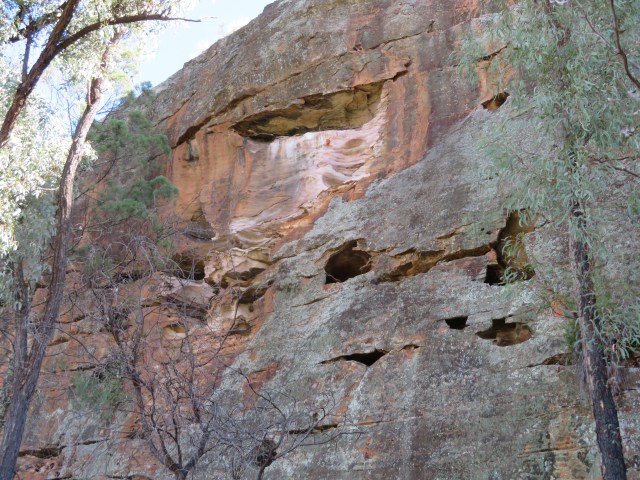
Close-up:
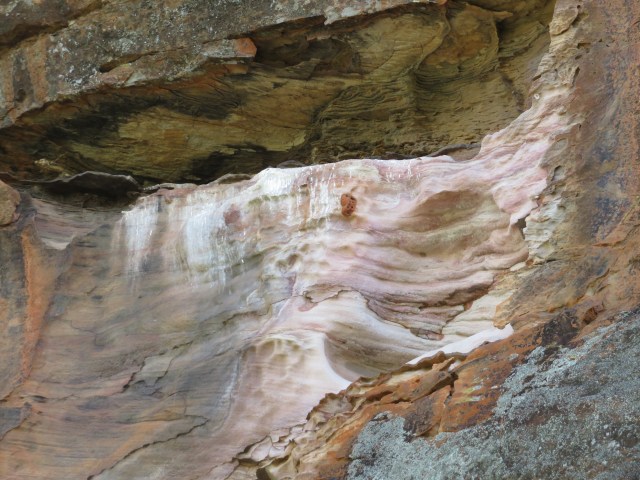
When I first saw it, I found myself thinking ‘birds must love that place’. I think those white splatters prove me right.
Sometimes you can really see where water has cut a path through the rock:
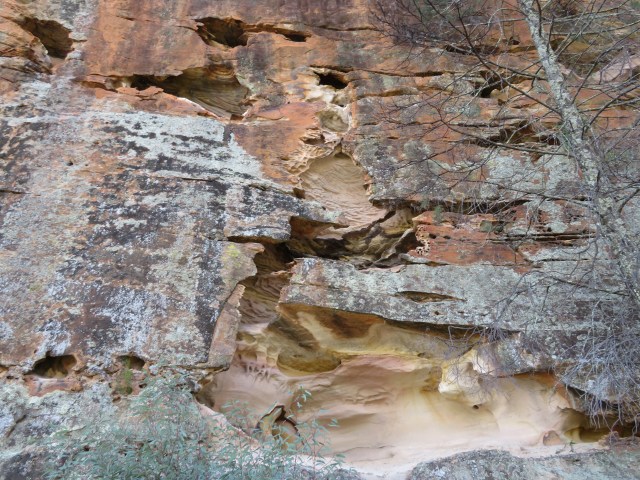
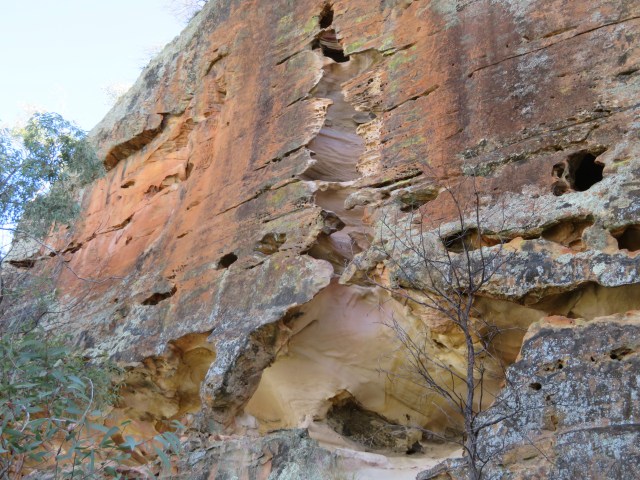
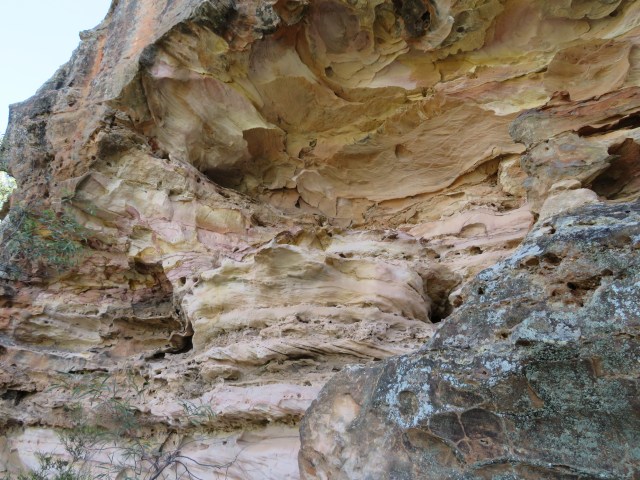
I came across some chunks of coloured sandstone, looking naked next to their grey brethren:
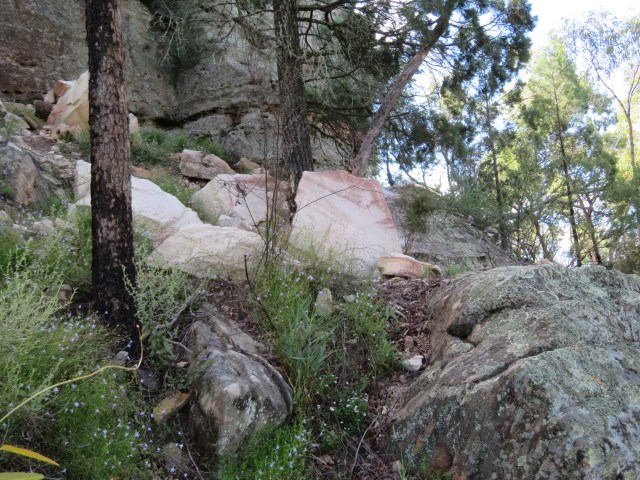
Put your clothes on!
As I climbed higher, there was also a nice lookout:
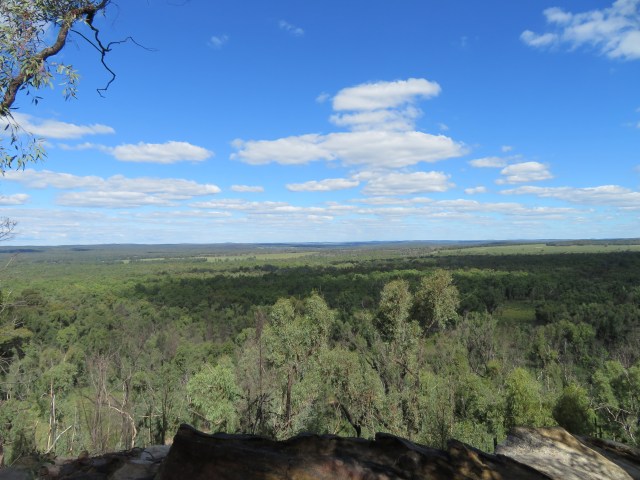
This was behind me at the lookout:
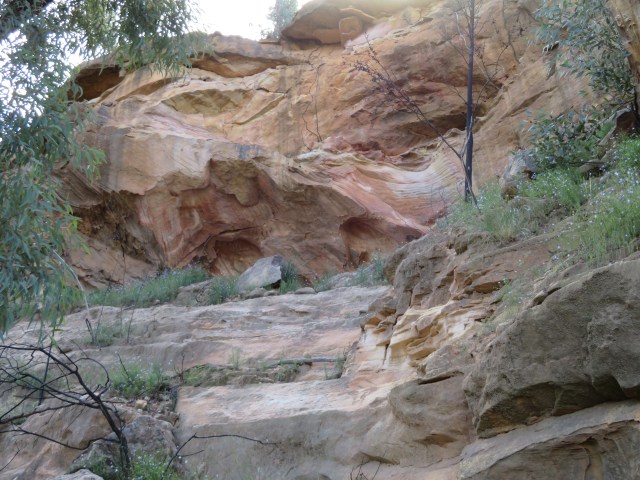
I spotted some birds around as well – nothing new, just some old favourites. This is a white-throated treecreeper:
And a grey fantail:
More caves:
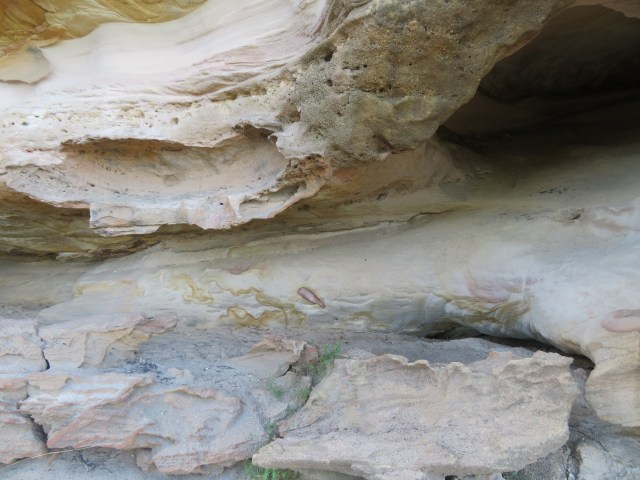
A close-up of those weird colours:
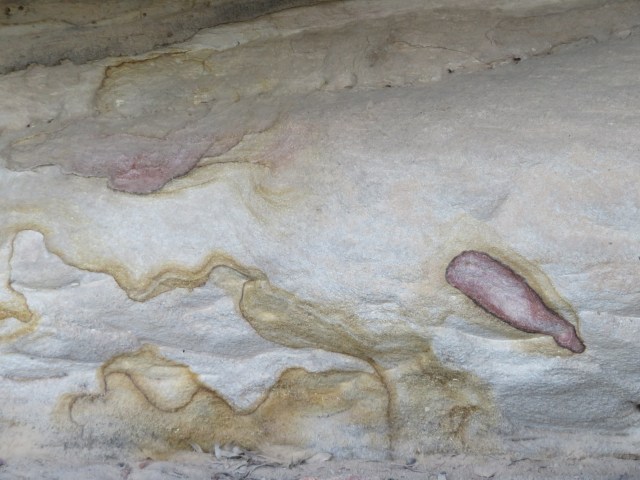
The ‘streak’ of red really puzzles me. Have the layers shifted so that erosion has exposed a red layer beneath the yellow and white? What’s going on there?
This one had streaks of ‘hard rock’ jutting through the soft sandstone:
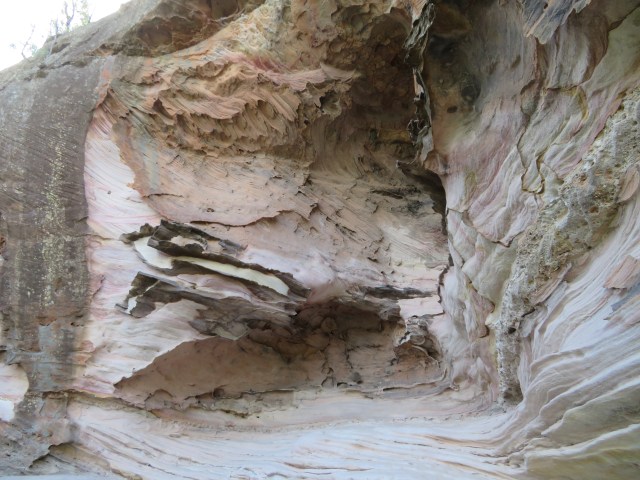
Have a closer look:
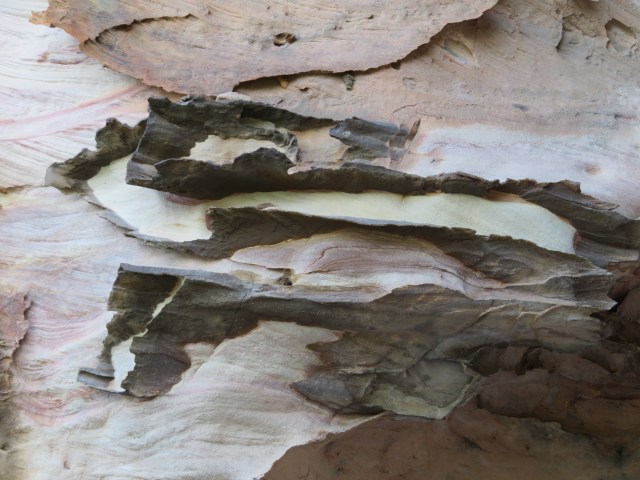
There were also a lot of little ground-level crevices that animals probably love:
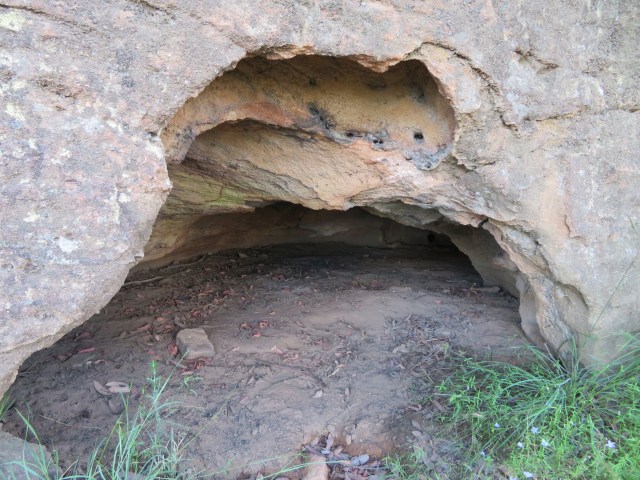
Another shell-like scalloped pattern:
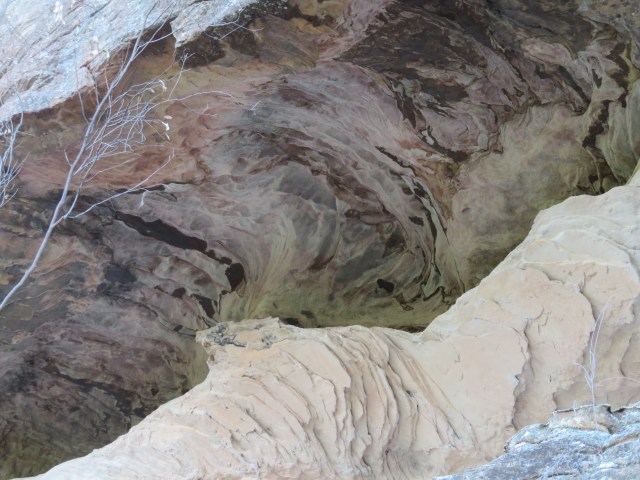
Sometimes erosion is just weird – look at how this spar of rock was retained, even after a nice little hole opened up underneath and behind it:
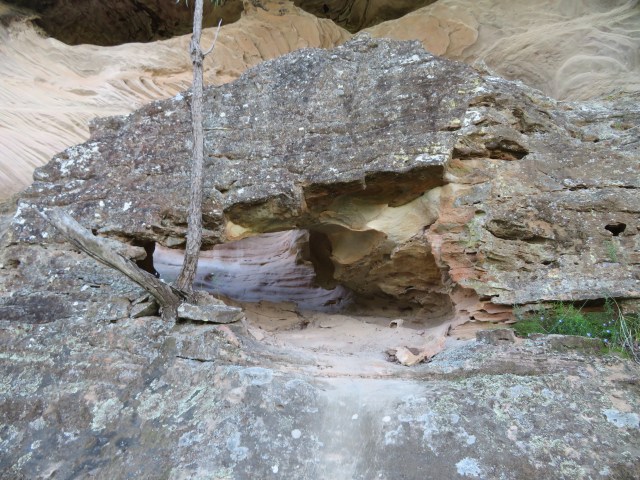
These ones, too:
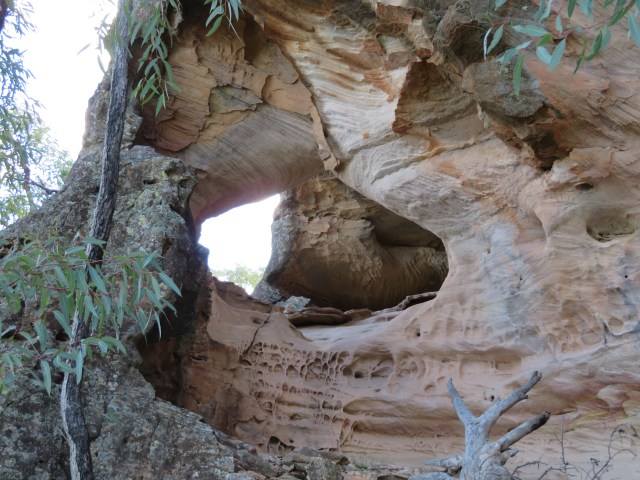
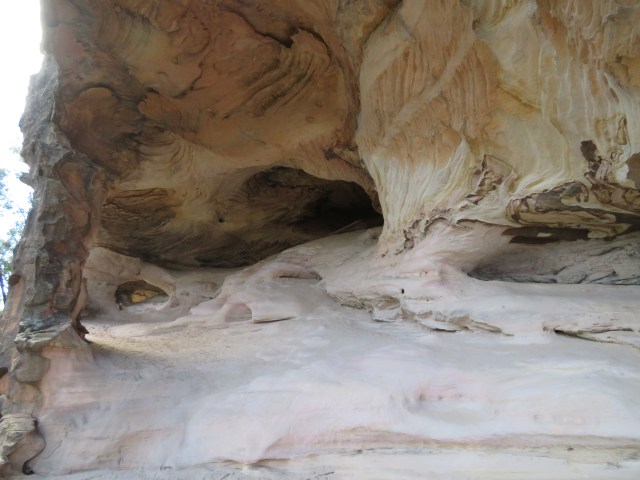
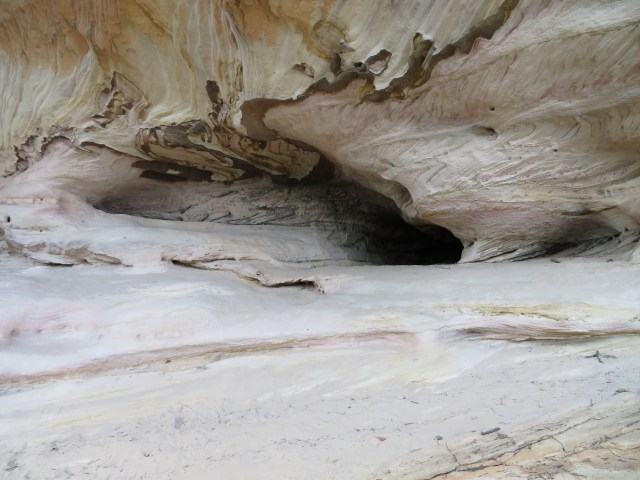
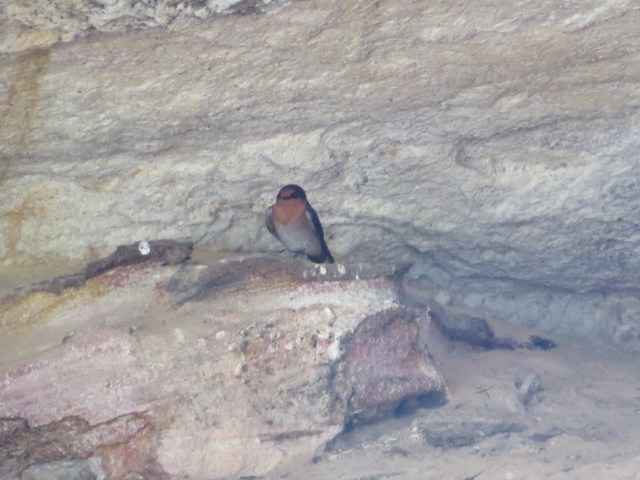
I found some welcome swallows in this cave – I think they might nest in it during the breeding season:
Parts of the cliff look like Swiss cheese:
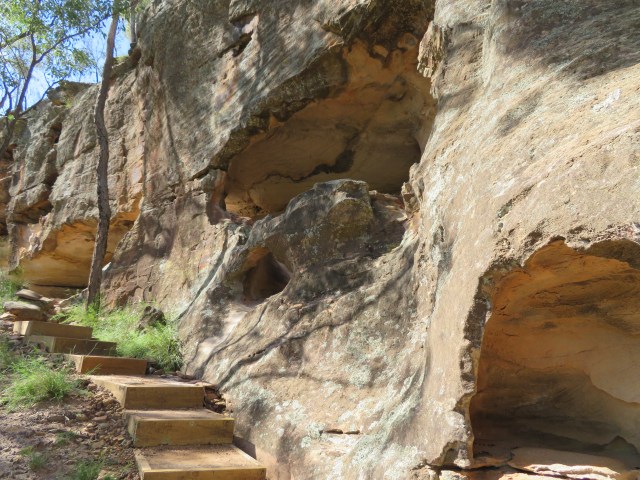
Just riddled with holes and crevices. This one had a low entrance, but I could see it was much taller inside:
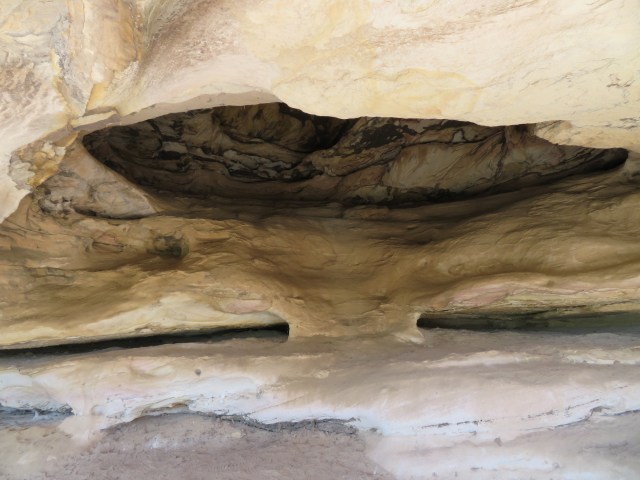
I didn’t actually step in, though – you’re not supposed to do that. The sandstone is pretty fragile (as rocks go), and can’t take a whole bunch of people wandering in and out all the time. So, I just crouched and used the zoom on my camera to check out the roof:
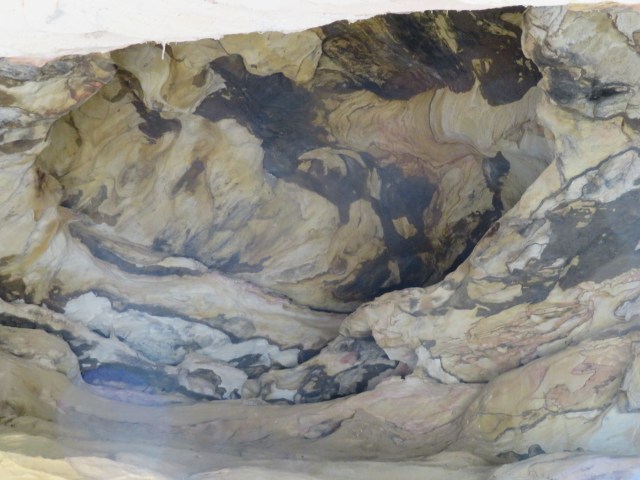
It looks like some kind of pudding. And it wasn’t the only one – there was another pudding-cave:
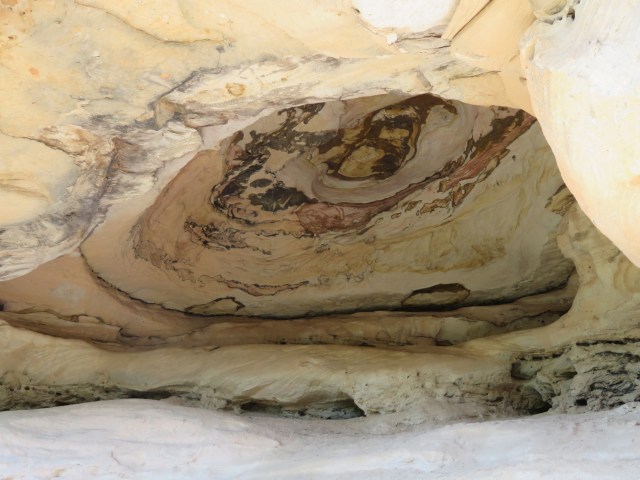
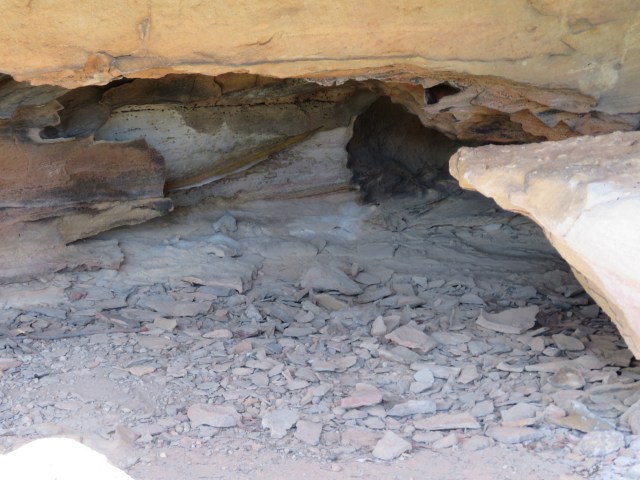
Little shards of sandstone that flaked off from the overhang above:
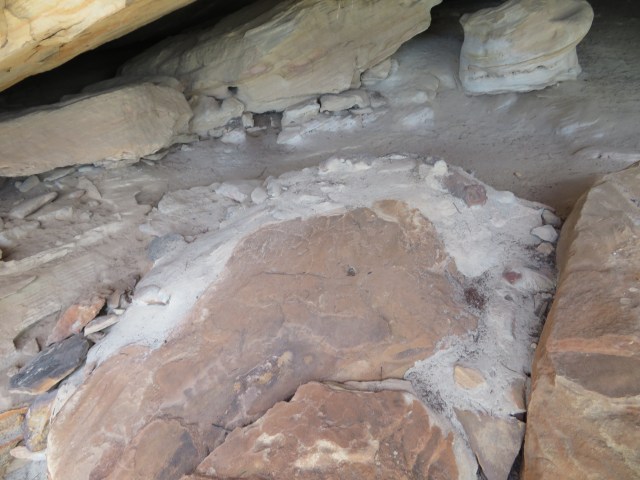
This rock is also quite special:
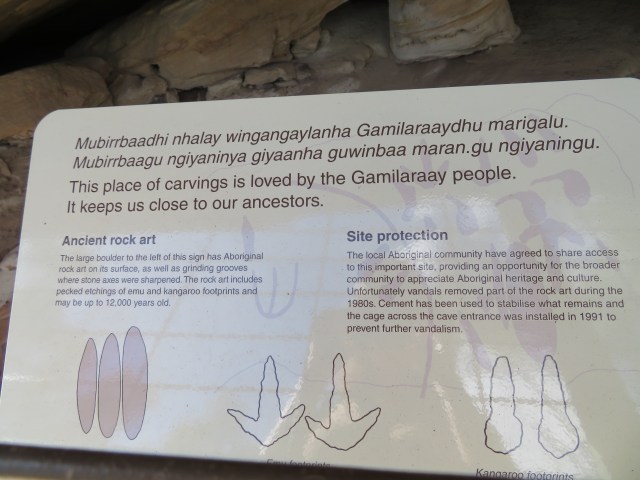
Why? Ancient rock art! I’ll give you this sign so you know what you’re looking for:
Now, check the close-up:
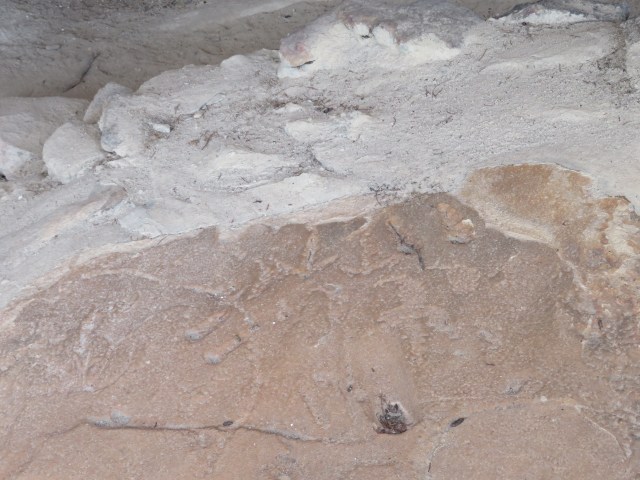
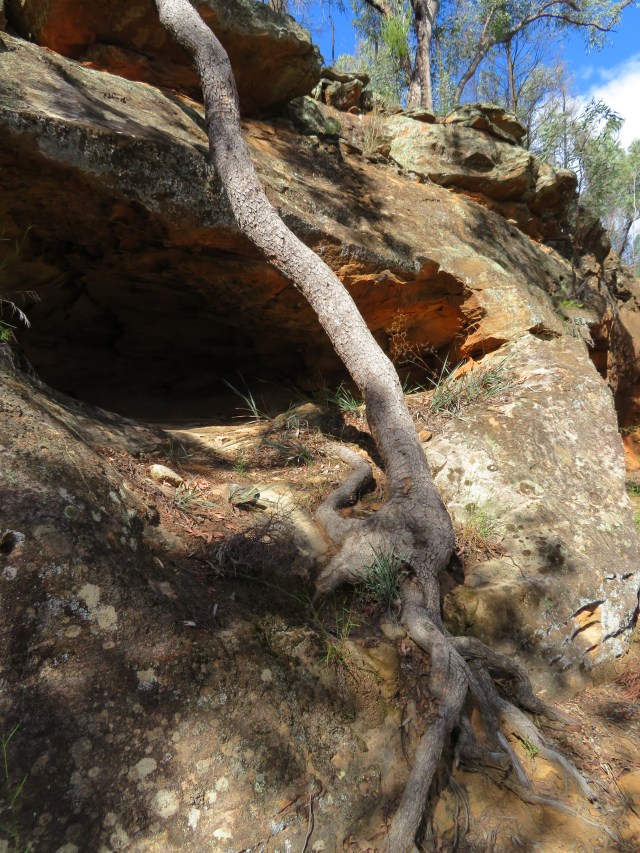
Pretty cool, huh? I was about at the end of the cave walk by now, but there are two last things to show you guys. First, this tree, casually growing out of the rock:
And this:
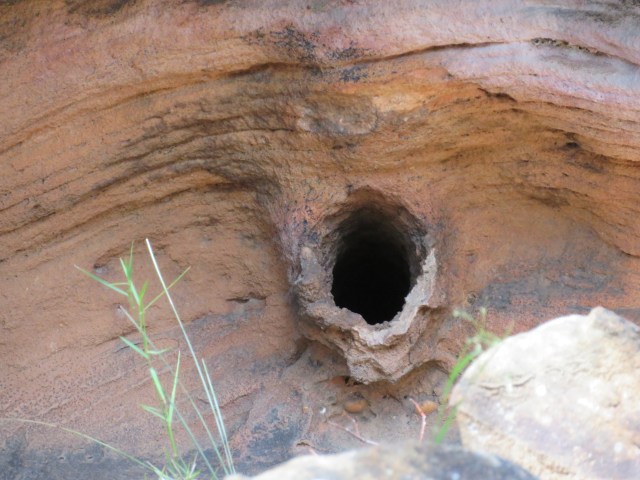
It was probably made by an animal or something, but it looks so much like a drainpipe I can’t think of it as anything else.
The track circled back around to the carpark, and then it was back to Turtle Shell! Cruising along the highway, I had to come to almost a complete stop to let an echidna walk across the road. Fortunately, I spotted it from quite a distance away and there was no one behind me, so it wasn’t really a problem. You never want to run over an echidna – even dead, their spines will take out any tyre that touches them.


Just gorgeous formations and colours!
LikeLike
Pretty astounding
LikeLike
Wonderful.
LikeLike
I’m still amazed they were so colourful!
LikeLike
Marvellous pics and commentary. Thankyou.
LikeLike