I split the zoo into two parts, because I went there for two consecutive days, and because there’s so much material I think one post would struggle with it.
Prepare to be inundated with animals!
I arrived there early (just before the zoo opened, in fact). I had packed a backpack with the essentials:
Hat
Sunscreen (to reapply as needed)
Map (so I won’t get lost – Dubbo zoo is a 6km circuit, this was a genuine worry)
Schedule of keeper talks
Phone (to check time)
Sandwich (for lunch)
Tiny Teddies (in case a quick sugar-hit is needed)
Cold water bottle (for refreshment)
Frozen water bottle (so I’ll still have cool water in the afternoon)
Fully charged camera with empty memory
The keeper talks are all included in the price of admission – you just rock up and listen! They’re scheduled in a way that you can mostly just follow them around the park, but there were two that I wouldn’t be able to get to, the Spider Monkey and Lemur Feed and the Asian Forest Talk and Feed. They were too far away from the ones just before them – the Lion Talk and the African Wild Dog Feed, respectively – for me to able to make it, so I’ll do them tomorrow.
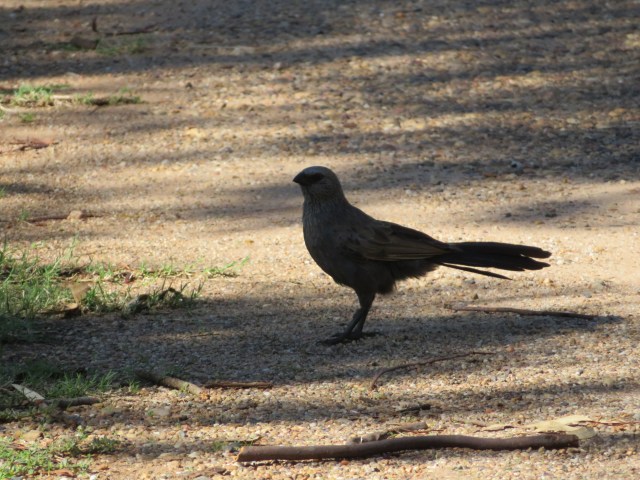
It wasn’t all exotic animals, either – I spotted some birds around the zoo, probably happily living on people’s scraps.
Grey-crowned babbler:
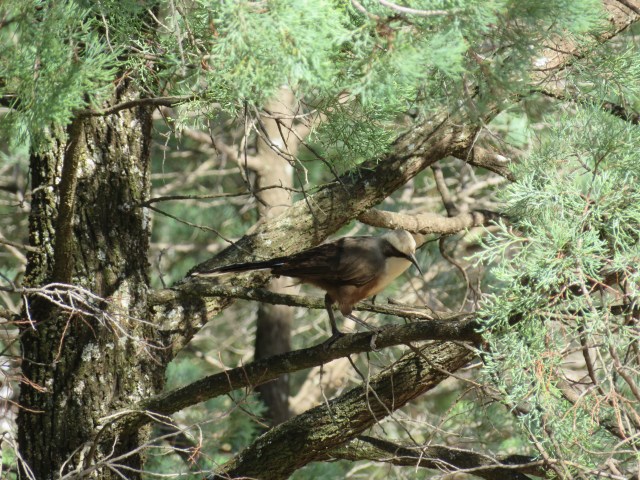
You can hear them squawking in the background:
Apostlebird:
A crested pigeon, doing a display:
This seems to be a juvenile grebe of some kind:
Enough of that. Time for what I came to zoo (and you guys came to the blog) to see.
First up, the black rhinoceros. This talk was first, but as I said, I got there early, so I went to the secondary enclosure to see a baby one – this is Dafari and his Mum, Bakita:
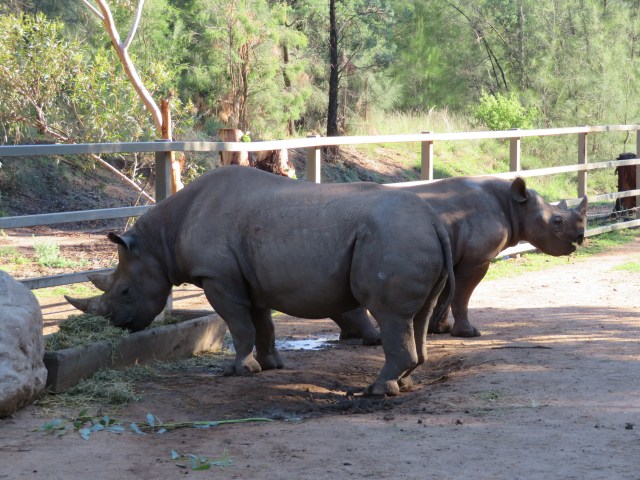
Well, I say ‘baby’ – he’s about 18 months old now, and weighs 700kg. The keeper told me he’s still nursing, but he can’t actually fit under his Mum anymore, so he sort of wiggles underneath her on his side.
Then it was time for the talk, so I hurried up to the main enclosure – this was it:
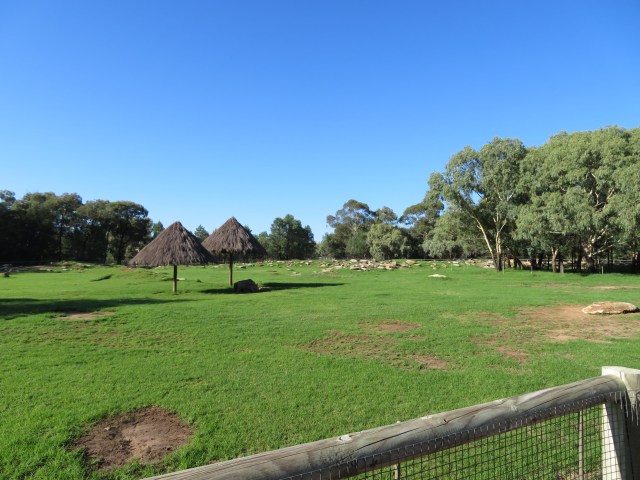
I took a picture of a lot of the enclosures, because they were pretty good. Some zoos make you feel sorry for the animals, but at Dubbo I think they’ve got a pretty sweet deal. I mean, this was the rhino in the main enclosure:
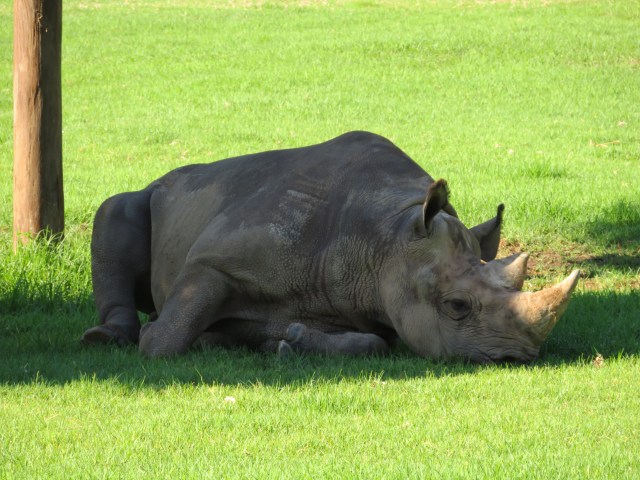
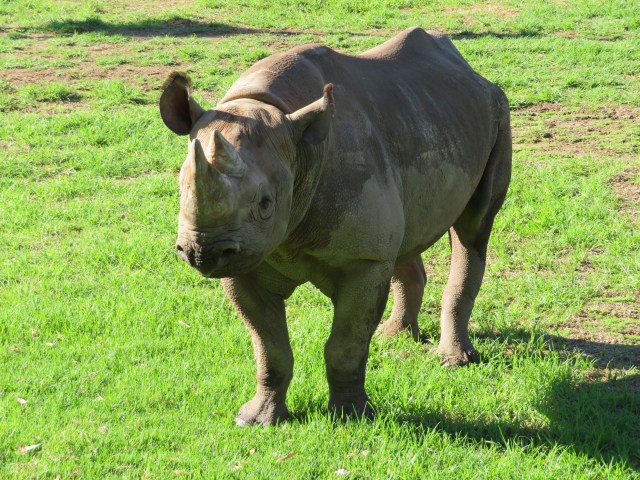
Look at him, he knows he’s got it made. This is Mapenzi (I’m just guessing with spelling here, given that I never saw it written down), and he’s all by himself because black rhinos are solitary. And not just in the wild, where they might have to worry about competing for food; even in captivity they’re not very interested in other black rhinos.
Mapenzi, once he stood up:
A profile shot:
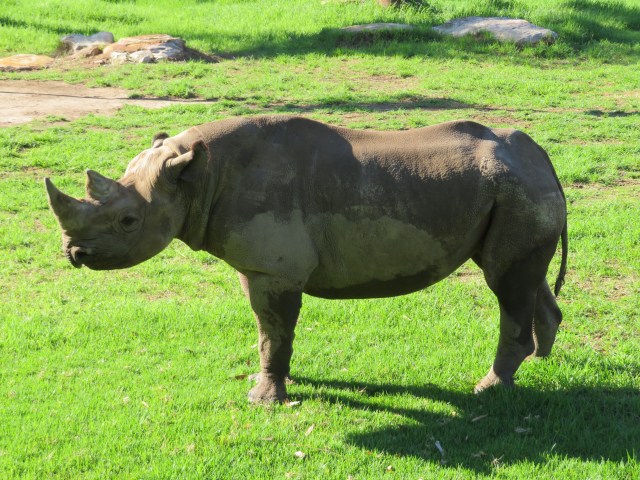
You may have noticed that black rhinos aren’t very black, but they actually get their name from the white rhino (that isn’t white). You see, the black rhino has a narrow, pointy upper lip, while white rhinos have a much wider, shovel-like lip, so when the European explorers asked about the white rhino, people were actually called it the ‘wide rhino’, which in Afrikaans is ‘weit’. Then when they saw the black rhino, it was very different from the white rhino, so it was called ‘black’. Basically, they got their name through a translation error.
These guys are jungle browsers, with their necks set higher on their shoulders than other rhinos so they can nibble from low branches. That leads to another difference between the black and white rhinos – black rhino mothers train their newborn babies to stay behind them at all times, so if they stumble across a threat as they move through the jungle, the mother faces it first. White rhino mothers train their babies to stay in front of them – no, not as a shield, but because they live on the savannah. This means the white rhino has a much wider field of view, so with the baby in front of them, the mother always knows where her baby is and can move to protect it if a threat appears.
Another weird fact – their horns actually grow as a cylinder, but the rhinos scrape them against rocks to sharpen them to points. Apparently, they usually do it after it rains, perhaps because moisture softens the horn.
I also took some videos – they were taken during the talk, so that voice you hear belongs to the keeper. The first one is just of Mapenzi walking over:
I also took one of him eating casuarina – lots of the browsing animals have this in their diet – because you can really see how flexible that pointy lip is:
Then it was time for the meerkats! This is their enclosure (well, part of it, anyway):
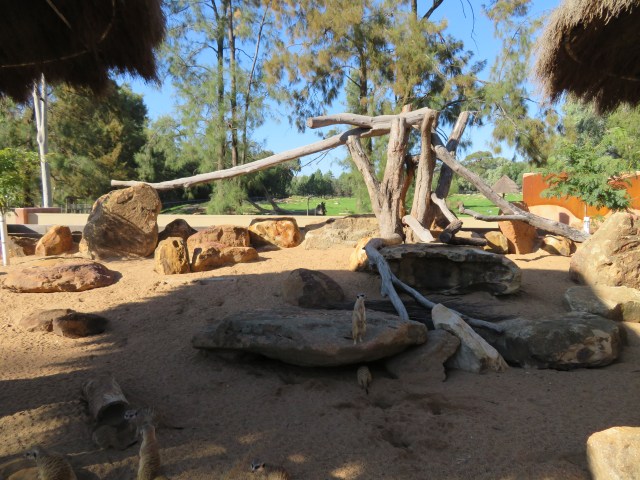
The group:
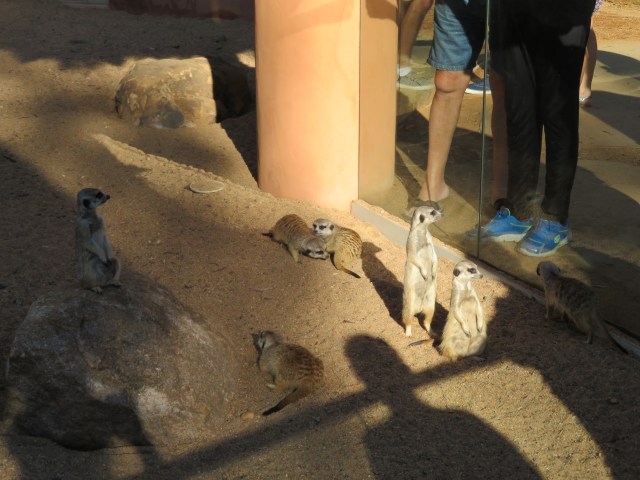
I also took some video:
In the wild, meerkats live in family groups, with a dominant female bossing everyone else around. They’re part of the mongoose family, and they sleep in large networks of burrows during the night. During the day, when they’re outside, one or more members of the group will stand sentry:
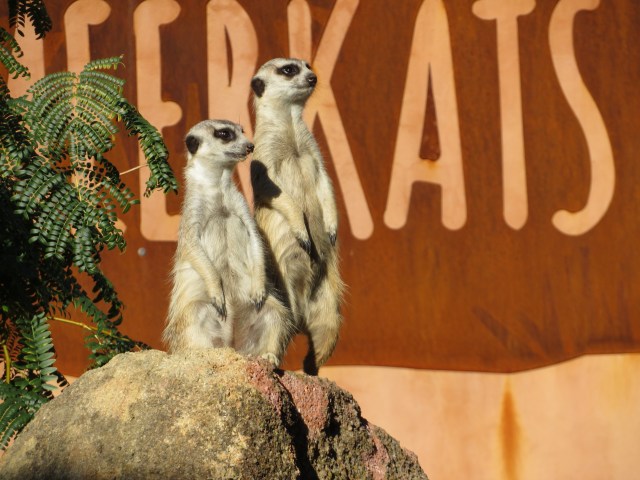
Basically, they’ll choose something elevated – a rock or log or whatever – and stand up on their hind legs, looking around for danger. The dark marks around their eyes act like sunglasses, meaning they can look directly into the sun and see a predatory bird coming. The keeper said that eagles and hawks often circle the meerkat enclosure, looking for a snack, but they’ve never lost one because the meerkats are so alert.
They also sit upright to bask in the sun:
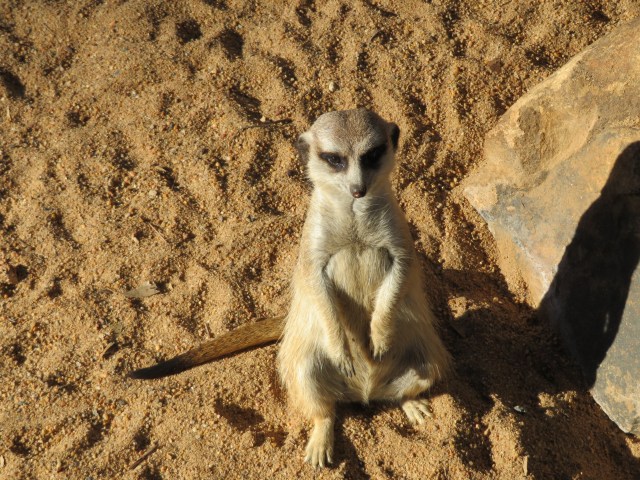
I’m not sure if this one is being a sentry or basking (maybe both?):
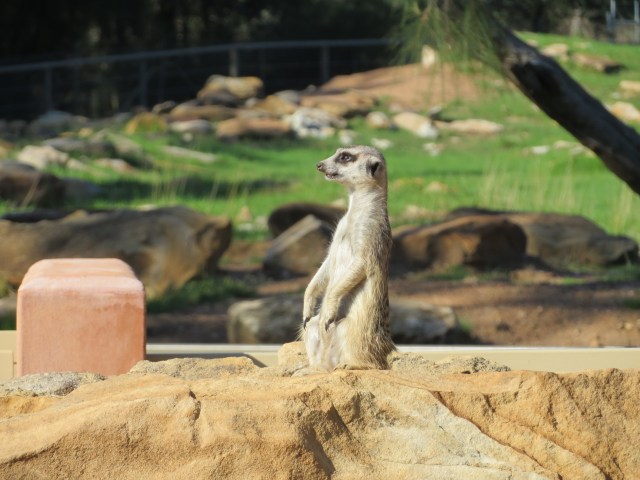
This gang consists of 9 siblings, which is a pretty modest as far as meerkats go – there are groups of up to 50 in the wild. Meerkats won’t mate with their relatives, which means this group is non-breeding. One sister has been removed and introduced to an unrelated male to continue their genetic line, but meerkats aren’t endangered so there’s no desperate need to breed them in captivity.
I arrived a little before the talk, when a student there for work experience was smoothing the sand in their enclosure, and the meerkats were suspicious of the broom she was using:
Remember how I mentioned that every group has a dominant female? For these guys, it’s this little lady:
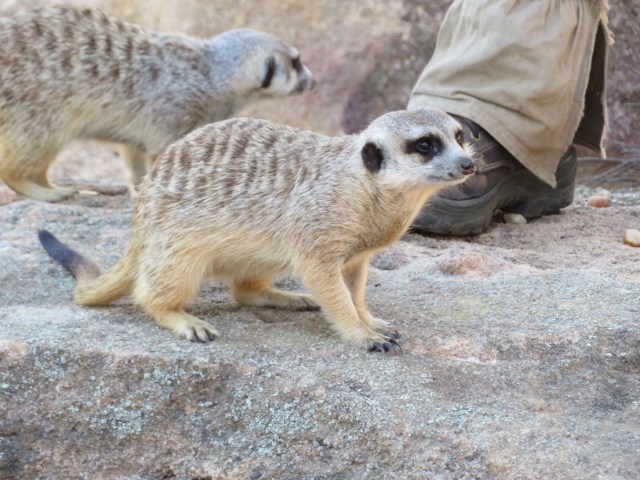
She and her sisters would have duked it out, and she won. In the wild, this means she would have breeding rights, but here in the zoo she doesn’t mate because the only males she has contact with are her brothers.
Meerkats will sometimes lie on top of their food to keep it to themselves, and the others will try to shove them off it:
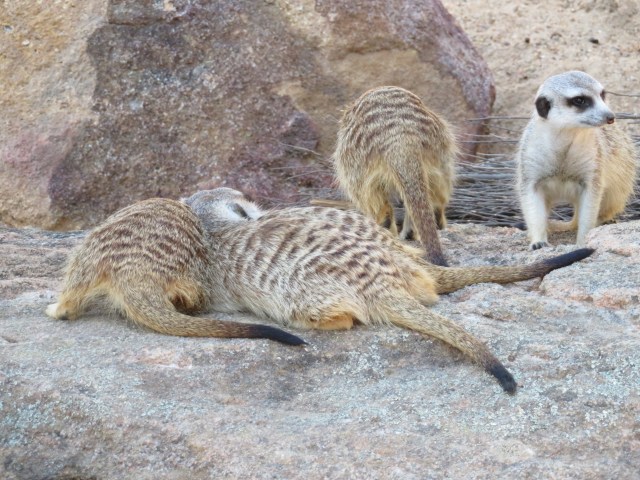
The one in the middle is the dominant female, and they didn’t even have any food at this point! It’s like they were just practicing.
I took a video of one clambering over the keeper, intent on food – you can hear the others chittering in the background:
The container had live crickets inside, and when they came out it was a free-for-all:
Funnily enough, while meerkats have good long-range vision, their short-range isn’t good, so sometimes they’d miss the crickets or run over them as they were trying to catch them.
Now, it was time for the giraffes. This was one of the first things I saw when I got to their exhibit:
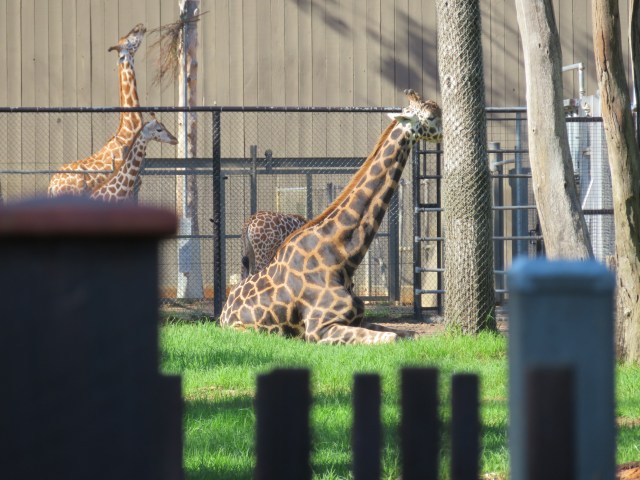
This is the dominant male, and it’s very unusual for him to be lying down. Babies will do it, but giraffes take too long to go down and get up to do it habitually – it makes them too vulnerable to predators.
He was the only adult male in the enclosure, the rest were all females and the offspring they’d had. Here’s three of them:
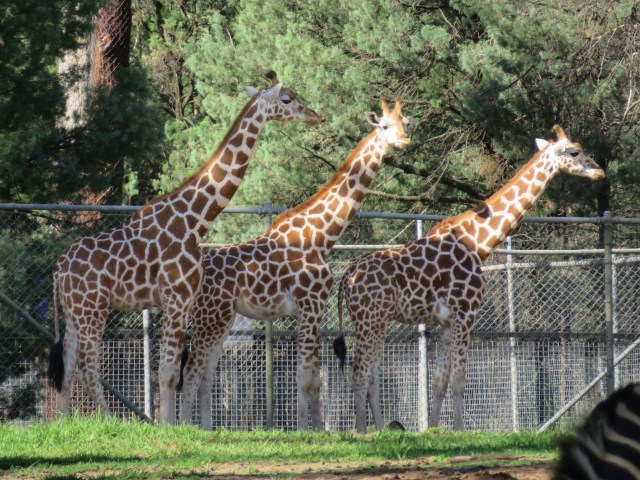
You can really see that they all have different patterns. The one on the right looks like someone tried to paint barbed wire. I also took a photo looking at one head-on, because it just looks ridiculous – what is that long, spindly thing?
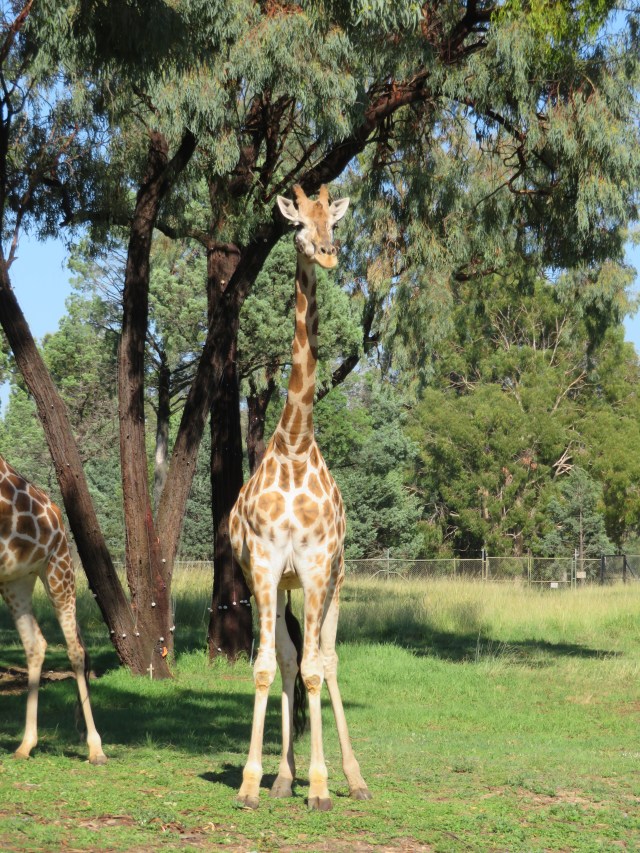
I took a video of one of them walking:
Giraffes move kind of unusually, in that both legs on the same side move at the same time, instead of alternately like with most four-legged animals. You can also see a zebra – they were in with the giraffes, because they tend to mingle in the wild as well. Giraffes can see much further than zebras can, so they can spot a threat earlier.
I took this video just for the little calf running at the end:
Though ‘little’ is relative – it’s bigger than me.
The giraffes were fed from a platform – this is the male approaching for his share:
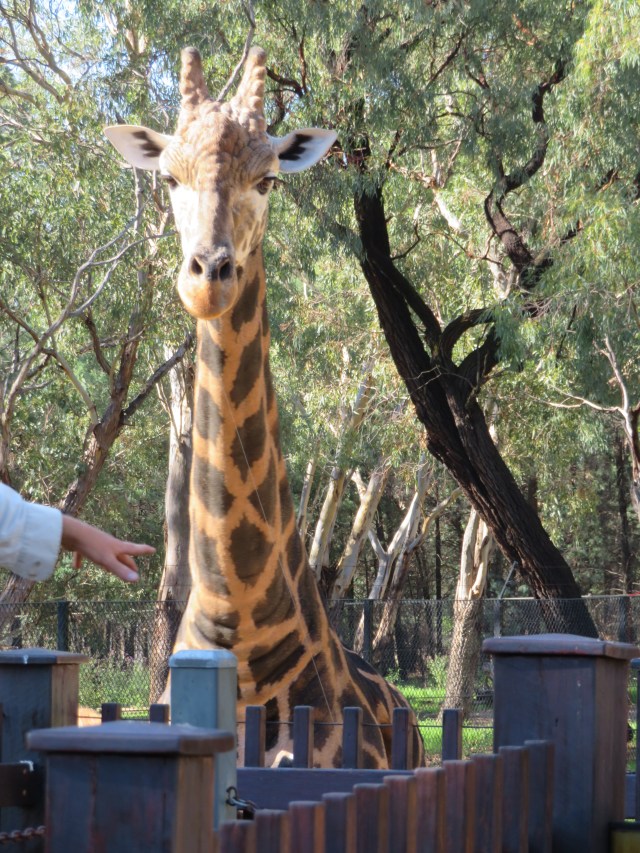
When giraffes are born, those ‘horns’ are folded down against their neck. They slowly straighten out as the giraffe grows.
I took a video of them jostling for breakfast:
This is the keeper feeding the giraffes carrot sticks (and instructing us how to feed them when it was our turn):
I took the video purely for that crazy tongue. As the keeper was talking, one of the giraffes tried to eat the carrots straight from the bin and cut out the middle man. It nearly got them, too – the keeper had to move them out of reach. I got three carrot sticks, and fed one to each of the females.
Once we were all out of carrot sticks, the giraffes lost interest.
Dad, leading the kids away:
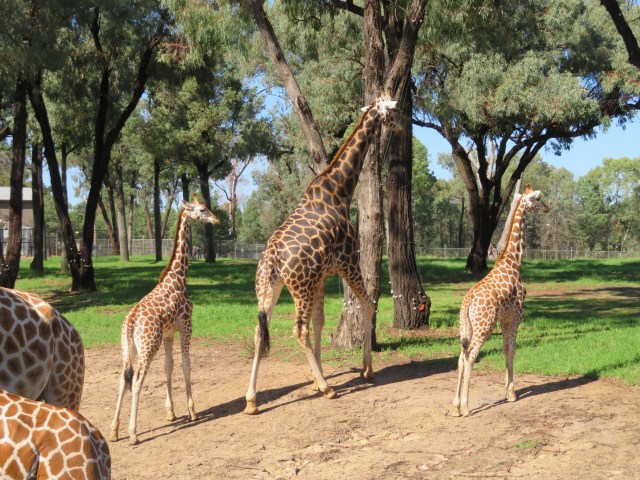
I spotted one of them grazing:
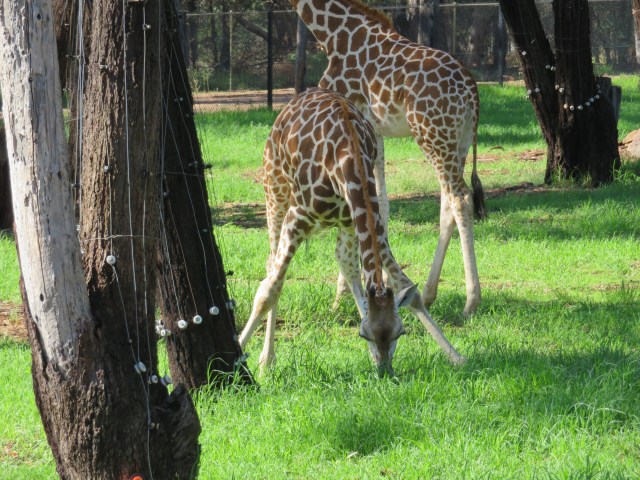
They just look so weird with their legs splayed like that.
Now for the zebras! There were some in with the giraffes, but they also had a pure zebra enclosure:
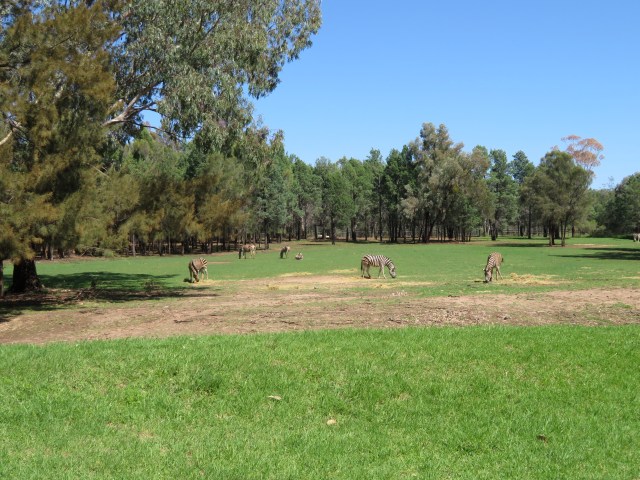
A zebra:
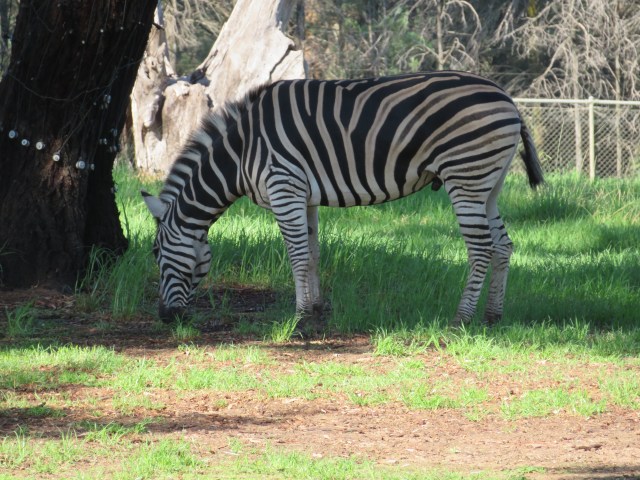
You’ve probably heard that the pattern of stripes is unique to each individual, but it’s still debatable as to why they have the stripes in the first place. The possibilities are:
1) It helps to protect them from predators. The stripes break up their outline amongst the herd, making it hard for a predator to target an individual.
2) It protects them from insects. The stripes have been proven effective in deterring flies.
3) The stripes help to maintain their temperature. Air moves more quickly over the black stripes, and more slowly over the white, creating convection currents that cool the zebra down. Zebras in hotter climates do have more stripes, so make of them what you will.
Of course, it could be a mix of all three. Zebras can be domesticated, and have been trained for riding, and to pull carriages.
I took a photo head-on. Look at its little stripy face:
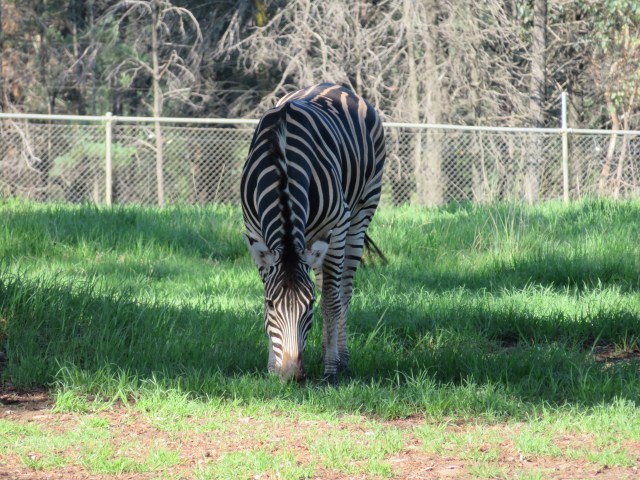
And a video, purely to see its lips working as it grazes:
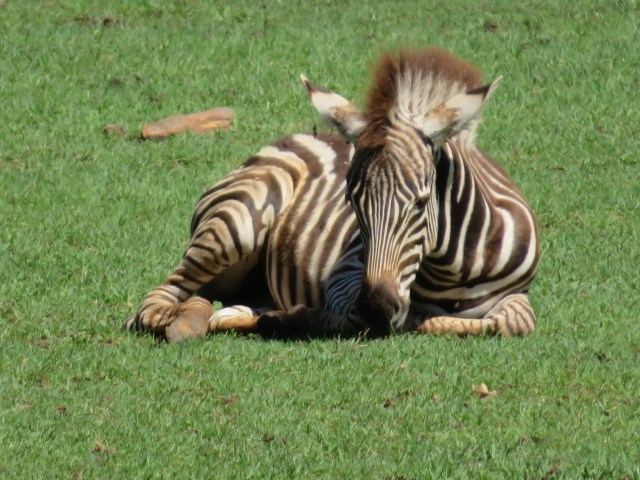
I took a photo of one resting:
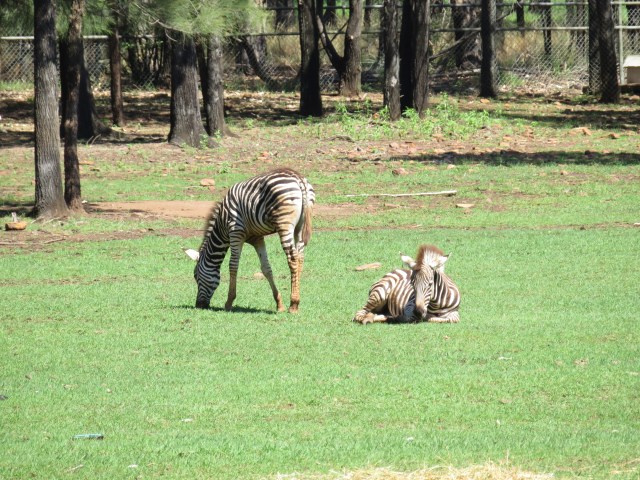
‘It’s been a long day.’
‘It’s only just started!’
‘And I’m already exhausted!’
A close-up, just to appreciate the way its nose is touching the ground:
I took a video of a mother and foal having a wander, then stopping to feed:
A photo:
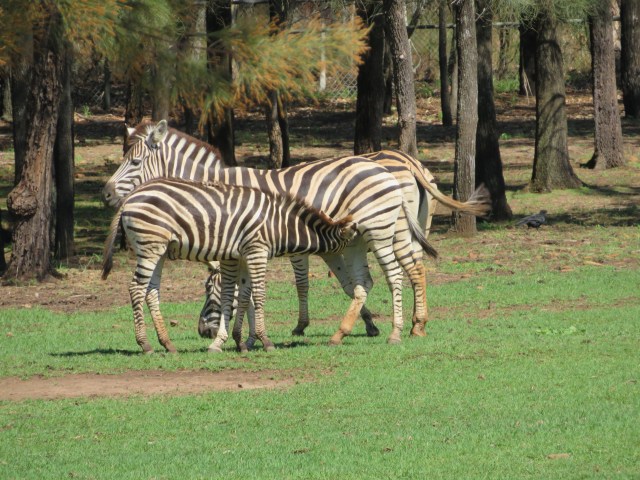
You can really see how the stripes break up their outlines.
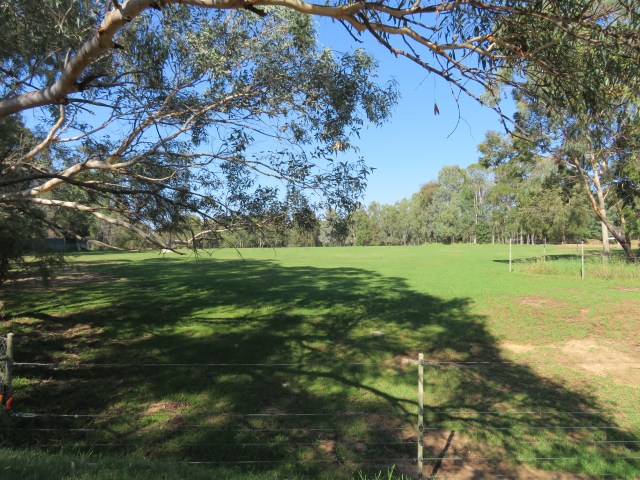
The elands were next – this is their enclosure:
The herd:
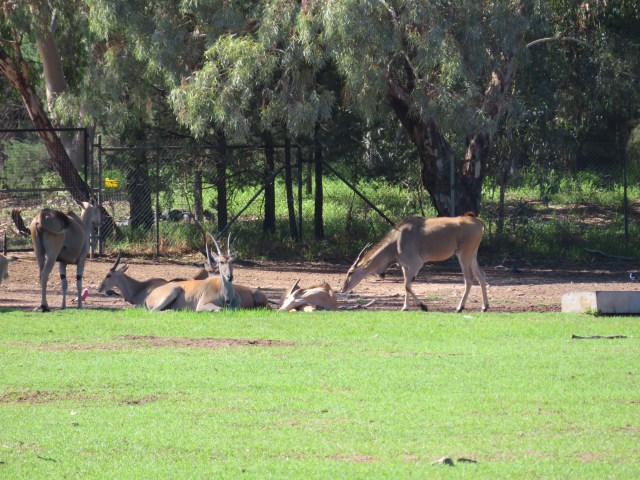
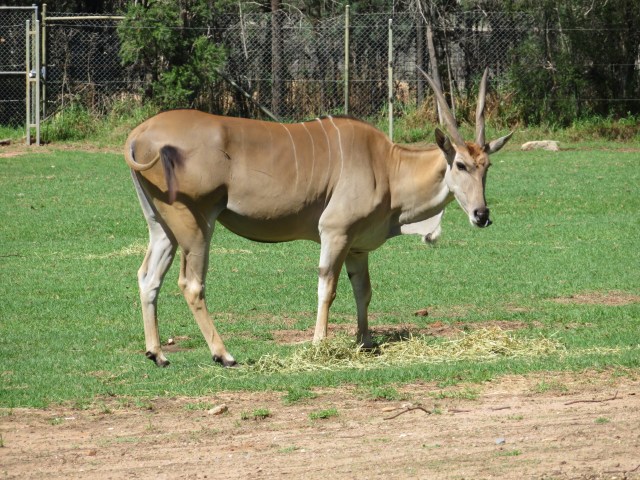
Elands are the world’s largest antelope, with males weighing up to a tonne. But they’re very agile, and can jump over 1.5m from a standing start. They also have a weird social life, in that they tend to come and go, alternating between being solitary and being part of a herd.
I took a video, but they’re not doing much:
A photo of one of them staring at me, looking puzzled:
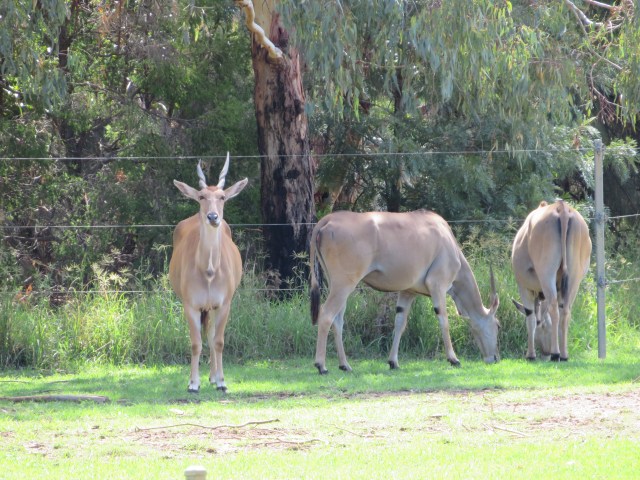
Check out the white stripes on their sides:
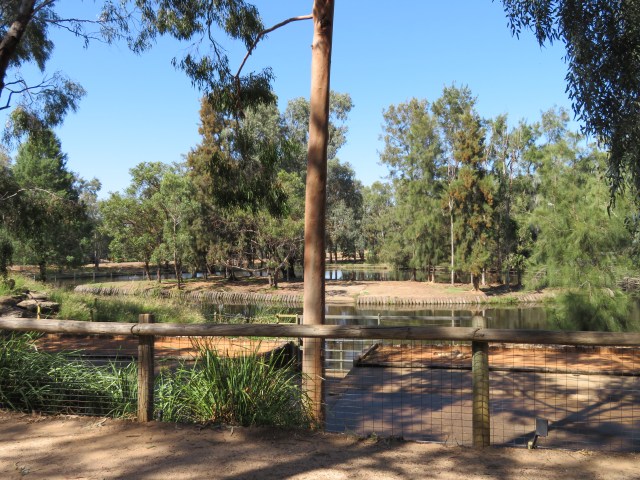
Then it was time for the hippopotamus talk. I made my way to their enclosure:
I was early, and the stars of the show were still in the water:
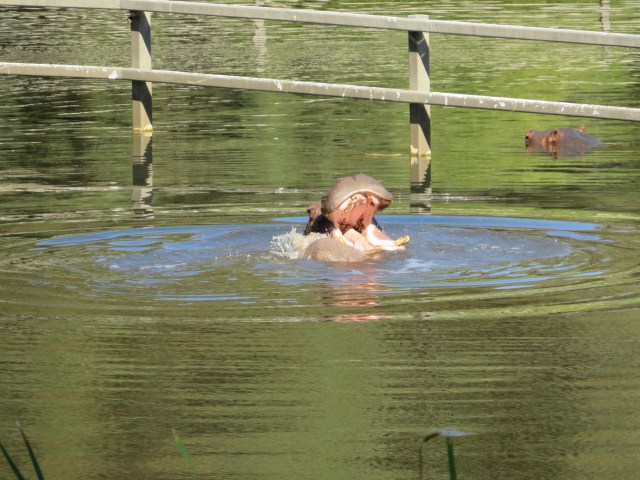
This didn’t seem to be a fight, as they just gaped at each other for a bit, like one of them had said something unbelievable. You can see the one in the next enclosure doesn’t care.
I also spotted this one, who seemed to be trying to chew a piece of wood:
The traditional hippo pic:
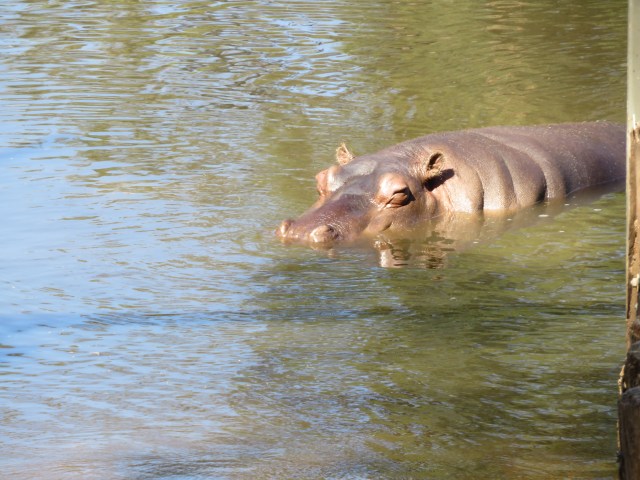
This is Nile, thinking about coming up the ramp and getting some hay. I got some video of her coming up, with Happy behind her:
Yes, her tongue is poking out of her mouth – it’s hilarious and strangely adorable. Here’s a picture:
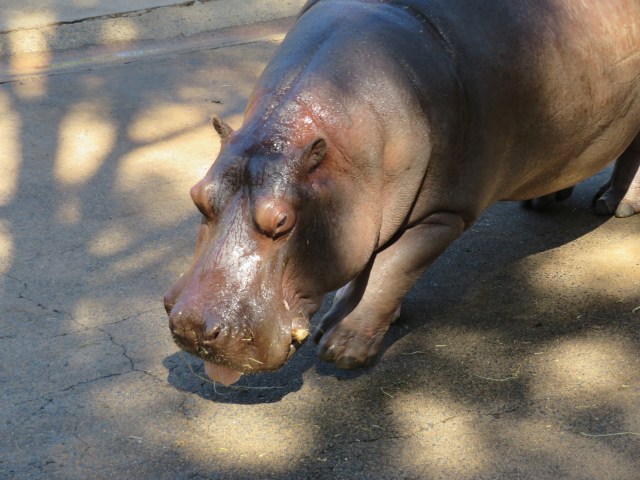
Males tend to have bigger heads than the females, and they tend to be larger in general as well. Hippos grow continuously throughout their life (though very slowly), so right now Nile is about a tonne, Happy about 1.7 tonnes, but they could get bigger.
Happy is 31 years old. In the wild, he would only live to about 35, but in captivity he could reach 55.
Nile on dry land:
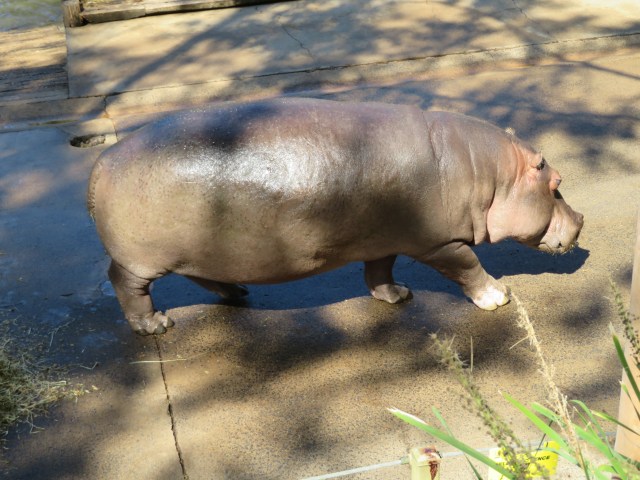
You see those folds of skin around her legs? That’s actually called a skirt, and it gives them a bit more flexibility in their legs, especially underwater. They don’t look it, but hippos are also pretty good climbers, because they have to be able to scale steep embankments to get out of the water to graze. The keeper told us a story about one hippo that ended up half over the fence to get at food, but she couldn’t pull herself all the way over because she had ‘too much junk in her trunk’.
Happy, out of the water:
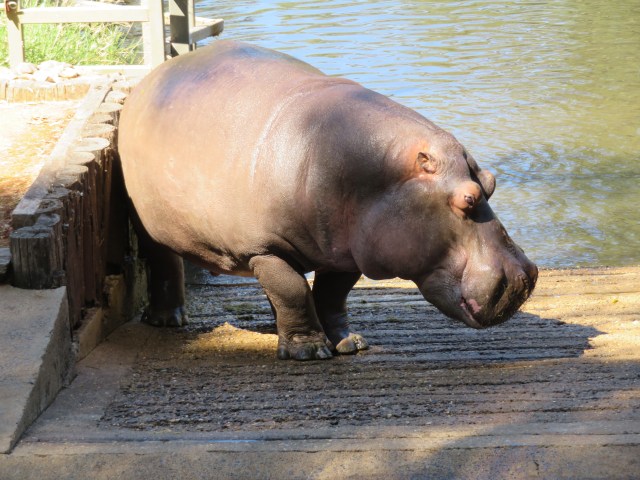
Nile checked out the hay first, and Happy let her – the keeper told us he’s a bit cautious because she sometimes rouses on him. Plus, he wants to keep mating with her, which means he has to be very nice to her.
I took some video – it starts with Nile, then goes to Happy:
As the keeper mentioned, they’re both pretty full, so they didn’t eat much. Nile especially would just chew it for a bit, then spit it out. Fun facts – hippos graze at night, travelling up to 10km to eat 2% of their total body weight in grass. So, for a hippo like Nile, that’s 20 kilos of grass a day. That’s pretty nuts.
I also learned about bloodsweat, which sounds like something that happens when you’re possessed by a demon, but is something hippos do when they’re out of the water. It isn’t actually sweat, but an oily fluid that helps moisturise them, and also acts as sunscreen.
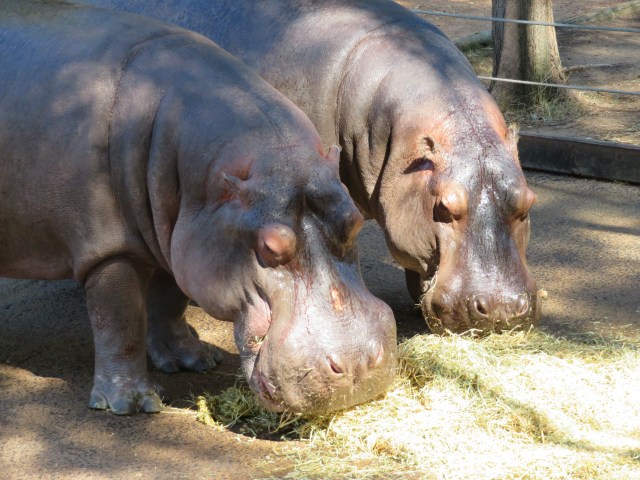
You can see it in this photo of the two of them – the little red trails down their faces:
I also took a picture of Nile opening her mouth to show her teeth:
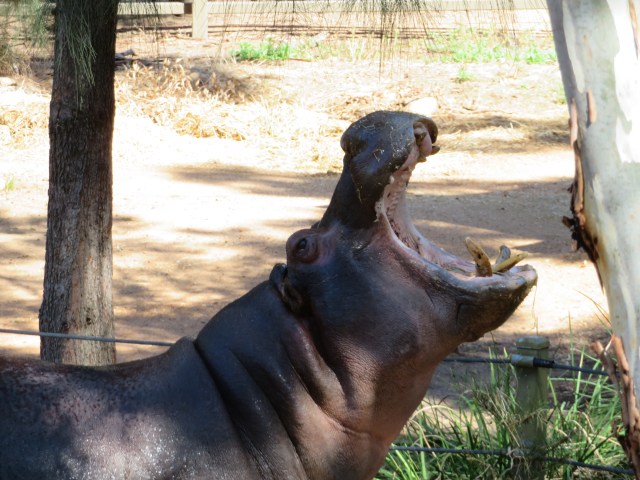
This is a trained behaviour, and she gets a reward of lucerne, which is sweeter hay. She was trained to do this because her left tooth is slightly crooked, and it has to be filed regularly so it doesn’t damage her mouth. This way, they don’t have to sedate her, she just opens her mouth and they file away.
Those teeth are also why Happy is so nice to her. She won’t want to mate with him if she’s not in season or she doesn’t like him, and while he can smell when she’s in season, if she doesn’t like him his first indication will be those teeth sinking into him. Hippos don’t really believe in ‘first warnings’.
That’s why I’m extremely sceptical of any information about dinosaurs that describes the large herbivores as ‘gentle giants’. Because hippos are herbivores too, and everyone who lives around them is very, very scared of them. I mean, there’s a reason the Egyptians believed the terrifying monster that devoured souls was part crocodile, part lion, and part hippo.
The teeth are also why hippos are at risk from the ivory trade – now that elephant numbers are dropping, their teeth are the next big ivory thing.
I had some time before the next talk, so I had a wander around my immediate area. I found the white rhino enclosure:
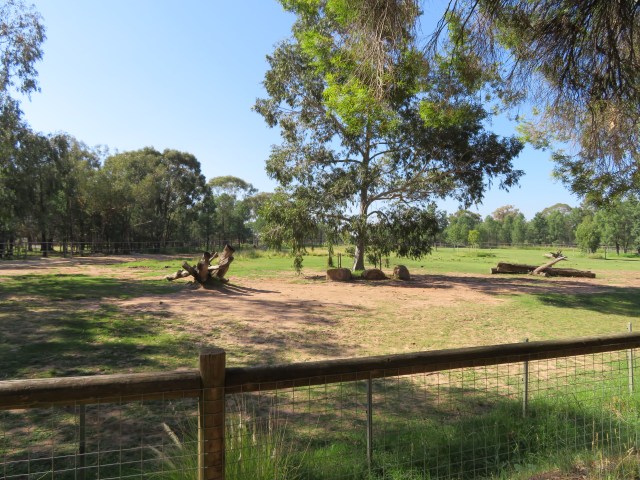
But they had yet to come out of the pens where they spend the night:
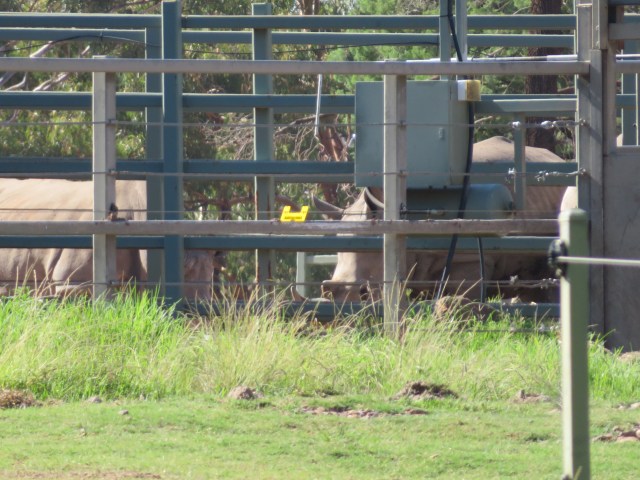
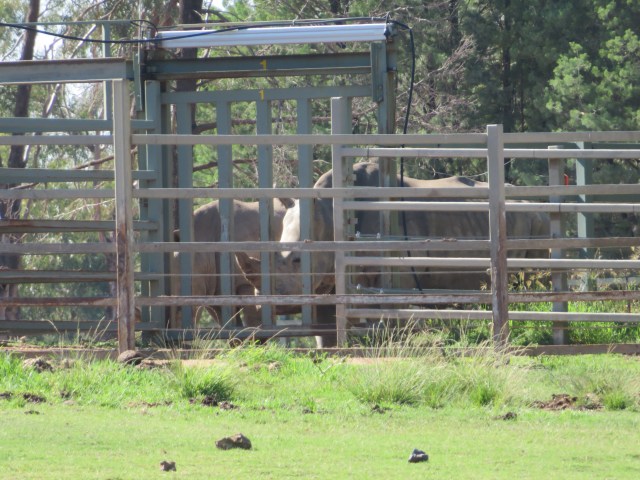
Still, I took some video anyway:
That ticking is the electric fence. I figure it would have to be pretty brutal to keep rhinos in.
Unlike black rhinos, white rhinos are social, and form groups of females and their calves, with males competing to mate with the females in the group.
The cheetahs weren’t doing much either – they were hard to find in their enclosure:
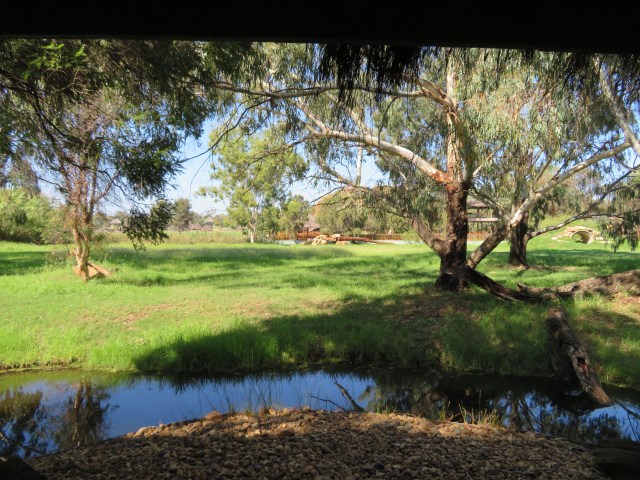
They had tucked themselves into a shady corner:

And only looked around when alerted by a noise:
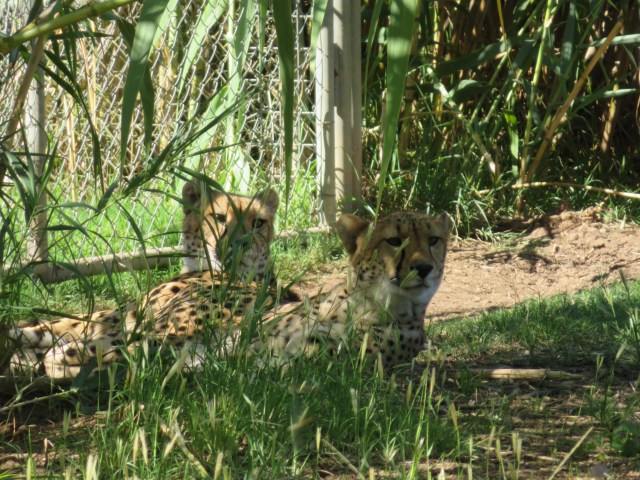
Have another boring video of a cheetah turning its head:
Now for the elephant talk! This was their enclosure:
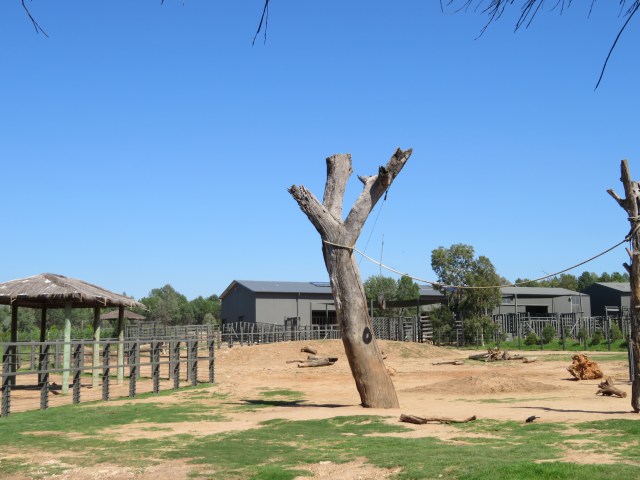
The first ones I saw:
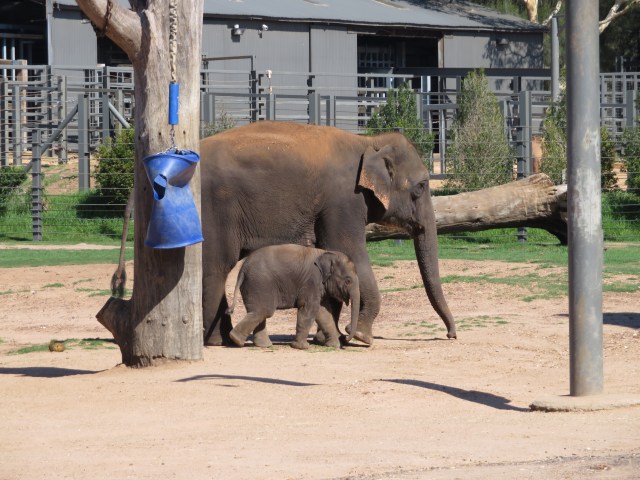
The adult is Thong Dee (which means ‘Golden’), and she was a street elephant in Bangkok – their owners make money from tourists who pay to have pictures taken with them. The baby is a boy called Sabai, and she had him in November last year. He’s already over 300 kilos.
Sabai and Thong Dee with the ‘aunty’, on the right:
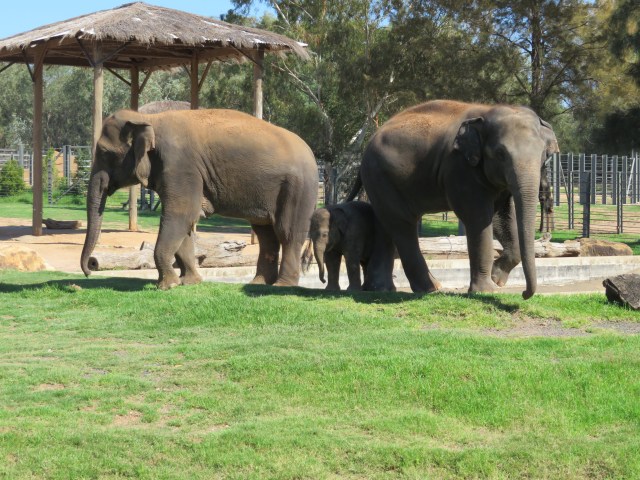
I’m not sure if they’re actually related, but the other female is Porntip (meaning ‘gift from heaven’), and she came here from an elephant camp in southern Thailand.
Story time! Porntip had a baby too, back in 2010. It was a boy that they called Pathi Harn, meaning ‘miracle’, and the name was well-deserved. You see, Porntip was in labour for eight days, and the vets figured something was wrong, and when they checked they found that the calf was upside-down, which actually made it physically impossible for him to proceed through the birth canal. No one had ever heard of this happening before, but while they were busy panicking, Porntip managed to turn him into a birthing position (they don’t say how), and he was born healthy, if a little weak. I’m not sure if that means she’s a really experienced mother, or just a very clever elephant.
All the adults in a herd help raise calves, and apparently Porntip often babysits so Thong Dee can have some time on her own.
A video of Porntip playing with Sabai:
They had a looping narration playing in the exhibit, so you’ll probably hear some of that.
A photo of Sabai hurrying over to another elephant at the fence:
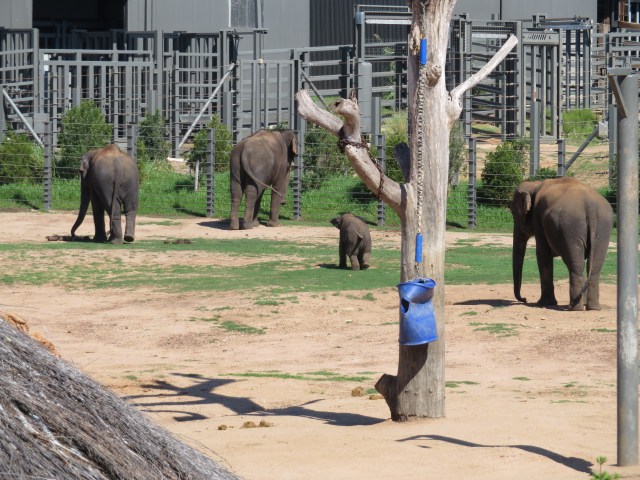
That elephant is actually his older brother, Luk Chai. Thong Dee had him in 2009, and he’s usually in another enclosure with Pathi Harn, Porntip’s son, in the equivalent of a bachelor herd, as they’re basically teenagers now. But he’s in this enclosure now and then so he and Sabai can get used to each other, in preparation for when Sabai joins the bachelor herd.
I took a video of Sabai running back to Mum, just because he looks hilarious when he’s running:
There’s going to be a lot of videos of these guys – elephants are strangely appealing. I think it has something to do with their trunk; it’s so clearly alien, but at the same time, they use it like we use our hands, so it’s almost recognisable.
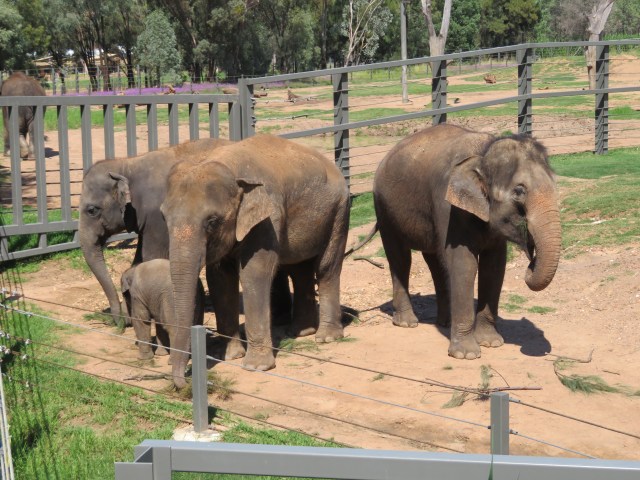
Here’s the family eating casuarina – I told you a lot of animals at the zoo were given it:
And a video:
Okay, two videos – they just look so funny:
The baby is just sticking things in his mouth to imitate the adults – you know, like human babies do. Also like a human baby, they’re pretty uncoordinated with their trunk at first; according to the keepers, he’s only recently got proficient enough to actually pick things up.
This is a video of him with something that’s a little too big for him:
I also took a photo:
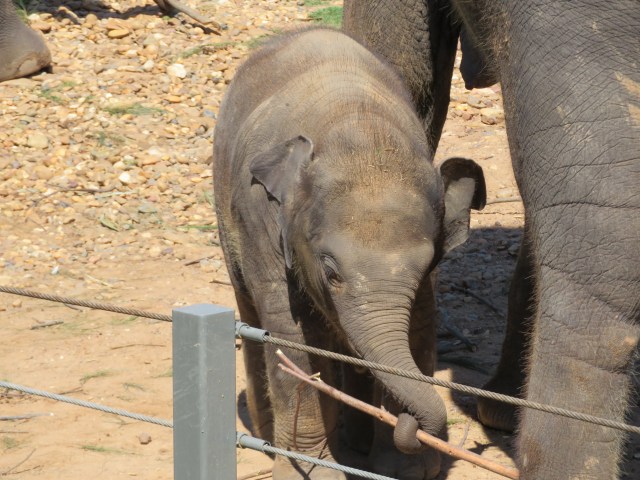
In his defence, an elephant’s trunk has 40, 000 muscles in it, so that must take some time to learn how to use. It’s why their trunks are so dextrous, and also why they’re so ridiculously strong. This video really shows how flexible the trunk is:
That’s Porntip, who likes attention and will show off to get it.
Another thing about the trunk I didn’t know…we’ve all seen those documentaries where the elephants drink through them, right? Apparently, they don’t actually drink from the trunk straight into the throat – we wouldn’t be happy if we tried to drink through our nose, and they aren’t, either. Instead, there are pouches beneath an elephant’s eyes that can hold up to 7 litres of water, which is where the water goes. Then they put their trunk in their mouth and spray that water down their throat (or they spray it over their backs to cool themselves off).
Apparently, dirt can also help to cool them off, and acts as a sunscreen, which is why you’ll usually see their backs dusted in it:
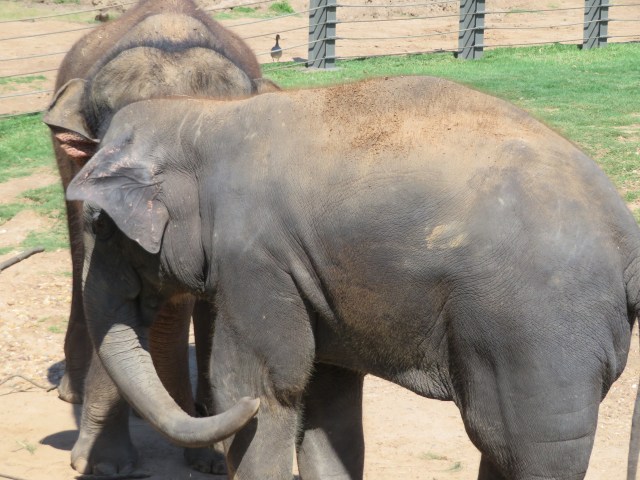
This is Porntip, lifting her feet one by one:
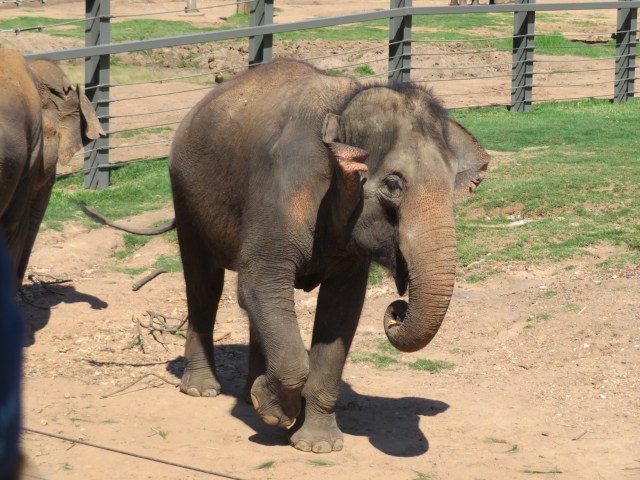
The keepers ask for that behaviour so they can check underneath them. She does it on her own now, to get people to pay attention to her.
Luk Chai, because we haven’t had much of him – I think he’s doing the elephant equivalent of trying to live in his room:
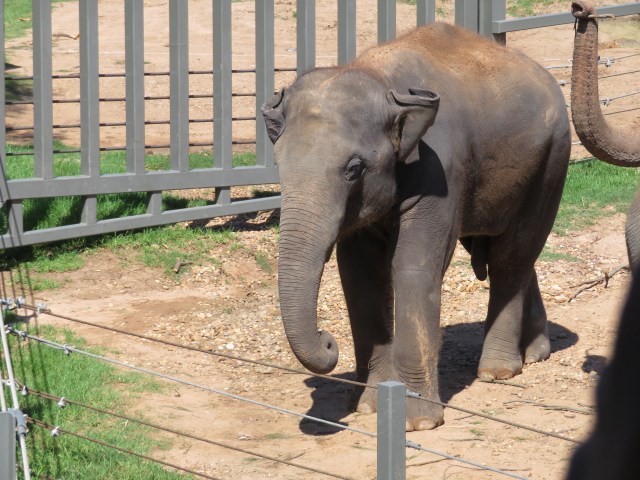
The brothers waving their trunks at each other:
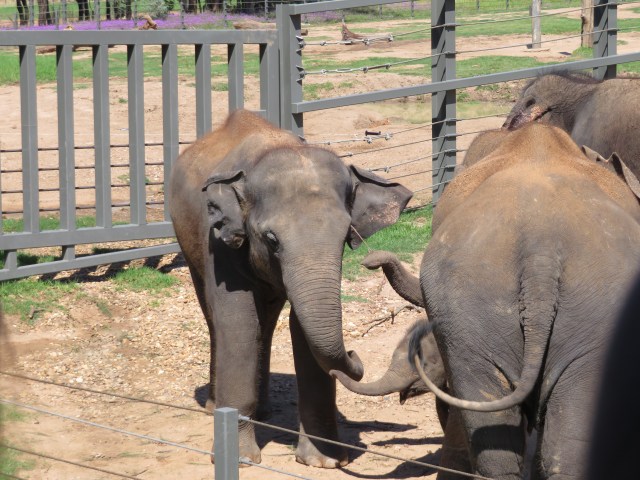
“High trunk, bro! Up top!”
The casuarina is their ‘feed and talk’ meal, but they also have food hidden inside puzzles, various containers, or just the hollow logs around the enclosure, all in an effort to stimulate them mentally. The keepers also smear jam, peanut butter, honey and all sorts of things around the place, just to ensure the enclosure doesn’t get boring. Elephants have an excellent sense of smell, better than most dogs, so if something tasty is around, they’re going to find it.
Just up the road were the Sumatran tigers! They had a more jungle-like enclosure:
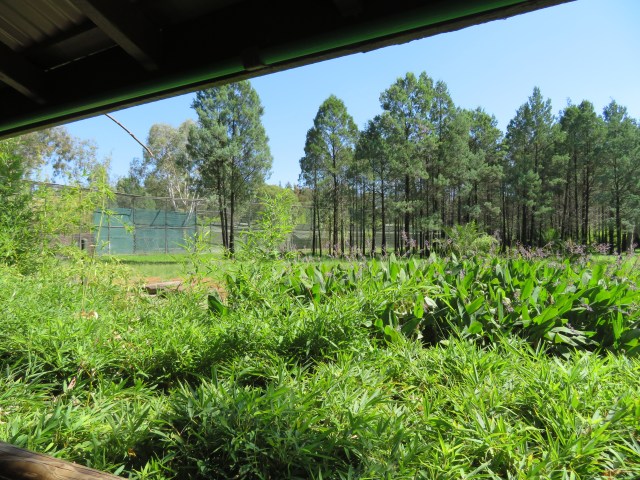
There were three tigers in the enclosure, and one was stalking back and forth:
One was lying down:
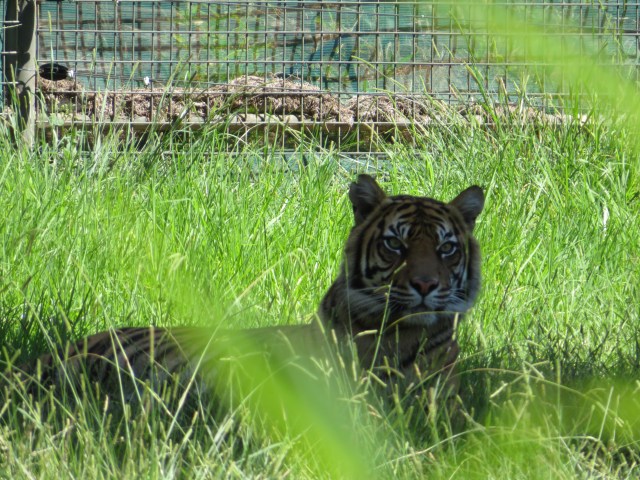
Well, the other two were both lying down, but I could barely see the other one – it was tucked away in the trees. The three tigers are a mother and her two grown cubs. Usually, she’d chase them off her territory once they can hunt for themselves, and she did turn aggressive towards one of her sons, but as she hasn’t pushed her other son or daughter away, they’ve left them with her.
Tigers are solitary in the wild, but in captivity it can be a different story. It seems a lot of them don’t mind other tigers hanging around, as long as there’s no competition for food. I think it’s really interesting that some ‘solitary’ animals aren’t so solitary once you eliminate the need to compete for food. I mean, black rhinos clearly have no social desire at all, but tigers do? Why? How many ‘solitary’ animals does this apply to?
When the keeper appeared, they were much more interested:
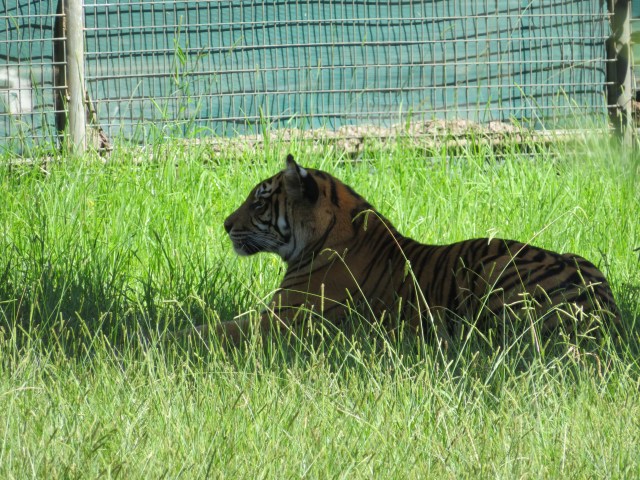
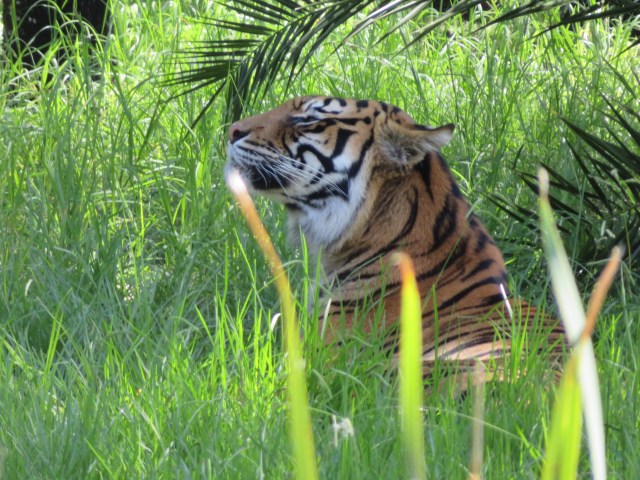
I took this photo just for the profile of the face and its glorious stripes:
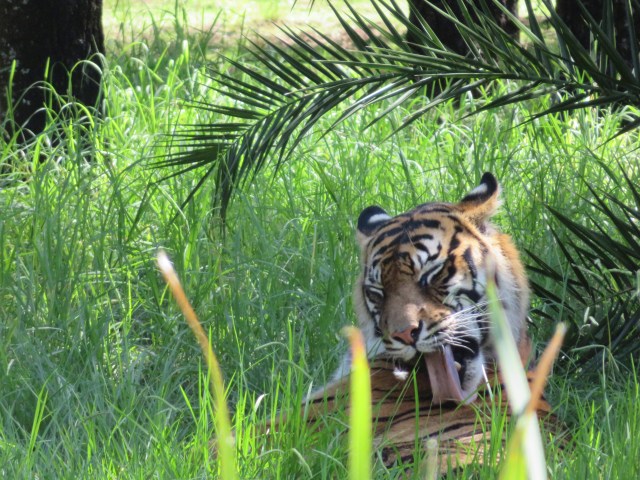
And this one because I caught it with its tongue out:
I took a video of it washing itself as well:
Aside from the usual tiger problems, Sumatran tigers are under threat from palm oil production destroying their habitat.
The lion talk was next, but I passed the water buffaloes first:
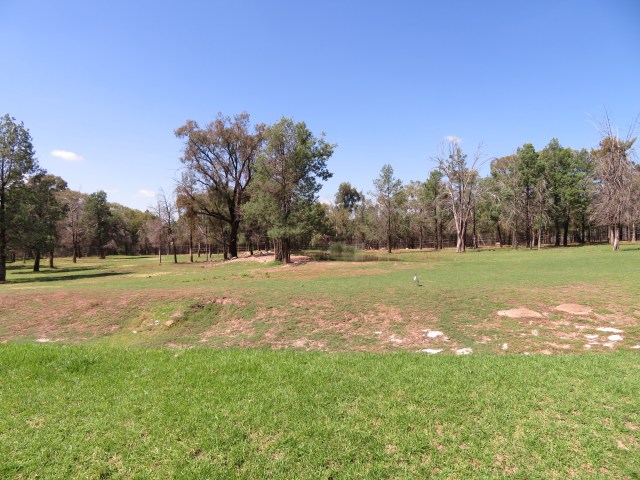
You may notice the distinct lack of water buffaloes in the picture above. I, too, was puzzled – where were they? Until I managed to see into the pool:
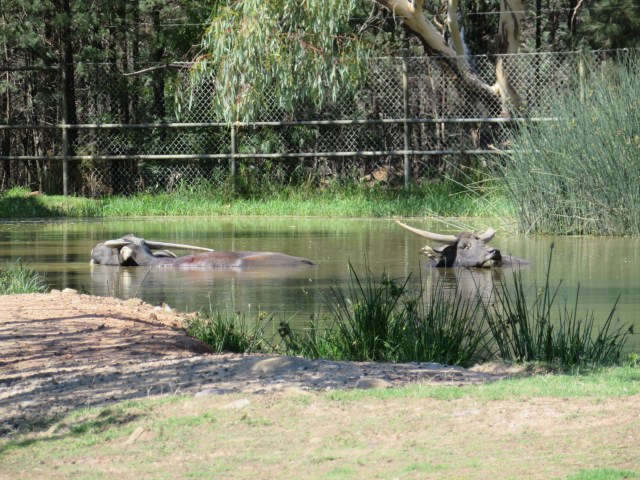
Found them!
It was hot day, so I was a little envious. I mean, look at that face:
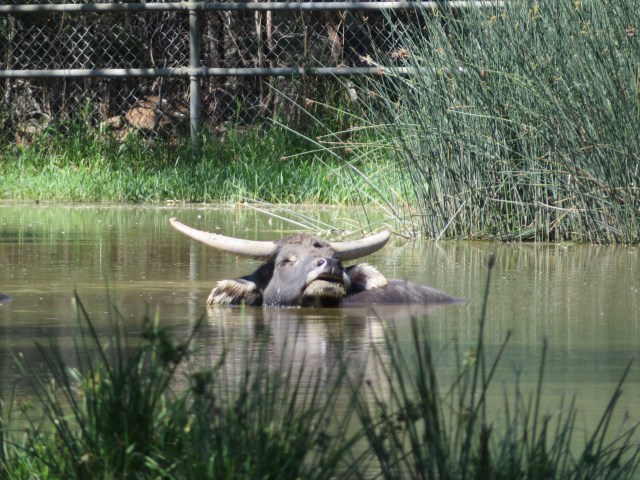
It’s probably anthropomorphising, but I can’t help but think that buffalo knows it’s living the good life.
I took a video of them just wallowing there, chewing cud:
I was early for the lion talk, so I ate my sandwich and reapplied my sunscreen. And had a long drink of water, but I’d been doing that at regular intervals all day, so that was less note-worthy.
The lions weren’t very active, given that it was the middle of the day, so I just took some photos. I’ll come see them early tomorrow and see if they’re more interesting. They recently had four male cubs, so at least the babies should be playing in the early morning.
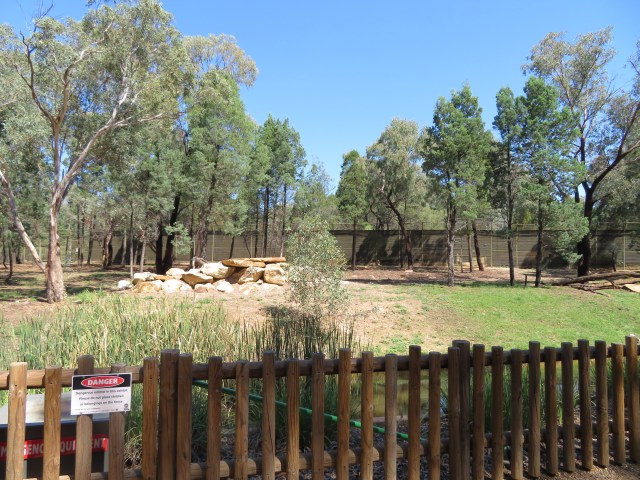
The enclosure:
The lions:
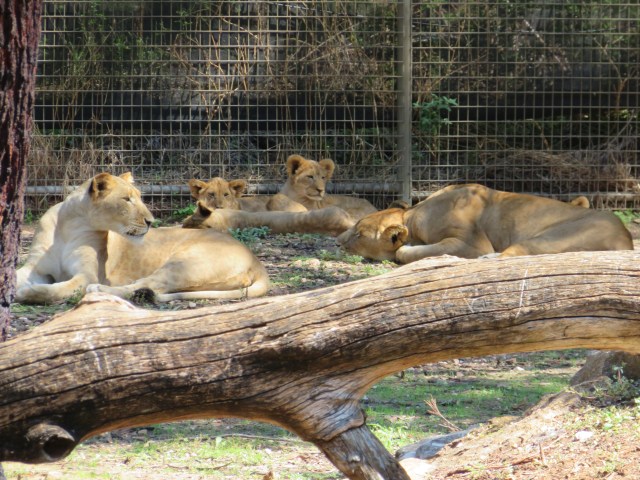
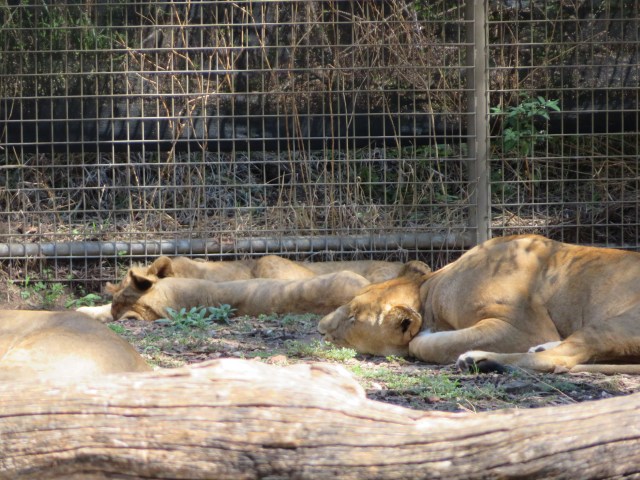
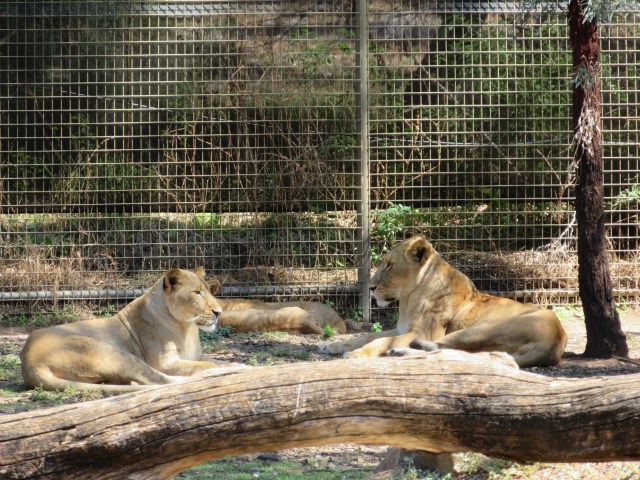
The mother – Maya – is the one sacked out on the right, with the cubs all around her. You can just see another cub’s ear over her shoulder. The other lioness is their older sister, from last year’s litter:
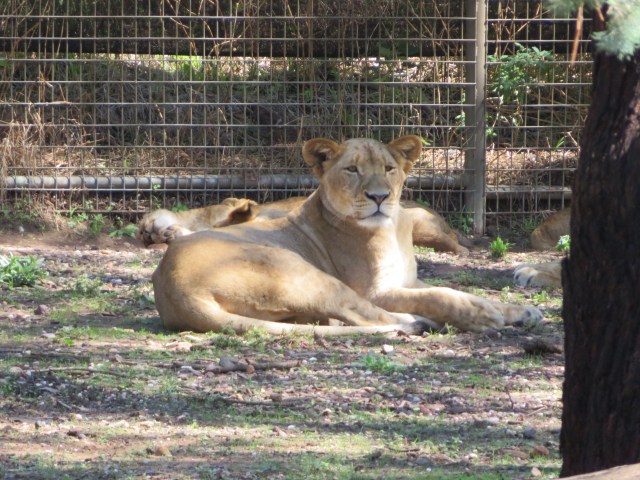
Their other older sister:
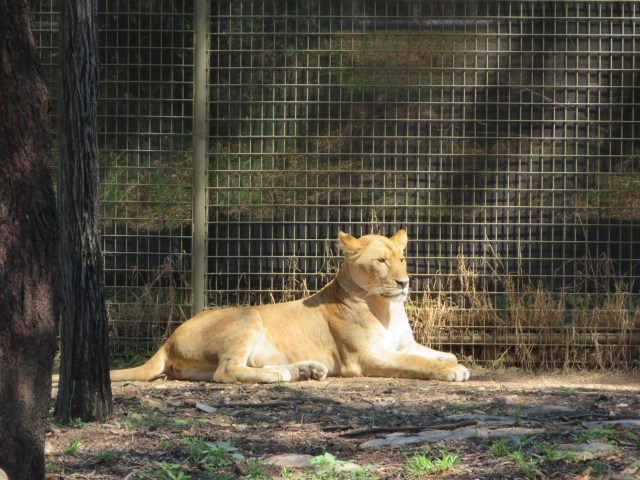
Tomorrow Maya and the cubs will be in with Lazarus, the cub’s father. He’s rather protective of the cubs at the moment, and will sometimes push the older siblings away, so the keepers have them on a timeshare – the cubs and Mum stay with their sisters/daughters one day, and their father/mate the next. It’s basically to help them all get along and integrate with the pride.
They’re so exhausted:
Though Mum perked up when a kid screamed – probably thought it was prey:
The next feed and talk was in a few hours, so I set off to try to complete the zoo circuit. Spoiler: I did not make it, so some of the animals (mainly the Australian natives) will have to wait for tomorrow.
But I did see the blackbucks. First up, the enclosure:
The herd:
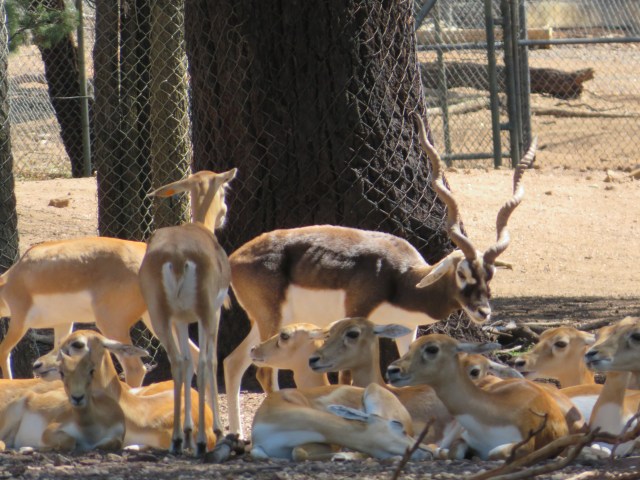
No prizes for spotting the male. While the juveniles look like the females, they grow big horns and their coat darkens as they mature, which takes at least two years.
Another photo of the herd:
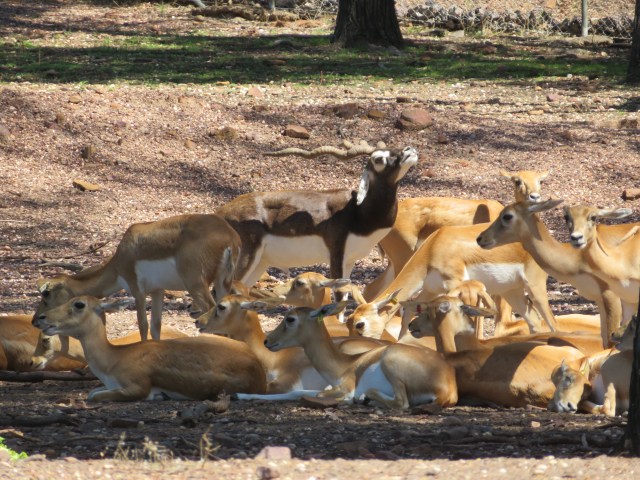
Video:
Yeah, he walked around like that all the time. Showing off the horns, maybe, in a ‘if you got it, flaunt it’ kind of way?
This isn’t an animal, but it’s still interesting:
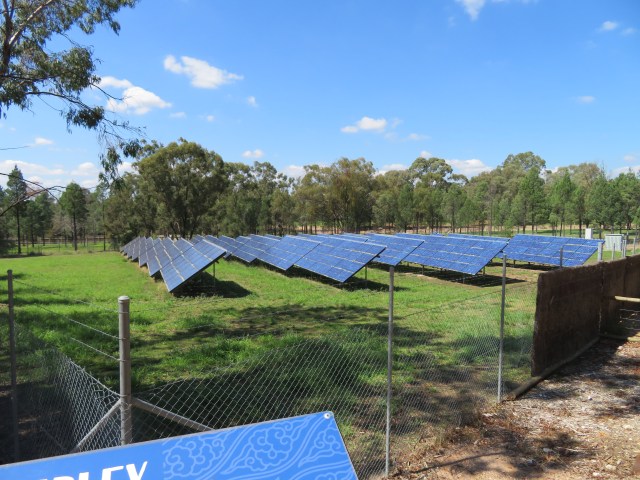
This solar grid panel powers a kiosk in the depths of the zoo. Well, about halfway around the circuit, but ‘depths’ sounds more ominous. It sends excess to the main power grid, and apparently produces enough energy in a year to power 15 average households.
I was a bit puzzled by this enclosure:
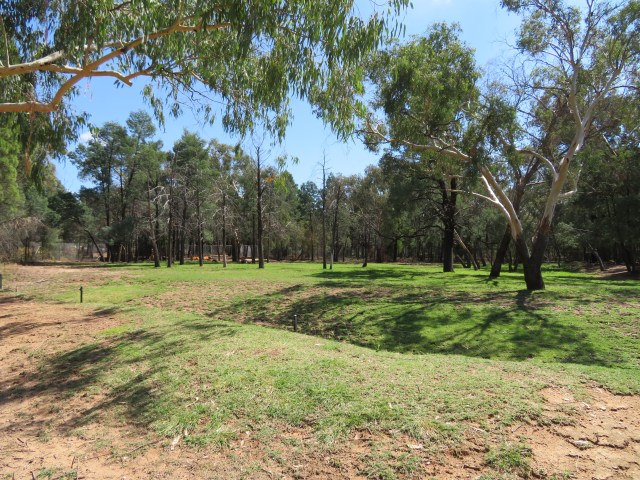
Until I saw the sign saying it was home to the Congo buffalo. This is the first one I saw:
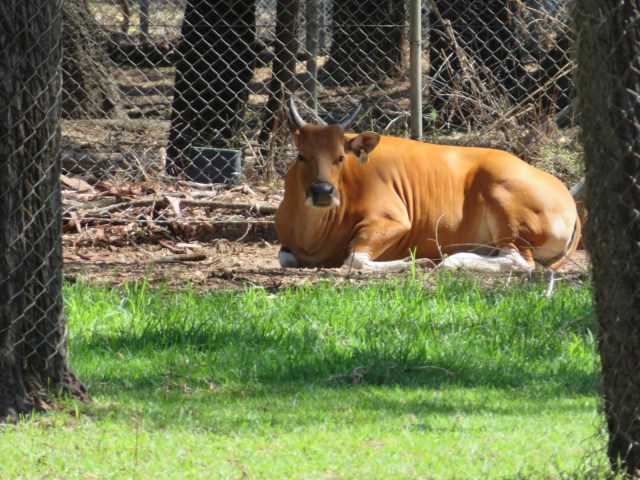
I’m going to go ahead and guess that the big black one is the bull:
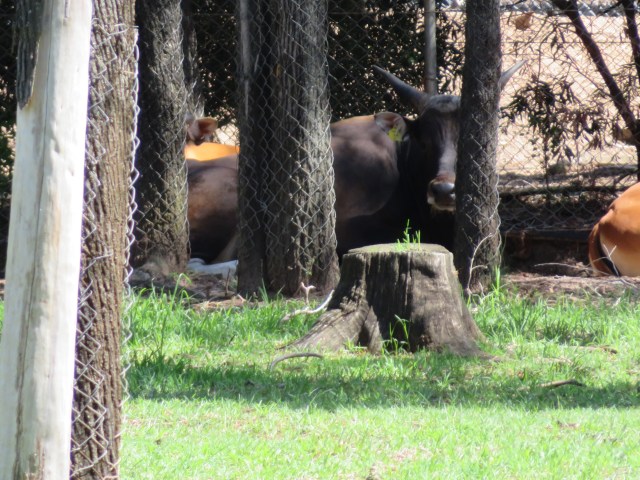
They weren’t doing much, either – that first one put its head down immediately after I photographed it:
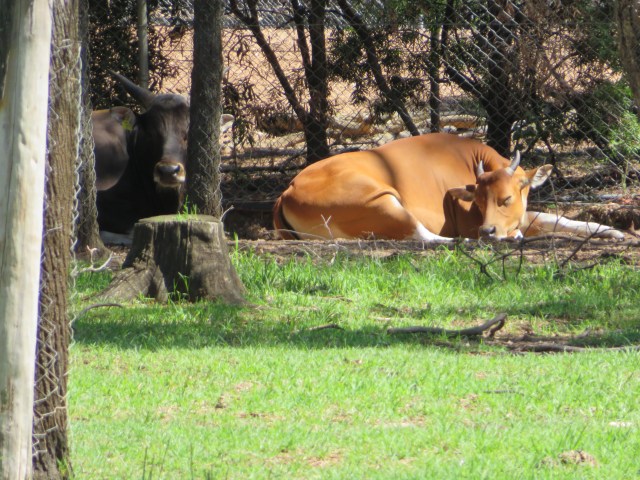
‘You’re done? Good, sleep now.’
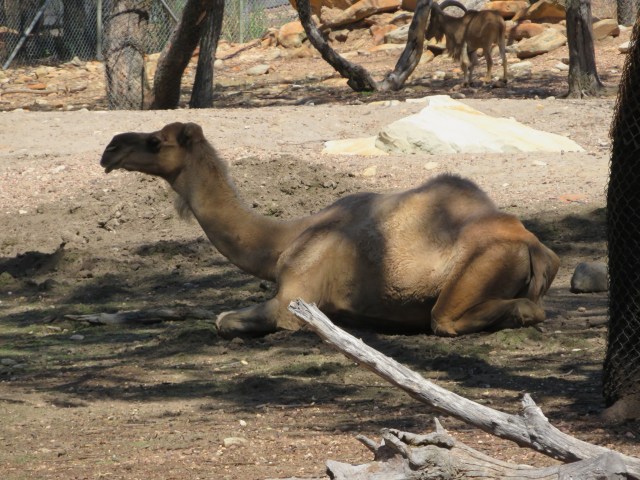
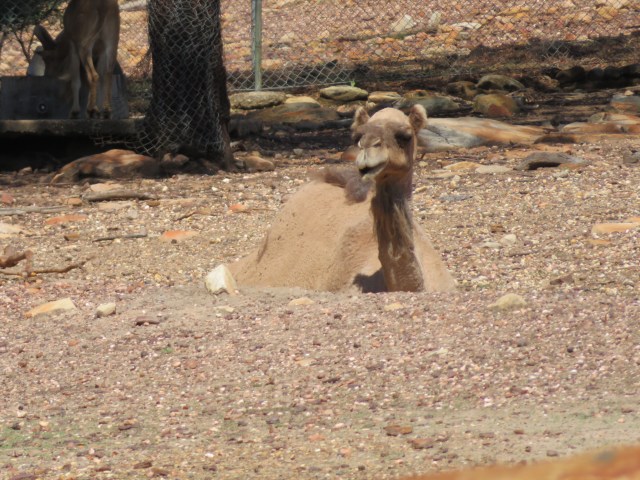
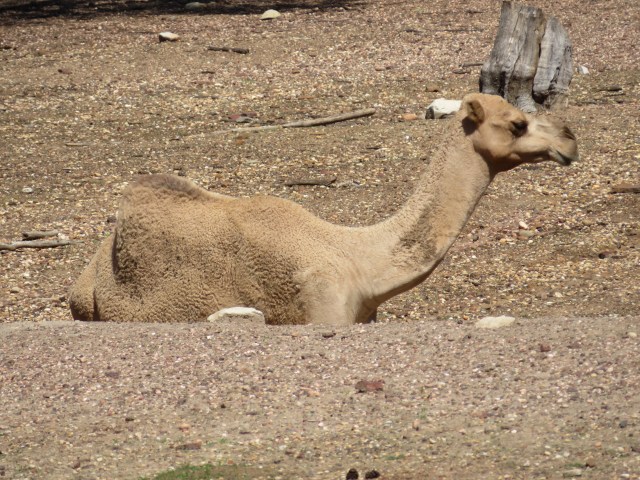
This was a combined enclosure – camels and Barbary sheep:
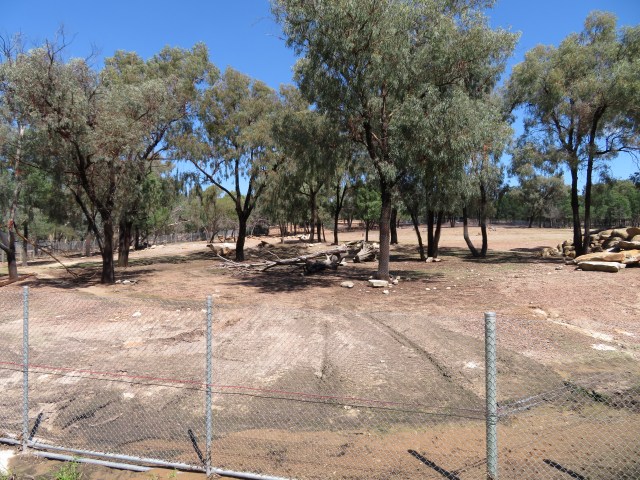
I could see the sheep:
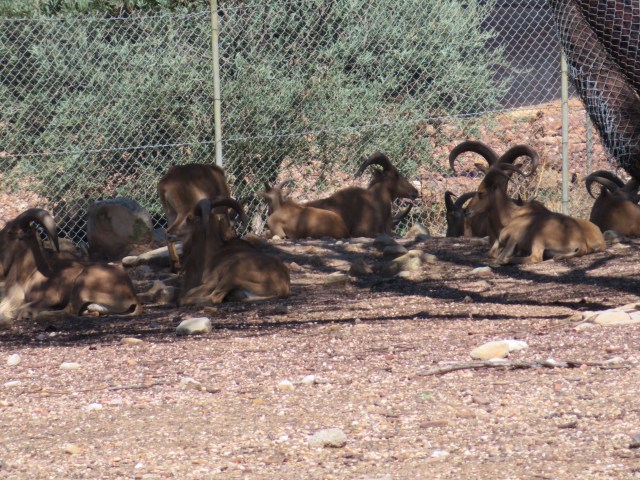
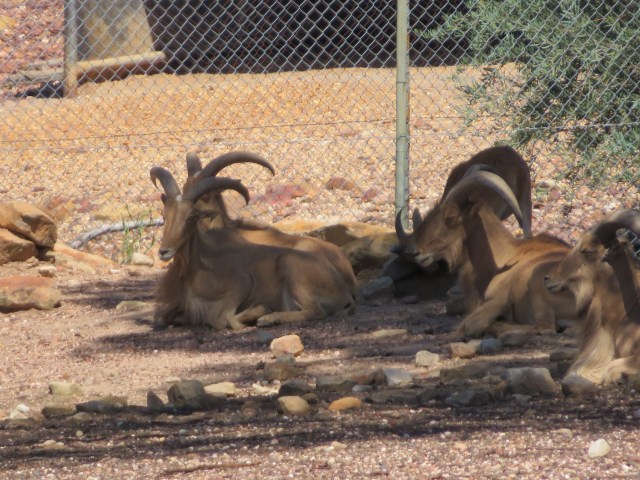
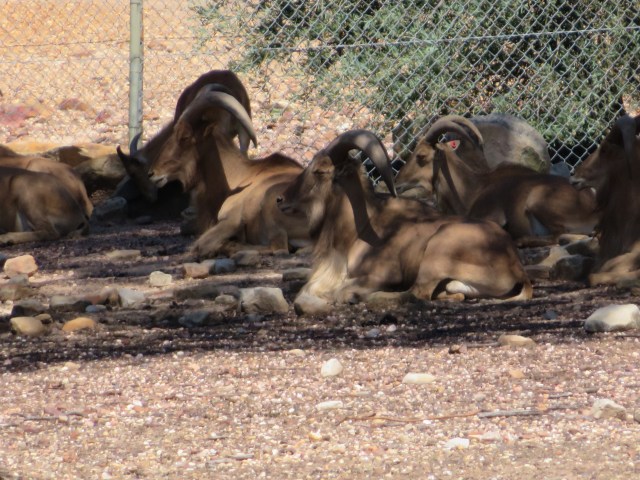
Even if they look more like goats than anything I recognise as ‘sheep’. But the camels were a bit harder to spot – at a distance, they made convincing mounds of dirt, and only their long necks gave them away:
Next up, Prezwalski’s horses:
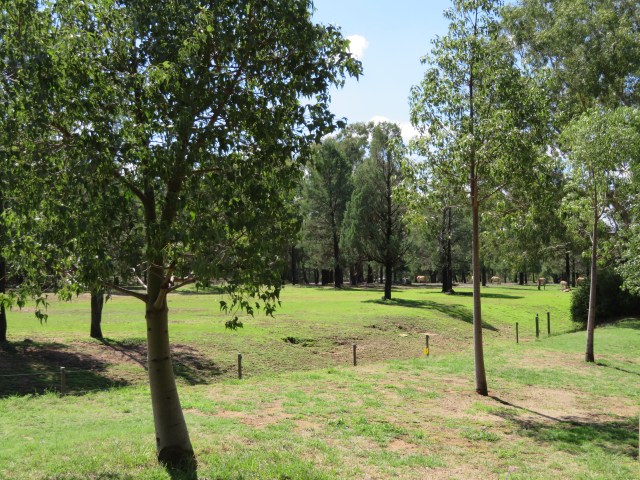
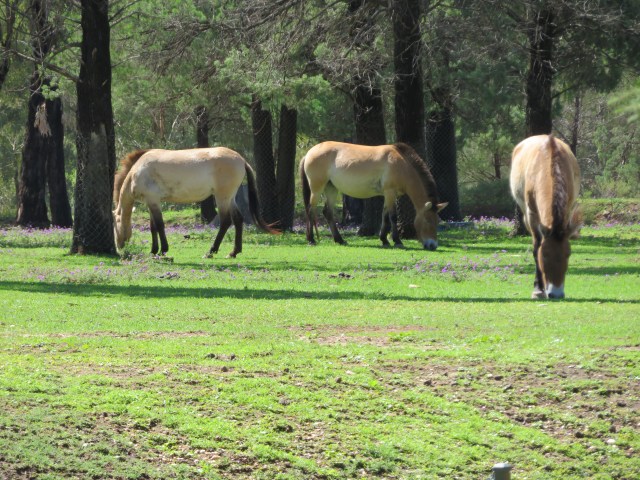
The wild horse of the Mongolian plains! They’re not just a feral variety of domestic horse – Prezwalski’s horses have 66 chromosomes, while all other horse species have 64. They’re smaller than most horses, and are also the only horse species to have never been domesticated.
Have a close-up:
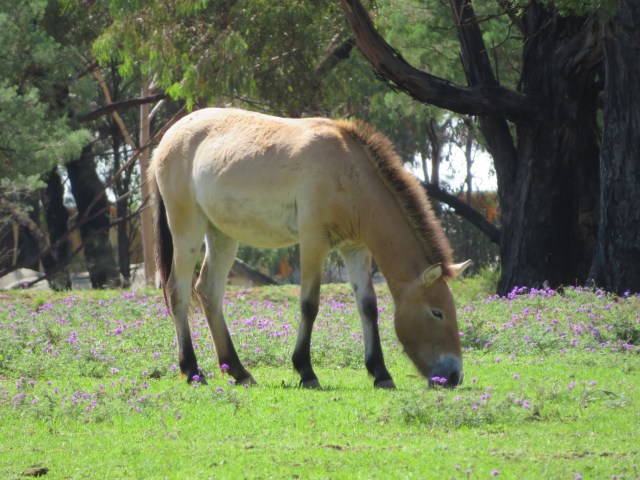
One of the mares had a little foal:
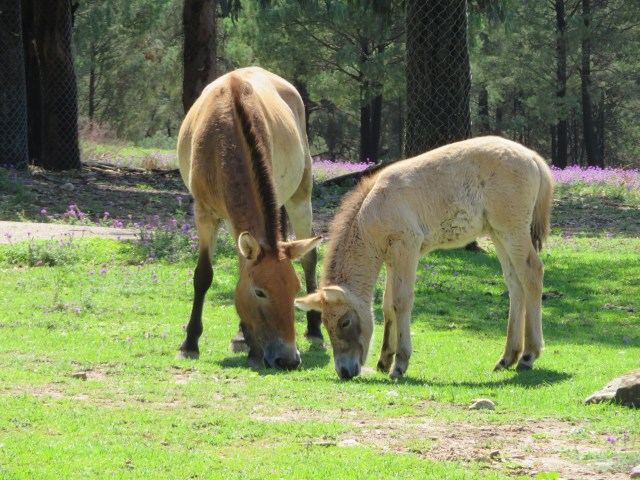
The foal is starting to lose its fuzzy baby coat, at least on the head and some parts of the legs.
I headed towards the otters, and I passed through a picnic area that had a lot of birds chattering:
The enclosure for the Asian small-clawed otters:
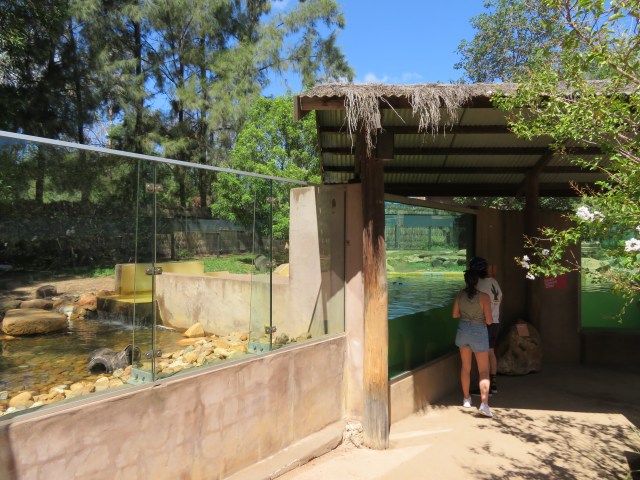
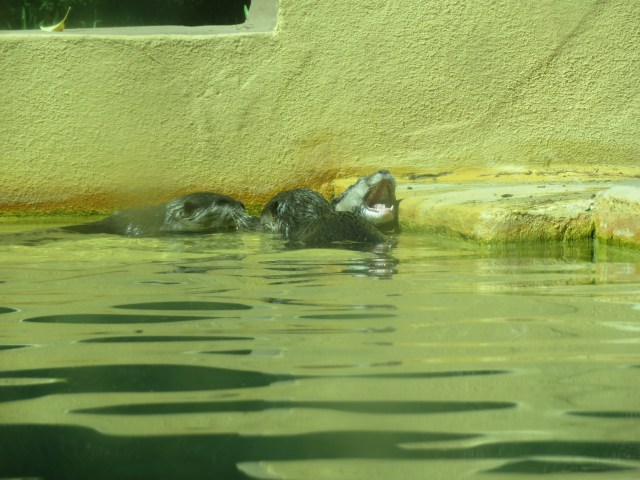
There were four of them scampering around, and I got a photo of them playing in the water:
I took video of one swimming:
And of one sniffing around on the land:
This one obliged me by looking into the camera:

They also had a little exhibit of comparative sizes, various species of otters vs a human:
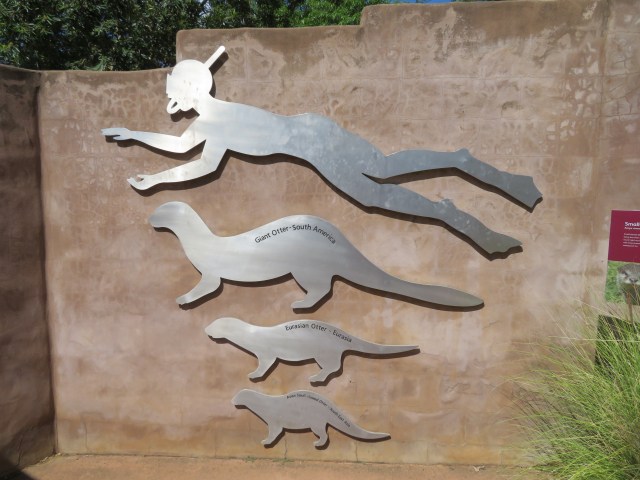
The first one is a giant river otter from South America, then a Eurasian otter, and finally the little guys in the zoo – the smallest otter species.
Next to the otters was a greater one-horned rhinoceros, also from Asia:
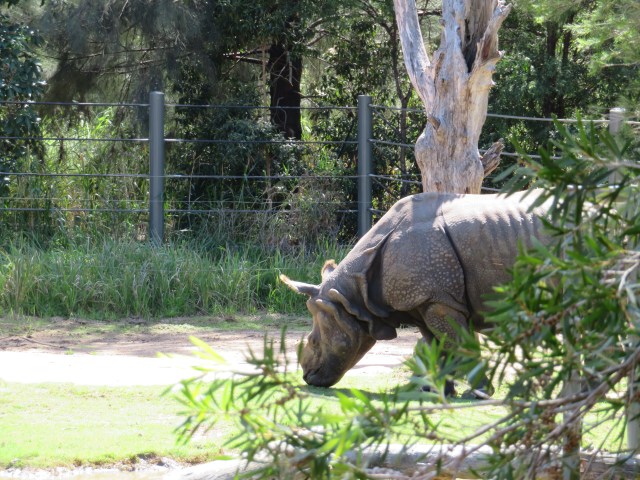
Honestly, it almost looks fake, like a model dinosaur or something:
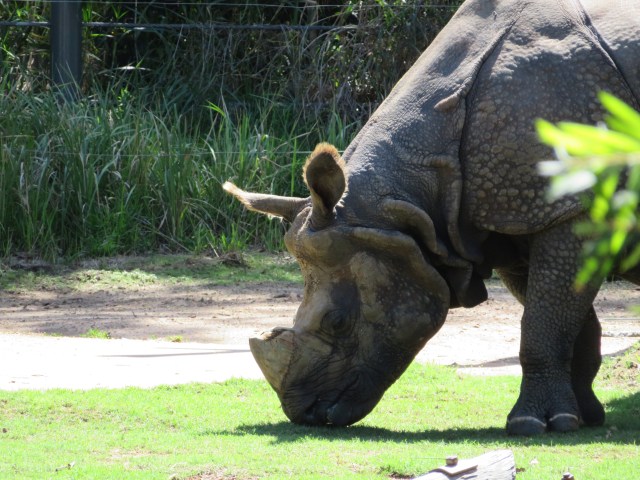
That skin, man! It moves slowly, too, like an animatronic:
It was time to move on to siamang island – siamangs are black-furred gibbons, the largest of the gibbon species. They’re native to Malaysia, Thailand and Sumatra – these two were on one of the islands:
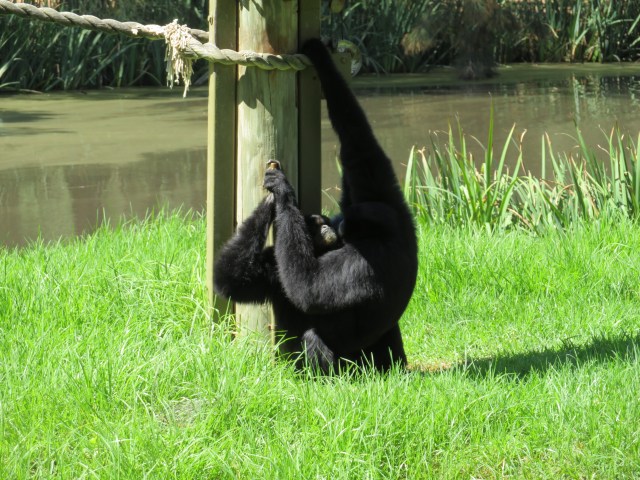
‘One of the islands’, because there were a couple that they could move between. This one was on another island:
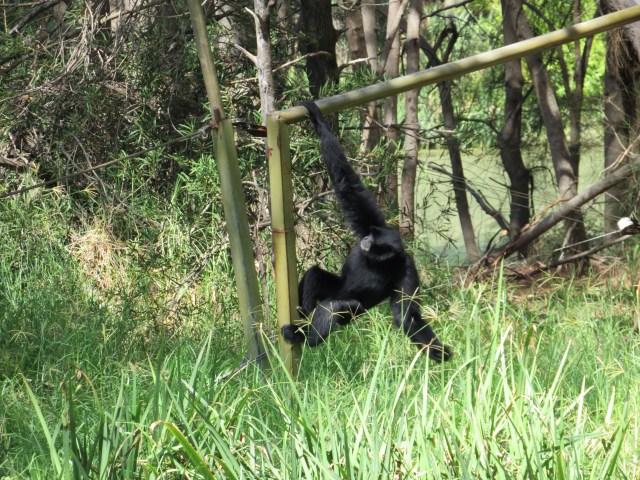
It didn’t want to be left out:
And now they’re all together:
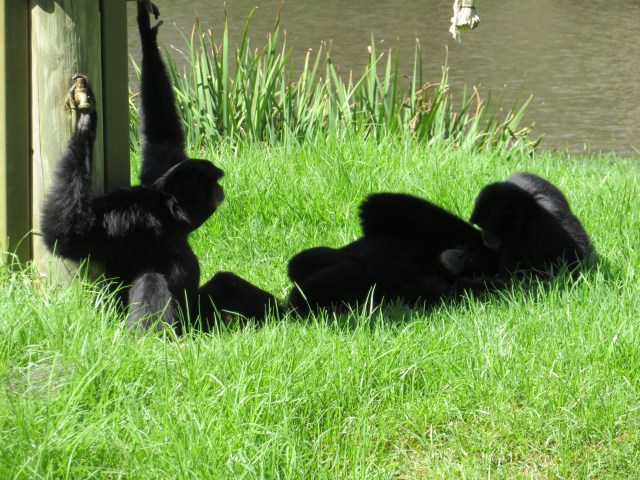
Those arms are very long and spindly, but you can see it better with the white-handed gibbon, who’s coming up next. This was their island:
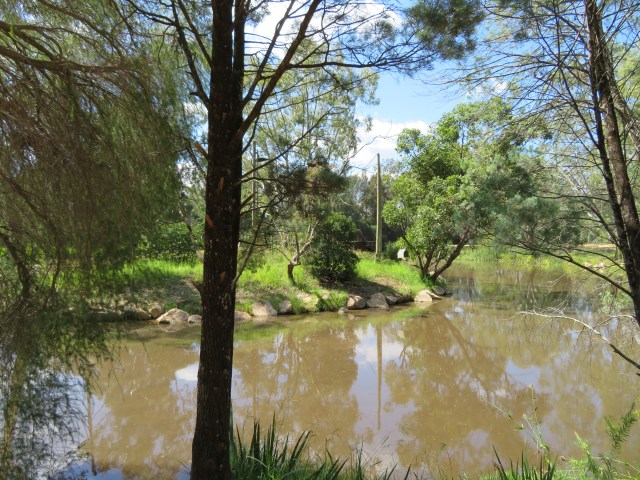
The gibbon:
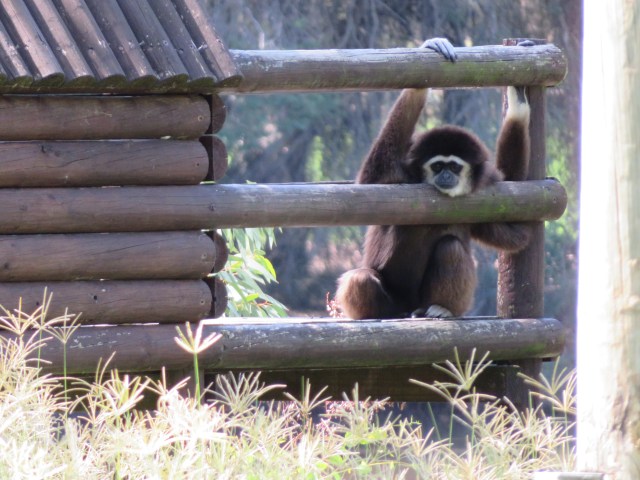
As you can, those are very white hands, and it also looks very sorry for itself. Something about the way the white fur angles upwards around its eyes makes it look like it’s sad.
Climbing down from the little house:
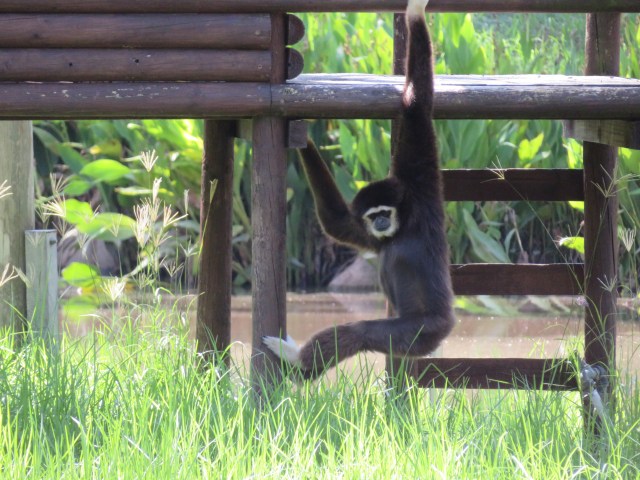
Very long arms, indeed. Gibbons are unusual among primates in that their wrist joint functions like a ball and socket, allowing for biaxial movement – basically, movement across two planes. This reduces the amount of energy needed in the upper arms and torso, which is why they’re so long and slender-looking, even though they’re pretty large apes.
Another one was swinging on the ropes they had:
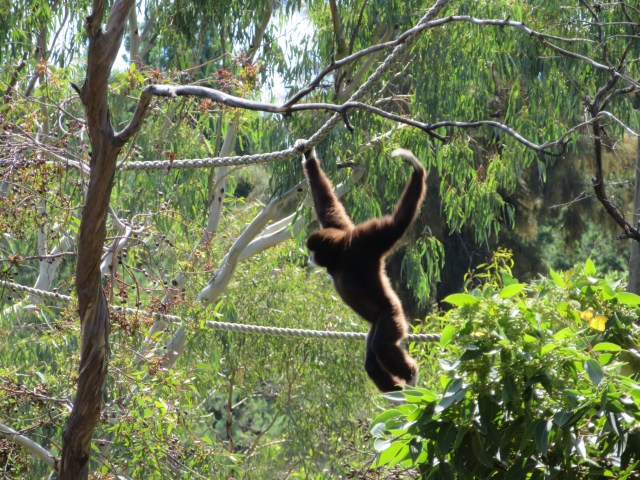
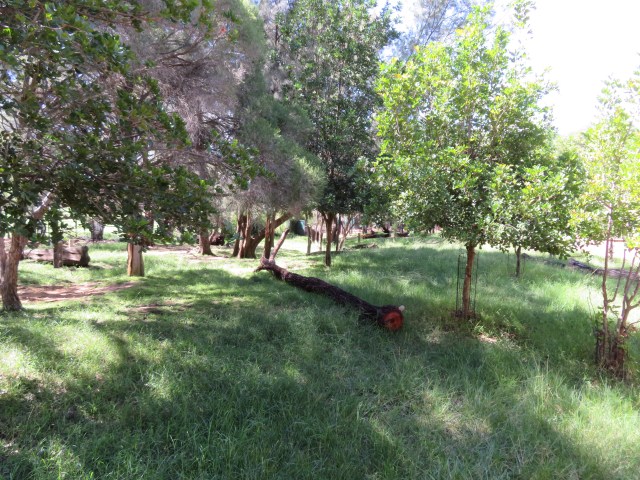
I followed a dirt path back to the Bongo enclosure:
Yes, they have the same name as the drum, but this is what a bongo looks like:
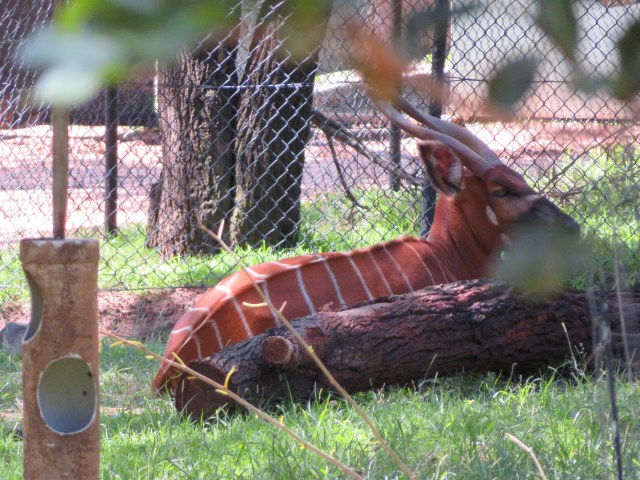
They are a forest antelope, and are native to Africa. They’re also critically endangered as a result of poaching for their pelts, horns and meat.
Have another photo:
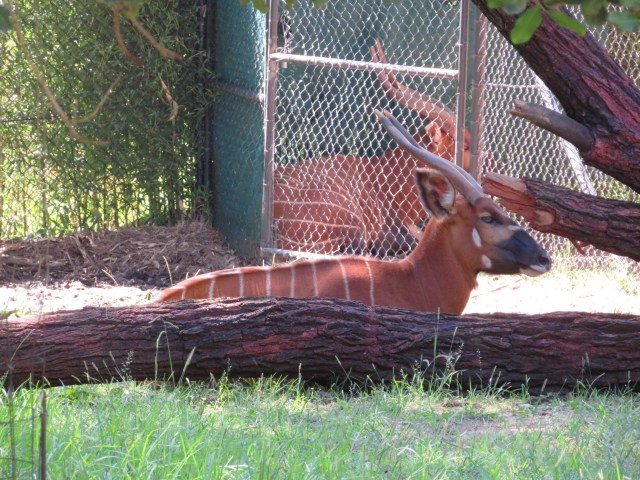
The stripes make it look pretty funky.
At the entrance to the dirt footpaths, they had these to block cars from coming in:
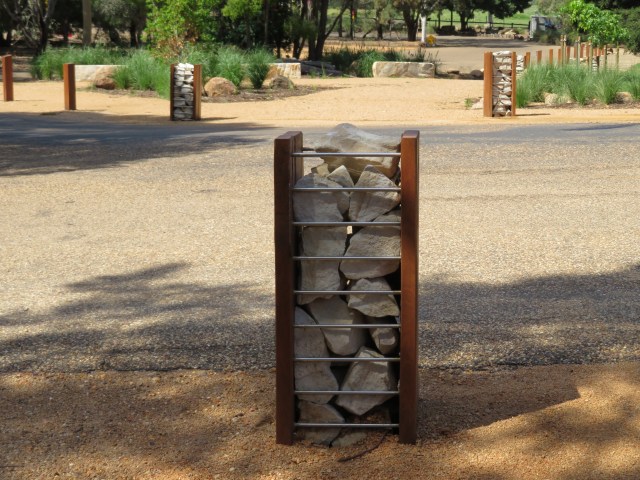
Much more attractive than large yellow cylinders, I’m sure you’ll agree.
I could have stuck around in this area for the Asian forest talk and feed – the keeper feeds the otters and the nearby rhino – but I decided to do that tomorrow. Today, I wanted to see the African wild dogs being given a carcass. You’ll get a lot of videos of these guys, because they were really interesting.
This is their enclosure:
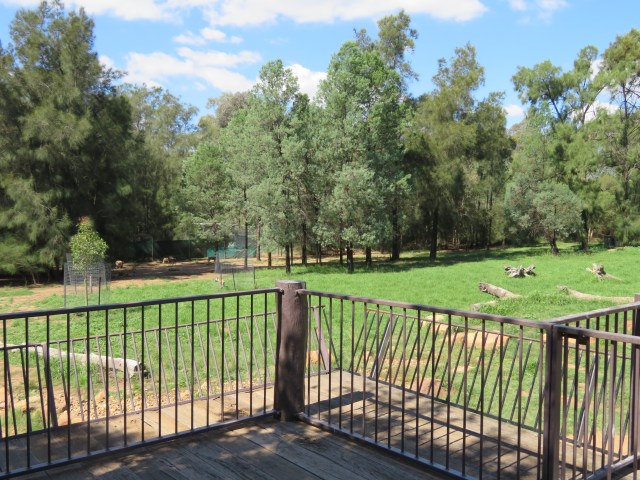
The pack:

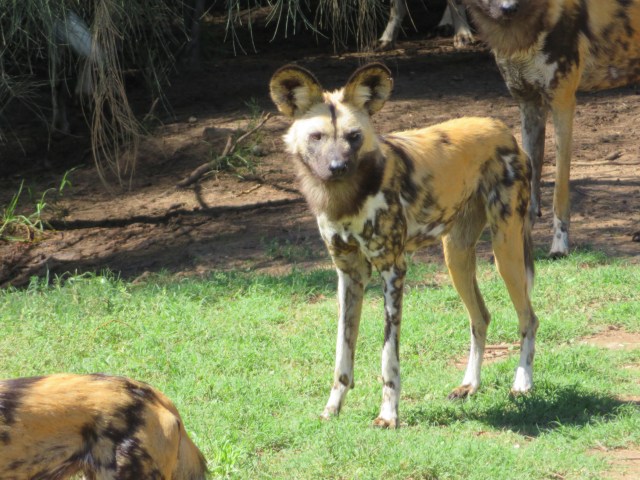
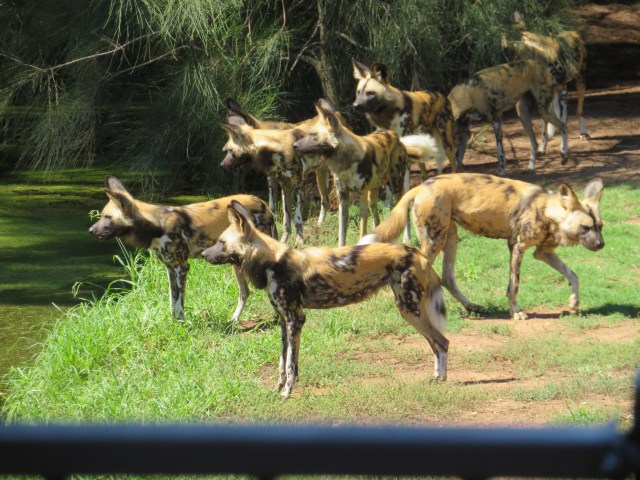
Or some of them, at least. This pack consists of an alpha pair, the alpha female’s sister, and the alpha pair’s offspring. They’ve done pretty well – they had nine pups in their first litter, and eleven in their second, which means this is already quite a big pack. African wild dogs can have up to twenty pups in a litter, so eleven isn’t unusual. In the wild, African wild dogs are the most successful hunters around – most predators only make a kill about 10% of the time, while the wild dog hunts are successful almost 80% of the time. That’s a big difference.
Most of them were relaxing in the shade:
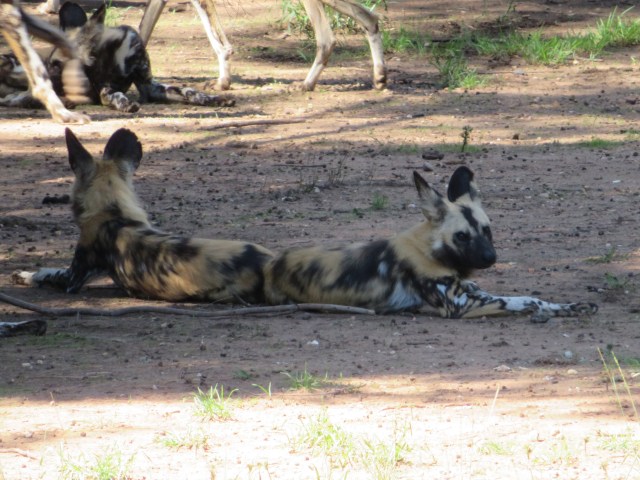
I took this photo because it really shows off their ‘Mickey Mouse’ ears:
Is there something in the water?
Into the water!
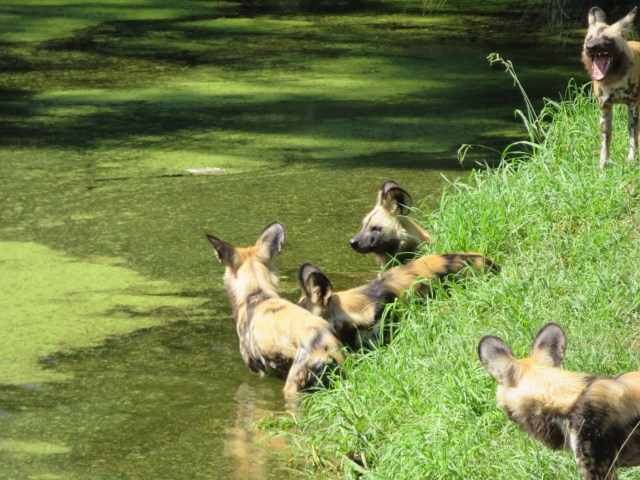
‘We may have made a mistake.’
Some of them also jumped in the water just to cool off. I took a video of this one splashing around:
When the keepers arrived, they knew what was coming. The whole pack rushed over:
And gathered on the shoreline:
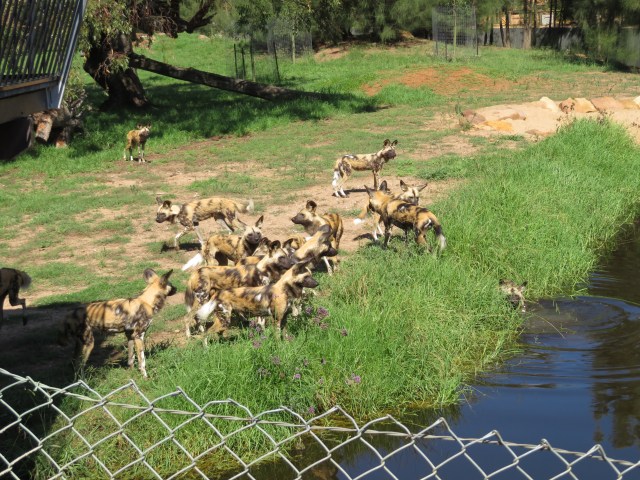
Some of the younger ones were getting excited and rough-housing with each other while they waited:
Then the kangaroo carcass was dropped:
As you can hear, they don’t bark, but instead make noises like squeaky toys. Or like hyenas. I took a photo of some of the younger pups swarming part of the carcass:
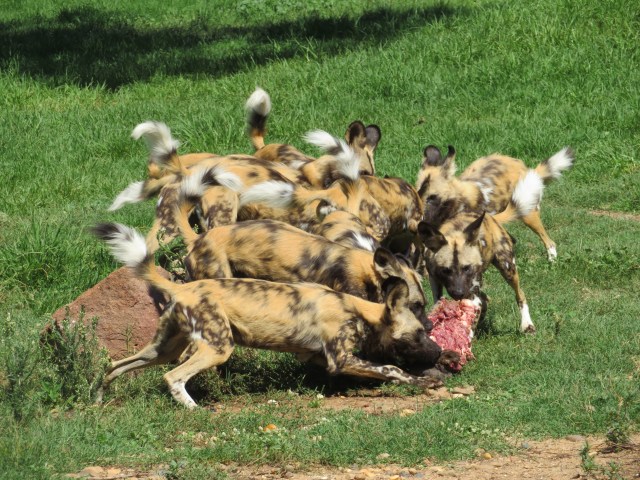
At the moment, the youngest litter still has feeding rights, but as they get older they’ll have to learn their place and wait for Mum and Dad to eat first.
One of them got a big, tasty piece, and some others chased it for the food:
This one managed to snag a bone, and didn’t want anyone else stealing it:
The island of black and white ruffed lemurs was close by, so I went to check it out:
The lemurs:

A close-up:
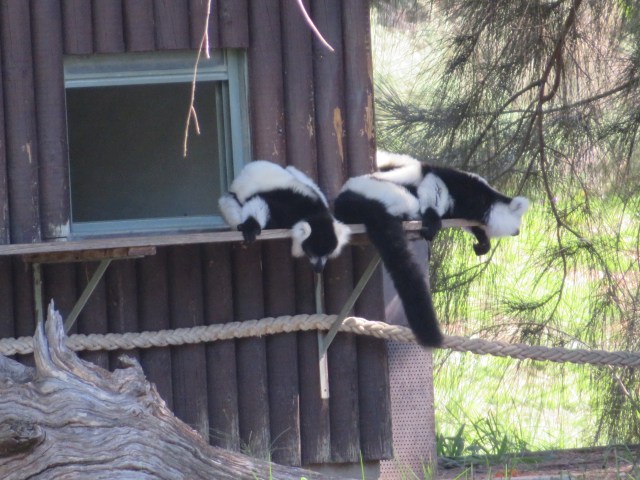
Again, no video because they weren’t really doing much – just lazing around. Probably shows how smart they are; they know they don’t have to work for food, so they’re taking it easy.
The last keeper talk of the day was with the Galapagos tortoises, on the other side of the zoo from the African wild dogs, so I made haste across the park. I passed the addax enclosure on the way:
The addax:
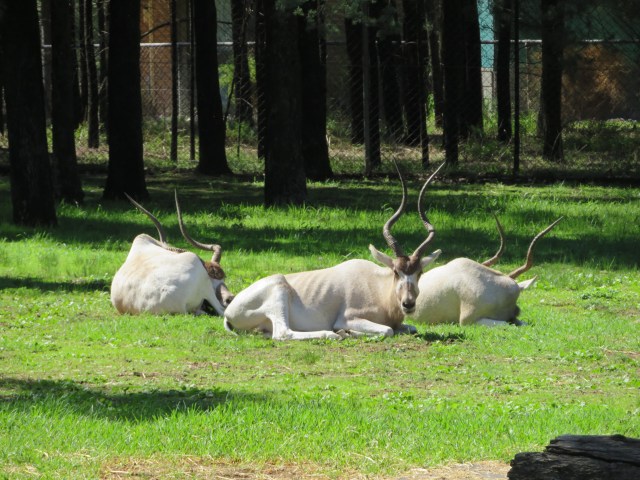
They’re also called the screwhorn antelope, for obvious reasons. Both males and females grow horns, and they’re primarily nocturnal, which is why these guys aren’t doing much.
I love the way they look like they’re wearing little wigs between their horns.
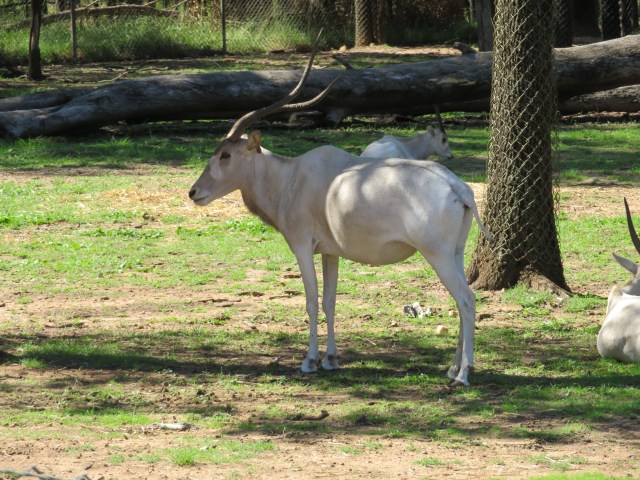
These horns are curving backwards – I’m not sure why:
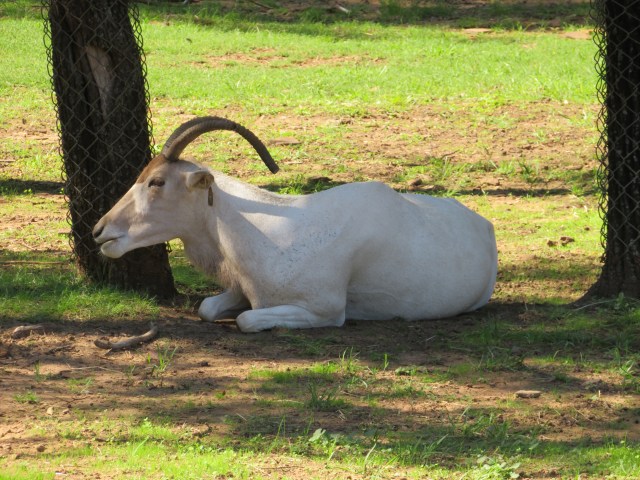
This one has a broken horn:
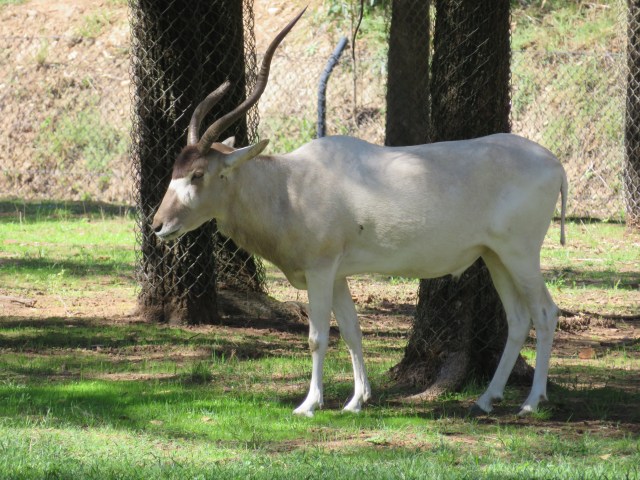
I also took photos of two little ones:
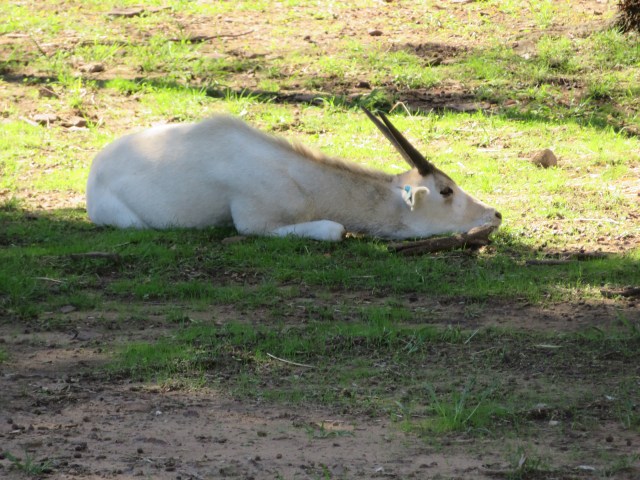
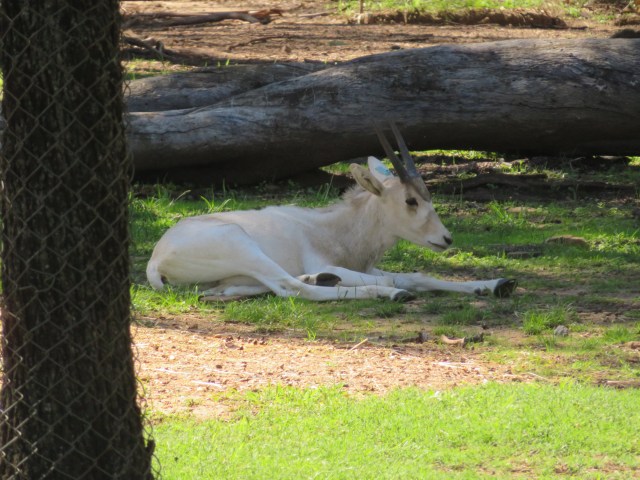
I did spot one of them rubbing its horns against a tree:
I think we can guess why that tree had that big gash in it.
I hurried past the Australian native animals to find myself at the Galapagos tortoise enclosure, just in front of the zoo’s exit:
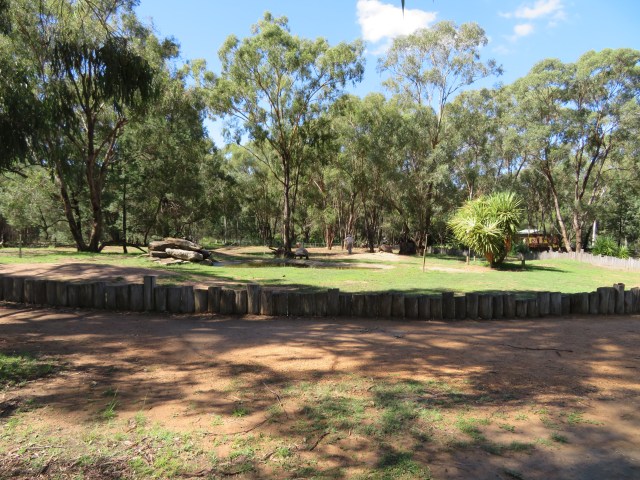
The keeper was just starting to feed them, and I took a video of one of the tortoises trying to follow her (very slowly):
The feeding:
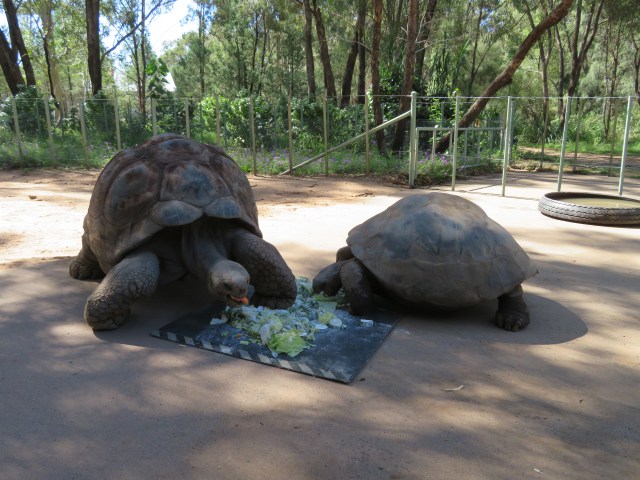
The white stuff over their food is calcium powder, a supplement to help strengthen their shells. It also helps the females produce strong eggs – some of the eggs the females here have produced are very soft and collapse easily, so the calcium should help.
This is a female:
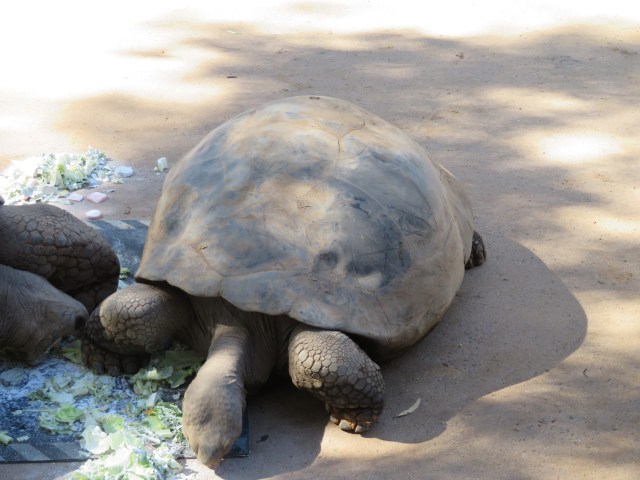
You can tell because she’s smaller, and has a smoother shell. The males tend to be larger, and have pyramid-like protrusions:
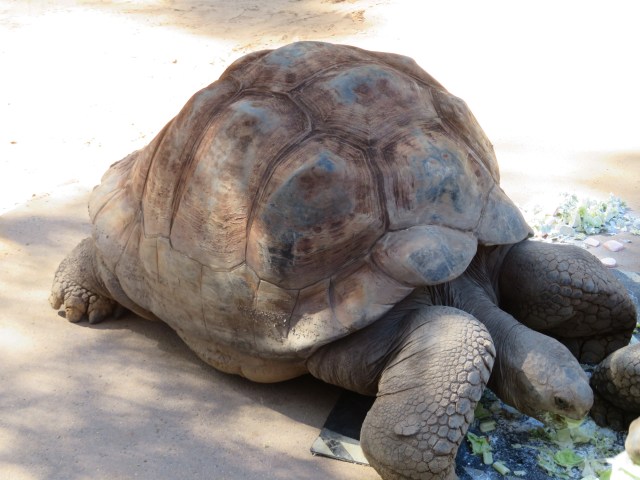
You can’t see it, but males also have a curved plastron, which is the shell across their bellies. That’s so they can climb on top of a female to mate with her – if they had a flat plastron like a female, they’d just slide off. But these differences only become apparent when a tortoise is about 15 years old – until then, males and females are indistinguishable.
Most of the tortoises in the exhibit are siblings, from a captive-bred hatching about 45 years ago. But this little female:
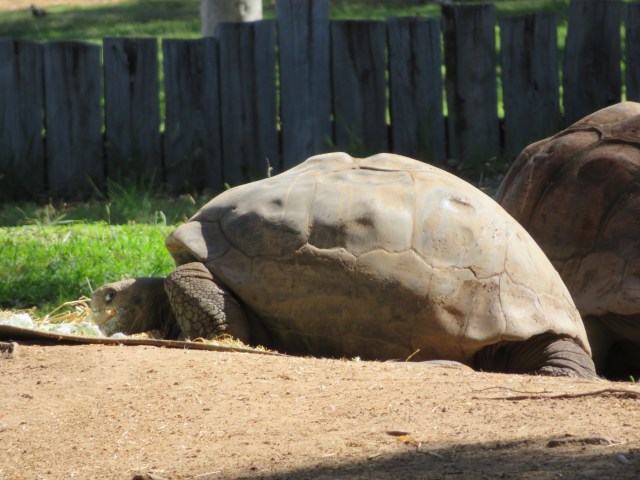
Came from the Galapagos as an adult, and she’s at least 95 years old.
Back to the two right in front of me, they weren’t real good at sharing and would occasionally hiss at each other. You can hear some of it in this video:
This next video is the keeper activating a funny reflex in them. You see, these tortoises have a symbiotic relationship with the Galapagos finches – the birds will fly around them, touching them, and the tortoise will stand up and go into a trance, staying statue-still so the finches can clean underneath their shell, and all the little crevices in their skin. When they’re in this state, even their eyes stop moving:
Pretty weird, huh? I took a photo, too:

They also had some hatchlings! They were in a separate area, though – they won’t join the adults until they’re sturdy enough that they won’t be crushed. Also, because they’re still young, no one knows their sex, so they’ve been given relatively neutral names. The keeper said they could ultrasound them to determine their sex, but no one really sees the need to put them through that procedure.
So, this is the hatchling area:
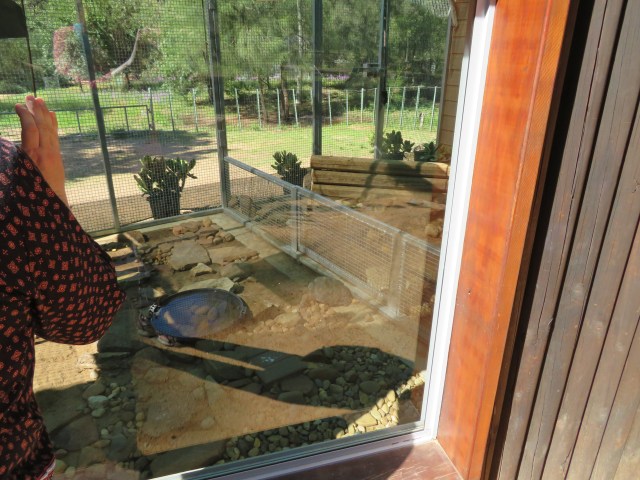
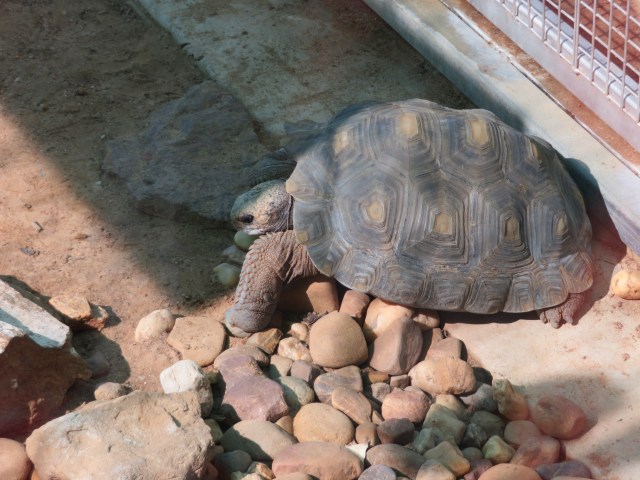
This is NJ, hatched in 2011:
There were two in the next section, but I could only get a photo of one without the sun throwing so much glare that nothing came out. So, this is either Pena or Turbo, hatched in 2014:
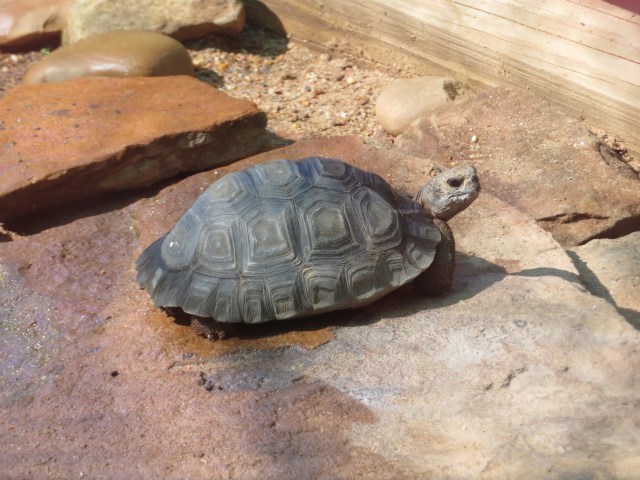
They’re pretty tiny compared to the adults. At this point, both my water bottles were empty, I’d walked so far my hip joints were starting to ache like I was a creaky old woman, and the camera was giving out, both in memory and battery. But I shall return!
 Jenny's Adventures
Awesome work – thanks
LikeLike
I’m so pleased I have this record of those days.
LikeLike