No, this is not related to what happened last night – the old Dubbo gaol is a museum and tourist attraction.
It’s actually on the town’s main street, which I think is kind of hilarious. “Welcome to Dubbo! Here are the swanky shops and restaurants, and here’s the old gaol.” This is the entrance:
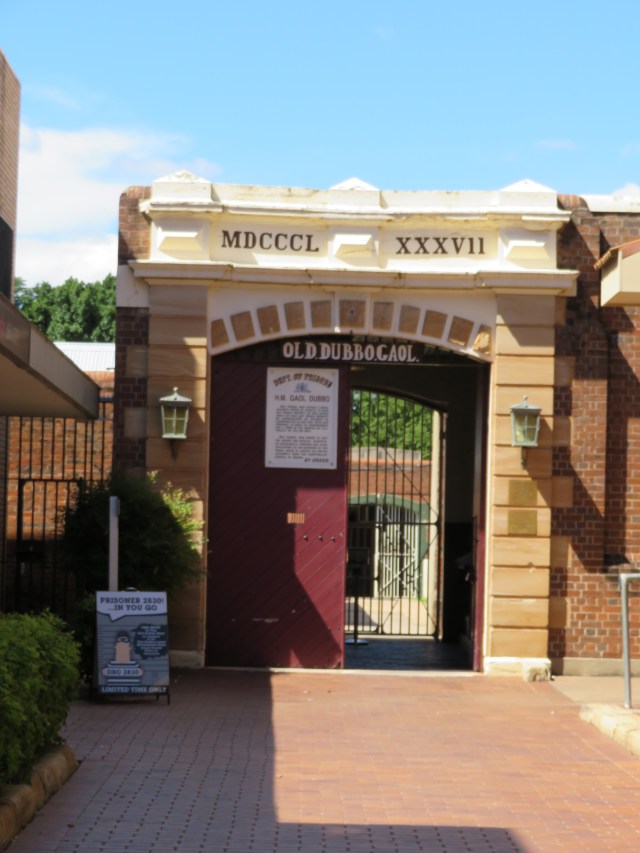
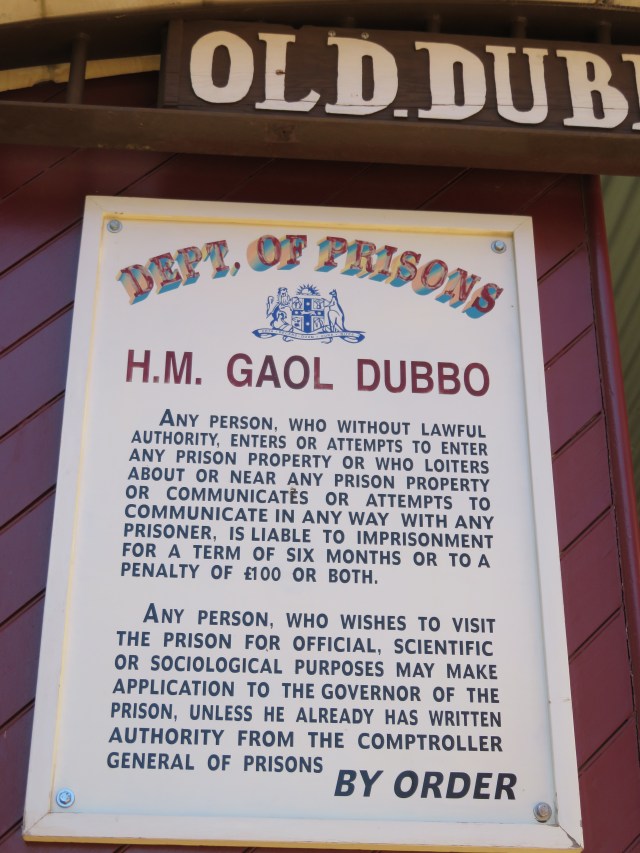
Yes, I’m going to keep using the old-timey spelling. It seems very fitting, considering. This is the sign on the door:
Inside the gaol:
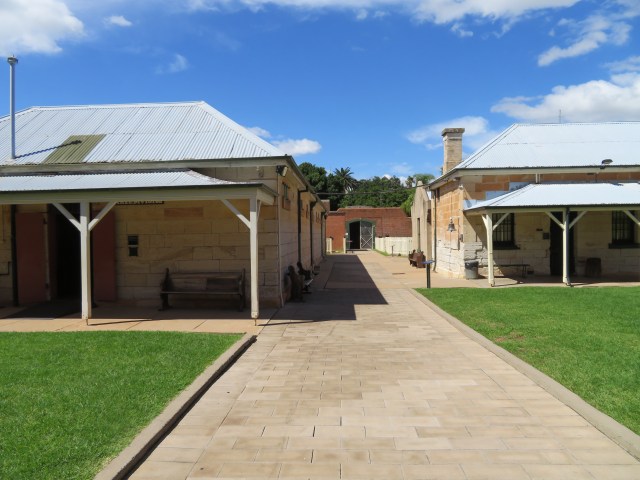
You see that green patch on the roof? Remember it – it’ll be important later.
The gaol started as a courthouse lock-up in 1847, and became a Minor Gaol in 1887. It was downgraded to a police jail in 1914, and mainly used as a holding facility for those awaiting trial until it was finally shut down in 1966. I was given a map before entering, and I took a picture so you guys could have some idea of the layout:
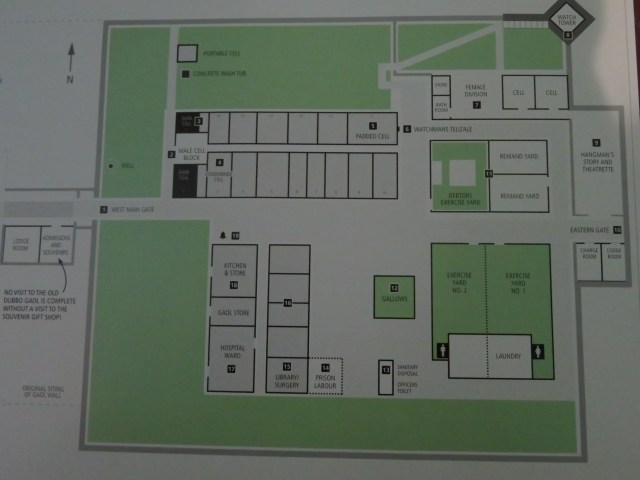
The Western Gate is the main entrance, so the first thing I saw was the reconstruction of the well:
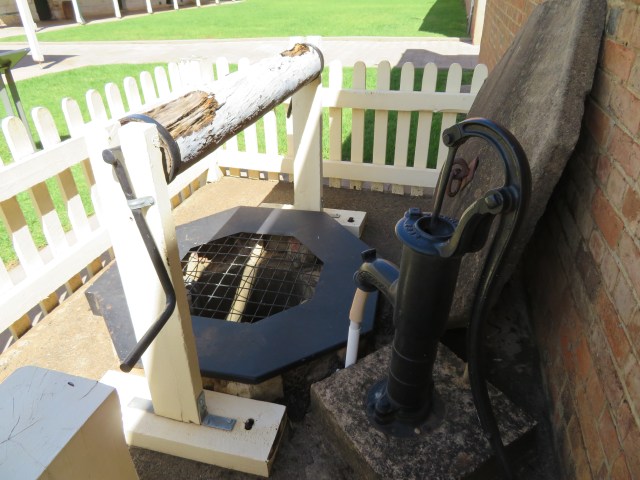
Originally, there was no well for the gaol, and barrels of water had to be hauled in by bullocks from a nearby property. But when a severe drought hit in 1865, the property-owner complained, and the well was dug. The one in the photo is a reconstruction – the actual one was filled in when indoor plumbing replaced it.
In that photo up there that I took inside the walls, the building on the left is the male cell block. That was where I headed to next.
The watchman’s telltale:
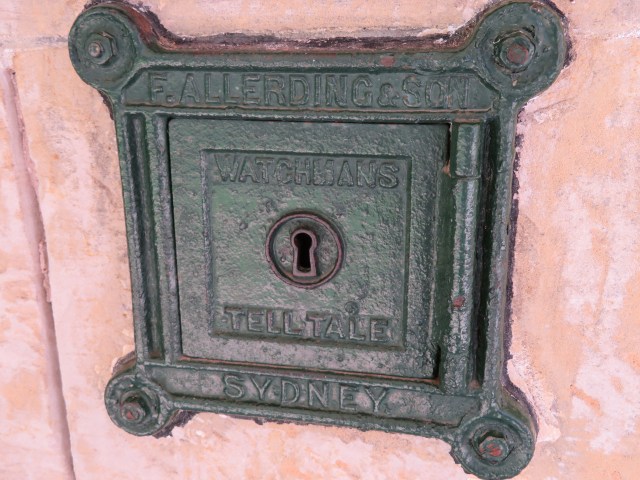
Basically, this was a security thing. The warders inserted a key and wound up a spring inside, and if they didn’t do this every hour, the spring would set off an alarm bell. Pretty clever, really. There were four of these scattered around the prison.
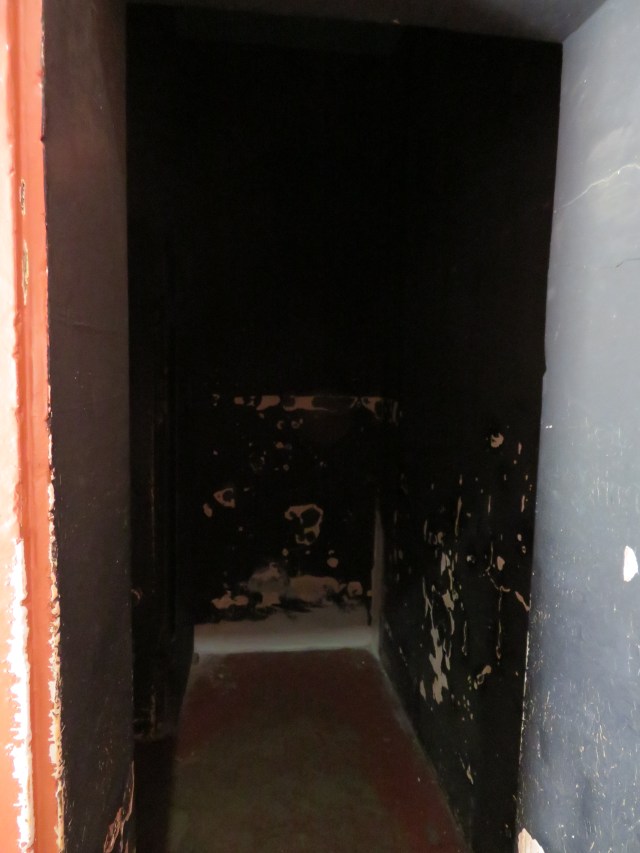
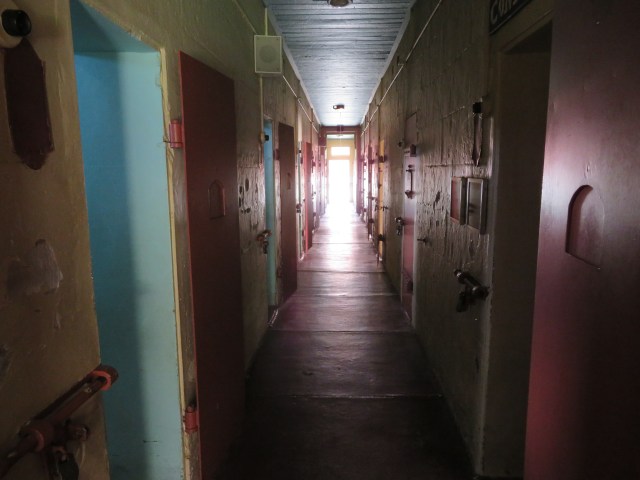
The first cells in the male block were solitary confinement cells. They had this corridor to them:
And this was the cell:
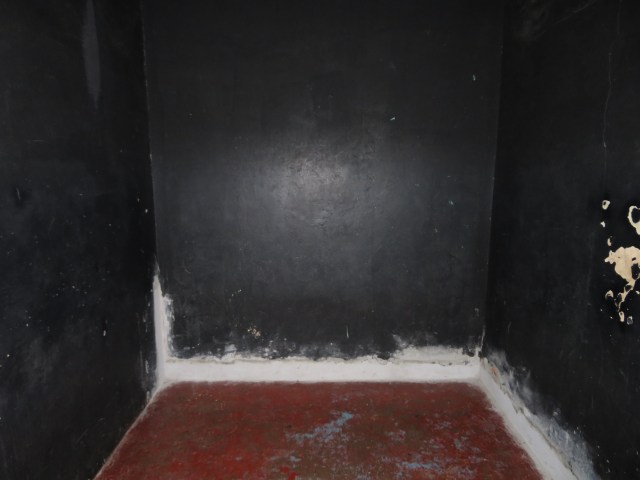
I needed the flash for that – it was pure blackness otherwise. These cells were in total darkness, and they were so insulated there was complete silence. When the warders brought food in, they’d close the door to the corridor so the prisoner didn’t see any light at all.
Sounds pretty horrifying, doesn’t it? And to think, people spent up to twenty-one days in there. The informative sign told me that dark cells were discontinued in 1895, when it was acknowledged that they did more harm than good. Which is a delicate way of saying, “we realised that when we put people in these things, there was a good chance they’d go crazy”.
There was a mannequin in the other solitary confinement cell:

The rest of the cell block:
They also had a condemned cell, for prisoners awaiting execution:
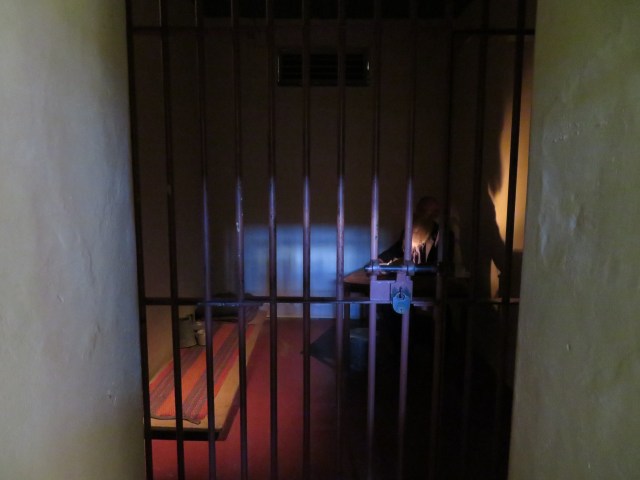
That white stuff at either side of the photo is the walls – there was a small recess in front of those bars, where a warden would sit 24/7 as a precaution against escape attempts. The mannequin inside is supposed to be Thomas Moore, who was convicted of murder and hanged in 1897.
Hangman’s kit:
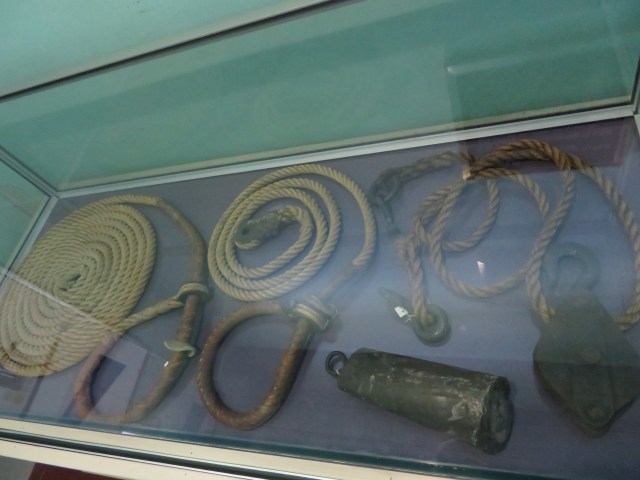
Yes, this is exactly what you think it is, including ropes of various lengths to accommodate different sizes of prisoner.
This used to be a cell, but was converted into an exit passage in 1880:

No one’s quite sure why they did this, but the building you can see outside is the infirmary, so it’s assumed this was used to quickly transport prisoners in medical emergencies. I like how they said they couldn’t know for sure, though, just in case a document turns up detailing that the head warden wanted another exit in case of the zombie apocalypse. Gotta cover their bases, you know.
Each cell had this outside it:
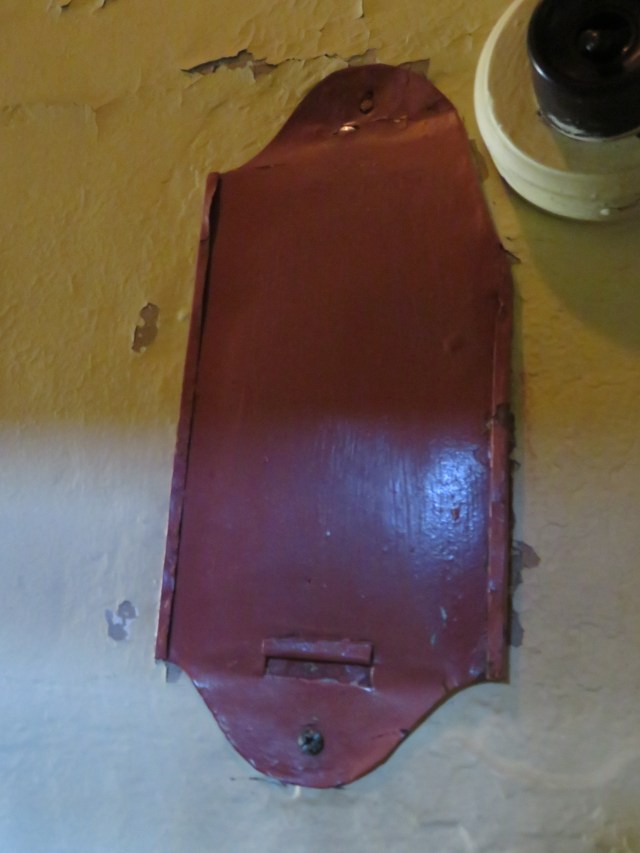
This was where an identification tag was attached, with the name of the prisoner, their religion, and the items allowed in their cell. If the tag was turned to face the wall, it was a signal to the day-shift that the prisoners inside had been rowdy during the night, and would remain in the cell all day as punishment.
The cells:

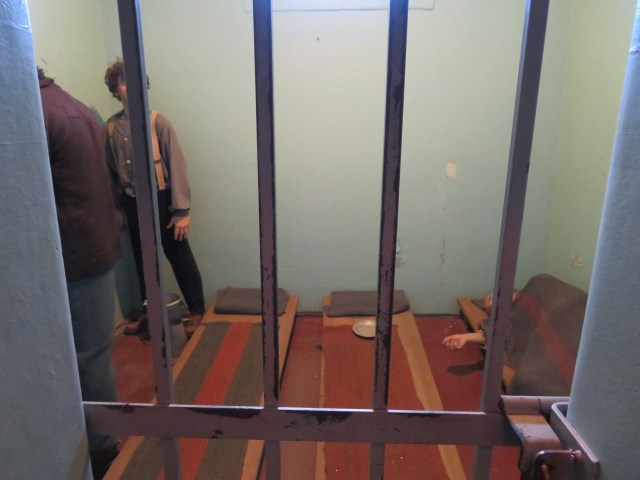
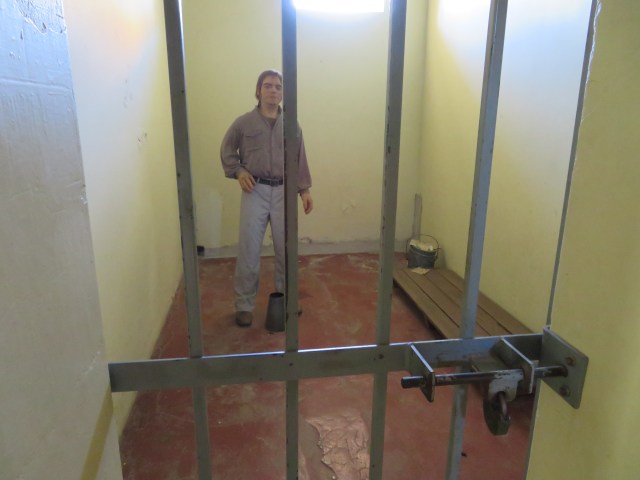
These are pretty faithful reproductions of the conditions in the jail – bed boards (which later had straw mattresses on top), two blankets in summer and three in winter, a quart pot of water and a tin cup, and a bucket that served as a toilet. And don’t forget the over-crowding.
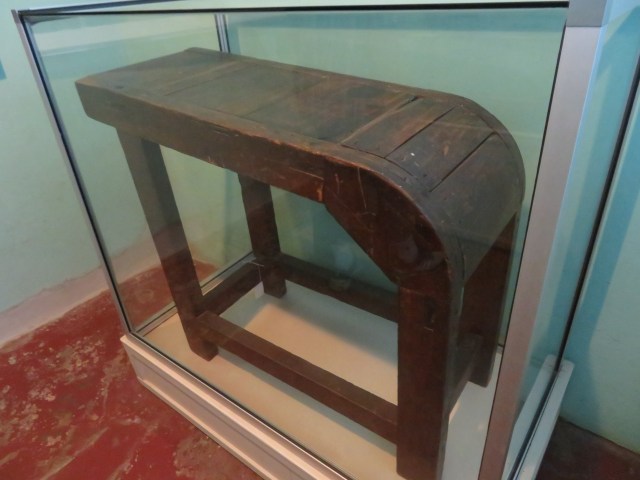
A whipping stool from 1900:
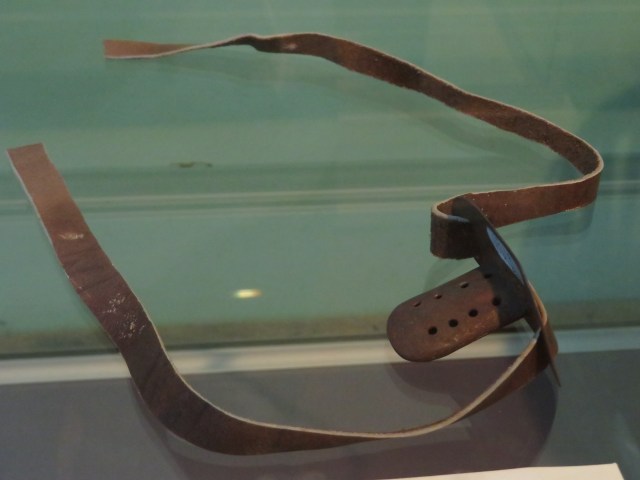
A wooden gag – the straps were buckled behind the head, and breathing was restricted to the hollow centre:
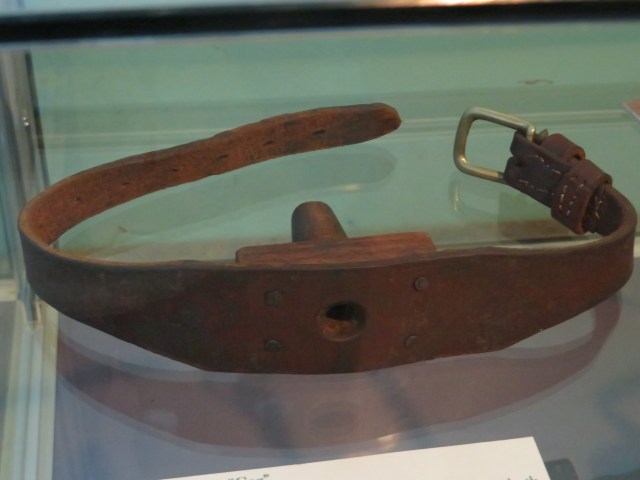
The metal gag – introduced in 1895 and seen to be more ‘humane’, as it allowed prisoners to breathe more easily:
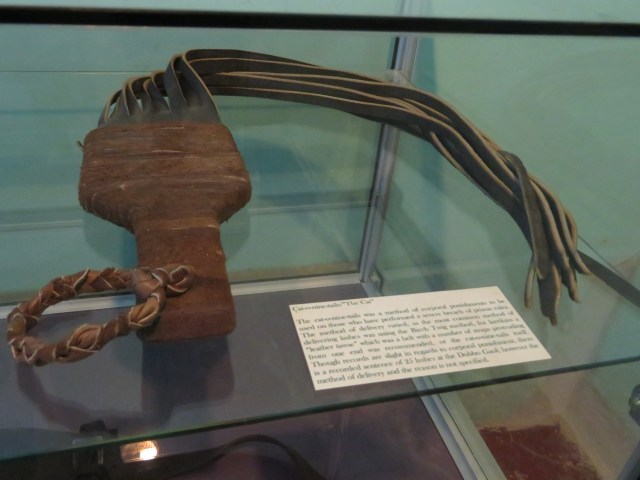
Cat-o-nine-tails:
Leather muff, used to restrain psychiatric prisoners:
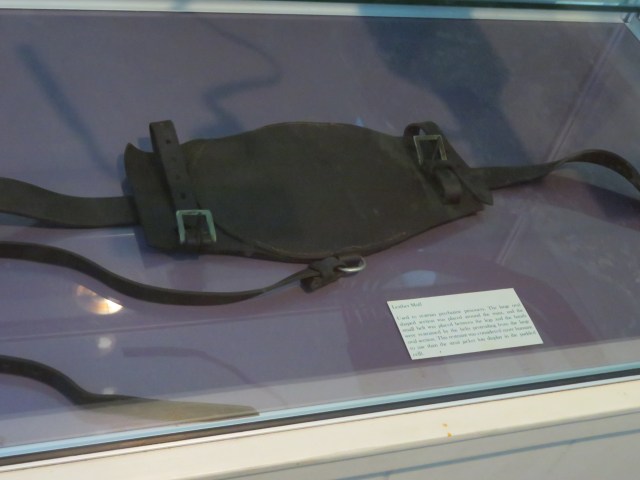
Basically, the large section went around the waist, a small belt went between the legs, and the arms were restrained by the large belts on each side.
The padded cell:
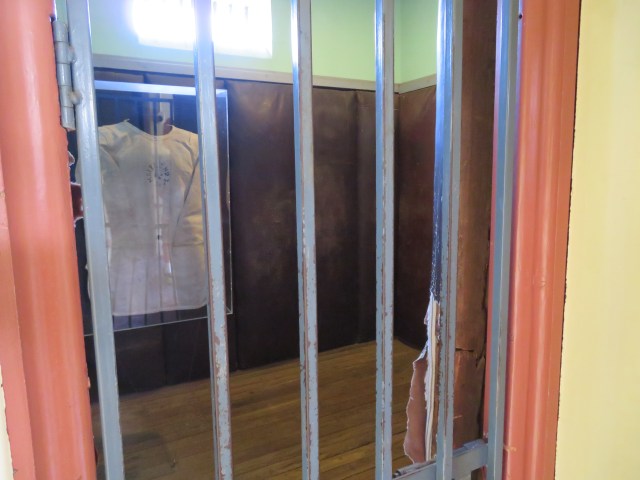
Close-up of the strait jacket:
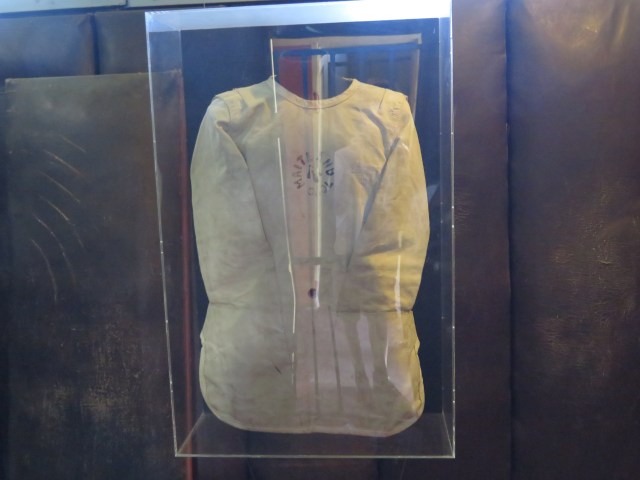
It probably makes me a bad person to find it funny that, with the way the jacket is made, anyone wearing it would look like they had their hands stuffed in their pockets.
A tribute to an inventive, but unsuccessful, escape attempt:


In 1958, two brothers (possible named Geyer), tried to escape by burning a hole in the roof of their cell. The plan was to crawl into the roof cavity, pull back some of the iron sheeting to get out onto the roof, then one brother would attack the single warden while the other stayed on the roof as lookout. Unfortunately for them, the warden was alerted to their plan – possibly by the smoke – and had already gathered reinforcements by the time they appeared on the roof.
Remember that picture of the male cell block? The one with the green patch on the roof? The green patch is where the brothers pulled back the iron sheeting and got onto the roof. And were then re-captured and sent to solitary confinement. Sometimes dreams just don’t work out.
Outside the cell block, close to the well, is a concrete wash tub:
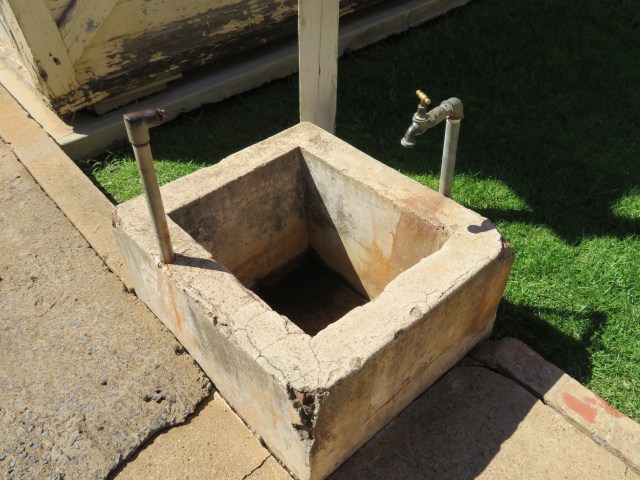
Prisoners had to wash their belongings here, to try to keep down the vermin. I’m not sure how successful that would have been. I mean, we know things like bedbugs don’t leave easily, but maybe it helped with the cockroaches.
Portable cell, from 1900:
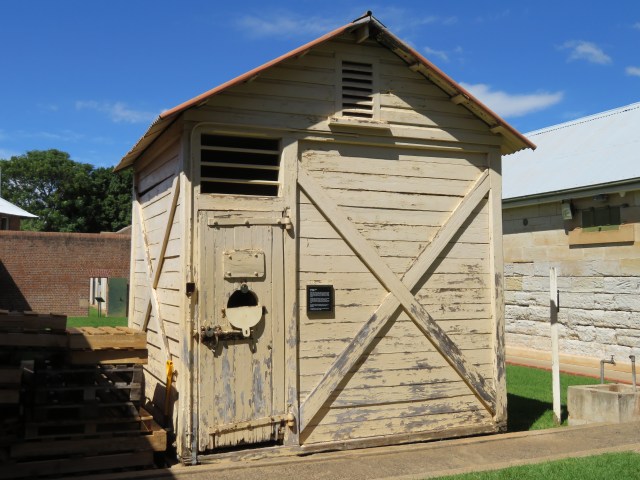
This was never actually used in Dubbo, but these types of cells had steel wheel underneath so they could be pulled by horses or transported by train. So, you could lock someone up in them, and you never had to take them out until you got to the actual gaol. They usually had two rooms – one was the cell, the other was an office.
This area used to be the vegetable garden:
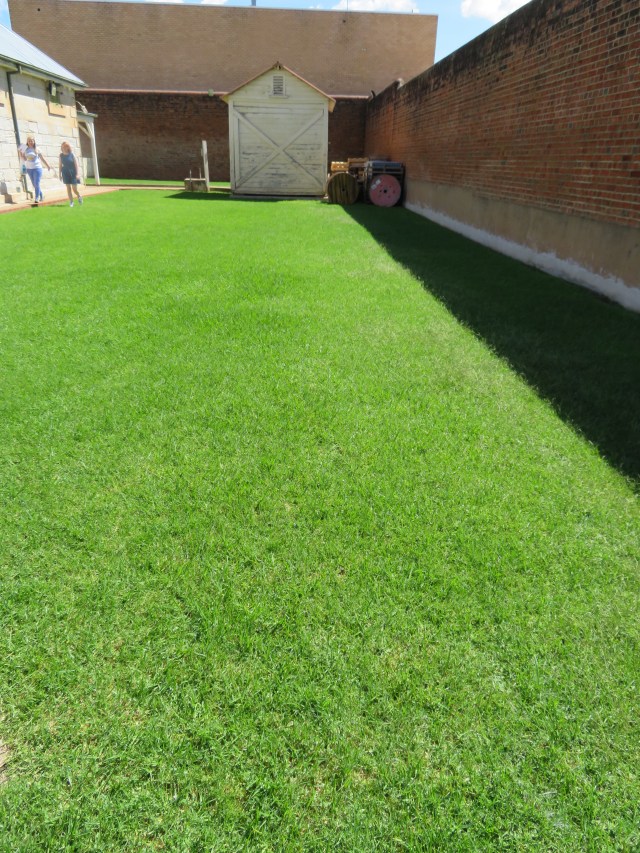
To the female division:
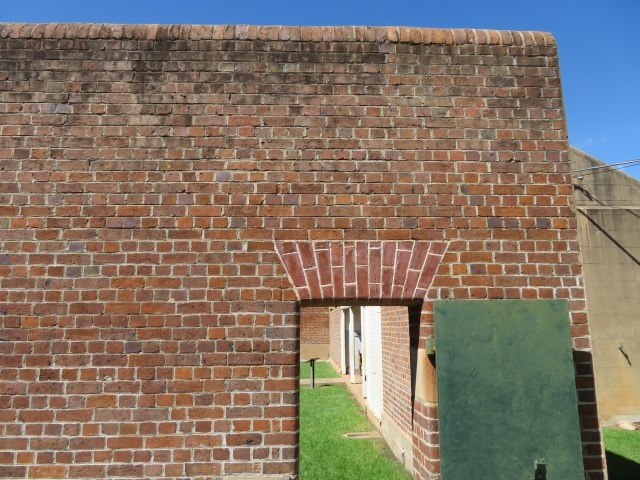
This was constructed in 1887 – before that, female prisoners were held at the far end of the male division, with separate toilets and exercise yards. In 1909, the State Reformatory for Women opened at Little Bay, and most female prisoners went there instead of local gaols like Dubbo, so this became a holding centre for those on remand, or who were serving a sentence of less than three months.
The female division had a courtyard:
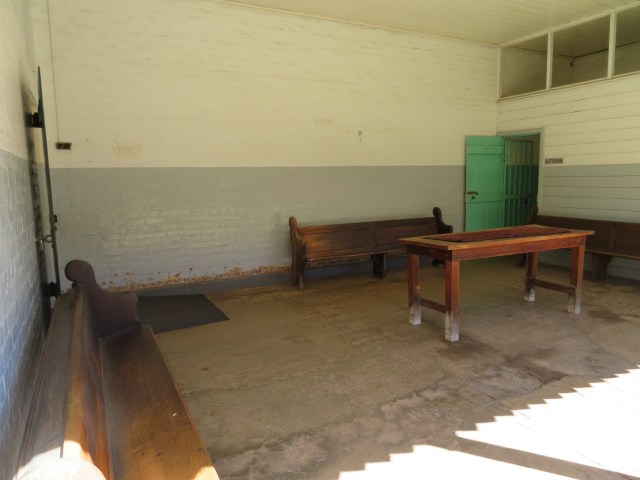
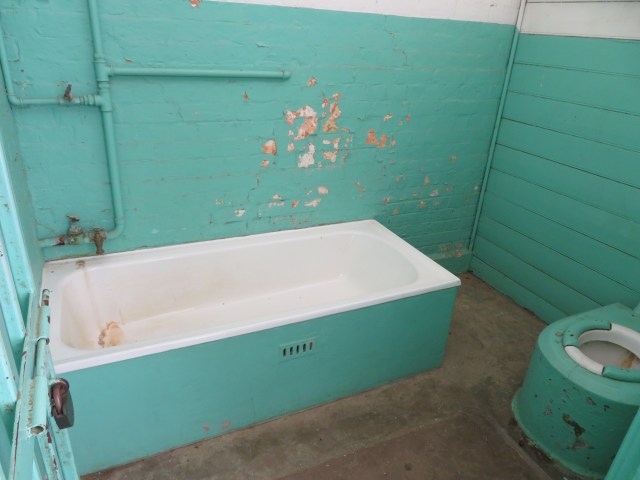
The female prisoners would have done laundry and needlework here. That green door in the corner leads to a bathroom:
The women’s cell block:
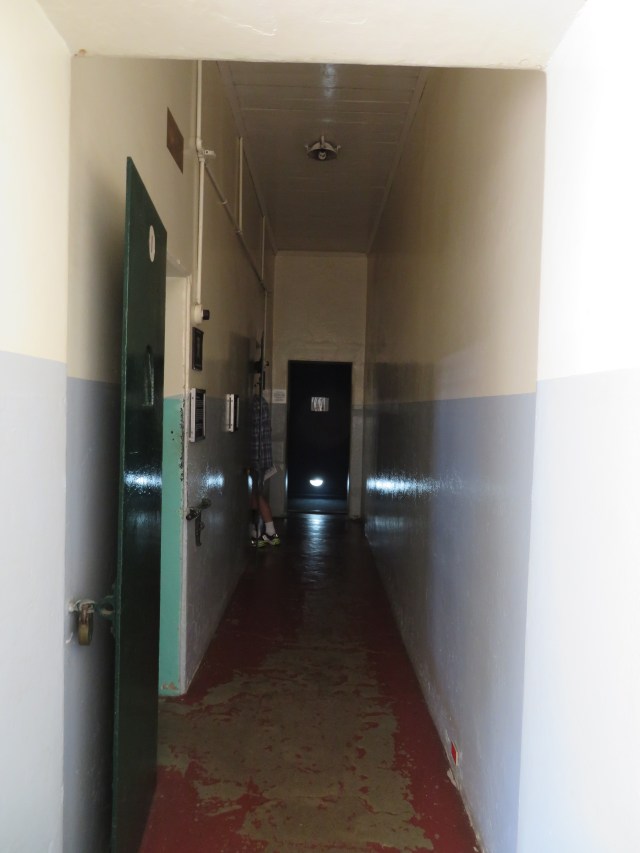
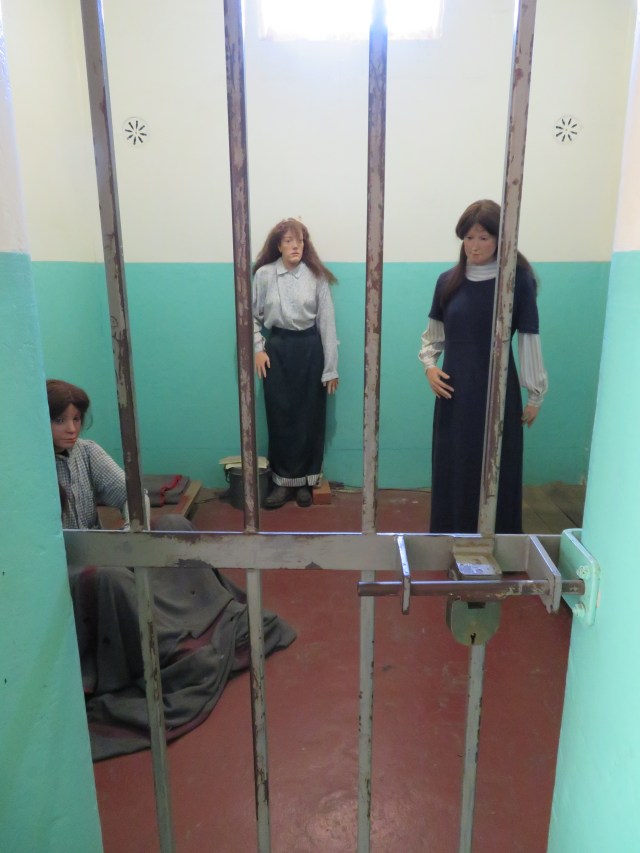

There were only two cells in this block, so over-crowding of the women inmates was very common.
The watchtower:
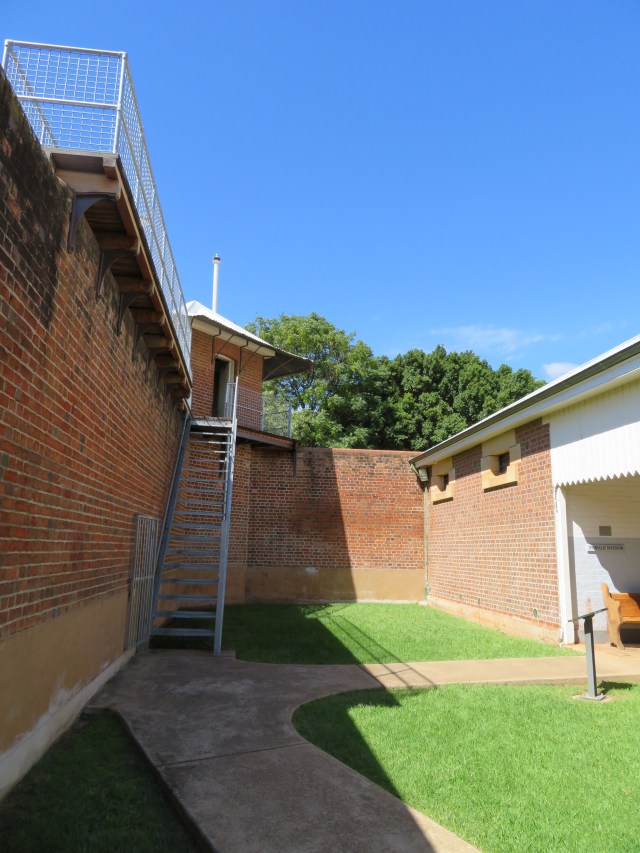
Inside:
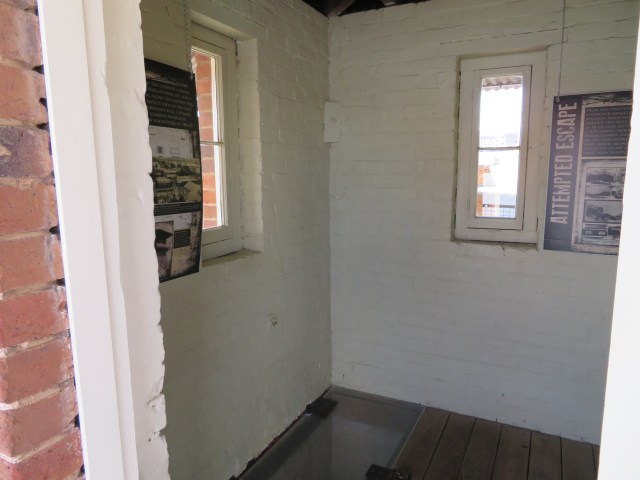
Partially reconstructed walkway:
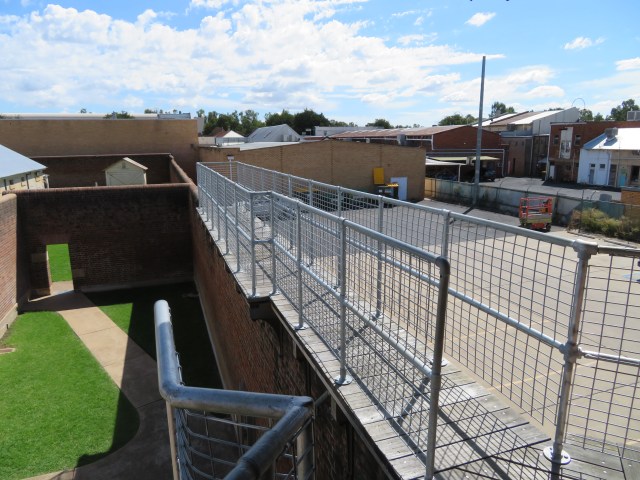
Looking over the jail:
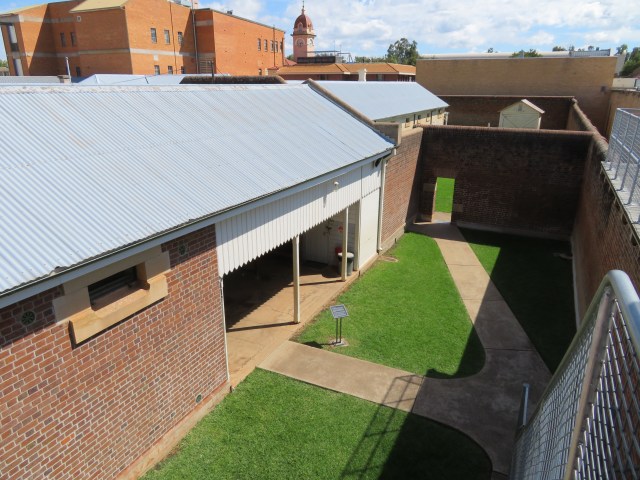
There used to be a second watchtower – you can’t exactly look over the whole jail from here – but it was torn down.
The Eastern Gate:
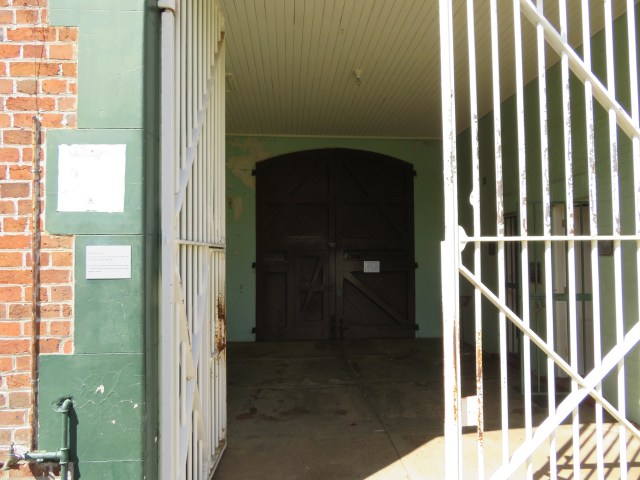
This became the main gate in 1929 when people complained about having the entrance to a gaol on the main street. You can see a little door within the gates on the left side – this is where visitors would have entered.
Also, check out the little window in it:
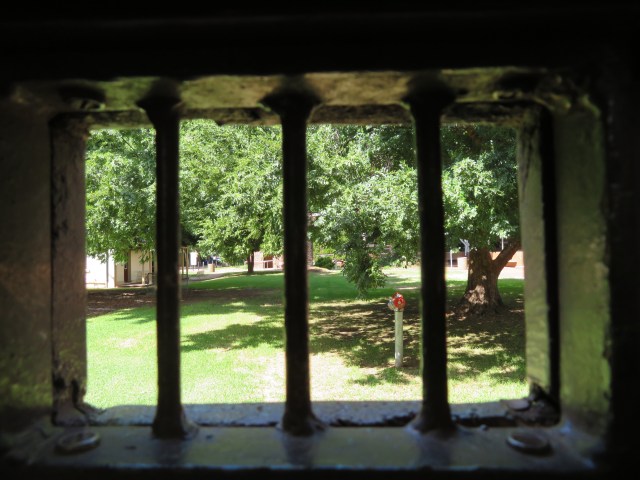
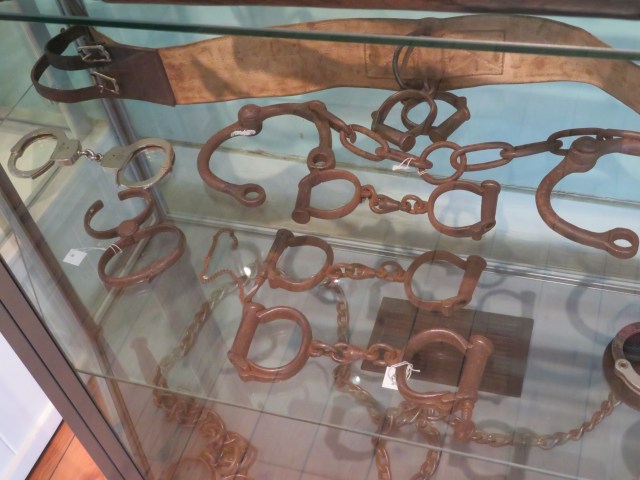
They had restraints on display:
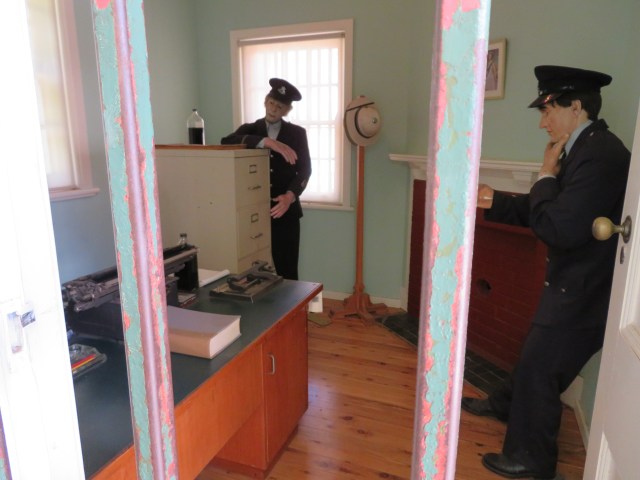
The Lodge room – the office for the senior wardens:
All the drainpipes around the gaol are recessed:
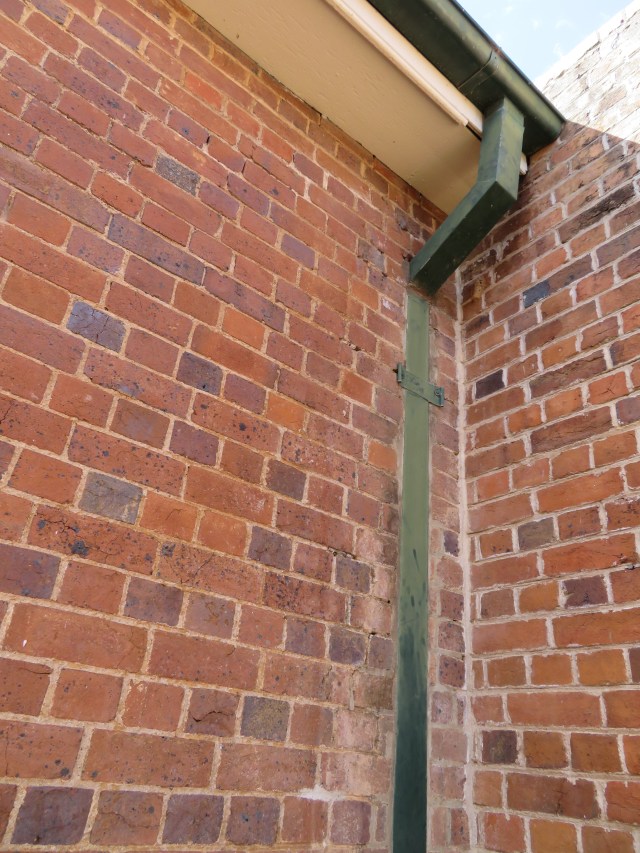
Apparently, this was done after a female prisoner managed to climb one to reach the top of the wall. I like that they only did this afterward, that someone look around and said “sure, there are drainpipes sticking out, but who would actually try to climb those skinny little things? No one’s going to do that.”
And later: “I was wrong.”
Remand yard:
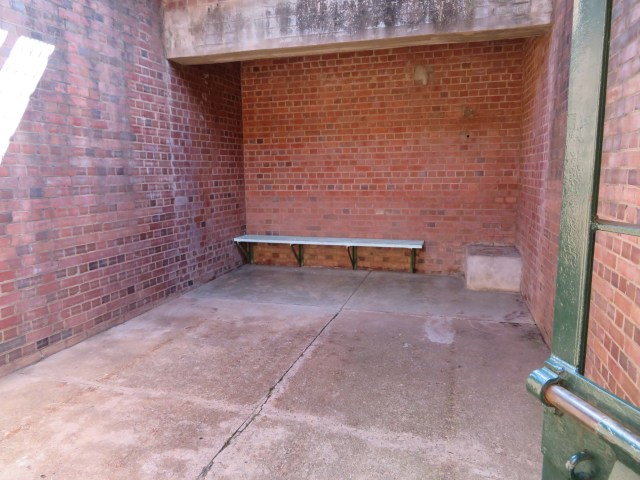
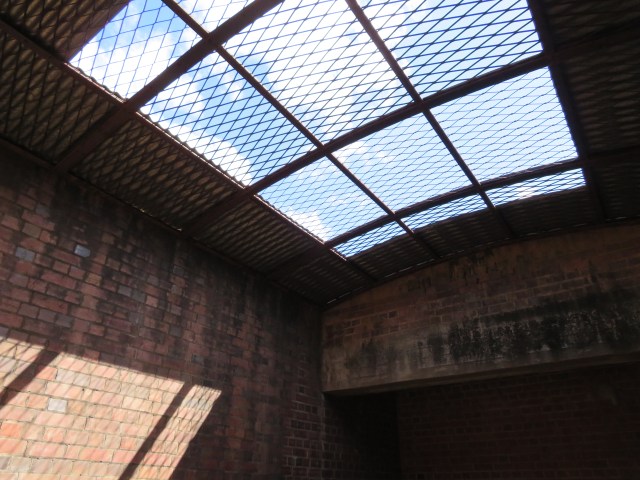
There were two of these – fully enclosed exercise areas for those awaiting trial, and not yet convicted.
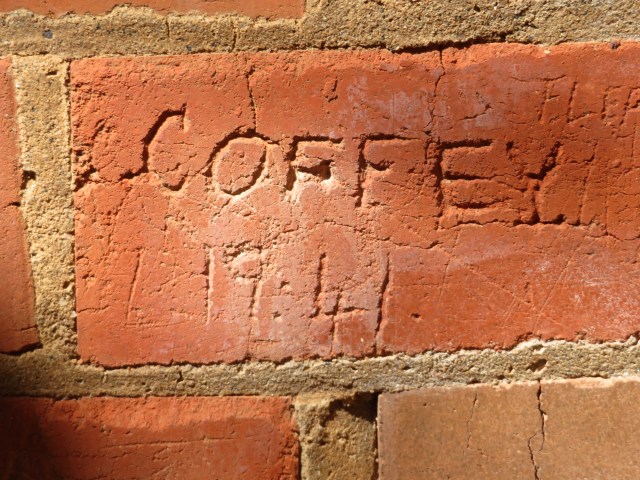
Names and dates had been scratched onto the brick in some areas:
The actual exercise yards:
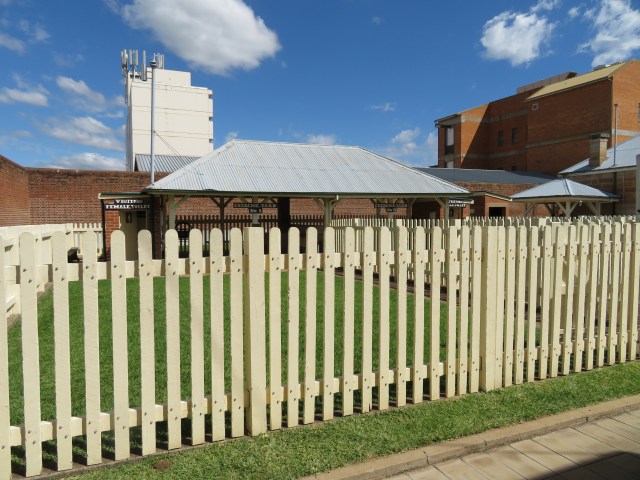
At the time, there would have been high walls keeping them separated, not these stylish fences. Before I read that I was very puzzled, thinking ‘even I could jump these fences in a pinch – was this place surrounded by wardens with guns or something to keep everyone in?’ But no guns, just walls that are now gone. Exercise yard 1 doubled as a laundry:
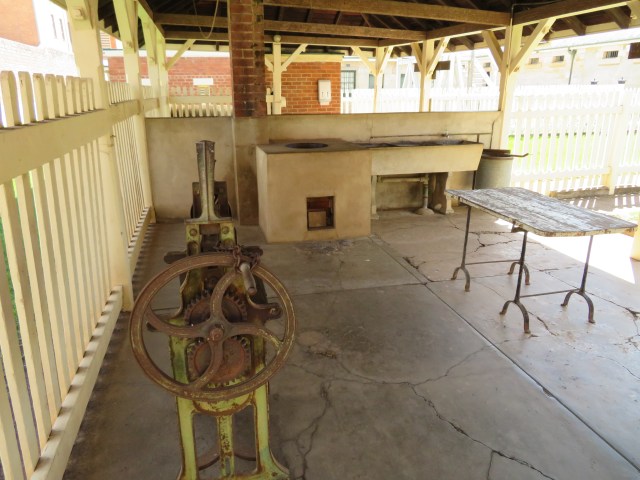
From underneath the shelter:

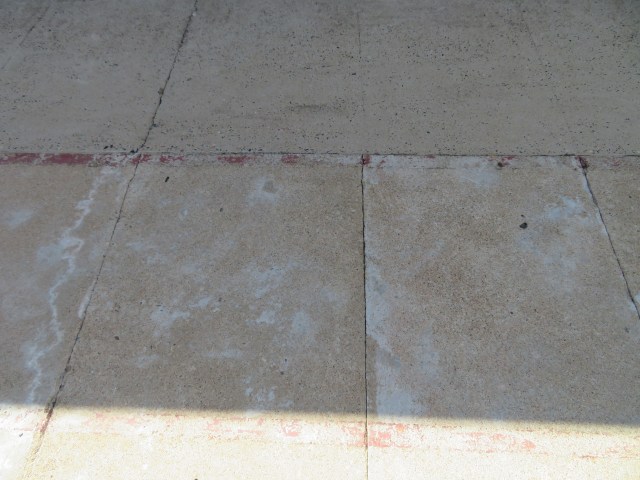
The remnants of a red ‘Role Call’ line painted on the ground:
The debtor’s exercise yard:
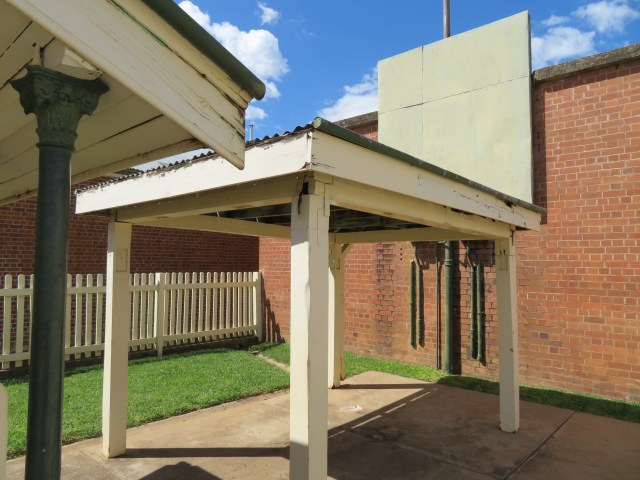
Debtors were very short term prisoners – they were held until their debt was paid, which was usually within a day. Later, this was the exercise yard for juvenile prisoners, to keep them away from the influence of older prisoners.
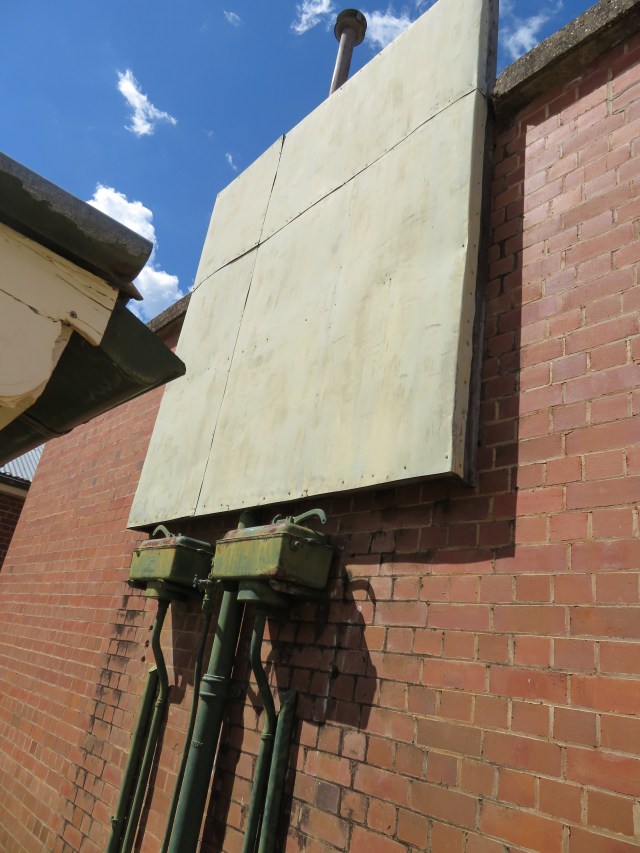
The shelter originally had a pitched roof, but this was changed to a flat roof after an inmate attempted to escape via leaping from the roof to the top of the remand yards. This panel against the drainpipes was also added to prevent escape:
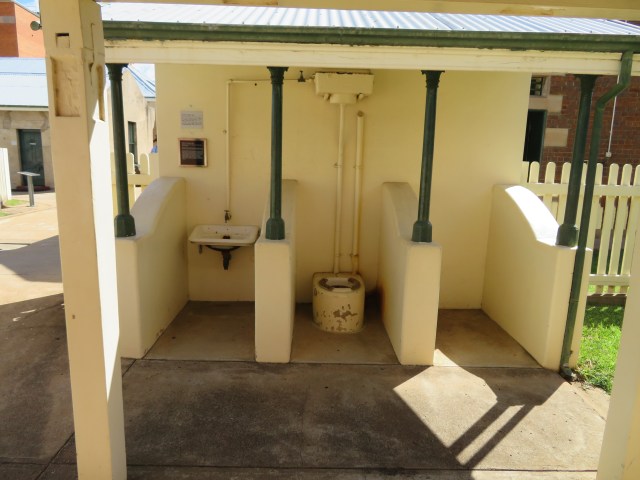
From inside the shelter:
The gallows:
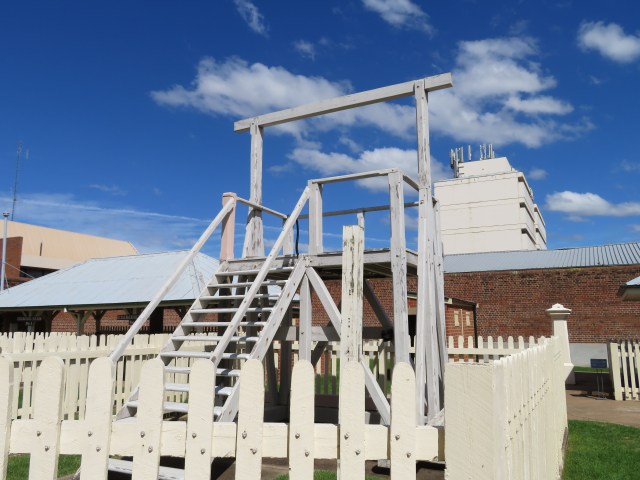
Kind of weird to think people were actually hanged there.
Sanitary disposal block:

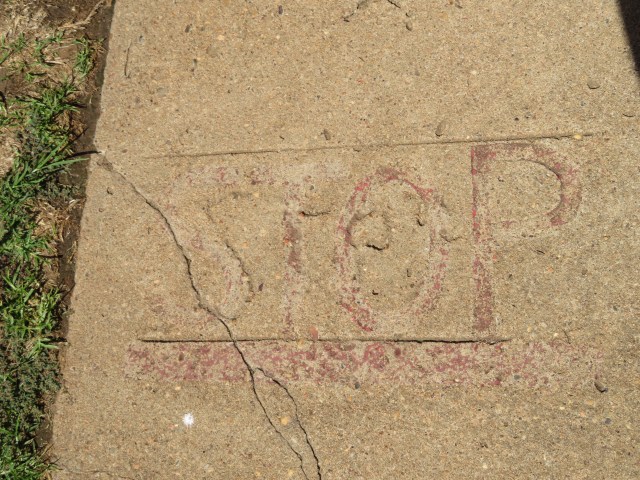
This was where the prisoners emptied the toilet buckets kept in their cells. They lined up behind the ‘STOP’ in the path:
And came up one by one to empty the bucket down this drain:
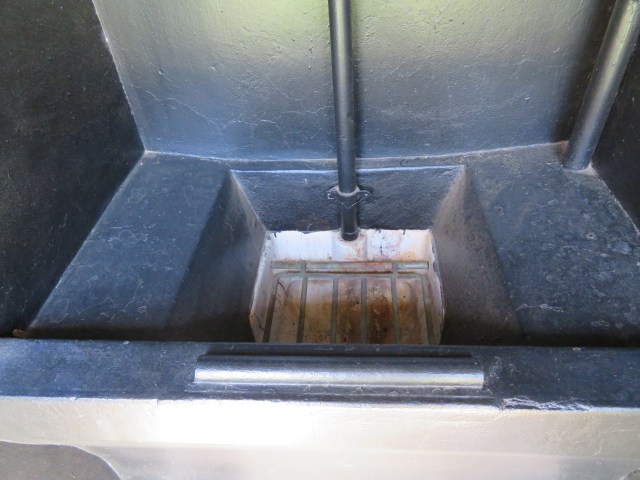
Then the buckets would be rinsed and sprinkled with disinfectant.
The hard labour yard:

Remember that exit to the infirmary all those photos and paragraphs ago? This is the infirmary:
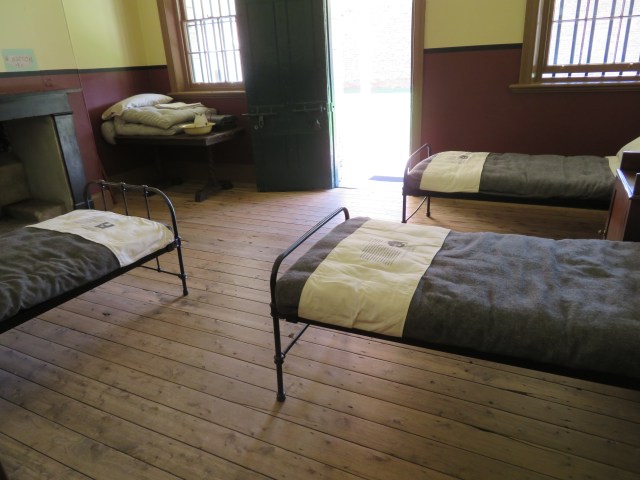
It was built in 1880, to reduce reliance on the local hospital. Even after it was built, most prisoners would be treated in the cell for minor complaints.
Gaol bell:
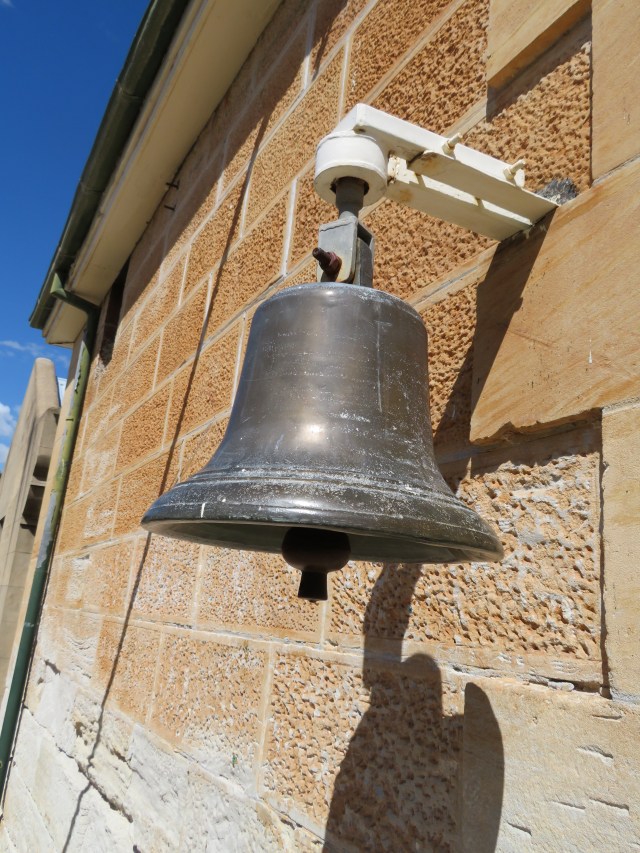
This tolled out the day’s schedule – one stroke for the wardens, two for anything regarding the prisoners.
This block is, in order, the kitchen, the food store, and the infirmary:
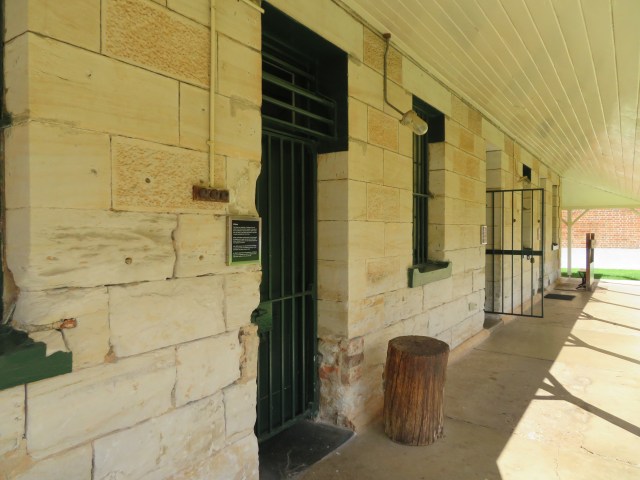
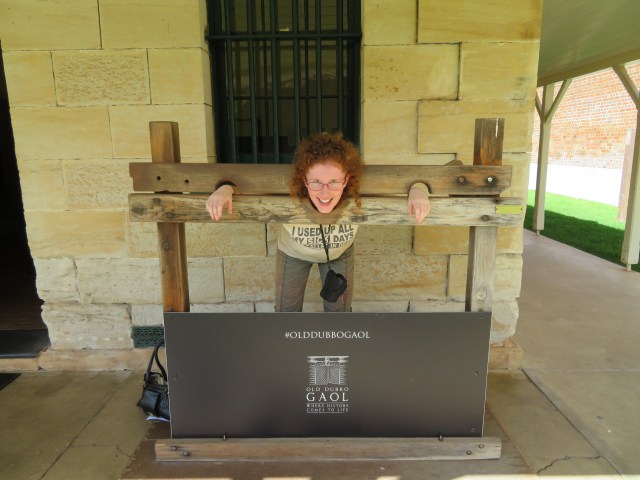
You can even see a pillory on the corner. I had my photo taken in it:
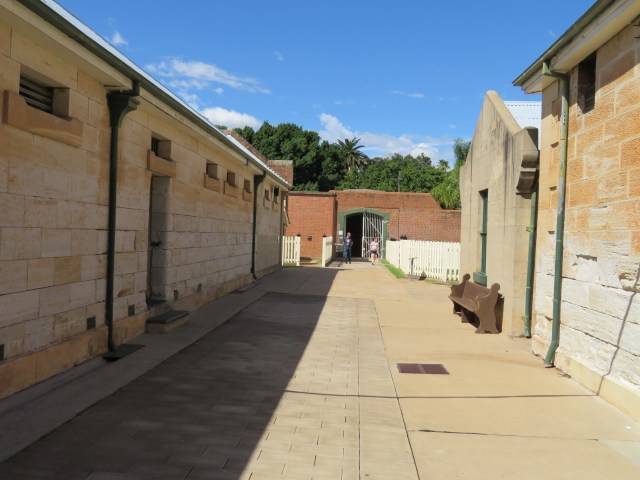
A last look back before I left:
 Jenny's Adventures
Looks fascinating! You look too happy in the pillory- there was no-one to throw rotten tomatoes at you, obviously!
LikeLike
Plus, I wasn’t actually locked in…
LikeLike