Today, I headed back to the Warrumbungles, to check out the observatory.
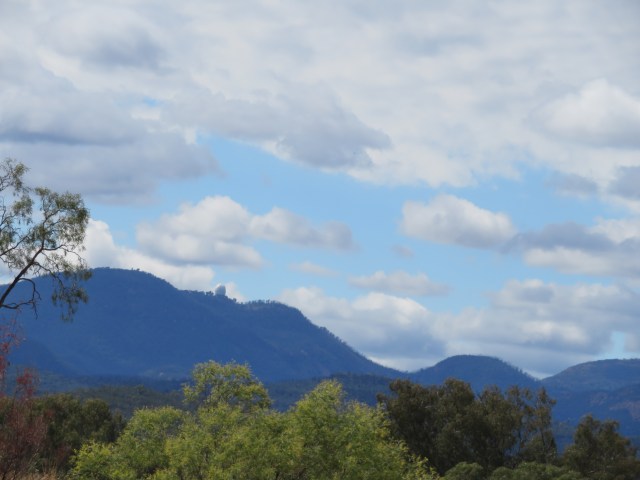
I took this photo on the drive in. You can just see the observatory on top of the mountain:
I took the signed turn-off, and began a slow drive up a very steep climb, with lots of twists and turns.
From the car park:
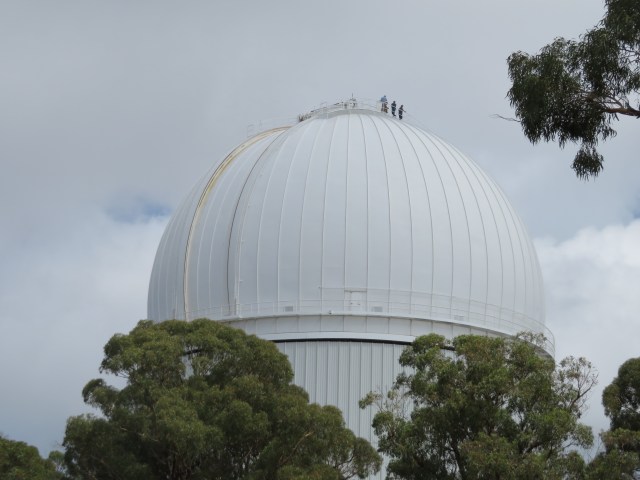
I popped into the visitor centre first, to see what they had on offer.
These are photographic plates from the UK Schmidt telescope:
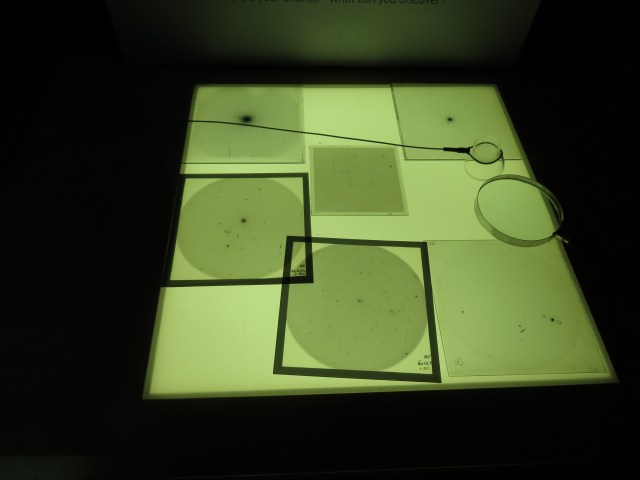
Yeah, they don’t look like much, but this is how they used to do it – the plates would be printed at the telescope, and developed in an on-site dark room. Then astronomers would use magnifying glasses to examine them, comparing two plates taken of the same section at different times to try to find new objects. Think of it as a high stakes game of ‘spot the difference’, where if you win you might get a name a planet – that’s what happened with Pluto.
Though Pluto’s not technically a planet anymore. Still counts.
The line of milk:
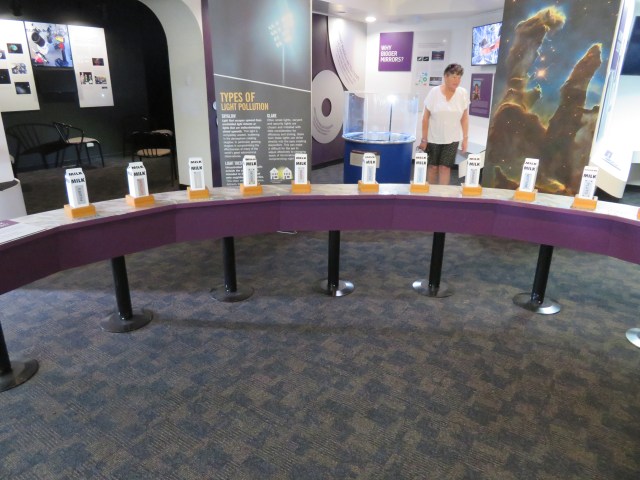
Bet you’re wondering about that, aren’t you? No need to linger in suspense – I shall explain.
That’s not actual milk, but metal containers representing one kilogram of weight on Earth, and how much it would weigh on the other bodies in our solar system. The ‘Moon’ one was very light, and Mercury and Mars were also very easy to pick up. Venus was slightly heavier than Earth, and I needed both hands to pick up the Jupiter one. They also had one representing one kilogram of ‘Earth’ weight on the sun – it was held down by a powerful magnet, which I thought was good way of representing that there’s no possible way you’re picking up the equivalent of a kilogram on Earth when it’s being held down by the sun’s gravity.
They also had a fancy scale that could tell you how much you would weigh on different bodies. Check out my readings:
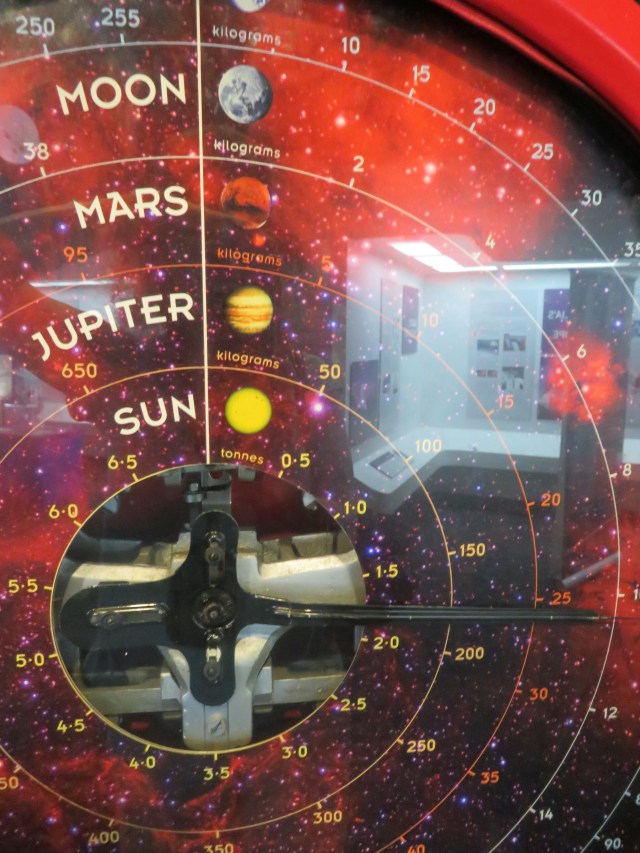
On the moon, I’d weigh a little over 10 kilograms, and on Mars, I’d be a little shy of 26. Jupiter puts me at around 175 kilograms, but on the sun I’d weigh close to 2 tonnes. Gravity is weird.
They also had an article about the Emu – the name Aboriginal people give to a void in the Milky Way. There was a translation of one of their stories:
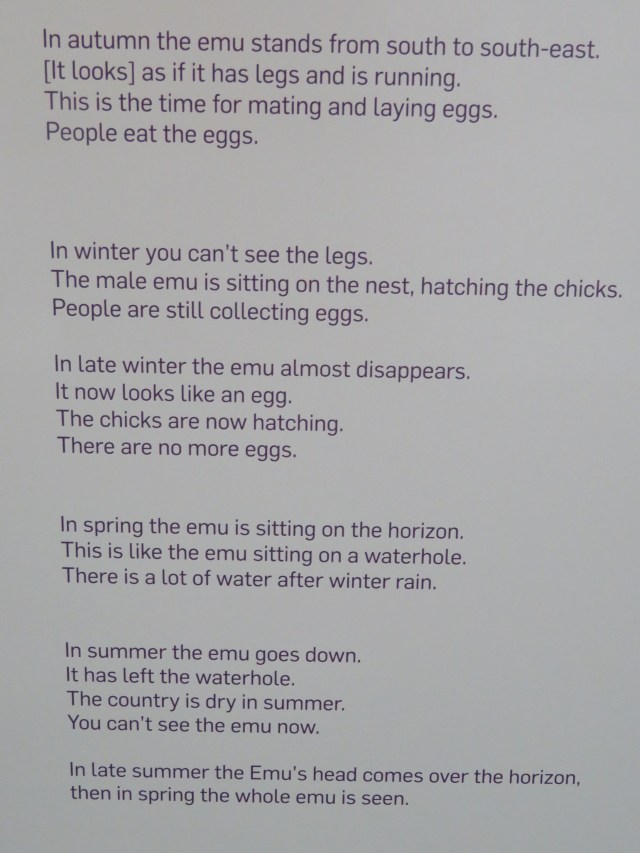
Complete with illustrative photos:

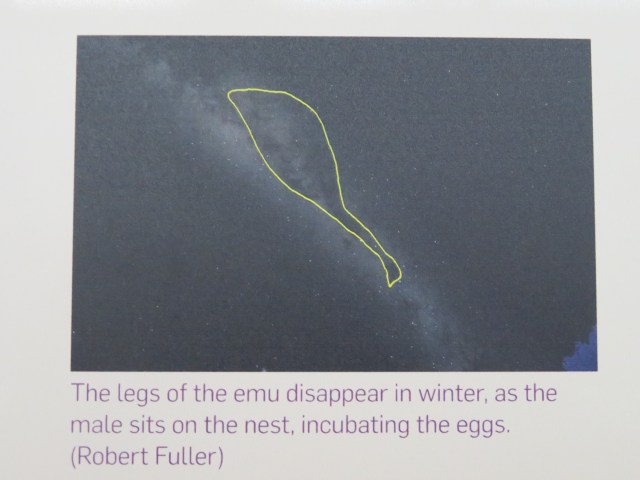
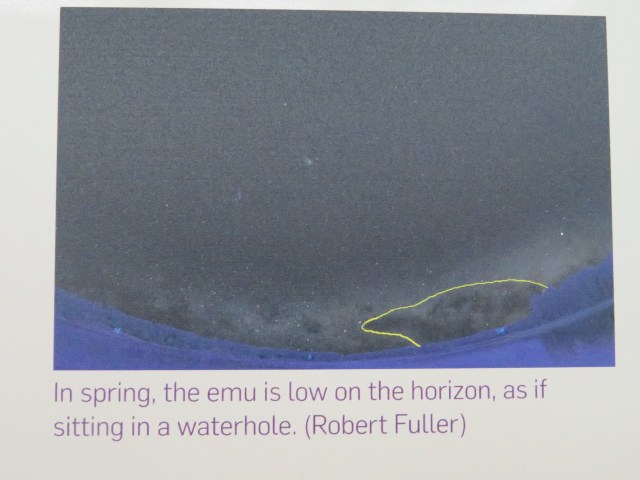
They also had a small, working model of the telescope:
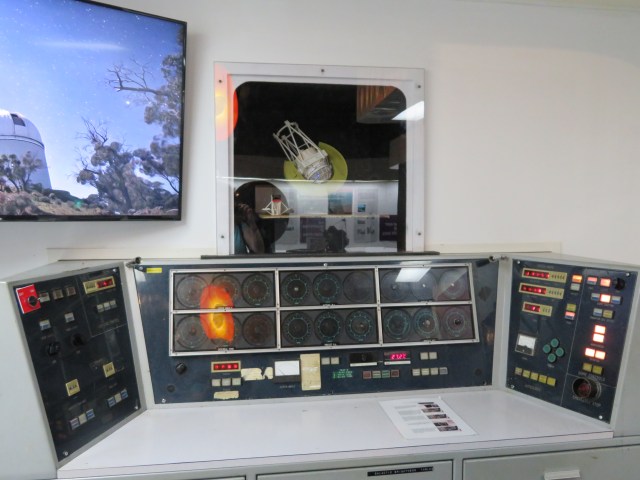
Basically, I could push a bunch of buttons and turn a dial, and that model would move in the same way the telescope would move.
They had a wall of shiny discs that I didn’t understand until I approached – this is the comparative sizes of the observatory’s telescope mirrors:
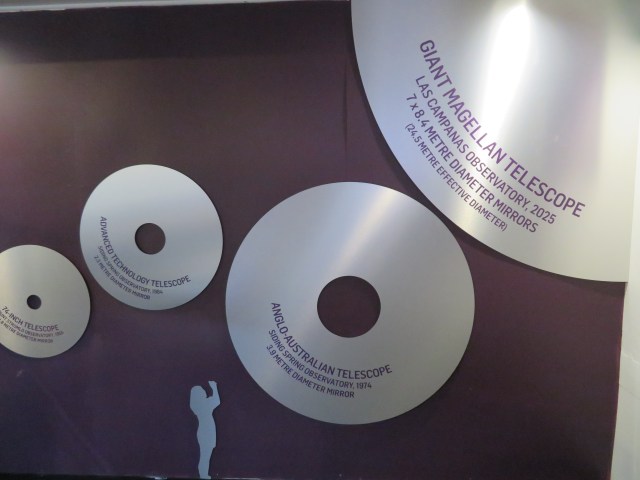
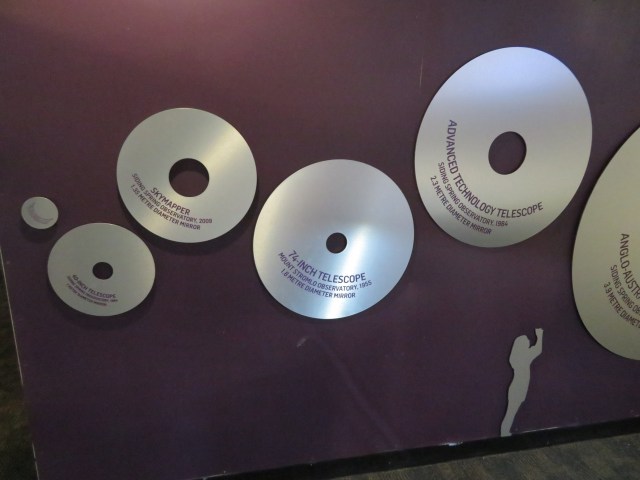
These are all telescopes around the observatory, except for the giant one. That’s representing the Giant Magellan Telescope, still under construction in Chile. It’s scheduled to start operating in 2025.
They also had some meteorites on display – this one was discovered at Lake Labyrinth in South Australia:

A fragment of the Henbury meteorite, that landed near Alice Springs about 4,700 years ago:
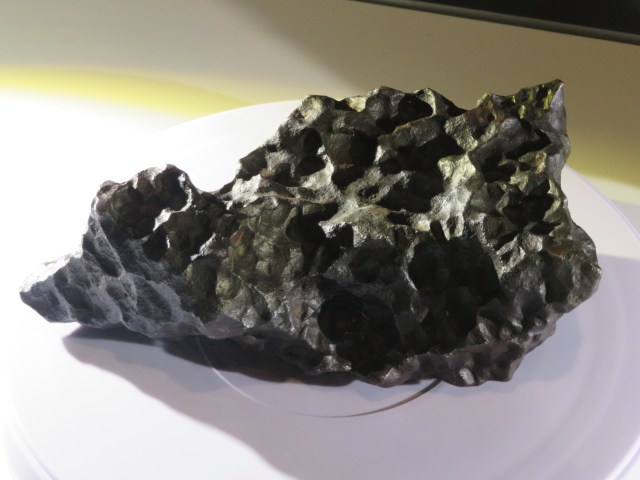
The dents in the surface were formed by friction heating and melting the rock as it passed through our atmosphere.
Tektites:


Basically, these are little bits of earth that got blasted up when a meteorite hit. They’re ejected from the atmosphere by the sheer force of the impact, but they don’t break the gravitational pull of the planet. So, they just come back down again, getting warped into interesting shapes along the way.
A map of the global telescope network:
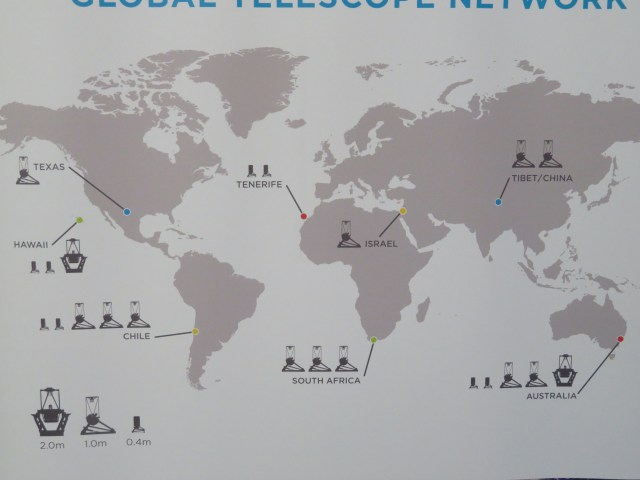
Yeah, apparently Australia gets all the cool toys. Then it was time to check out the actual telescope for myself:

These statues lined the path up to the telescope:
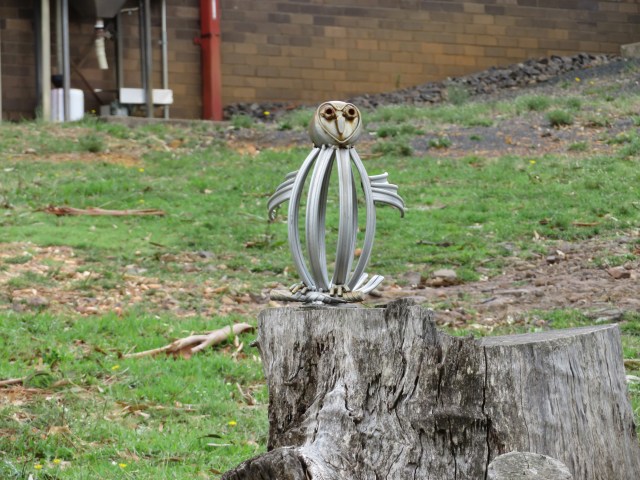

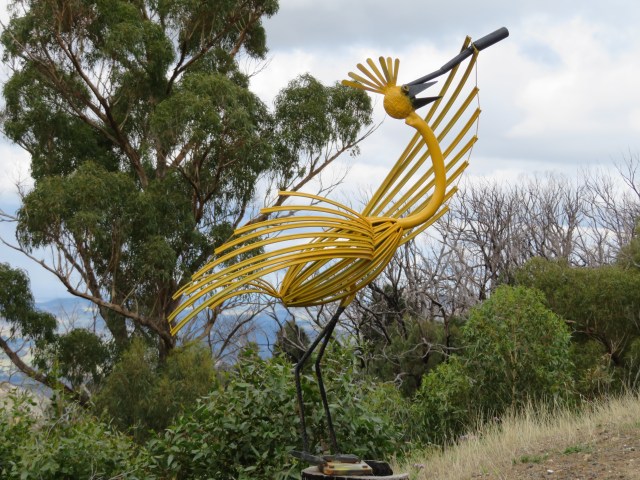
Yes, the last one actually has a little tiny telescope.
There was a pretty good view from the base:
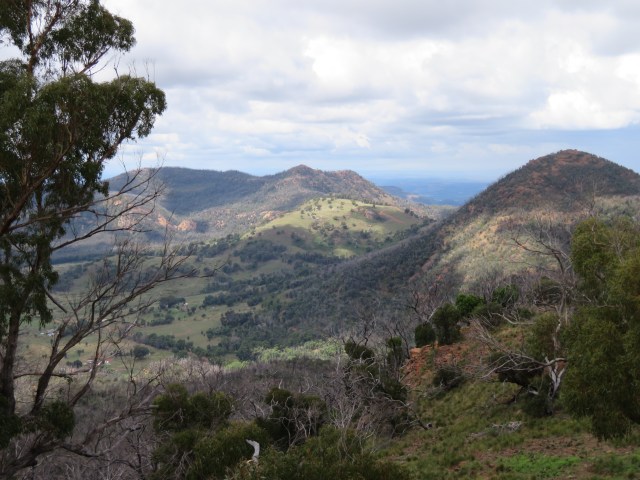
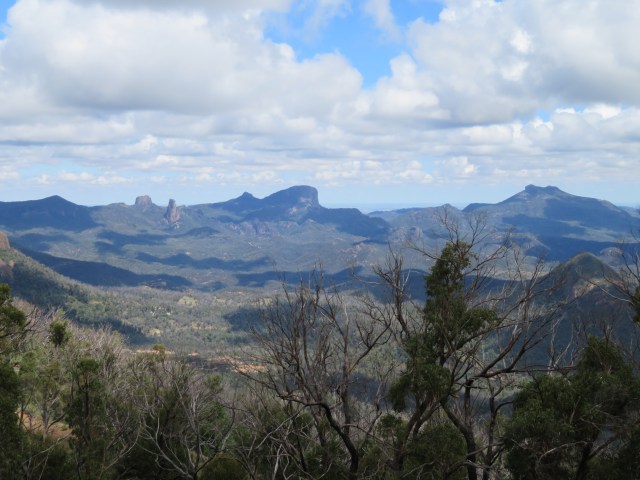
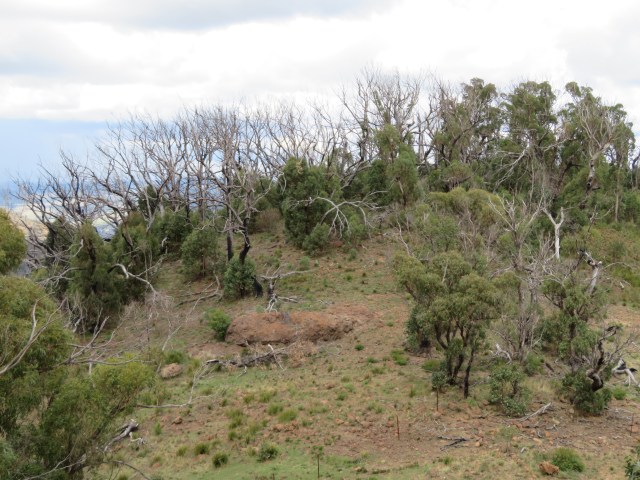
Though there was evidence that the 2013 bushfire made it here:
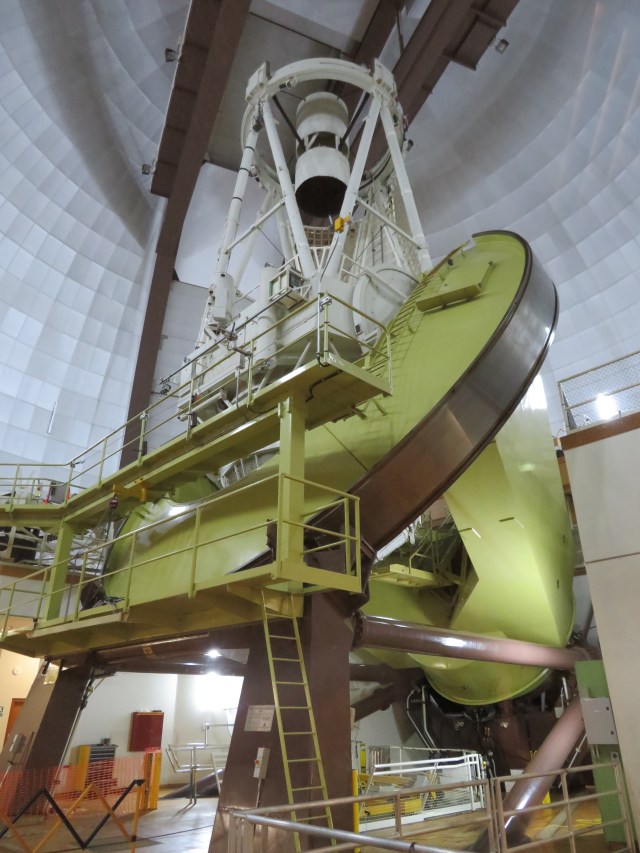
Finally – the AAT, the largest optical telescope in the Southern Hemisphere:
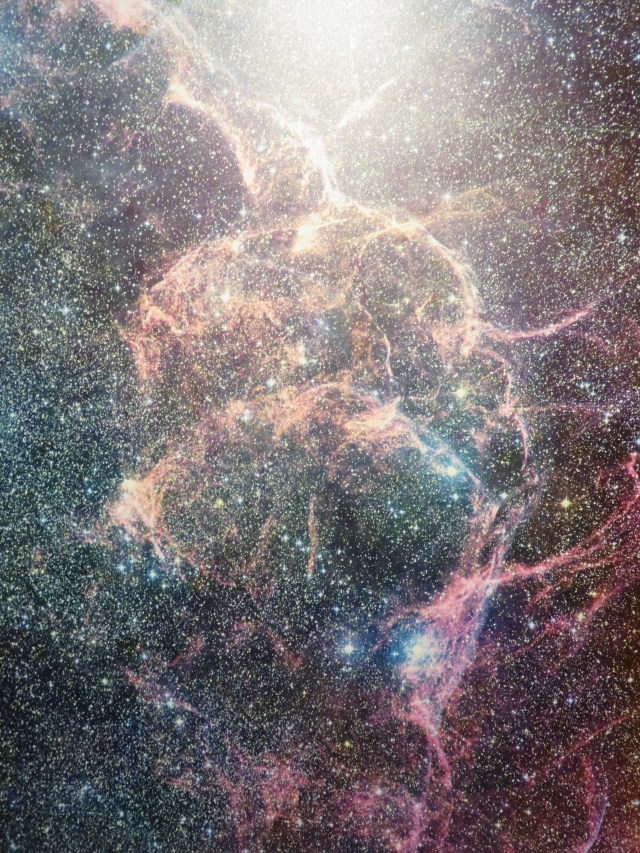
Some of the more spectacular photographs it has taken – the Vela Supernova Remnant:
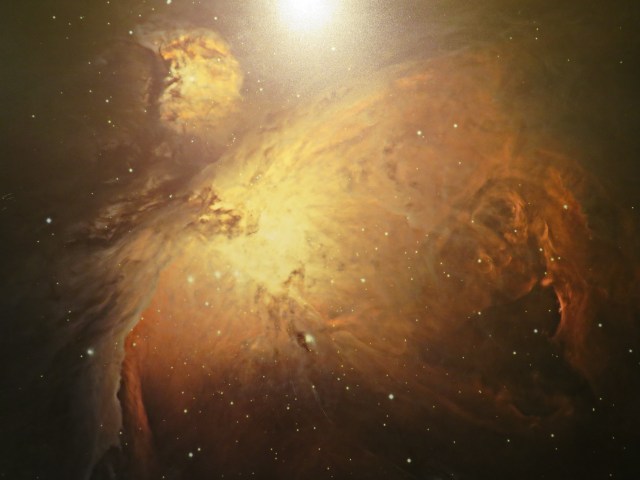
The Orion Nebula:
On the way back to the car, I spotted this statue that had somehow escaped my attention on the way up:

The others were vaguely life-sized. I hope this one isn’t.
Now it was time to check out the world’s largest virtual solar system. A 1 : 38,000,000 scale model, stretching over several highways. The ‘sun’ is the dome of the telescope, and the other planets are along this route:
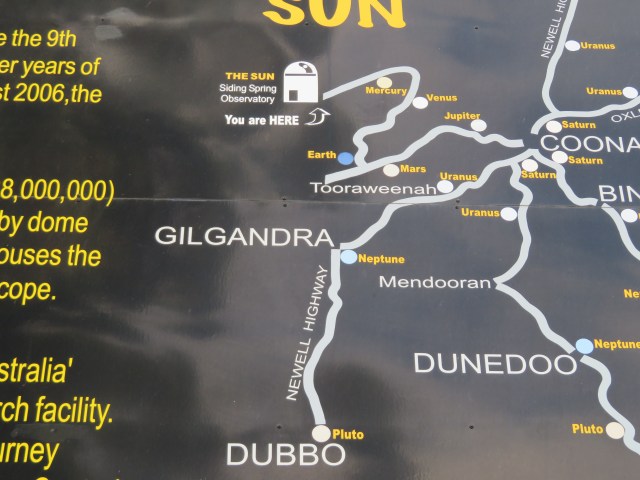
You can actually take several routes, which is nice, but I’m taking the one back to Dubbo. I set off down the road…
Or I would have, but apparently there was a big earth-mover coming up, so I (and other people in cars) had to pull over to the side for quite a while until it got up to the observatory. It was okay, though – I had time to eat my sandwich and drain my water bottle.
Once the big truck was past – going slowly on that hill, there – I could drive on down, keeping an eye out for the first three planets that are along the observatory road.
Mercury:
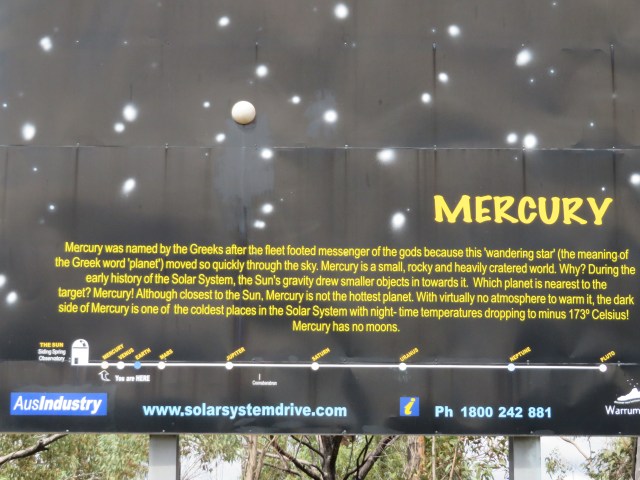
Yeah, they had little informative blurbs and everything.
Venus:
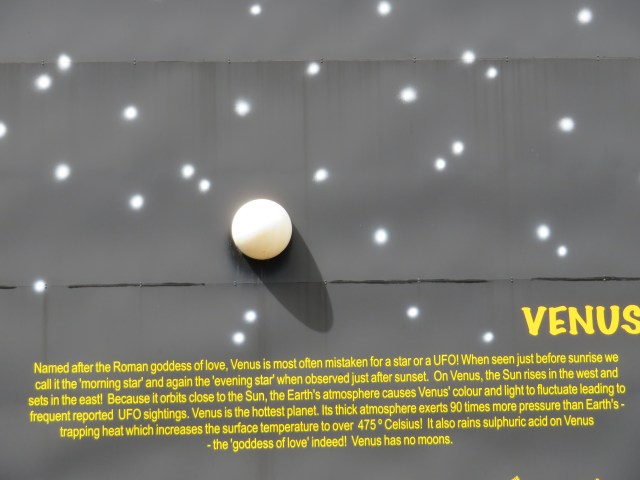
Earth:
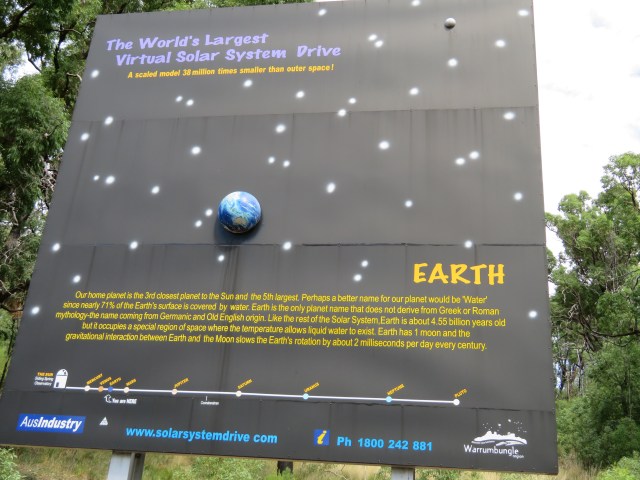
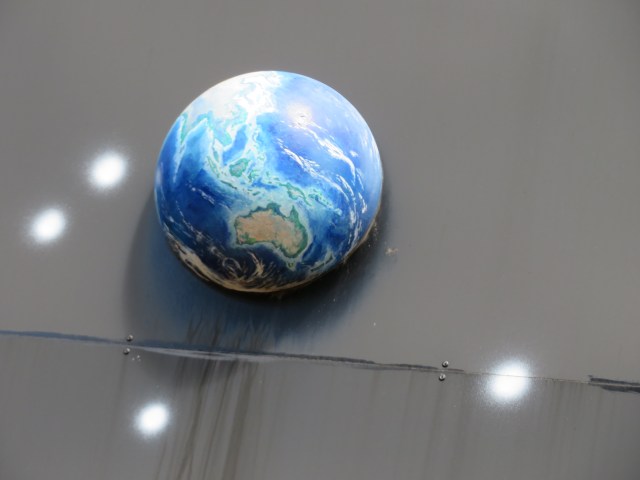
And because our own planet deserves something special, here’s a close-up:
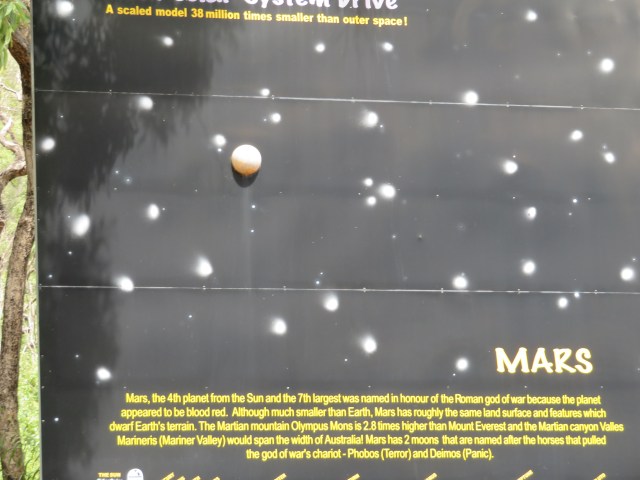
Then I hit the Newell Highway for the rest of them – Mars:
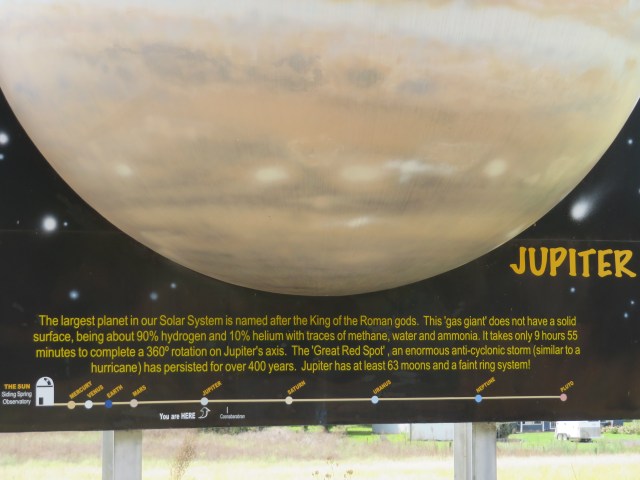
And Jupiter:
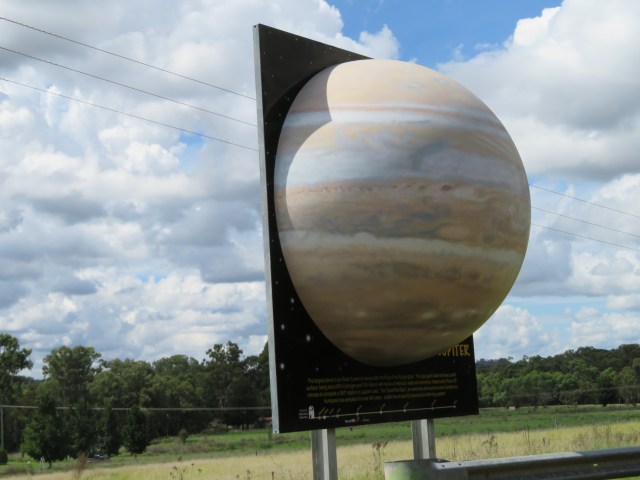
Yeah, that one was easy to see. Just in case you want the blurb:
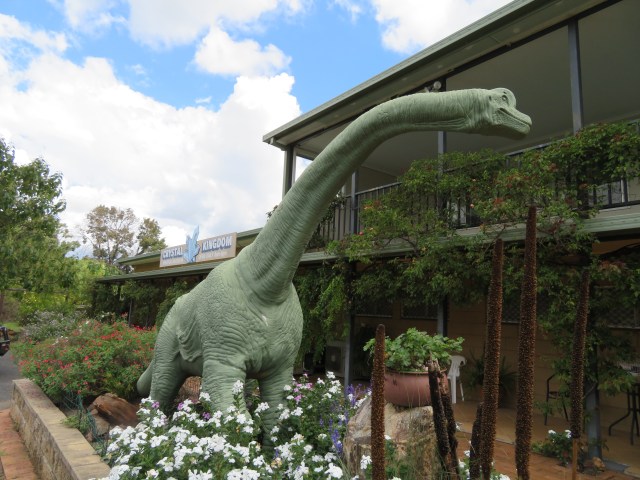
Now for a slight detour. At this point I was in Coonabarabran, so I stopped at the Crystal Kingdom. That isn’t some fancy, new-age spa, but a shop selling precious and semiprecious stones, with a small museum attached.
They had this guy outside:
Without any more ado – have some fossils!
Permian horsetail:
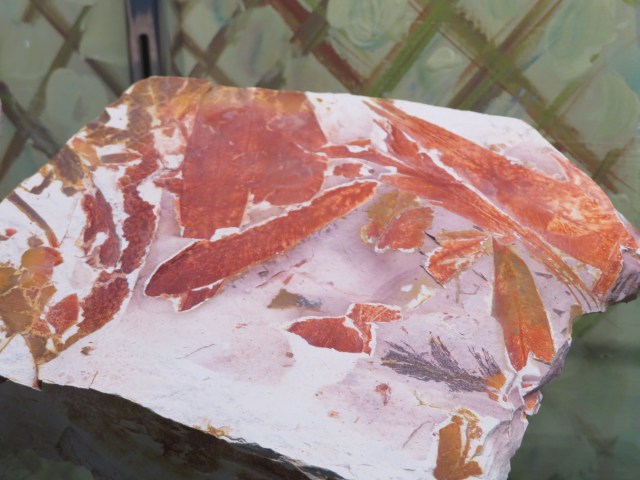
Alethopteris:
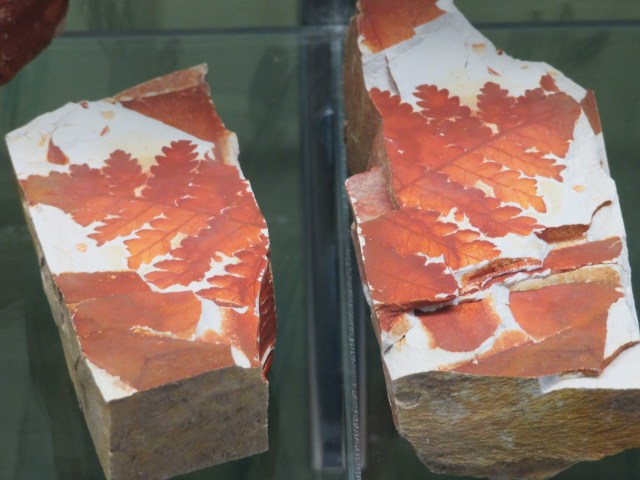
Glossopteris:
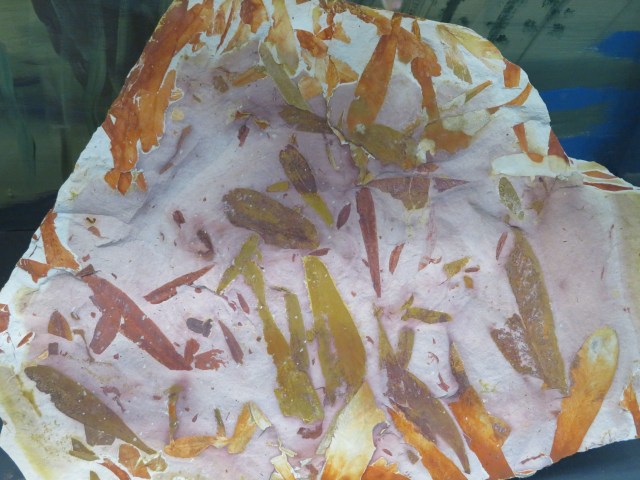
Those are 255 million years old. The next one is a Triassic tree fern – 225 million years old:

Calcified algae:
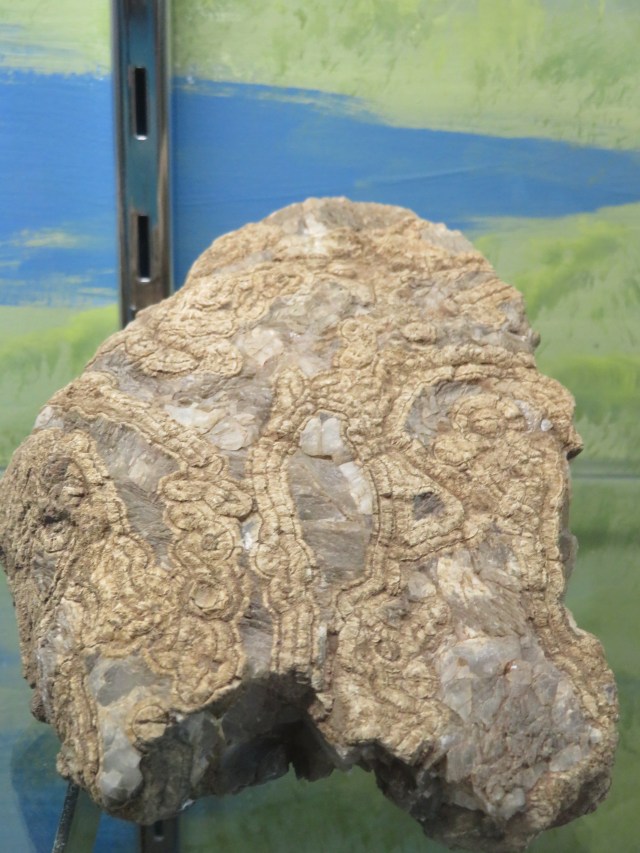
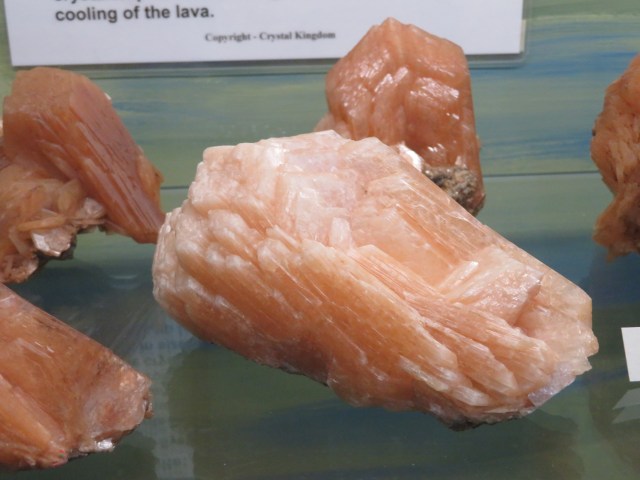
Now for some crystals – these are stellerite:
The largest stellerite found to date:
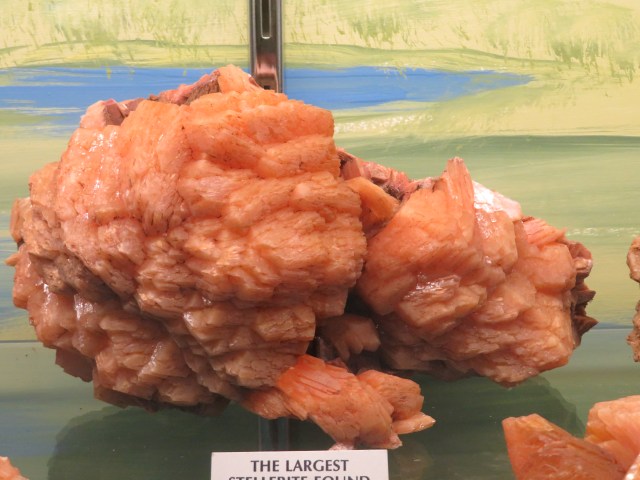
Stellerite is a zeolite – porous stones with aluminium and silica, formed when volcanic rocks and ash react with alkaline groundwater. There are only two places in the world where large stellerite crystals are found, both in Australia. These ones are from the Garawilla Volcano, about 40km east of Coonabarabran. The volcano was active from 200 million years ago, but ceased about 45 million years ago. These specific crystals come from what seems to have been a single lava flow, about 35km long and 7km wide, which took about 1000 years to cool down properly.
Stellerite and calcite crystal:
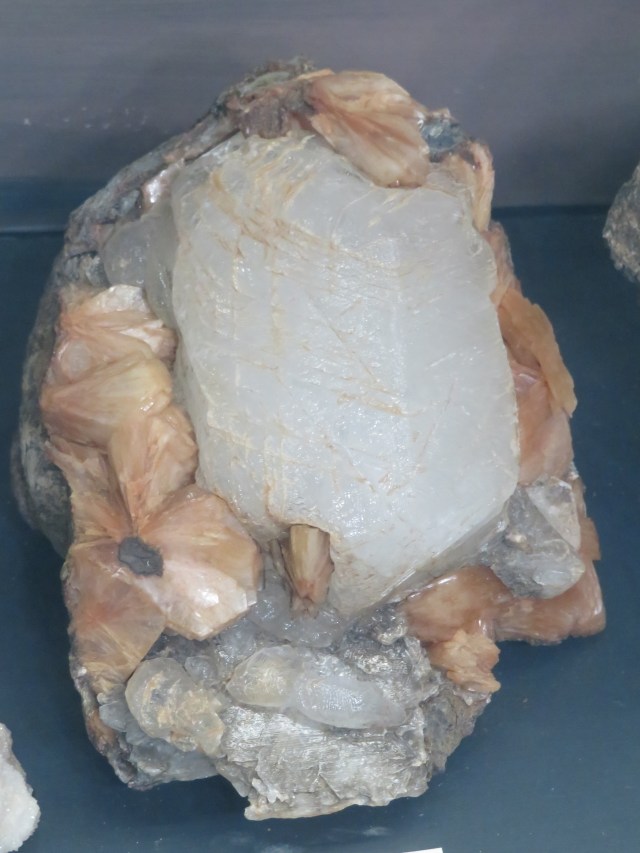
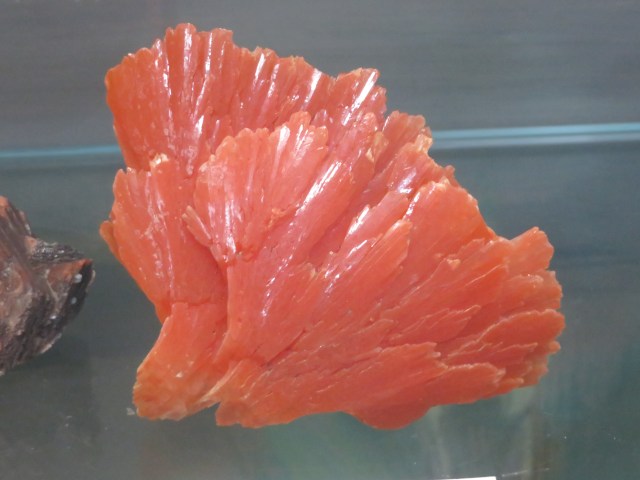
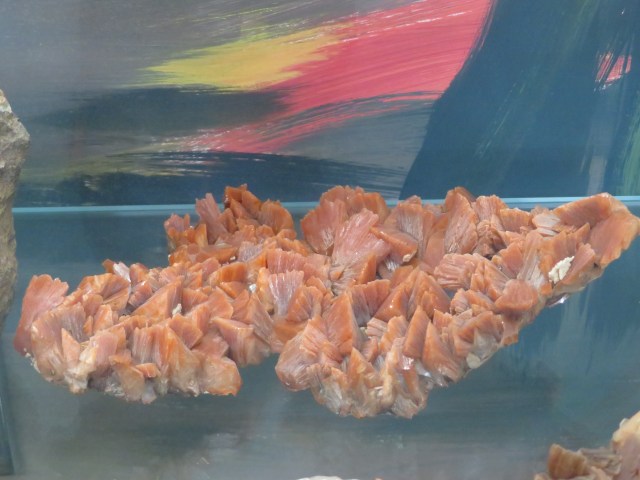
Heulandite – again, something that rarely has large crystals – tends to form fan shapes:
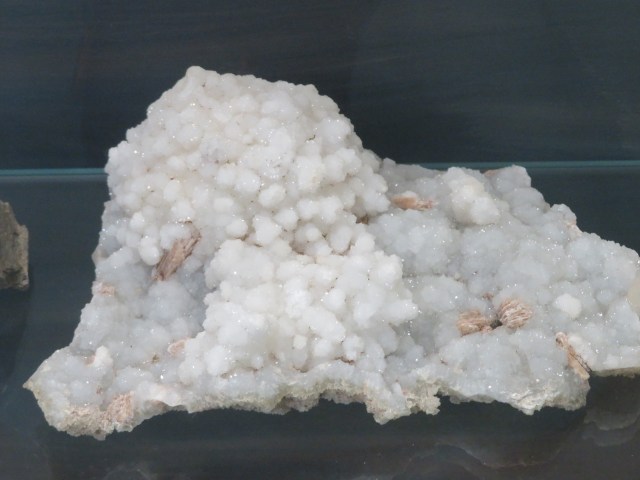
Drusy quartz – basically, lots of tiny quartz crystals atop another mineral:
Green quartz with stellerite:

Clear quartz with stellerite:

A plate of quartz:
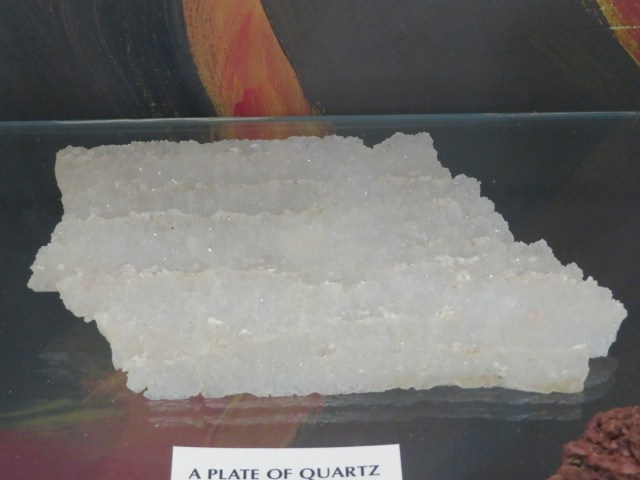
Well, you can pretty much just read the label on that one.
This is prehnite:

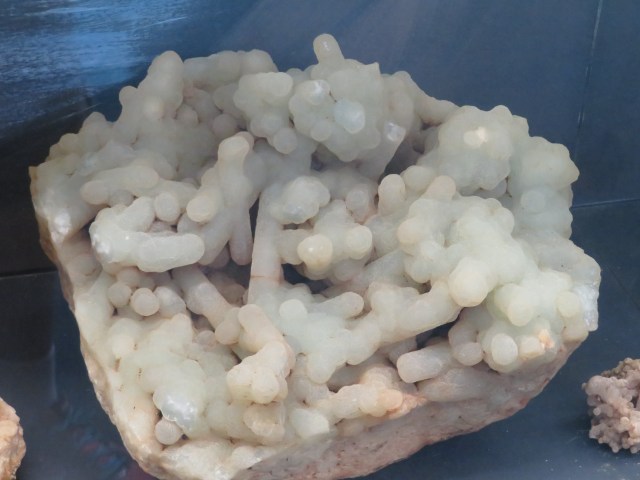

The fingers aren’t usally more than two centimetres long, and Garrawilla is the only location in the world to have ones larger than that. It’s believed that the crystals found there grew in a mineral-rich hot spring with very large cavities.
These were all in fancy glass cases, lining the walls, but someone had painted the walls above them:
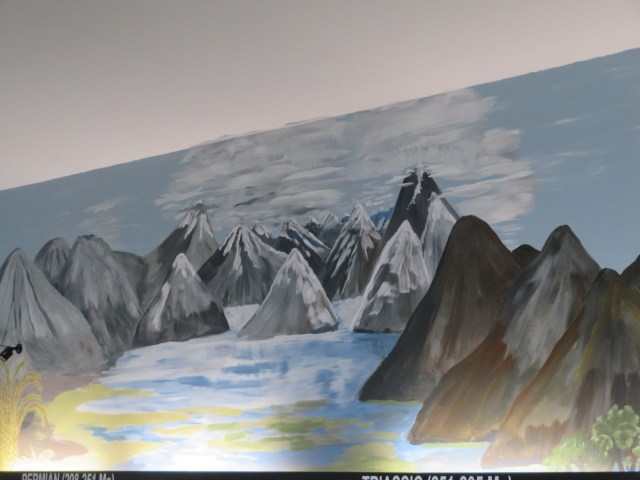
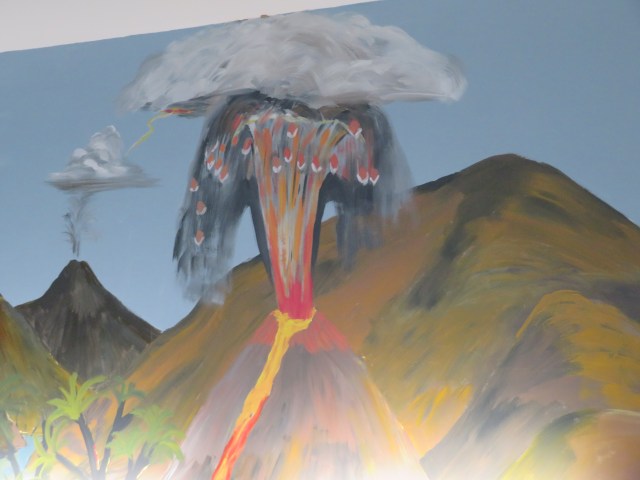
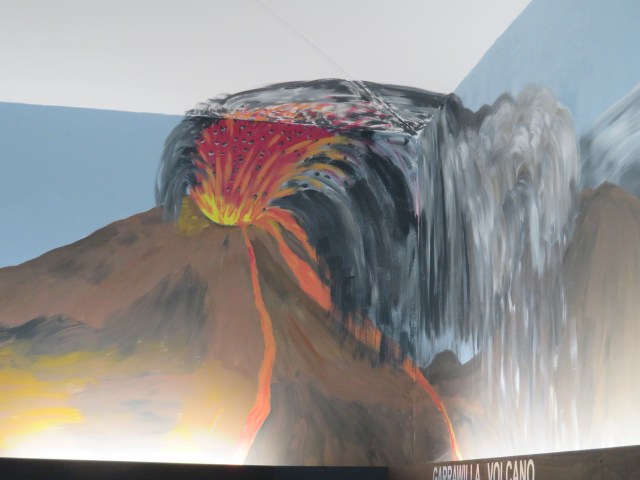
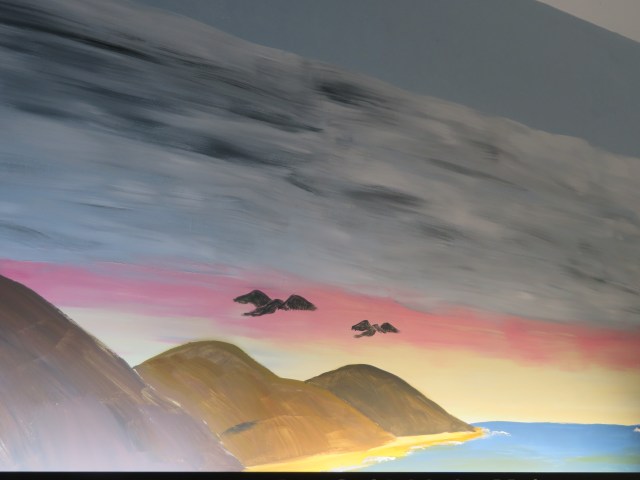
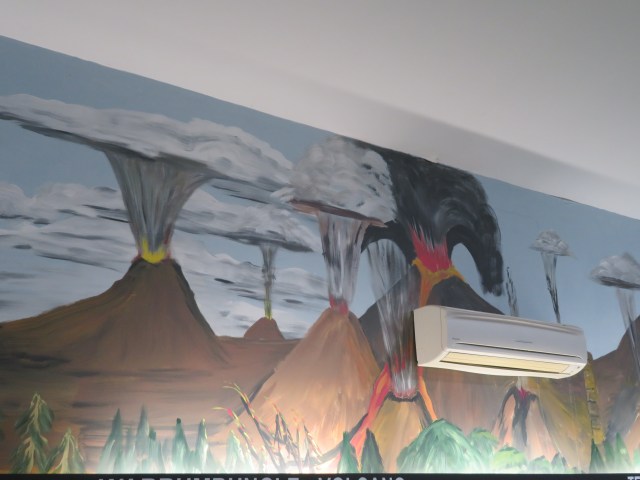
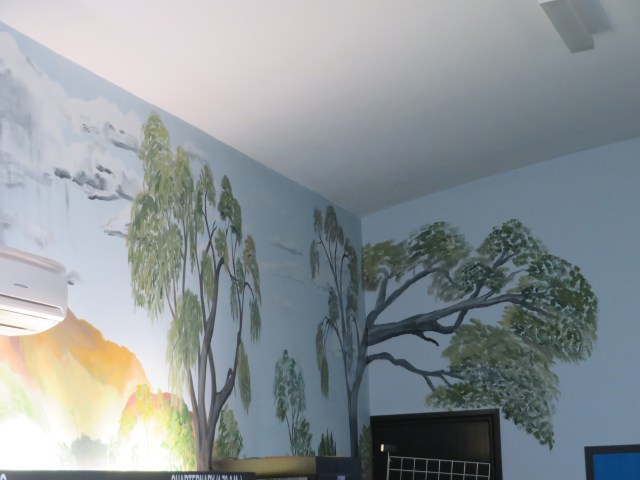
Pretty cool, huh? Now for some crystals – this is called Dogstooth calcite:
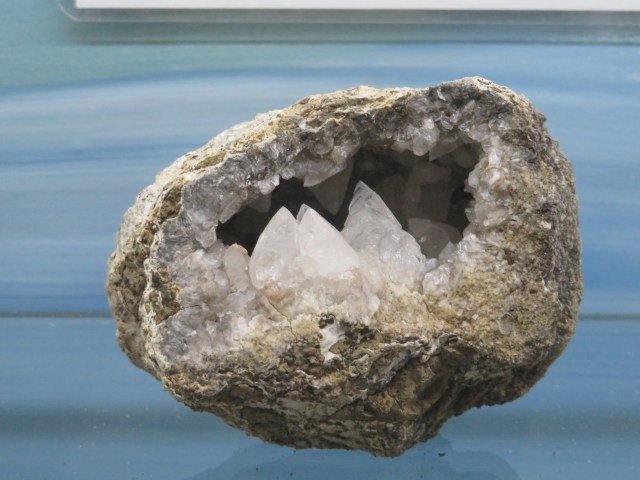
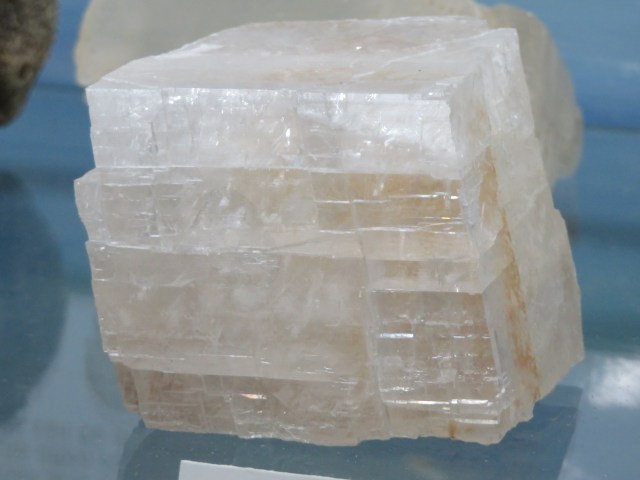
I’m sure it’s obvious why it’s called that. This flat formation is called Iceland spar:
Analcime – crystals that form in cavities with heulandite and/or calcite:
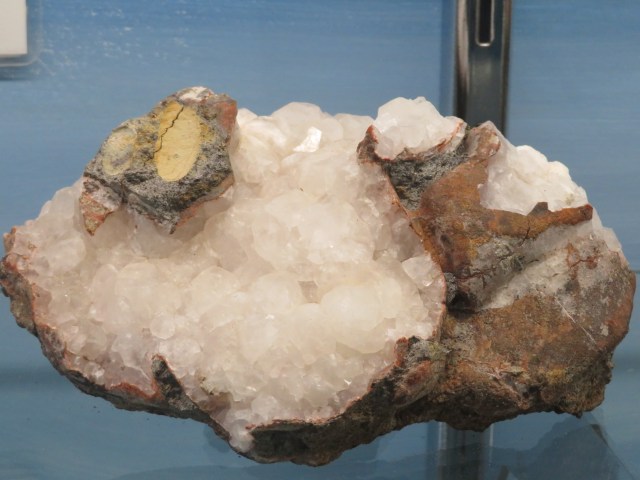

The crystals are clear when found but will eventually become translucent, because they absorb moisture from the air.
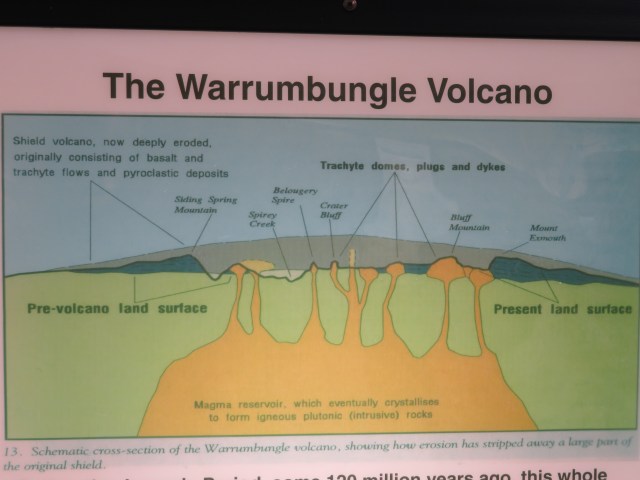
I found this sign interesting – a cross-section of the Warrumbungle volcano:
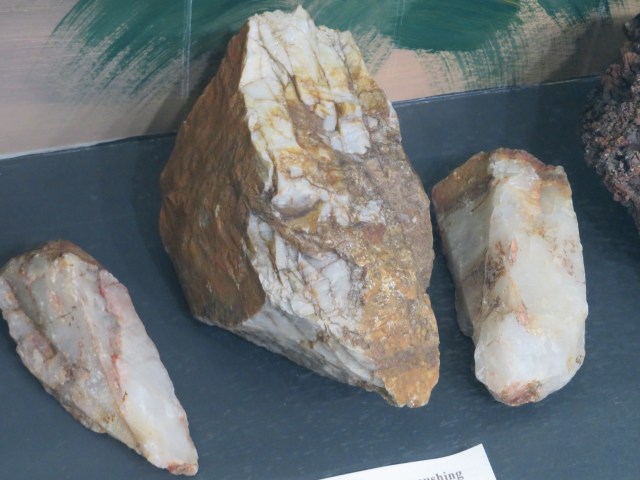
The heat from the lava changed this sandstone to quartzite:
Iron dendrites:
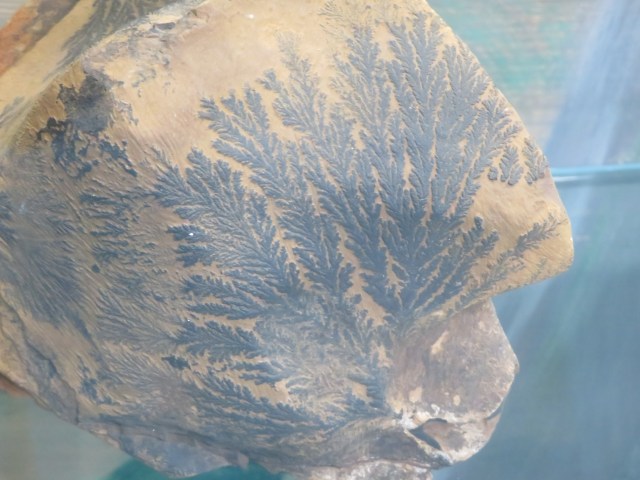
In spite of the appearance, they’re not fossilised ferns. This is what happens when iron oxide seeps between rocks.
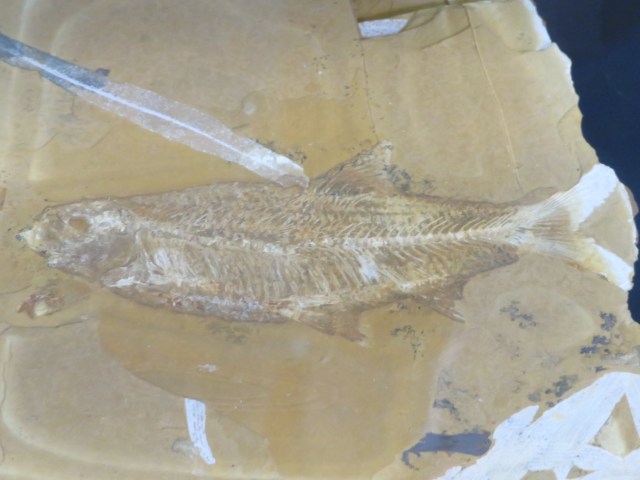
And now we’re back to the fossils again. Have some ancient fish:
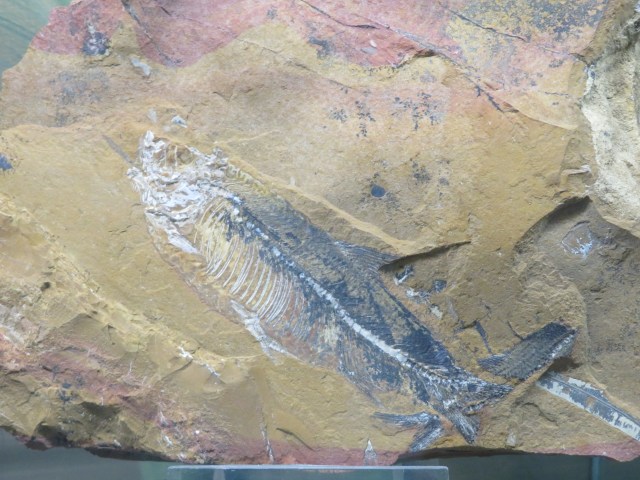
This is a plant fossil from the Jurassic period:
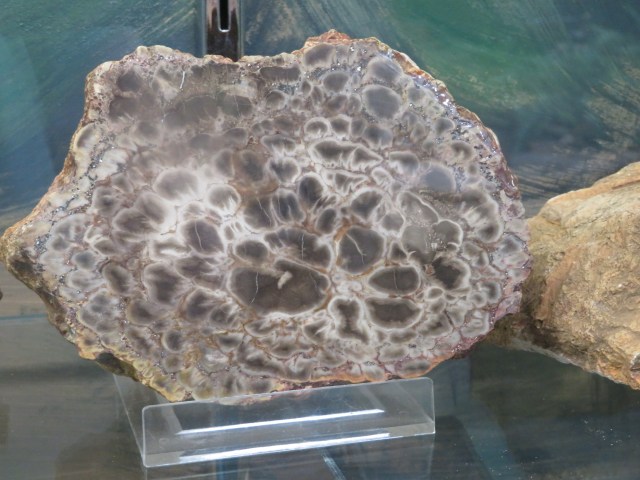
Opalised wood:

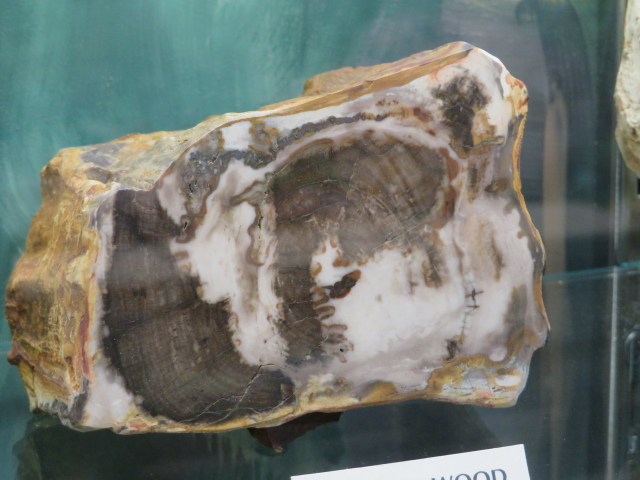
Petrified wood:
This fossil fish is about 15-20 million years old:
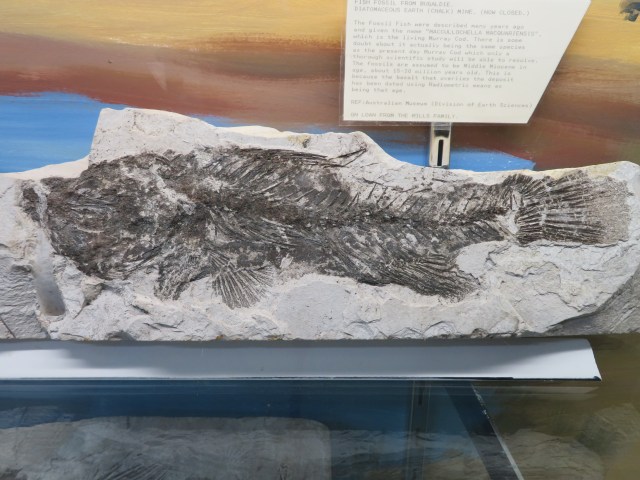
It was given the scientific name Maccullochella maquariensis, which is the living Murray Cod. Not everyone’s sure if it’s actually the same species, though.
Amberat:
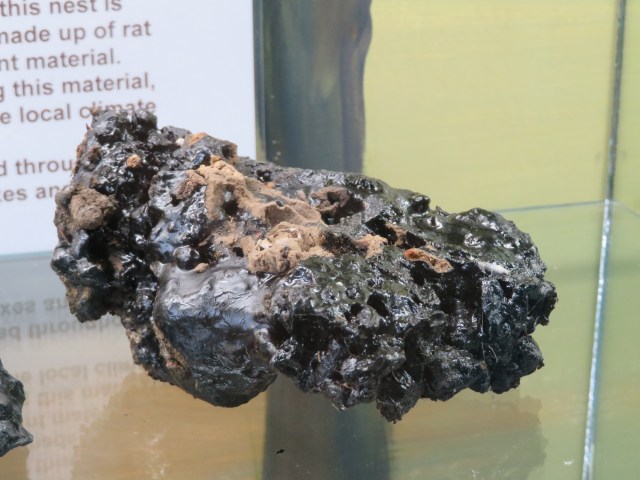
This comes from the nest of the Sticknest rat, now extinct. The rats built nests in fissures, and they would build nests on top of each other. Over time, the nests compacted into this thick, black substance, mainly made from droppings, rat bones, and plant material. Sticknest rats used to be widespread, but were wiped out by foxes and cats, in yet another reason why feral animals are not good.
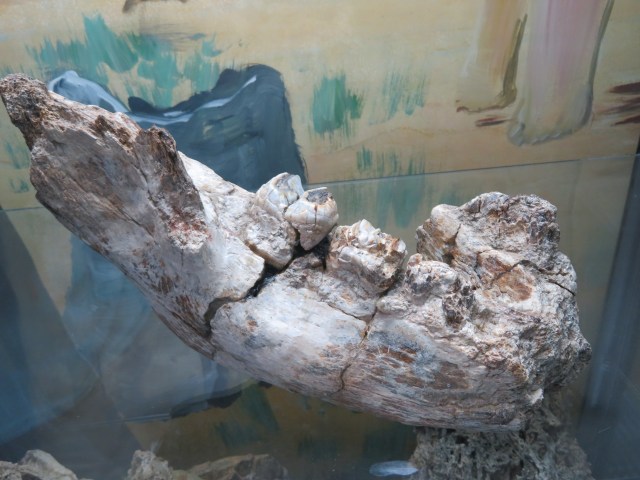
Part of a Diprotodon’s lower jaw:
Charales:

Basically, these were water plants that had both algae and ‘plant’ characteristics, and they’re believed to be the forerunners of land plants.
And that was the Crystal Kingdom – much more interesting that the name would suggest. Then it was back to the solar system.
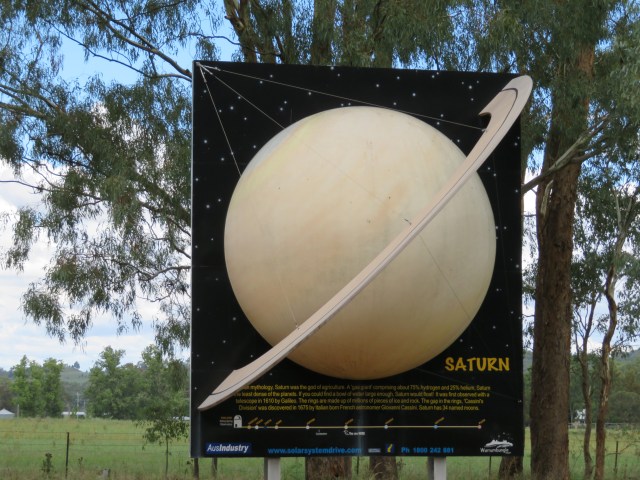
The next stop was Saturn, at Camkeena Rest Area:
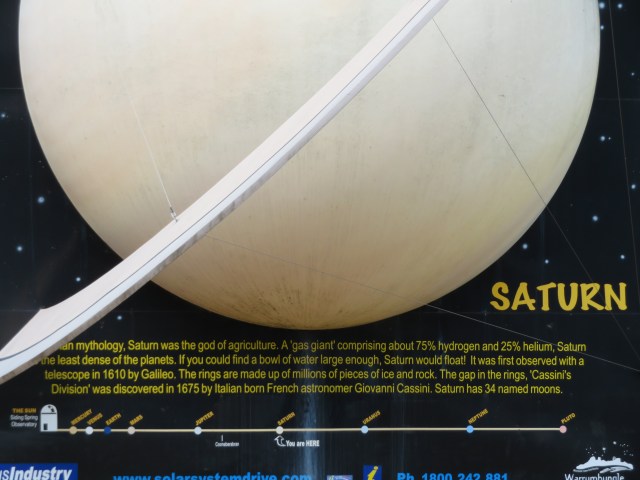
The blurb:
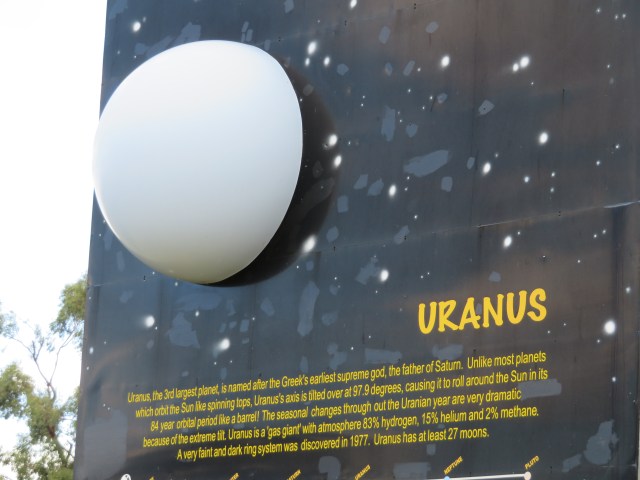
Uranus, at Tooraweenah Rest Area:
Neptune, at Gilgandra:
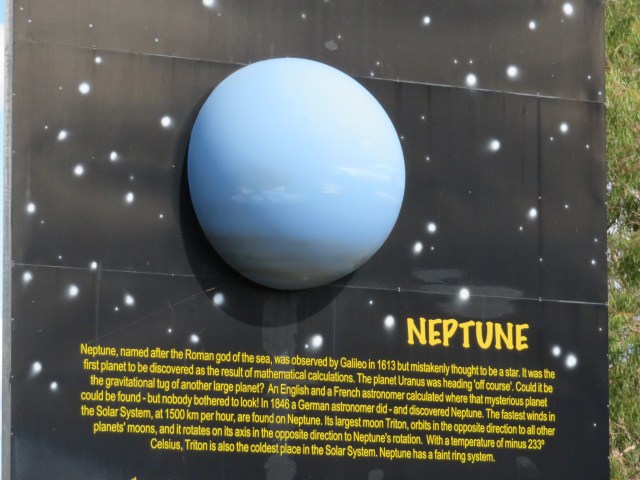
And finally, Pluto at the Dubbo Visitor Centre:
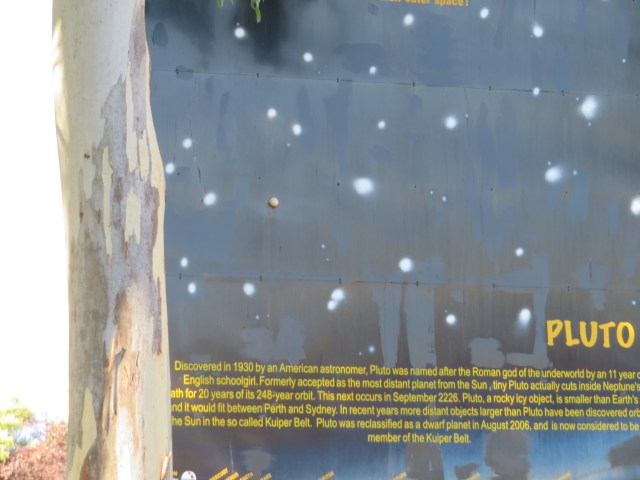
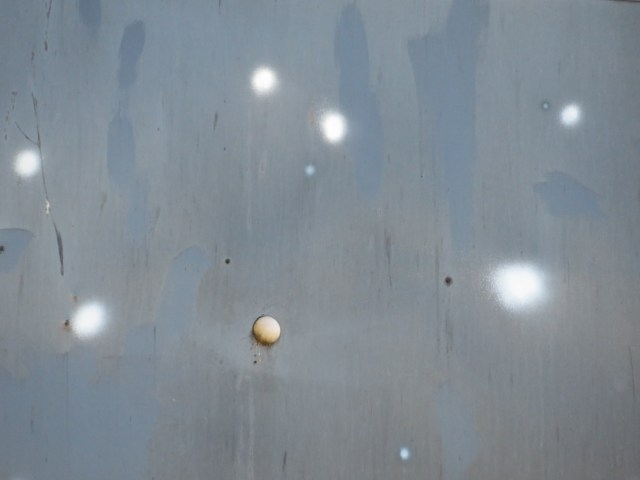
After all the giants, it’s pretty hard to find on the sign. Have a close-up:
Thus ends my excursion, and it was back to Turtle Shell. I’m actually typing this up the day after – well, the night after, as my day was mainly devoted to laundry and various domestic pursuits.
I was also listening to some kind of fight as I typed this – a drunk woman was screaming because her boyfriend was breaking up with her, or she just thought he was breaking up with her. It was hard to tell, really. And not because I couldn’t hear clearly – these are the guys in the spot next to me – but because they weren’t exactly being articulate.
It turned physical a while ago, and I called the park owners, who said they were way ahead of me and had already called the police. The coppers are having a chat with them now, and I think they might end up taking the woman away. We’ll see how it goes.
And as I’m posting this…yep, she’s being taken away. Good call, policeman.
 Jenny's Adventures
Wow! Your adventures are full of excitement of the informative kind, and of the dramatic kind!
LikeLike
I must admit, I loved that solar system drive.
LikeLike
Wow is right! I am so glad you were able to get to the Observatory. It is an awesome, magical place… to me anyway 🙂 Great view of the Warrumbungles. From where you took the photo you might have seen a huge steel case which was used to transport the main mirror to the telescope, if it is still there and not rusted away! I only ever passed by the Crystal Kingdom without visiting, so thanks for that interesting cameo. Thanks again Jenny for sharing your journey to the Warrumbungles and the Observatory.
LikeLike
The observatory was pretty amazing. Crystal Kingdom looked like a kooky tourist trap, so I was surprised by their lovely little museum.
LikeLike