Today, I set off along Waterfall Way once again, this time to the Dutton Trout Hatchery.
It’s along Grafton Road, which isn’t exactly a highway but is certainly just one a step down. Overtaking lanes, wider areas to pass where people might turn off, 100km/h speed limit…so imagine my surprise when a sign suddenly comes up, telling me a grid is coming up.
It wasn’t lying. Right in the middle of a well-travelled, well-kept road, was a cattle grid. It stretched across both lanes, with a fence running off into the trees and everything. I kind of liked it, just a little reminder that the farmers were there first.
The first stage of the hatchery tour was watching a short video – I learned it’s called ‘Dutton’ after the man who started it – and looking at a small aquarium above the visitor’s centre. I took photos of two of the more interesting fish:
The bullrout:

When you learn it’s also called the freshwater stonefish, you know right away it isn’t a friendly fish. Just like stonefish, they go still and erect poisonous spines over their back when disturbed, and if you step on one, you will immediately regret at least one decision you’ve made in your life.
Long finned eel:
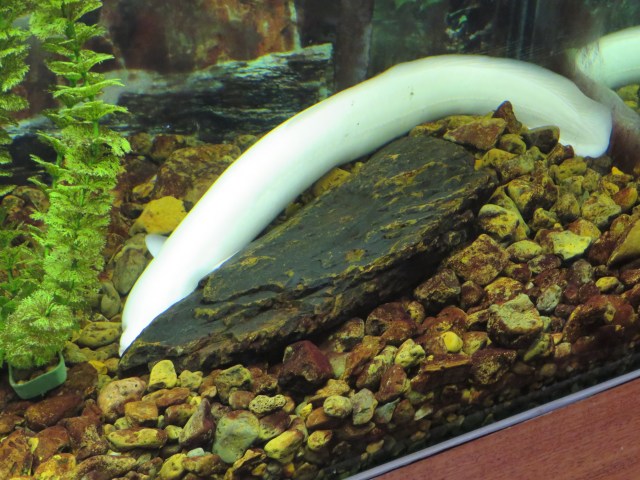
As you may have noticed, it’s an albino. It’s also the largest freshwater eel in Australia.
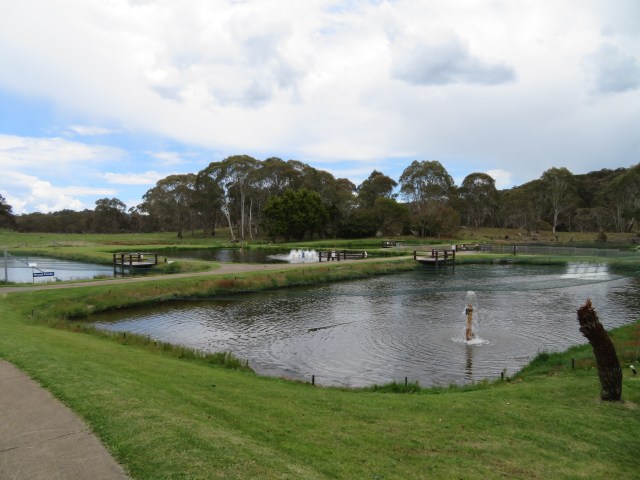
Then it was onto the actual hatchery. These are the ponds where most of the fish are kept:
There were a few birds around outside – I spotted these crimson rosellas:
And this currawong:
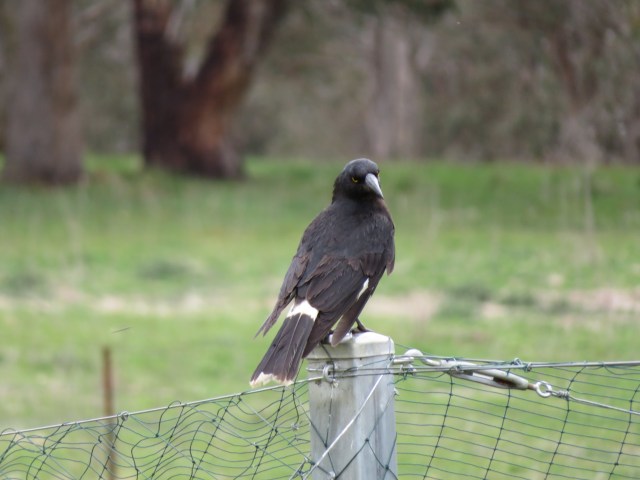
I’m pretty sure the currawong was hanging around in the hopes of snagging a fish. A few ponds had netting over them, presumably because the fish in them are young and small enough that a bird could make off with them.
It was difficult to get pictures or videos of the fish. It was actually kind of interesting – my eyes were managing to look through the water, but the camera obviously struggles to filter out the distortion caused by ripples and reflections. So even though I went quite snap-happy, I don’t have much to show you.
Rainbow trout:
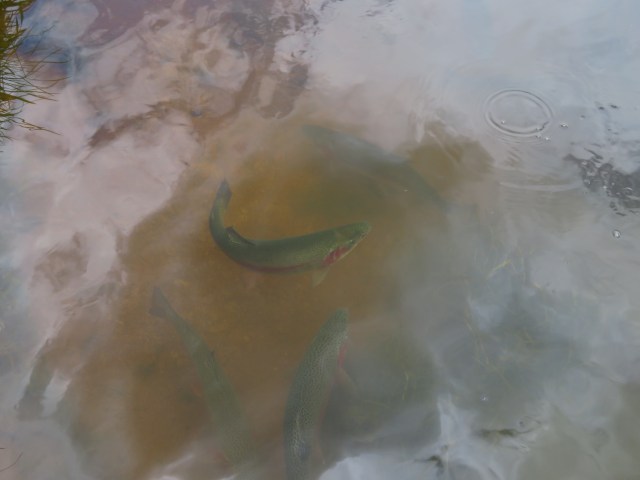
Rainbow trout are the main trout raised and bred at the hatchery, though they also have some brown trout.
I had a bag of fish food – little pellets a bit like dog food – and threw them into the ponds to make the fish come to the surface. They didn’t do it calmly, though. I guess there are so many of them, when you throw food into the pond they all try to get it, and this happens:
Pretty wild, huh?
These are called raceways:
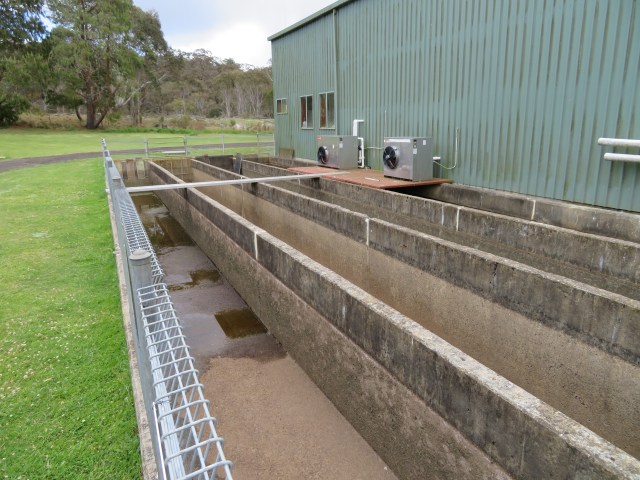
These are filled with water and the trout are put in them just before breeding season. This allows the workers to sex them and separate the breeding stock.
The hatching shed:
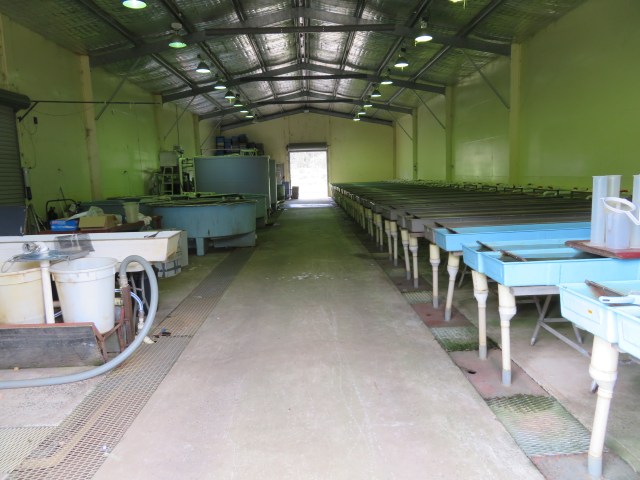
Exactly as it says – where the eggs and the immature trout are kept. The newly-hatched trout live in little trays of water:
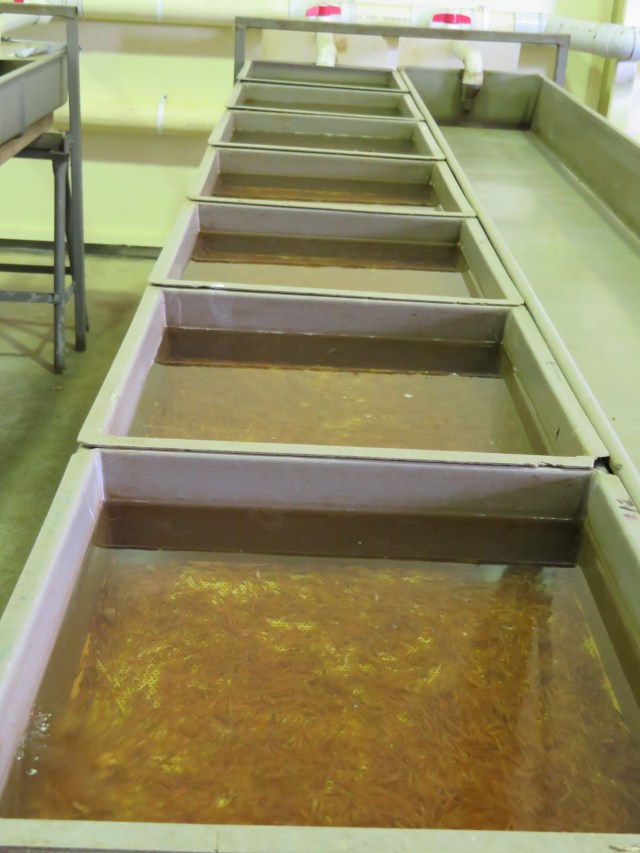
Close-up:
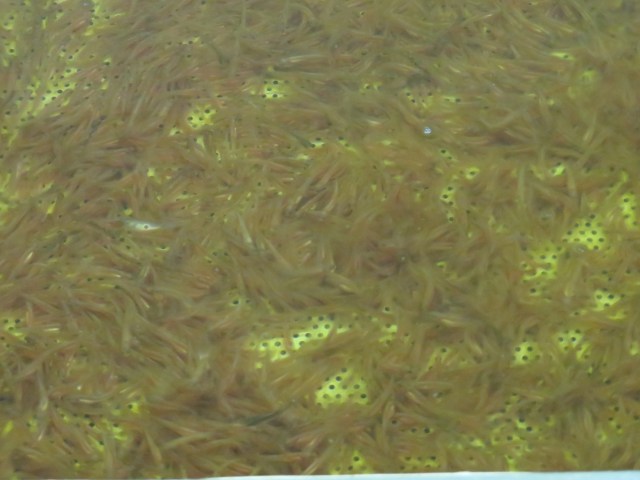
They don’t look anything like trout, do they? More like guppies. It might be hard to see in the photo – they’re kind of just a big mass – so I took a video:
When they’re a little older, they’re called ‘swimmer fry’, and they live in bigger troughs:
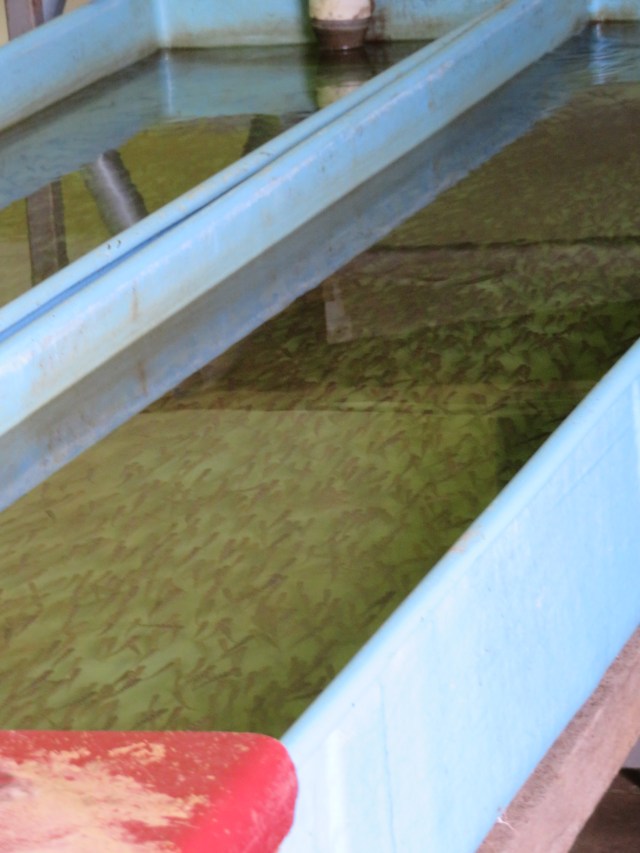
Close-up:
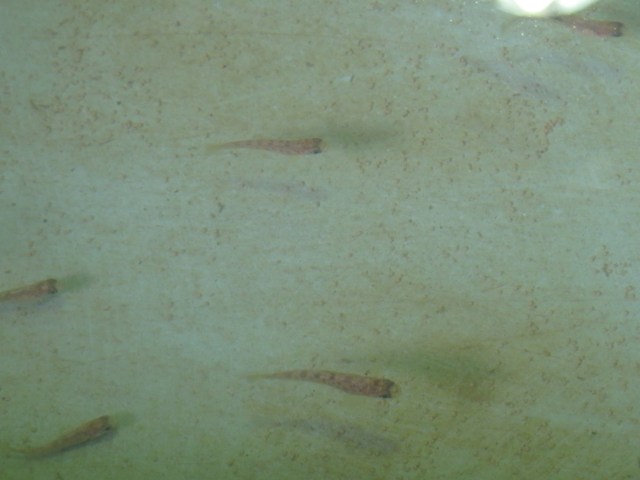
Not quite as pale anymore – they’re starting to get proper trout colouring.
I took video of these as well:
They had tanks full of these marked ‘for private sale’:
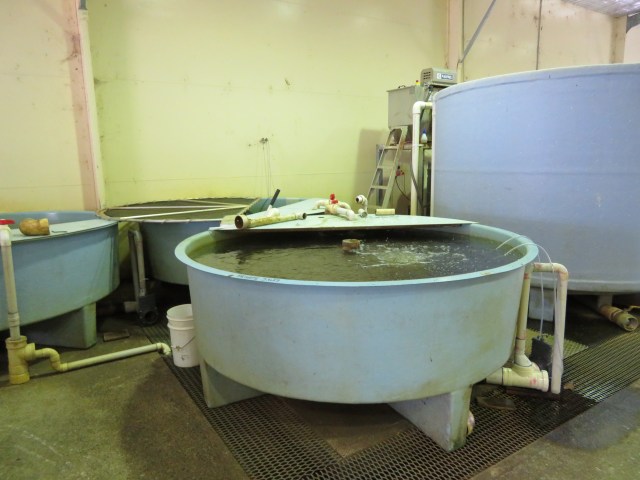
By the way, that’s where the rushing in the videos comes from – there’s a pump churning the water to aerate it, and it’s quite loud.
These are the ‘back-up’ tanks:
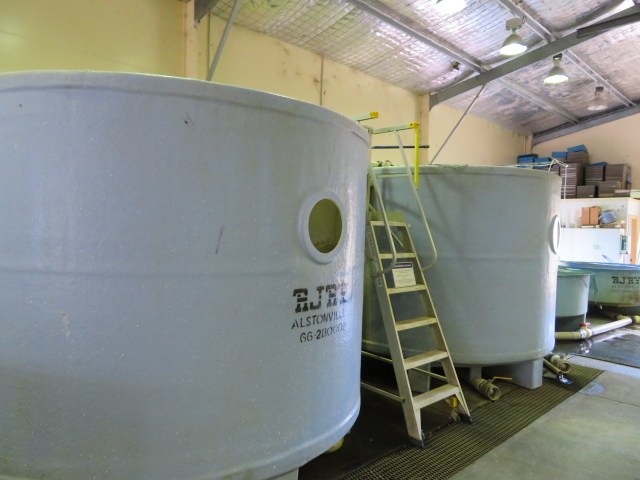
So, if total disaster hits and the fish in the ponds outside all die from…something…the fish in here will be able to re-stock the hatchery in a few generations. I took a video of the fish through the little porthole:
As you can see, most of them are rainbow trout, but that spotty one at the bottom is a brown trout.
The fry must have been used to being fed by people standing at the edge of the trough, because every time I approached one of the troughs, they started to seethe like crazy:
As you can see, they’d calm down eventually, when they realised there was no food for them. I had food, yes, but the little ones need different food than the adults, so I couldn’t feed them from my bag of fish food.
Then it was out to the rearing ponds:
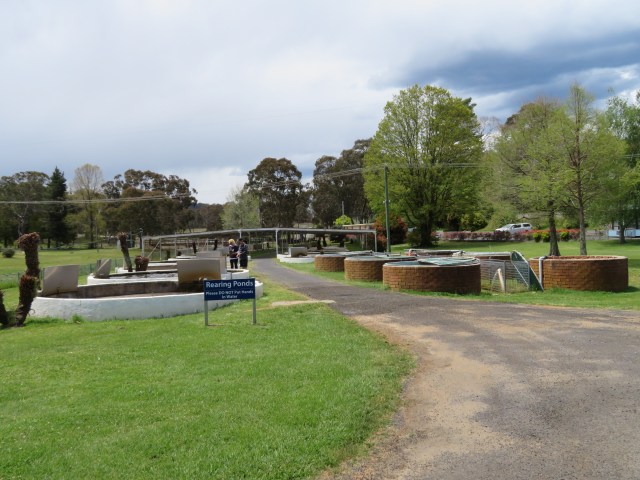
This is the next stage after the hatching shed – where the trout can grow full-size. I took a photo of what they call ‘fingerlings’ – the stage between swimmer fry and adult:
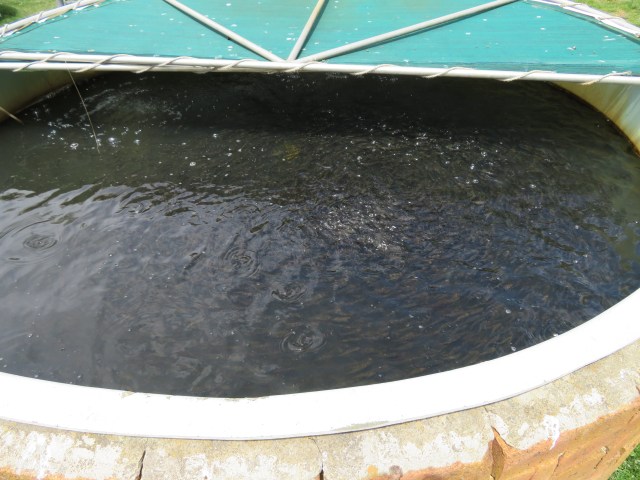
It might be hard to see in the photo, but they’re bigger, and look more like trout now. Still pretty small, though. I’m not sure exactly why they’re called fingerlings, but I’d guess it would be the fact that they’re just a bit longer than fingers.
There were some larger fish in the rearing ponds as well, and I gave them some food:
The trout have to be fed with caution in the rearing ponds. I dropped the food too close to the edge, and the ensuing splash-fest soaked my shoes and my pants. Sometimes I got splashed even if I threw the food into the middle of the pond, if the thrashing was enough to create a wave that slopped over the edge of the pool.
I did spot an interesting fish in one of the rearing ponds, and I took a video:
See how it’s much bluer than the others? I’m not sure why, but it was interesting.
Photos of trout in the rearing ponds:


My suspicions about the currawongs were confirmed:
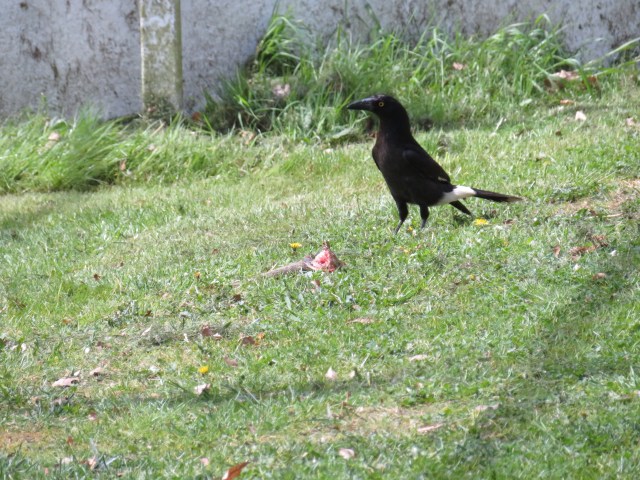
That’s a fish it obviously got out of one of the ponds and is in the process of eating. I took some video:
I joke about being Attenborough, but this was the first time I really felt like some person filming a wildlife documentary. “And here, we see the majestic currawong feeding on its prey, plucked from the trout hatchery…”
After the tour, I set off again up the road. The trout hatchery is on a dirt road turn off from the main road, and the dirt road ends at Point Lookout, which I figured was worth a visit.
The place was actually kind of eerie. I guess it was because I was up so high, but the whole place felt different to any national park I’d been in before. The trees were gnarled and twisted, and everything was covered with moss. Check it out:


A close-up of some of the hanging moss:
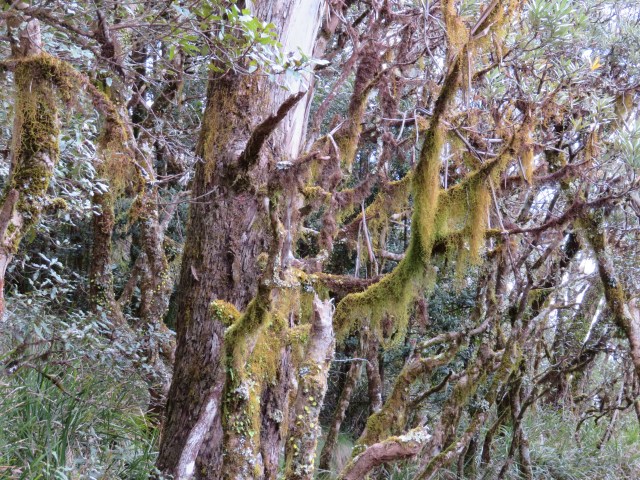
Crazy, huh? But what really got me was how quiet the whole place was. Usually, when you’re in a national park you can hear birds, even if you can’t see them. But not here – have a listen:
All you can hear in the wind and what sounds like a frog. Kind of eerie, huh?
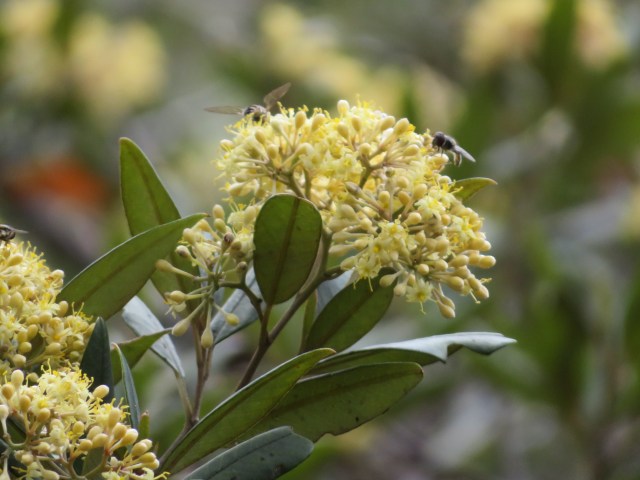
This was the most life I saw – unfamiliar flies feeding from flowers:
There were two lookouts, and this is the view from the first one:
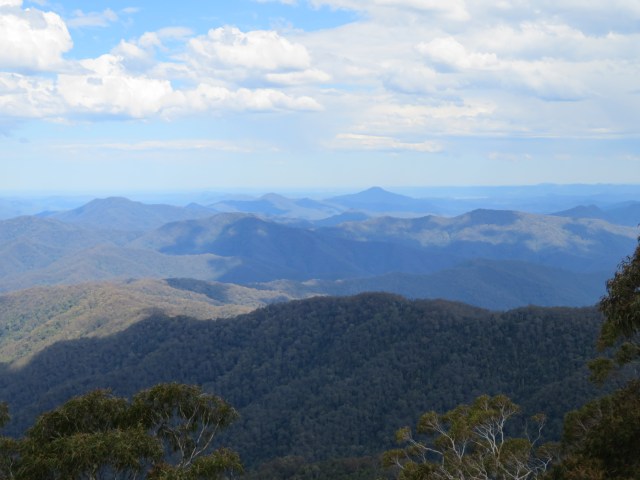
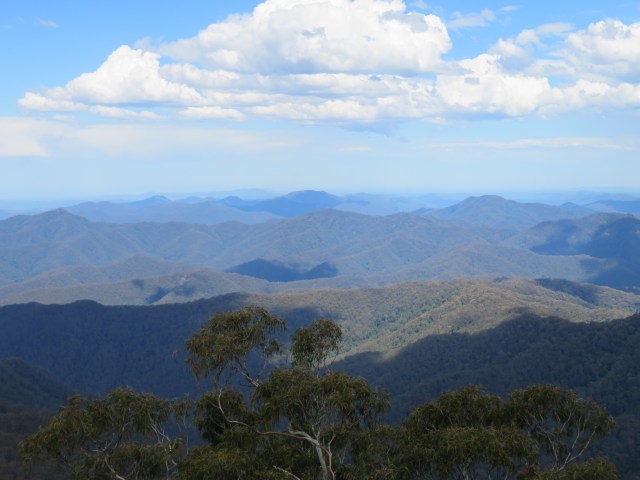
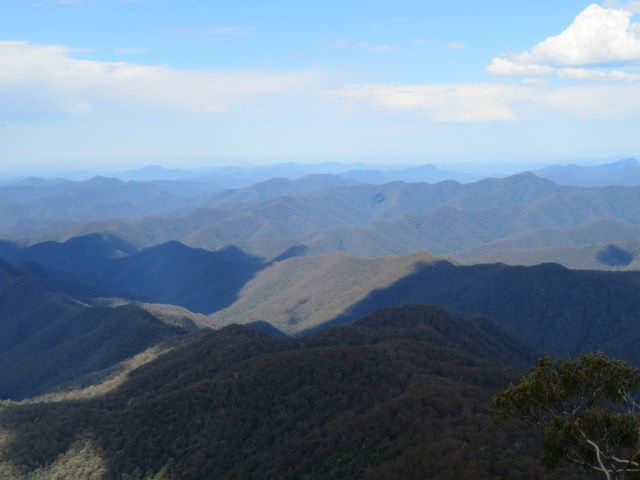
Amazing, isn’t it? Just tree-covered hills and mountains rolling off into the distance.
This is what I saw looking straight down:
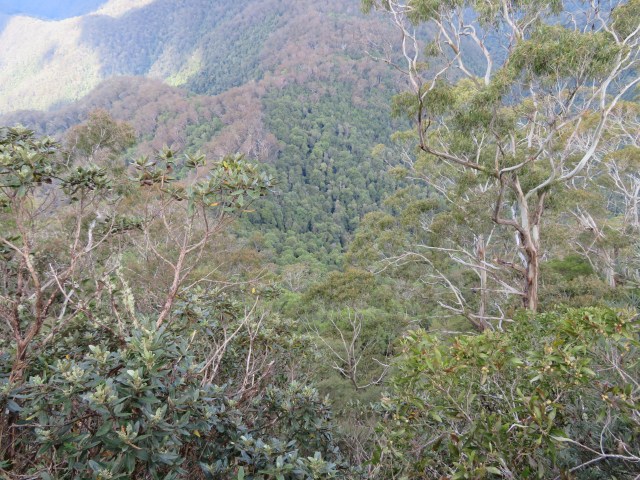
Nothing but trees.
Then it was off to the next lookout. The lookout paths were bitumen, but there was a little dirt path down to a campsite, and I took a picture:
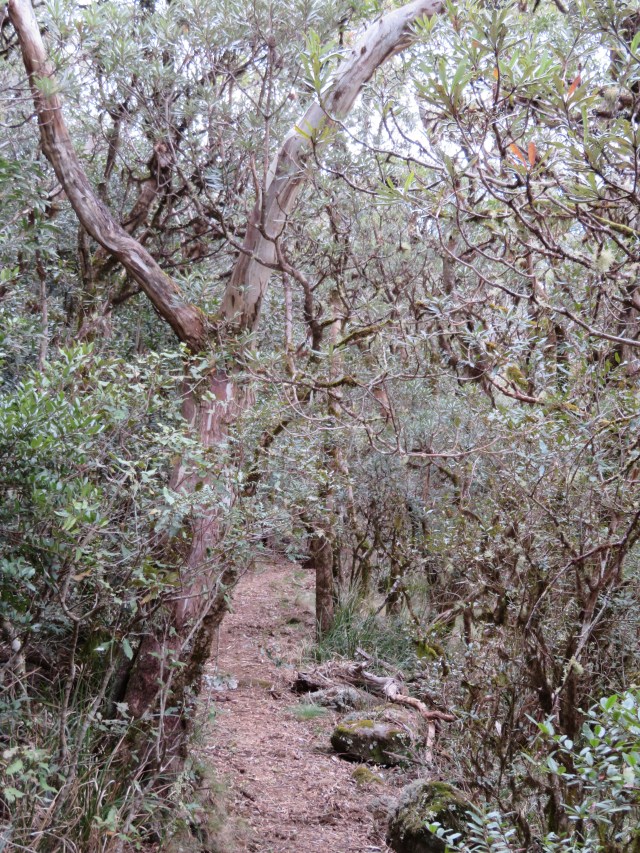
Looks like the path to a lost world, doesn’t it?
I took a picture of myself on the path, just because I liked the way it looked:
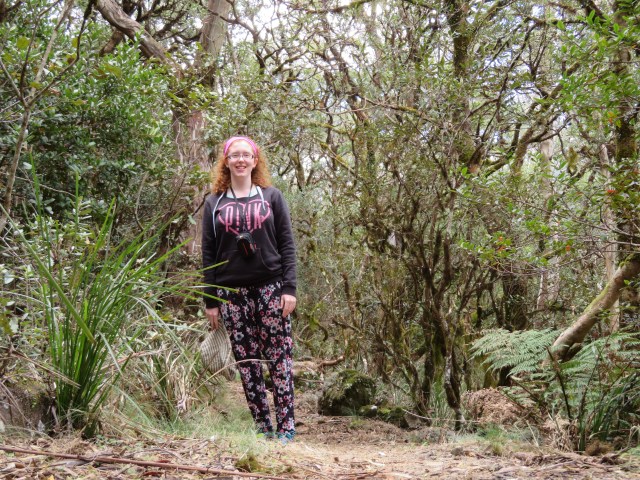
If I was transported to another world when I set my camera and purse down, I would have been only moderately surprised.
The view from the second lookout:
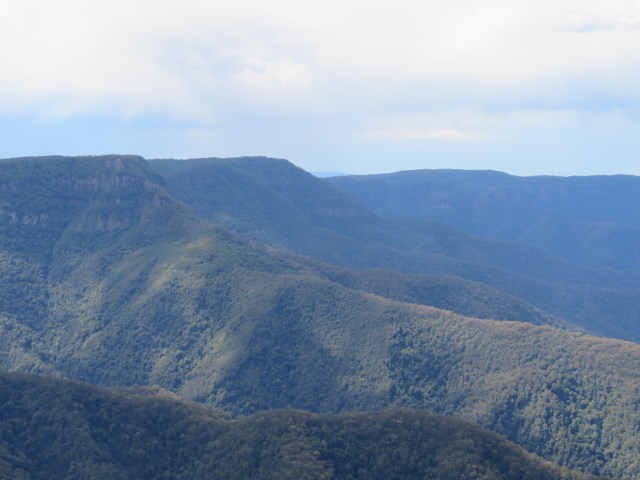

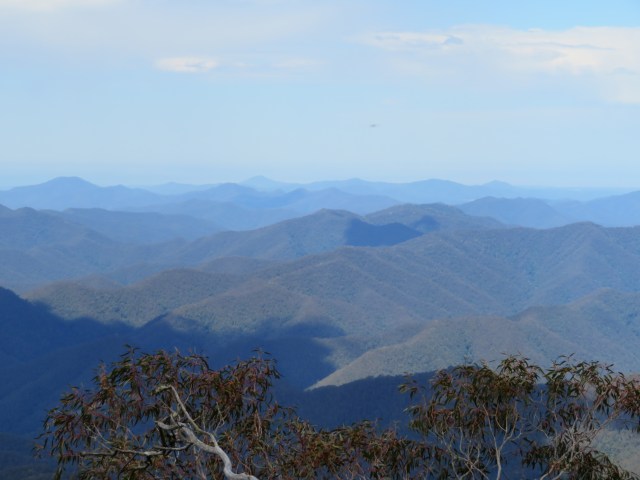
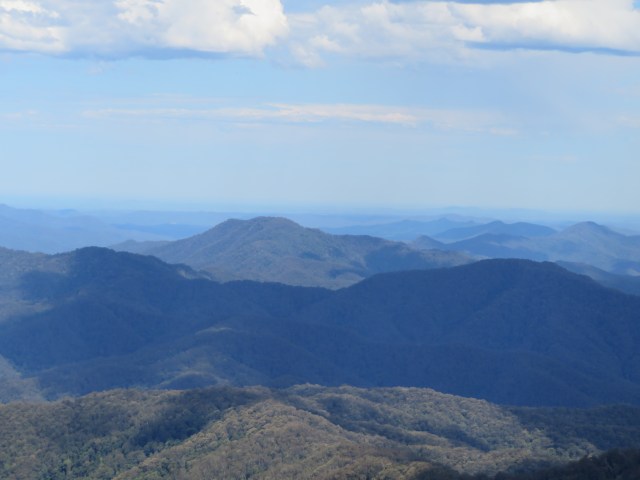
It’s actually pretty amazing to gaze out into the distance and see no sign of civilisation. Just adds to the eerie feeling of the place, the idea that you’re completely alone. Maybe it should have been scary, but I actually found it exciting.
But all good things must come to an end, so I headed down the mountain and back to the real world.
 Jenny's Adventures
Beautiful pics and videos, looks like you’re having a lovely time xXx
LikeLike
It’s wonderful. I’m spending a lot of time with horse though, so it’s probably not nearly as exciting for you guys as the other places I’ve been to.
LikeLike
Loving that beautiful scenery- my fav views are mountains!
Looked fun with the fish- magical stuff that food for making them jump!
LikeLike
The mountains were pretty spectacular, weren’t they? Especially with no sign of civilisation.
LikeLike