Today was fine and sunny, so I went back to Uralla for the famous heritage walk. Prepare for a lot of photos of old buildings.
My first stop was what used to be St. David’s Presbyterian Church, built in 1904:
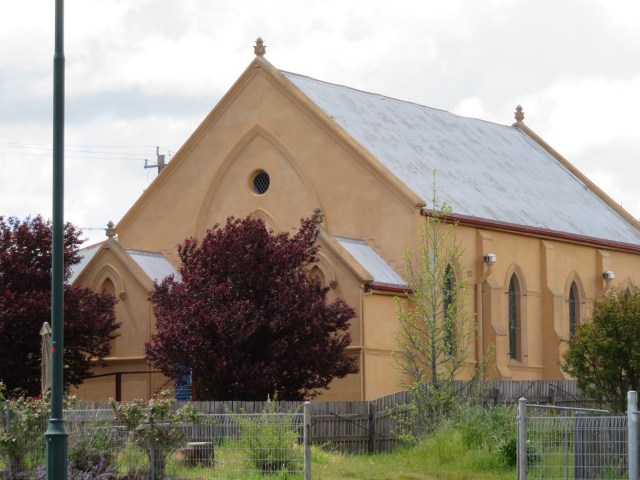
Now it’s a café, and I stopped in there to have some brunch. There were some very delicious-looking options, but in the end, I went with scones (with jam and cream) and a chocolate milkshake. Indulgent, yes, but I was going to do a lot of walking – I had to fuel up!
But first – explanation time! Uralla started off as a few bark huts near the creek, but when gold was discovered in the river in 1852, over five thousand miners came to the goldfields. The railway line reached them in 1882, but the car made Armidale the more accessible place, so Uralla’s population remained at around 1000 until the 1960s, when cheap land began enticing people to move there. That’s why it has so many old buildings – because there was no expanding population, there was no need for new buildings, so even if the old ones were unused, no one was going to knock them down. People started actively working to preserve the old buildings in the 1970s.
Now, the heritage walk!
Weatherboard cottage constructed in 1890:

Brick cottage, constructed in 1885:
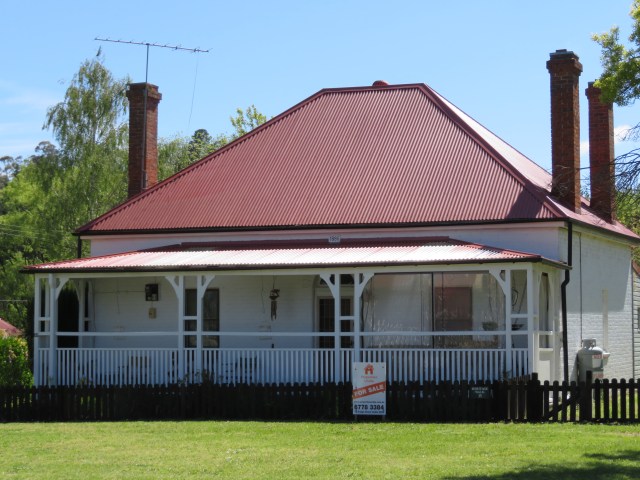
And apparently for sale, as well. The guidebook told me to ‘note the tall chimney’s’, but gave no explanation. So, I guess the chimneys are just unusually tall.
A commercial hotel, built in 1860:

Not much to be seen of it, though I suppose if I lived in one of these houses I’d plant trees to stop people gawking at me too. It was first registered as “The Ship and Anchor”, though no one knows why – Uralla is a long way from the sea, after all.
“Wangaleigh”, built in 1881:
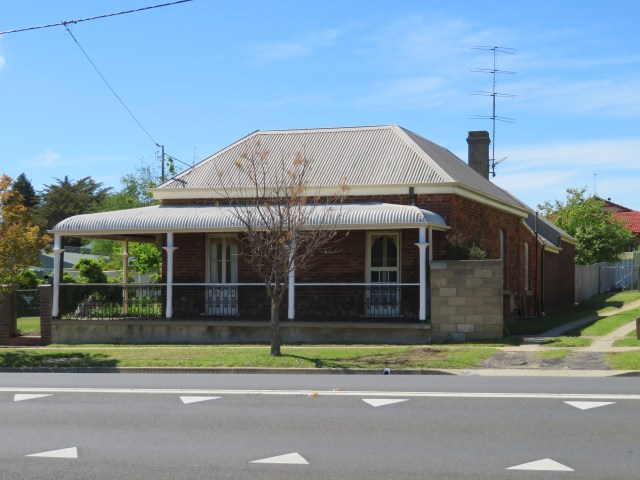
This was originally a cordial factory, and is now a house. Interestingly, the front of the house isn’t facing the road – you’re actually looking at the side door. The main entrance is around the side.
St. Joseph’s Church, built in 1881:
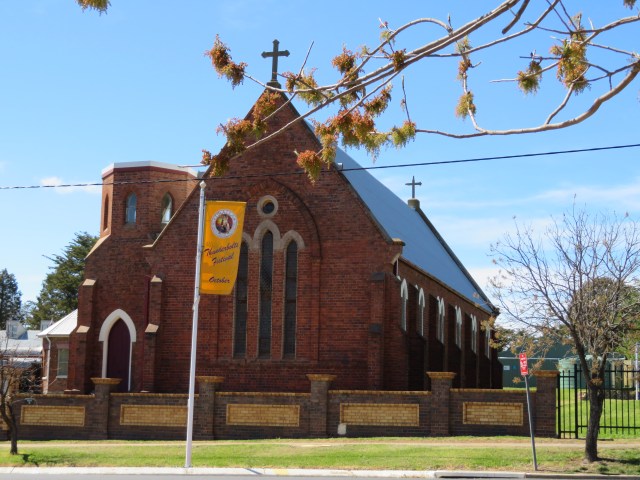
According to me guidebook, that turret tower used to have a conical spire on the top.
St. Joseph’s Convent and School, built between 1886 and 1912:


These were right next to the church – you can see the turret in the first photo.
Blue Trail Garage, built in 1864:

This was originally a retail store for a flour mill. Nice name, though.
“Eliza”, built in 1887:
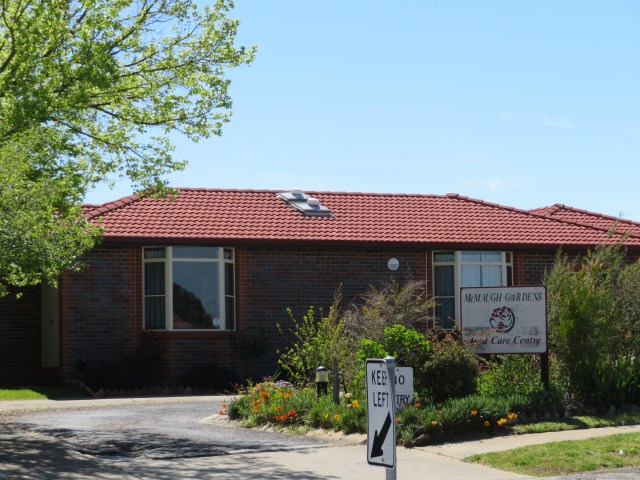
Remember that building that used to be a cordial factory? This was the residence for it.
“The Great Northern Hotel”, built in 1881:

It was originally a single storey building – the top floor was added in 1904. Nowadays it’s called “The Top Pub”. Because of the two pubs in Uralla, it’s the one nearest the top of the hill.
Replica of a gas street lamp:

This was the main street lighting from 1911-1918.
Australian Joint Stock Bank, 1892:
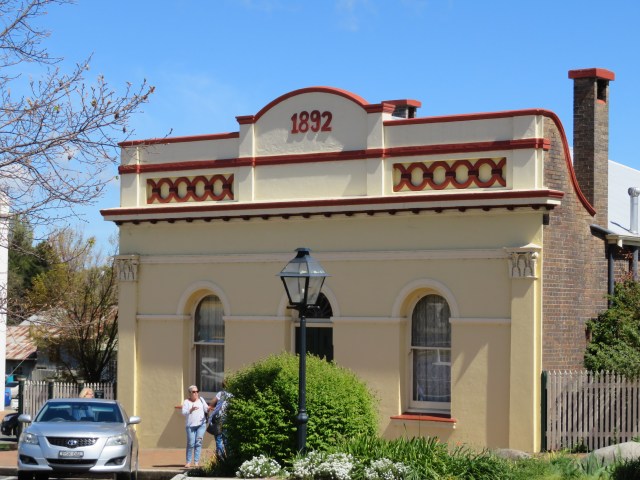
The bank closed down during the depression of the 1890s, then reopened as the Commercial Banking Company of Sydney until 1995, when it became a private residence.
Store, 1872:


The verandah awning was recently rebuilt, according to the guidebook. It’s strange to see old buildings sporting signage for modern businesses, isn’t it?
I spotted some swallow hatchlings in the corner of the building, so I took a video:
Another store, 1890:
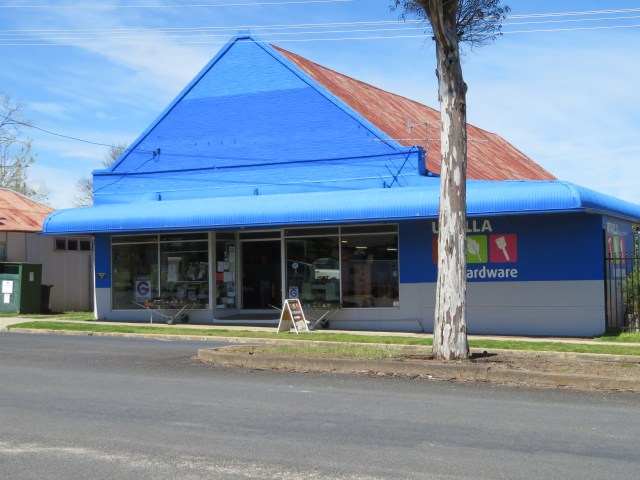
They have a lot of old stores in this town. This one was used as a roller skating rink and later as a general store.
Uniting Church, 1908:


Built as the Methodist Church with bricks made and fired in a specially built kiln on Burial Ground Gully. The guidebook doesn’t say why – maybe it was more holy that way?
Uralla Post Office, 1885:

Exactly as I said (typed), this was, and still is, the post office. That little boxy addition at the side used to be a verandah, but it was enclosed to accommodate the telephone exchange.
Trickett’s General Store, 1910:


Originally built by C.E. Solomons, who constructed the corner portion. Fred Trickett bought it in 1920, and built the further extension. This was the son of Ned Trickett, that world champion that we saw in the museum.
Imperial Hotel, 1909:
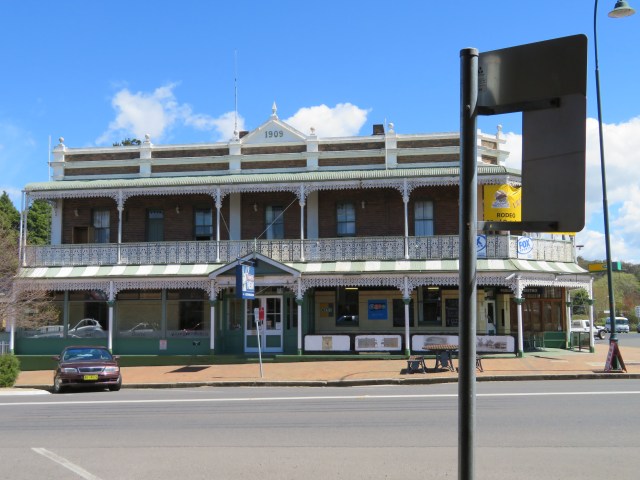
Not much to say about this one, except that it was renamed “The Thunderbolt Inn” in 1970.
The Heart Stone:
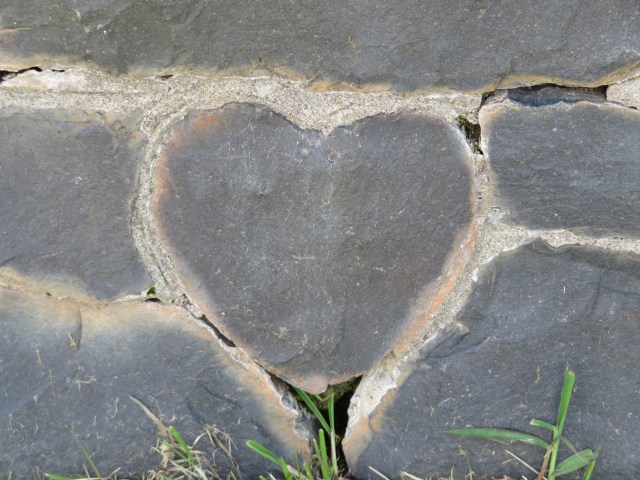
Just a little carved basalt rock. The guidebook doesn’t give you a story for it, except speculating that it might have been a tribute to the stonemason’s beloved, so you have to use your imagination.
Stoker’s Store, 1864:
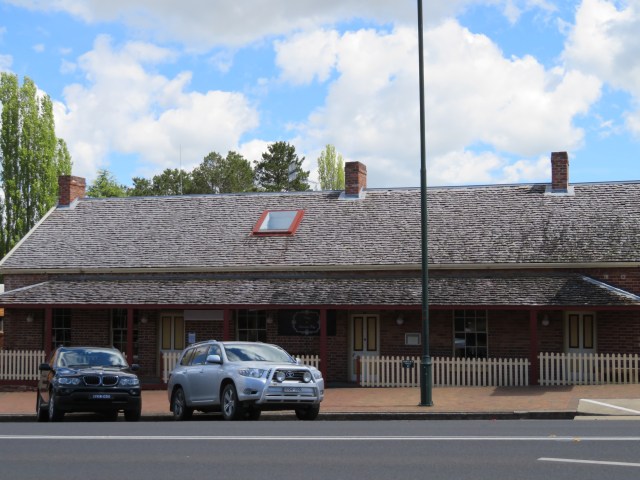
Built as an inn, but never licensed. A tinsmith operated there from 1905, then his son ran a clothing store. In 1980, the new owner planned to demolish part of it, but the NSW Heritage Council prevented it. Eventually, it was turned into the Bushranger Motel.
Sid Gill’s Billiard Saloon and Bike Shop, 1904:
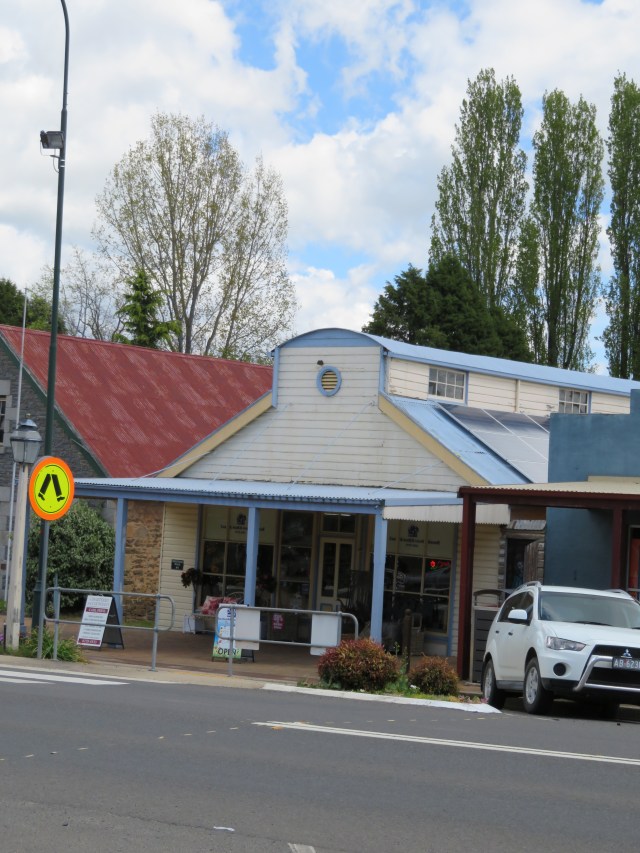
Weird combination, huh? But why not?
Salvation Army Citadel, 1872:

Used by the “Blood & Fire” Salvation Army until it became privately owned in 2002.
LiteraryInstitute, 1910:
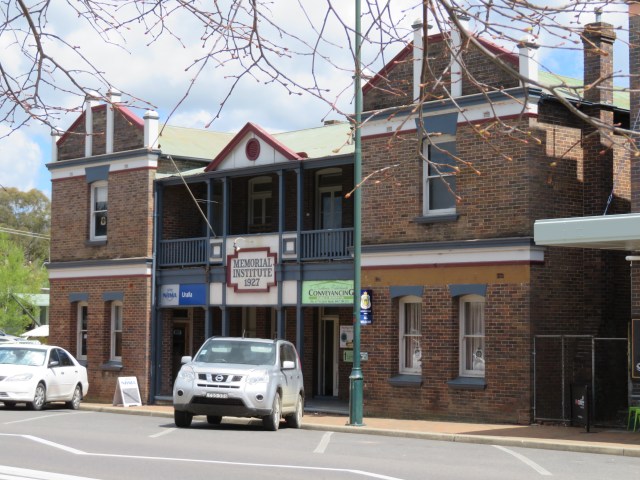
First licensed as a hotel, it was abandoned after a fire in 1920. It was rebuilt in 1927 and officially recognised as a First World War Memorial Literary Institute. A lot of these buildings have interesting (and sometimes disparate) stories. But I suppose, if the building’s already there, it’s just adapted to whatever’s needed at the time.
Uralla Literary Institute, 1886:

It was apparently an attempt to encourage the guys out of the pubs and into books and billiards. It didn’t really take.
McCrossin’s Flour Mill, 1870:


Yes, this is the museum from the other day. It was converted in 1979, after lying abandoned for years.
McCrossin’s Chaff Cutting Shed, 1881:
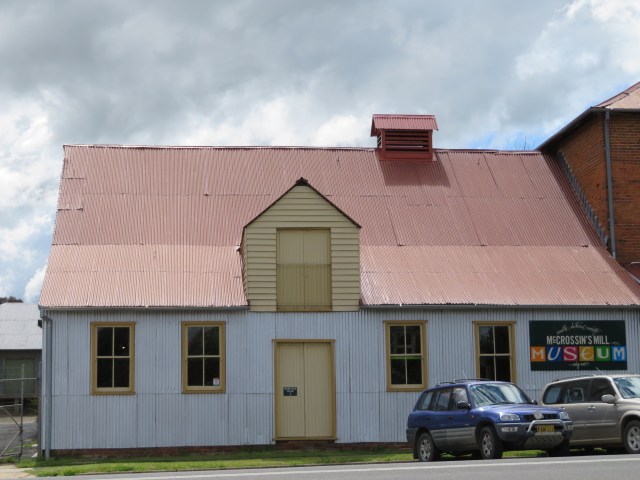
Just as described, this was where they cut hay into chaff, using the mill’s steam engine.
McCrossin’s Stables/Store, 1878:
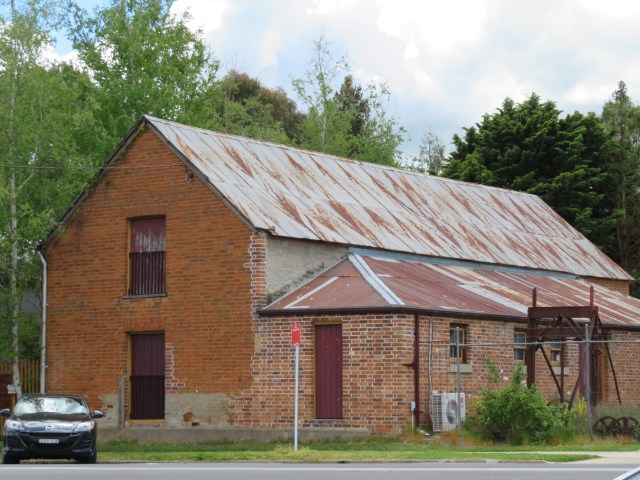
Just as described – this was the store and the stables.
Site of the Oddfellows Hall, 1888:
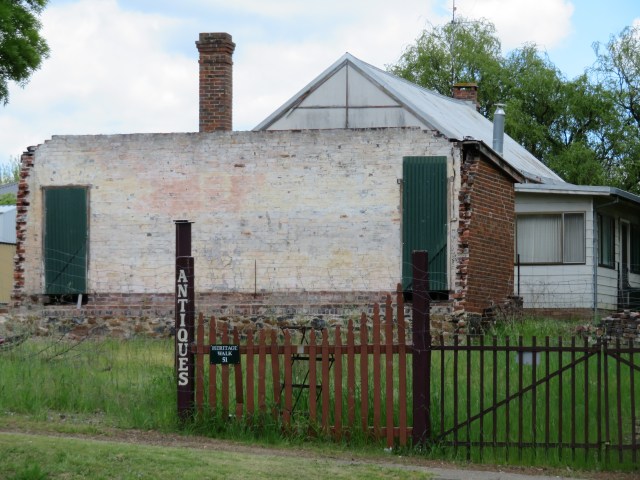
Built for the United Order of Oddfellows as a meeting place. Hilarious name, huh? They were a fraternity of English origin, but their early history is unknown – all that secrecy, like the Freemasons.
110 Bridge Street, 1883:
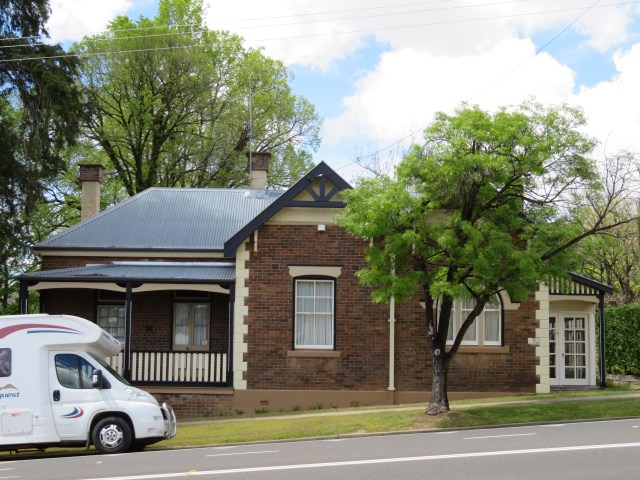
Built for the McCrossin’s store manager. The story says that the site was chosen so the manager could sit on the verandah and keep an eye on the mill.
W. Curtis Building, 1904:
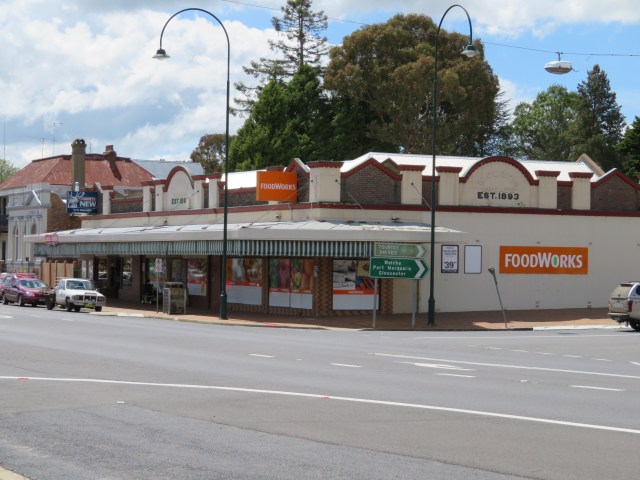
I know, the building says ‘established 1893’, but there’s a good reason for that. You see, this was the site of the first general store in Uralla, in 1859. It was reconstructed in 1904, and the builder incorporated the ‘1893’ bit because Curtis had opened another shop (menswear) in 1893.
It’s weird to see ‘Foodworks’ plastered all over it.
Old Bank, 1874:

Originally built for John McCrossin, it was purchased four years later by the Bank of New South Wales. The sign is still there:
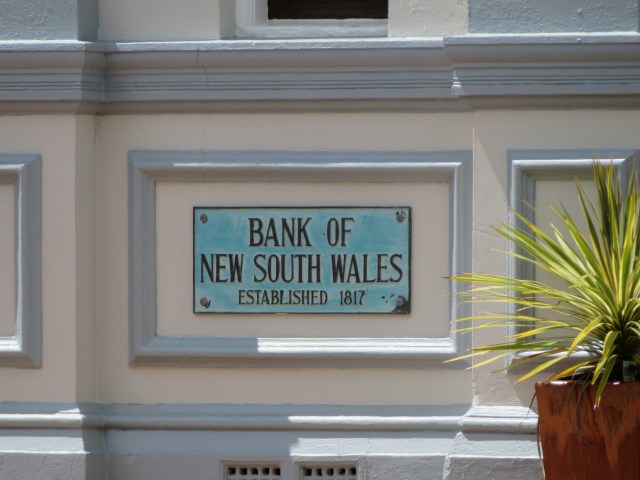
Now it’s a café, and this is where Mum and I had lunch the other day after we checked out the museum.
This isn’t a ‘heritage’ thing, just some gorgeous artwork I found in an alley:
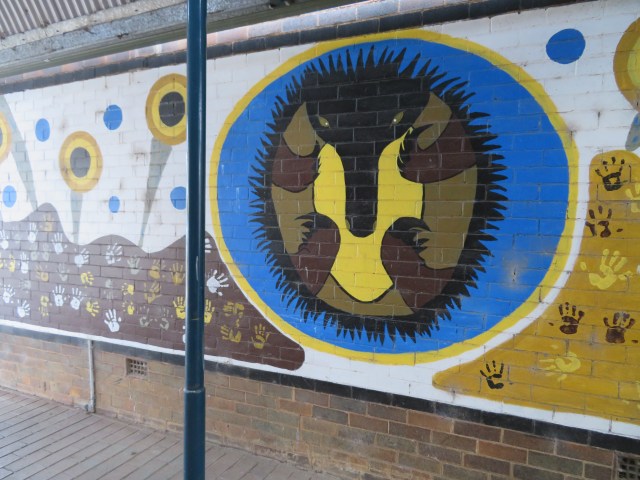
Why an echidna? Because it was special to the Aboriginal tribe that lived here before the Europeans came, the Anaiwan. So maybe it is a heritage thing.
In the same alleyway, a portion of an old ‘hairdresser’ sign:
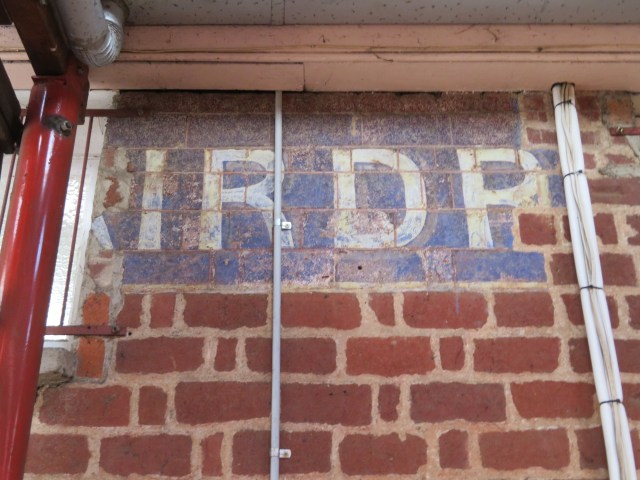
And spots where doors and windows have been bricked up:
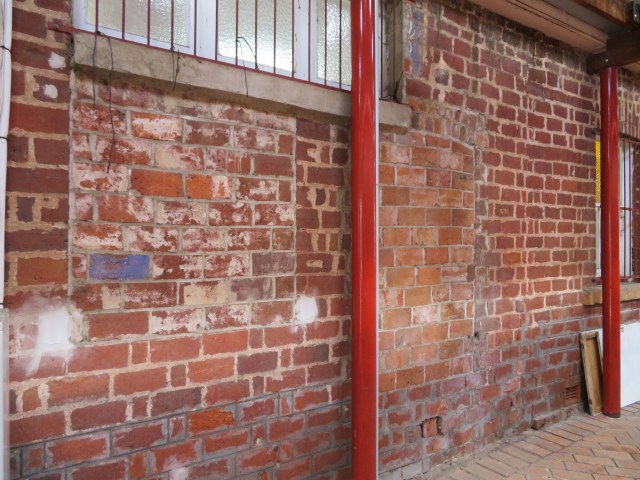
This wall (with its bricked-up doors and windows, and sign) is the wall of this shop, built in 1860:

Just outside is a replica of a kerosene lamp (1887-1906):
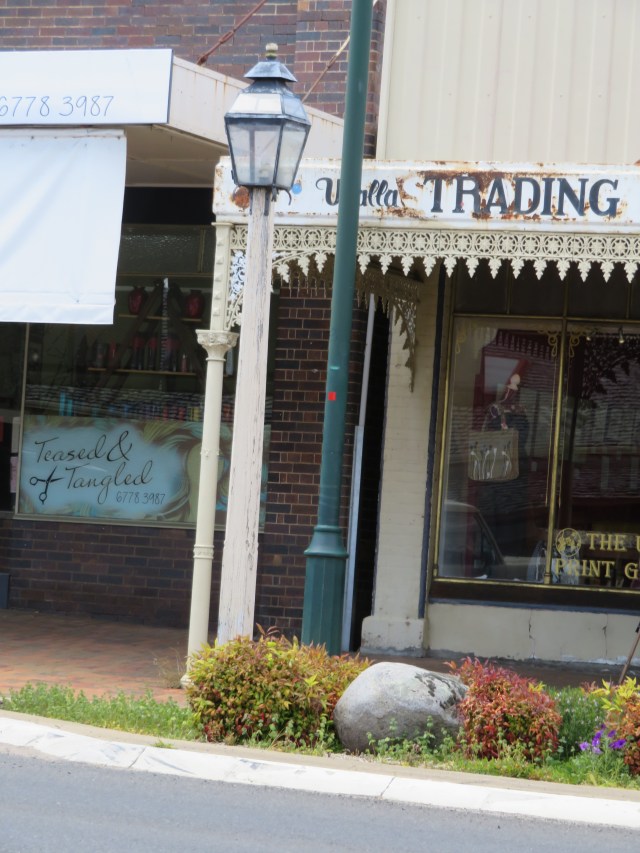
Bardsley’s Shop and Accommodation House, 1886:
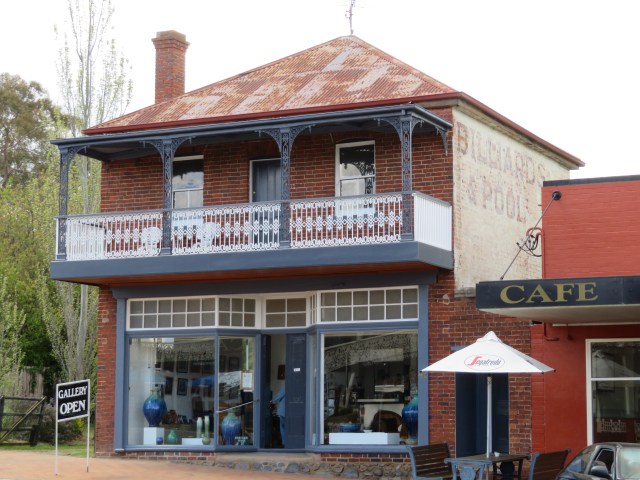
It was built as a general store with family accommodation above. It later had a billiards room – hence the sign on the side.
Shop, 1920s:
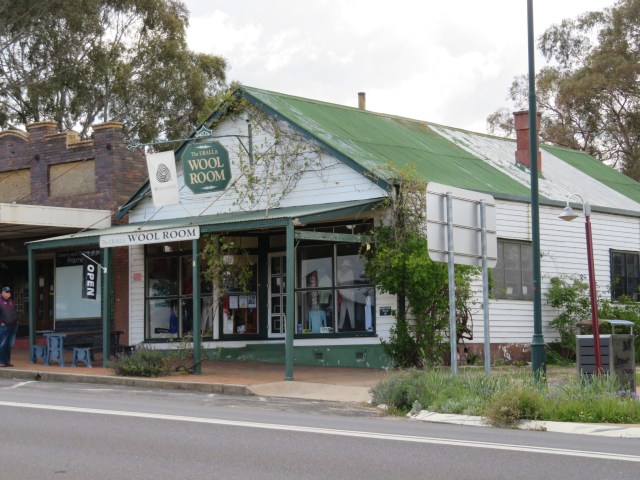
Not much to say about this one – it was a shop, it still is a shop.
“Clay’s House”, 1881:

Built by Mr. Dangar of Gostwyck Station as a retirement home for one of his best workers. The worker was named Phillip Post, though, so I’m not sure where ‘clay’ comes from. It’s wasn’t Dangar’s first name, either, so maybe it’s meant to refer to the bricks somehow? The guy who built it?
Alma Park, 1893:

Uralla’s schoolchildren assembled to plant 100 trees on the 3rd August, 1893. The park was named after the daughter of the mayor – she planted the first tree.
“Goddard’s Cottage”, 1860:

Uralla’s oldest existing cottage, the road it’s on used to be the Main Northern Road, until the highway was moved.
31 Queen Street, 1880:
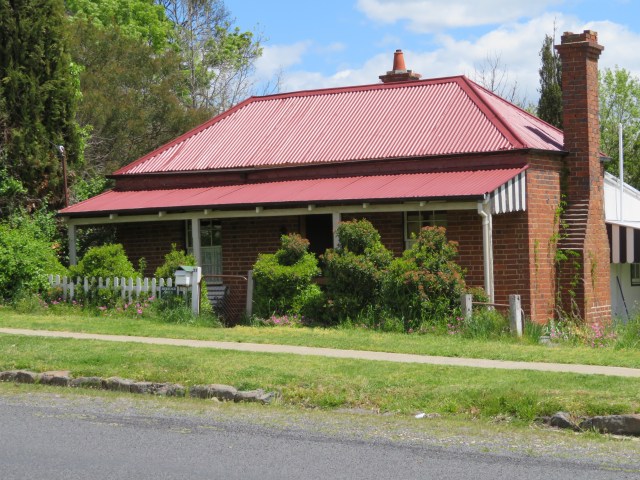
A Victorian cottage in almost original condition, but you can just see the white edge of the extension in the photo. Makes sense – the original brick house was just three rooms, if I lived there, I’d want more space, too.
St. John’s Church of England, 1886:
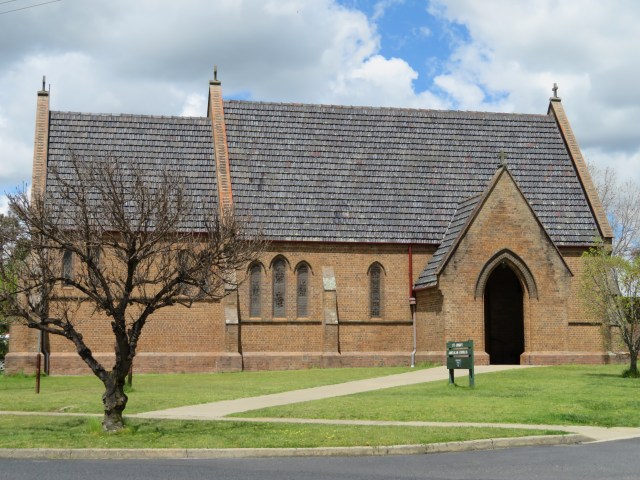
Not much to say about this one, either – it’s a church, what more do you want from me?
Masonic Hall, 1883:

Everyone’s probably more familiar with the Masonic Order than the United Order of Oddfellows, but they were basically the same idea – a fraternity that wrapped itself in secrecy.
35 and 37 Maitland Street, 1889:
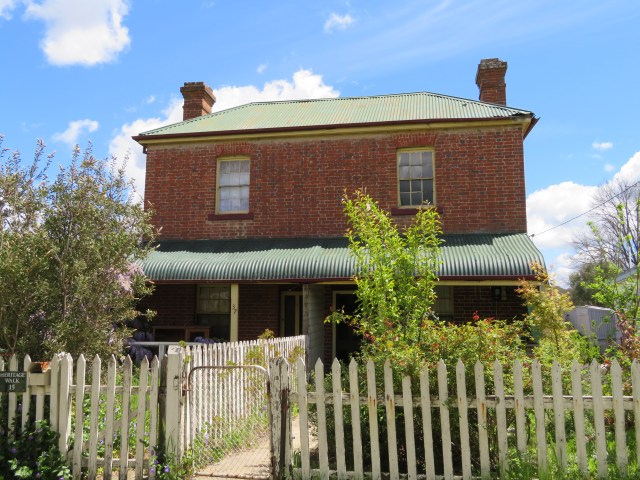
The guidebook says these are the only pair of two-storey semi-detached houses that still exist in the New England Area. So, there’s that. You see a lot of these houses in England – the interiors are the same, just mirror-reversed.
“Foxwood”, 1891:

A Victorian house, with the decorations that the guidebook informs me are typical of the era. Check out these gateposts:
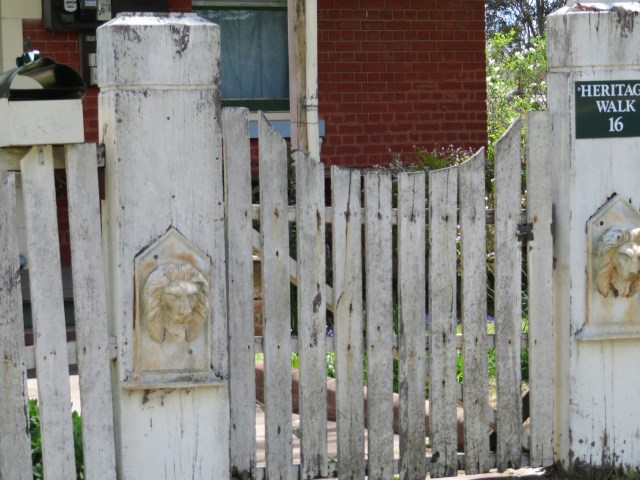
And the door, with the old-fashioned bell:
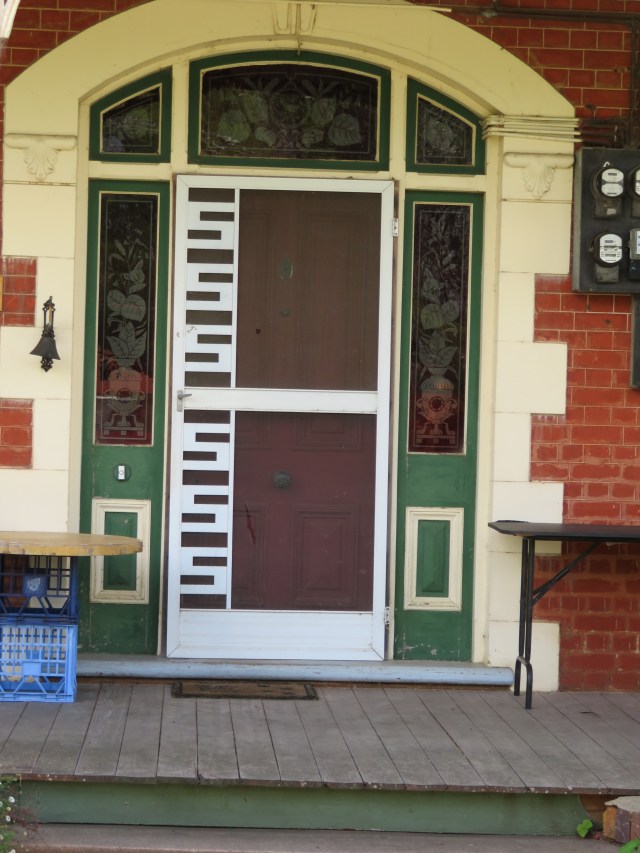
26 Maitland Street, 1885:


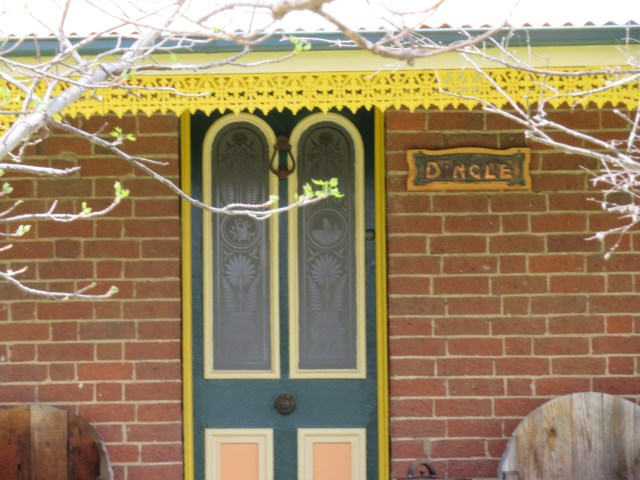
This old cottage was extended in 1977, and is now a B&B called “Dingle Bed & Breakfast”. Don’t believe me? Here’s a close-up of the sign (and their gorgeous door, which is the original article):
5 Elizabeth Lane, 1885:
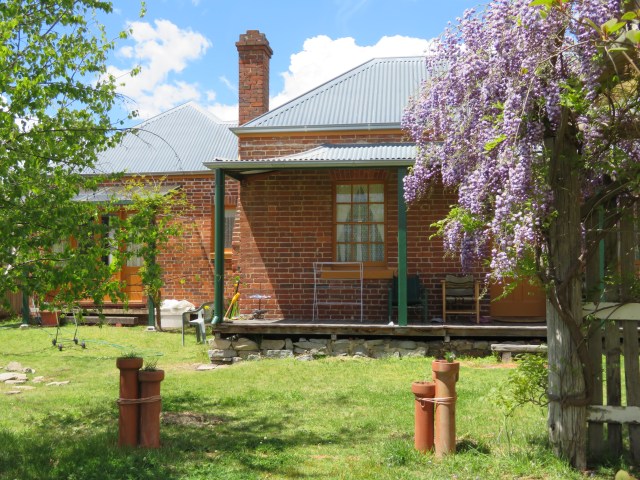
Another little cottage, enlarged in 2002 using bricks from the demolished Gostwyck Municipal Council Building.
Police Residence, 1891:
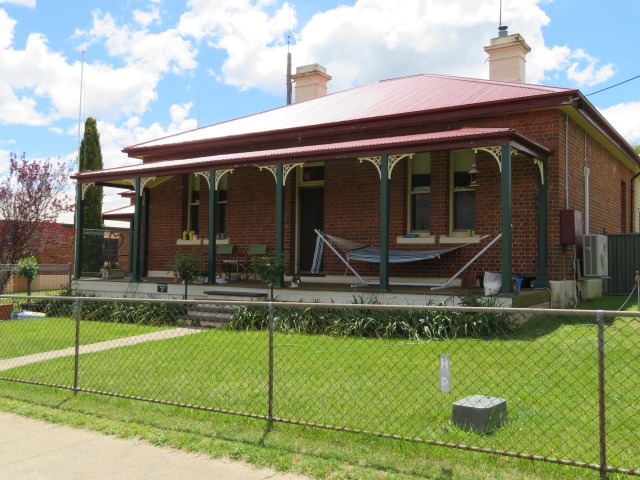
Built close to the courthouse for convenience. Not a police station anymore, as you might have guessed by the hammock out front – the station has moved next door.
Uralla Courthouse, 1885:

Still the courthouse, though they’ve built in a disabled entrance at the side. There’s a building at the back that used to serve as the stables:

Not huge, but it would have got the job done.
The train station, 1882:
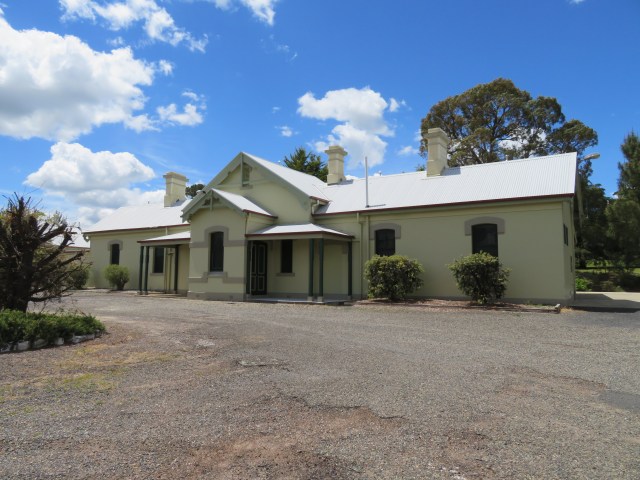
This is still in use. The stationmaster’s house was built at the same time:
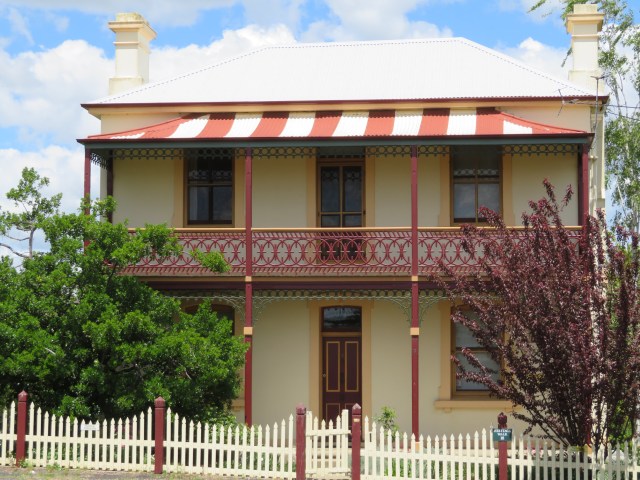
9 Salisbury Street, 1901:

Another person trying to grow trees to hide their house. Good luck to them.
15 Salisbury Street, 1885:
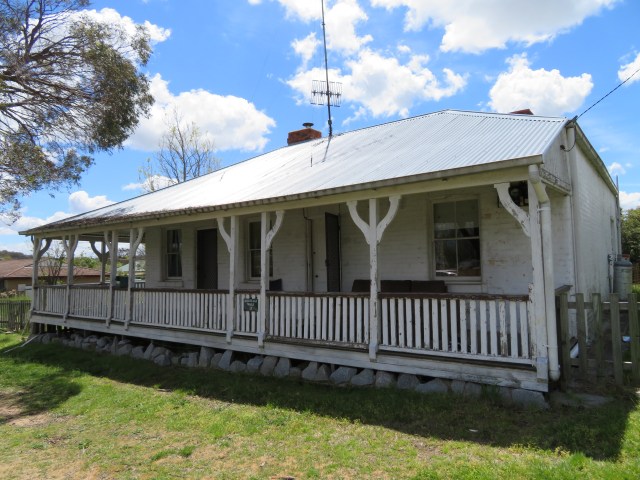
Built for the licensee of the Locomotive Hotel.
“Gartshore”, 1885:
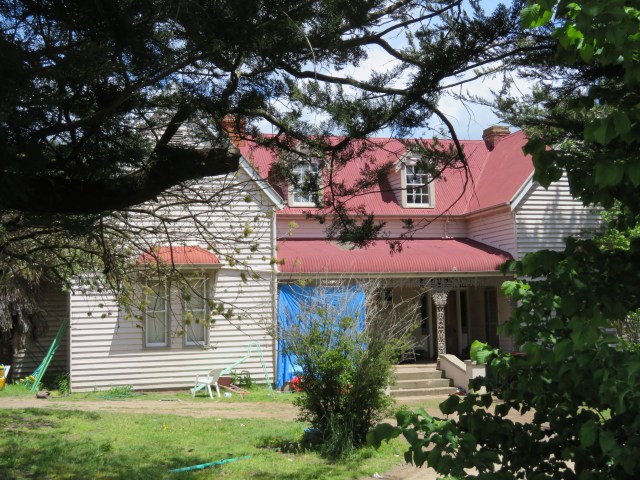
Gothic style, built for David McNeal, who died just before it was completed, poor guy.
Railway Gatekeeper’s House, 1882:
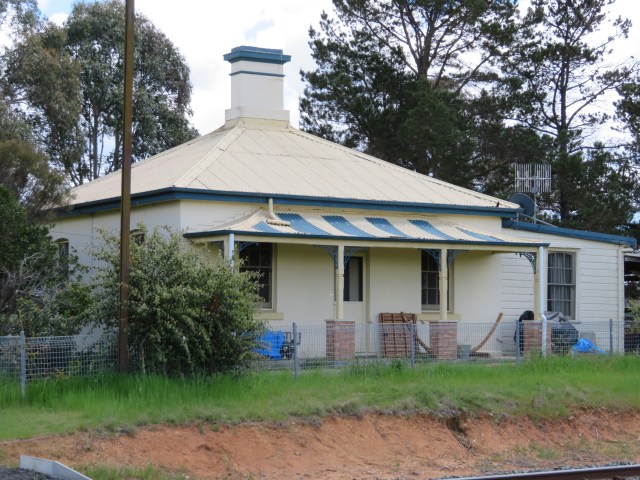
There used to be over a hundred of these cottages throughout NSW, now there are less than twenty. The guidebook told me to ‘note the central chimney and the location of the backyard dunny’. I had a look for the promised dunny, and finally found it tucked into the furthest corner of the backyard:
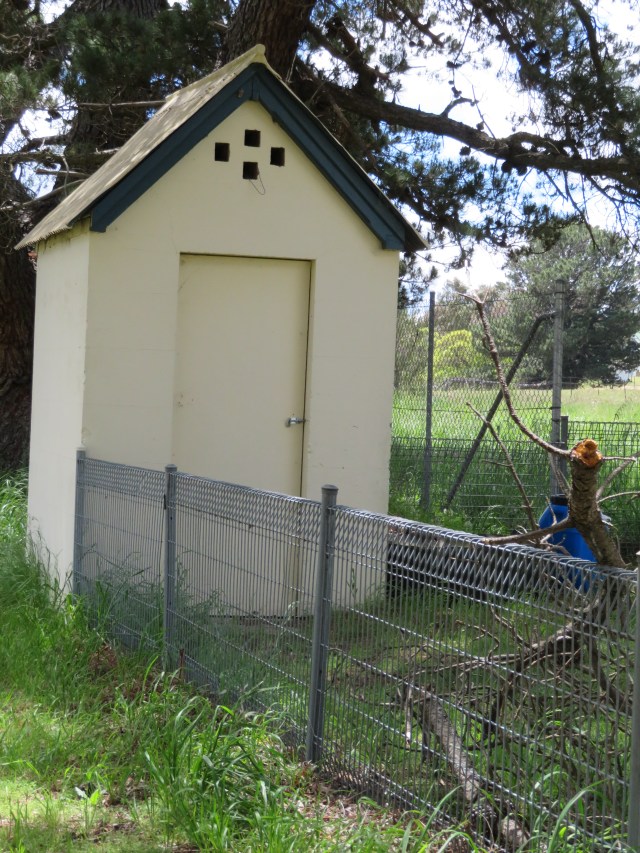
I suppose you didn’t want the smell anywhere near the house.
Phoenix Foundry, 1900:
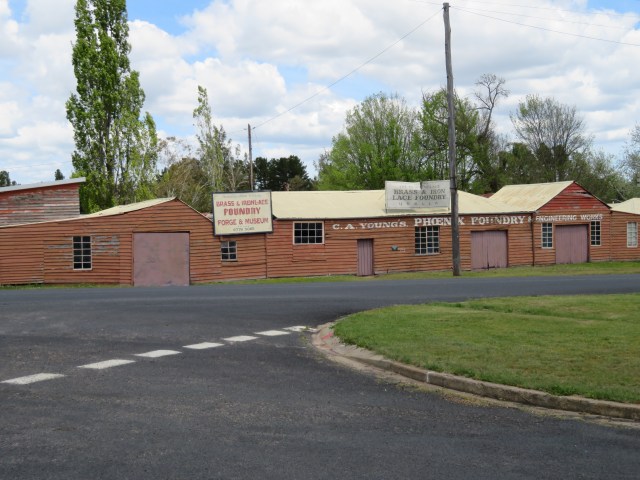
Aside from having a great name for a foundry, this is also the oldest operating foundry in Australia.
6A East Street, 1885:
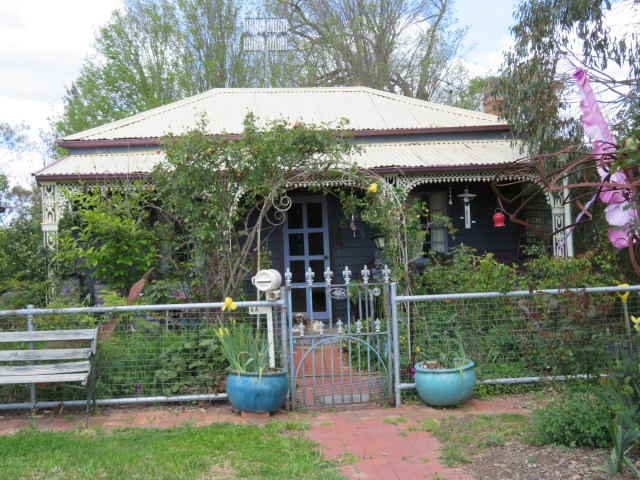
Originally the home of the founder of the foundry (not exactly a pun, but it feels like one).
10 East Street, 1900:

Built with materials from a demolished hotel, one of three cottages added to the foundry precinct to accommodate the founder’s family – he had 12 children!
After the heritage walk, I took a quick drive up to the lookout. It was bit of a disappointment, to be honest – the trees blocked the view. All you could see was a little sliver of the town and the hills beyond:

Then I headed back to Armidale and played with the horses for a while. I didn’t do much – just some groundwork and brief riding in the round yard, just to keep the previous day’s intense sessions fresh in their minds.
 Jenny's Adventures
Clays house was bought by my G G Grandmother Augusta Clay in 1921 then taken over by her son William Clay, his wife Florence (Ollie) and their family till about the 1980’s. Hence it’s called Clays House.
LikeLike