In the morning, Mum and I went to see Saumarez Homestead.
It’s a historic house on the outskirts of Armidale – you have to drive past the airport to find it. Now I’m going to give you a brief overview of the history of the place, so if you’re only in this for the pretty pictures, skip past.
The property was settled in 1835 as a squatting run owned by Henry Dumaresq. Dumaresq was the owner, but never lived on site – there was a slab homestead for the manager and timber huts for the workers. It was sold Henry Arding Thomas in 1856, and as the first resident owner, he built a brick extension to the slab house for his family. The property was sold again in 1874 to Francis White. He died soon after acquiring it, and it passed to his eldest son, Francis John White, commonly known as F.J. White.
He and his wife Margaret lived in the brick/slab homestead until the first storey of the larger homestead was built in 1888. The second storey was added in 1906. F.J. and Margaret had seven children – five daughters and two sons. The daughters were Frances (called Mary), Elsie, Joan, Frieda and Doris, and the sons were Harold and Frank. F.J. later developed Parkinson’s and Margaret succumbed to dementia, and when they died Elsie and Mary remained in the homestead. Mary died of cancer in 1948 (they weren’t a lucky family, were they?), and Elsie lived in the house alone until 1979 when she moved to an aged care facility. She died two years later, and the National Trust acquired the house in 1984.
And now that that’s over with…
The house from the car park:
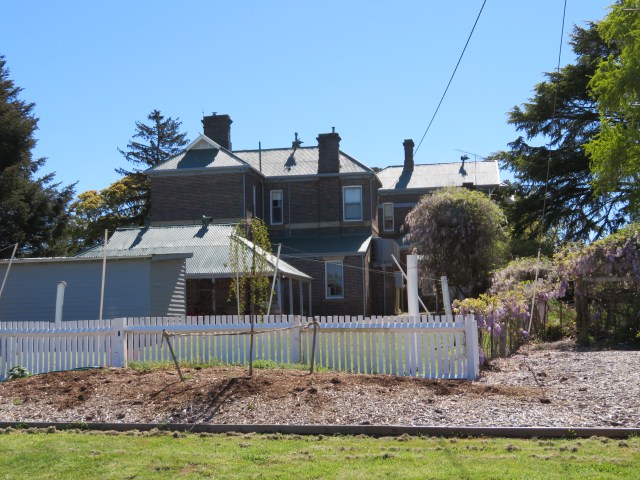
Not a particularly impressive angle, but don’t worry – that will come.
They had a little trellis that was covered in wisteria and roses:


Mum and I arrived early for the guided tour, so we had a wander through some of the gardens. And what spectacular gardens they were!
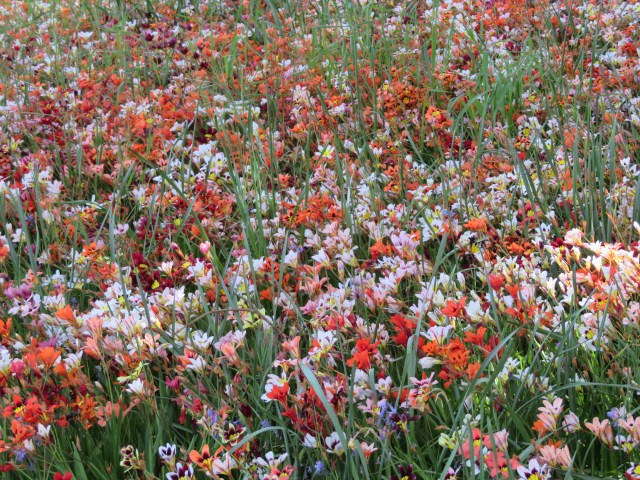
Some close-ups of the flowers in this planting bed:


They also had some white wisteria:
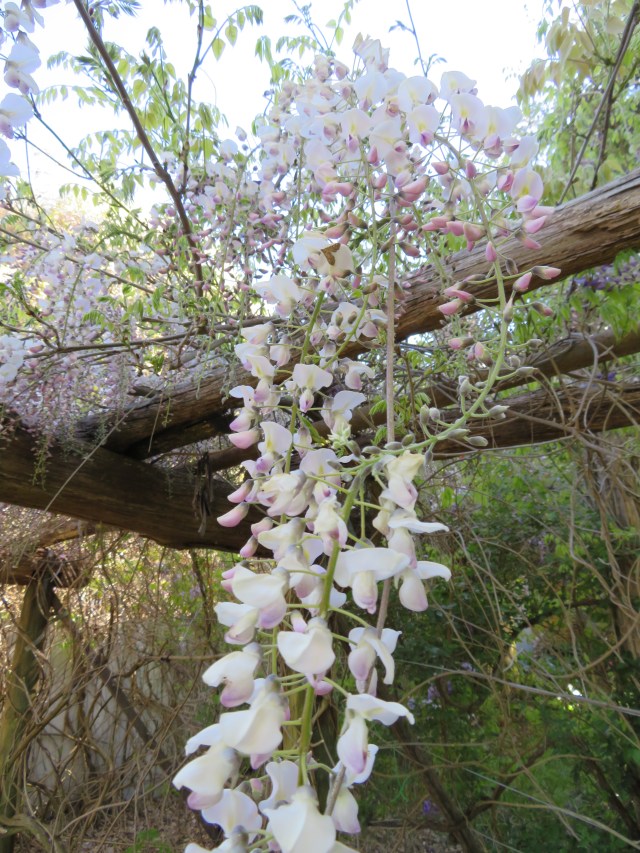
With a crimson rosella eating the flowers:
Now prepare for an overload of flowers:


Yeah, there really were that many flowers – it was amazing. And the whole place smelled wonderful. It was hard to pick out a particular flower’s scent, they all just blended together in this perfumed haze.
We found another crimson rosella in the garden:
The garden was full of butterflies as well – check this out:
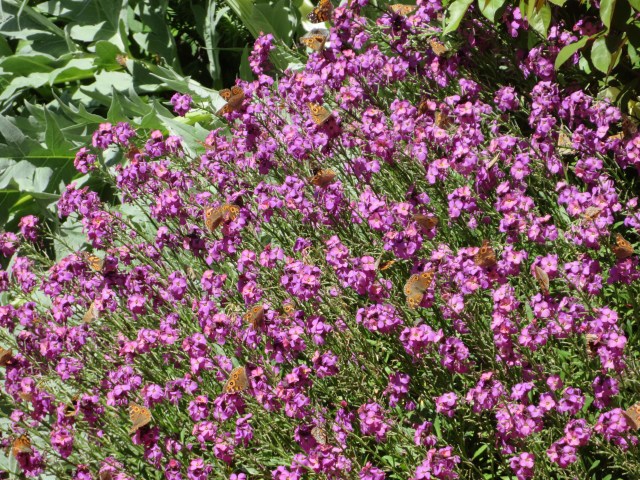
Every bit of brown or orange in that picture is a butterfly. Crazy, huh? They were everywhere, and when we were walking through the garden every step sent up little clouds of them in front of us.
On the way back to the office for the tour, I spotted a few galahs:
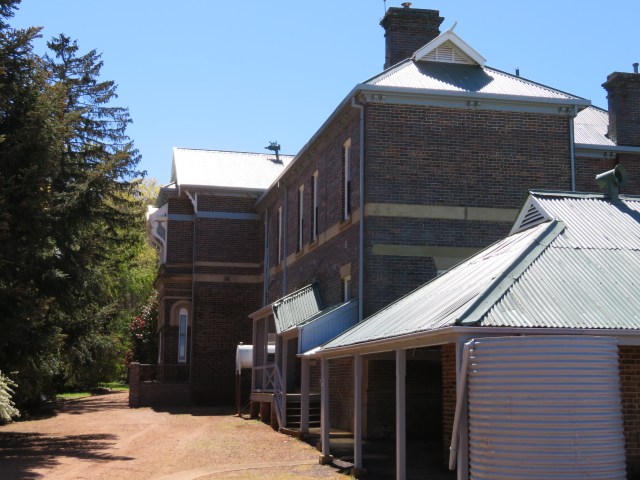
Then we were off around the house. This is a view of the homestead from the side:
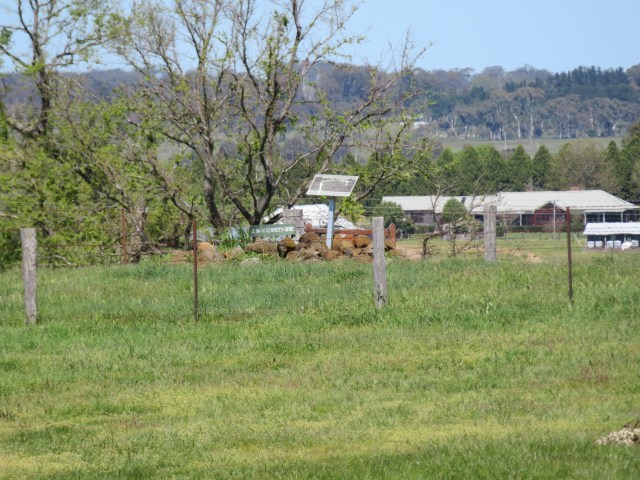
That pile of rocks marks where F.J. White’s office used to sit:
You can see the difference in brick work between the two stories:
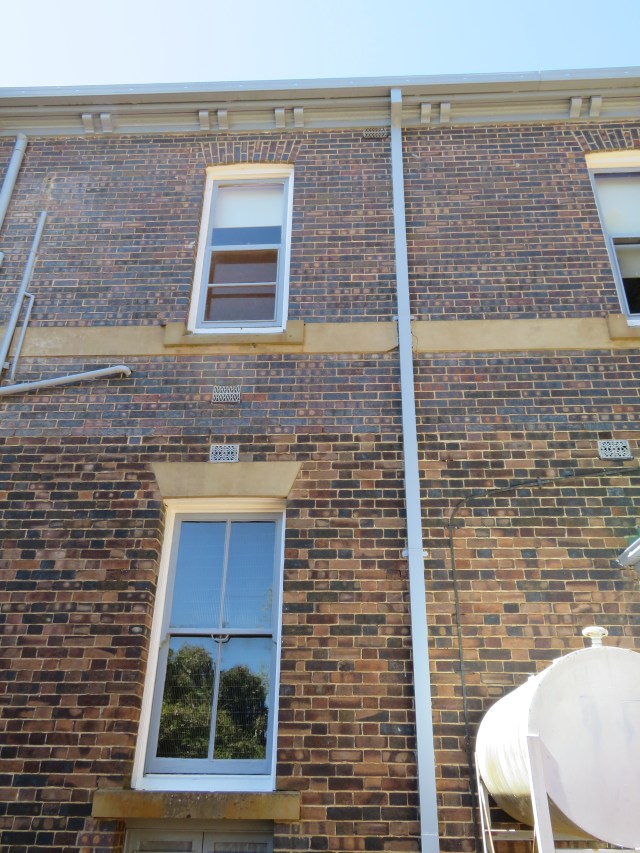
The ground level was built with bricks made on-site. But by the time the top floor was being constructed, Armidale had its own brickworks, so the bricks were bought from there.
At the side of the house is a large aviary which used to house budgerigars, and beyond that was the greenhouse:
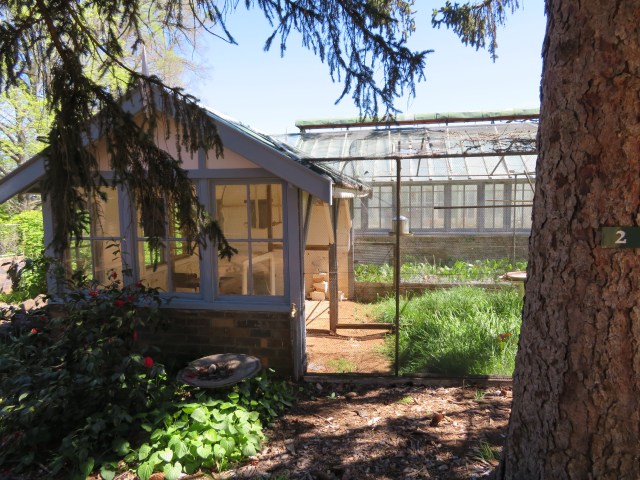
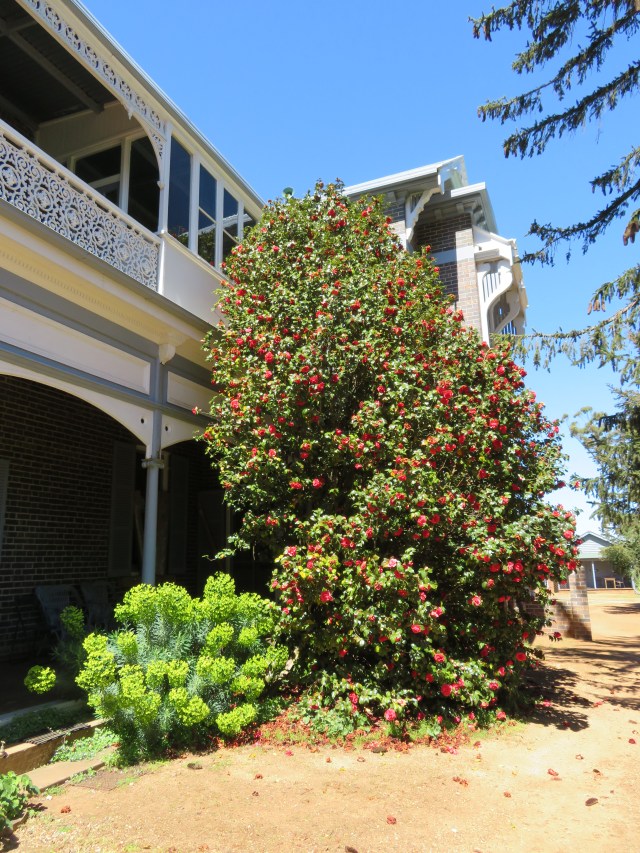
A huge camellia growing up the side of the house:
The front of the house:
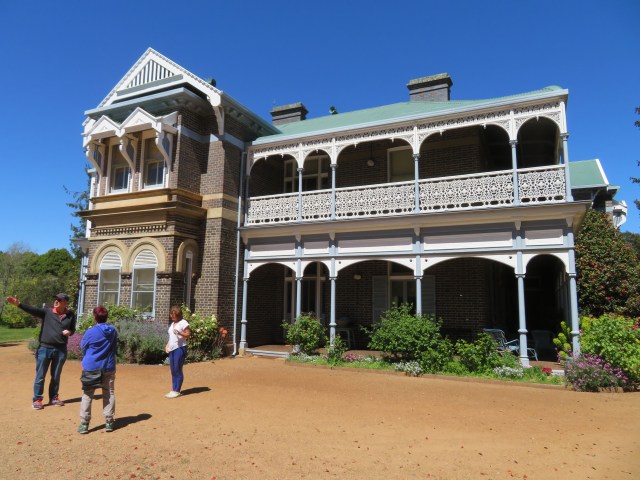
I told you the spectacular view was coming!
The courtyard:
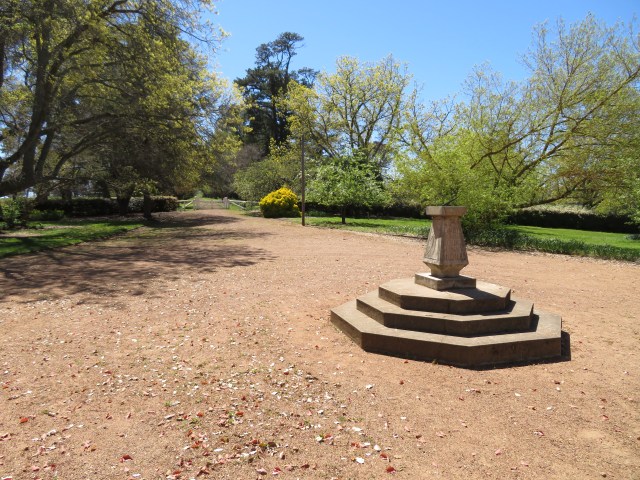
The original driveway:
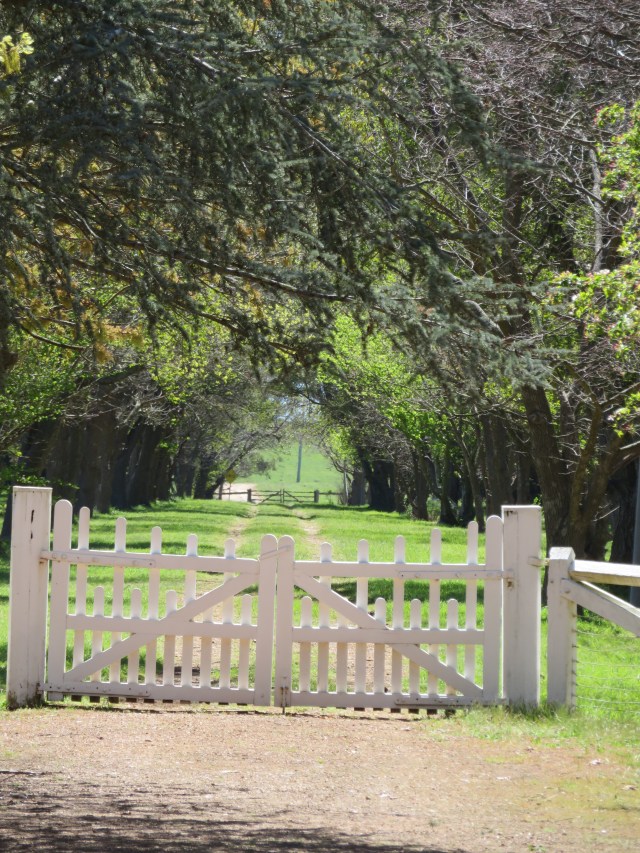
Now, visitors use another driveway that takes you around to the back of the house. With this one, you came in up the front so you could get a good look at the house and be thoroughly impressed.
We had to put special booties over our feet to go inside. It was awkward because mine were a little too big for me and I kept accidentally stepping on the edges of one with the other foot.
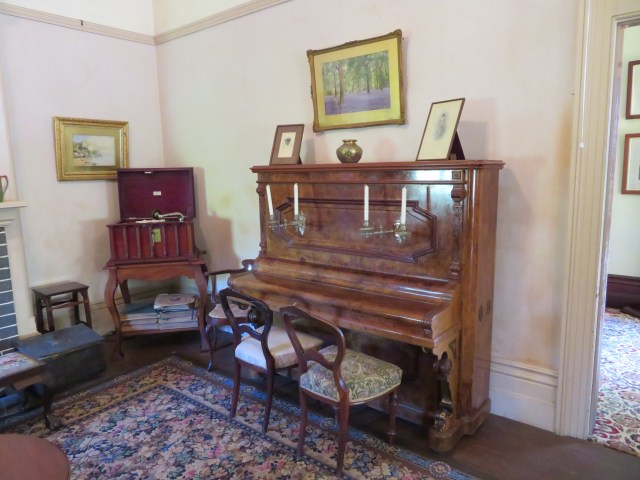
The drawing room:

A German piano and a gramophone, for entertainment:
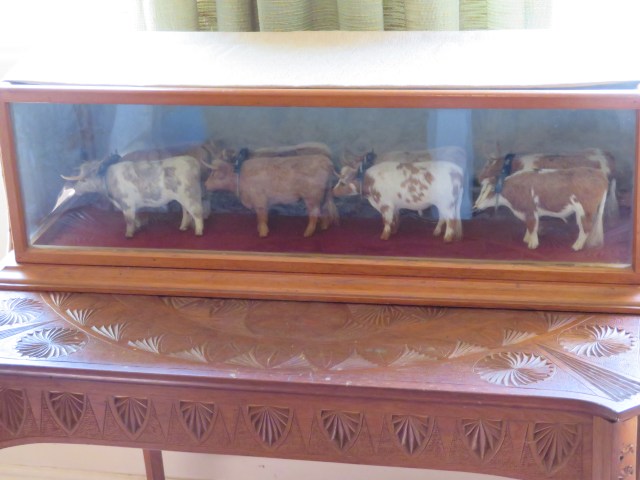
There was also a model of a bullock team, made from wax, and covered with real bullock hair:
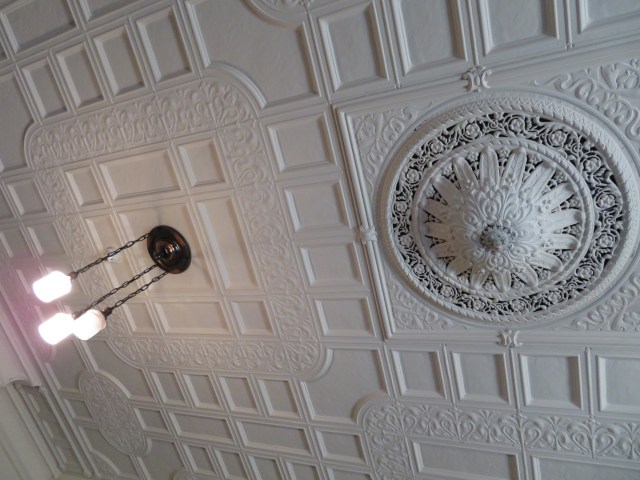
The ceiling:
Mum looking at a honey stain on the wall:
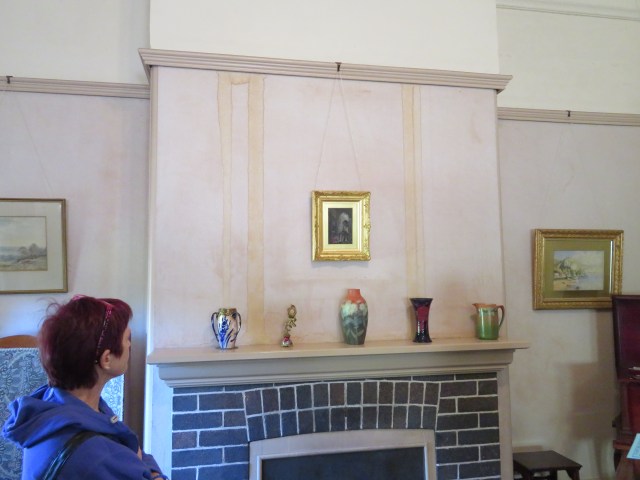
I know what you’re thinking – a honey stain? Apparently some bees set up a hive in the chimney, and when the fire was lit a lot of the honey and beeswax melted and ran down, staining the wall.
The old drawing room:
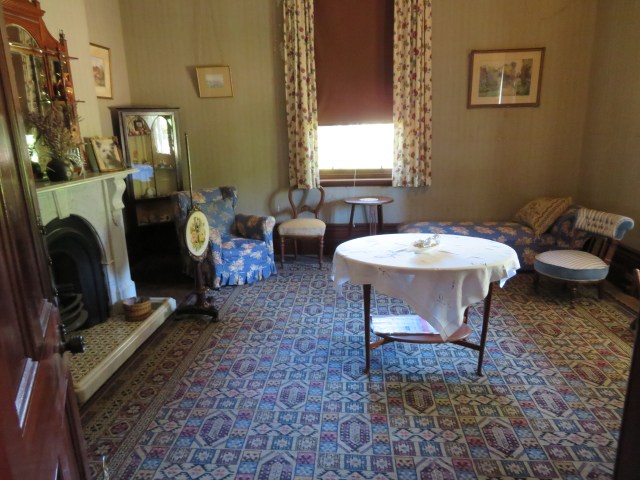
This would also have been used as a guest room – for male guests, that is. Male guests slept on the ground floor, female guests slept on the top floor.
It had a marble fireplace and an embroidered fire screen:
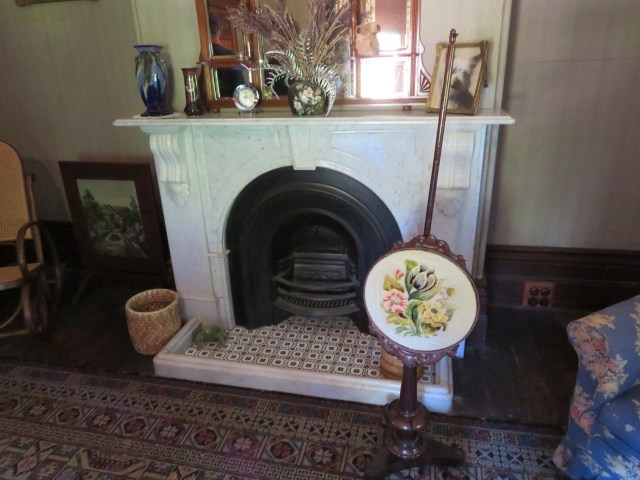
The height of the fire screen could be adjusted, and its purpose was to keep the heat off a lady’s face so her makeup didn’t run.
The front door from inside:
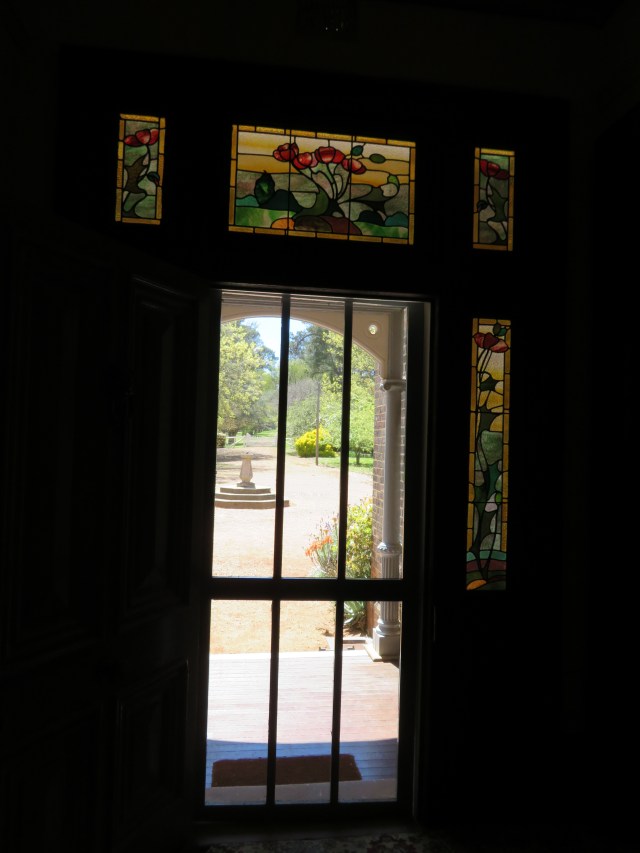
Gorgeous glasswork, wouldn’t you say?
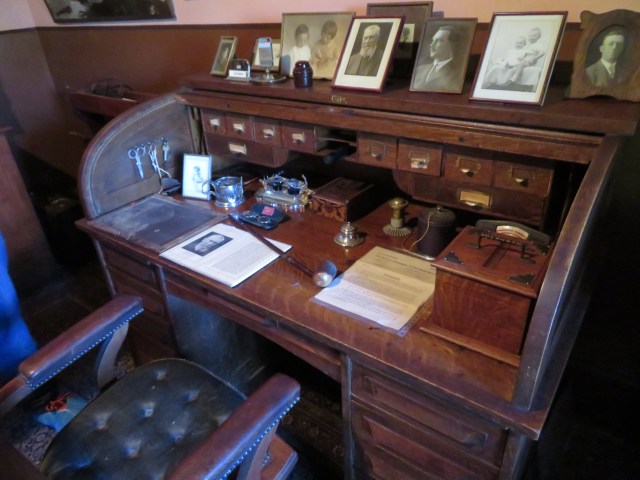
The home office:
This decorative wooden lock and chain was carved from a single piece of wood.


Pretty impressive. It’s amazing what people can do.
An old bedroom, later used as a storeroom:
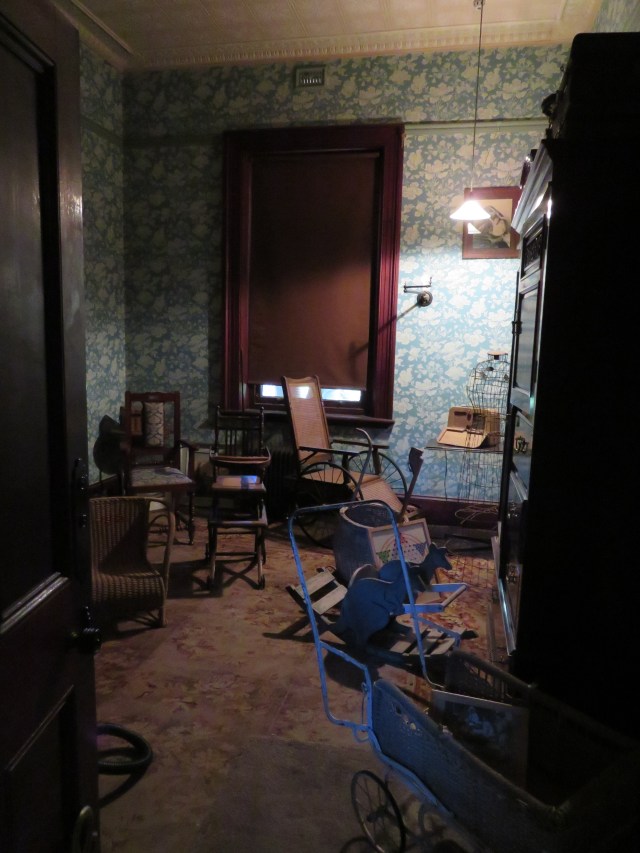
This room retains the old Edwardian wallpaper. You can also see Frank White’s wheelchair, and a ‘rocking kangaroo’.
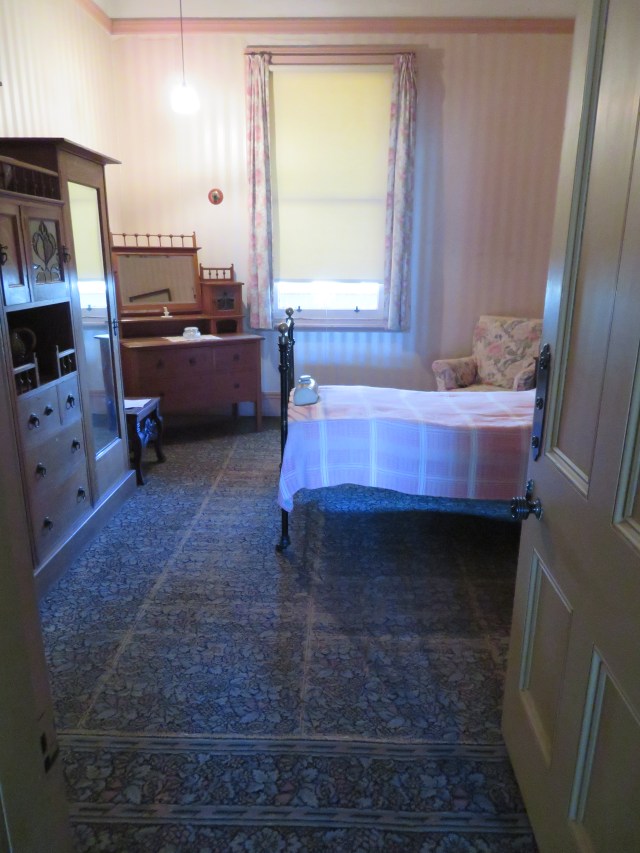
A guest bedroom:
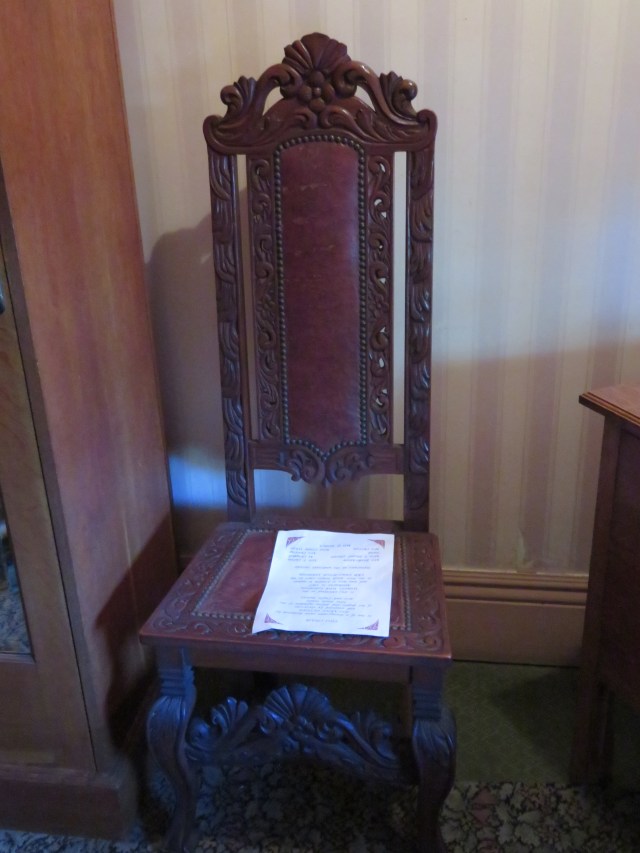
Mary White was into wood carving (and gardening, and sewing – she was a real Renaissance woman). The chair below is part of a set she and her association carved. No one knows what happened to the rest of the set – probably gathering dust in someone’s attic.
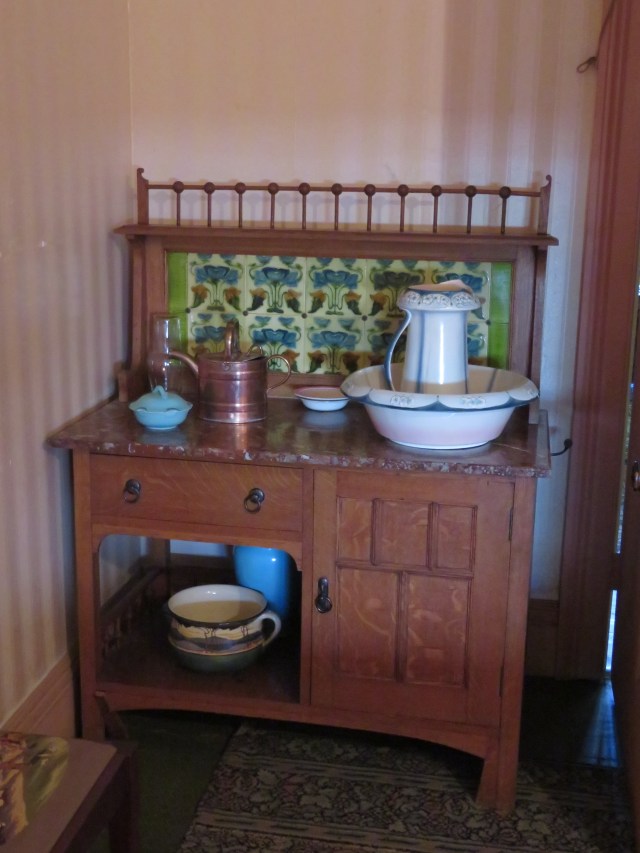
A washstand:
The staircase:
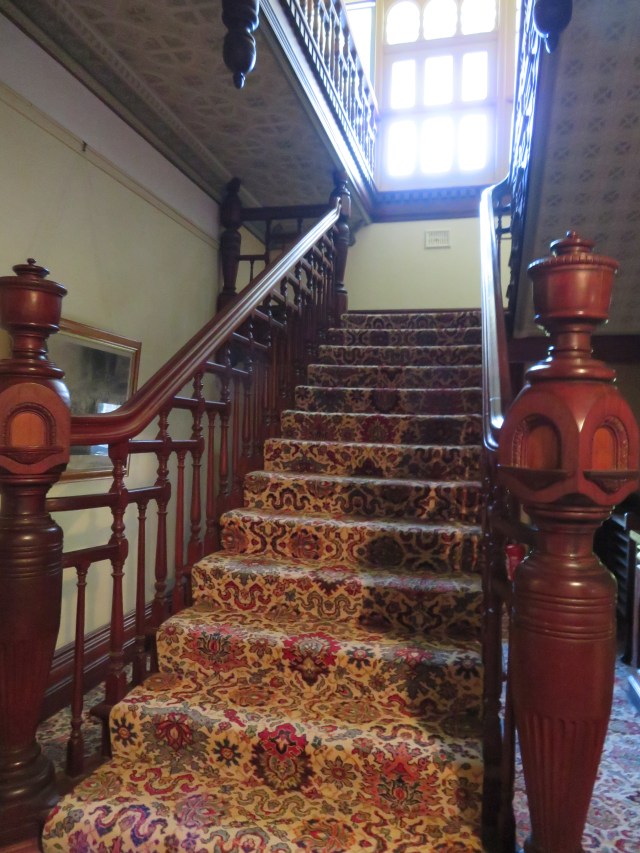
The stairs are made from red cedar – if you wanted to be fancy in those days, you went for red cedar.
The bedroom ultimately used by Margaret Simpson:
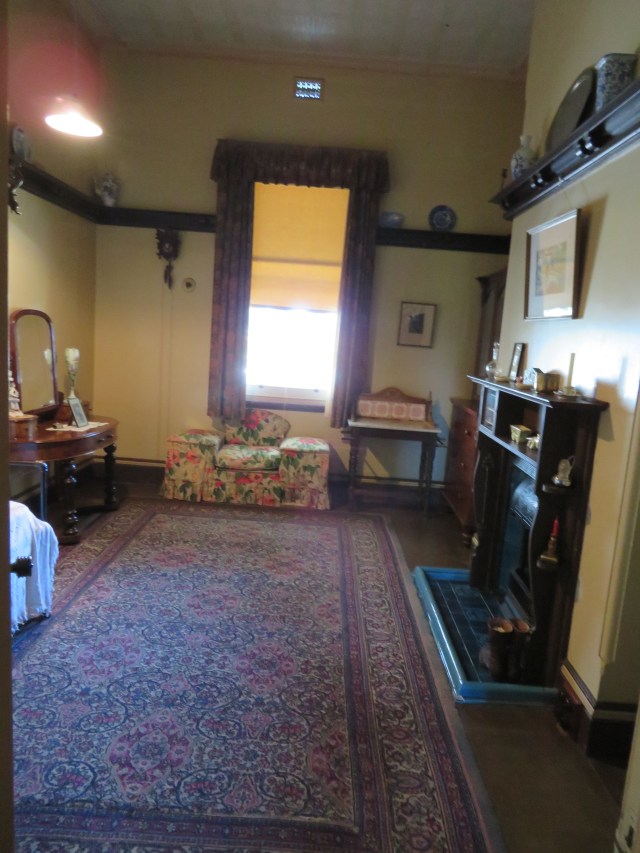
Originally, this was Doris White’s bedroom, until she died in a car accident. At this point, F.J. had developed Parkinson’s, and Doris, Mary and Elsie had been looking after him. So when Doris died, her friend Margaret Simpson came to help out, and she was moved into Doris’ bedroom. Which seems a bit creepy to me, but hey – it’s a nice bedroom. Maybe she didn’t mind.
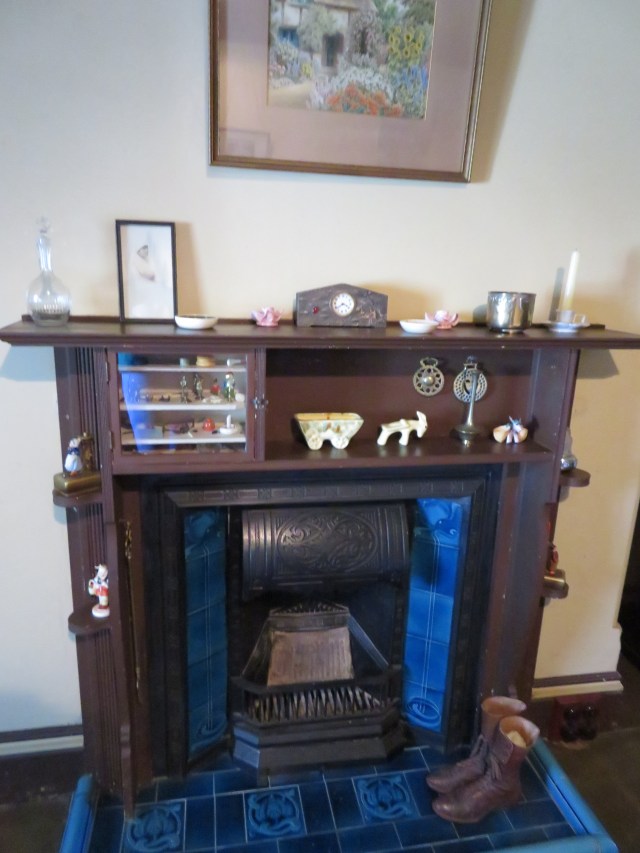
The beautiful fireplace and mantel:
Mary’s bedroom:

Mary had her section of the verandah closed in, so she could work on her hobbies in the sunlight without worrying about a breeze:


The view of the courtyard and driveway from the verandah:
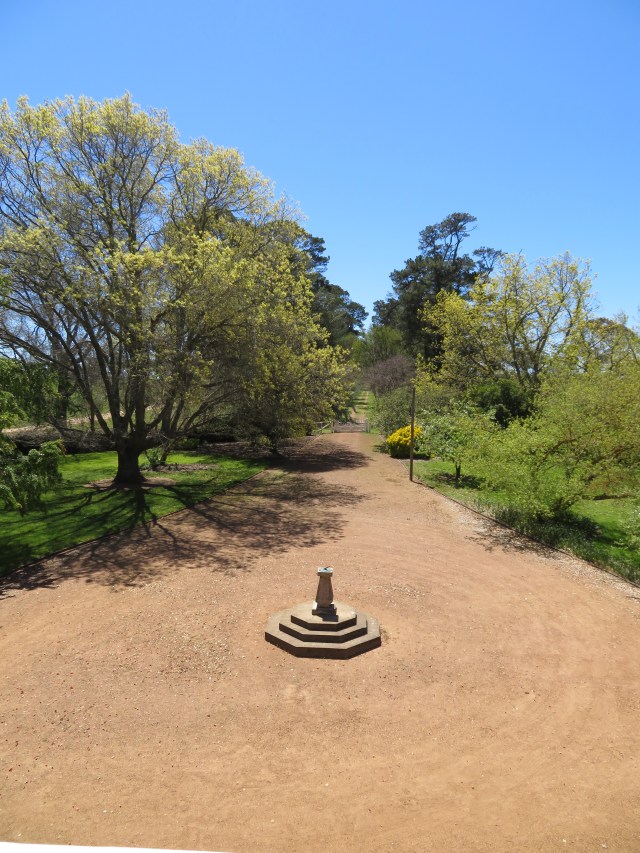
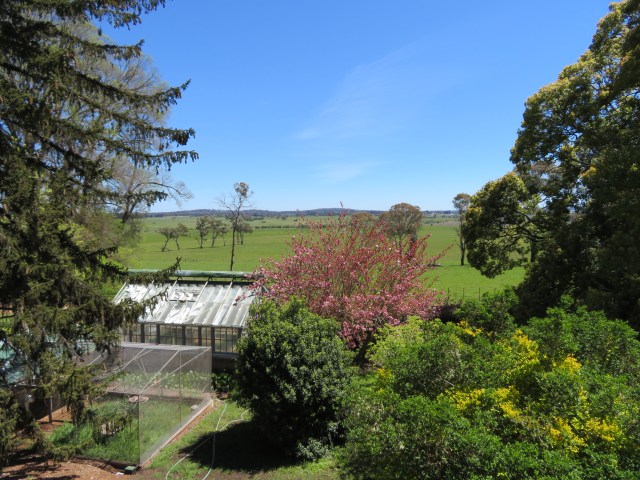
The view of what would have been White property:
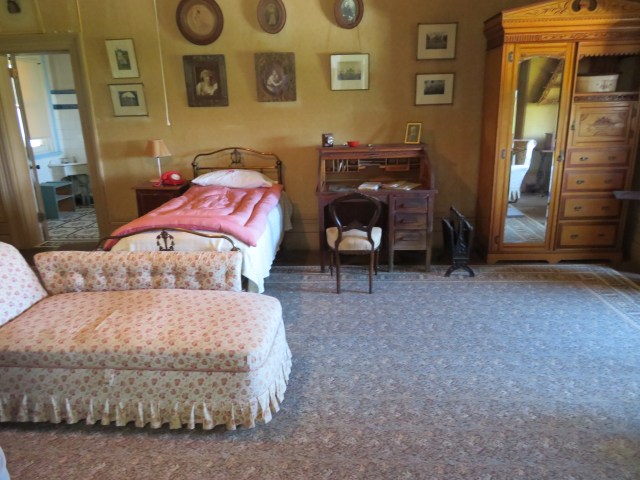
The main bedroom (which ended up becoming Elsie’s bedroom):
Margaret White’s hairbrushes and hatpins. Elsie left her mother’s things on the dresser:


Again, it seems a little creepy, but what do I know?
The ensuite:
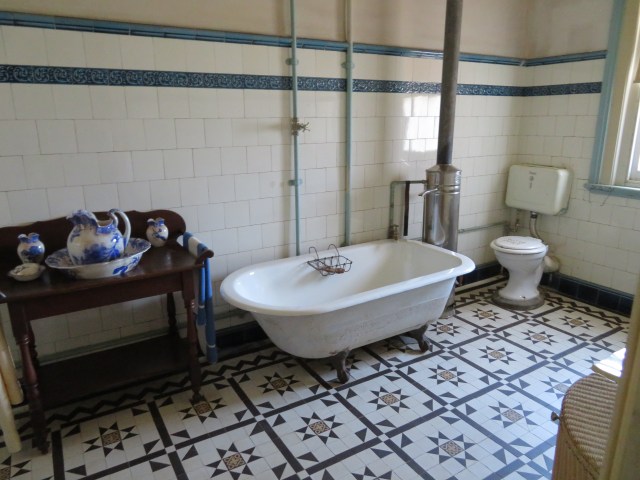
This would have been very rare and swanky when it was built. Especially with hot water and the indoor toilet.
Another guest bedroom:
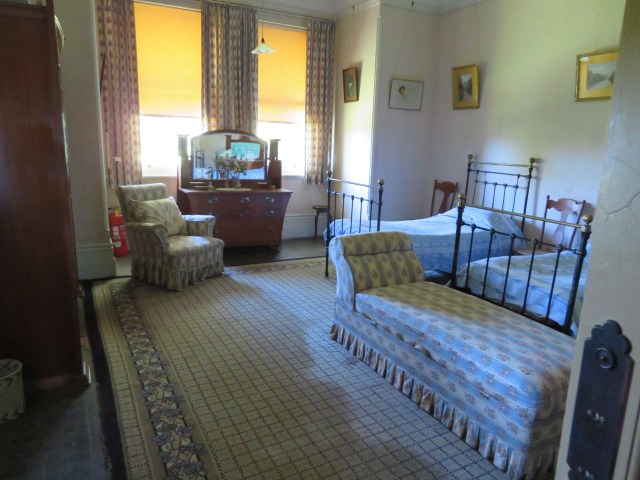
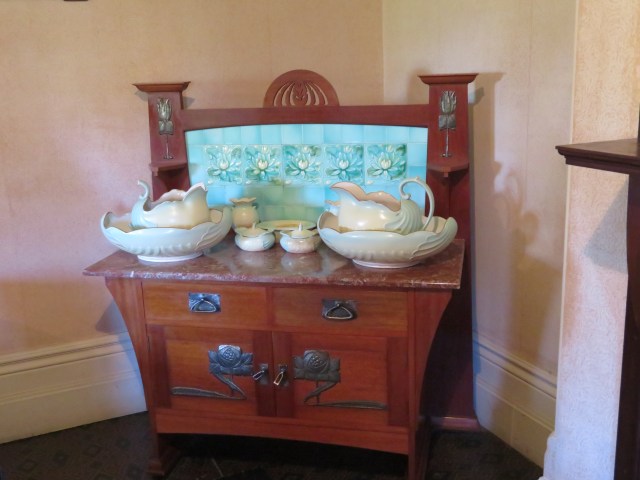
The washstand:
The wardrobe:
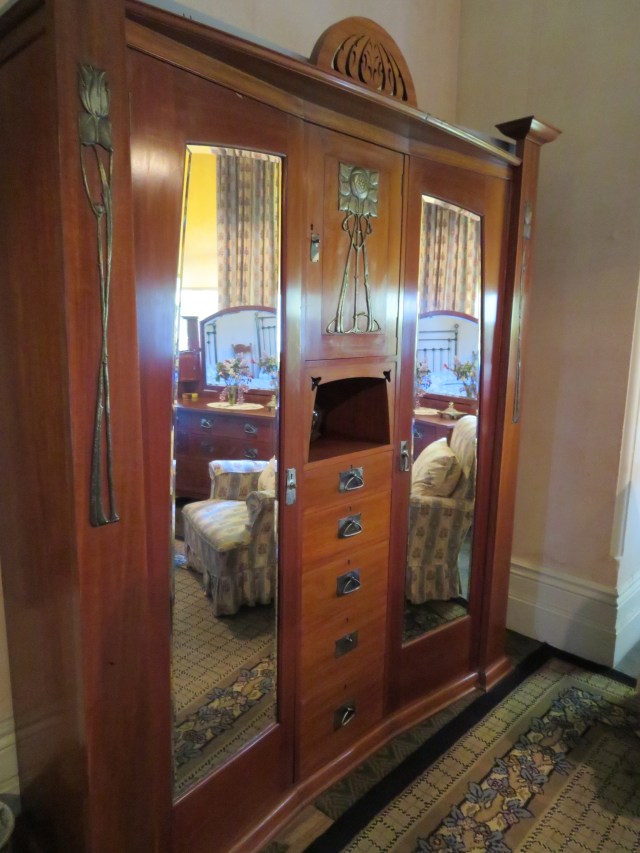
The mirrors are curved inwards so a lady dressing up would be able to get a good view of her bustle (that thing that sticks out at the back of old-fashioned dresses).
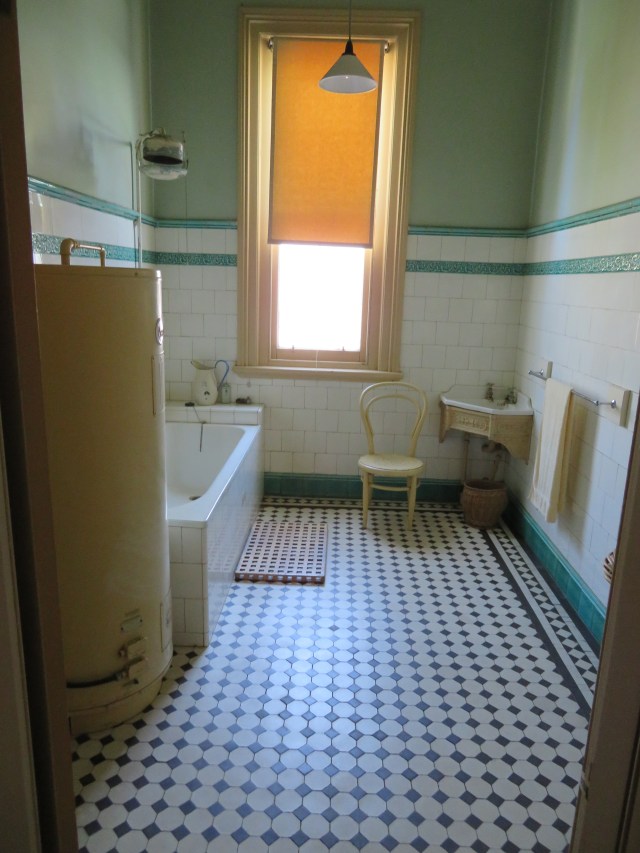
Bathroom:
The sitting room:
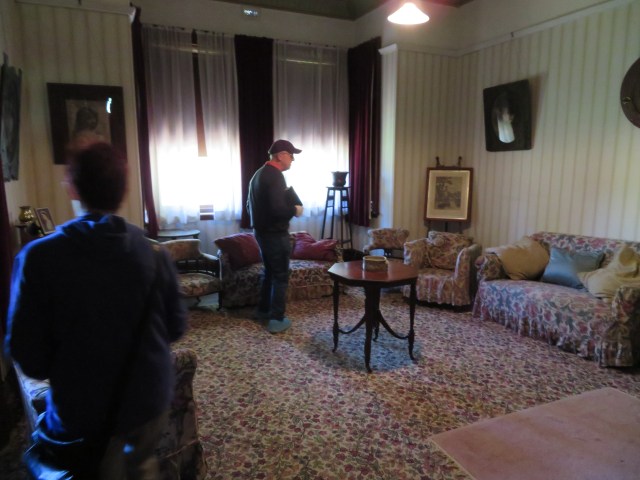
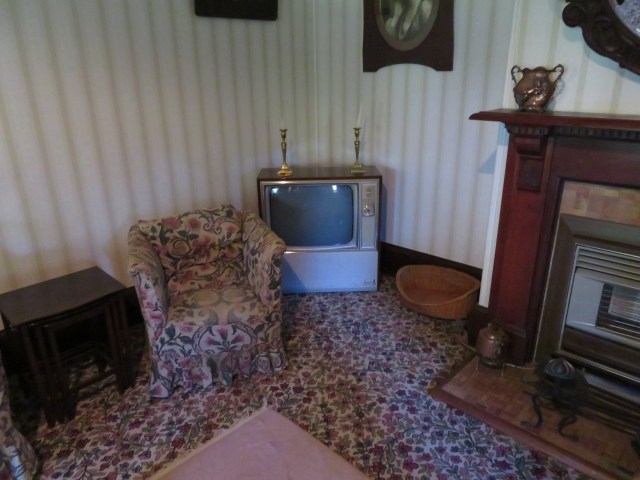
This was the room Elsie retreated to as she got older, eventually even sleeping in here.
It’s the only place in the house with a television:
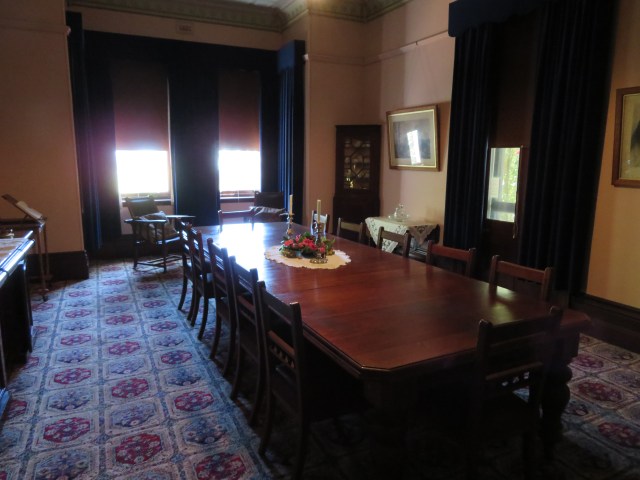
The dining room:
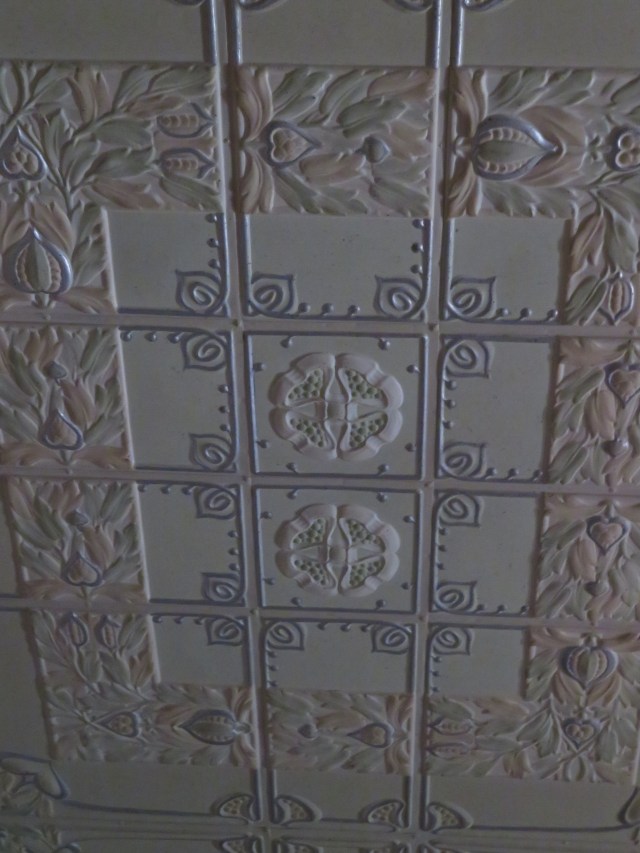
This room had the most impressive ceiling – it’s made of pressed tin:
The fireplace:
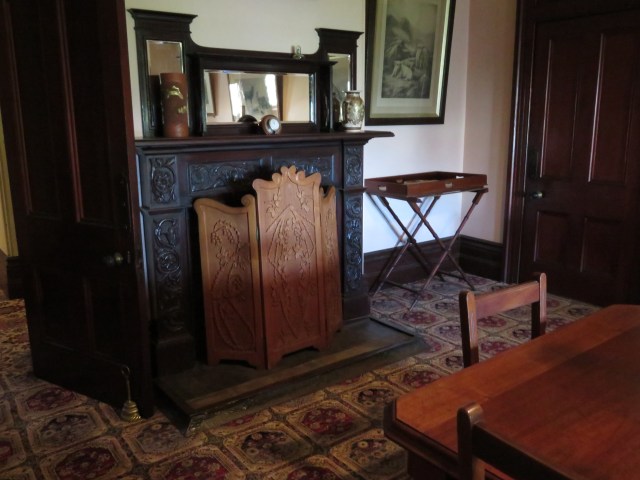
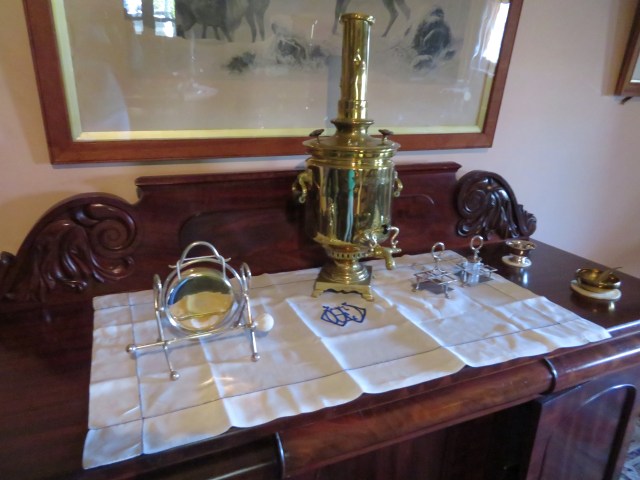
A gong that would have called in the servants to serve the meal, and a Russian pot used to brew tea:
In the kitchen, the legs of the cool safe sit in little shoes:
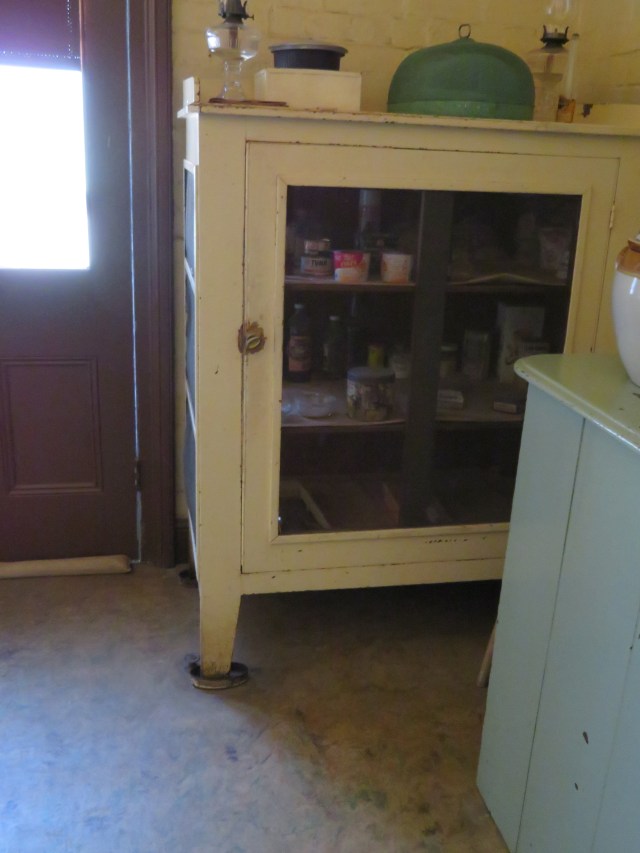
These would have been filled with water to stop ants getting into it.
A battery jar:

When the house was running on generated electricity, batteries would have been used as well. This jar would have housed a conductive solution of either acid or copper sulphate, with a lid holding positive and negative terminals. Basically, just a giant, glass version of the usual AA battery.
Where the clothes were washed:


The tub was filled with water and a fire was lit underneath to heat it. Plus, you can get a glimpse of the blue booties we were wearing in the corner of the first photo.
One of the first washing machines:
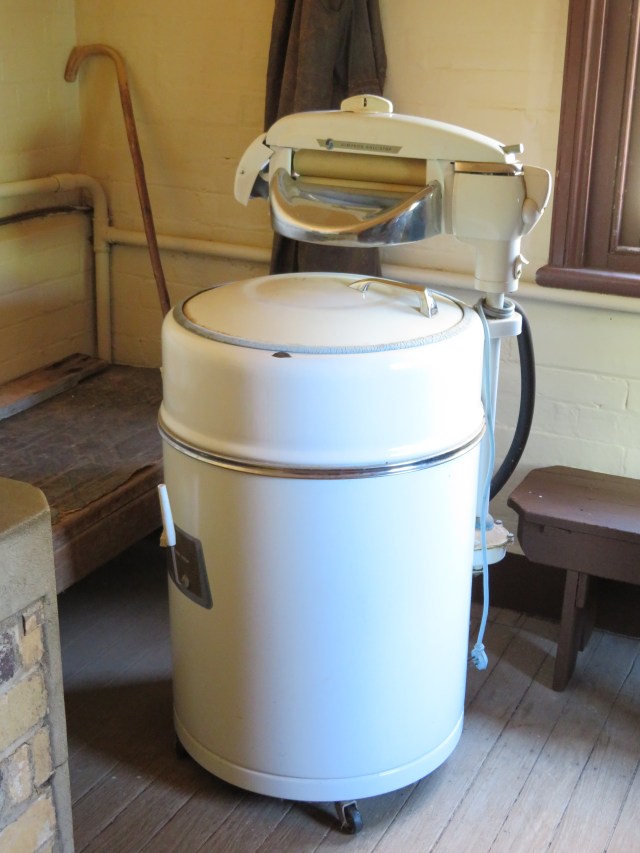
The guided tour ended here. We gave our booties back, and went to explore the grounds – there was still some of the garden we hadn’t seen.
This building served as both the butcher’s and a dairy:
Back to the garden:


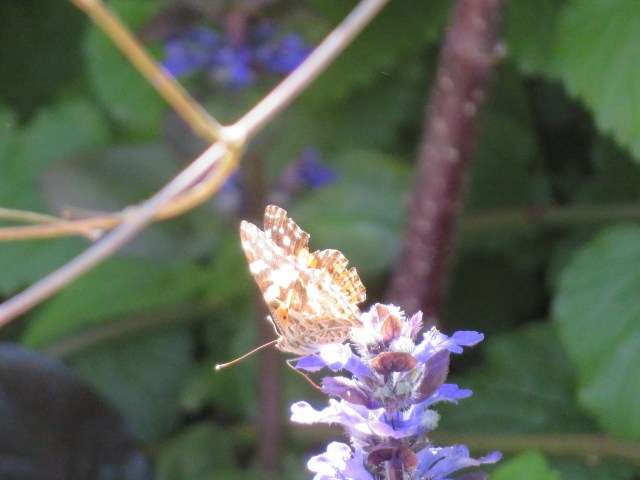
I got a nice close-up of a butterfly:
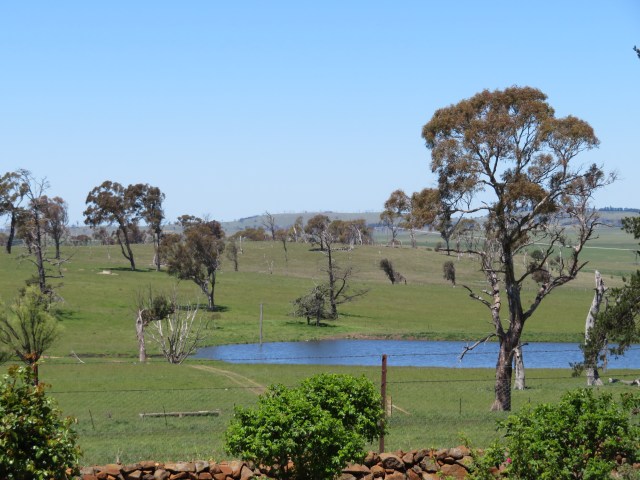
The view from the garden:
I saw something on top of the roof, and zoomed in for a closer look. This is the top of a chimney:
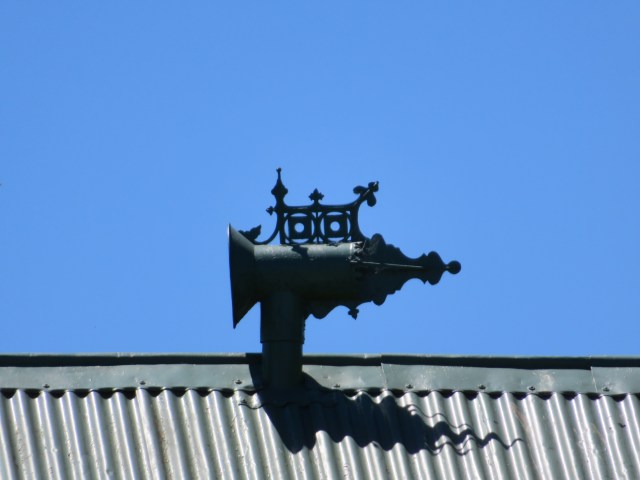
Bet you were expecting a bird or something, huh? After the garden, Mum and I had a light lunch at the café – tea and scones – before driving down the road to check out the actual farm.
The building that used to serve as a store:


Why a store? Well, the Great North Road used to be right in front of it.
The original slab house is gone, but the brick extension to it remains:
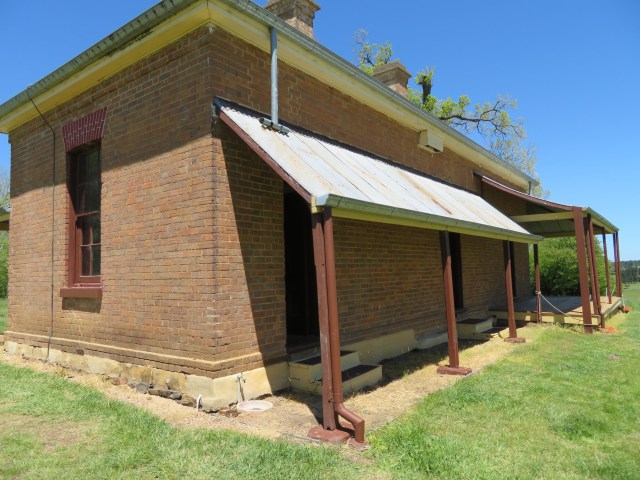
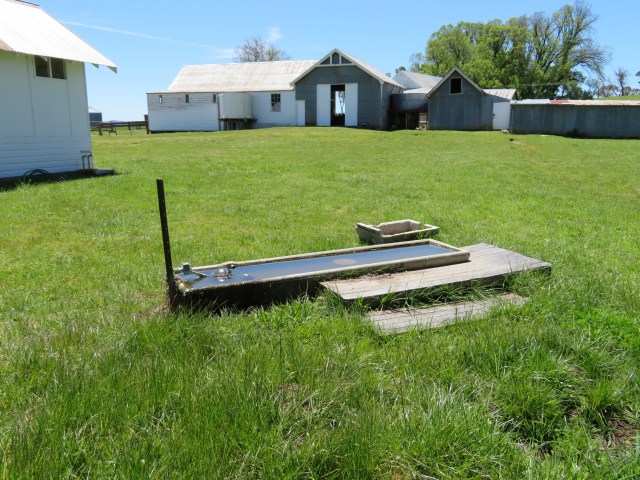
Water trough:
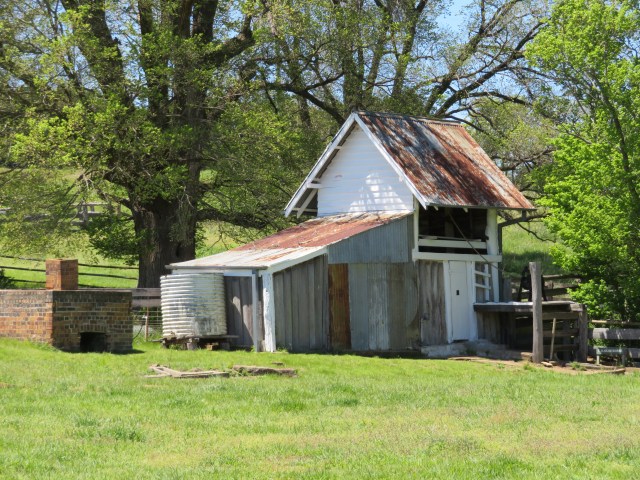
The slaughterhouse:
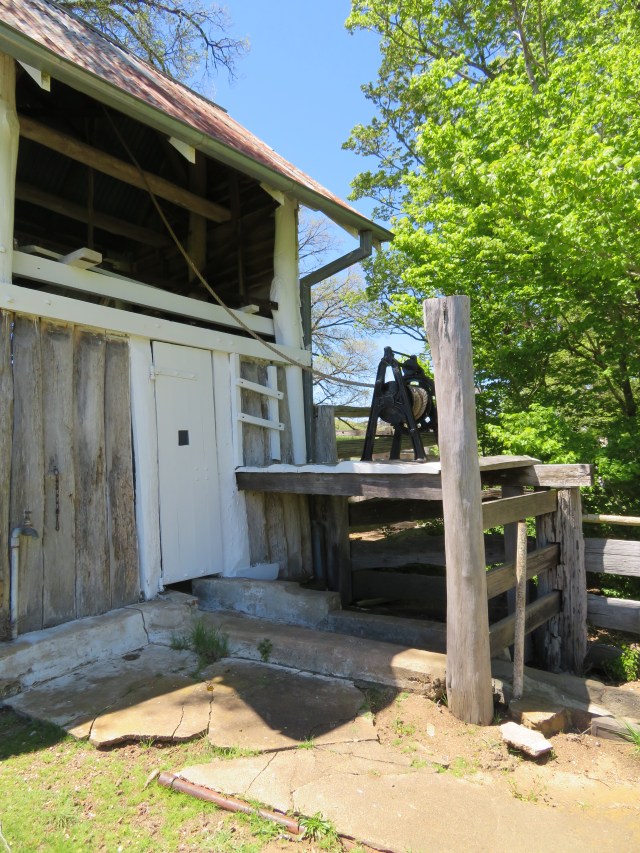
You can see the winch that would have raised the carcass in the air, and the trough under the door where the blood would flow:
Mum next to the rendering vat:
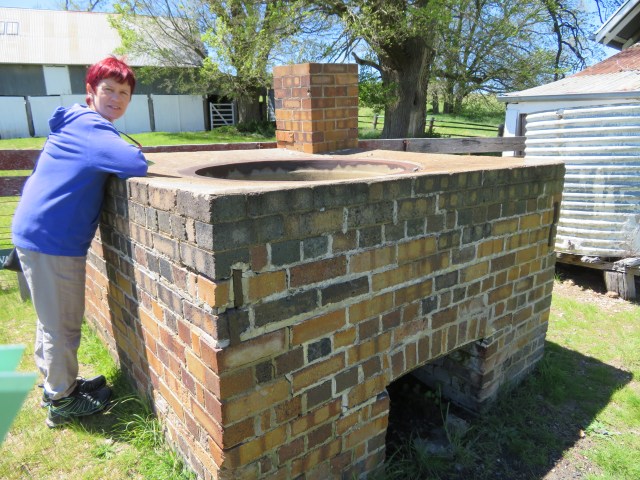
This was next to the site of the piggery, and was obviously used to render pig fat.
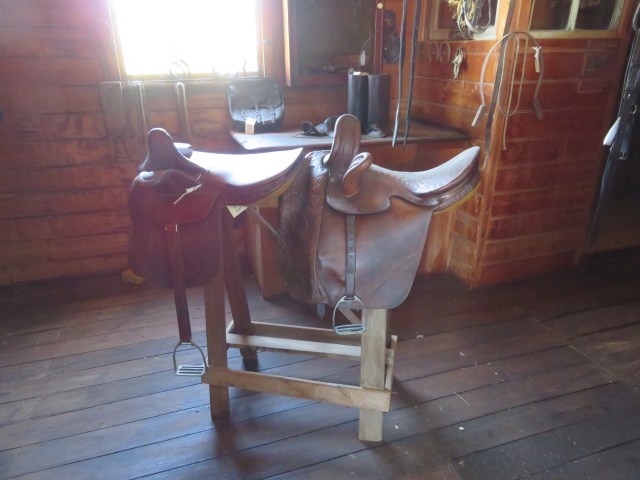
Elsie was a big horsewoman, and the intricately-decorated side-saddle belonged to her:
The stables:
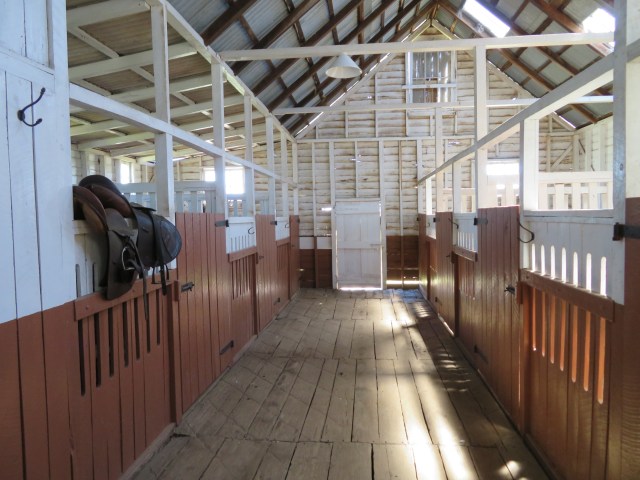
Over a hundred years old and still looking like a place where you’d be glad to put your horses.
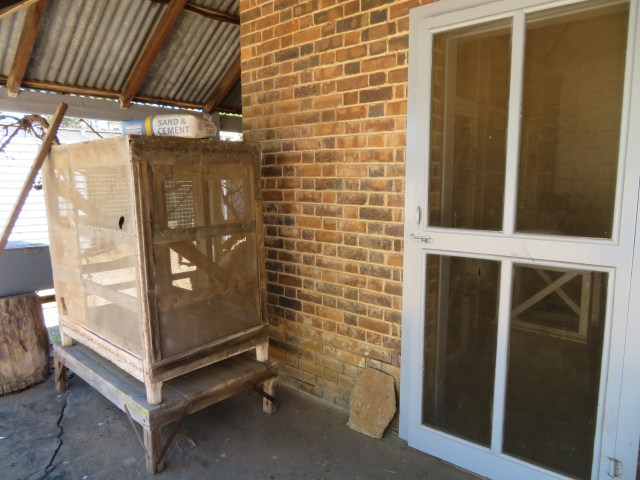
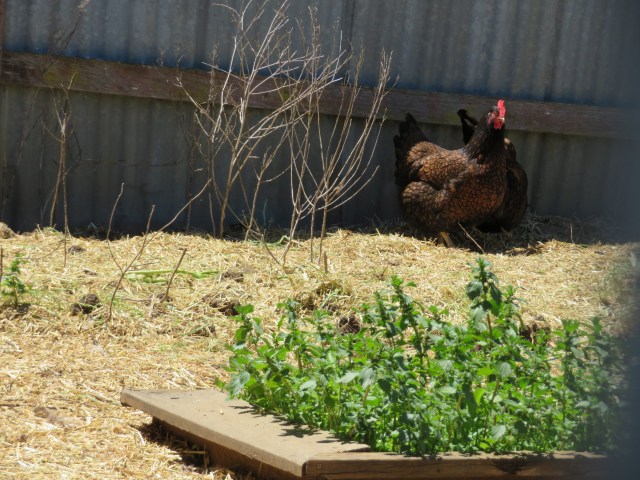
The chicken pen was still in use:
The blacksmith (check out the huge bellows):


In the hay and chaff shed, you can see the different sizes and makes of the timber:
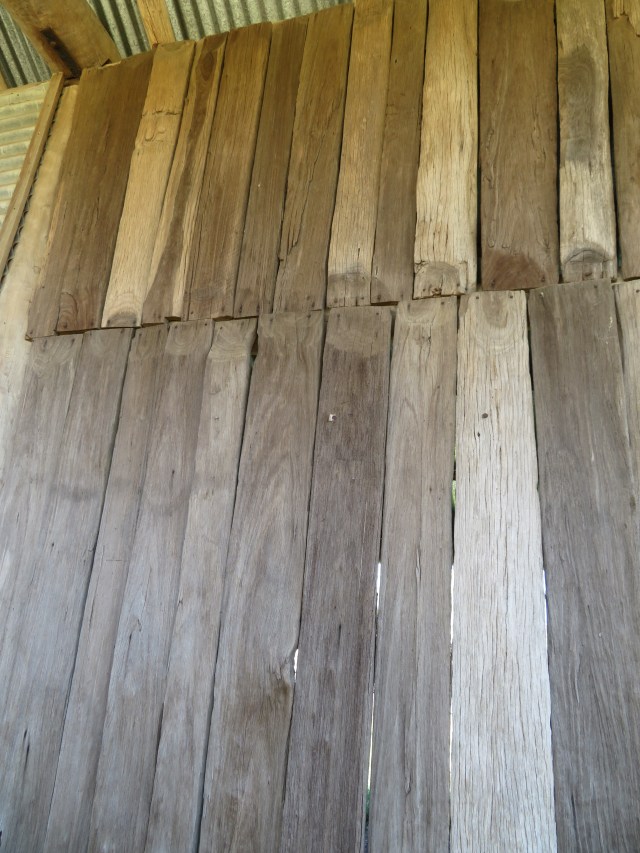
They really just used whatever was around, didn’t they?
The chaff cutter:
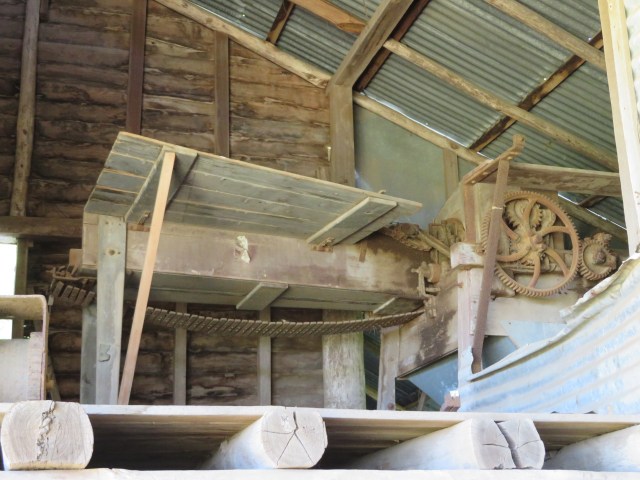
Those it’s up on a platform, it was driven by an engine on the ground floor. The hay was pitched up from the hay shed and drawn into the machine where a series of cutters chopped it to the desired size. Then the exit chute dropped it into the chaff room.
After Saumarez, we met up with Aunty Sandy back at her house. The three of us had some lunch, then went to check out Dangars Gorge. That’s the real spelling, by the way – I know it looks like I misspelled ‘danger’, but that’s really what’s it called!
Prepare for lots of views of the gorge!
The view from the lookout near the carpark:


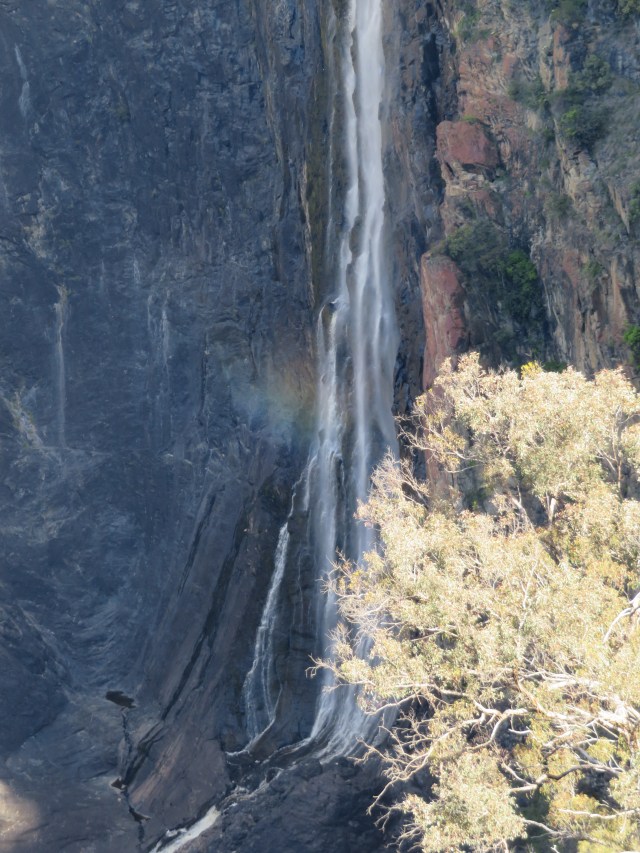
A close-up of the waterfall:

There was a rainbow in the spray, and it shows up faintly on the photo. Can you see it, down near the base?
The bottom of the falls:
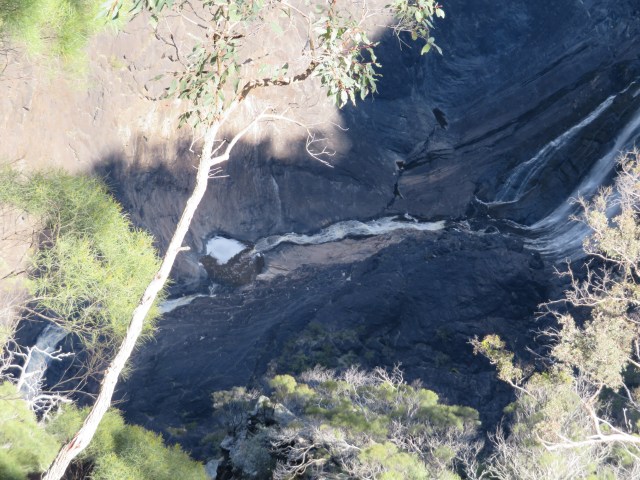
The rainbow’s a little clearer in this pic:
The river below the waterfall:


On the way to the lookout over the waterfall, I managed to film this Brush Cuckoo:
The river (before it becomes a waterfall):
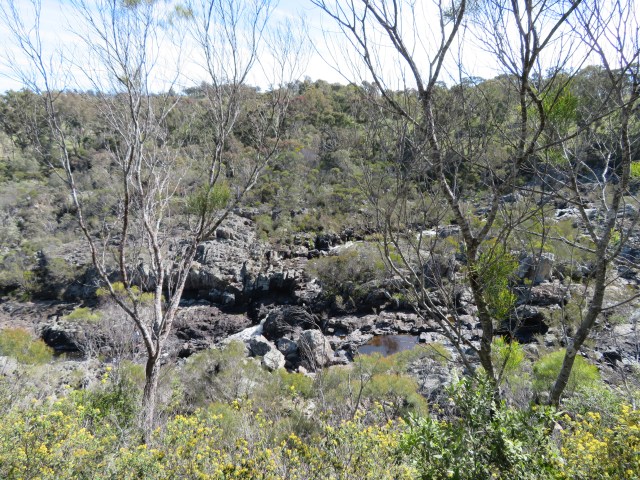
The little pool just before the water runs over the cliff (complete with our shadows):
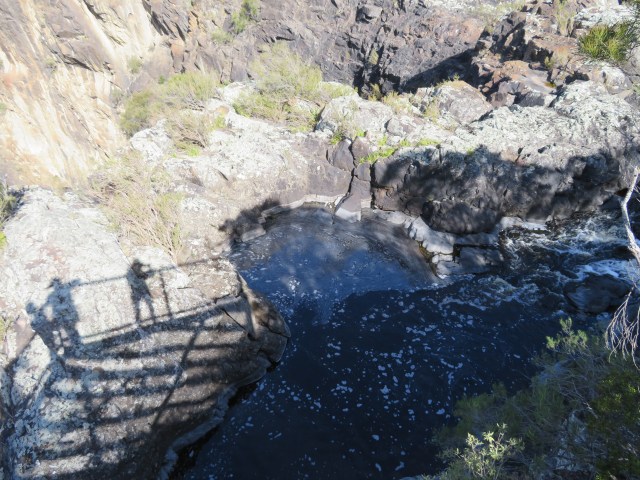
From the top of the waterfall:
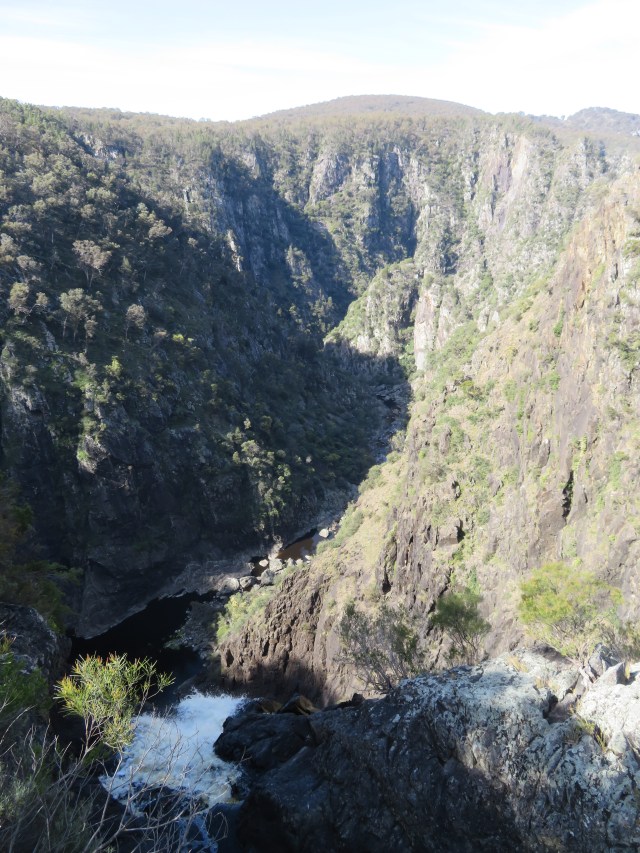
Across the gorge:
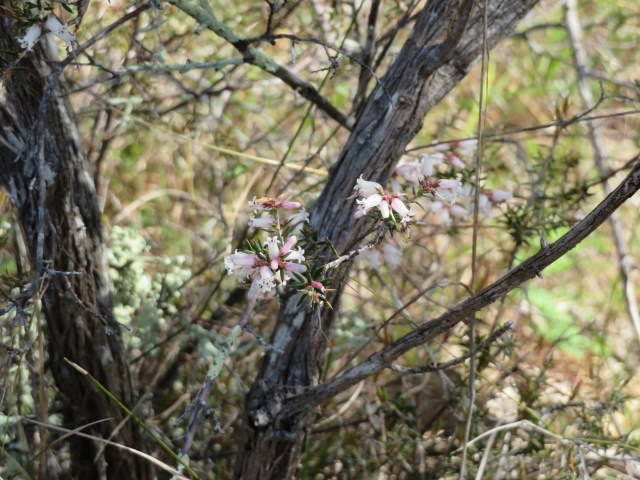
Some flowers we spotted beside the path:
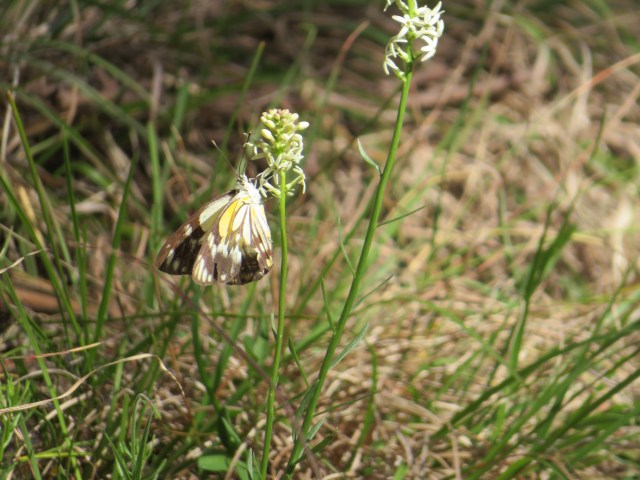
A Caper White butterfly:
We crossed over the river on the next little journey:


I spotted a willie wagtail perched on one of the boulders:
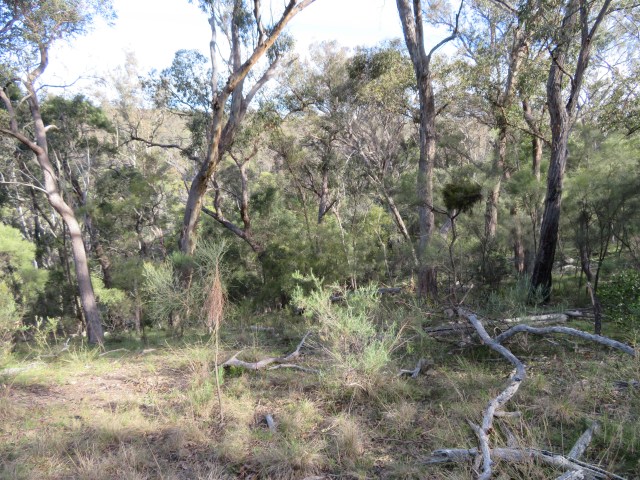
The landscape we were walking through:
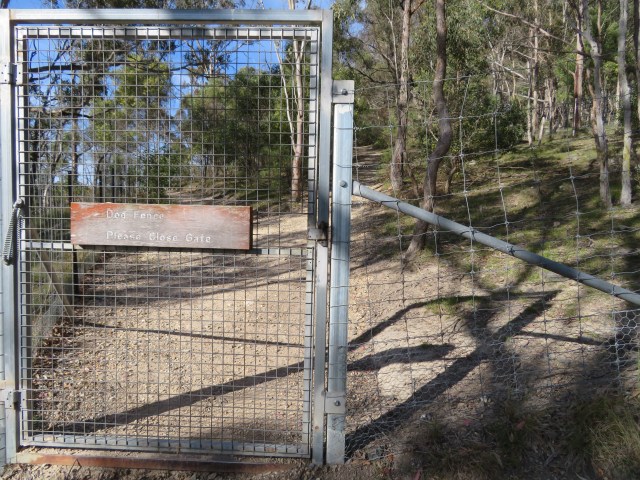
I saw a gate along the path and was a little confused by it, wondering if we were skirting private property. Turns out it was a dog fence, to keep wild dogs out of the national park:
The river running through the gorge:
The waterfall from another angle:
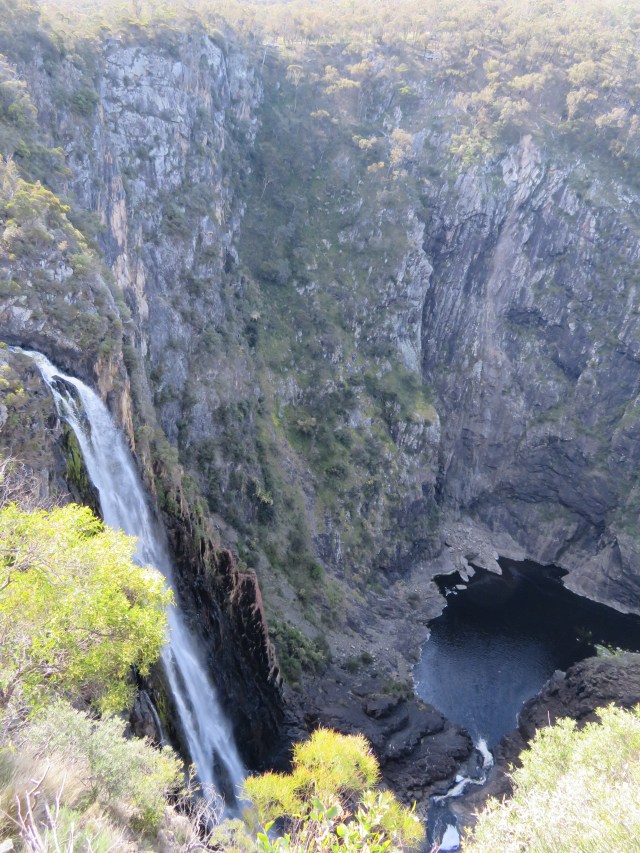
Sick of it yet? Don’t worry, that’s the last one. Now it’s all birds!
We spotted what I think is a brown gerygone on the way back:
And this grey fantail:
My first thought when I heard that funny little call was that it sounded like someone scraping the strings of a violin.
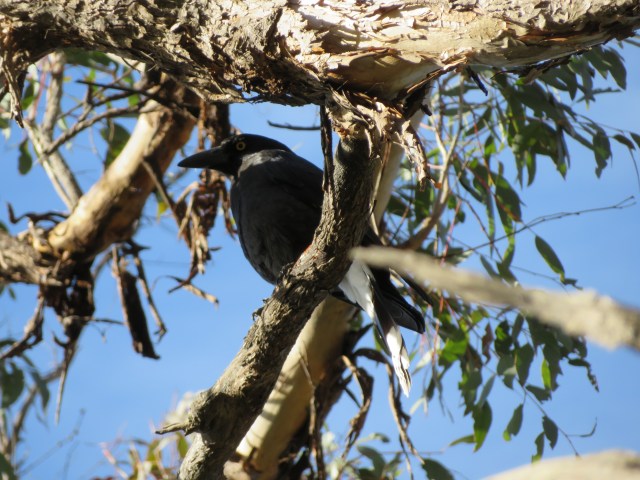
This pied currawong was giving us a look from the branches:
We took out time going back, and spotted this random cross a little way off the path:
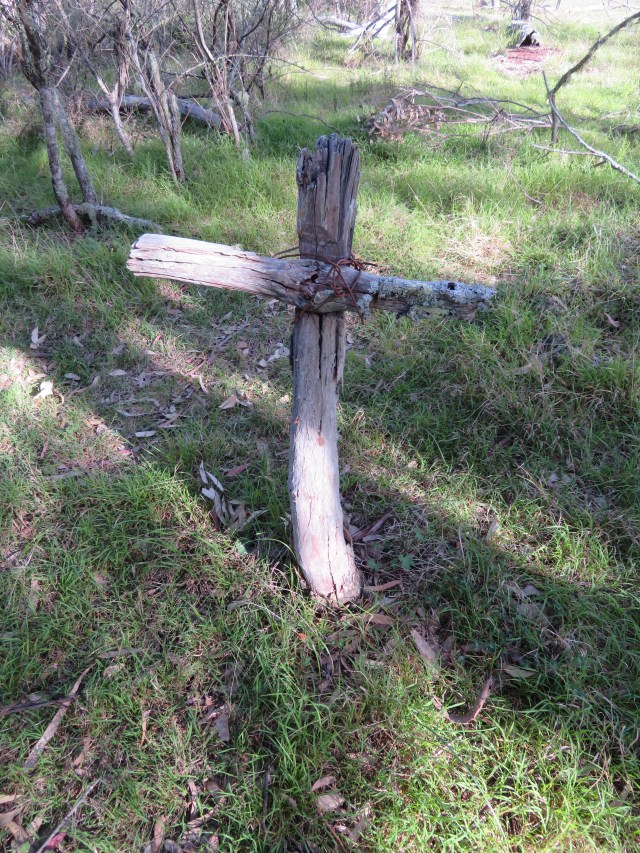
Pet grave marker? Some religious site? A purpose we can’t even guess at? Who knows…
And before we got in the car, I managed to film these noisy friarbirds:
There’s a reason they were called ‘noisy’.
Then we went back to Aunty Sandy’s house. We had shepherd’s pie for dinner, and went to bed early.
 Jenny's Adventures
Great stuff – I love the way the brush cuckoo was checking you out!
LikeLike
Yeah, it’s funny when they do that. I kept filming because I wanted to see it in profile, and it was just staring at me!
LikeLike