It was rainy and overcast and a bit of miserable day, so I went up to Warwick and checked out their historical museum. They had quite a collection tucked away in a few buildings, and I was given a tour by one of the volunteers, who used to be a teacher before he retired.
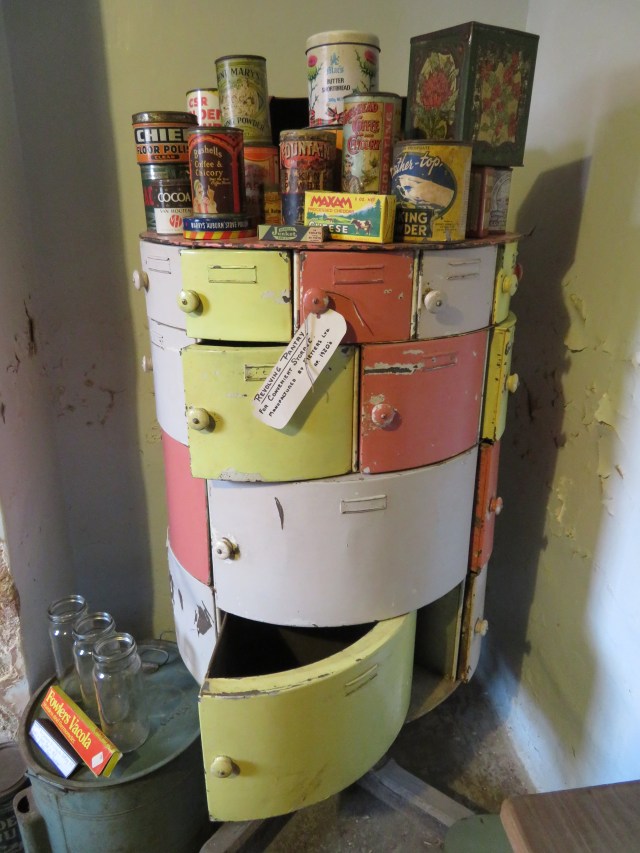
This is a revolving pantry. I’m sure it saves a lot of space, but something about it just seems very funny to me.
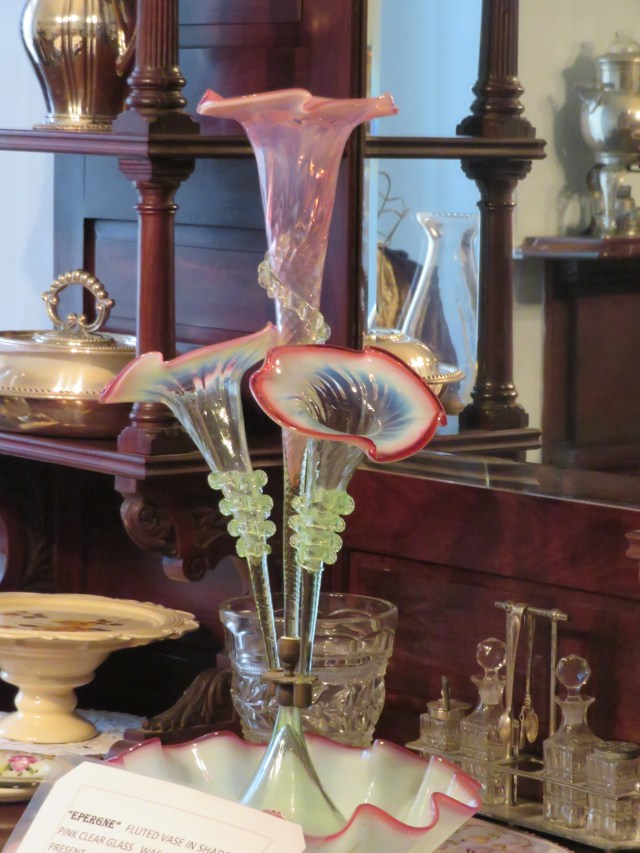
Fluted vase shaped like flowers.
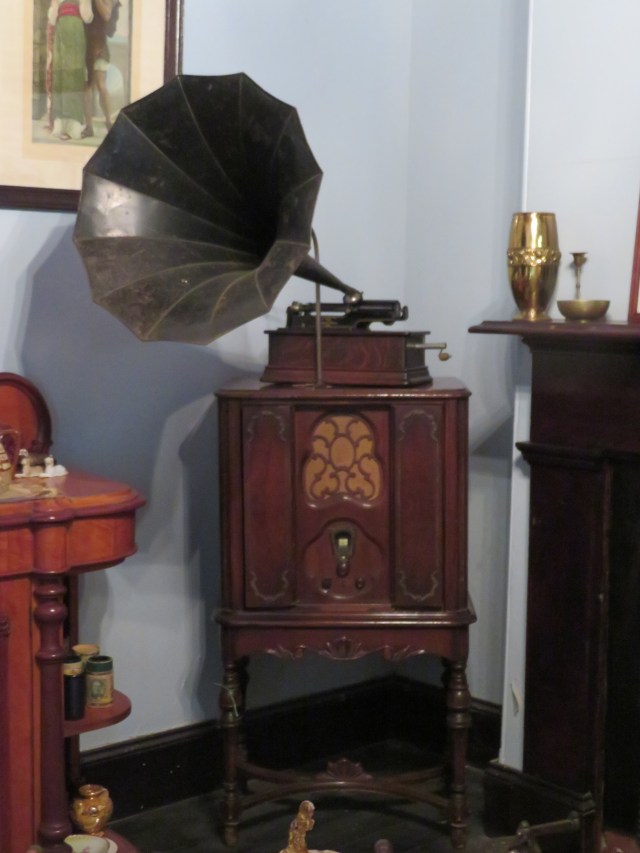
This gramophone had been restored to the point that it actually worked, believe it or not. Pretty impressive, considering it was from the 1800s.
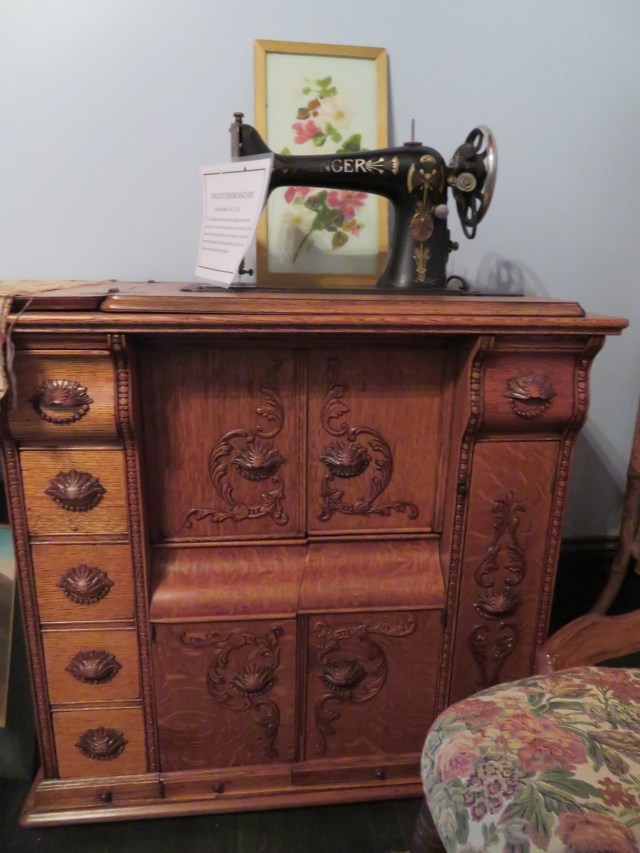
A parlour sewing machine, with a nice wooden cabinet to hide the wheels and pedals.


A light that used to be a gas lamp – see the little tap at the bottom where you could turn the gas on and off?
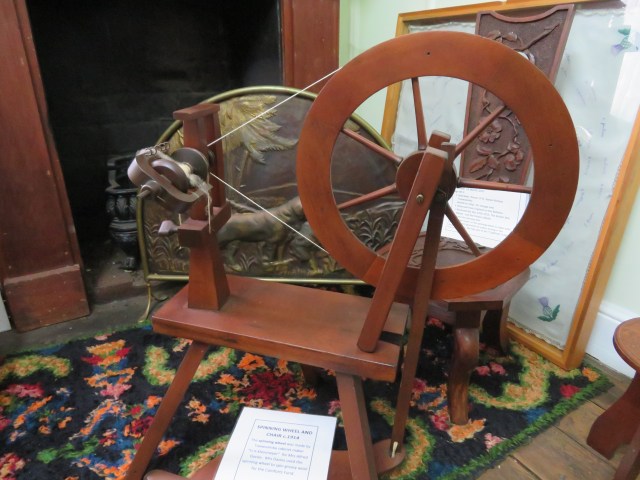
A spinning wheel! Lacking the exposed spindle though, so no chance to play Sleeping Beauty.
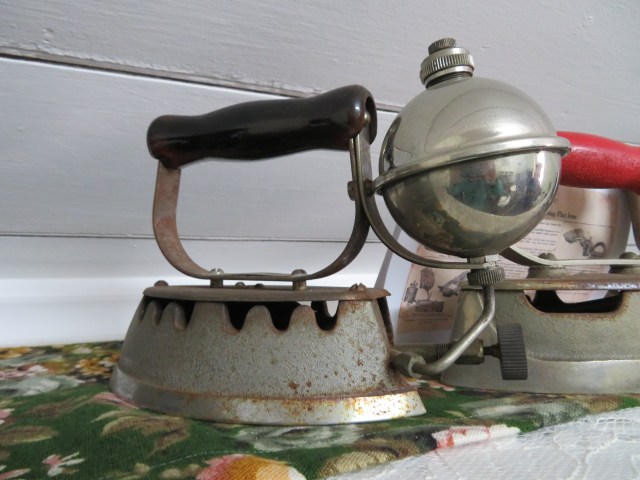
An old iron that ran off kerosene. Doesn’t that look hilarious with its a little fuel tank attached to it?
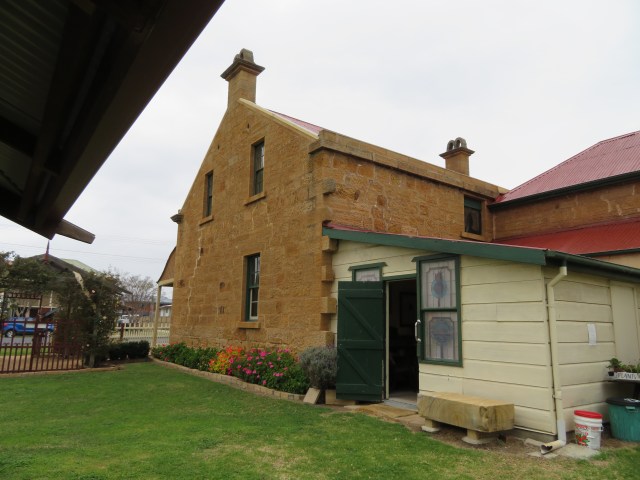
Pringle Cottage, built in 1870 out of sandstone. It was built on site, too – the stonemason who built it owned the lot the museum now stands on.
They had an old newspaper office, and I saw the little metal letters they used to set the type. They were kept in huge drawers, and apparently that’s where the terms ‘upper case’ and ‘lower case’ came from – the capital letters were in the top cases, with the others below them.
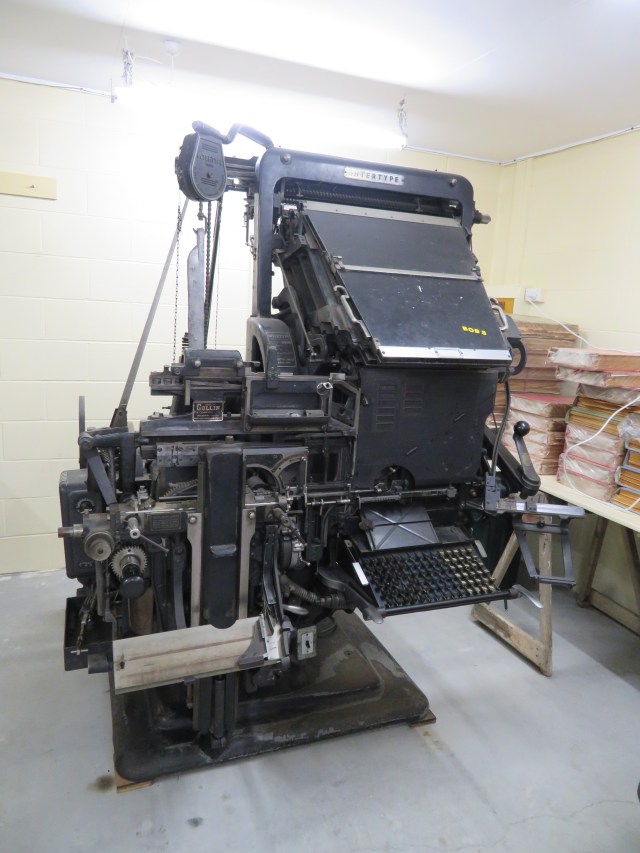
The intertype, a kind of halfway point between making up the typeface yourself and computers.
This machine could produce one line of type at a time. Someone typed the line on the keyboard at the bottom, and the machine would send a cast of the reversed letters one at a time down to the small line to the right of the keyboard. Then molten lead would be poured on the letters, solidifying in the casts and producing a line of reversed type. And once the printing was done, those lead lines would be melted down again for the next printing.
Man, writing and publishing used to be a lot more work, huh? And now having this blog available to anyone in the world is just a matter of tapping at a keyboard and having internet access.
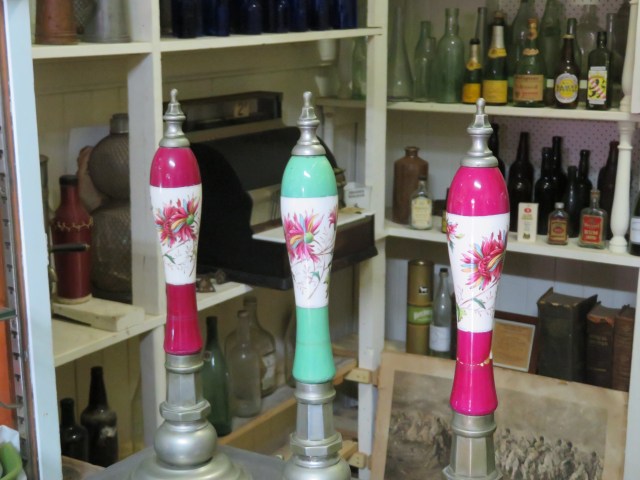
Old beer taps. I think you’d be hard-pressed to find a pub with these kinds of designs today.
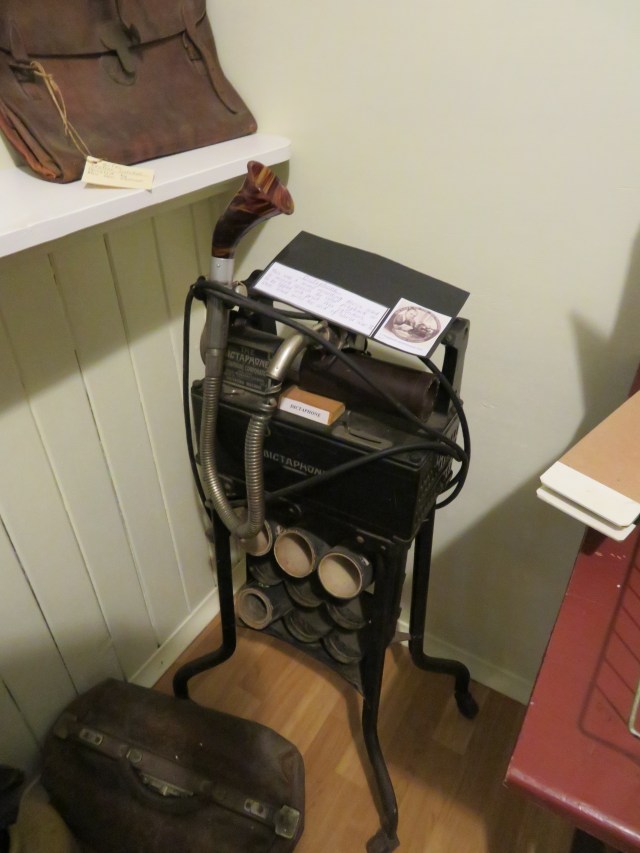
An old dictaphone. It recorded voices by putting indents on a wax disc. Until my guide mentioned it, I’d only ever thought playback discs were made of metal or vinyl, but I suppose wax was easier to record on.
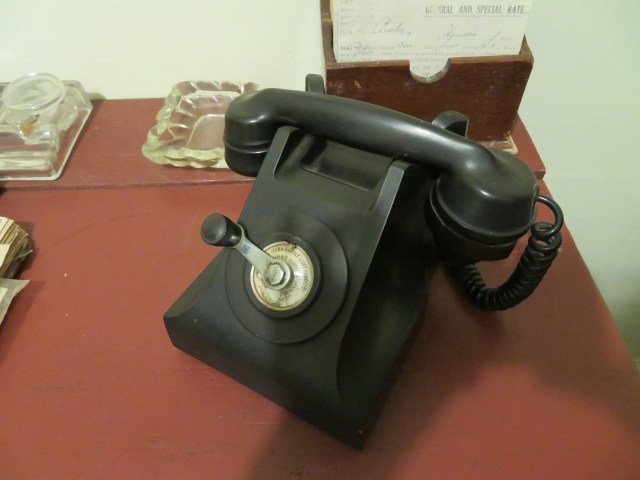
You can see the shadow I’m casting across this old phone. And if you look closely, you can see it doesn’t have any numbers. It was back when you had to connect to an operator at the switchboard, so you just turned the handle and lifted the handset.
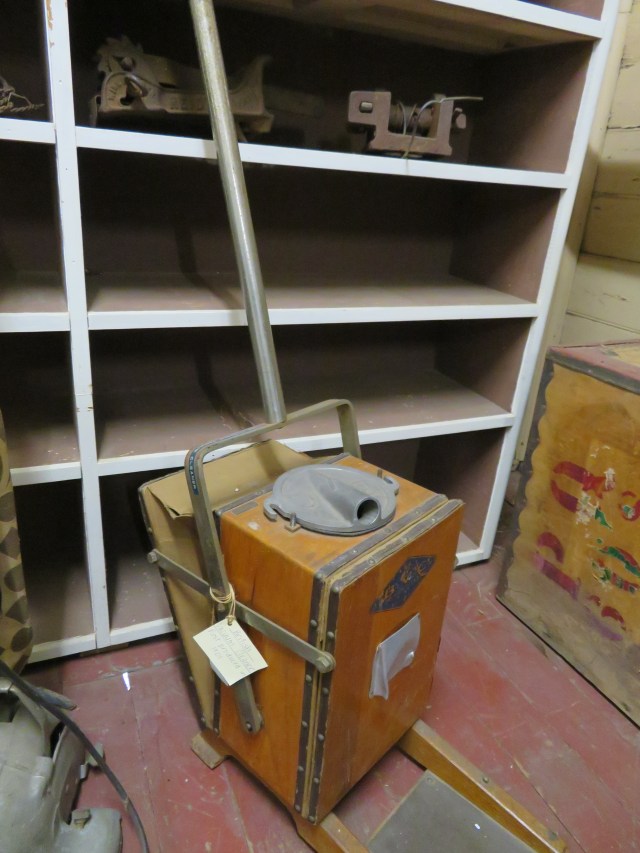
One of the first vacuum cleaners.
You actually had to move that huge lever on the top from side to side, creating an air current that was supposed to suck up the dust. I’m not sure how effective it would have been, though, and you couldn’t push it across the floor – you had to pick it up and move it to wherever you wanted to clean next. No wonder people preferred to stick with brooms – can you imagine having to clean the floor square by square?
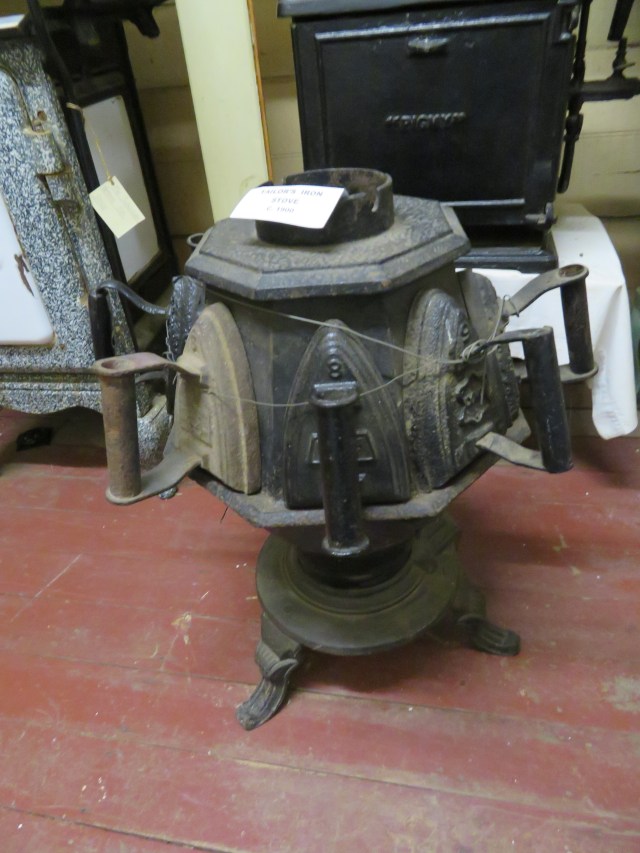
A tailor’s stove specifically for heating irons.
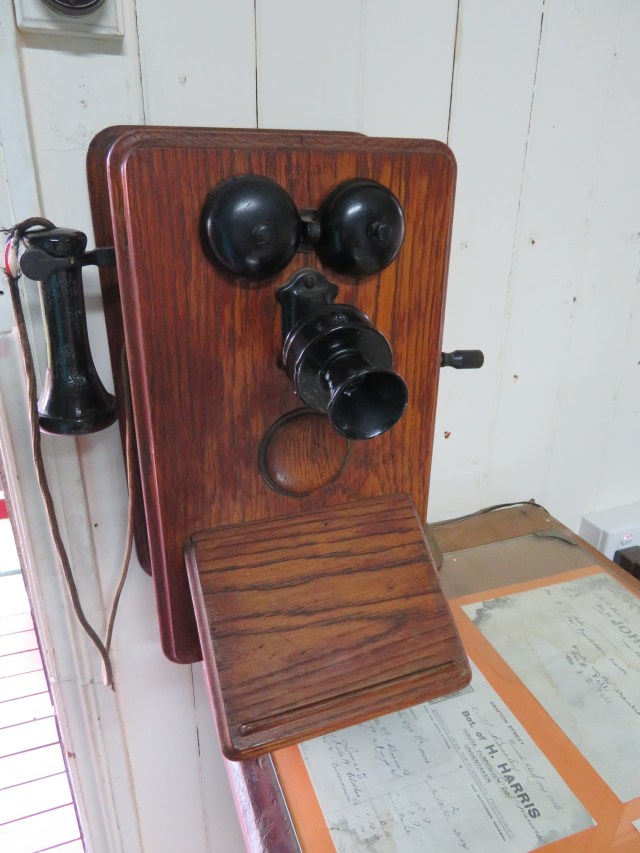
This old phone actually worked! It was in old shop building, and was connected to an equally-ancient phone in the reception building. You had to talk quite loudly to be heard over the connection.
The volunteers were nice enough to play an old record for me on one of the gramophones (they had several). It was called ‘The Lone Psychiatrist’, and it was a parody of the Lone Ranger, made sometime in the 1920s or 1930s.
It was raining more heavily on the way back, instead of the light misting it had been doing in the morning, and I was quite glad to retreat into my cosy little home.
 Jenny's Adventures
Way to go Jen. You will be an encyclopaedia when you return.
LikeLike
Thanks, Uncle Bank Robber! It’s honestly amazing how many little towns have historical museums. And how many are just collections of historical memorabilia that people donated after they were passed down for generations.
LikeLike