Today it was time for me to finally go past the border into New South Wales. I put on some nice music, and had a leisurely drive down the highway to Tenterfield.
My first stop was the Tenterfield Saddler – yes, like from the song.
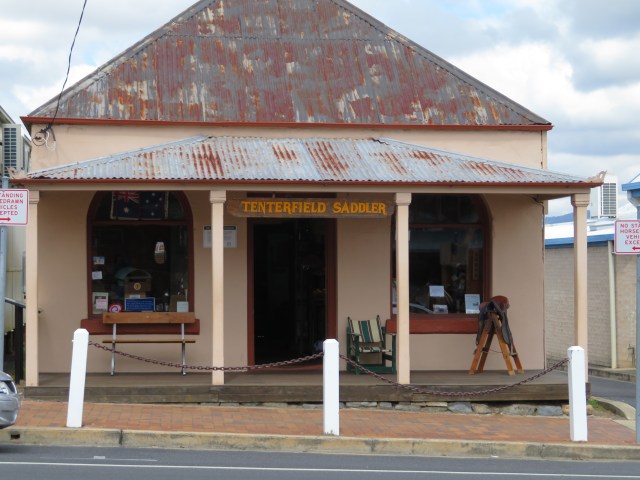
The shop front
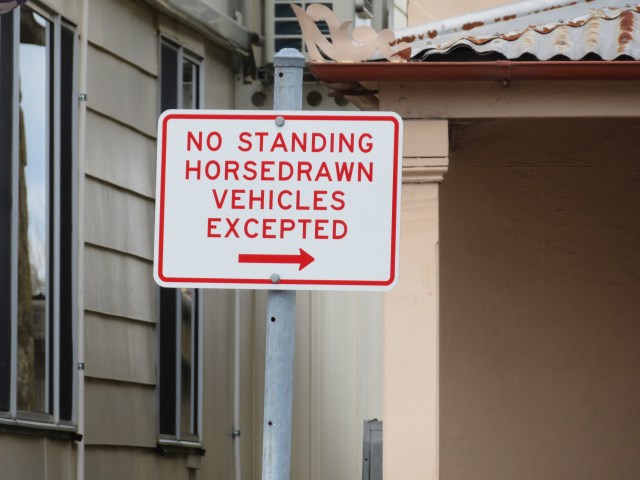
I loved this sign – it was on the street outside.
Apparently the building was first constructed as residence in the 1860s, and only became a saddlery in 1870 when it was purchased by a saddler – C.H. Pavel. It was sold again four years later to the Australian Joint Stock Bank, who sold it on again 1895 to go back to being a private home for two years. In 1897, it was sold again to a saddler, Dan Egan. And between 1908 and 1960, it was occupied by George Woolnough, grandfather of Peter Allen.
Now it’s run by volunteers and it’s less of a saddlery and more of a museum or nostaliga collection. So here’s a few photos of old stuff.
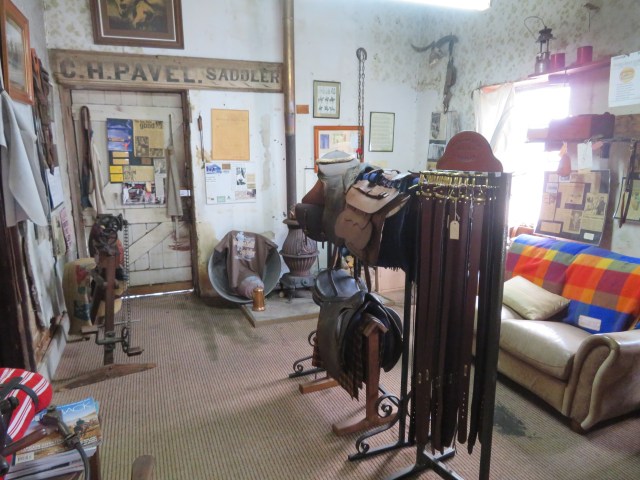
Inside the saddlery
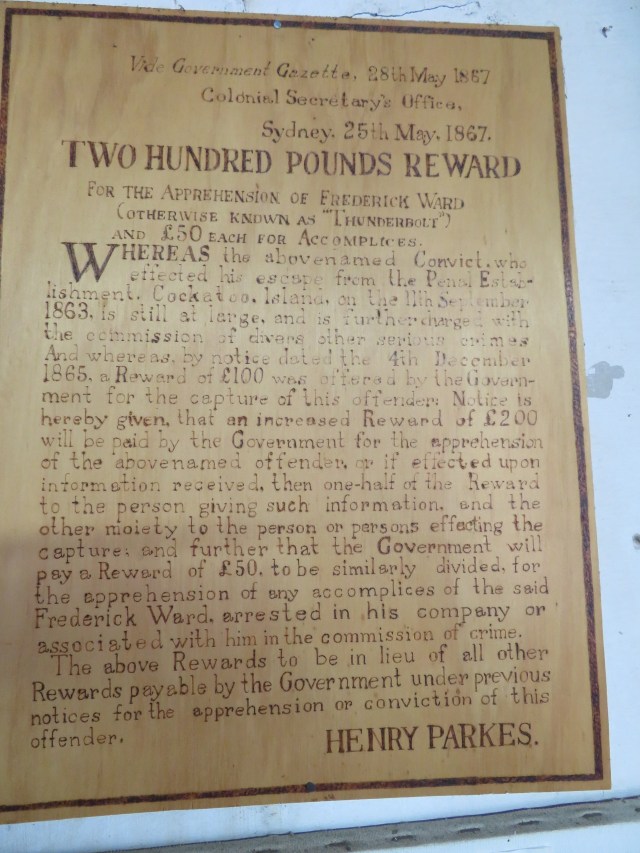
A carved wooden poster declaring a 200 pound reward for the capture of the bushranger Thunderbolt.
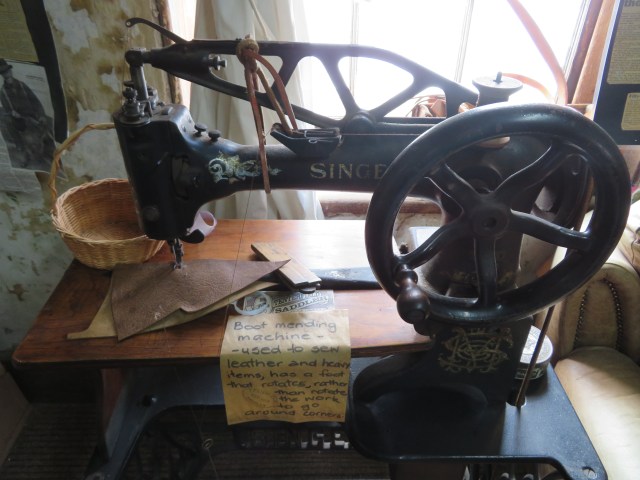
A heavy-duty sewing machine used for leather items like boots.
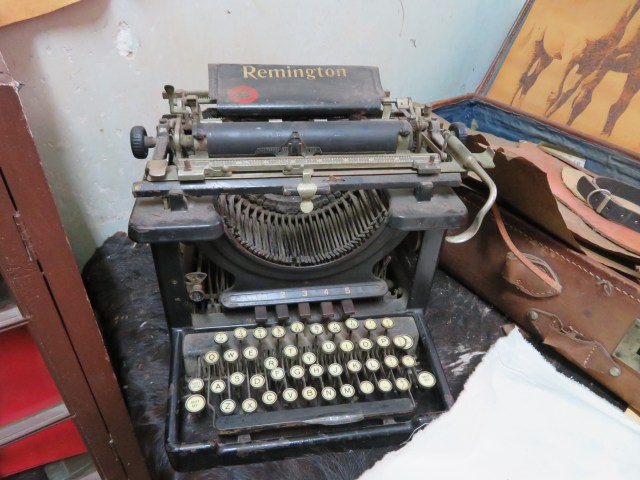
A Remington typewriter.

A transcript of a letter from Banjo Patterson, essentially saying he doesn’t know where the tune to ‘Waltzing Matilda’ came from, but he believes he was the first to put it into writing.
Then I wandered over to the Centenary Cottage Museum, but unfortunately it wasn’t open – the volunteers who usually ran it had come down with the flu. So instead I drove on to Stannum Historic House. For those of you who’ve been on the trip to and from Armidale, you’ll know it as the big pink house next to the petrol station.
It’s a B&B/restaurant, but they also offer free tours! It’s awesome – you don’t need to pay money or anything, just go up to the reception and ask. It was built in 1888 by John Holmes Reid, designed by Italian architects, on a foundation that was excavated down to granite.
So you can just imagine how swanky it was back in the day. Hey, it’s still swanky now! And it’s called the Stannum house because the Reid family made their money in tin mining, and stannum is Latin for tin.
These are photos of the front hall.


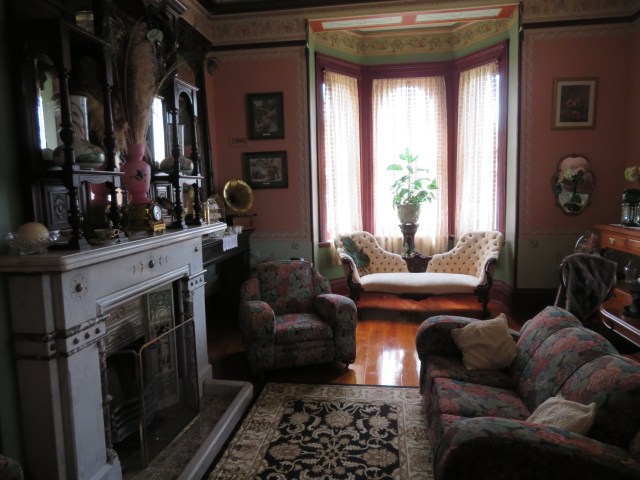
The sitting room


This is a replica of an 80 year old Monopoly set. The board is made of wood and felt, the houses are silver and the hotels are gold. The player tokens are gold too.
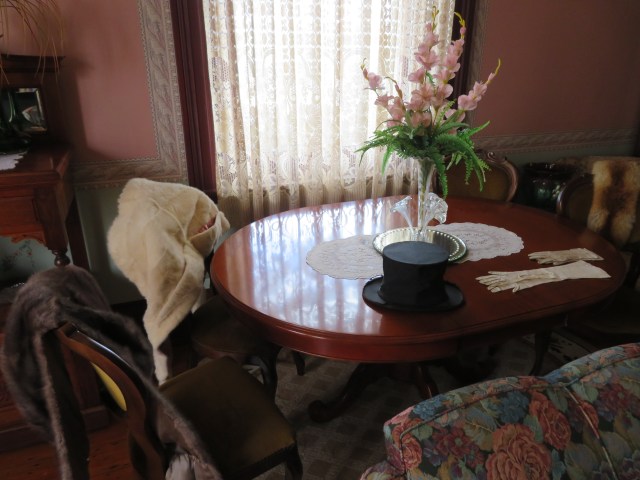
Some old fur coats, hats and gloves on the table. The pale one was worn by Marilyn Monroe in the movie Gentlemen Prefer Blondes.
There was a whole bunch of very pretty stuff in the place. The fireplaces were made of marble.


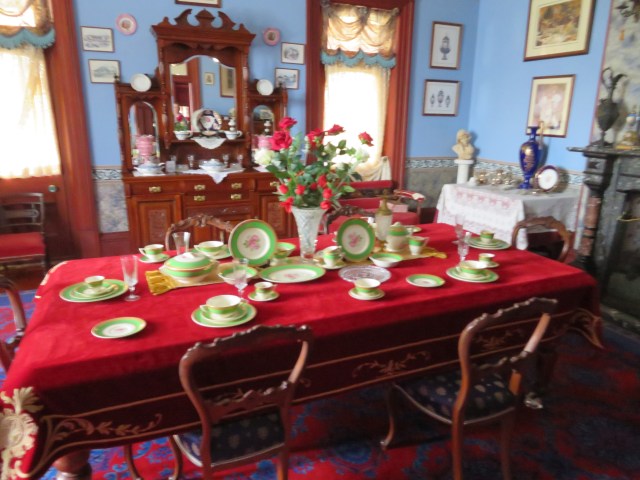
The dining room. The carpet came from Buckingham Palace, bought at auction.
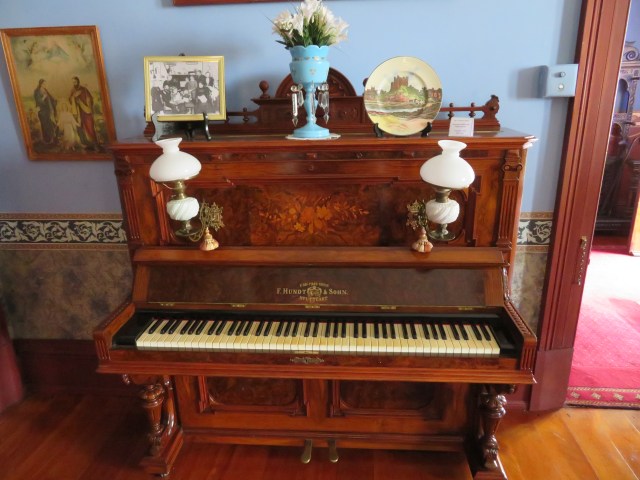
A German grand piano in the dining room.
Also, I seem to be having a problem with the word ‘dining’ today – every time I type it, it comes out as ‘dinging’, and I have to go back and correct it.
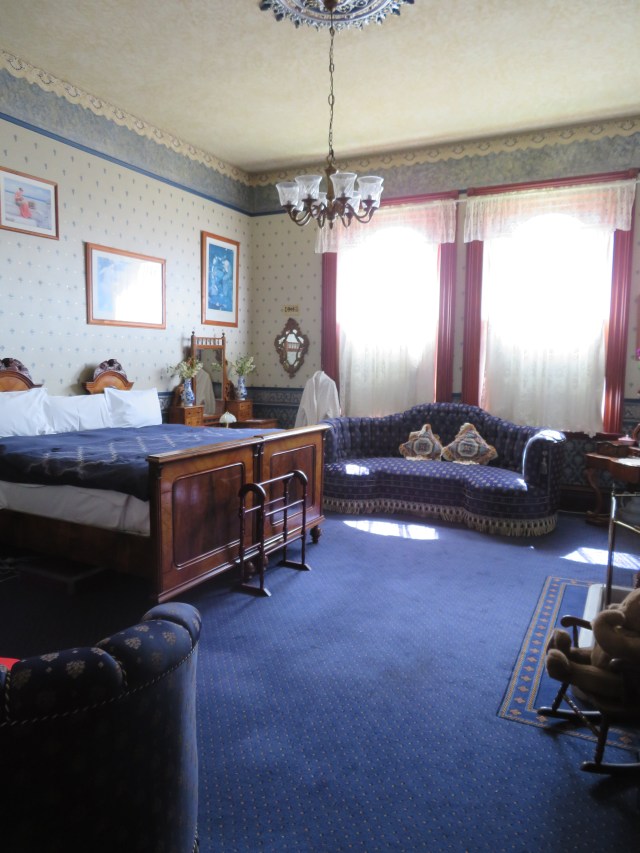
The Blue room. Apparently it used to be just for display, but people can stay in it now.
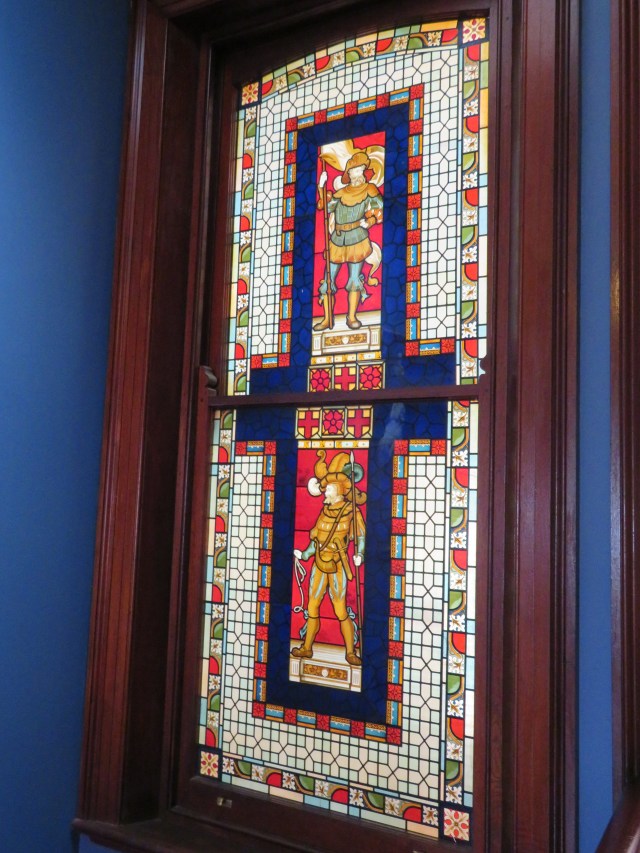
Random stained glass pane between the corridor and the media room.
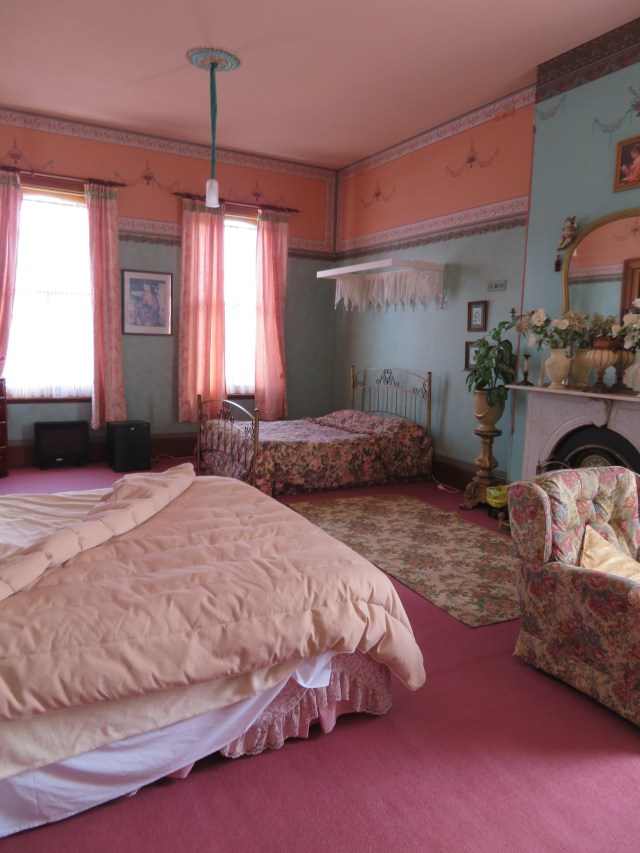
Another room you can stay in, that used to be the children’s room.
It would have had more beds when the original Reids were using it though – they had twelve children!


A spiral staircase going up to the third floor. Apparently it was built with Stanthorpe timber, then shipped to Ireland, then later shipped back as one whole piece to be included in the house.
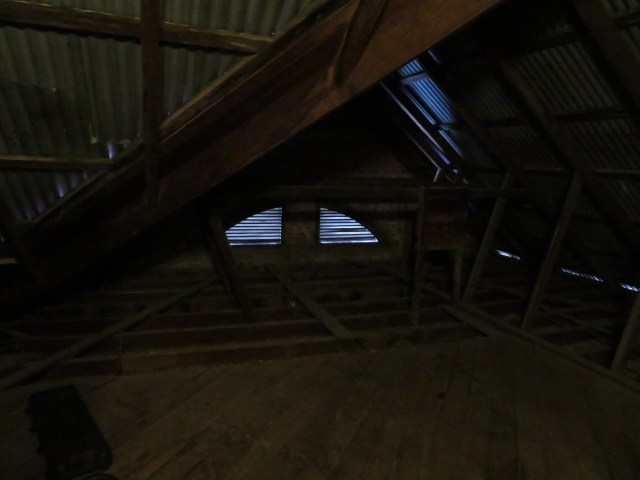
A dingy little attic room that would have been where the servants slept.
Then there was a ladder going up to the lookout. I took lots of photos of the view.


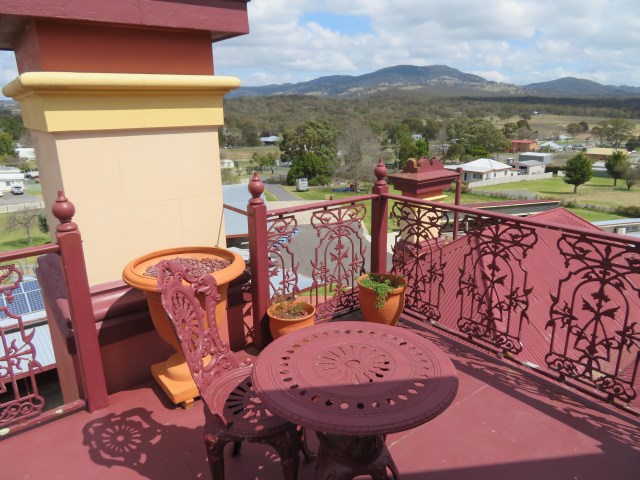
There are little tables and chairs on the lookout, so you can eat up there if you want.
After that awesome tour, I went on to the Railway Museum. Along with Stannum, this was one of the highlights of the trip, so prepare for more information about trains than you could ever need.
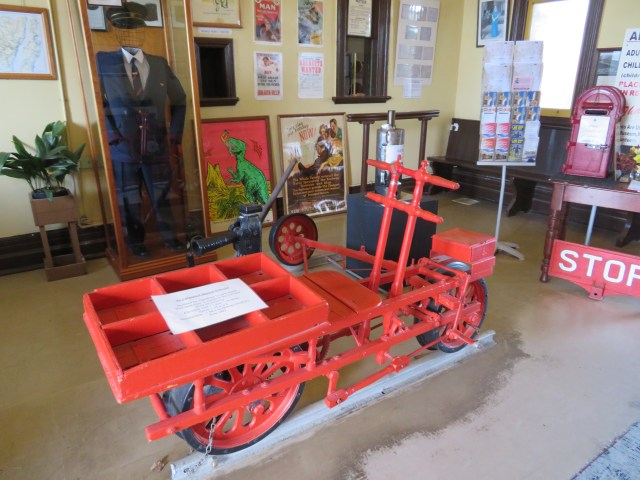
This is called a manual tricycle – it ran along the train line carrying lamps to the signals.
That was just in the reception area. The actual museum was in the old train station, and when I stepped out onto the platform, this is what I saw:


They have a bunch of actual train carriages that you can go inside and check out! I knew that would be a lot of fun, so I saved that for last. Instead, I went into the old station master’s office.
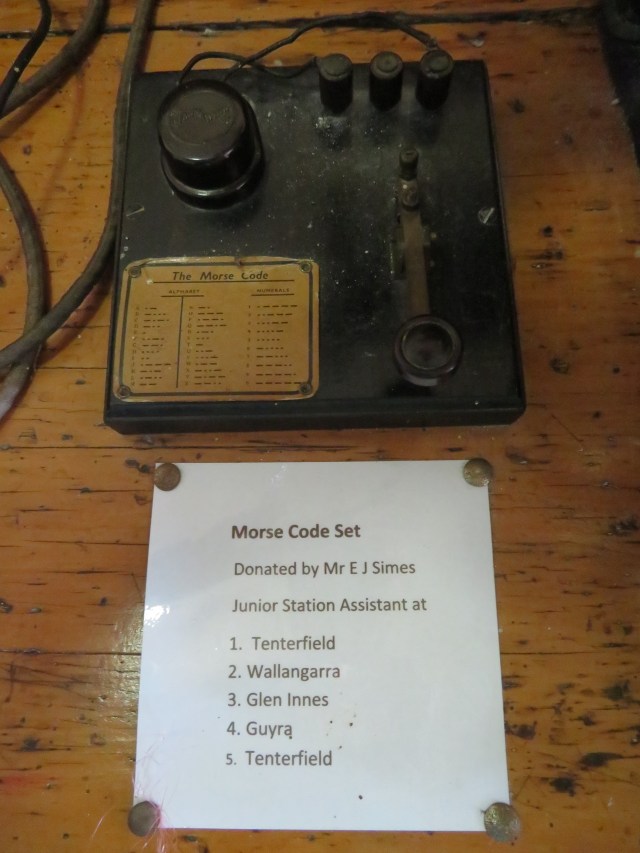
Just as it says, this is a Morse code set.
They had lots of model trains on display behind glass cases, which were very pretty. The glass was rather reflective though, as you can see:


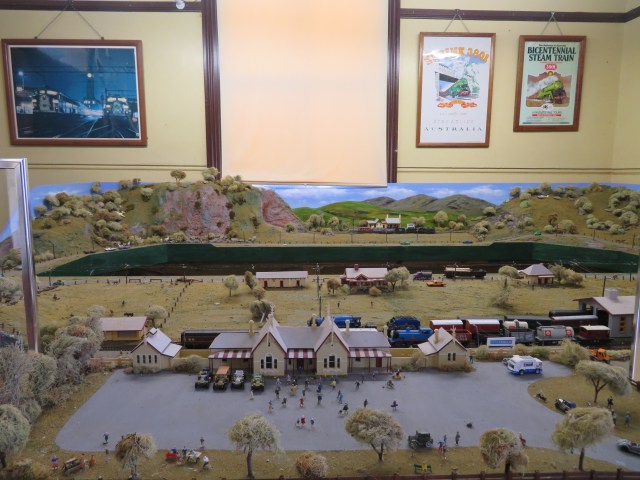
They even had a working model – this is a picture of it.
Look at it go!
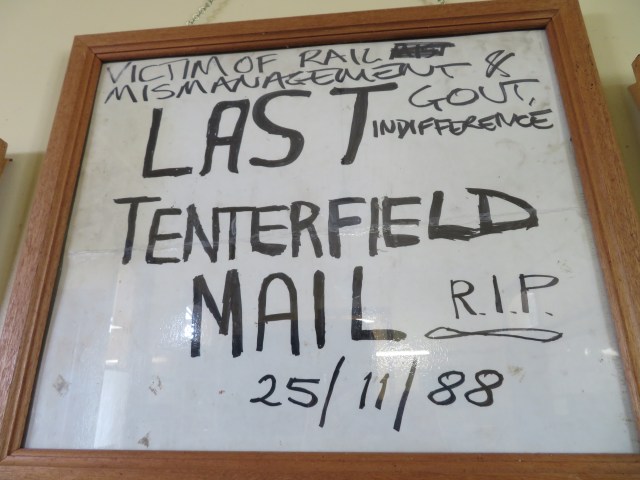
The last passenger train – the Tenterfield Mail – departed the station on the 25th November 1988, and two railway enthusiasts placed this farewell sign on the front of it. The words ‘victim of rail mismanagement and govt. indifference’ were added by an unknown person prior to departure.
Though I wonder if the person really was ‘unknown’, or if the station workers just agreed with their graffiti and decided not to dob them in.


This is exactly what it says – photos of the workers building the train line. It’s easy to forget just how much work went into it.


These were all inside a place called the Trike Shed, and these are the little cars that run up and down the track, usually transporting people or materials to sites where they’re working on the train tracks.
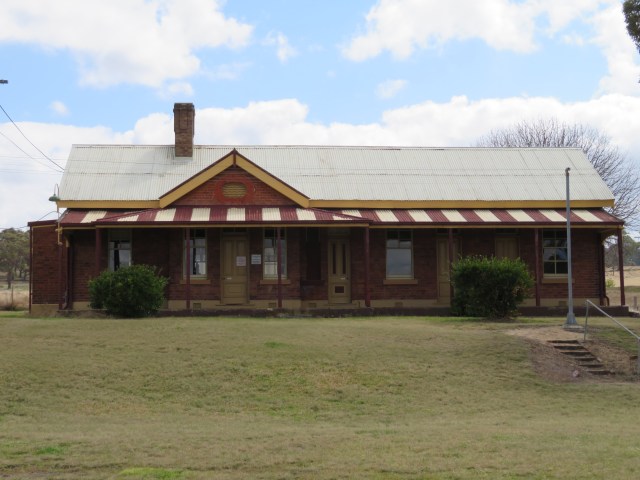
These were barracks built to accommodate visiting train crews. I couldn’t go inside – they have issues with white ants, apparently – but you could peer in through the windows and see things set up as they would have been in the steam era.
I admit, I was expecting some pretty rough accommodation, but it was actually rather nice. Shared kitchen and dining area, but everyone got their own room to sleep in – backpackers do it worse than that!
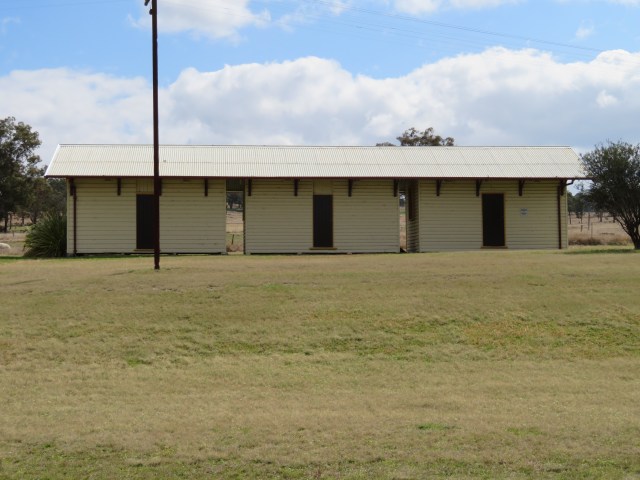
These were extra barracks built during WW2. Apparently the inland line was more popular for moving troops and goods, so they got much heavier traffic than the coastal line.
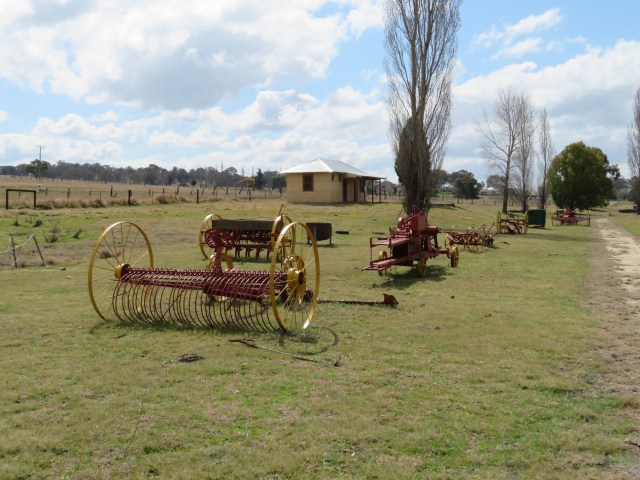
Some historic farm equipment. Because why have just trains when you could have other big metal monstrosities as well!


That’s a lot of levers.
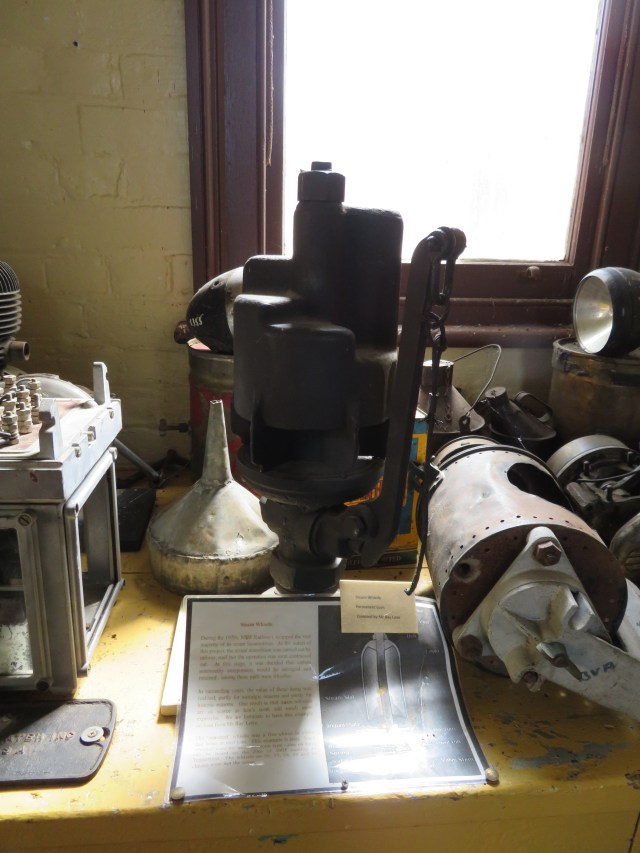
An old steam whistle


Maybe it’s just me, but that seems to ride a fine line between helping and teasing.
There were stairs down to the tracks so you could walk among the carriages and locomotives. It felt a little bit naughty – we’re always told to stay off the tracks, so when I went down and walked back and forth across them, it gave me a false sense of daring.
Lots of photos of interesting machines coming up. I also took pictures of the signs attached to them, so you too can be informed!
First up, are the ones you could walk around but not duck inside of:


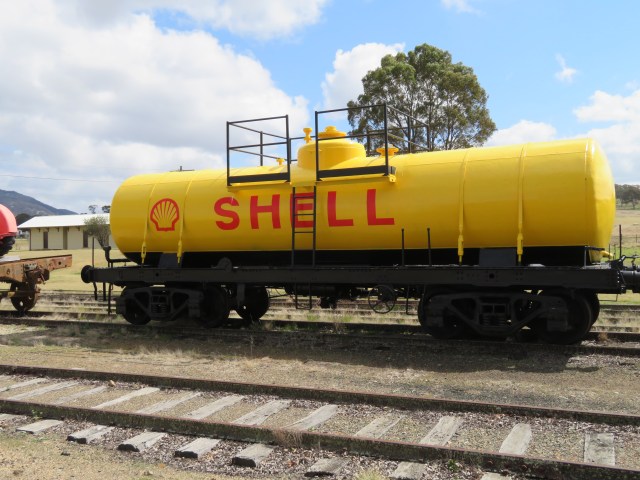
There was no explanatory sign for this – probably because it’s self-explanatory. It carried petrol (and I have a feeling the petrol was from the Shell company).
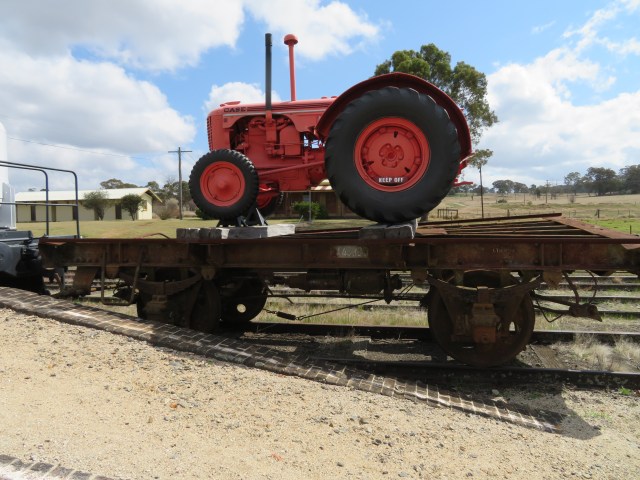
No explanation for this either. It’s a tractor on…something that was probably used to move that kind of equipment.
Now, below are the ones you could go inside. They often had displays inside as well.


Apparently the ‘occasional passengers’ were usually the train drovers. They were paid by the stock owner, and usually just accompanied the animals to market to make sure nothing went wrong. There were resting paddocks along the way where the cows would be unloaded, spend a few days in a paddock, and the drovers would have to keep an eye on them.
As you can see, there was some room for sitting down, and the kind of tiny toilet you’d find today on aeroplanes


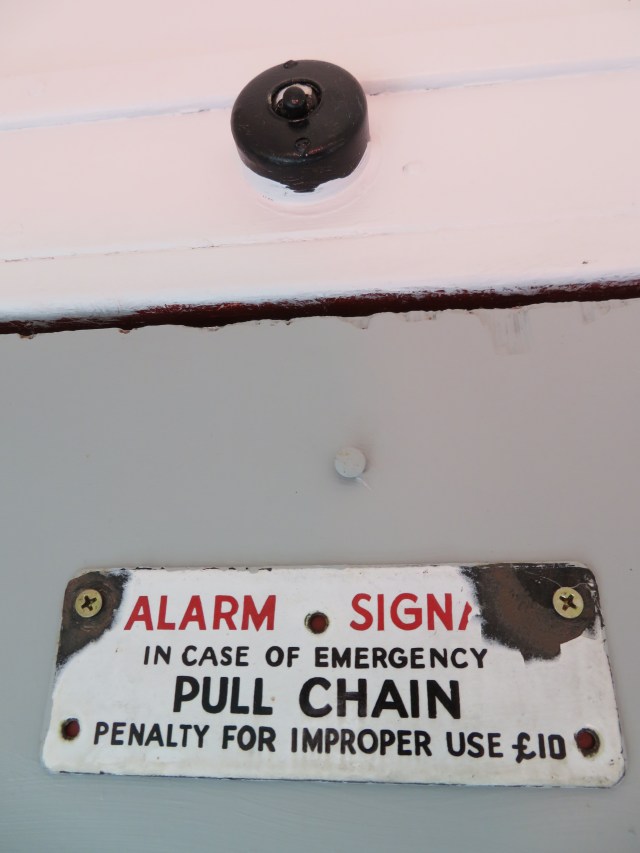
The alarm signal – I think there used to be a chain dangling from that little black lever. Man, the fines have sure gone up, haven’t they? Inflation is a funny thing.
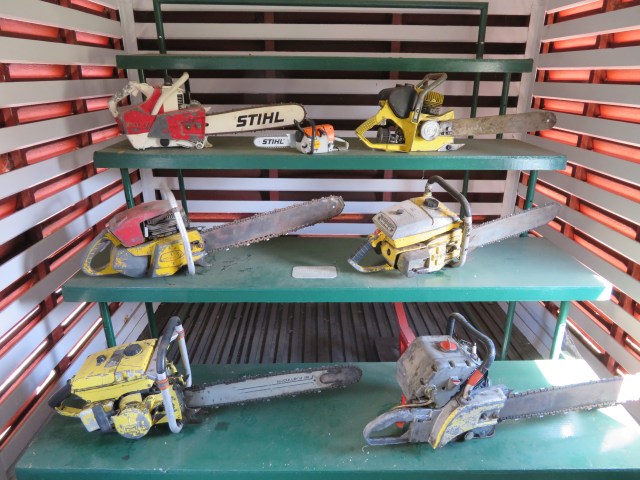
I suppose you’re asking why there’s a chainsaw display in the goods and cattle van. But the question isn’t ‘why’, but why not?
In fact, why not have a whole display of lumberjack equipment?


Oh look, they do!

This was a very big chainsaw. You can see where someone is supposed to hold the other end. You’d really have to trust the person running it, wouldn’t you?
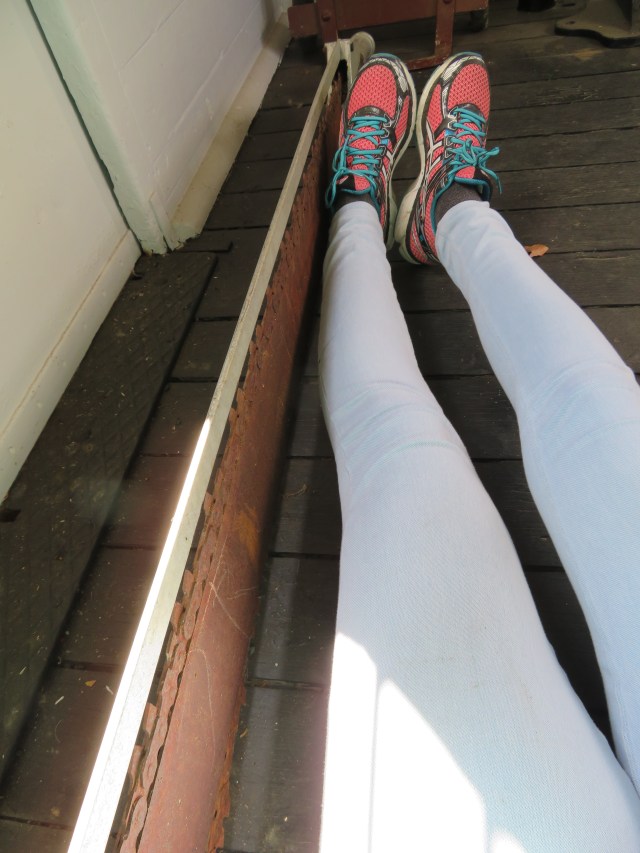
Size comparison. I’m sitting next to the motor of the saw and stretching out my legs in front of me. They didn’t reach the end.


Not much too see inside, really. Though the ridged, reinforced floor is interesting.


You can see the compartments – the little door open at the bottom was where the dogs went.
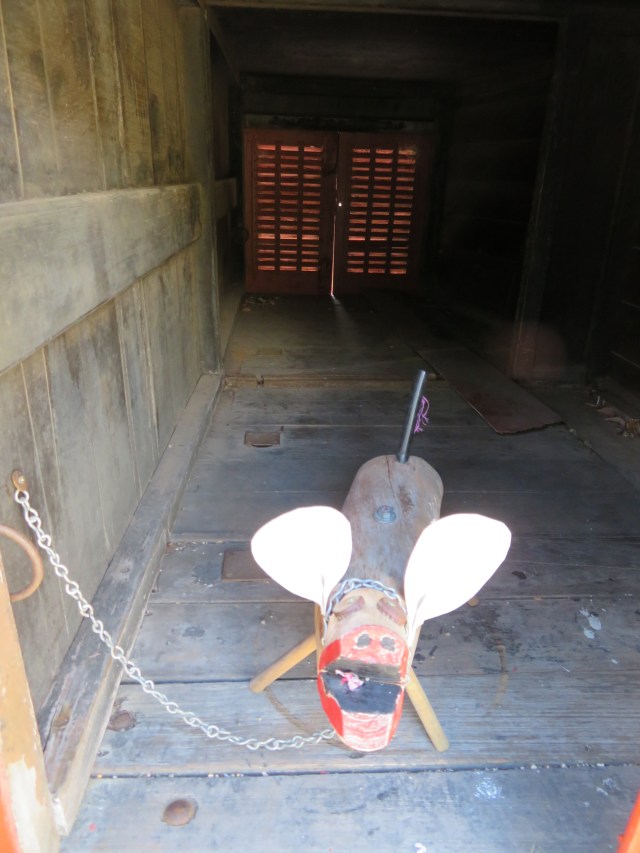
And there it is! They’ve helpfully indicated it with a little wooden animal that is probably meant to be a dog, but looks more like a pig to me.


This was a fogging machine, basically used to spray sheep with insecticide inside a tent or shed.
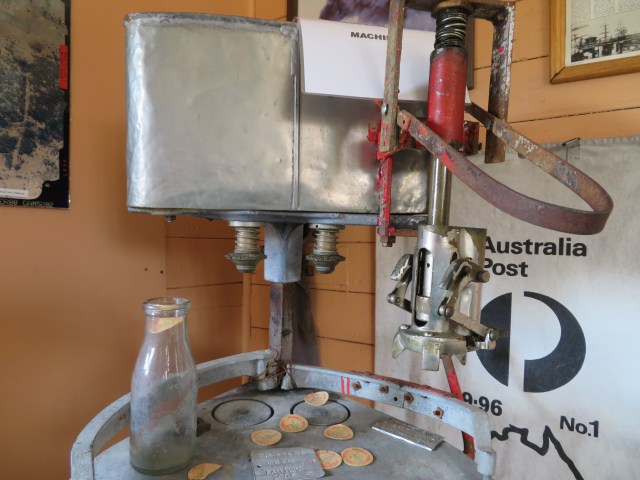
A milk-bottling machine


This controlled the speed of the engine by regulating the amount of fuel. Wikipedia calls them centrifugal governors, but I like flyball governor better. It’s also very Australian, I feel – we don’t give things fancy names if we can help it. It has ball weights that fly around, so we’ll call it a flyball.


First class seating.
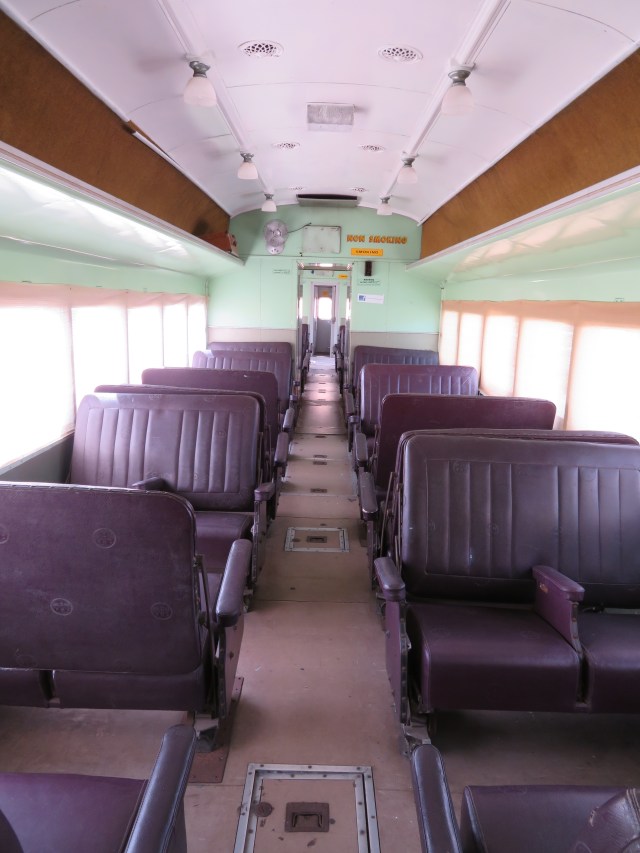
Economy seating. Some things don’t change.


The main controls, labelled nicely.


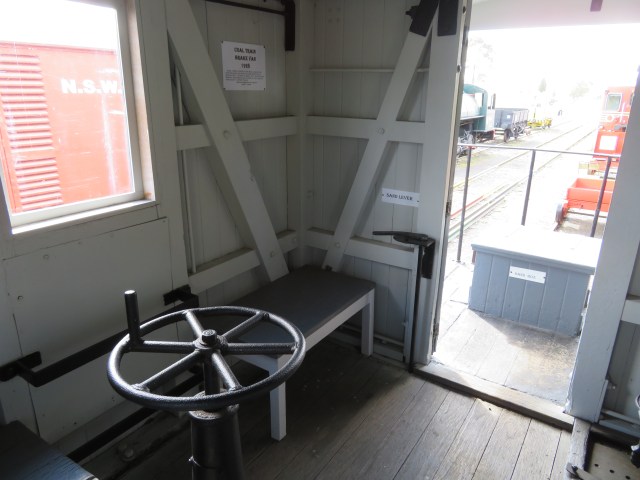
The large wheel in the centre is the brake. The black lever to the side of the door released the sand, which was in that wooden box on the decking.


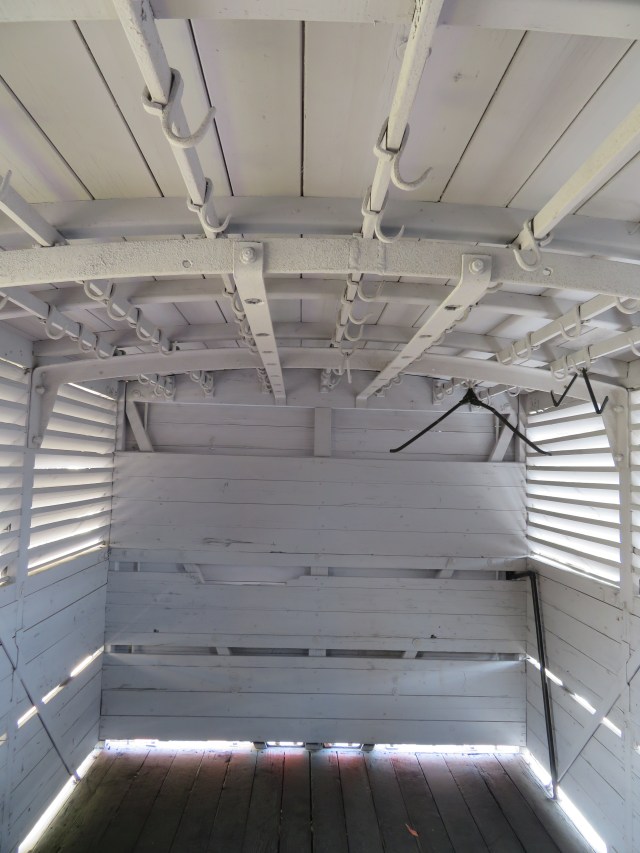
The meat obviously hung from the hooks, and the carriage is much more enclosed than the others.

The butcher’s tools mentioned in the sign. Not many, but I suppose you really don’t need lots of complex tools to cut an animal up.


The ‘mobile workshop’ mentioned on the sign:


The stuff below was tucked away in a little room in front of the toilets.


Maybe I’m not getting something here, but being given a bench seems a very strange present.
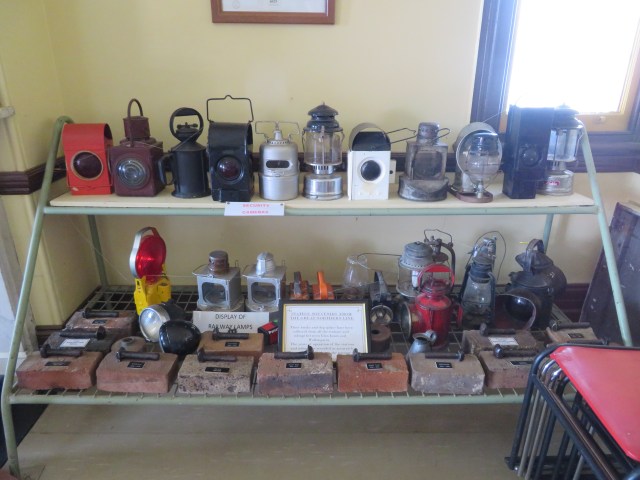
Railway lamps


Lots of people in Tenterfield have sheep or cows in their backyard, so this is a familiar sight. And a rather nostalgic one – it reminds me of when we used to drive through here on the way to see Aunty Sandy.
At this point, I was too late for lunch at that Stannum resturant, so I stopped at another place and grabbed some pizza. Didn’t finish all of it, so the leftovers will be dinner at some point. After that, I went to see the Tenterfield cork tree.
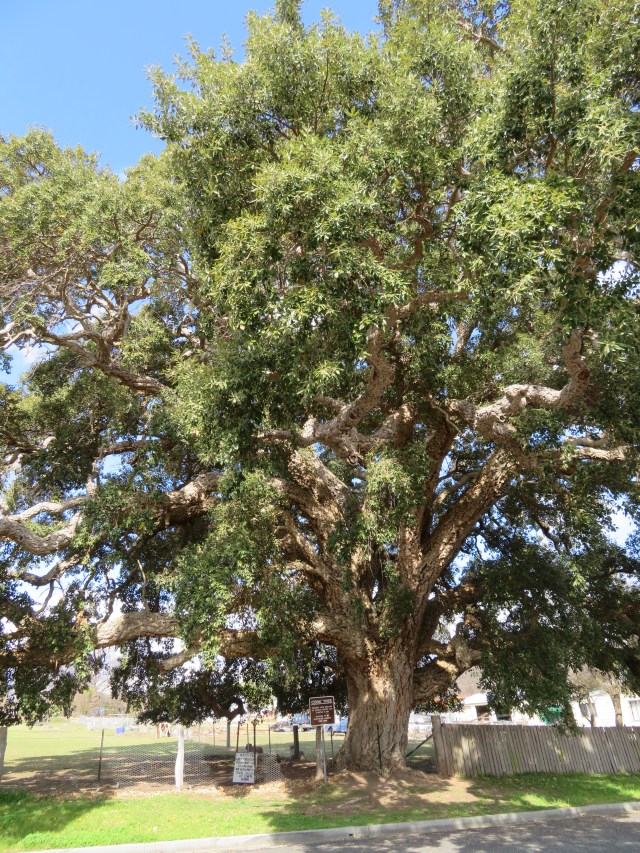
The cork tree.
Apparently it was brought from England in a jam tin and planted in 1861. The bark on cork trees looks very weird and bumpy (or maybe it’s just this one).
I stopped at the Forest to Furniture gallery, a little woodworking gallery with a lot of paintings as well – it’s a very nice place to just drop in for a few minutes. Then I went on a tourist drive that promised a scenic lookout.
The drive turned onto unsealed road, travelling through some farmer’s properties.
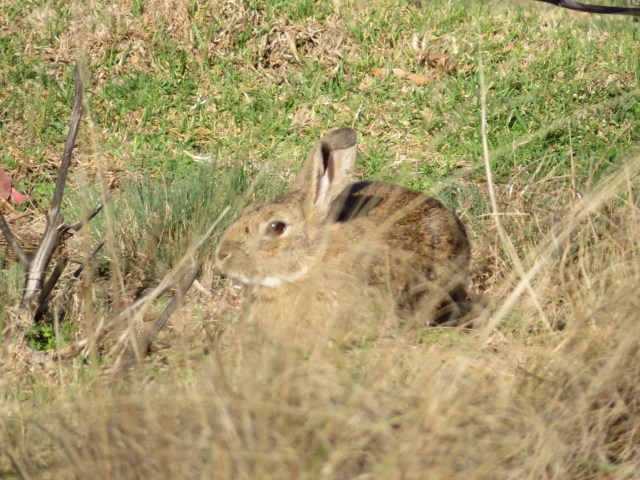
I spotted this rabbit trying very hard not to be seen on the side of the road.
Now I really felt like I was on a farm – all those years at Aunty Sandy’s have made me feel that it’s not a proper farm unless there are wild rabbits all over the place.
I turned a corner and got a big surprise – controlled burning on the side of the road. When I first saw the flames, I was genuinely worried, thinking a bushfire had started…until I saw it was burning in a line.
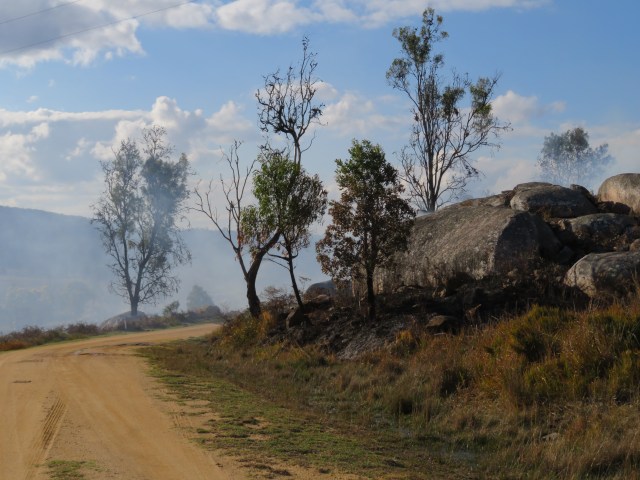
You can see the smoke billowing from where it’s still alight. I got a video of the fire too:
The smoke smelled interesting – not nice like a pure wood fire, but still not exactly bad.
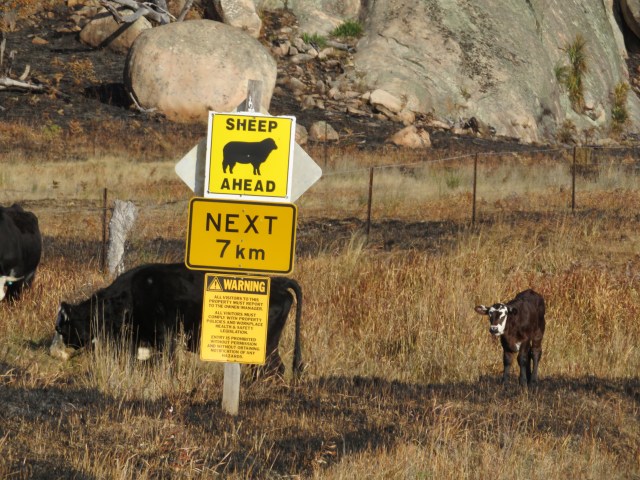
Those aren’t sheep! Go home, sign, you are drunk!
Seriously, I never saw any sheep in this paddock. Plenty of cows though.


More controlled burning, both finished and in-progress.

An Eastern Rosella I spotted sitting on a fence. It’s almost as colourful as a rainbow lorikeet.
Finally, I turned into Mackenzie National Park, and got a nice view from the lookout.


Then I completed the circuit. I passed a free range chicken farm on the way, and couldn’t resist getting a picture – I’d never seen one before.
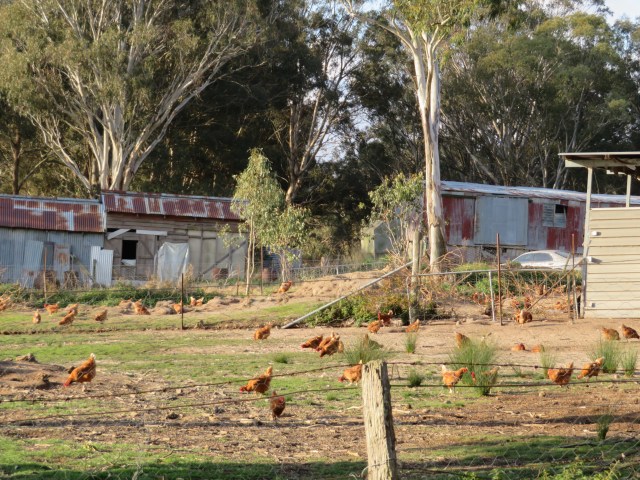
The grey building I’ve just got a corner of in the shot is their barn.
It was very late in the afternoon by this point, so I headed back to Turtle Shell to write this up and get some rest. I was having internet issues though, which is why you didn’t get this until now.
 Jenny's Adventures
Enjoying this all so much. Loving the commentary and the pics- I’m practically there with you! Will have to see some of this for myself!
LikeLike
Glad you liked! I’m trying to give everyone reading it a real feel for what I’m doing.
LikeLike