Cowra is the home of a few interesting things, but my first stop was the historic railway.
You’ll notice I left off ‘museum’ in that top sentence. Because this wasn’t actually a museum, but more like a gigantic industrial yard that works to restore old trains and carriages and lets people tour it for a small donation to the cause.
This is the entrance:
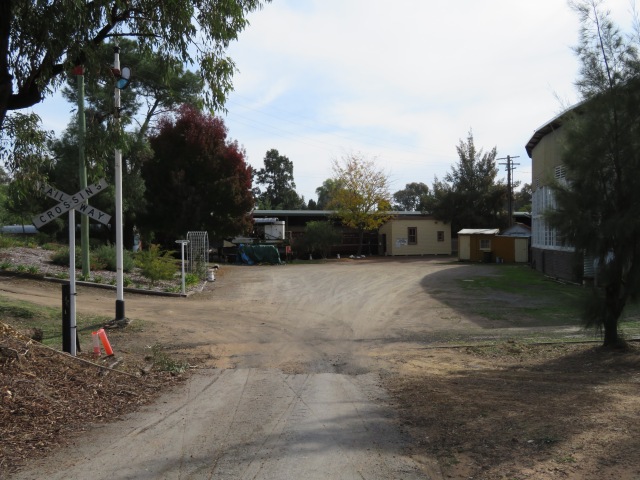
That isn’t a joke ‘railway crossing’ sign, either. These trains actually run, and they often do heritage steam trips for rural events.
Once I’d dropped my donation in, I met Eddie, a lovely man who used to work on the steam trains (basically just shovelling coal, he hadn’t driven them), and now helps restore them. He took me on the grand tour, along with some grey nomads who’d also turned up about the same time. First stop, the sleeping cars:
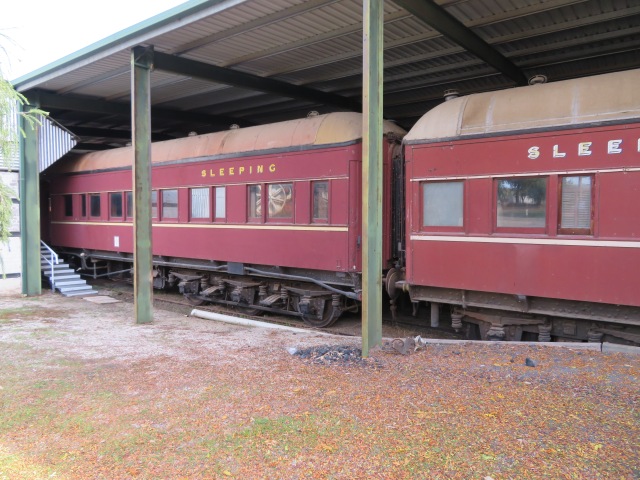
We didn’t actually follow those metal stairs into that compartment – that’s where the volunteer workers sleep when they’re staying here. We checked out the other one.
Inside the carriage:
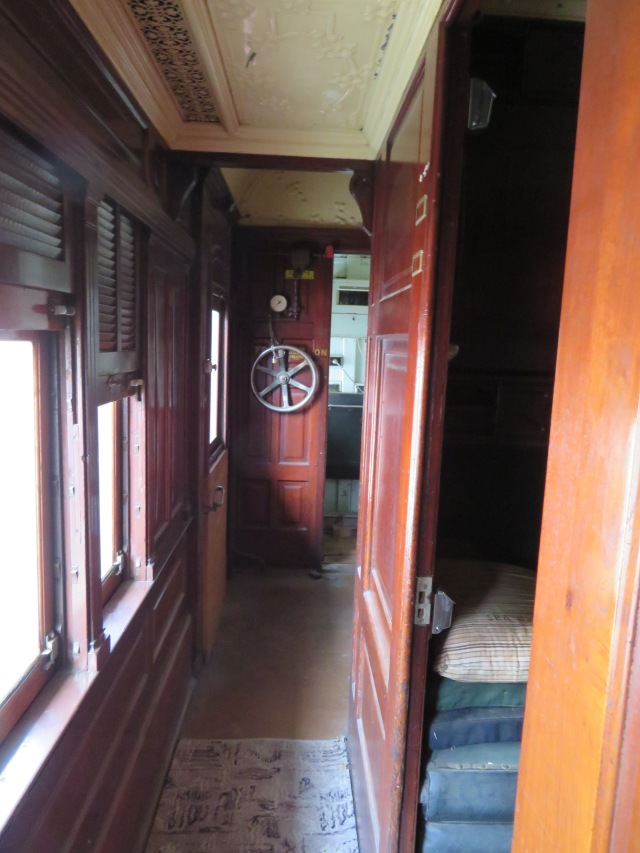
It’s made from red cedar, which is why everything looks so fancy. This is inside one of the compartments:
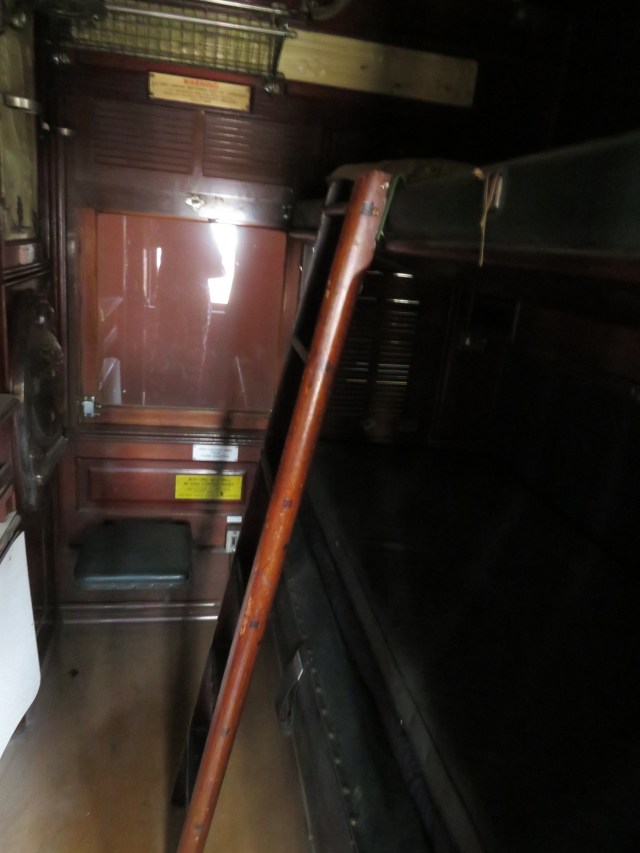
Both beds are set up, with a little ladder to reach the top one. The top one could also fold away, and you could have a ‘sitter’:
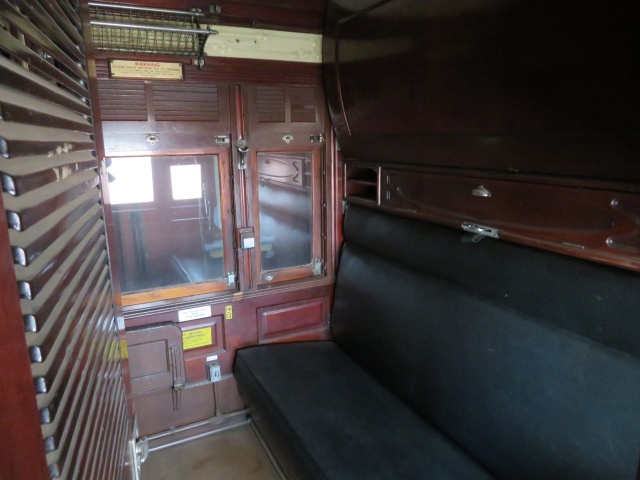
Quite clever, really. And every compartment had this:
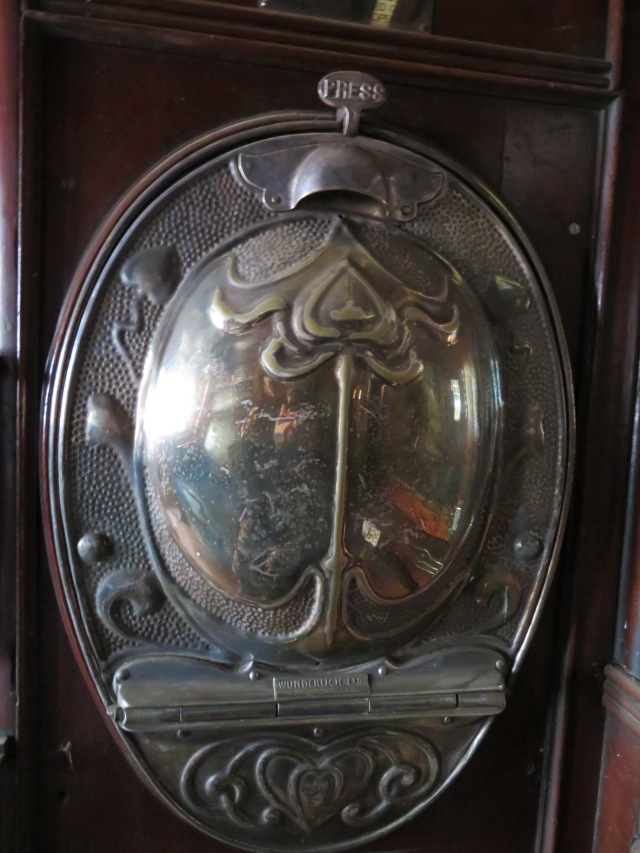
That would fold down into a little tap and sink. There wasn’t much privacy in these compartments though – this was the best you got:
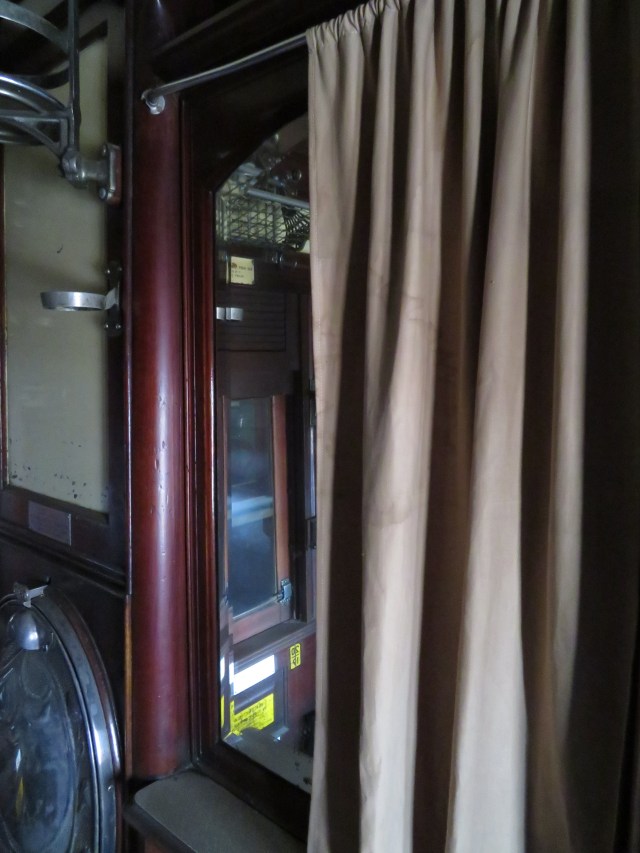
A curtain across the mirror so you couldn’t look at the other bunk while you were in your own. Sleeper compartments were supposed to be single-sex only, but sometimes they weren’t, and Eddie told us he once gave a tour to an old married couple who told him they’d met in a sleeper car.
Then we moved into the next carriage, where they had seats instead of sleepers. This is economy class:
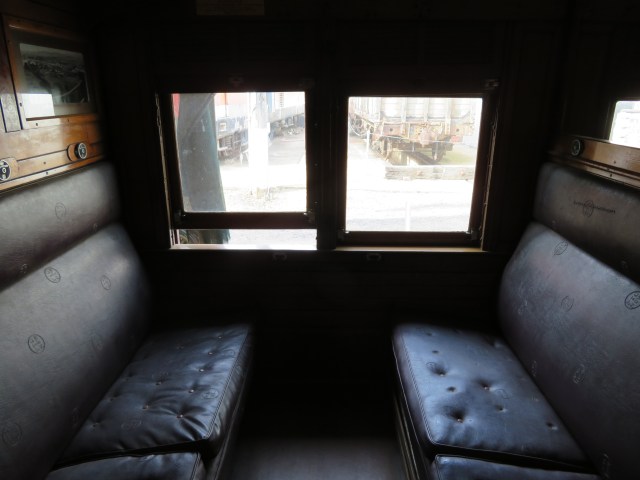
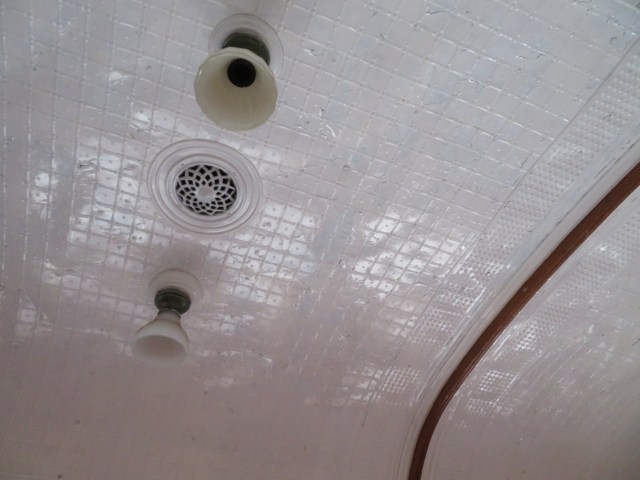
The ceilings were more ornate than I expected:
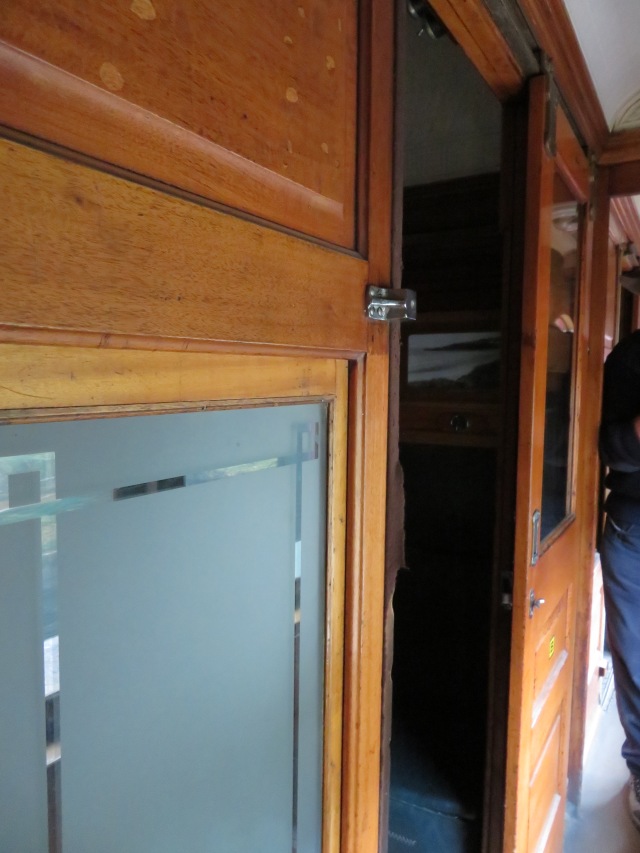
This was the door to first class – more gorgeous red cedar, a decorated window, and a lock to keep out the riff-raff:
First class itself:
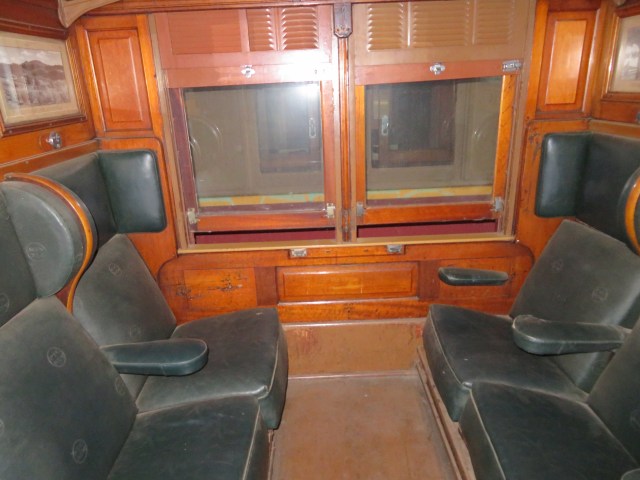
Armrests and headrests – much more fancy than economy!
This is an old goods carriage they’re in the process of restoring:
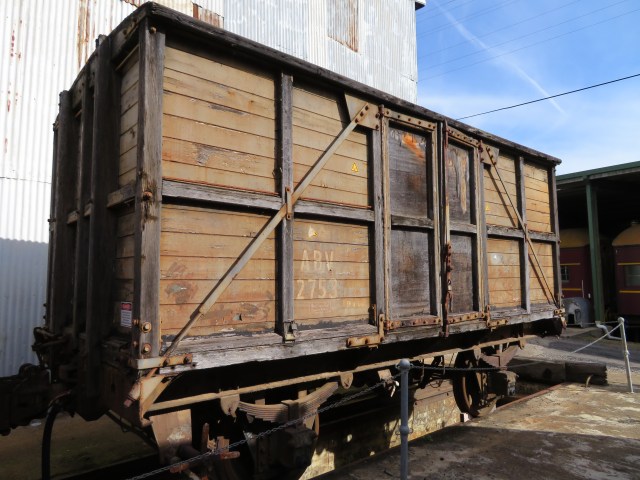
This one mainly carted crates of Arnott’s biscuits around.
This is a DEB – Diesel Engine Bus:
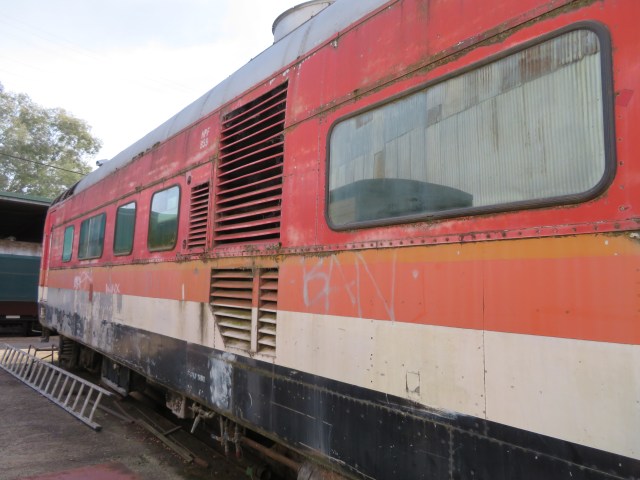
Basically, it’s a train that uses diesel. Then Eddie took us to this:
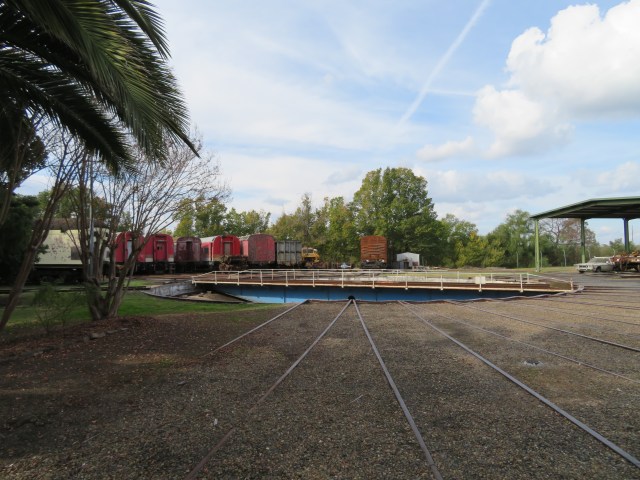
A turntable! And they even have a roundhouse to go with it:
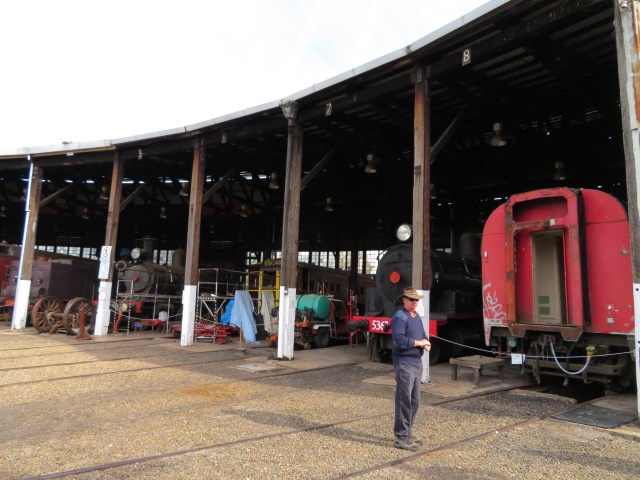
That’s Eddie in the photo there. This is the set-up we all saw in Thomas the Tank Engine, and the only operating roundhouse and turntable in New South Wales. I think it might be the only one in Australia – it’s certainly the only one I’ve ever heard of.
This is Rosie:


This is the traditional steam train, and this one in particular is 104 years old. There were stairs that let us climb up and have a look inside:
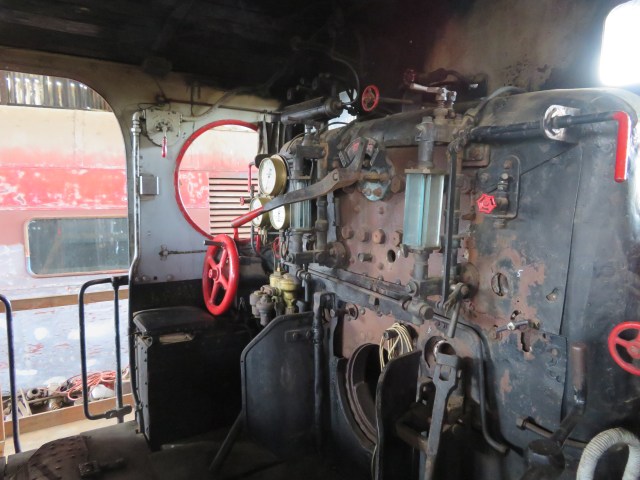
I take the wheel:
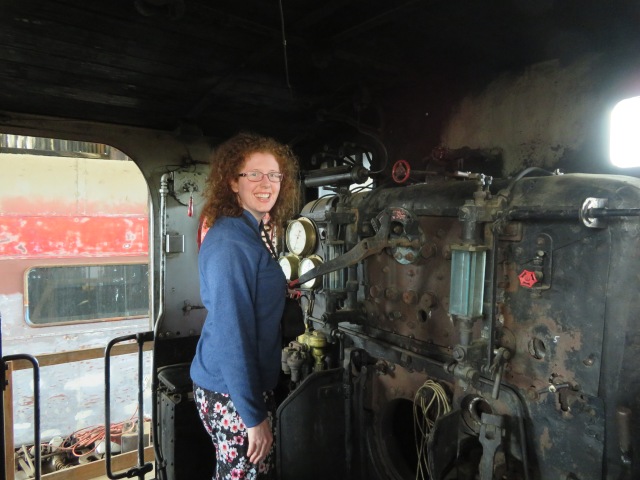
Or the lever, as the case may be. In spite of its age, this train pulled a heritage steam line up until the 1990s, and now it just needs to be spruced up a little.
Another carriage being restored – this one is a light seating car, and was often attached for quick passenger trips. By ‘quick’, they meant something that wouldn’t be overnight, so there was a lot of leeway there:
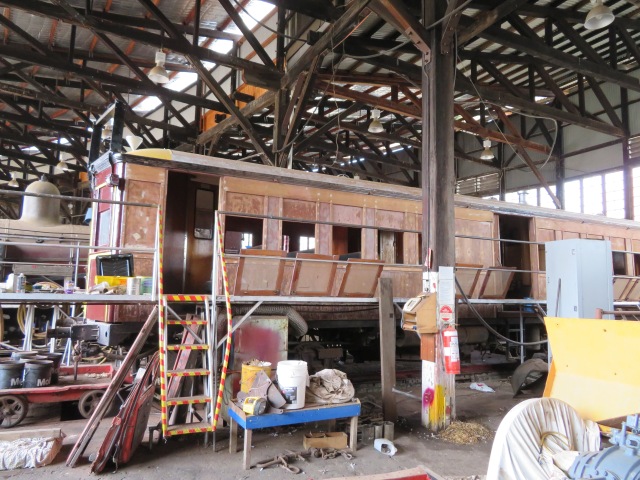
Another old steam engine – this one is 114 years old:


This is a tender, or coal-car, which would have held the fuel for the steam engine:
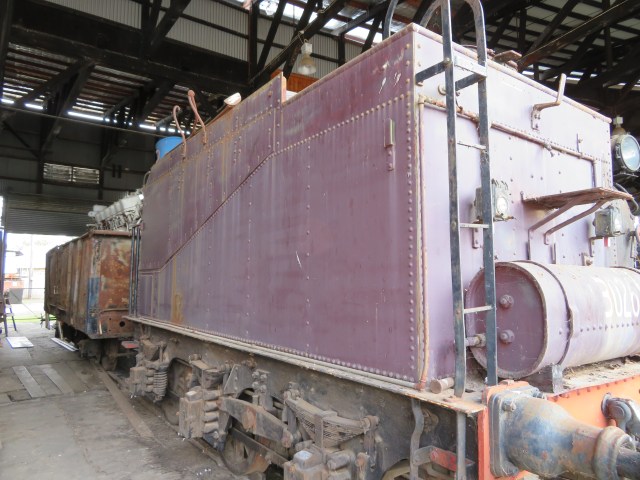
That one is somewhere around 125 years old. Pretty crazy, huh?
This is a breakdown crane:


As the name implies, it would have run along the tracks to tow in broken down trains, and would have sometimes just been used to lift things around the repair shop.
This complex set-up:
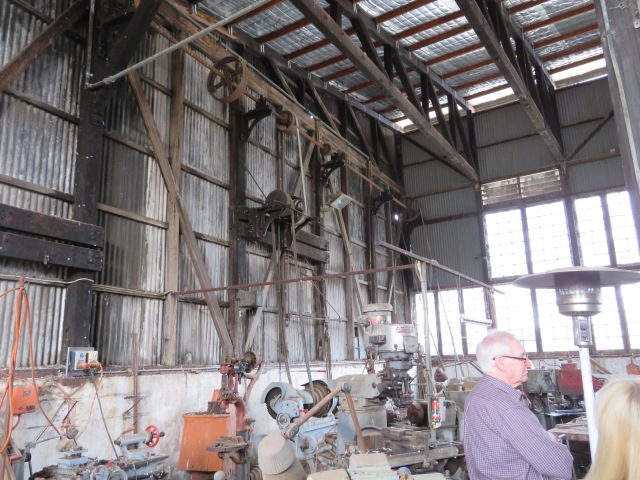
Is the original workshop. Amazingly, all those belts and wheels are still functional – it’s just hooked up to an air compressor, and it can run a variety of machines.
This is a shunting locomotive:


And it’s still in-use! As you may have guessed, it’s just used to shunt trains and carriages around the train yard – bring them into the repair shop and then take them out, that sort of thing.
Now we were finished with the roundhouse, and we got a closer look at the turntable:
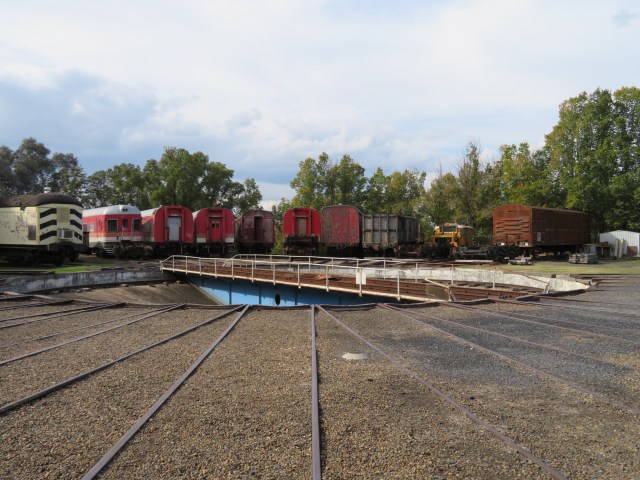
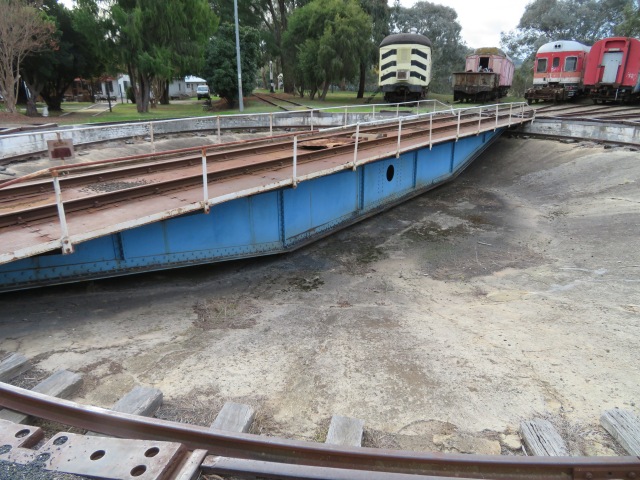
Amazingly, once the train has been driven onto the turntable, it only takes one person to turn it – they just grab the edge and pull it around. I’m not sure what kinds of gears and balancing goes into that, but it sure does the job.
They also had a memorial garden:
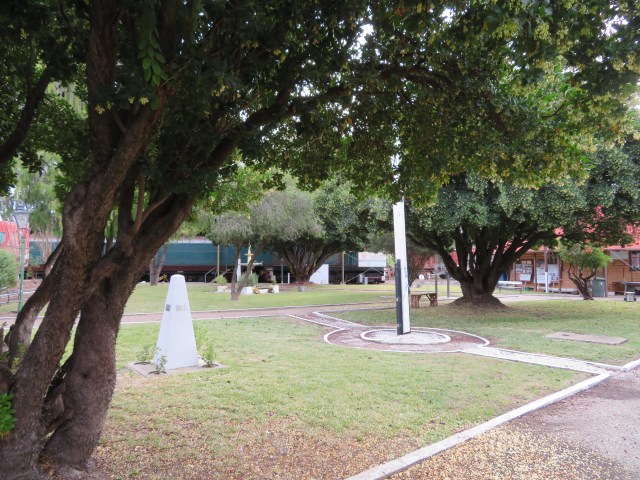
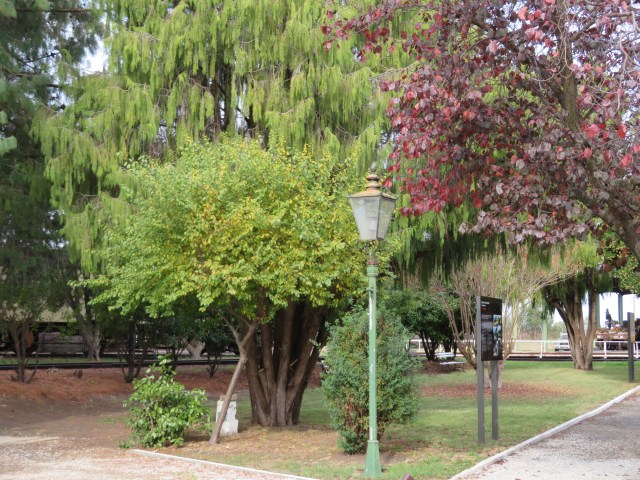
Can you see the old lamppost in the second one?
Originally, it was just a garden for the employees to have lunch in, but then they erected a memorial for WWI, and several people who worked on the railway asked to be buried here, and it all just snowballed. Usually it’s just ashes and a rose bush to commemorate them, but apparently some people were buried before the advent of cremation, and Eddie pointed out several spots where people have been interred. They know there are more, but they don’t quite know where – as he put it ‘everyone knows not to dig too deep in this garden’.
The WWI memorial:
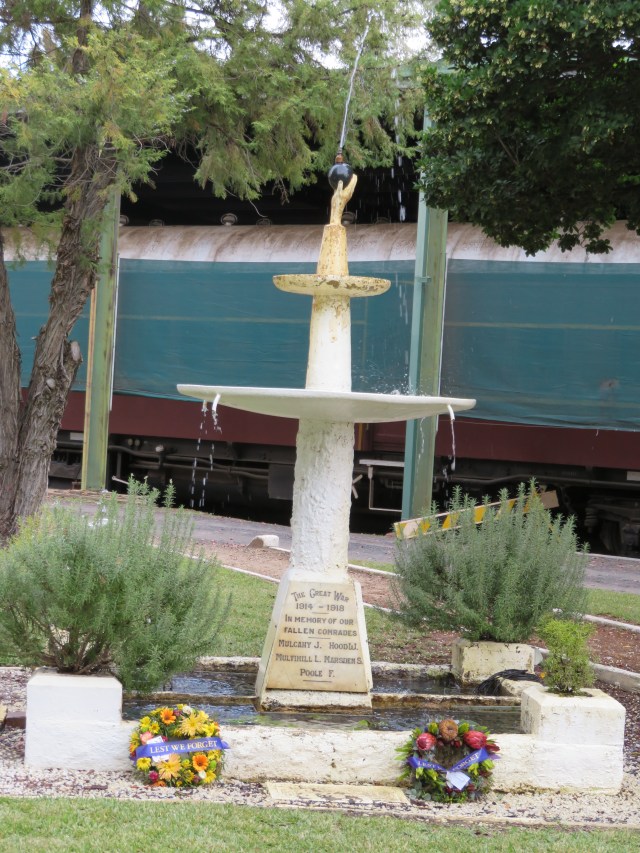
It’s unique in that it’s mostly made out of spare train parts – the only exception is the hand, which was made from a cast.
An Aleppo pine seedling:
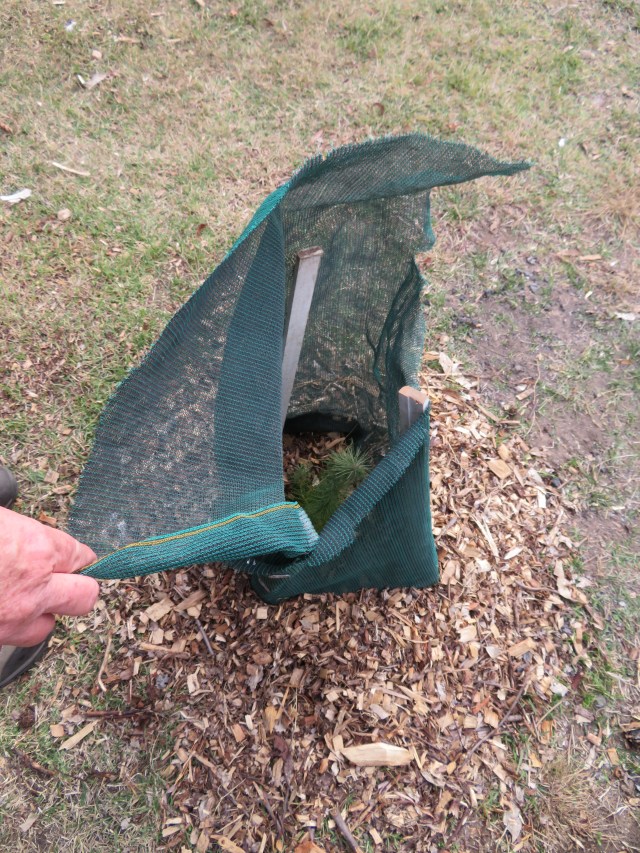
This was propagated from seeds collected from the Lone Pine Tree in Canberra. It was planted here two years ago, and that netting over it is to protect it from rabbits.
The office:
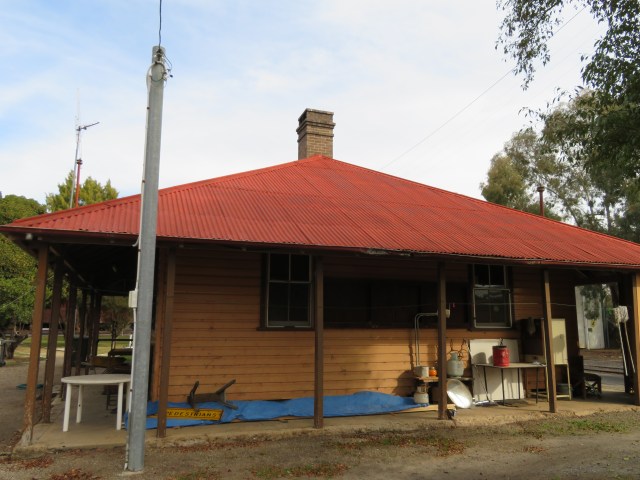
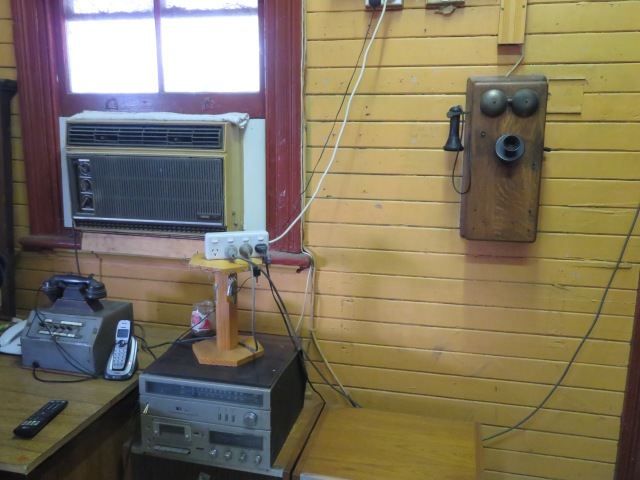
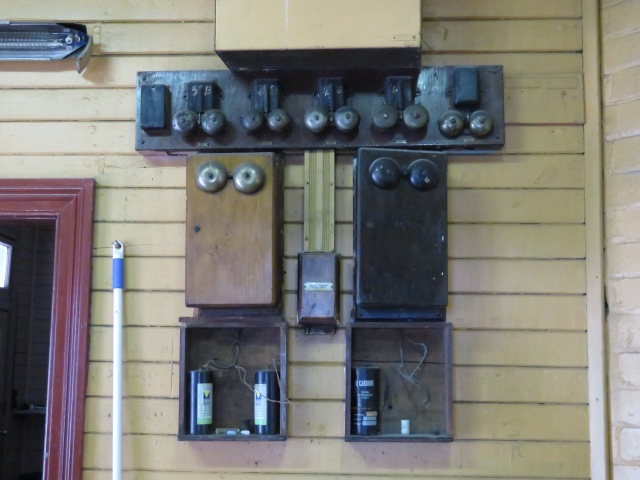
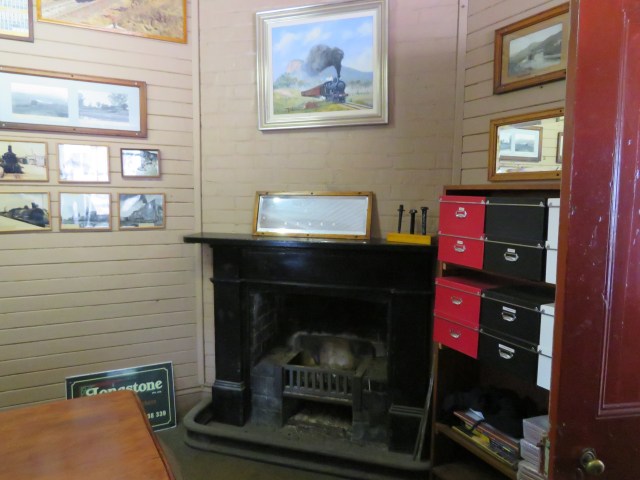
That big central chimney is actually connected to four fireplaces – there were four offices, all with a door to the outside and all with a fireplace. When this station closed in the 1970s, everyone just locked the door and left, so a lot of old equipment was still there when they started to restore it. They still have old phones in the stationmaster’s room:
And a desk and pigeon holes from the 1920s:


They had an Anzac Ceremony at their memorial, which is why all those wreaths are still around.
One of the old fireplaces:
The records office:
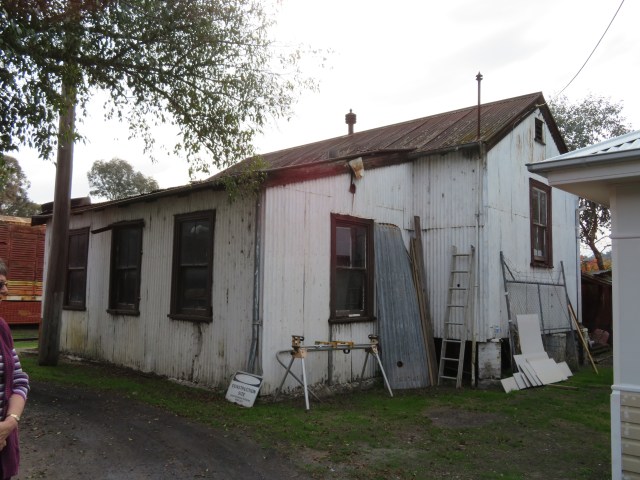
It’s locked up to us plebeians, because they’re still going through it, but they’ve found records going all the way back to the 1920s.
This is one that needed a lot of restoration:
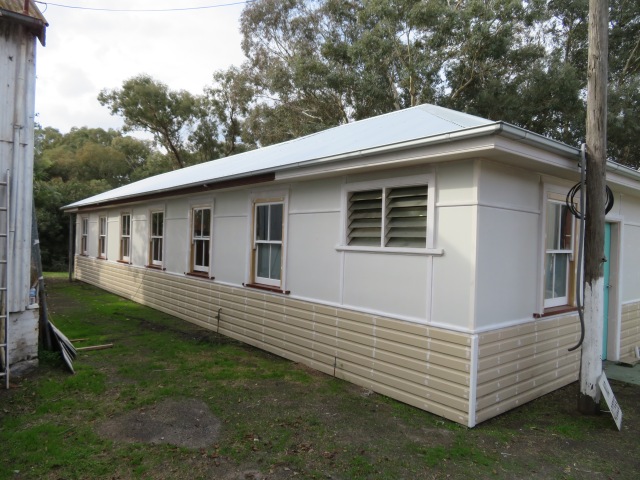
It used to be an enormous toilet/shower block for the men who worked on the railway, but the termites got into it and a lot of work had to be done to make it habitable again.
Then we saw some old cattle cars, in the process of being restored:
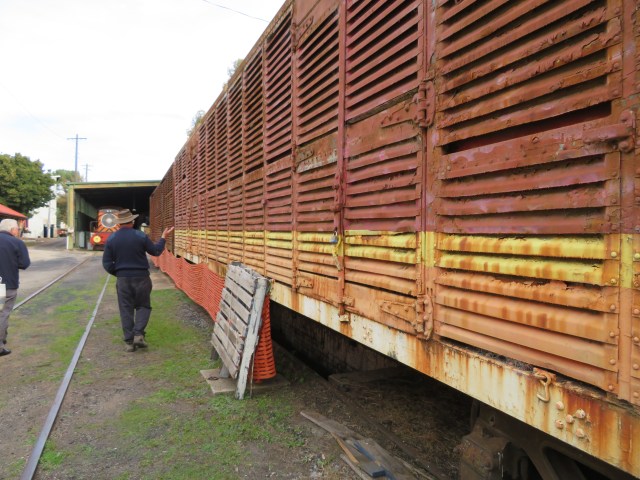
There are pits underneath them:
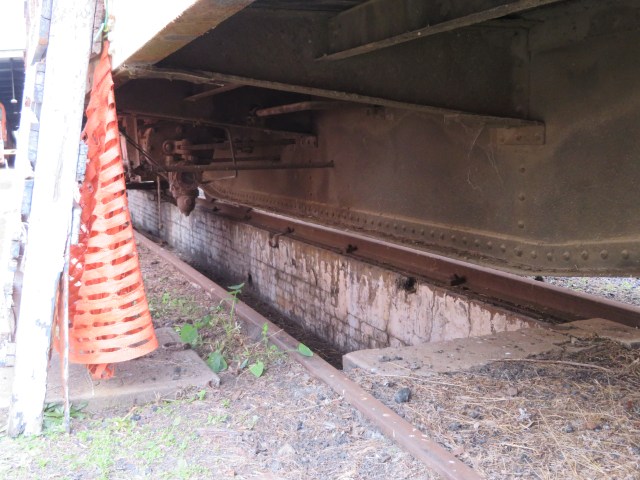
So people can work on them. Trains were never lifted into the air like cars – all work on them has to be done at ground level (or slightly below grown level, as needed).
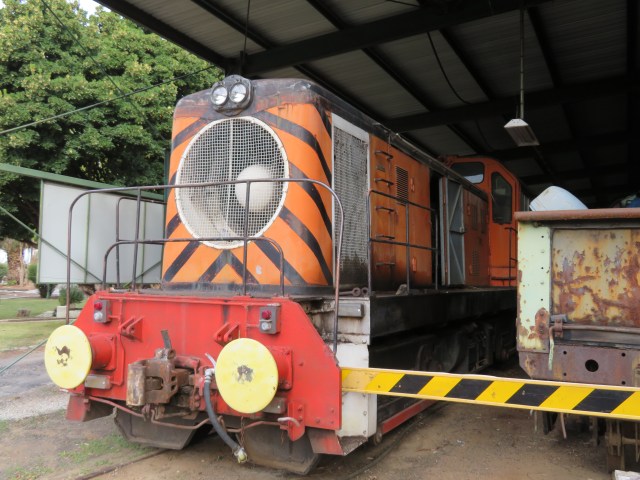
Another old train with a huge fan at the front to cool the engine:
A refurbished lounge car, turned into a bar, that will soon begin service on the heritage steam trains:
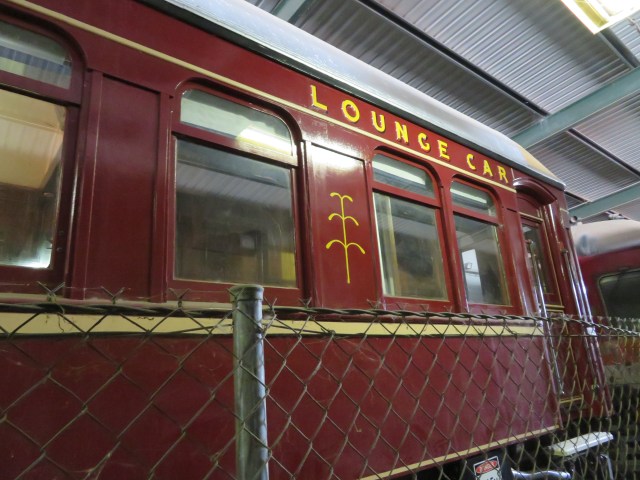
We couldn’t go in yet, but we could look inside:
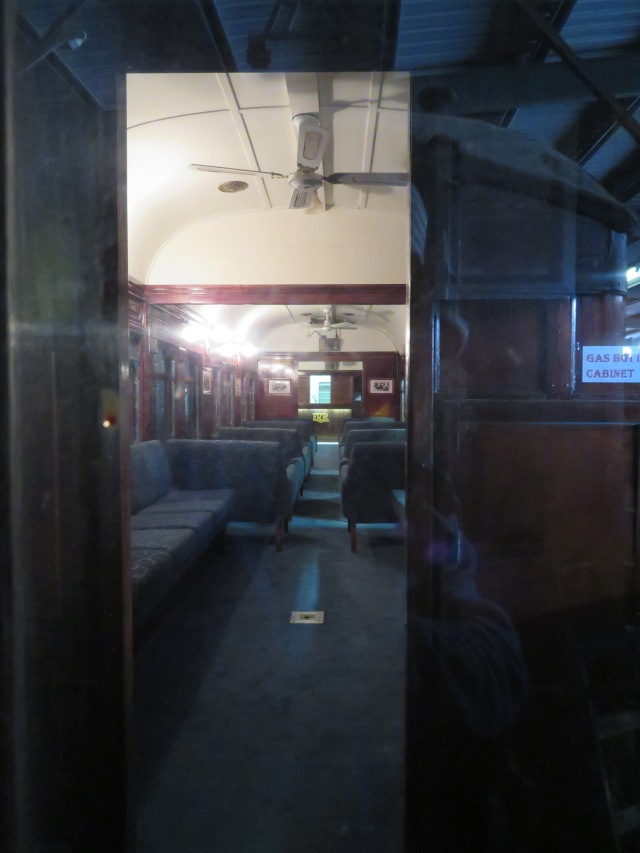
Pretty swanky. I certainly wouldn’t mind sitting in there and having a drink.
This one is an old horse box:
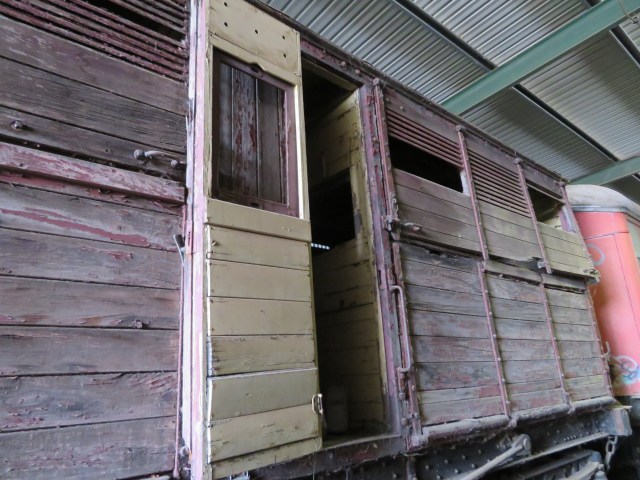
It transported valuable horses along the train lines, including Phar Lap at one point.
Remnants of old train yards:
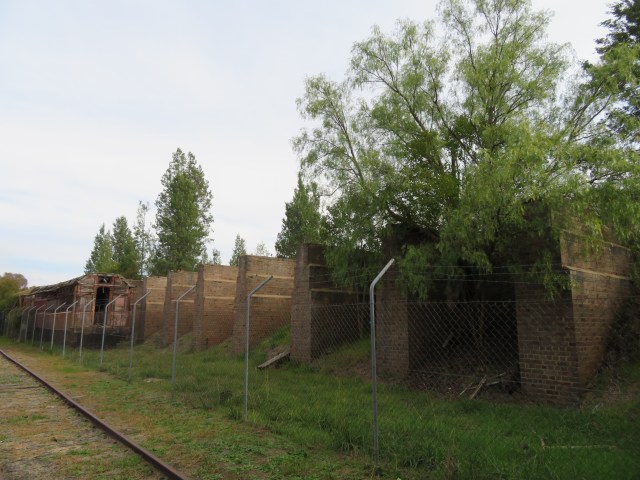
The sand shed:
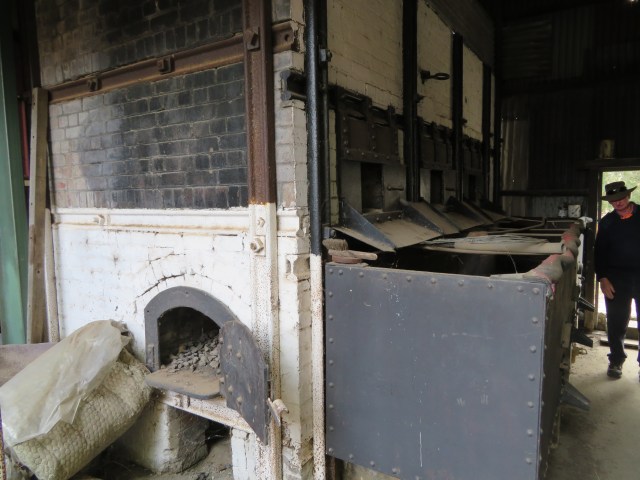
Sand is still used today to increase traction on the railways, and this is where it’s processed. They take huge truckloads of very fine sand (usually from rivers), stick it in the top, then light the fire to heat it up and dry it out. When it’s all been dried, they open the hatches and the sand is poured into those black bins. You can see they have little spouts attached to them – people stick bags under them and open the spout when they need sand.
This is another breakdown crane:
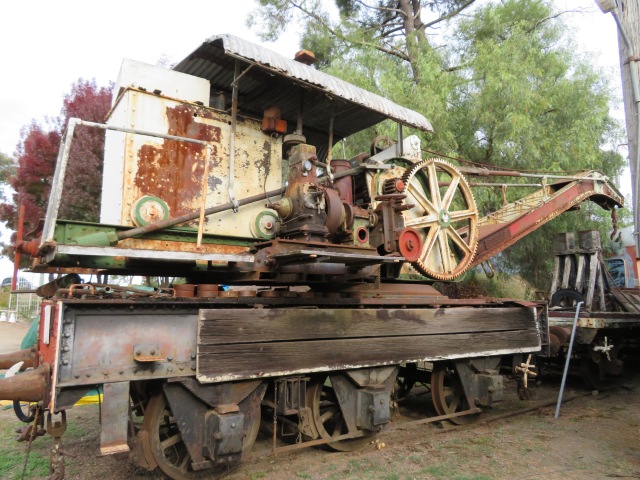
This one is still in use! It usually goes to get old trains/carriages that have just been purchased and bring them into the yard here.
There were some birds around the garden and the trains, and I managed to film this white-browed scrubwren:
And I’m not entirely sure what this is (maybe a juvenile of something), but it was committed to digging in the garden. Probably after some tasty insects, but I suppose, given what we know of the garden, we can’t rule out grave-robbing:
Then it was time to say goodbye to the trains. I stopped by Cowra’s civic square to check out the Peace Bell:
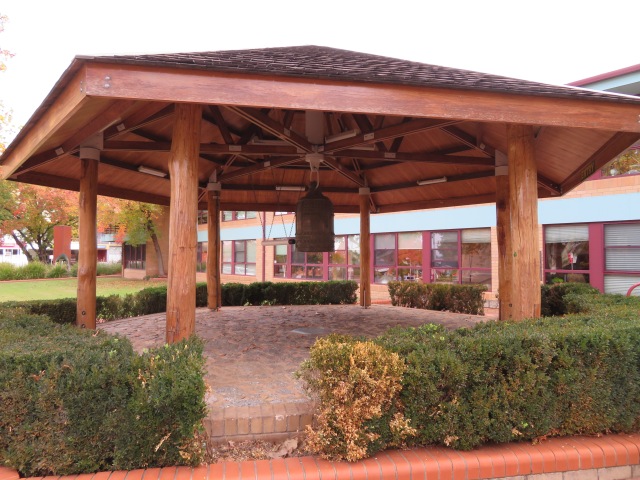
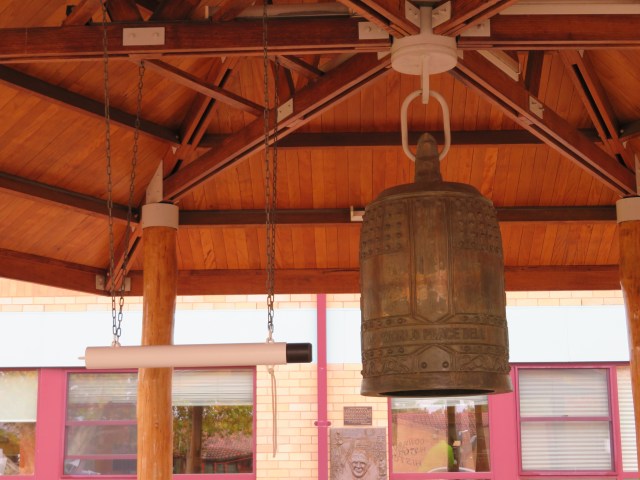
It had a plaque underneath it:
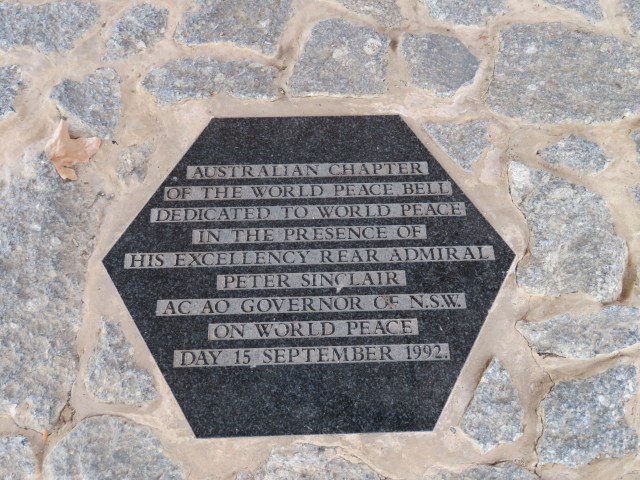
This is the Australian World Peace Bell, made from coins provided by 103 countries of the United Nations. World Peace Bells are usually hung in capital cities, but Australia’s is in Cowra.
The other side of the bell:
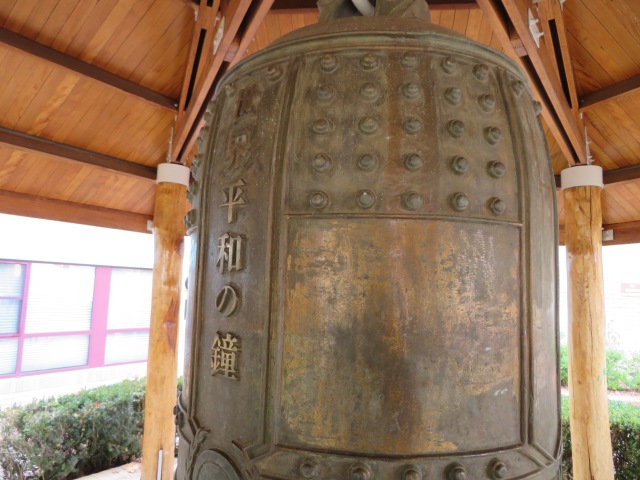
I gave it a ring, and it was a much deeper note than I expected – I filmed it for you guys:
Mind you, the bell weighs something around 450kgs, so that would probably produce a deep sound. Then I headed out of the town, to the site of a former POW camp:
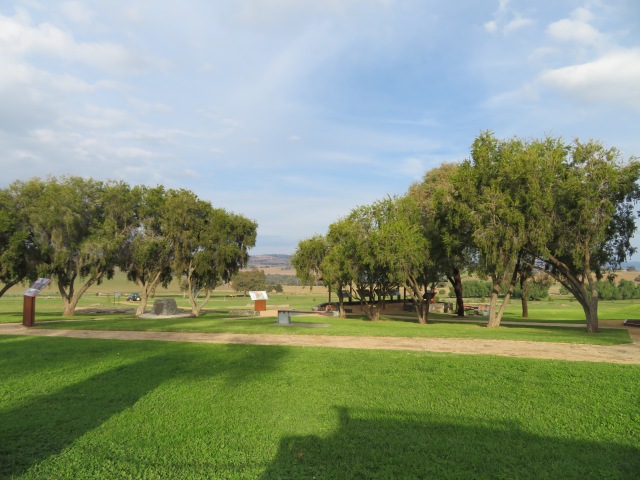
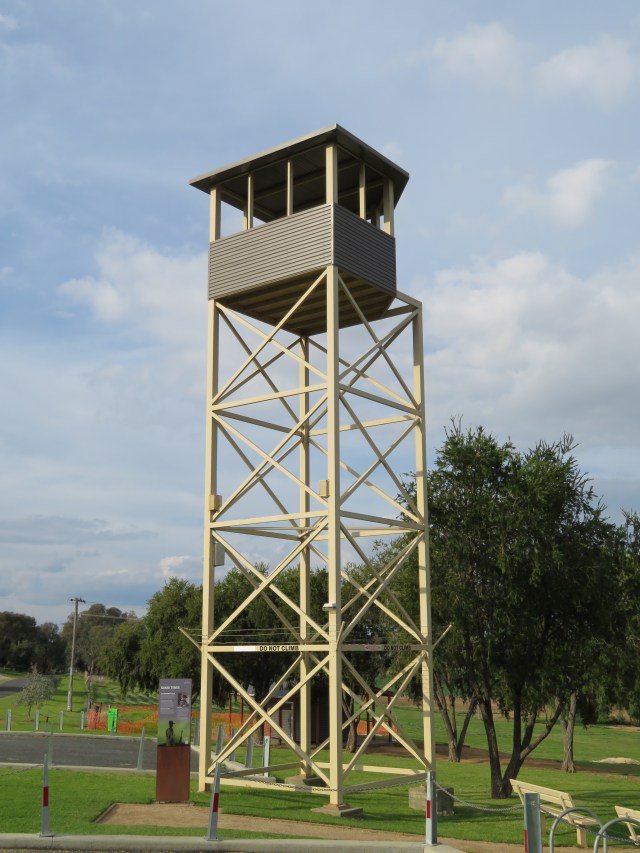
This was the site of the Cowra breakout in 1944, the largest breakout in WWII. Over a thousand Japanese POWs attempted to escape from the camp, and 231 were killed, along with four Australian soldiers. This replica guard tower was erected in memorial:
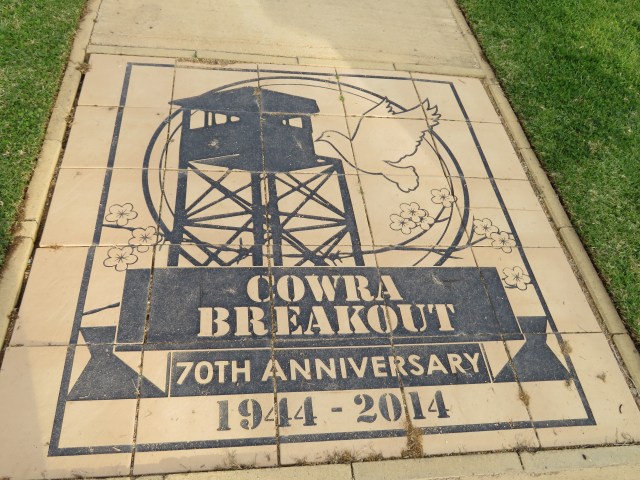
And this to commemorate the 70th anniversary:
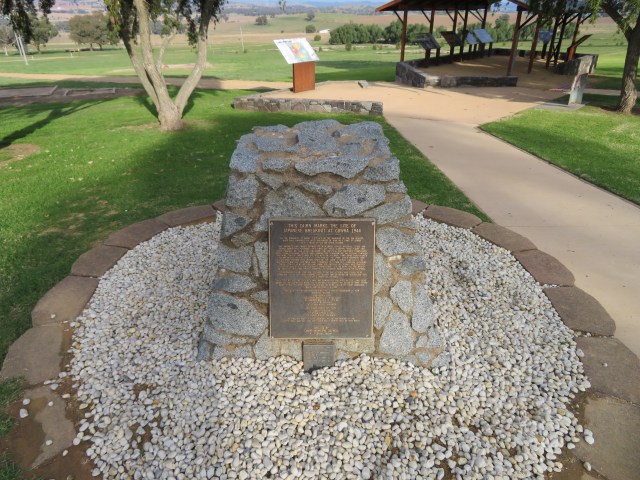
They had a cairn to mark the spot:
And a helpful sign, telling me the layout of the original camp:
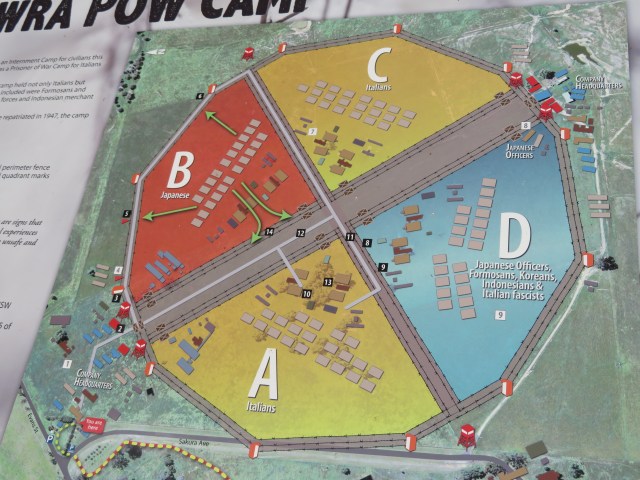
Those green arrows are where the prisoners attempted to break out. The ones escaping into the road between the two camps didn’t do so well – they were killed in the ensuing gunfire. The ones who went over the fence into open country were rounded up over the course of several days, though a lot of them committed suicide rather than be re-captured.
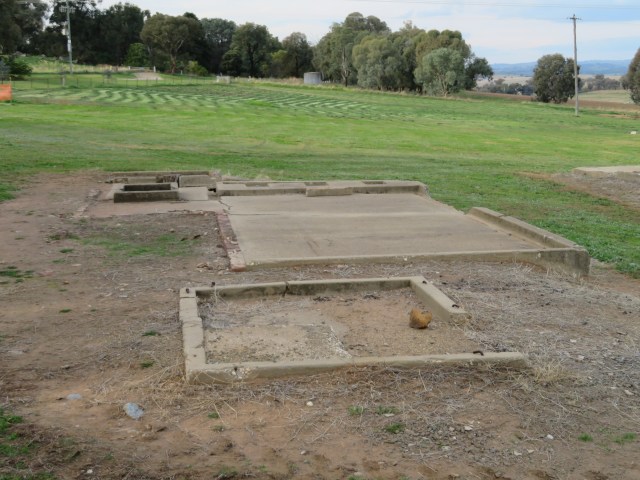
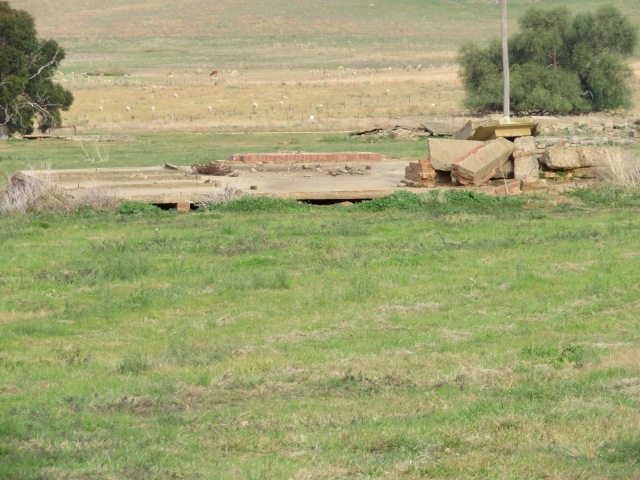
There wasn’t much left of the camp – just some foundations scattered through the grass:
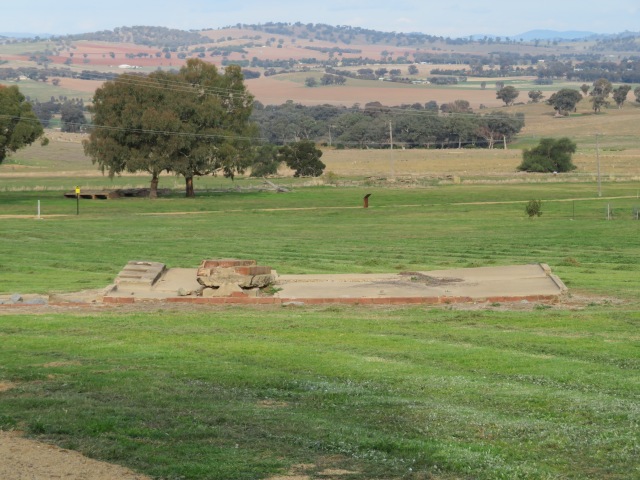
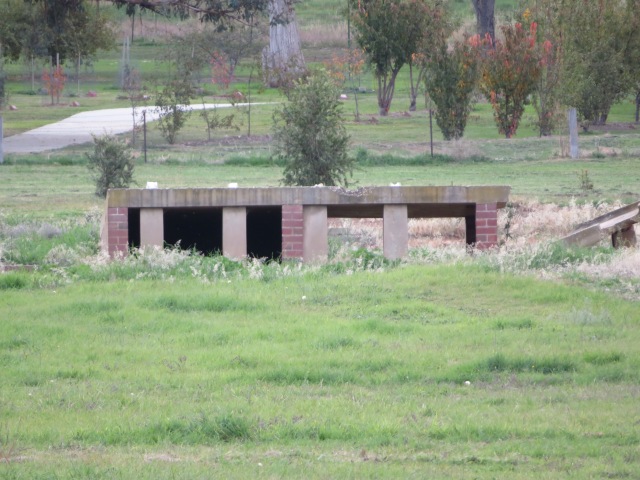
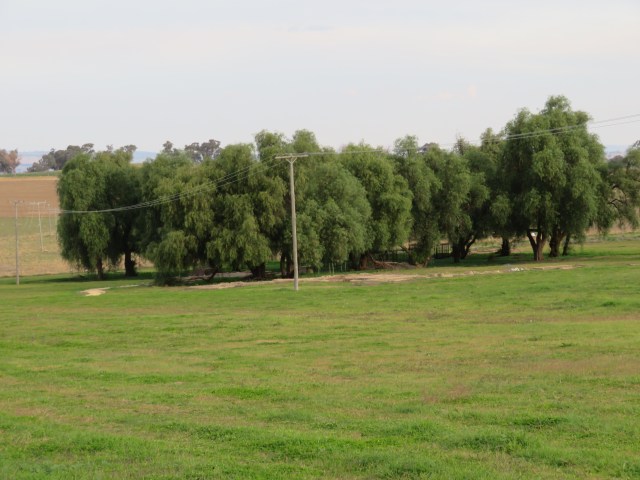
I spotted a row of trees, and went down to them to see if there was anything interesting there:
I found some more ruins:
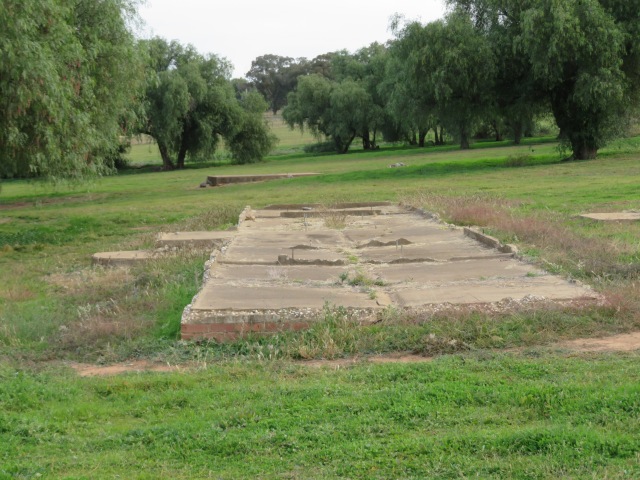
And I was interested to see what was either pipes or remnants of rebar sticking up from them:
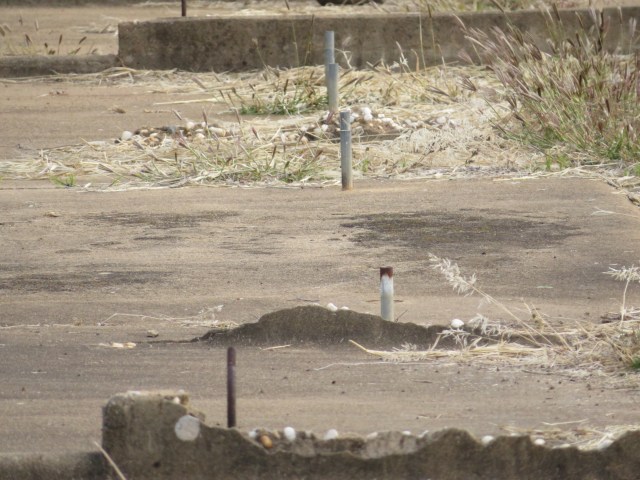
This used to be the Italian mess hut:
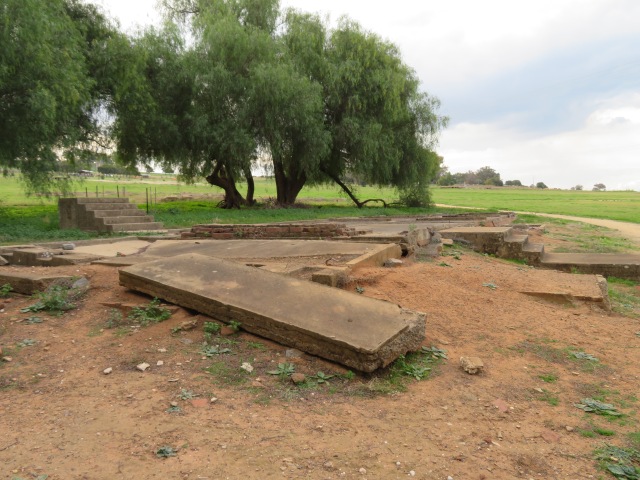
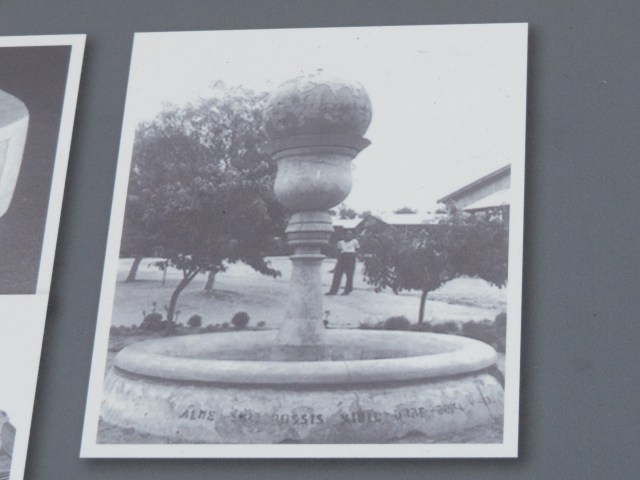
The concrete stairs are still intact. They also had some old fountains, protected by fences:


They were made by the Italian POWs, and this is what one of them used to look like:
It was a park, so you didn’t have to stick to the paths, but there were places where wandering off them wouldn’t have been a good idea:
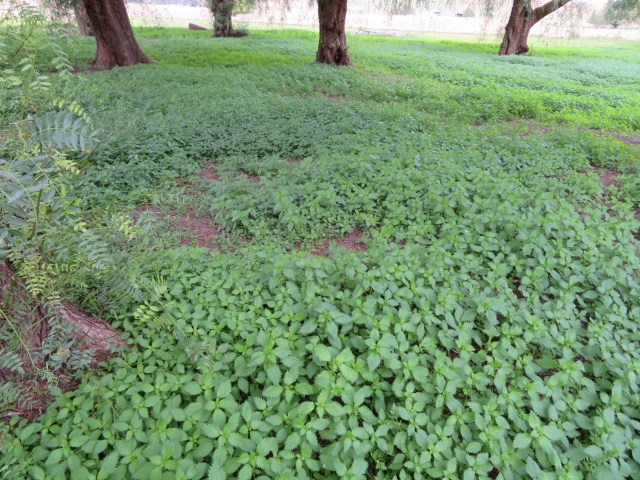
Yeah, those are all stinging nettles. I like being not-stung, thanks very much (in fact, I like it so much I try to be not-stung all the time), and stuck to the path. There were quite a few buildings around here, and another with intact stairs:
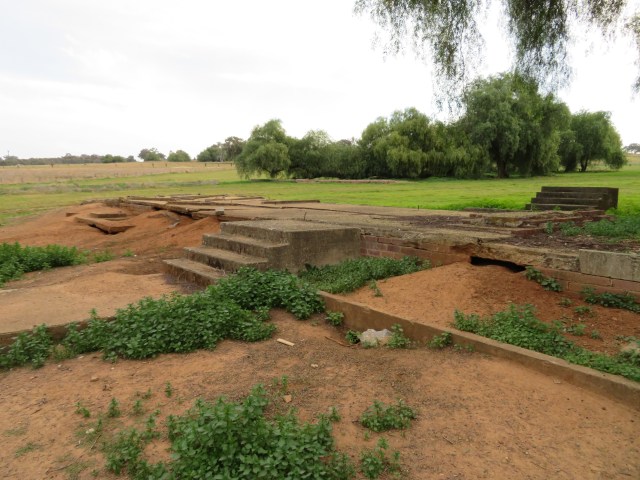
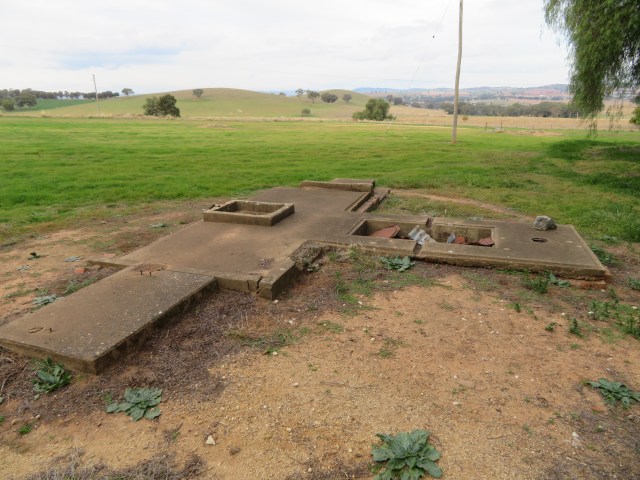
There wasn’t really a good indication of what these buildings were, with the exception of the mess hut, which I think is a shame. It would have been nice to have a sign telling me what this was:
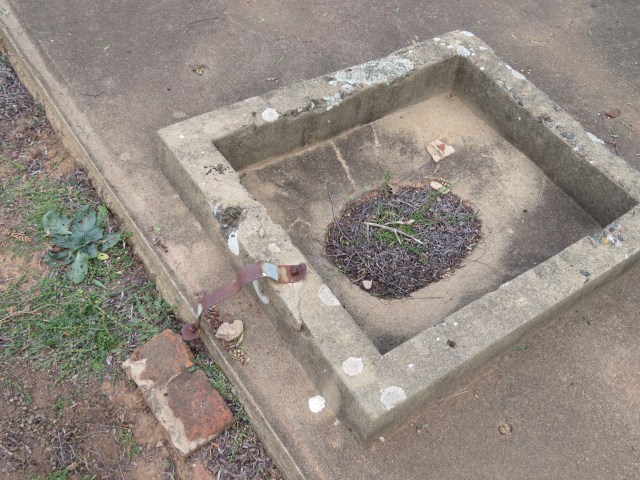
Because I don’t know enough about building architecture to be able to figure it out. A toilet? A sink? None of the above?
There were some fairy wrens (I’m not sure what kind), hopping around in the undergrowth beneath the trees. I took a video of two of them:
As you can see, one was female and one seems to be a juvenile male, and there’s not a lot to distinguish between species from them. You really need the adult males to be able to figure it out (or at least, I do. I’m sure some ornithologists can probably suss it out jsut from this, but I’m not that dedicated).
This was chosen as the site of the POW camp because it was isolated – only close to a small town, in the middle of farmland, and very far from the coast. I could hear sheep while I was walking through the park, and I used my camera to zoom in on them:
Pretty good video for being on the other side of the valley. You may notice there are two figures that don’t look like sheep:
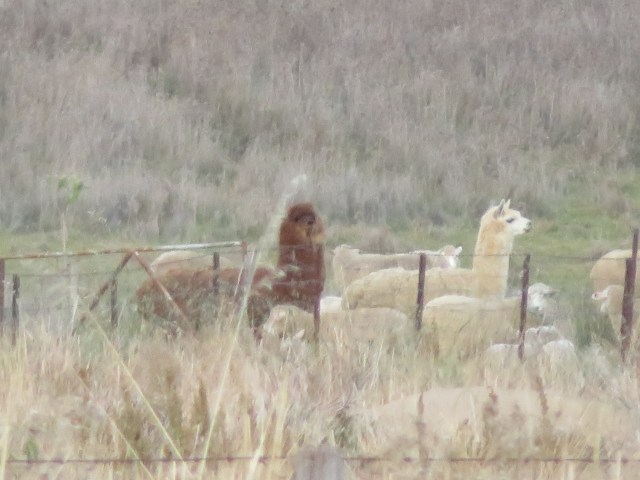
They are llamas! Given that there’s only two of them, I suspect these are guard llamas, used to protect the flock against predators. Which sounds strange, but llamas will bond to the sheep and protect them from feral dogs, dingoes, and foxes – they tend to be much more aggressive than sheep, and while they might not fare very well against a pack of dingoes, they make it difficult enough that the dingoes go back to their usual prey of other wild animals.
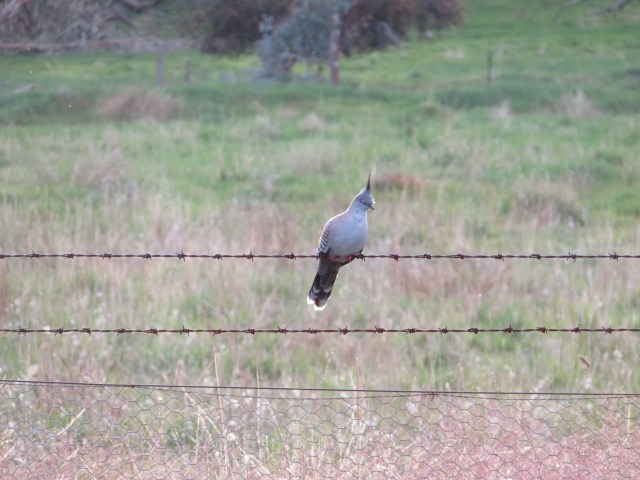
I also spotted a crested pigeon, casually perched on a barbed wire fence, between the barbs:
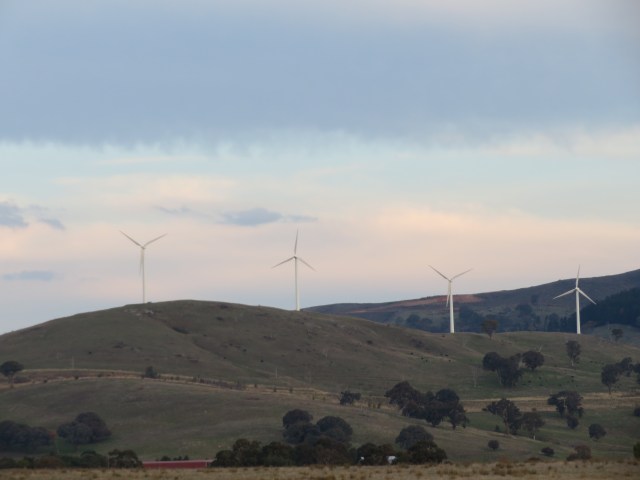
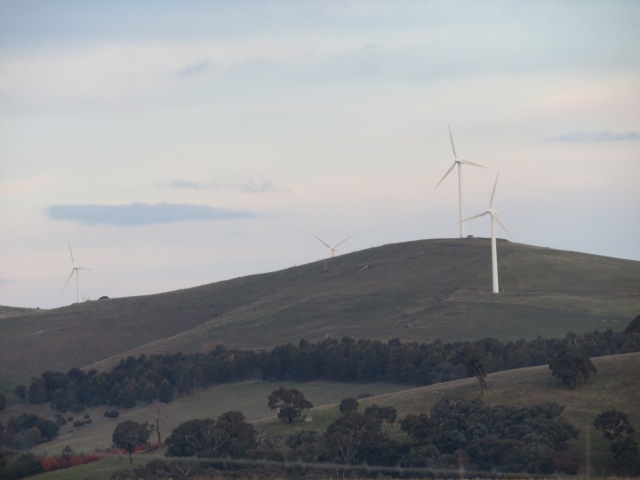
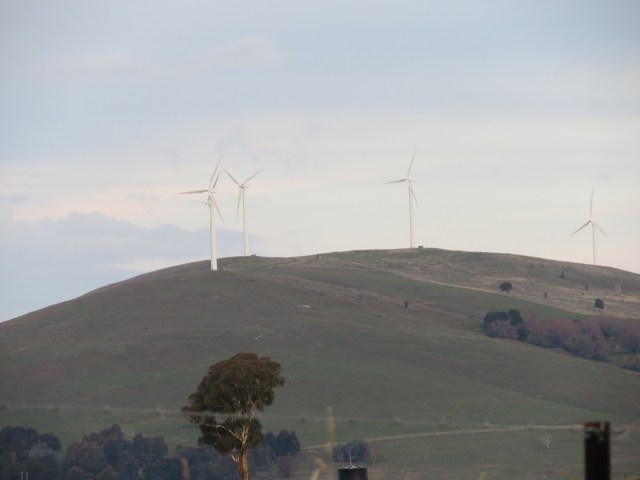
Then it was time to head back to Turtle Shell. I’d passed a wind farm on the way, and this time I stopped to get some pictures:
And a video:
I’ve never understood why people call them an eyesore. Compared to huge powerplants belching out black smoke, I actually find them rather soothing. Something about repetitive motion does it to all of us, I guess (except in a boat or car, then it’s liable to make us sick).
I also took a picture of the sky before I left:
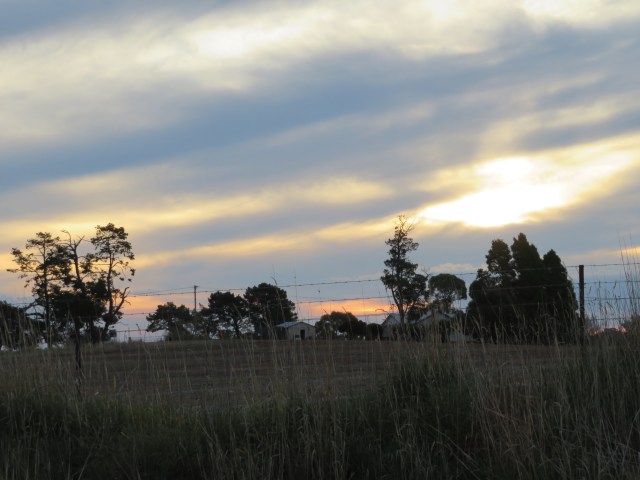
Not an actual sunset, but I liked the light orange peeking between the clouds, like a watercolour. And I just thought you guys should know that at this point, autumn is well underway in Orange:
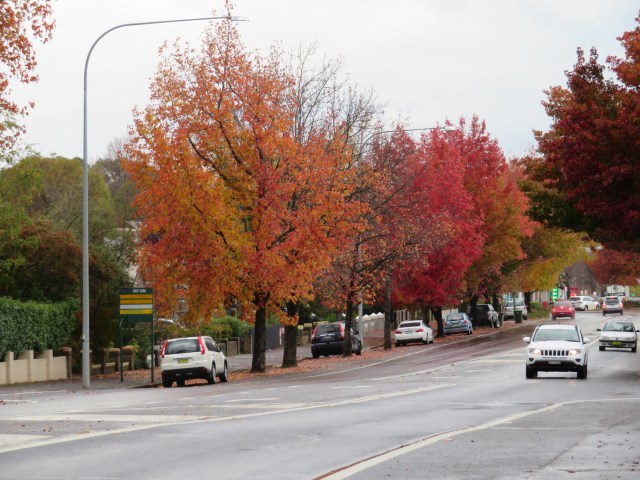
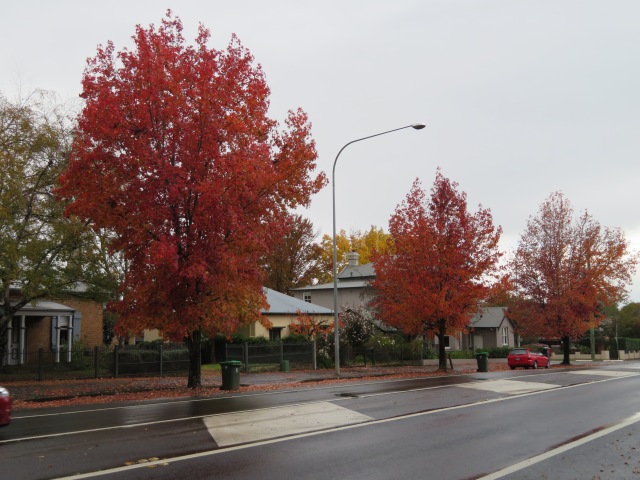
 Jenny's Adventures
Beautiful. Love your wisdom “I try to be not-stung all the time”
LikeLike