Dundullimal is a colonial slab hut, believed to be the oldest slab house in Australia.
But first, the sunset from yesterday:
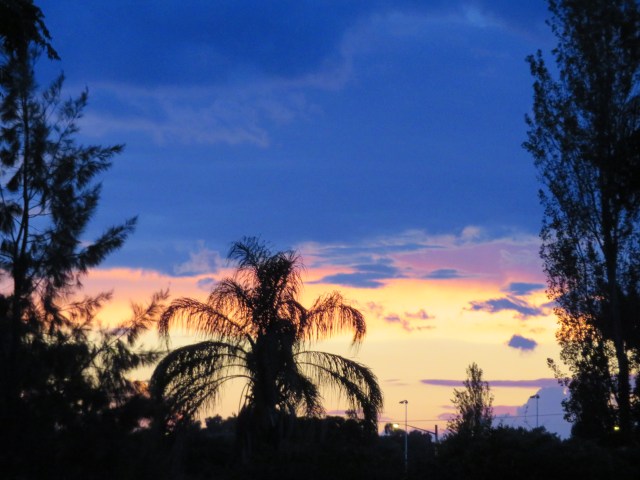
It was pretty stormy, which made for lots of cloud cover and some good colours.
The homestead is along the same road as the zoo, which I’ll be checking out as soon as the weather settles down. Built around 1840, Dundullimal survived so long largely because it was expanded and improved over time, instead of being knocked down to make way for a stone or brick house. This is the timeline:
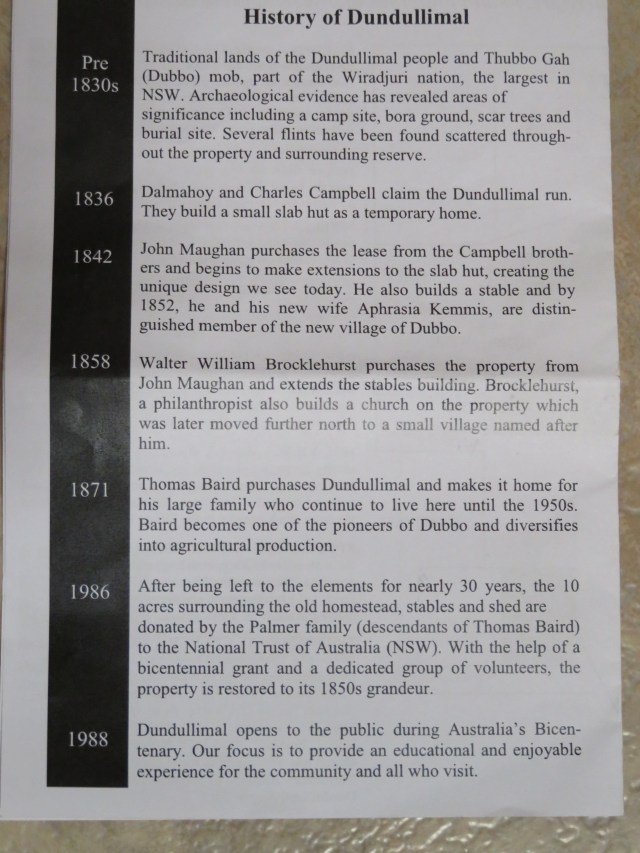
There’s a growing collection of photos that I took purely so I wouldn’t have to write stuff out. Anyway, the eleven acres around the homestead were donated, but most of the property is still a working farm, running both sheep and cattle for meat, alongside some crops. I’m assuming they also have a more modern house to live in.
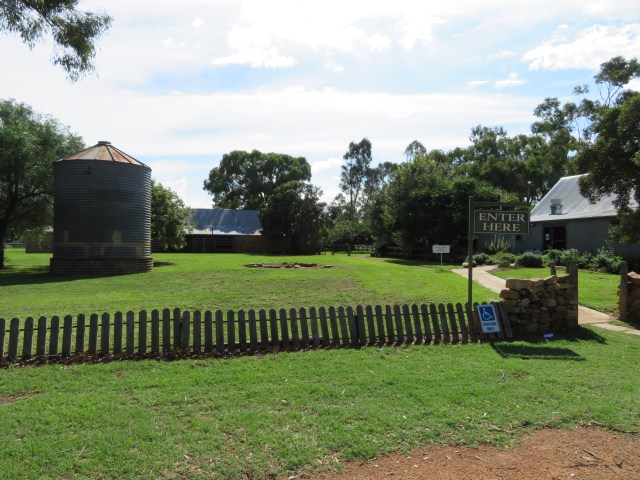
The entrance:
There were a lot of birds hanging around – check out these straw-necked ibis and galahs foraging in a field (extra credit if you spot the magpie):
Two red-browed finches:
And a female fairywren of indeterminate species:
Without the males around, it’s impossible to tell these ladies apart. Well, it’s probably possible, but takes more knowledge than I have or can easily access via internet, so I’m going to say it’s impossible.
To get to the house, I passed the old silo:
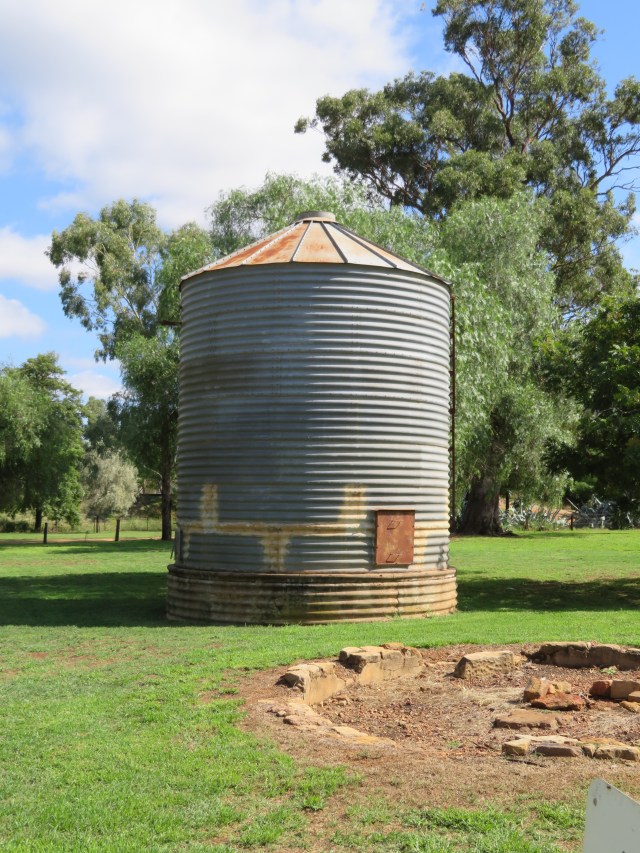
And the old sump:
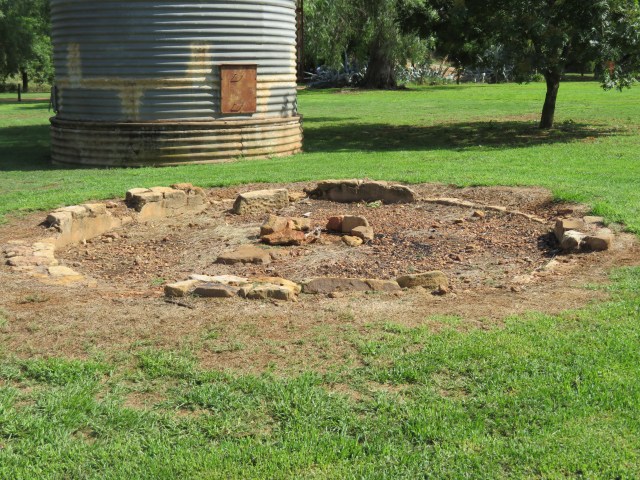
This used to be the machinery shed:

Now it’s the reception and café! I was tempted to check it out, but I’m trying to save money, so I’ll be having a lunch of classic peanut butter sandwiches when I get back to Turtle Shell.
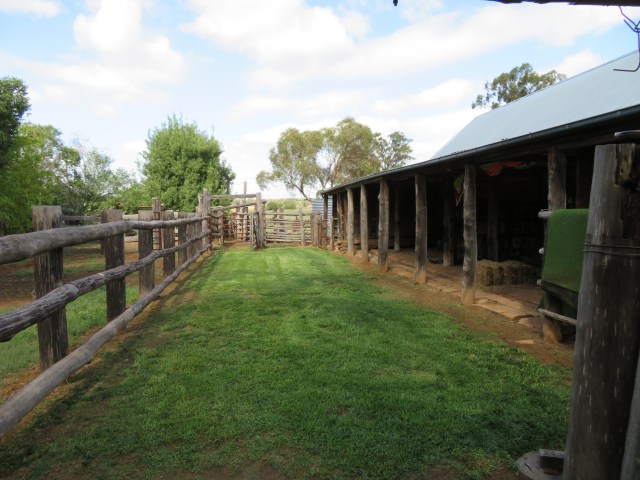
The stockyards:
I took a bit of a circuitous route to the house, passing some of the other attractions on the grounds. First up, the killing tree:
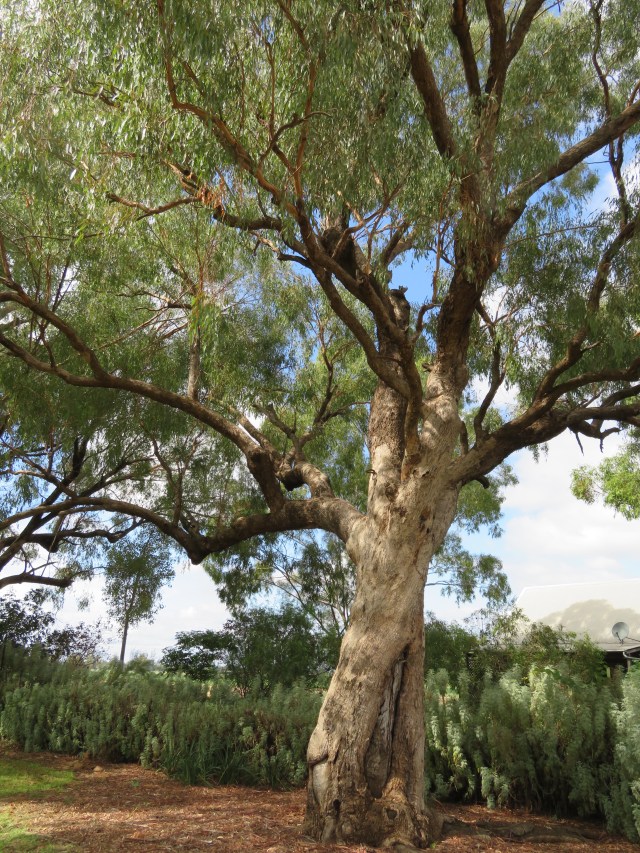
Yes, that was what it was called and, no, it’s not nearly as sinister as it sounds. Animals carcasses were hung from this tree, like this:
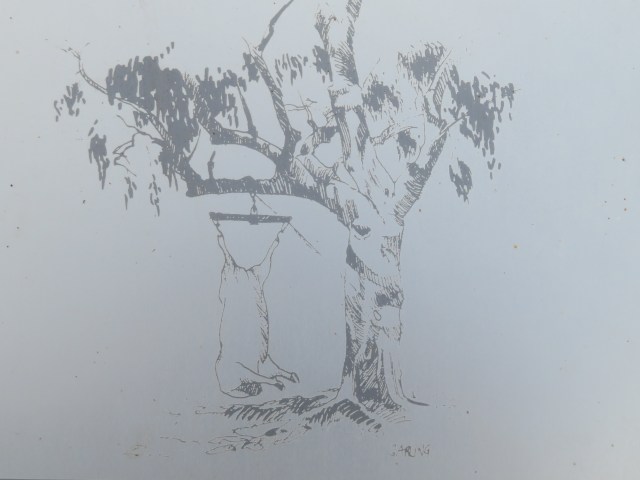
For ease of bleeding/gutting/skinning, etc. In a change of tone, it was right next to this church:
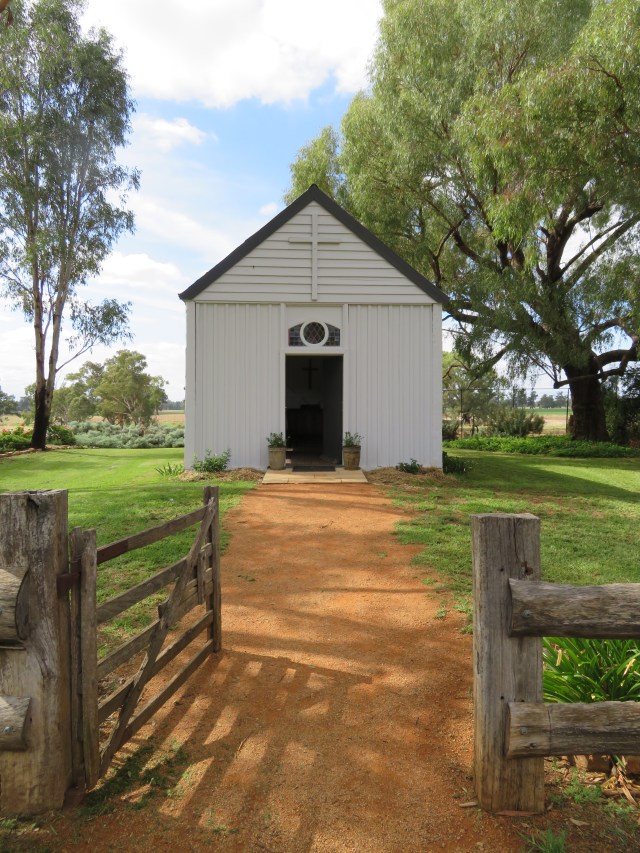
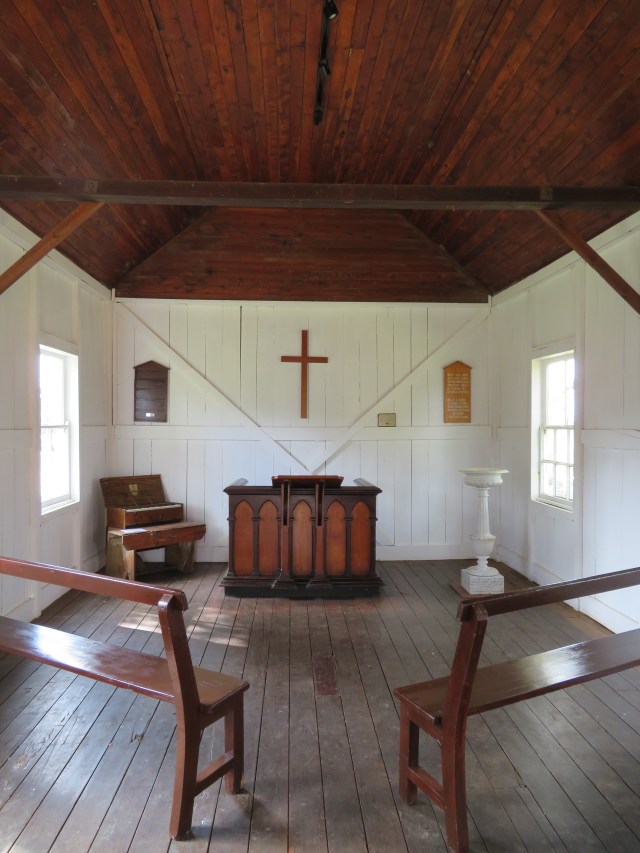
This wasn’t part of the original property – it was from Timbrebongie, built in 1872, and was moved to Buddah in 1910. It became the property of the National Trust and moved to its current location in 2009.
This well was part of the property, though:
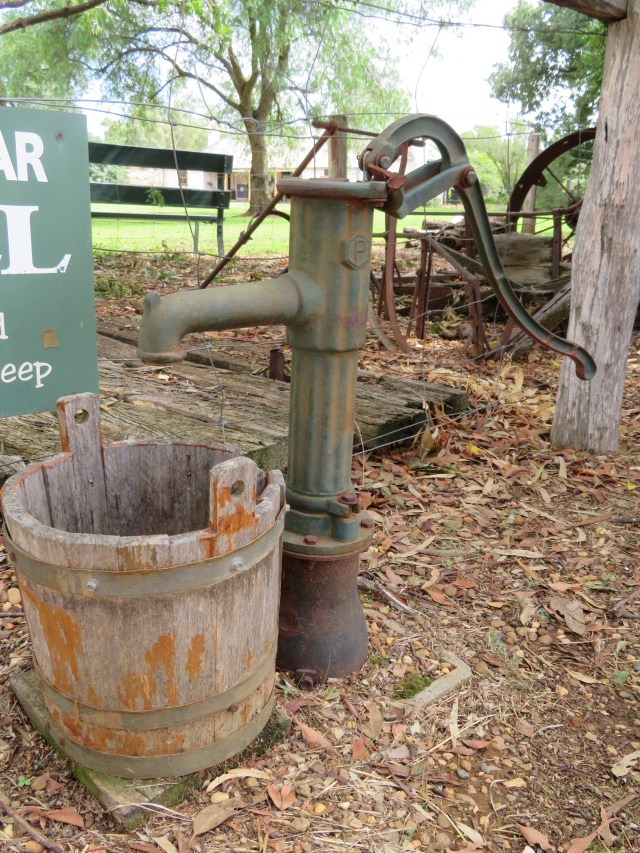
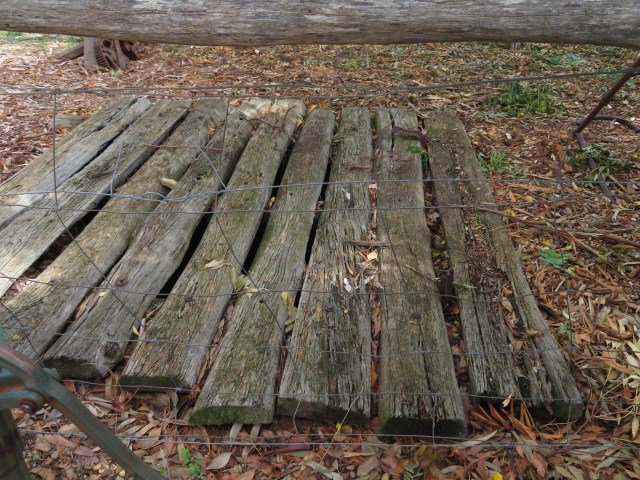
The warning sign gets right to the point:
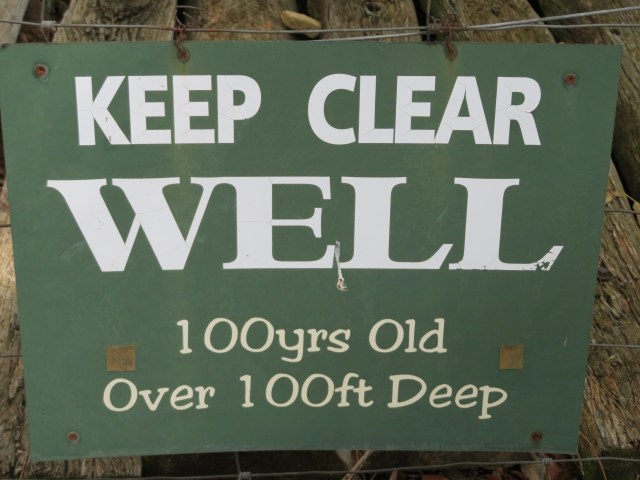
So behave, or you’ll be thrown down it!
Old farm machinery:
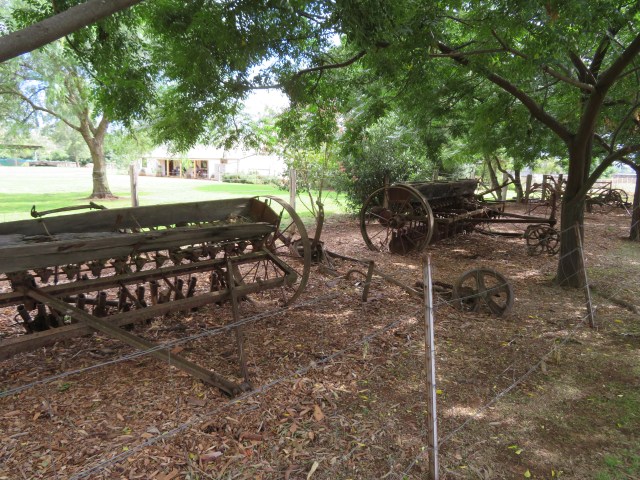
The privy:
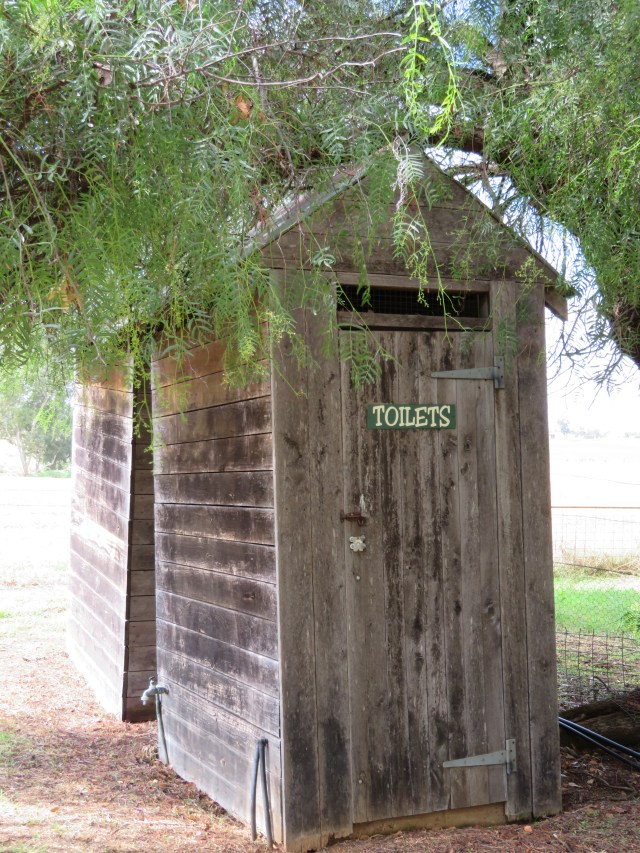
Technically, it’s still functional, but with a flushing toilet in the café, I doubt anyone uses this one often.
A peppercorn tree near the privy:

These trees were usually planted near cesspits because they actually thrive on raw sewage, so they help to lower the level of the waste. I don’t know if this was widespread practice, or just a few people figured this out and decided to keep the secret, so only they would have good privies.
The windmill:
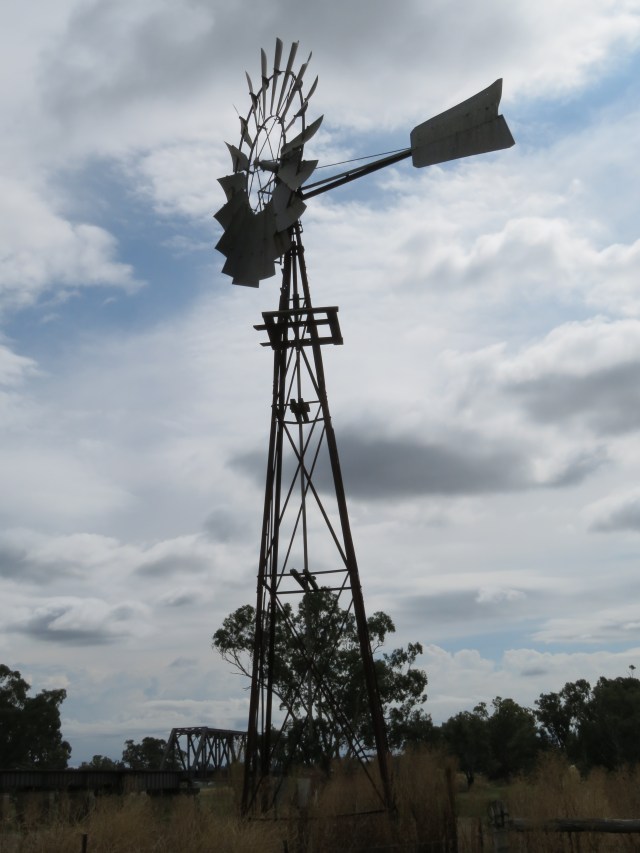
It was a windy day, so I took some video:
Perhaps not my most interesting video, but I find it strangely soothing.
They had a small garden going:


With some flowers:


I was in the garden when I saw something fly into one of the bushes, and the small birds inside suddenly set up a racket. I started filming, just in case, and caught a few seconds of a hawk as it took off:
Usually, I’d identify it for you, but with only a second of its back, there’s nothing I really do. I’m not sure if it actually got one of the little birds or not, but it flew off into the trees and caused a racket:
I have no idea what’s going on there, but from the sounds of it, no one’s happy about it. Maybe the hawk did get one of the birds, and is busy eating it while the others birds scream the avian equivalent of “oh, the humanity!” Oh, the avanity?
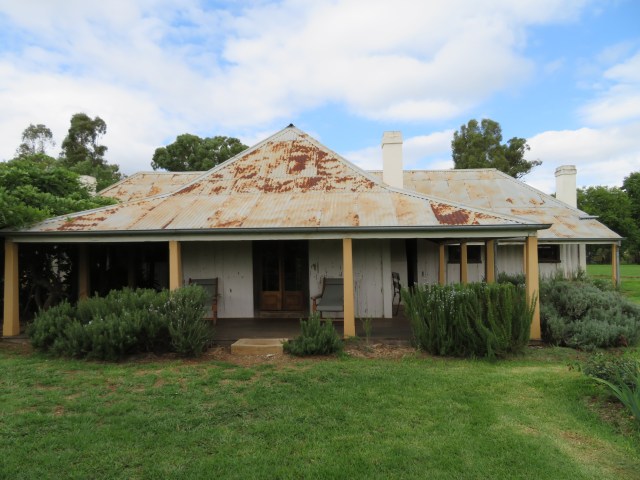
The house:

From the back:
It used to look more like this:
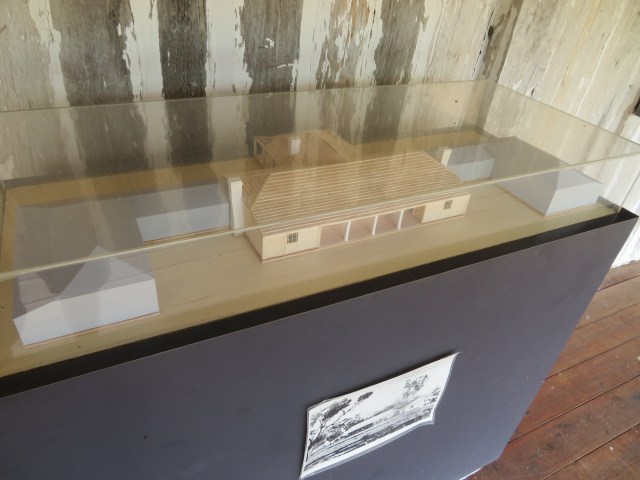
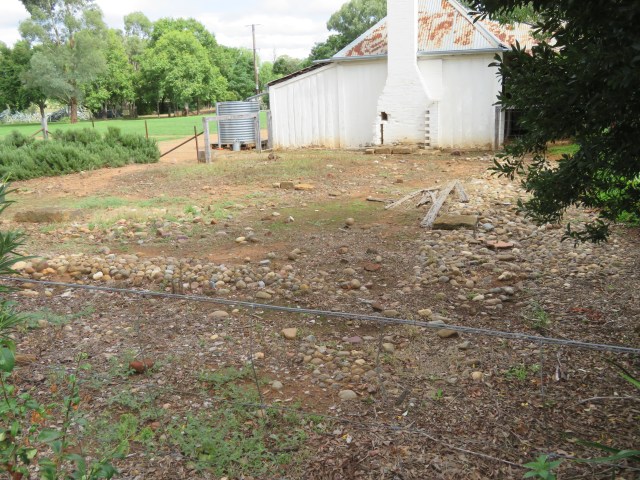
Where the wooden part is what was preserved, and the grey bits are what was knocked down. The main living quarters are still around, but this is where the kitchen used to be:
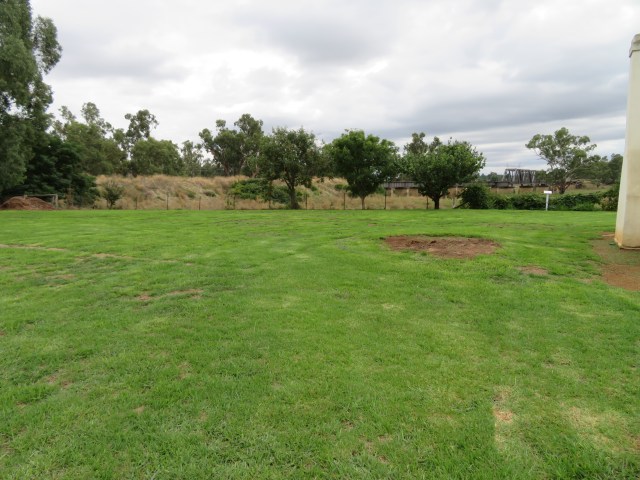
On the other side, you can sort of see an outline in the grass where the servant quarters were:
There was an audio tour as well. Okay, it was a collection of buttons in various rooms than you pressed to get a narration, but it was pretty good. I recorded them for the edification of all – this is the first bit:
A photo of the stranger’s room:
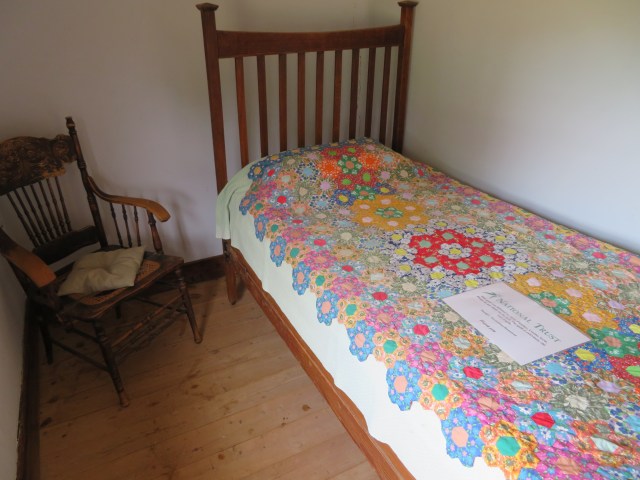
Basically, this was a small room on the outside of the house for overnight guests to sleep – the kind who were travelling between towns, and would have to stay at properties because the settlements had several days’ travel between them.
A close-up of the old quilt:

Side-view of the house:
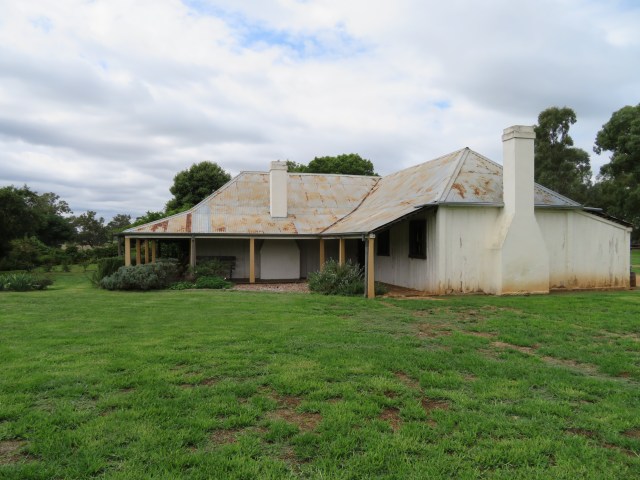
Seems weird to think that most of the corrugated iron is over a hundred years old. No wonder they used it to build so many things – it really lasts!
Inside the house, I took a brief detour into the second bedroom:
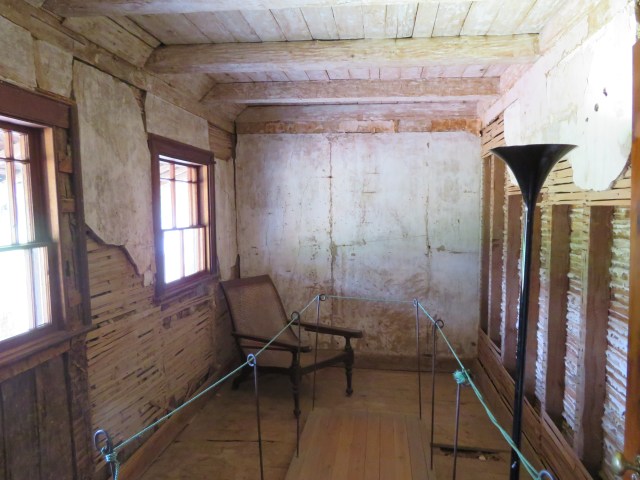
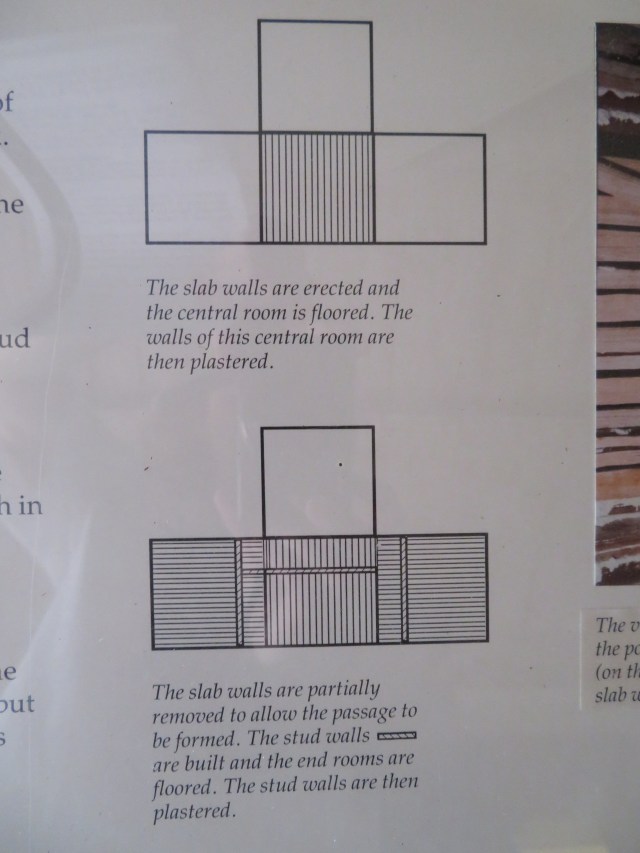
It’s been left in its original condition, to show the house’s status before the restoration work. There are also suggestions that the room was bigger before the house had a hallway added – you see how the stud wall intersects the plastered wall?
This is what they think happened:
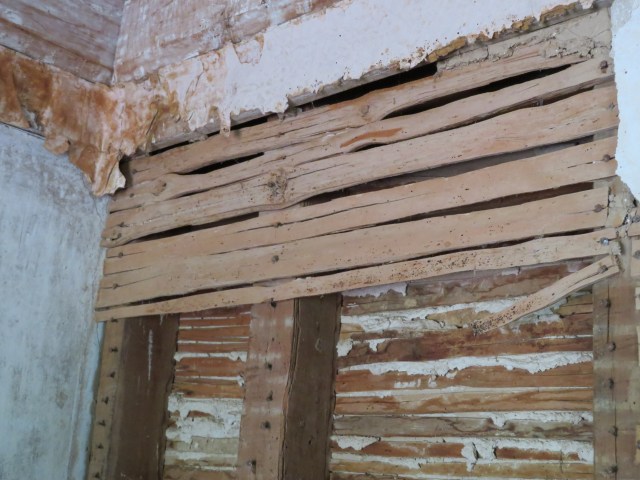
I thought it was interesting the way I could see the layers in the decaying wall:
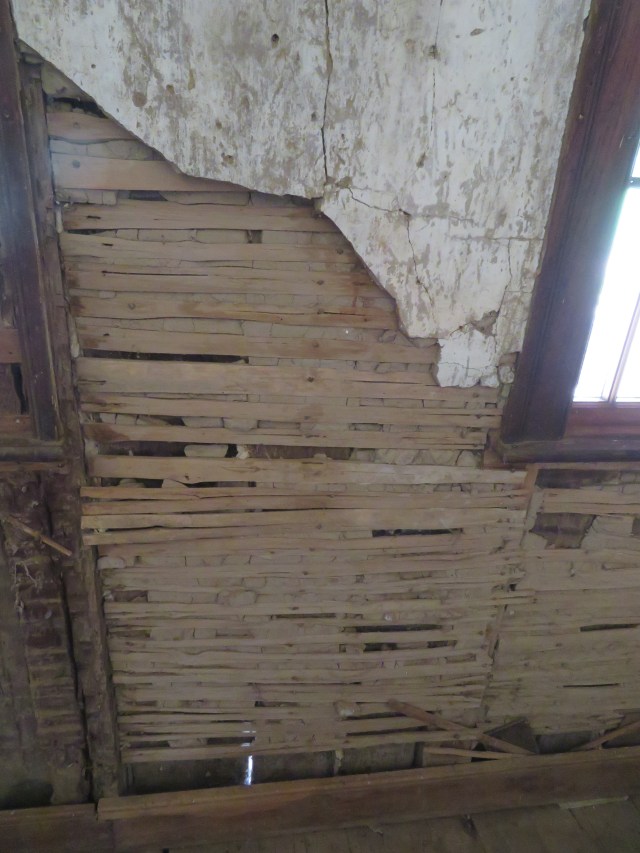
You can see the slabs – with light peeking through – at the bottom, the ‘stud’ part of the stud wall, and the plaster on top of it all.
The hallway:
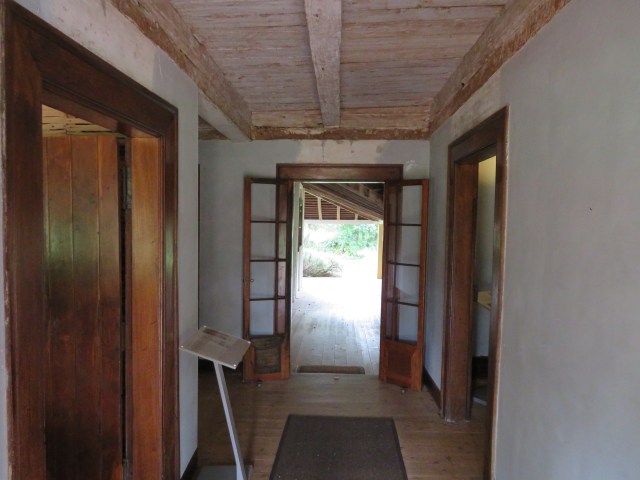
Tour, part two – aren’t you guys glad I recorded this for you?
Photo of the bedroom:
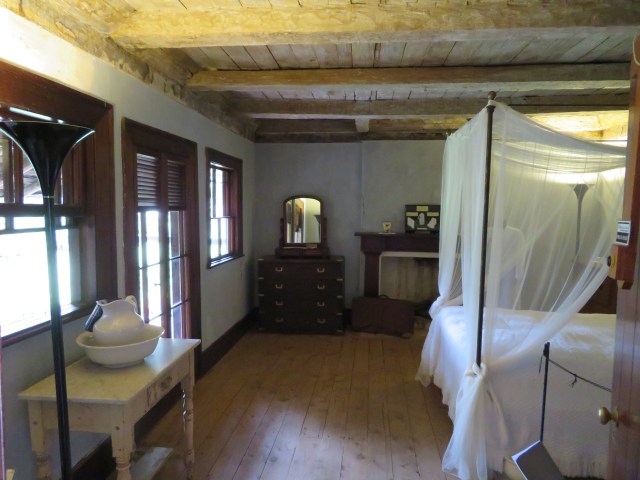
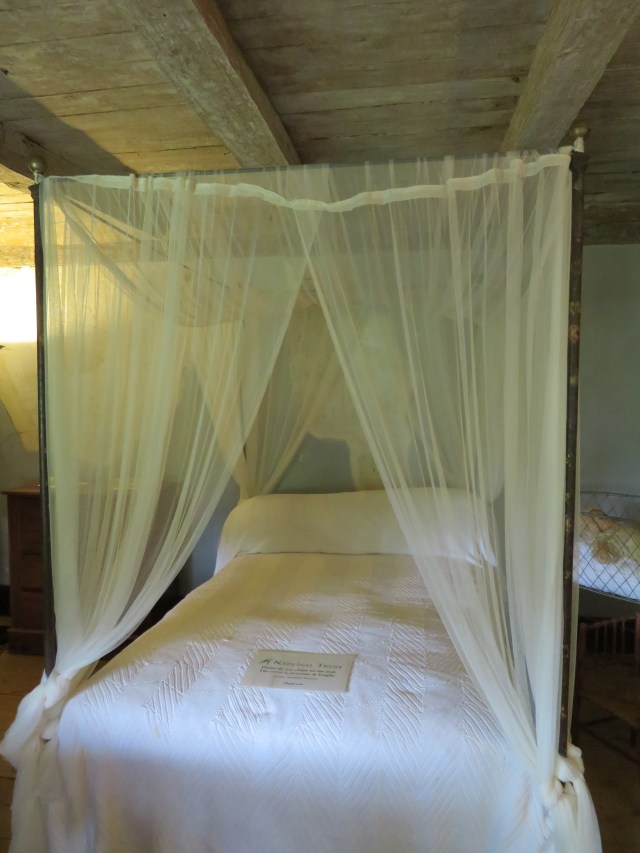
Bed:
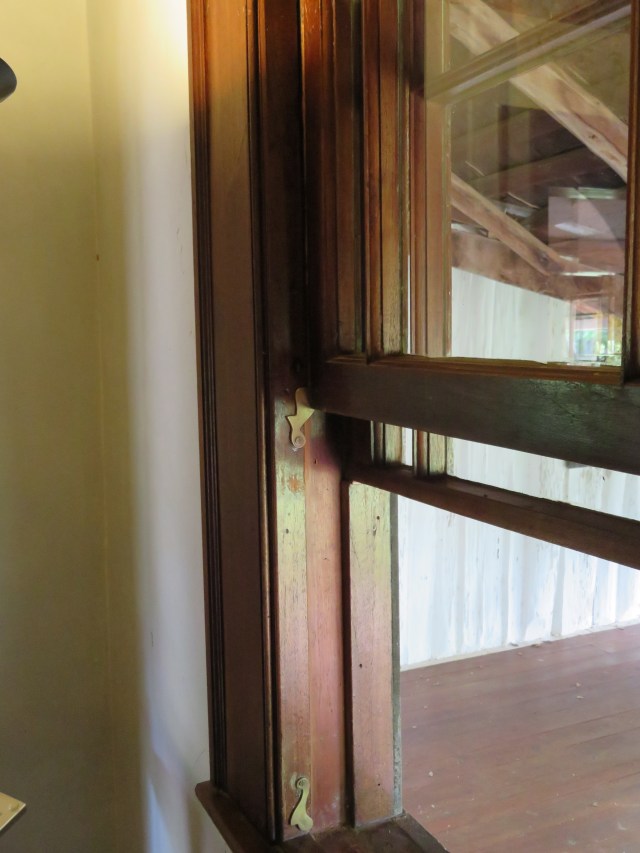
A closer look at those window catches the guy was talking about:
The metal cradle – complete with fake baby:
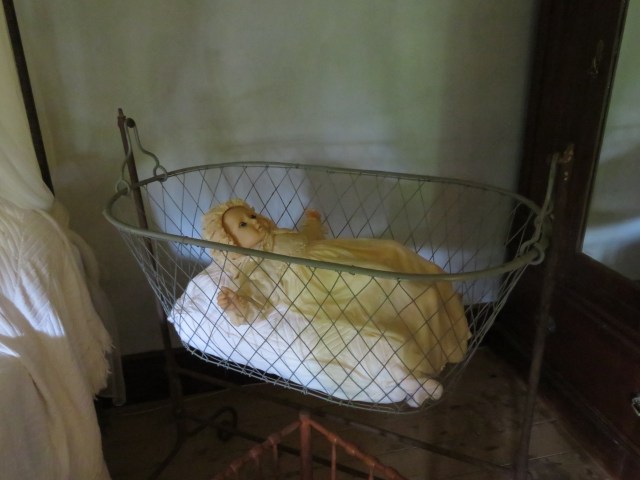
I find something about that unsettling. What is it about dolls that can make them so creepy? Is it the way they’re meant to imitate humans – some mutated version of the Uncanny Valley effect?
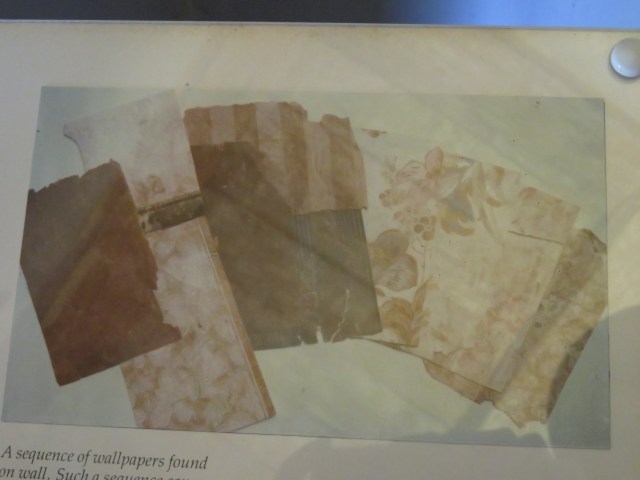
According to the informative signs, a sequence of 13 wallpapers was found in this room during restoration – here are a few of them:
From the verandah:
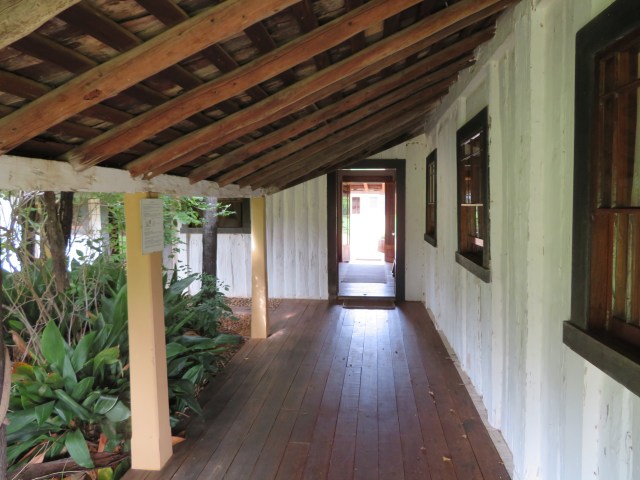
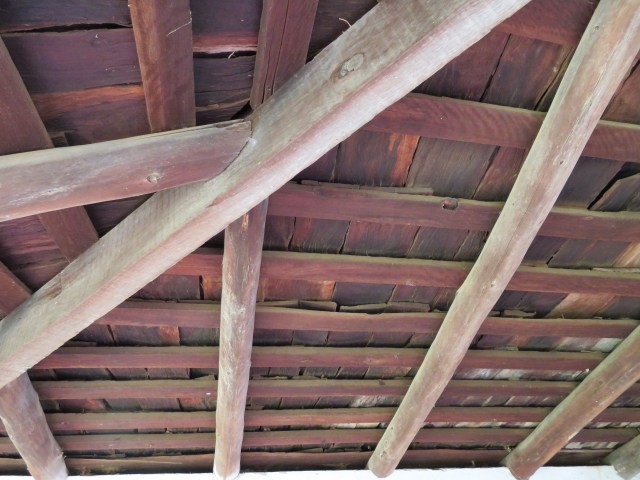
The roof:
Outside the bedroom:
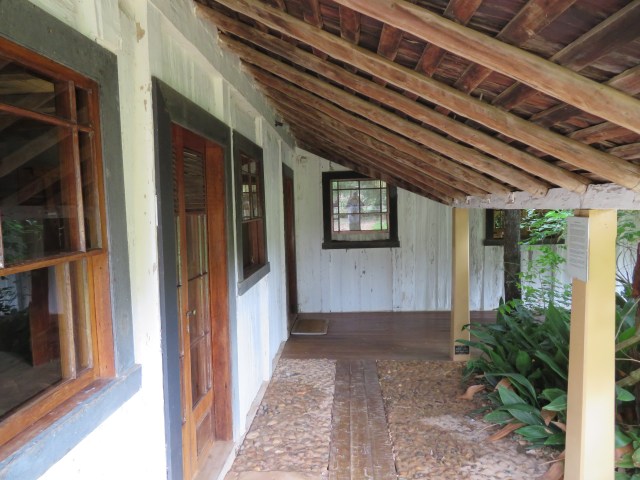
As you can see, they had cobblestones:

Some people used cobblestone courtyards as a form of air-conditioning – the idea was to throw a bucket of water on it, and the irregularity of the cobblestones meant the water would evaporate slowly, cooling the air around it. I thought that was pretty clever. I won’t be trading my electronic air-con in anytime soon, though.
The hallway:

Part three of the tour (enjoy me wandering around a room and trying to keep up with the points of interest in the narration):
Photo of the drawing room:
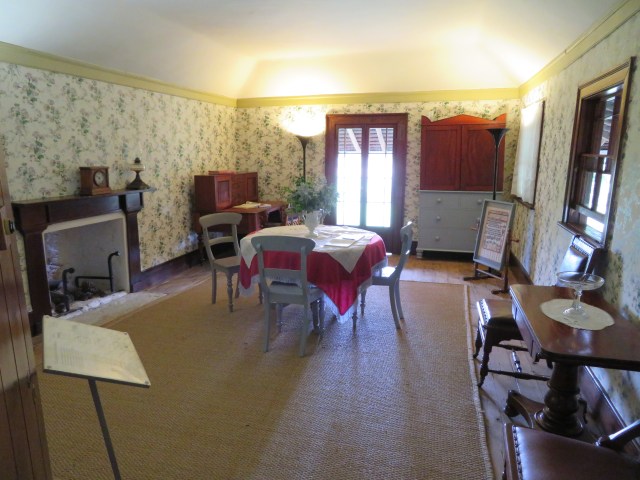
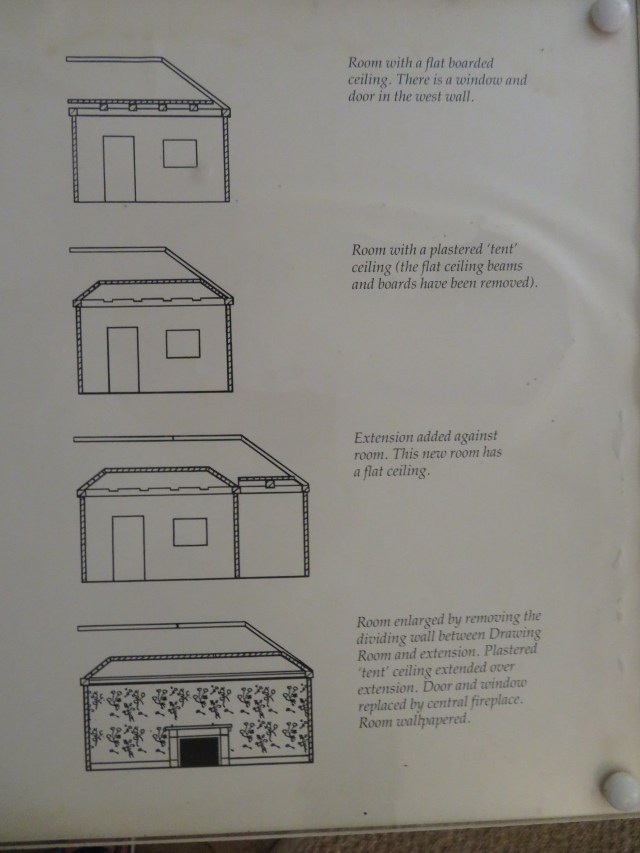
During the restoration, alternations in the walls and ceilings showed that this room went through a lot of changes. They’re not sure when it happened, exactly, but this is what was done:
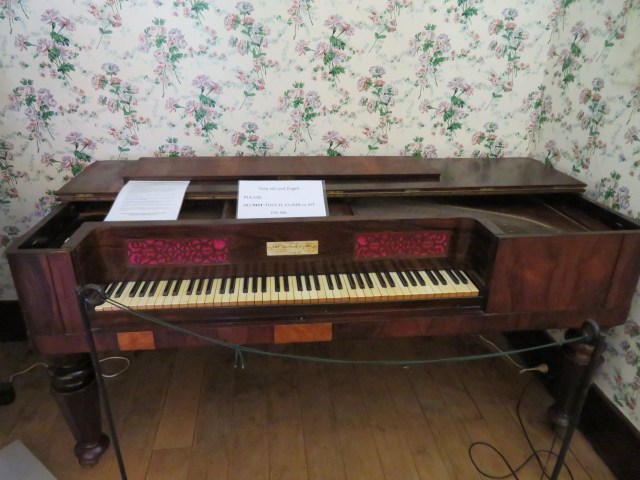
The very old piano – seriously, this was made in the 1830s:
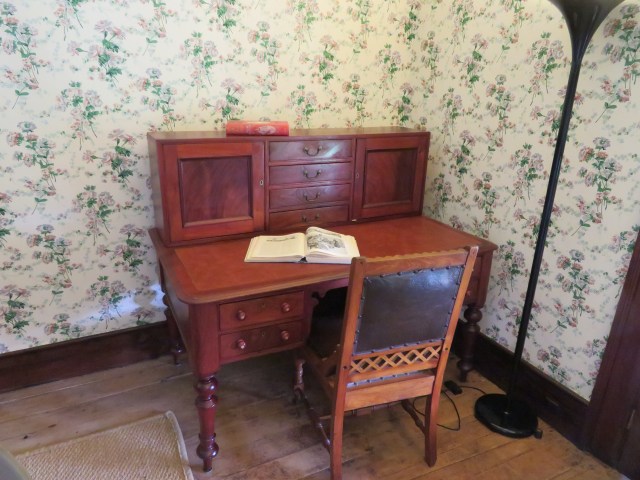
The desk:
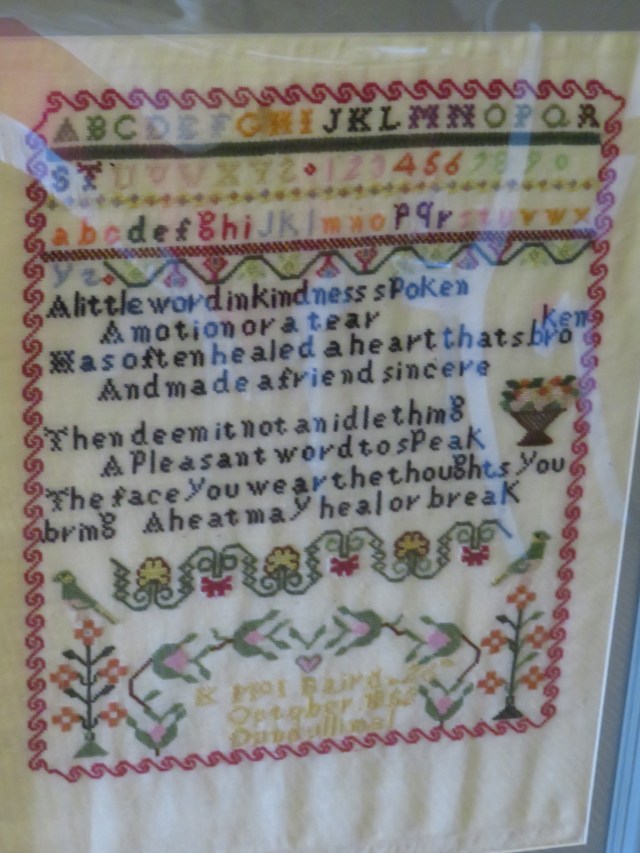
Close-up of that embroidery:
I’m not sure if this was the pantry or where they stored the crockery:
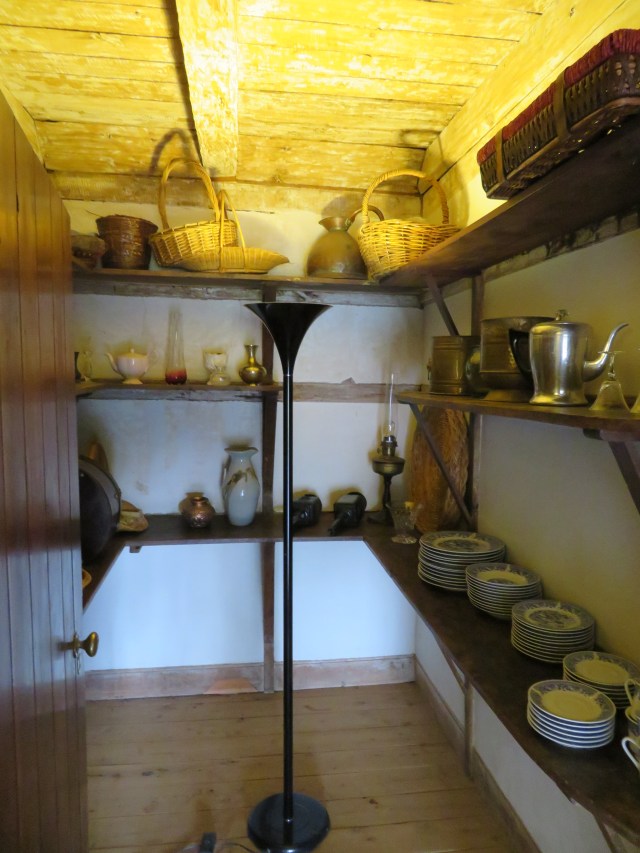
There were no signs and the guide wasn’t helpful, so it shall remain a mystery.
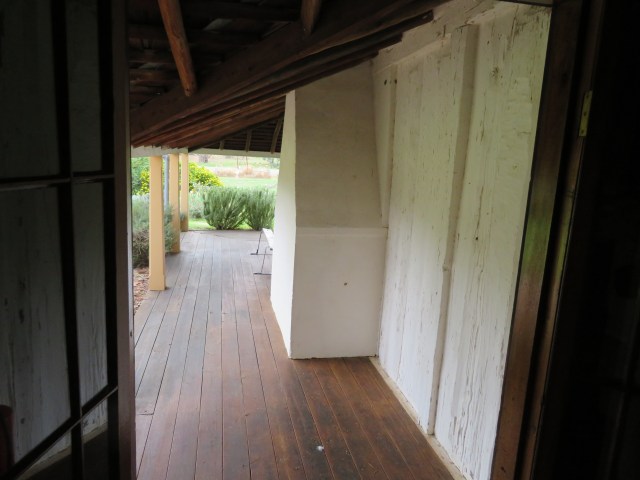
Before the dining room, there was a door to the verandah –the fireplace and chimney for the drawing room really stick out:
Part four of the tour, the oddly truncated one:
I’m not the only one who feels like there should be more, right? I kept expecting documentary-guy, our old friend from the past three audio spots, to come on, but I played it again twice, and he’s nowhere to be heard.
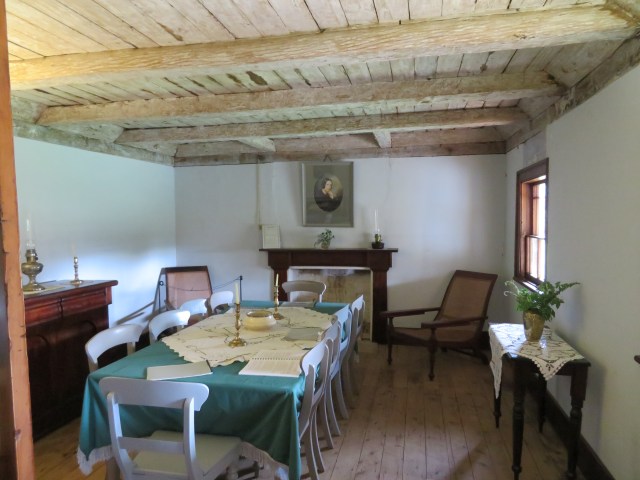
Photo of the room:
Photographs of John Maughan and his wife Aphrasia:

These were the people who decided they weren’t going to bother with a stone house when they had a perfectly good slab house that just needed some fancying up.
Outside the dining room:
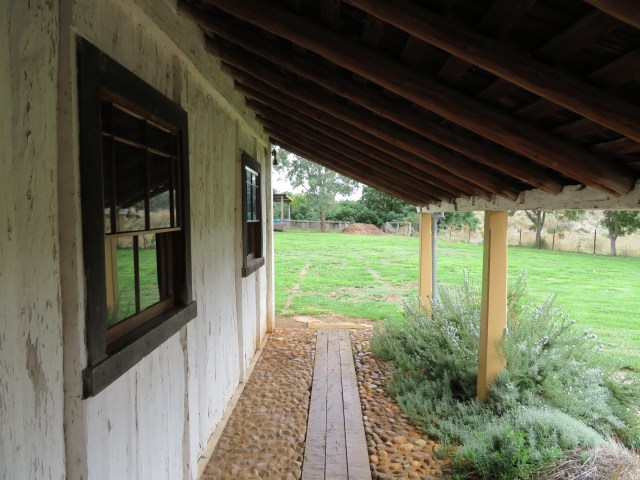
More cobblestone air-con! Also a random bell:
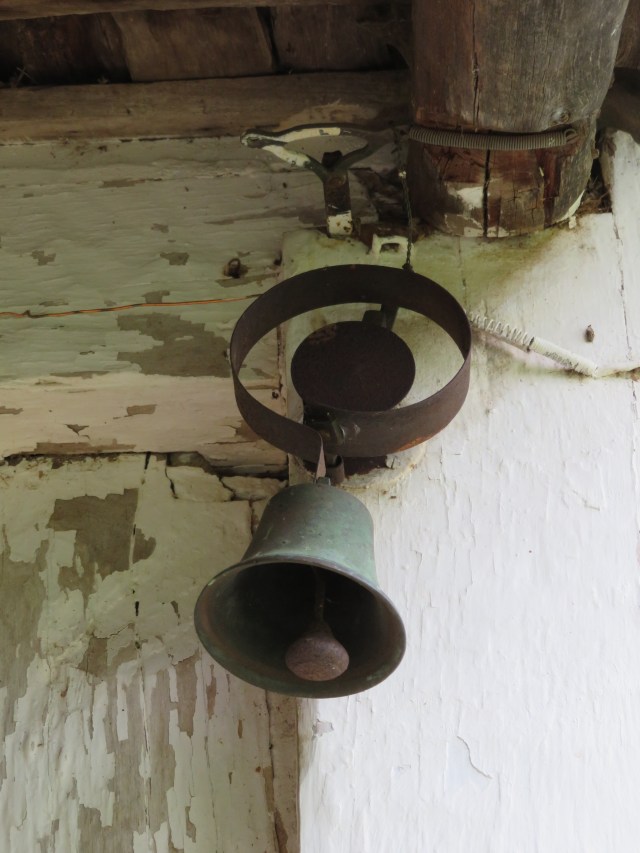
Might have been used as a dinner bell, a way of calling everyone in from the yard. At least, that’s all I can think of.
That stables were next up, but again, I took a detour on the way. Past this old well:
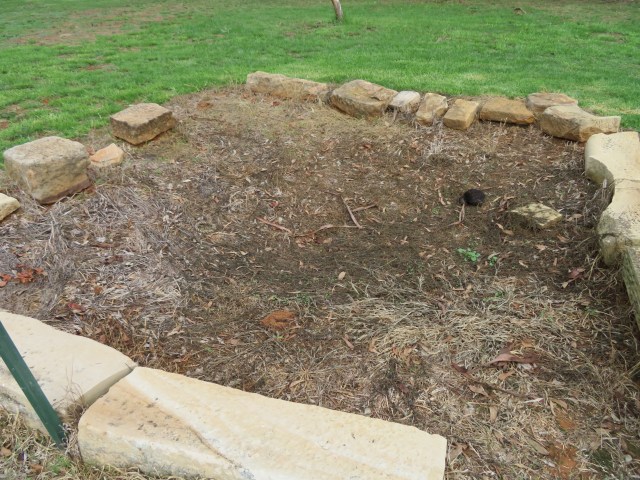
It was filled in, either due to poor water quality or because it became a gateway to an evil dimension. Television tells me the odds are fifty-fifty.
This was the children’s play area:

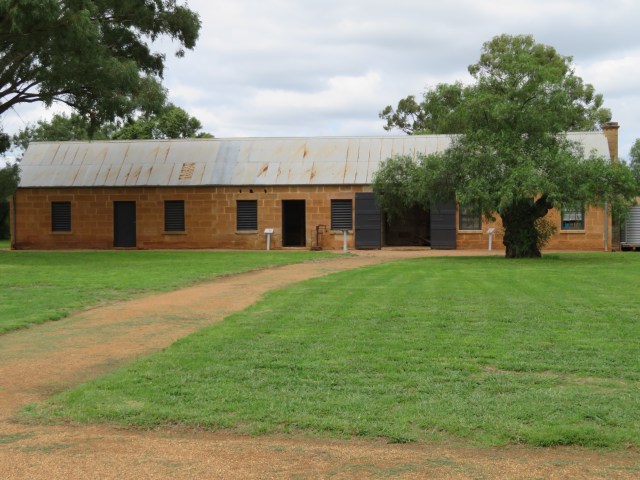
The sandstone stables (trying saying that five times fast):
The layout:
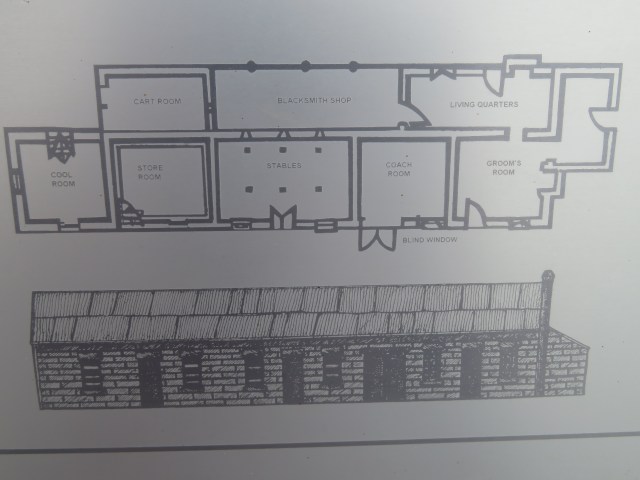
The coach room:
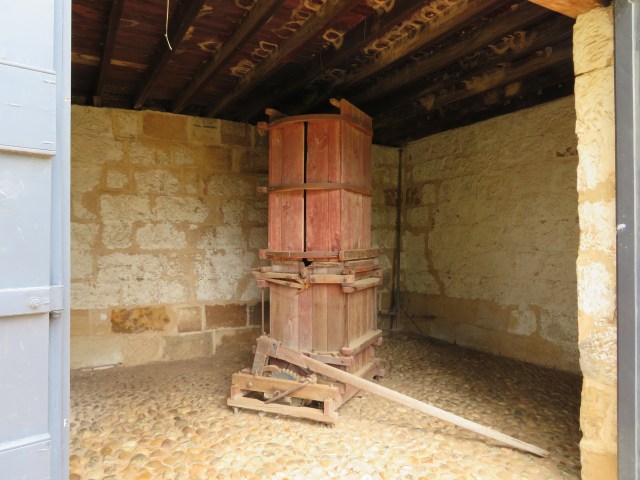
This was where they put the family carriage. There are no windows in the room, but a blind window was added outside to maintain architectural symmetry:
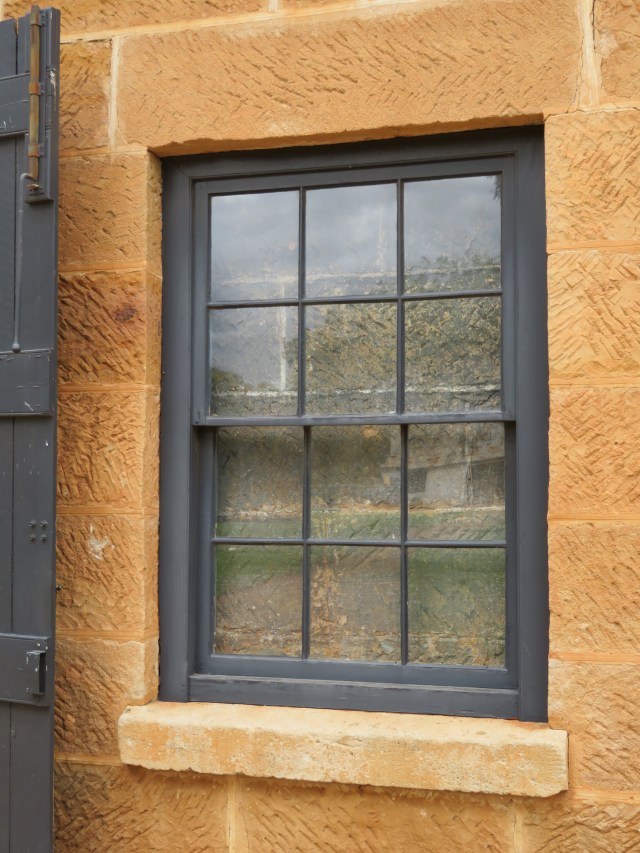
See how there’s just stone behind it? By itself, that actually looks really ominous, like it’s some kind of trap.
The stable itself:
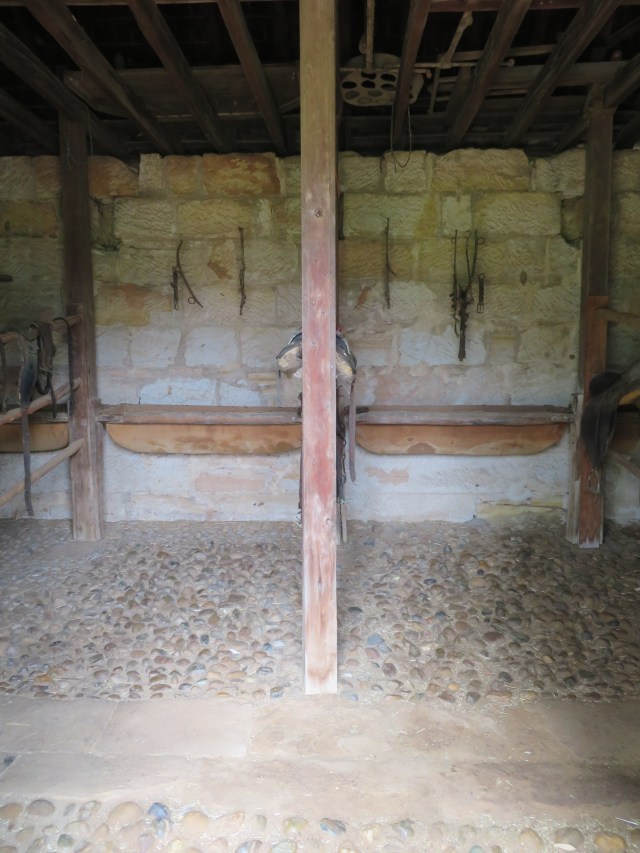
There were only four stalls, so only the favourite saddle and harness horses would live in here. There would been straw over the cobblestones, and the floor sloped towards the gutter you can see at the bottom of the photo. There were even air vents above the mangers:
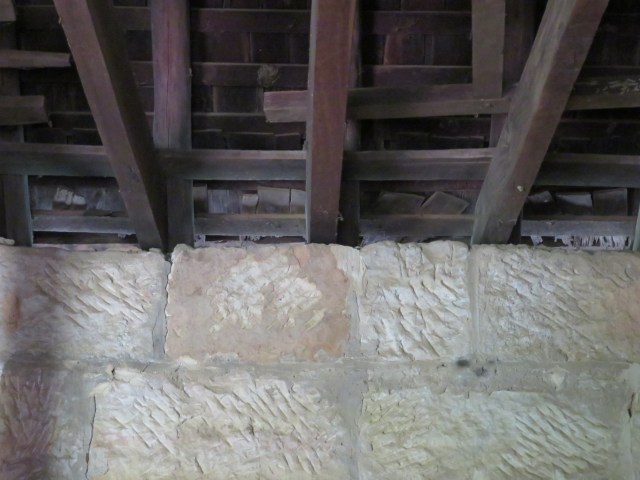
And slotted windows:
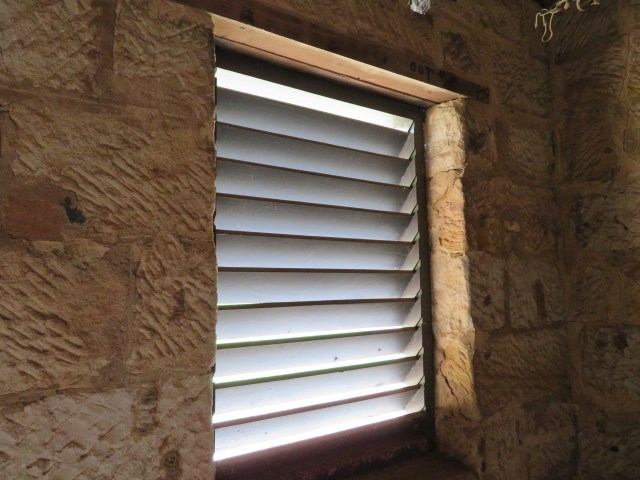
To encourage air circulation while still keeping the weather out. It looks like it would be a decent stable today – back then, it would have been pretty swanky!
These scales were outside the stable:
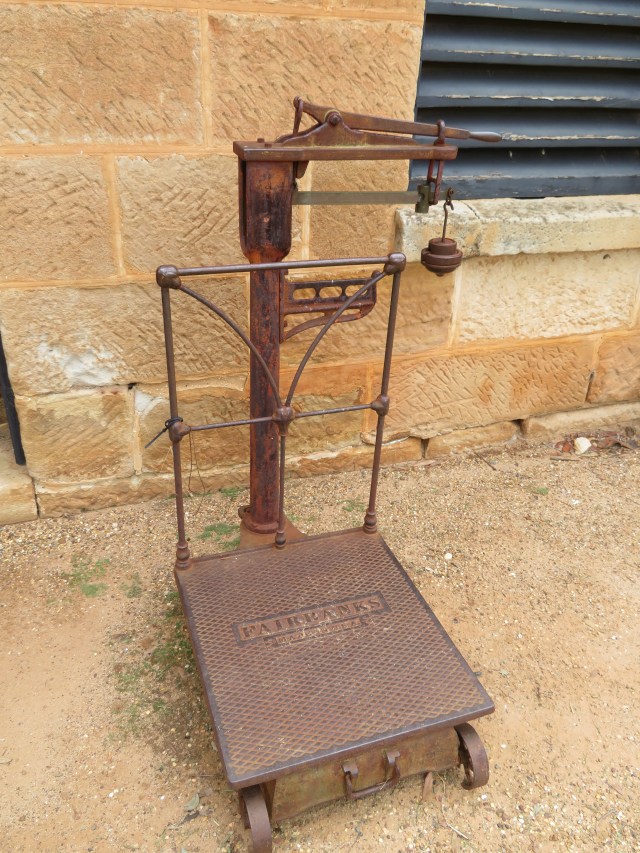
I’m not sure why. They were just there.
Around the other side:

A storeroom and a cart bay:
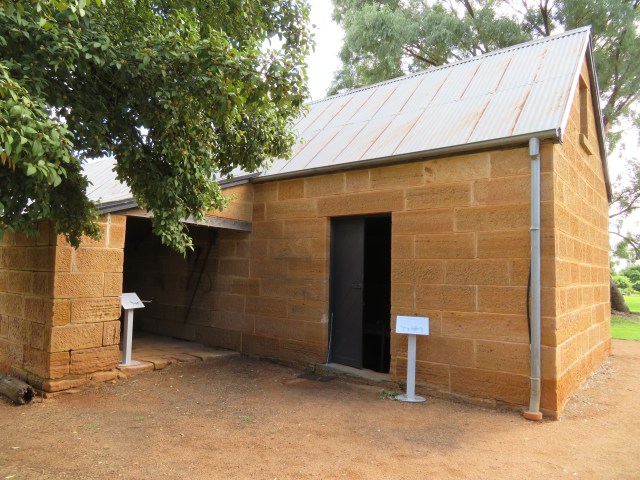
The storeroom, capable of holding up to 6 months of supplies:
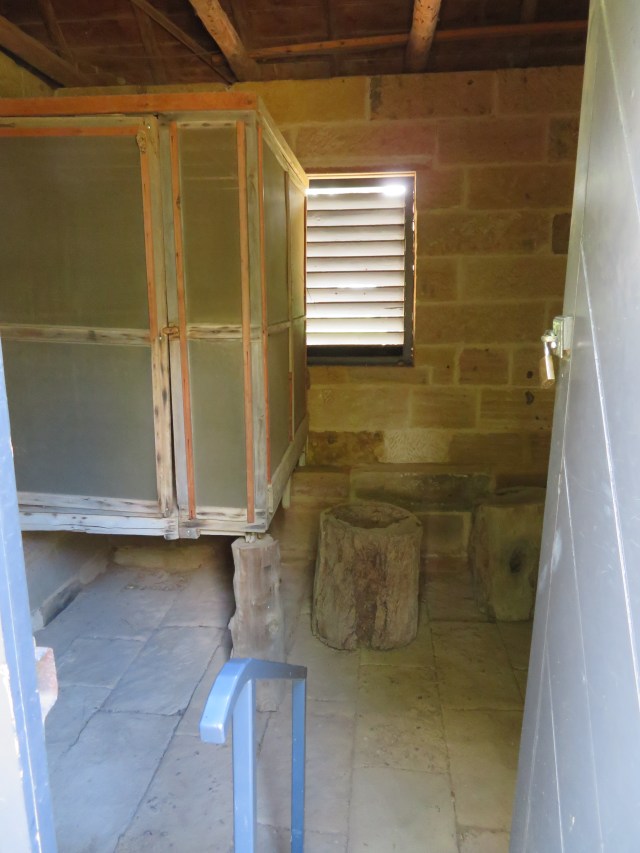
I’m not sure if you can tell in the photo, but it’s slightly sunken – just a few steps below ground level – to keep everything that much cooler.
The cart bay:
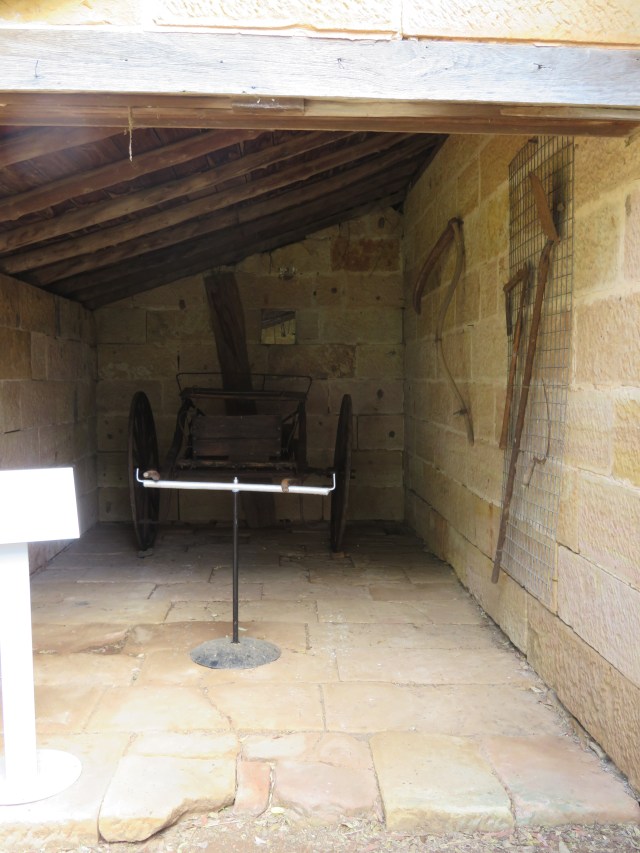
This was part of the extension added in 1862. As the number of inhabitants increased, the property would have needed another vehicle, likely smaller than the one stored in the coach room – basically, the Maughans were the equivalent of a ‘two-car family’.
The sulky:

The blacksmith:
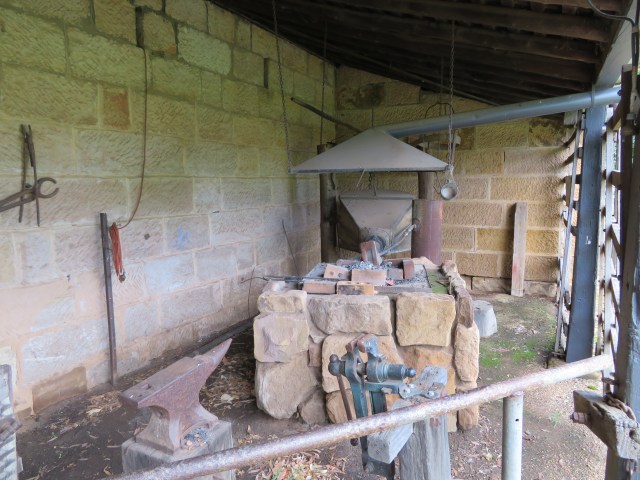
Most really large properties would have a blacksmith attached to them for maintenance, repairs, and shoeing horses. They’d also help in construction, making nails and reinforcing and the like.
The grooms’ living quarters:
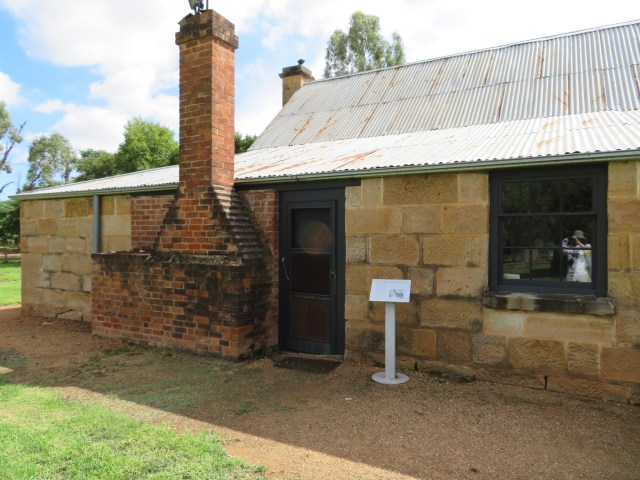
With bonus reflection of me in the window! You couldn’t go inside this part, but given the location of the chimney and the window, it was pretty sizeable for servant quarters in those days. In addition to being responsible for the horses, the groom was usually in charge of the household stores, kept the chickens and pigs, and was responsible for the slaughter, butchering and rationing of all meat on the farm. He was a busy guy, is what I’m saying.
That was it for Dundullimal! I headed back to Turtle Shell, to see if the predicted storm would hit or not.
 Jenny's Adventures
Wow, what a beautiful place and all that history. Thanks Jenny, I’m loving being able to see all these wonderful places from the comfort of my own couch xXx
LikeLike
I know Australia’s old buildings have nothing on Europe’s, but I think it’s pretty amazing how durable some of that colonial stuff was.
LikeLike
Glad you avoided the evil dimension – and you noticed the matrix change
LikeLike
If it was a gateway, it’s already had dirt poured into it, so I think I’m safe.
LikeLike
I love these places- they give you a sense of how things were, and how people lived not too long ago. Loving it!
LikeLike
They are pretty amazing – though Saumarez was better, to be honest…
LikeLike