Today, I headed to Nabiac to check out the National Motorcycle Museum!
It was about an hour down the highway, but I followed the signs (and my GPS) and pulled in here:
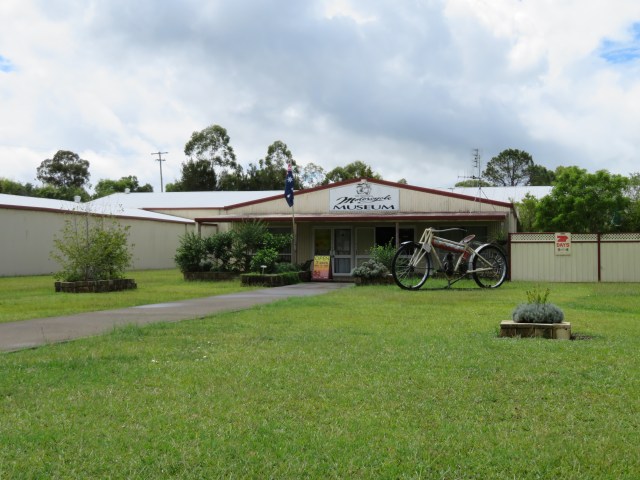
They had this out the front:
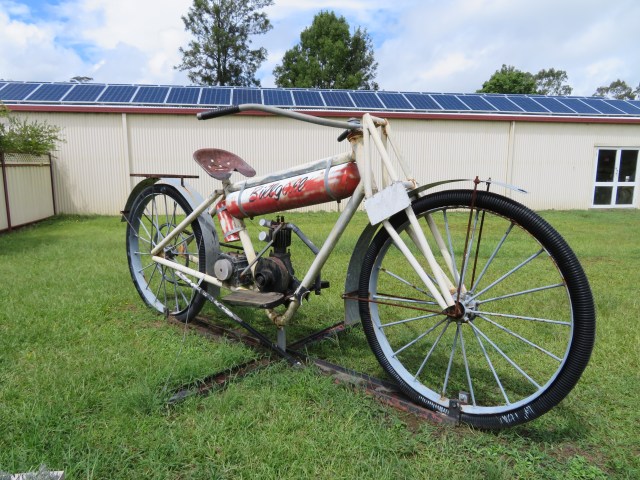
Just in case you didn’t know where you were. This little dog was waiting in the doorway:

Alas, it didn’t seem to understand when I offered it money – clearly it wasn’t there to take tickets – so I continued on into the office. This museum has over 900 motorcycles, so I didn’t take a photo of all of them – just the ones I found interesting. There’ll be plenty with sidecars because, man, some of those sidecars are hilarious! I also took photos of the informative signs, so I didn’t have to type!
The first thing I saw was a little anteroom off the office that led to the museum proper. It had something they called a ‘drag bike’:
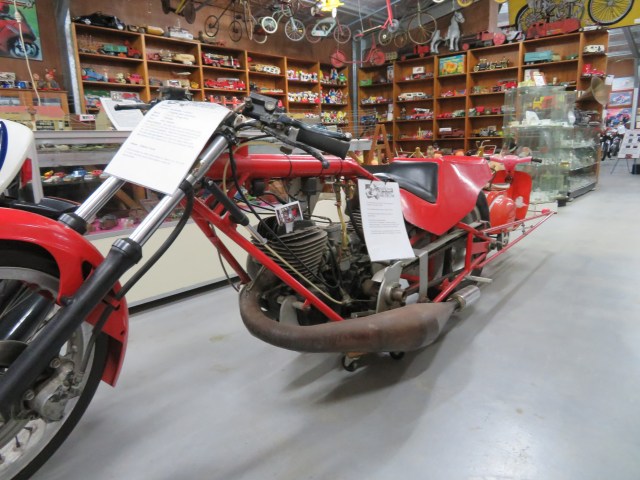
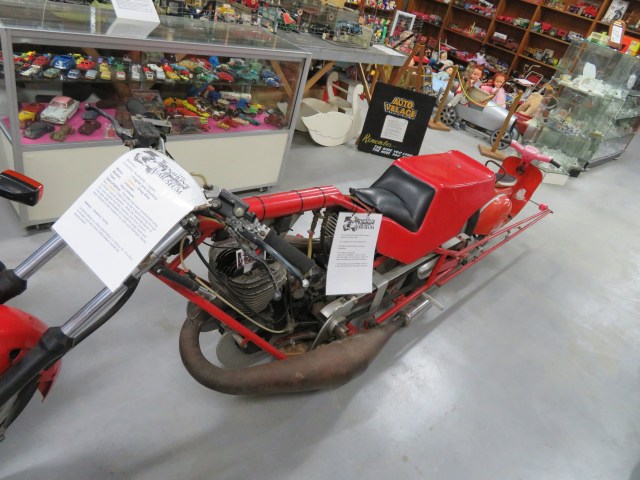
This was at the back:

The info:
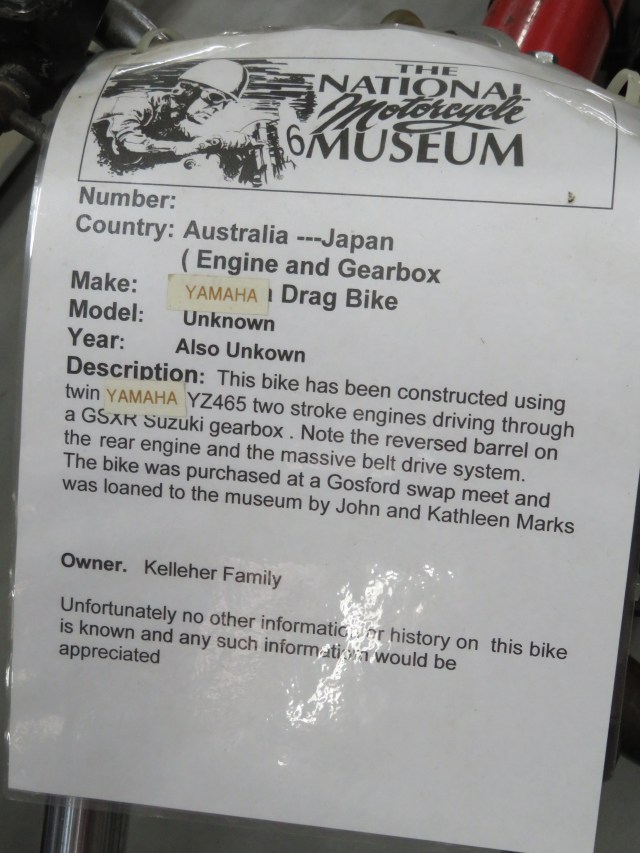
I like how even the informative sign says ‘we have no idea why this was built’. I must admit no purpose immediately springs to mind.
They also had a collection of toys, though I’m not sure why. The transport Museum had one too – it’s like there’s a rule, if you’re displaying machines you need to have a toy collection as well:
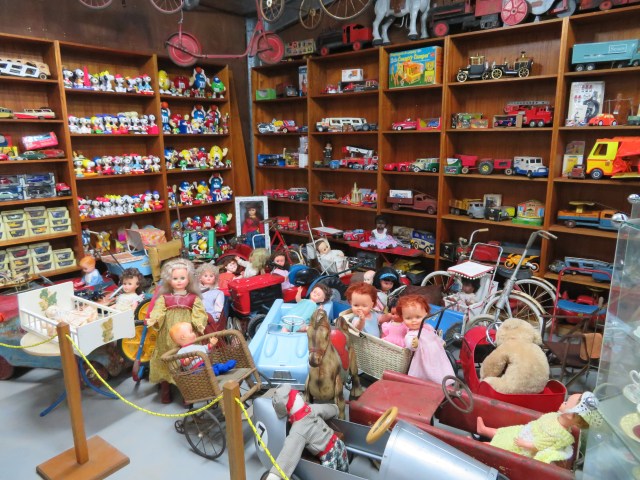
Look at all the Snoopys:
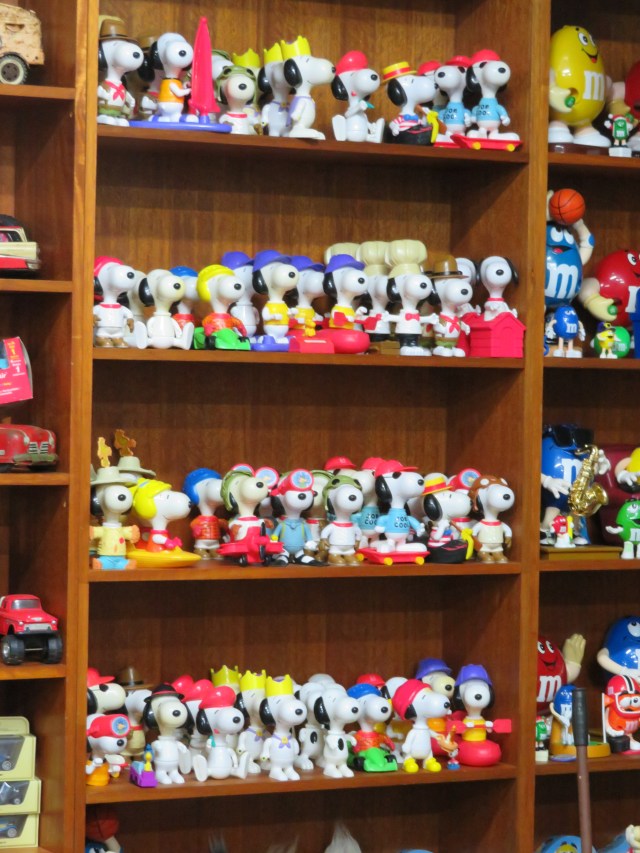
I thought the plastic dome on this one was interesting:
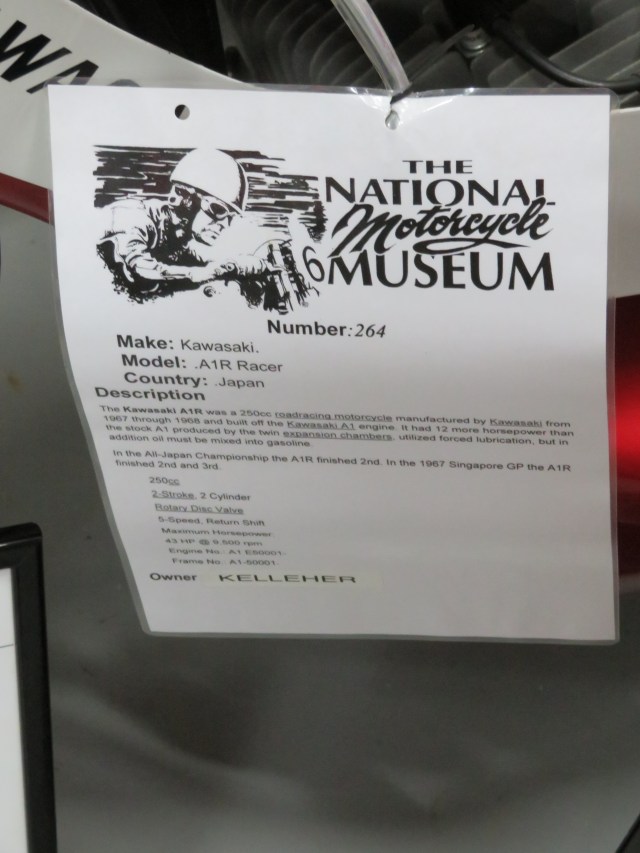
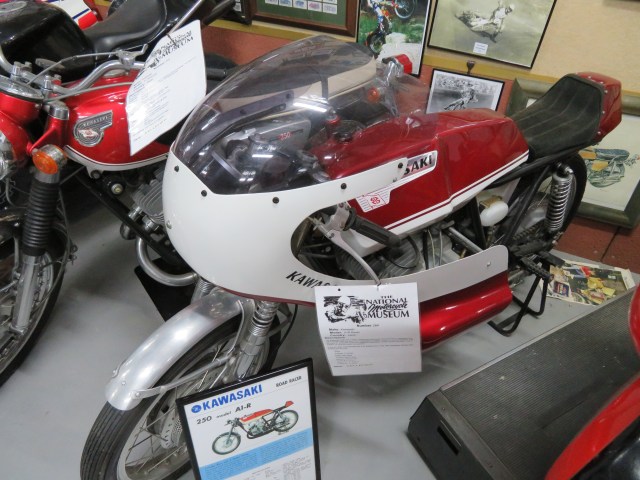
Then I was in the actual museum:
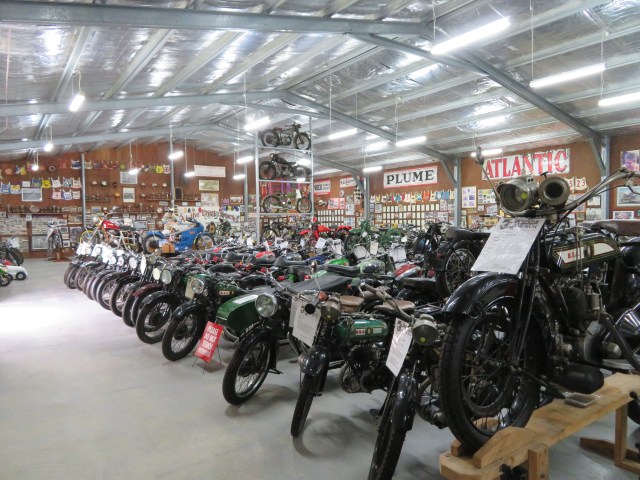
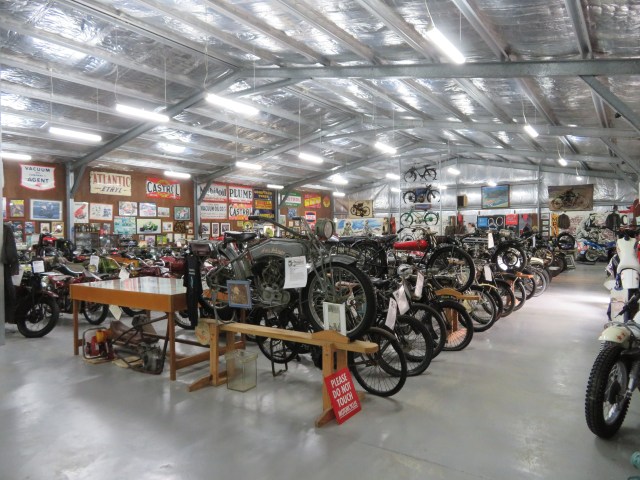
And that wasn’t all. There was an additional two rooms, also filled with motorcycles (and some cars). When they said over 900, they weren’t kidding! The whole place smelled like metal and oil, so it was very immersive.
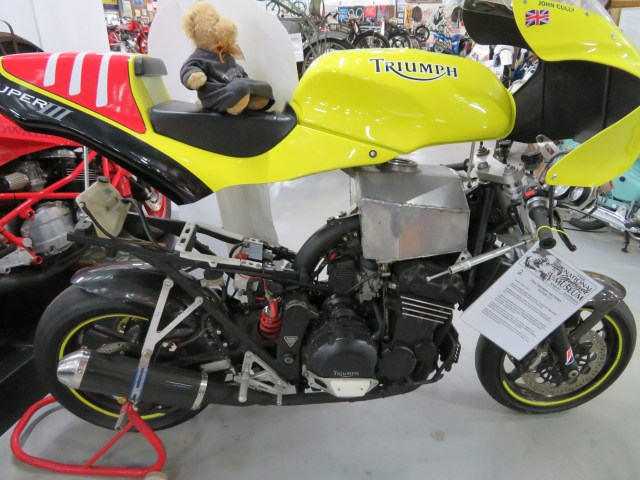
I liked the way they’d exposed the engine of this 90’s racing bike:

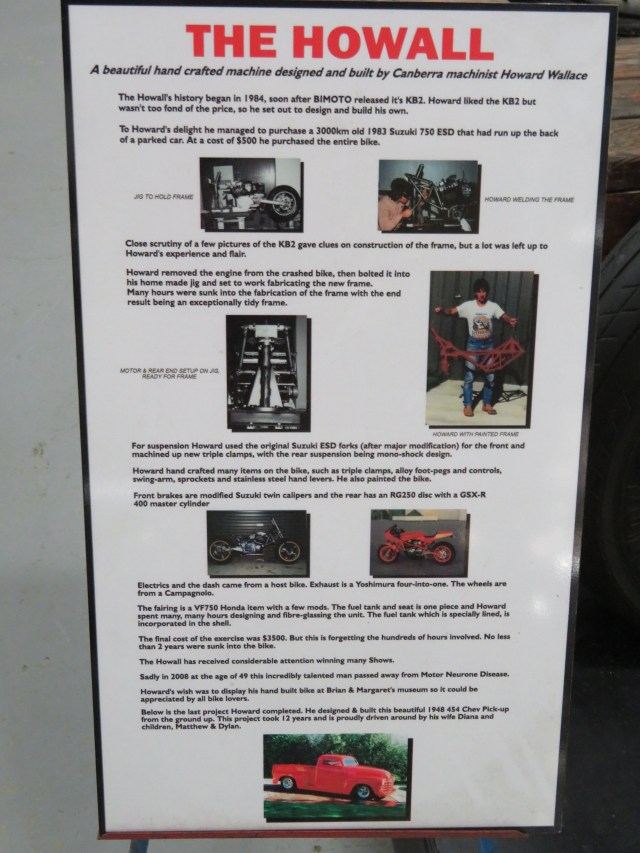
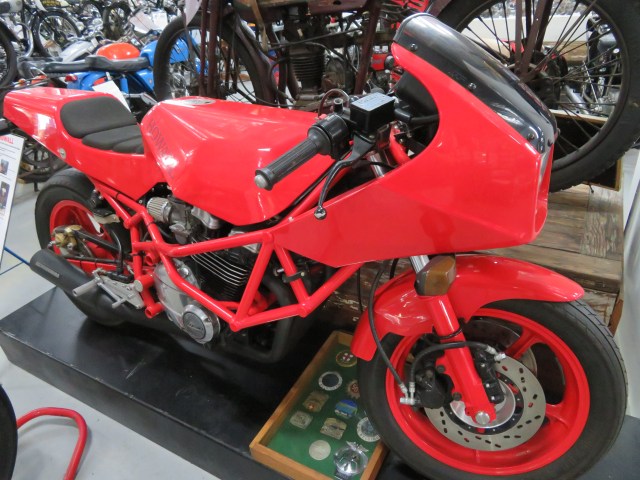
This one was designed and built by a machinist in Canberra:
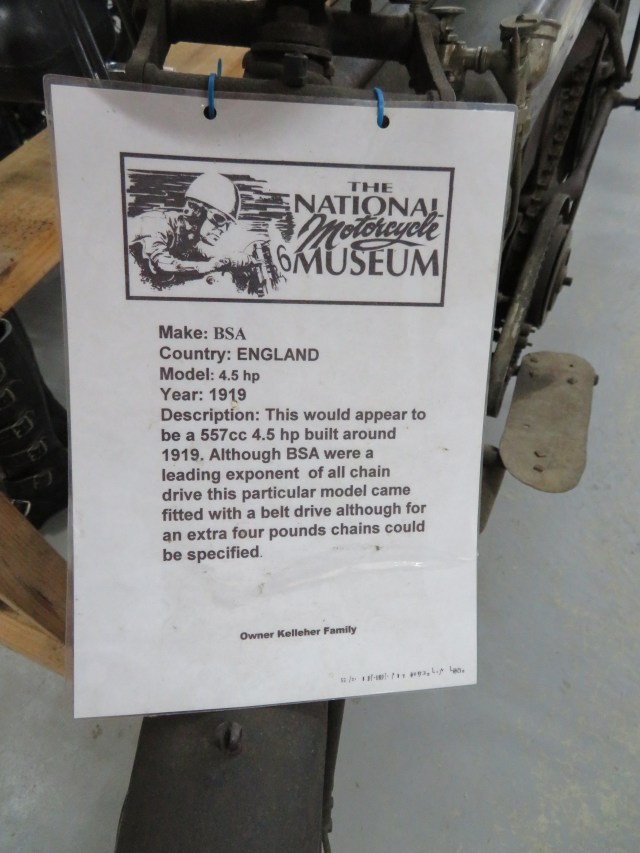
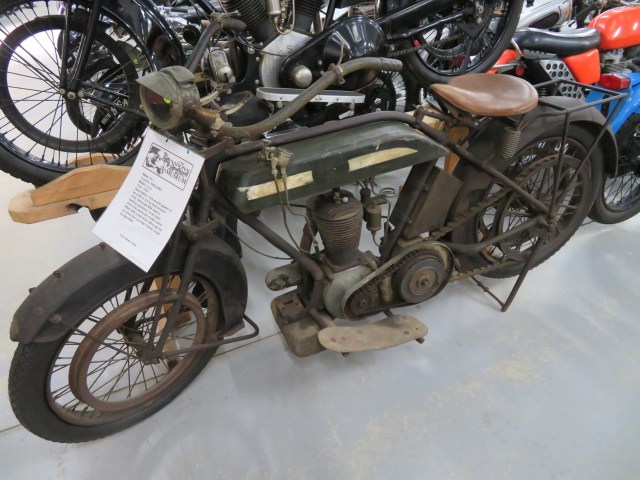
An early motorcycle – built in 1919:
The first of the sidecar ones:
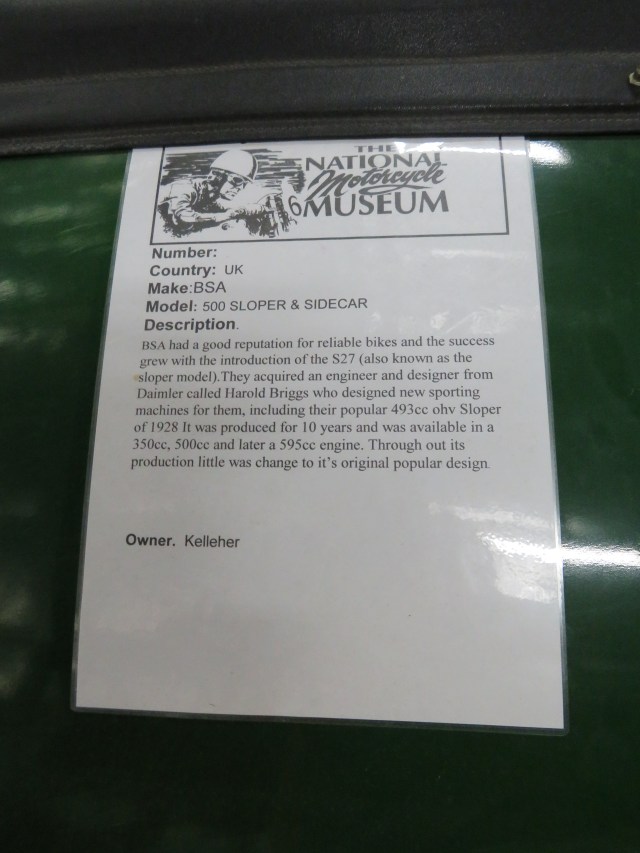
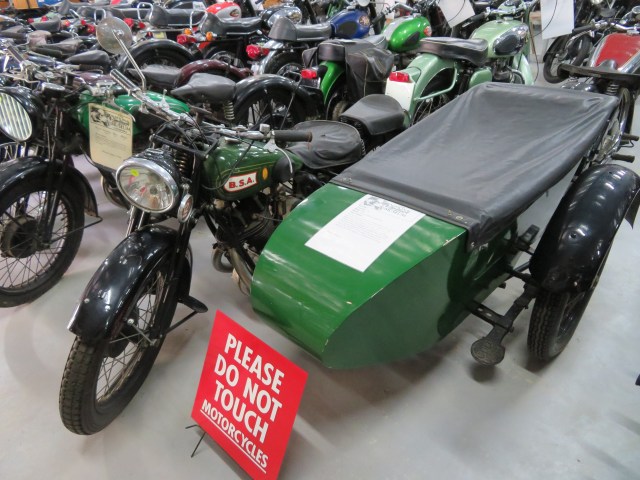
Me next to a mini to try to give it scale:
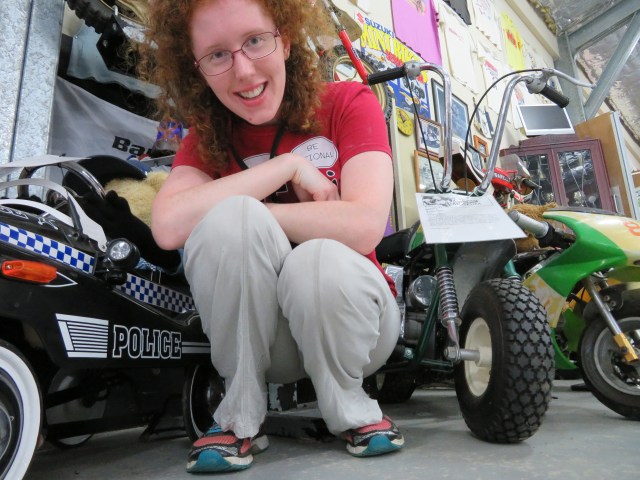
Yeah, I look like a giant next to it.
Giving another mini bike scale:
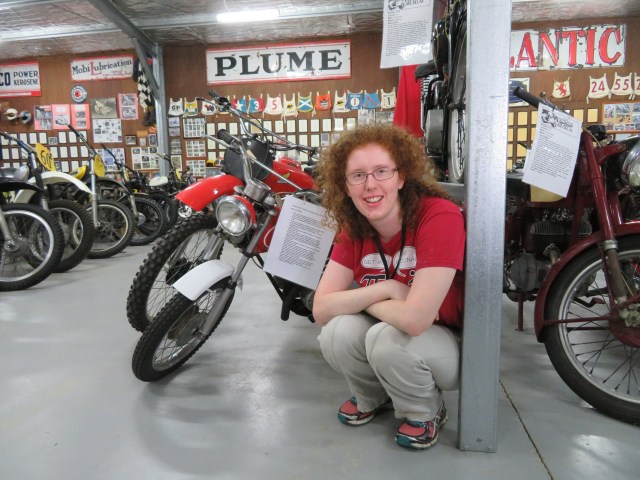
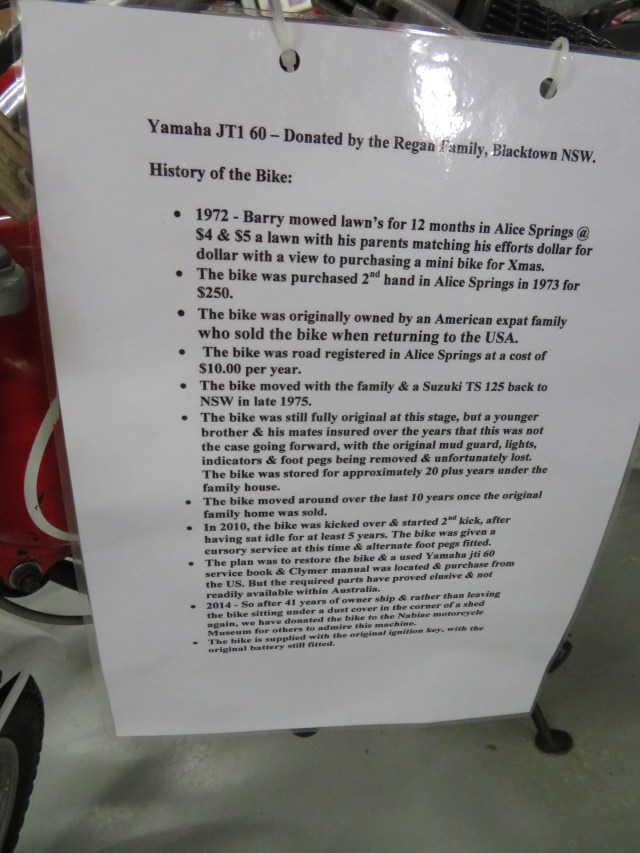
Not quite as tiny, but still smaller than you expected something with an engine to be. This is the info:
I loved the name of this one – ‘Snail Pacer’:
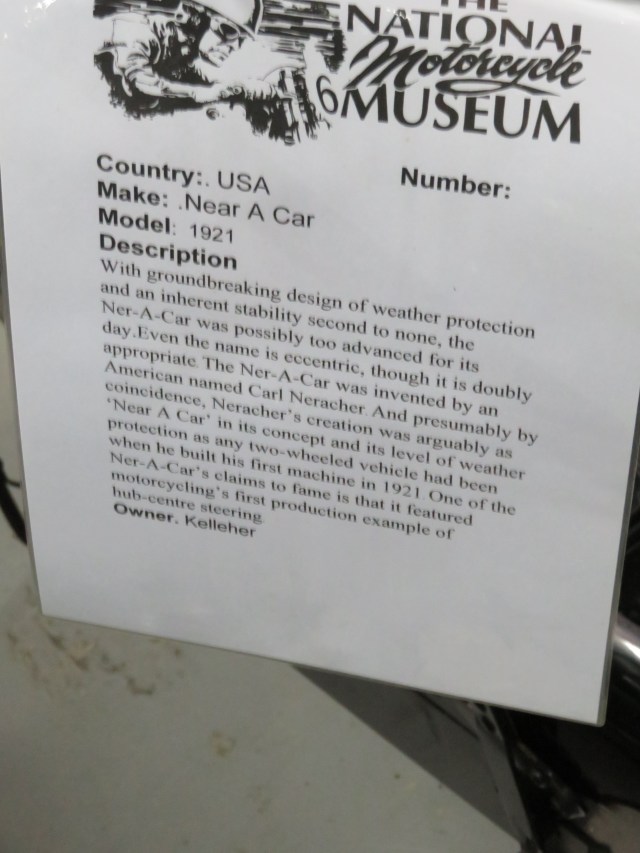
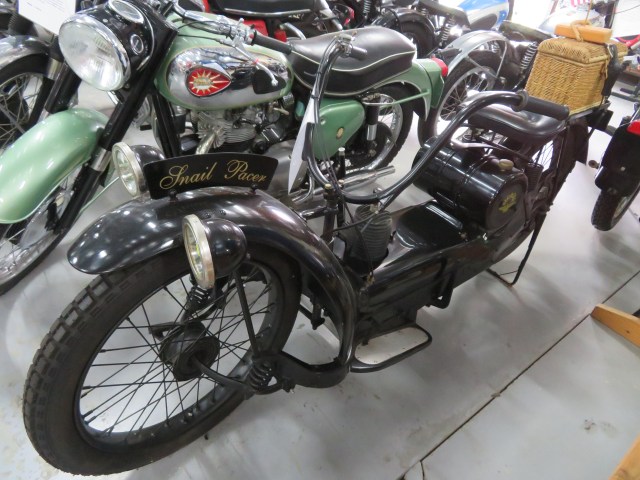
You may be thinking ‘what do they mean, it has weather protection?’ Apparently just encasing the engine was a big move in 1921.
Excelsior, circa 1950:
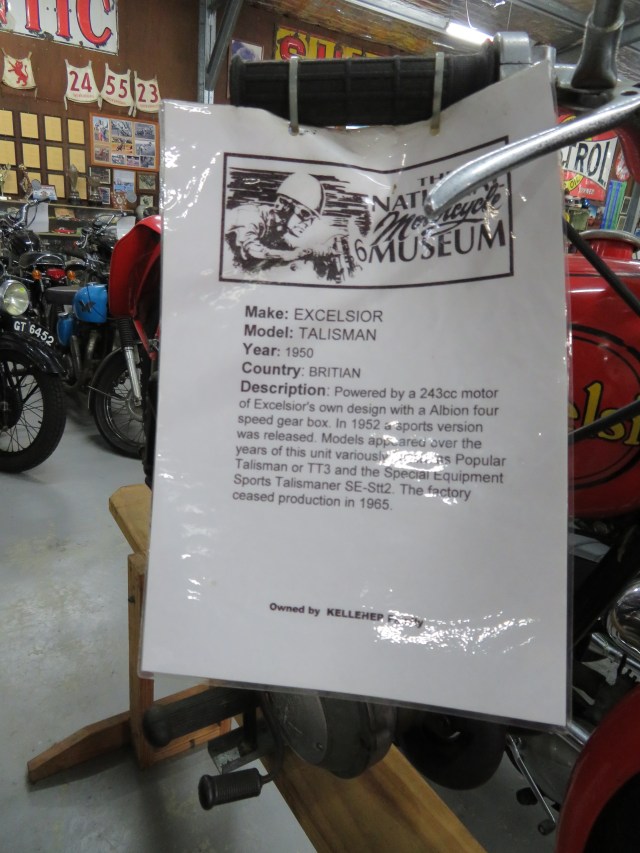
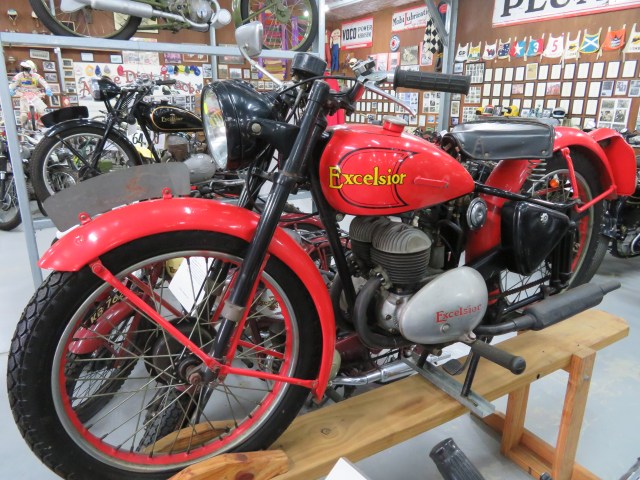
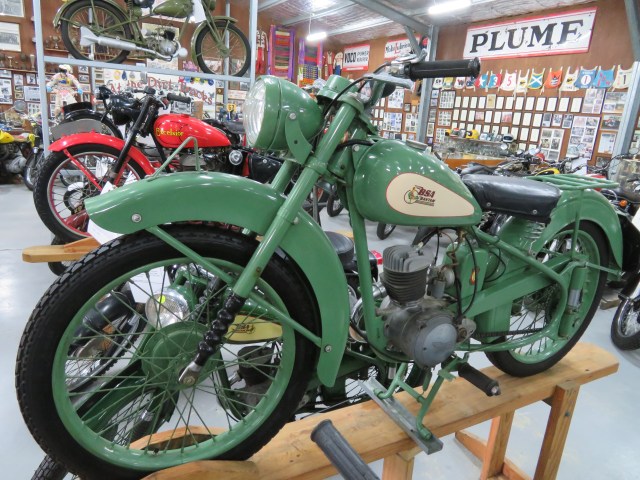
I just love the brand name. I also love the name of the next one – Bantam (1945):

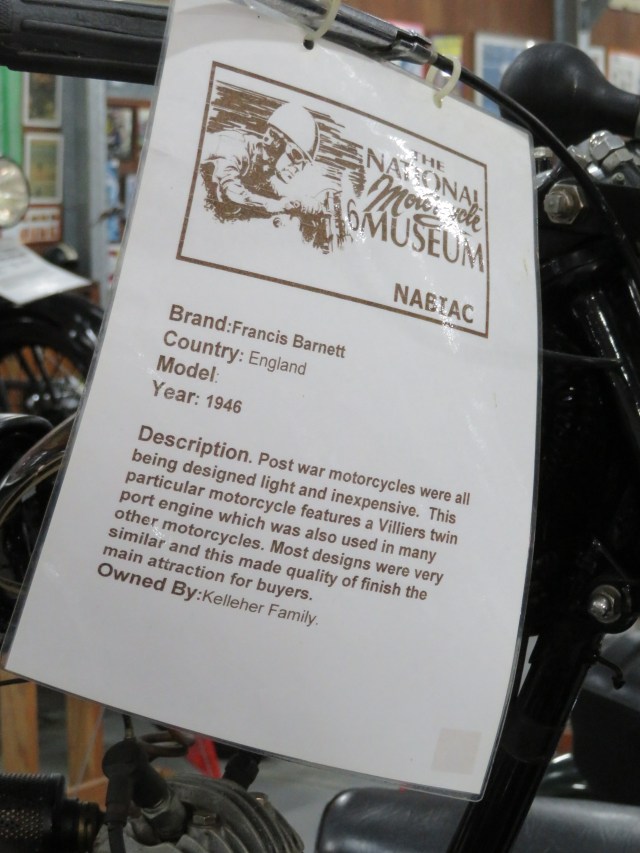
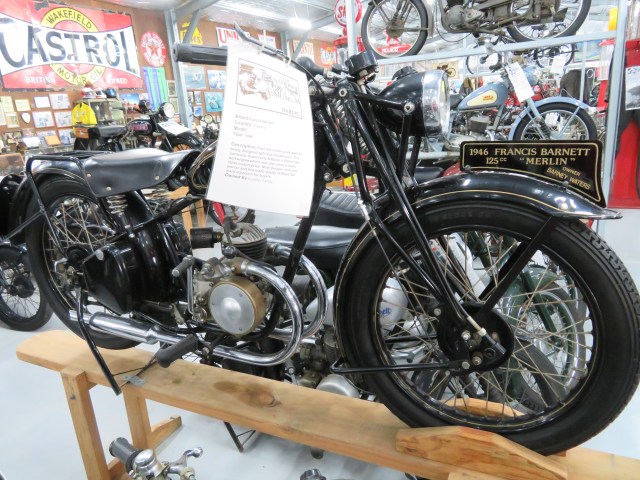
For this bike, ‘Merlin’ was its name, not the name of the brand. Kind of like how I’ve named the caravan Turtle Shell:
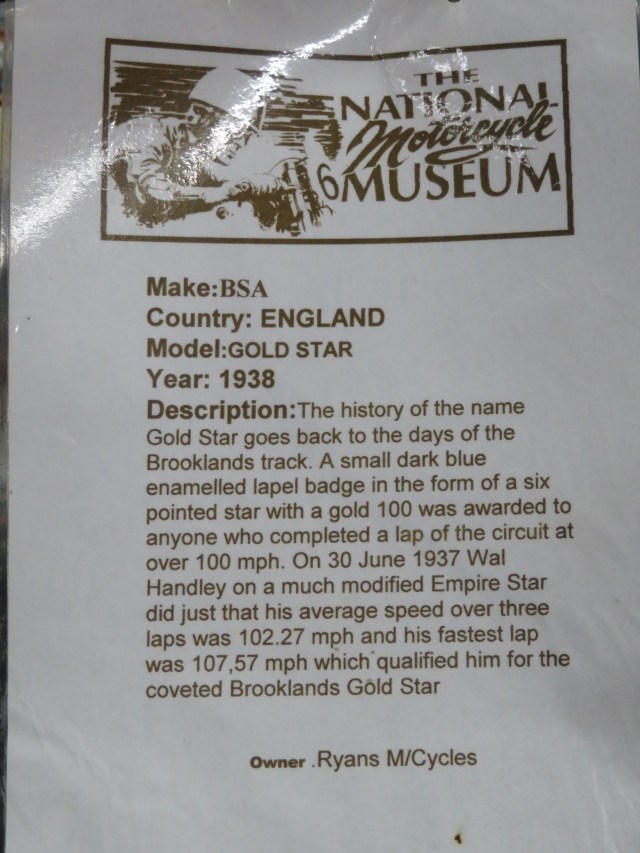
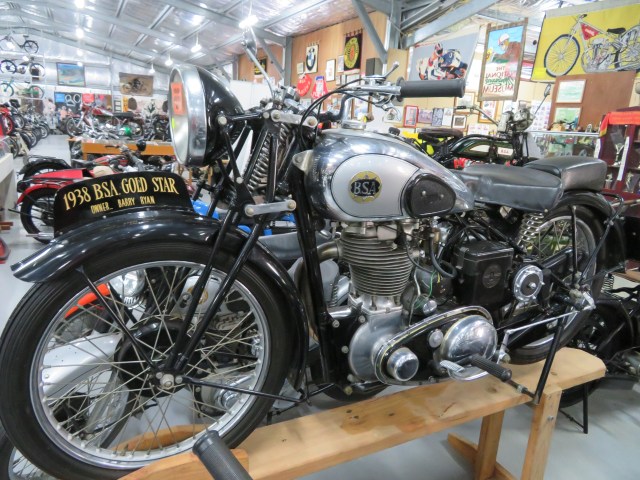
The 1938 Gold Star:
Another one with a sidecar, though this one looks like you’re transporting a torpedo (also, I think this one lost the informative sign, because I couldn’t see anything):
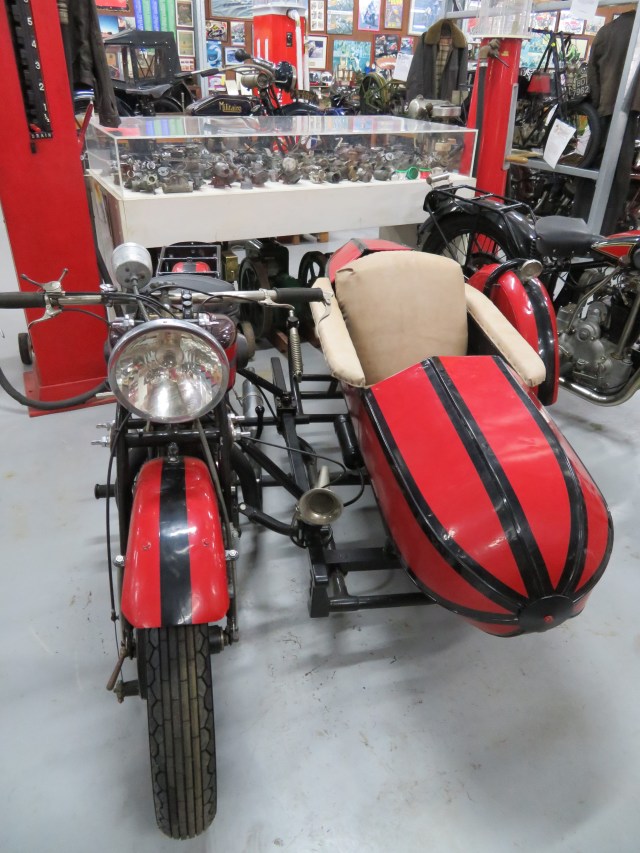
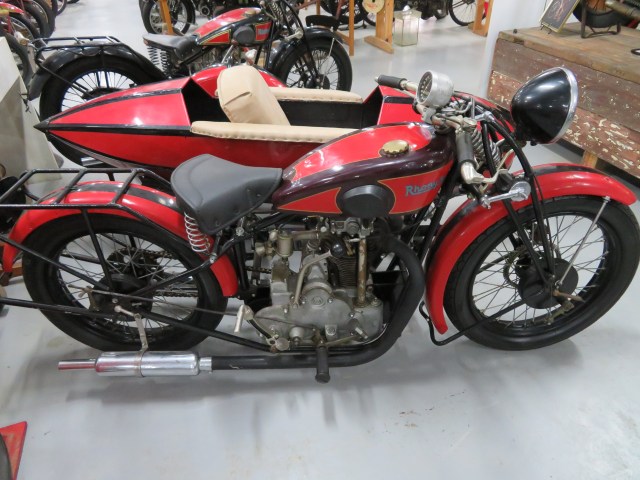
I know the passenger’s legs have to go somewhere, but you can’t deny that looks hilarious.
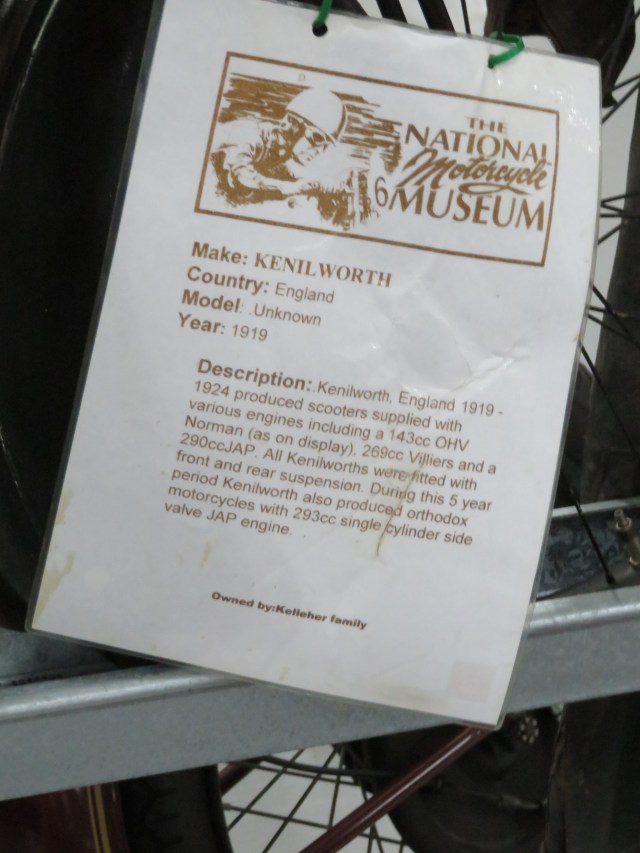
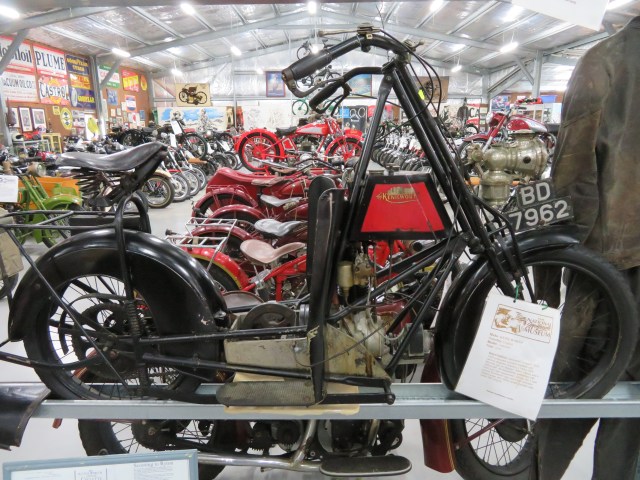
The 1919 Kenilworth, a precursor to the scooter:
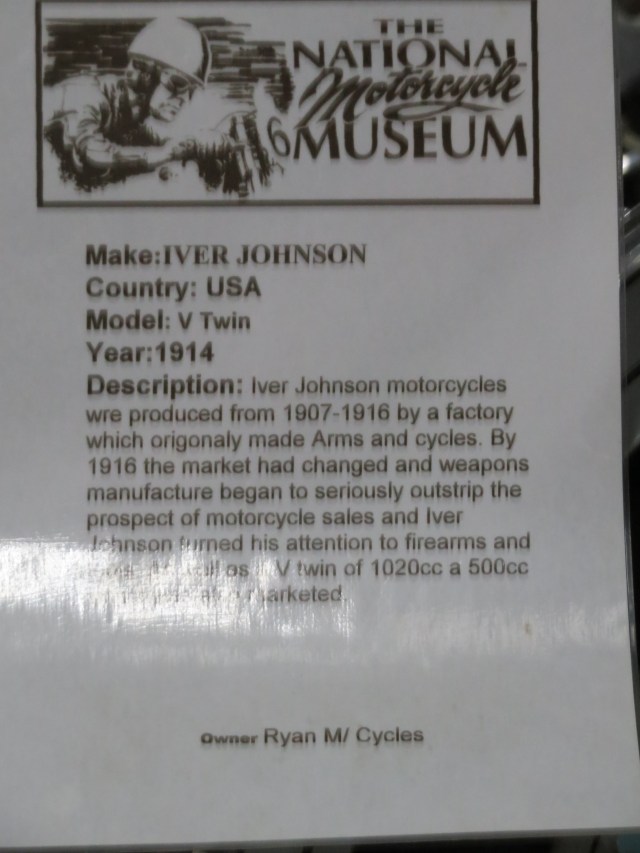
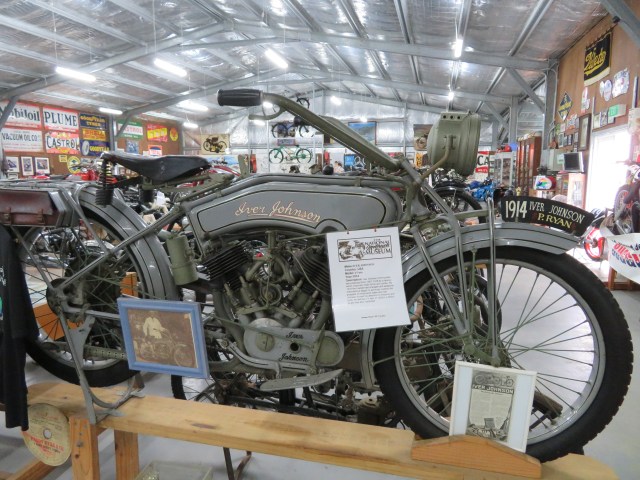
Iver Johnson, 1914, that had a framed article next to it:
The article:
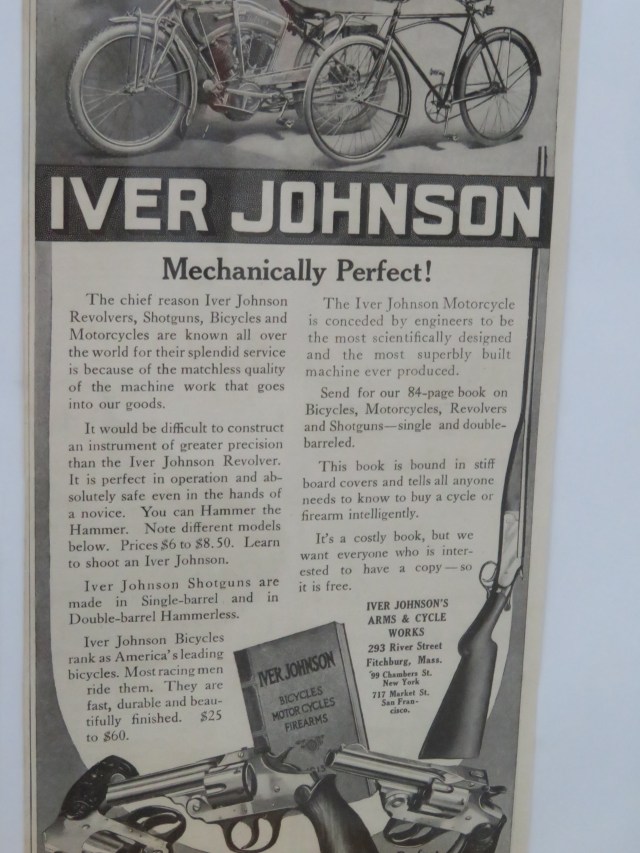
Well, more like a wordy advertisement than an article, but I liked it. I also love the price – $25 to $60. Inflation has progressed at a rather crazy rate, hasn’t it?
Another oldie:
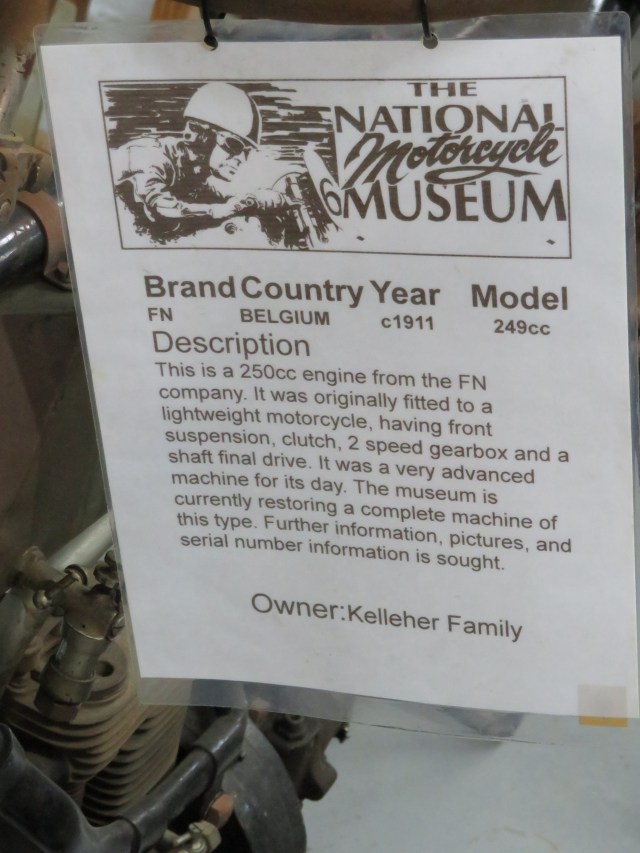
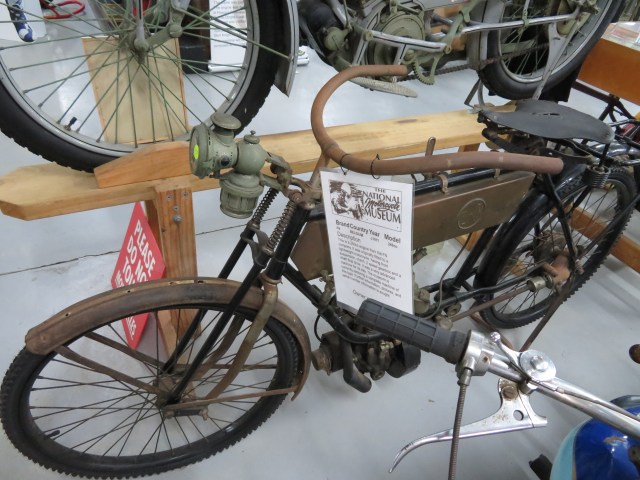
I like the lamp on the handlebars. The next one is a 1925 Douglas, looking a bit more like what we think of a motorcycle:
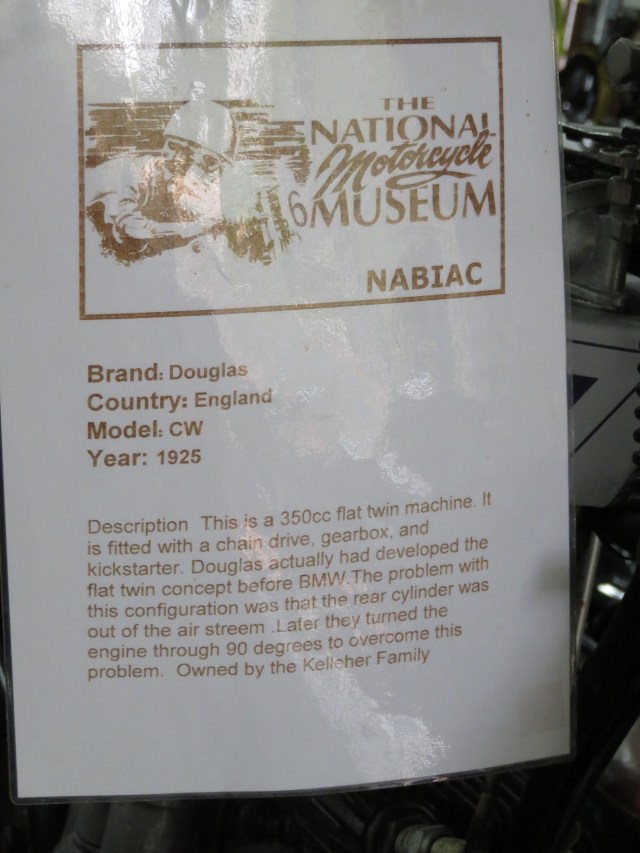
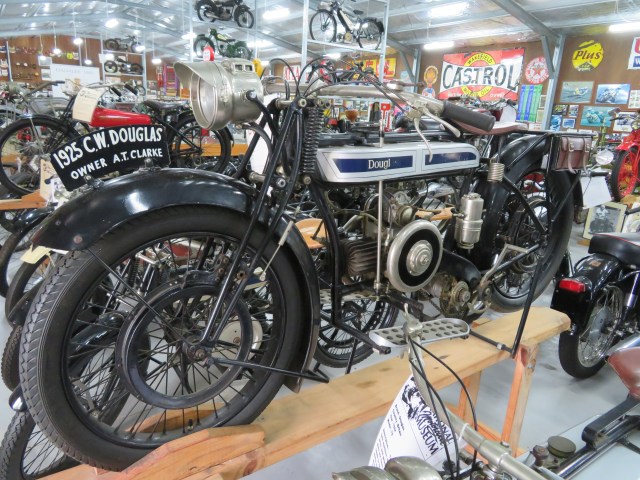
There’s still a ways to go, though. But better than this replica of an 1898 Phebus Tricycle:
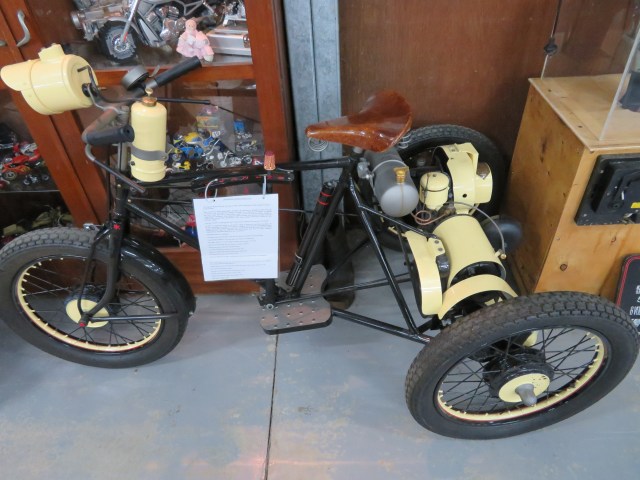
Yes, that is a tiny little gas bottle and engine on the back. There’s also a gas bottle up front – for the light.
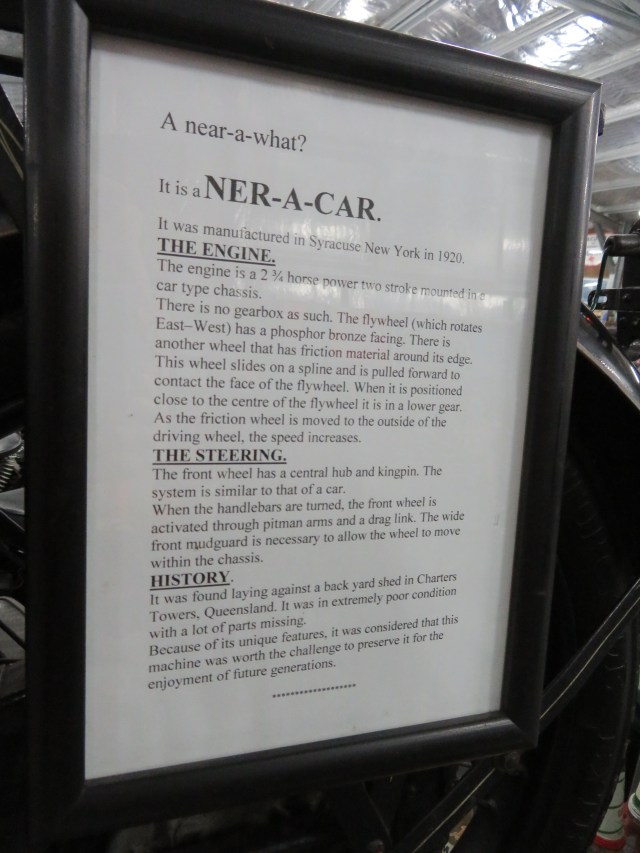
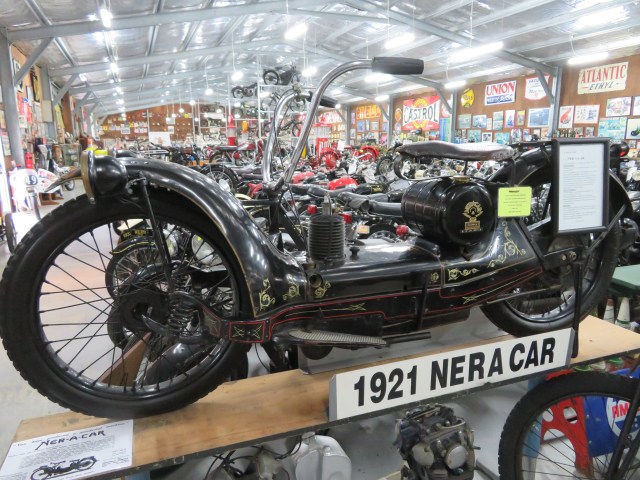
I love this name, too – the Neracar (from ‘Near-A-Car’):
Another torpedo-like sidecar, on a 1955 Panther:
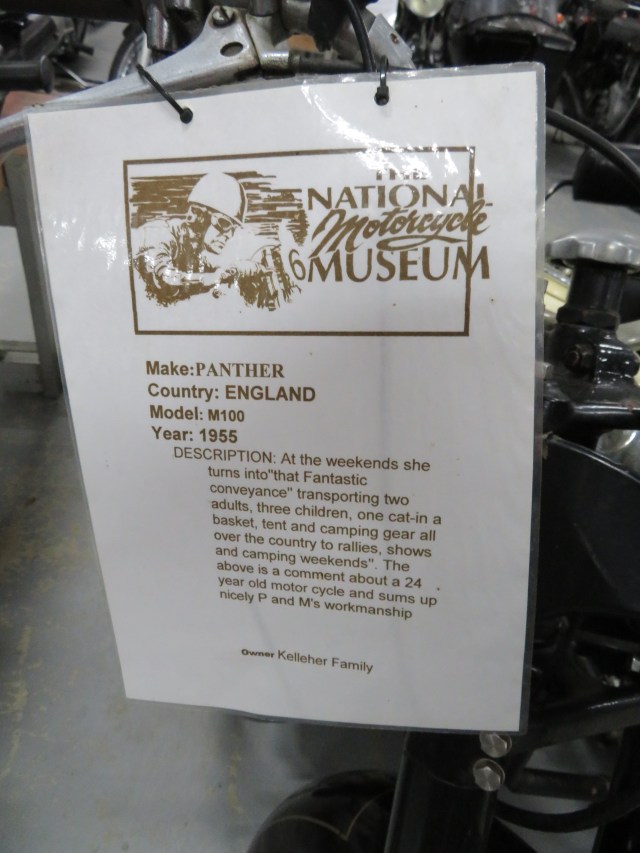
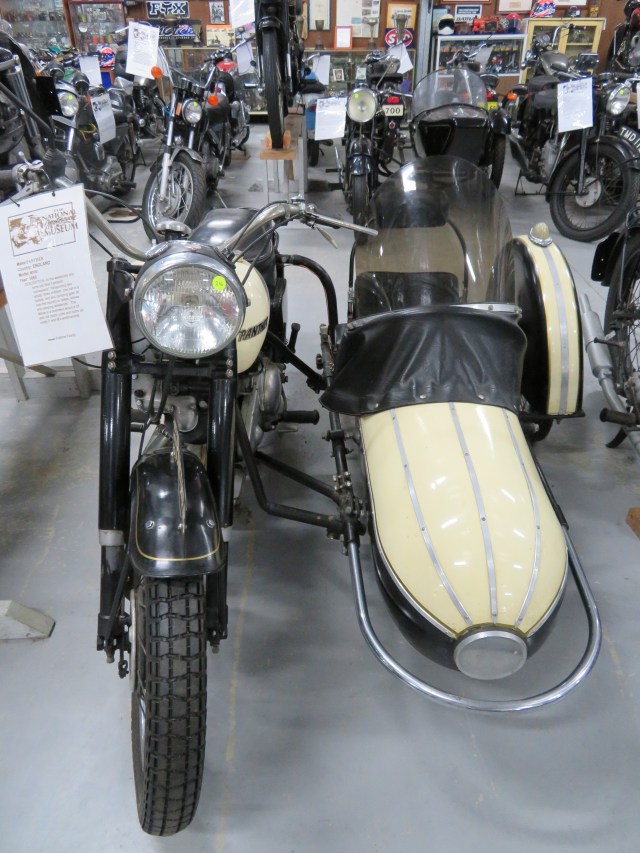
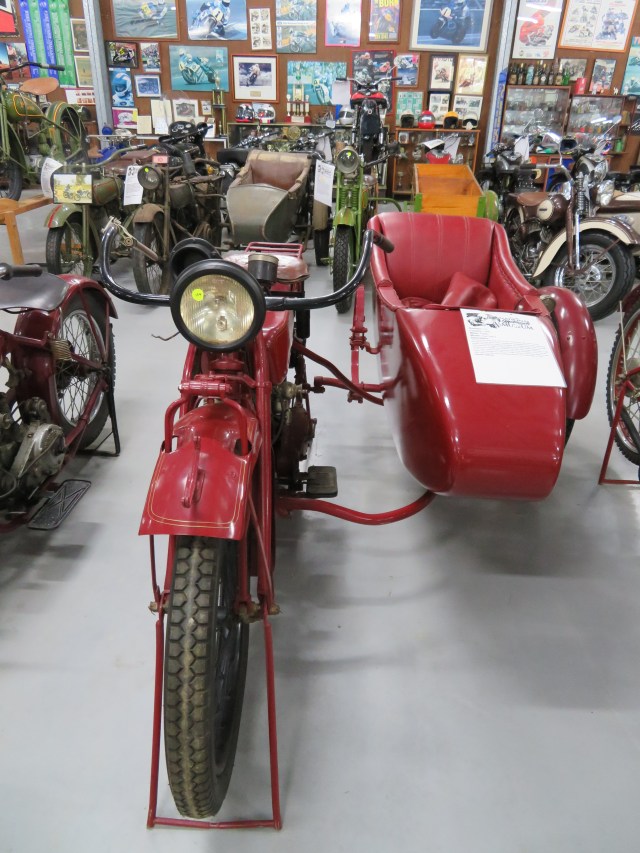
Two more sidecars to follow – this one, a 1920s Indian:

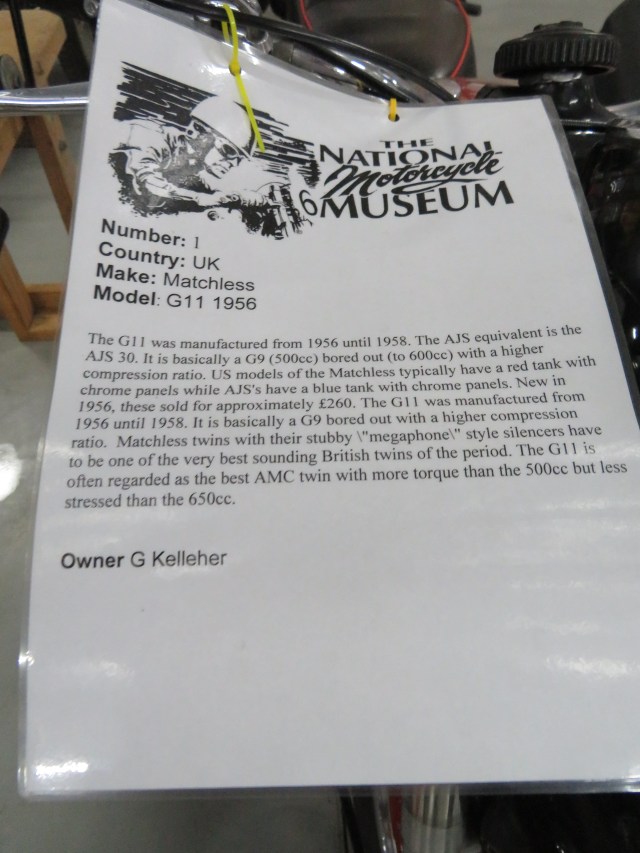
A 1950s Matchless:
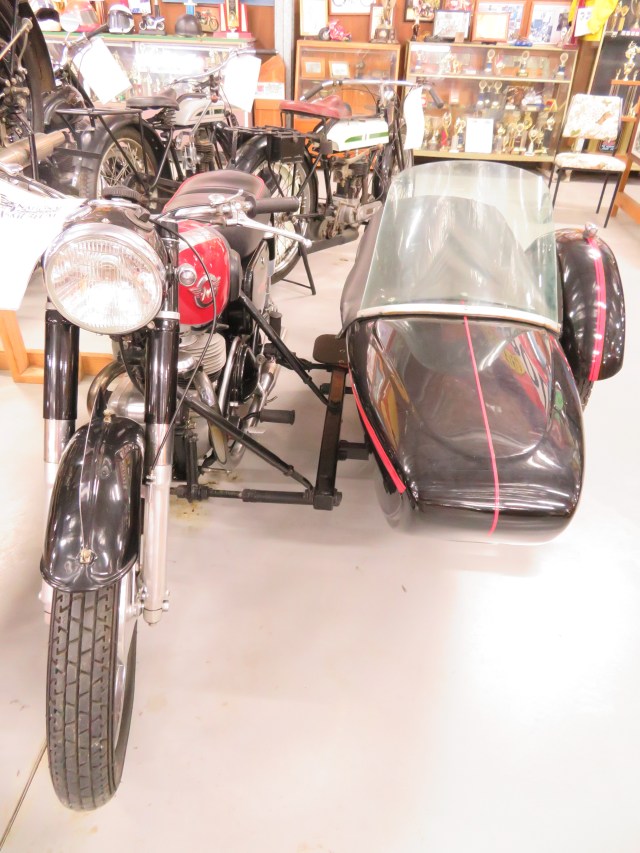
Back to the unadorned motorcycles. This is a 1929 Harley Davidson:


I love that little leather seat just sticking up there.
This one was made in 1916, and was known as the Magneto, no relation to X-Men (that we know of):
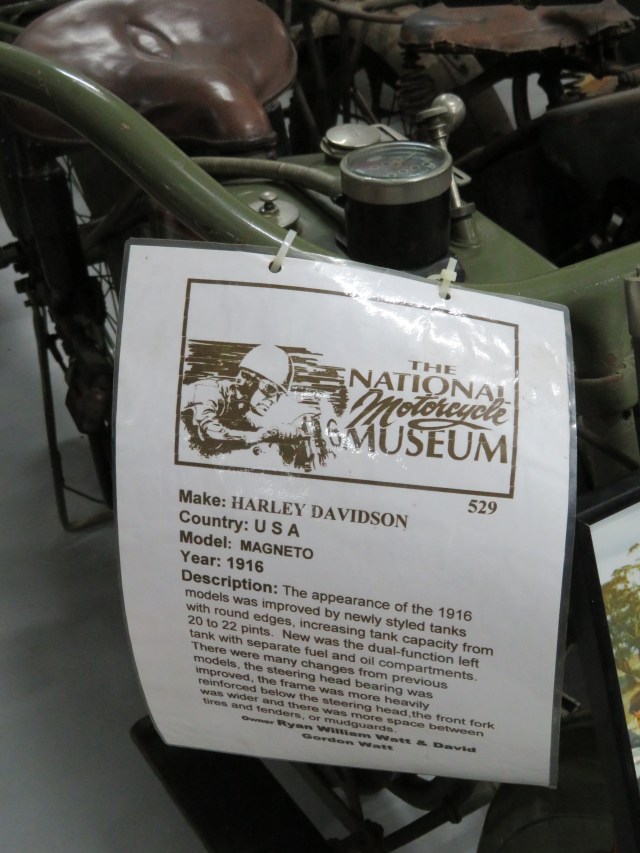
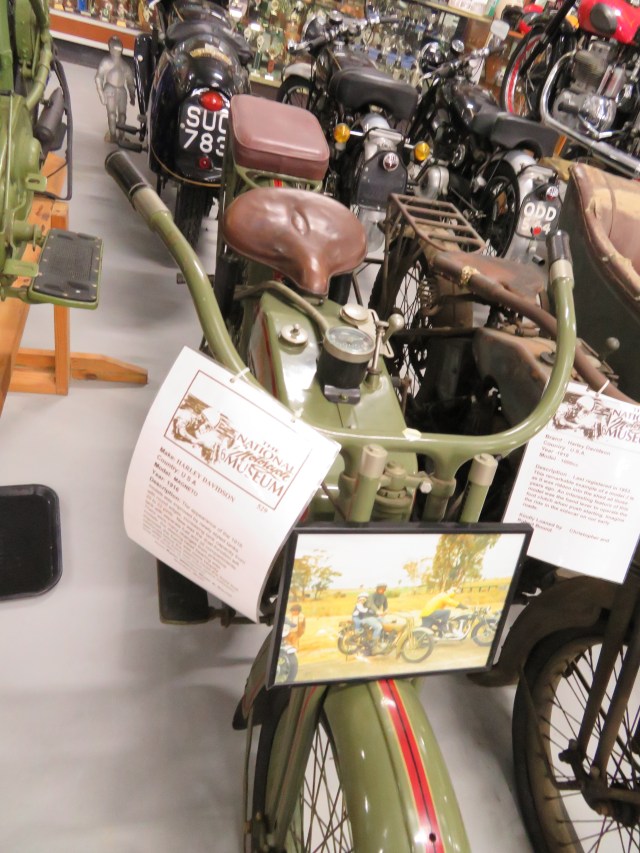
I also managed to get a photo of the dash:
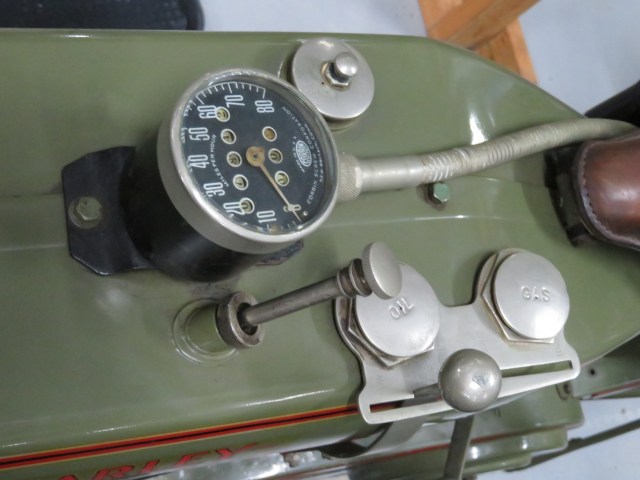
I like the helpful labels of ‘oil’ and ‘gas’. Apparently, separate fuel and oil compartments were a new thing when it was made.
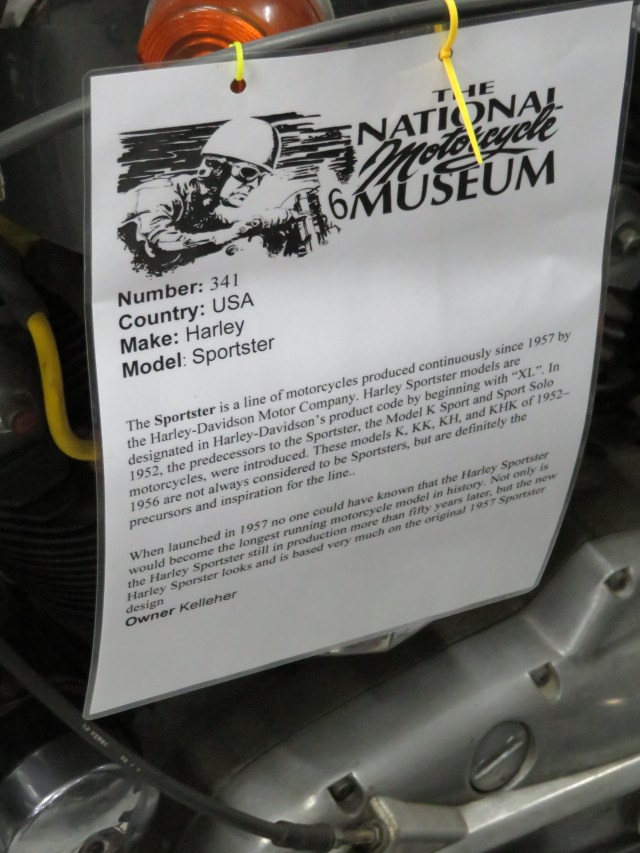
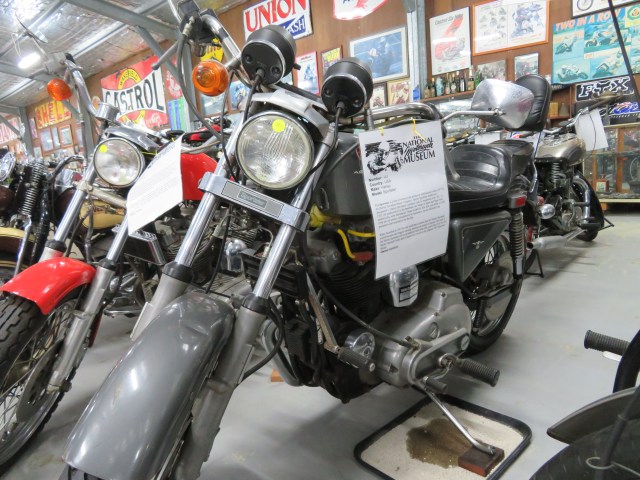
This is an old Harley Davidson Sportster:

Velocette LE, used by police in the UK:

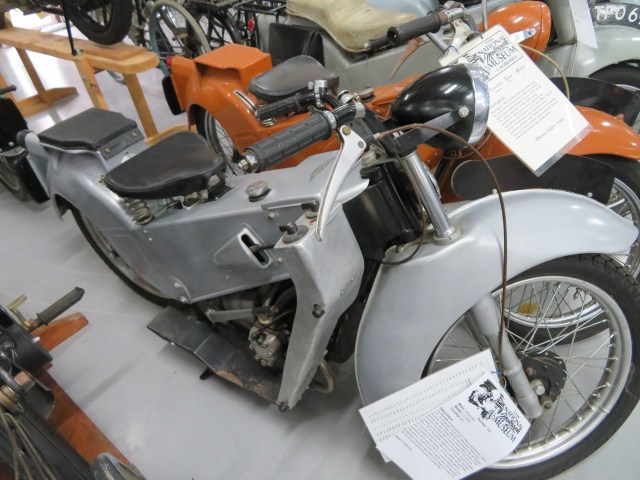
More shielding for the engine, but it kind of makes the motorcycle look like a lopsided triangle.
I’ll let the sign do the talking for the next one:
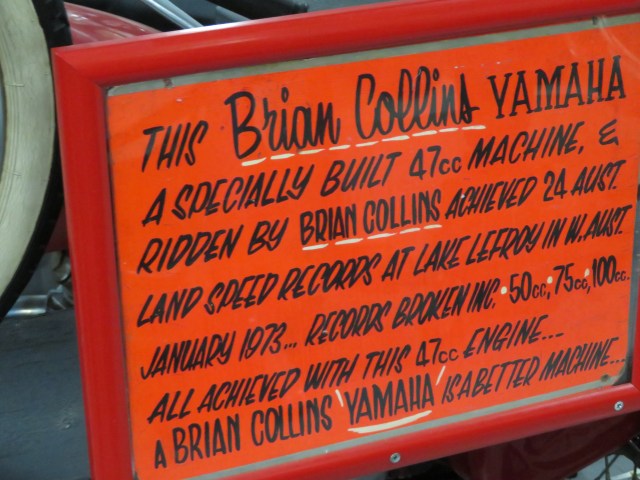
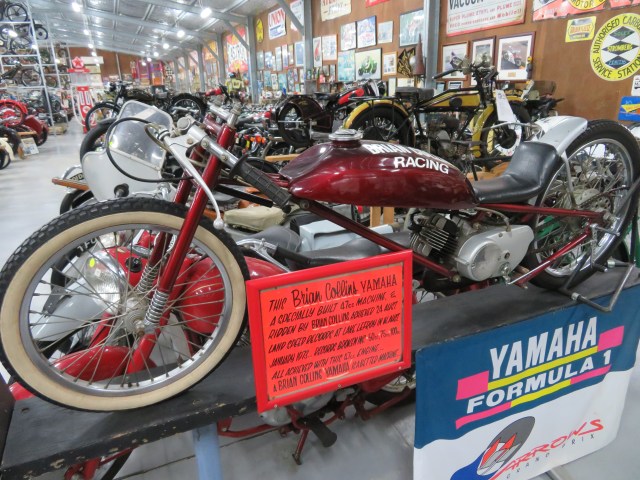
For those wondering, the top speed it attained was 66mph, or a little over 105km/h. Laugh now, but a lot of its records still stand.
This is described as an autocycle, from 1946/47:
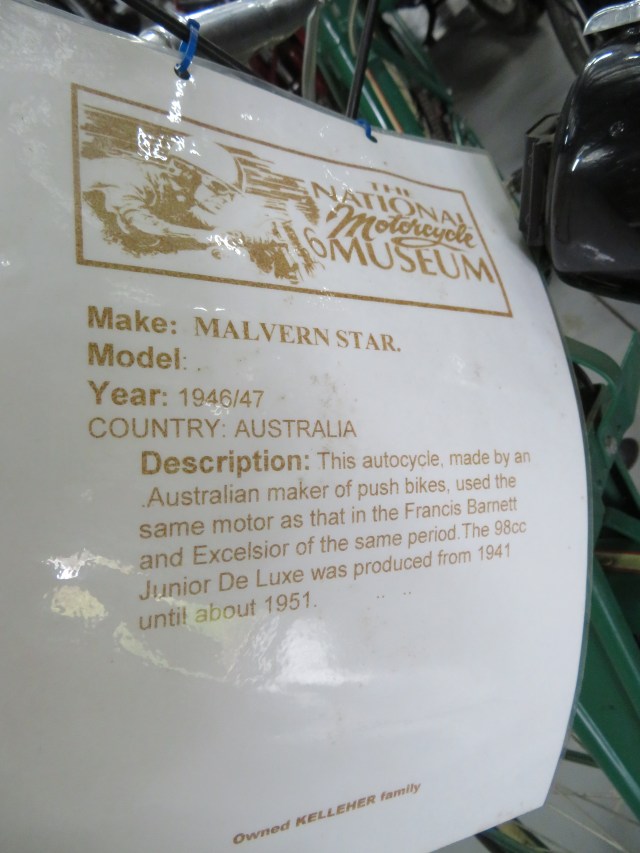
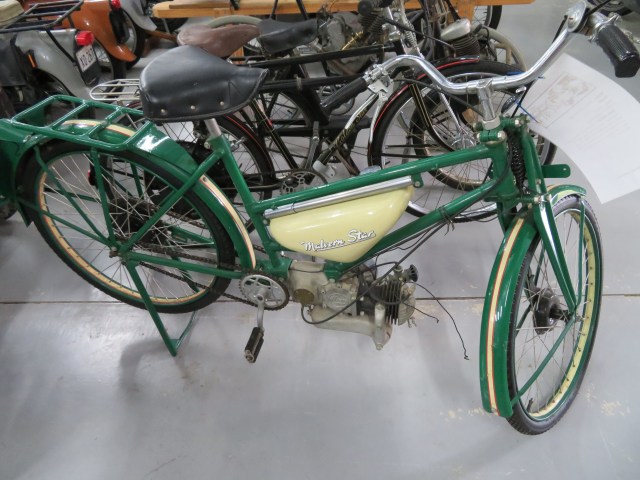
It’s basically just a bicycle with an engine.
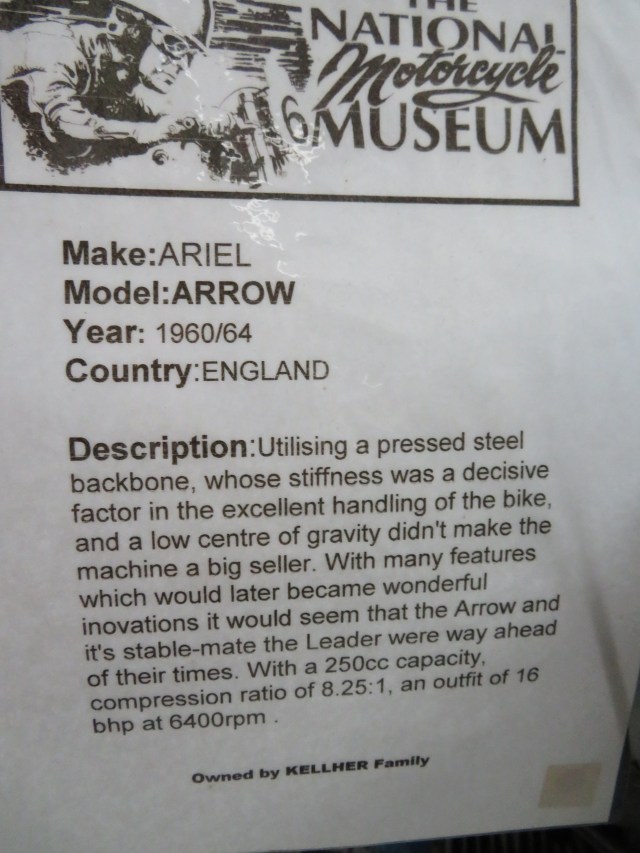
An Ariel Arrow from the 1960s:
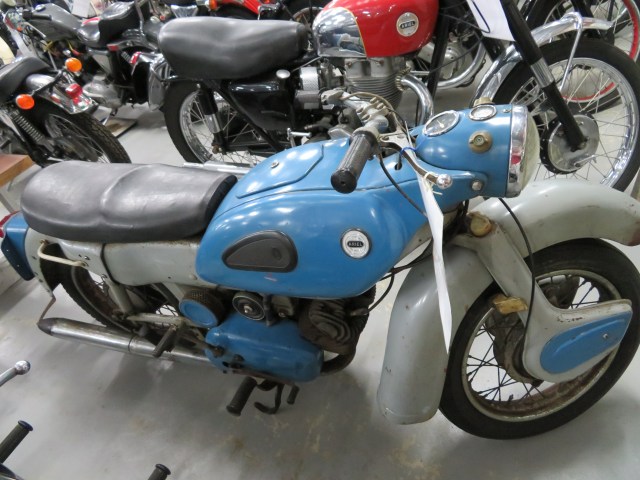
Another Ariel, from 1955:
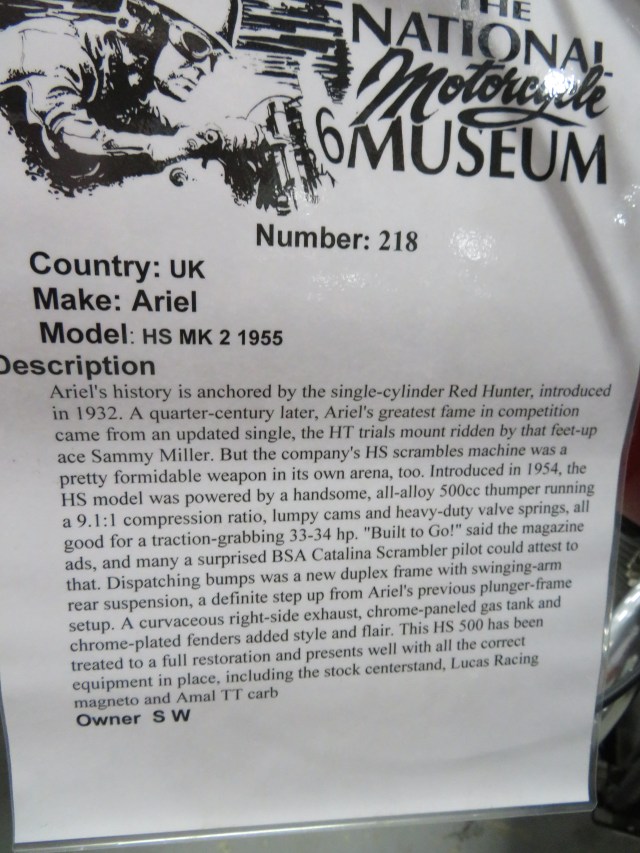

Once we get to the 50s, the motorcycles look a lot more recognisable. Maybe we sometimes see them in 50s movies, so our brain knows them.
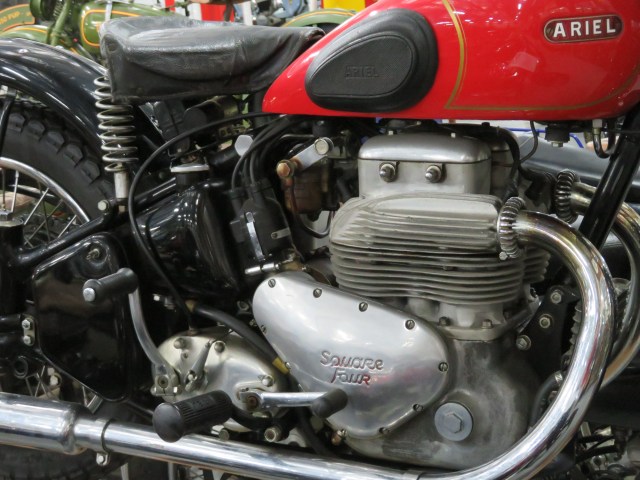
The Square Four, the first motorcycle to have four cylinders arranged to form (you’ll never guess) a square:
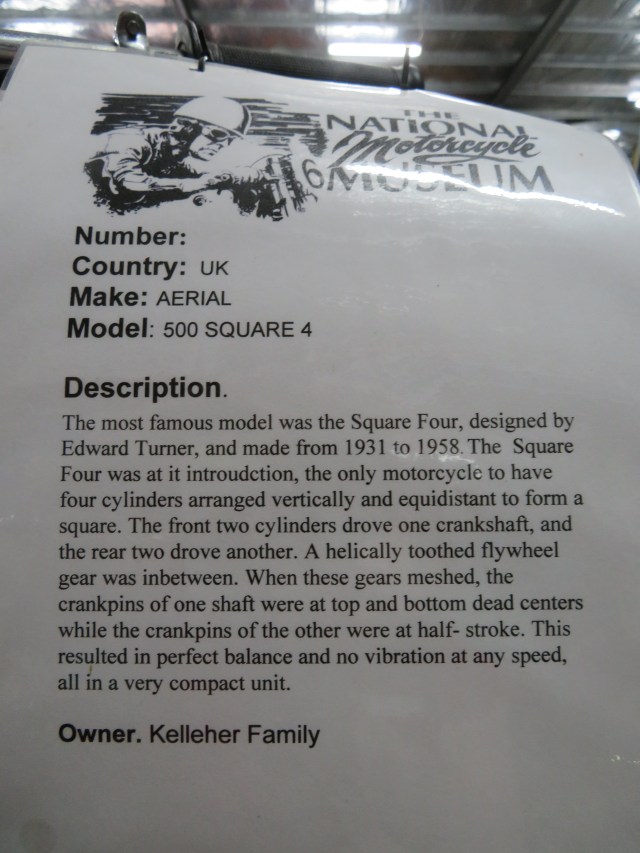
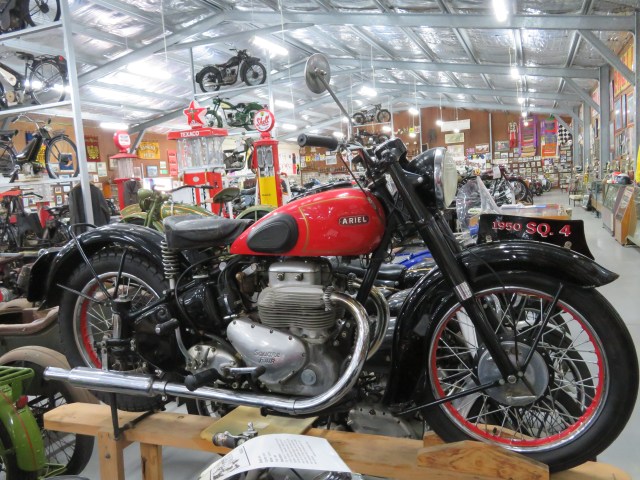
Now that is a motorcycle! I also took a close-up of what I could see of that engine:
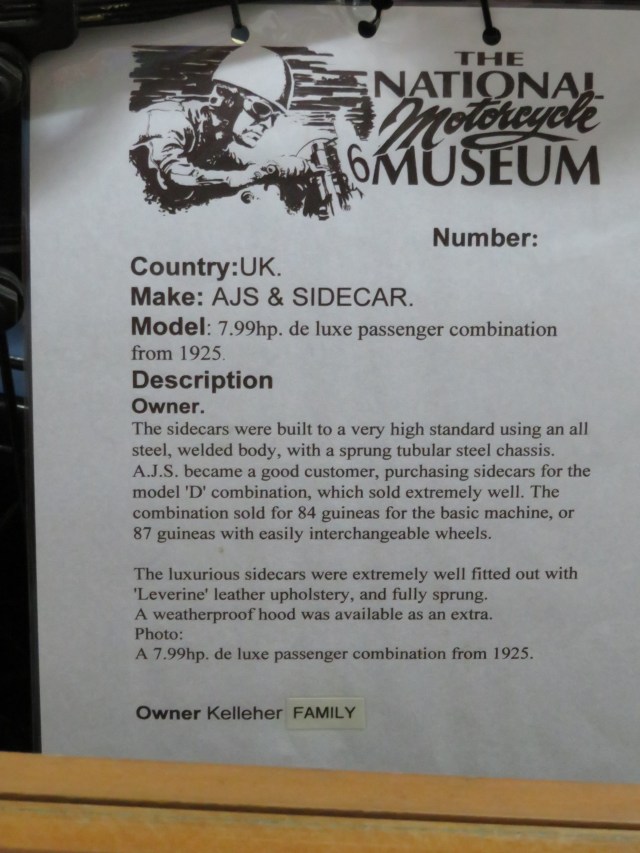
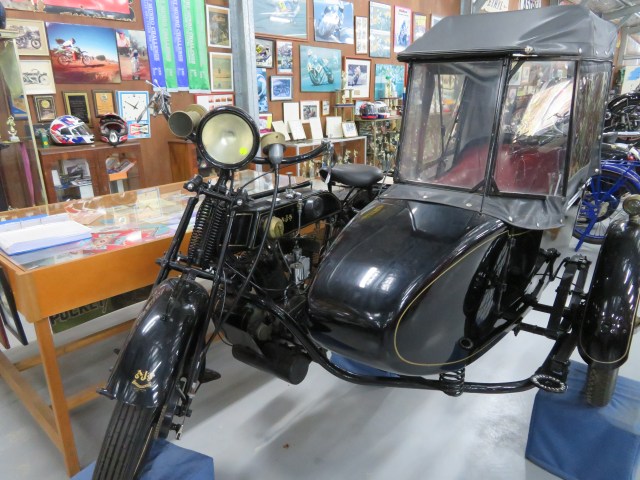
Another sidecar, from 1925. This one has weather protection:
1950 Triumph:
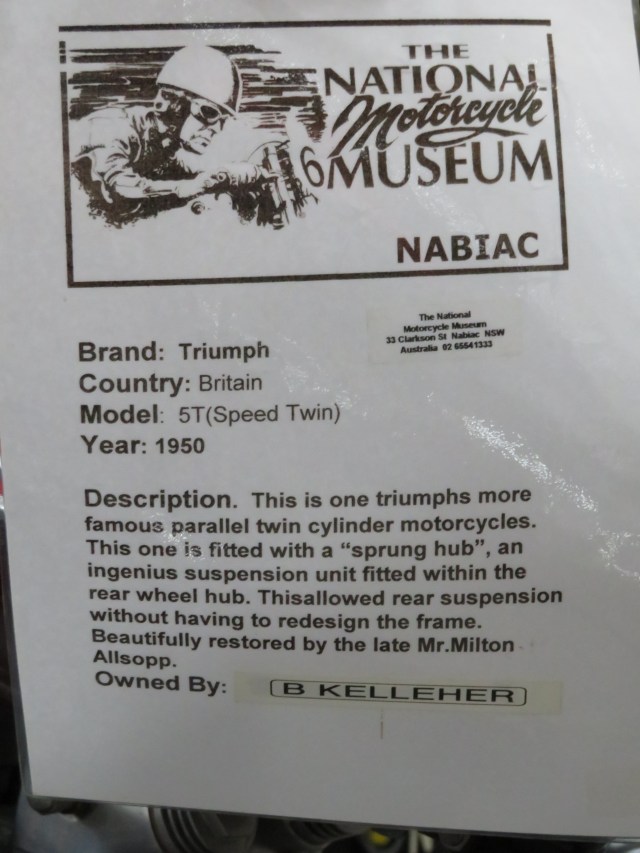
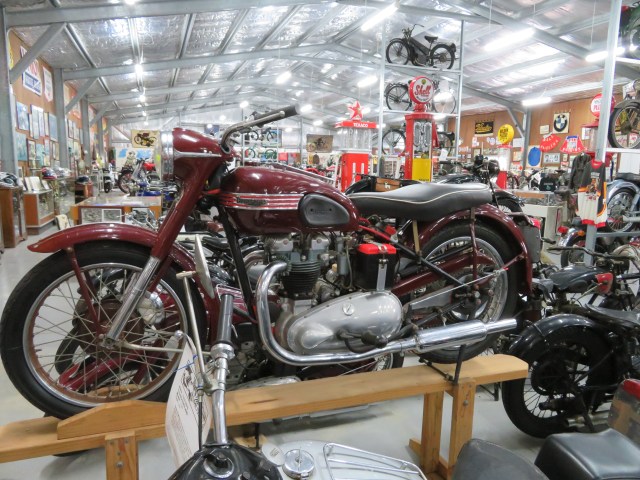
Again, the sign tells you everything you need to know:
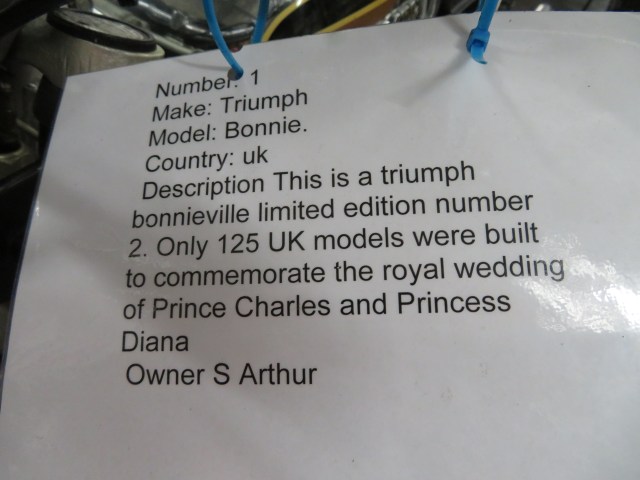
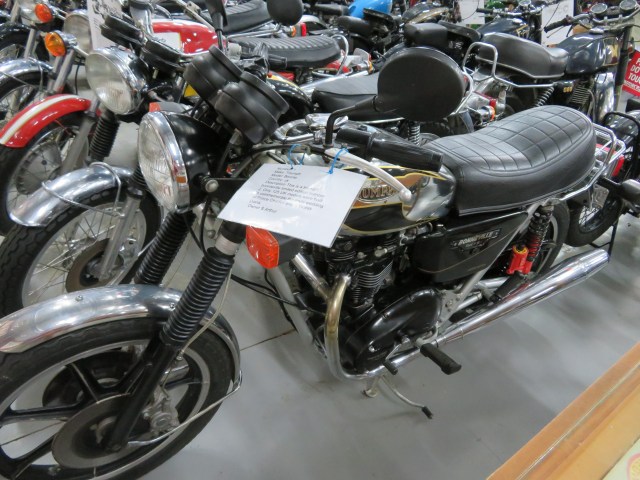
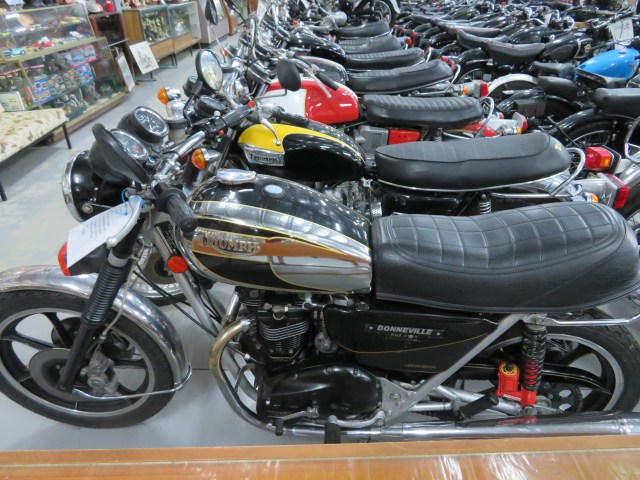
It seems funny to use a motorcycle to commemorate a royal wedding, but what do I know?
An Acme Board Racer:
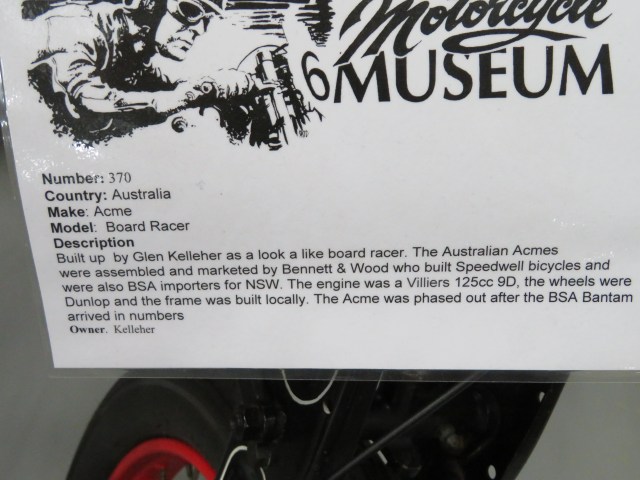
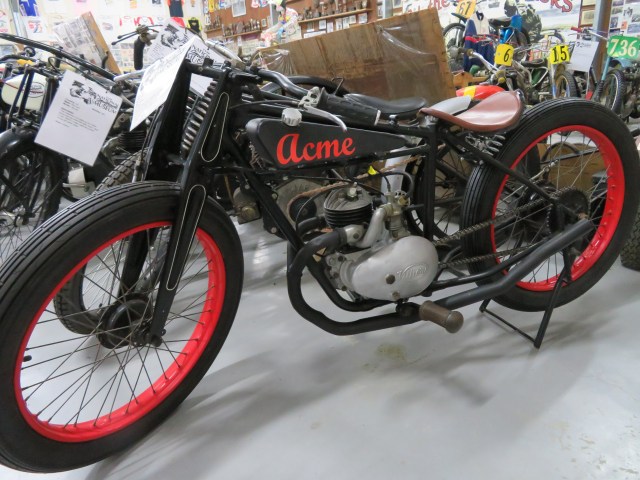
I just like that the Acme company genuinely existed, and has achieved immortality not through being a big business, but through cartoons.
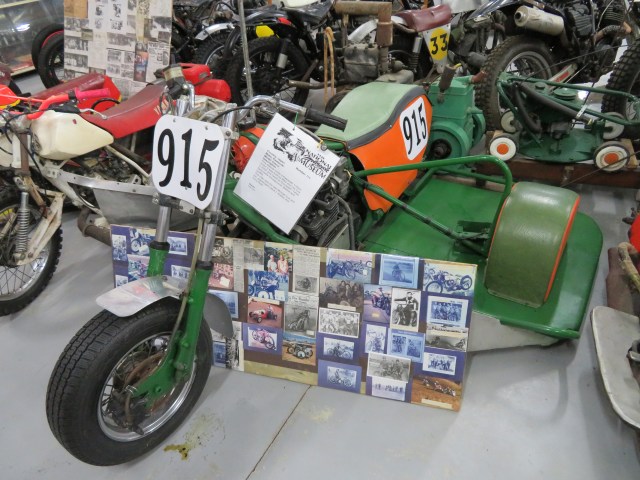
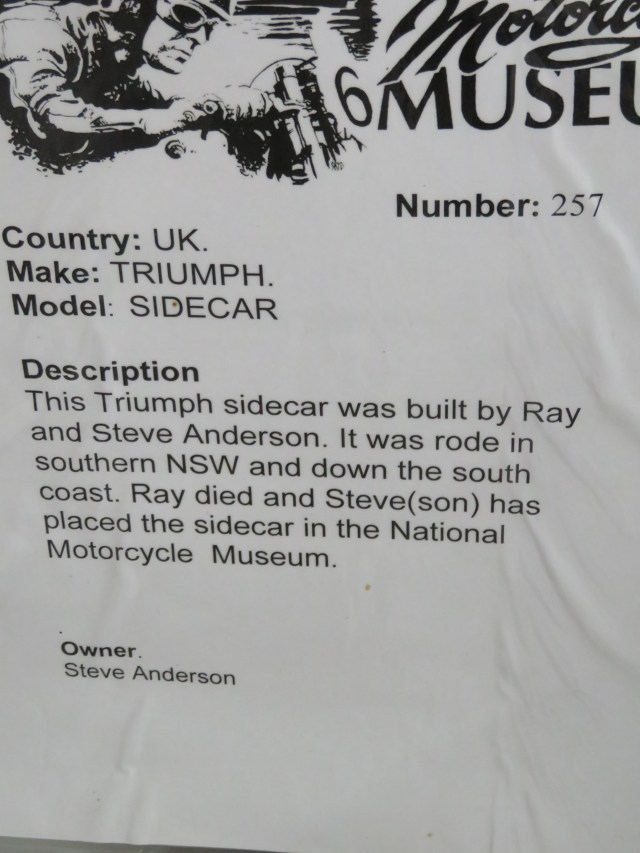
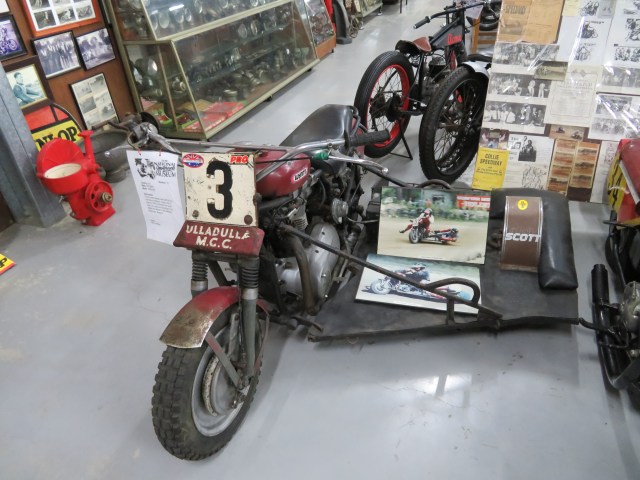
These next ones look very strange, until you realise they’re for sidecar racing, which looked something like this:
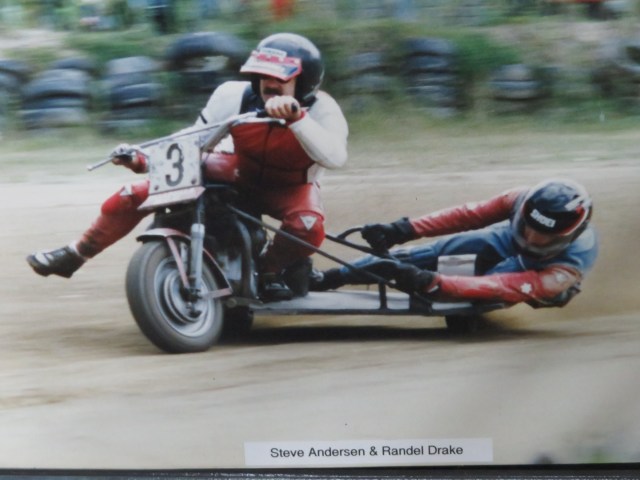
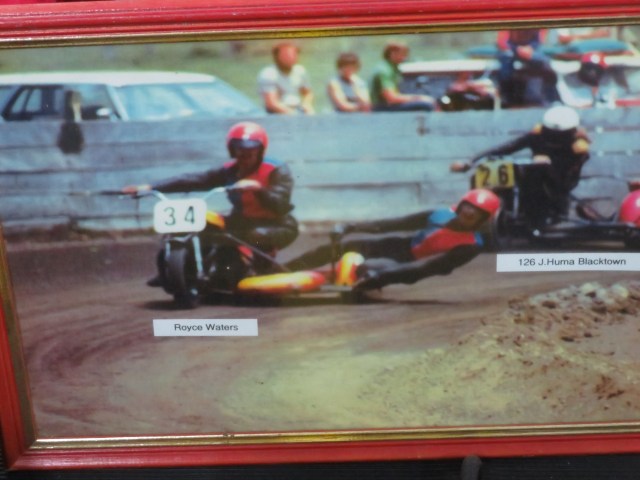
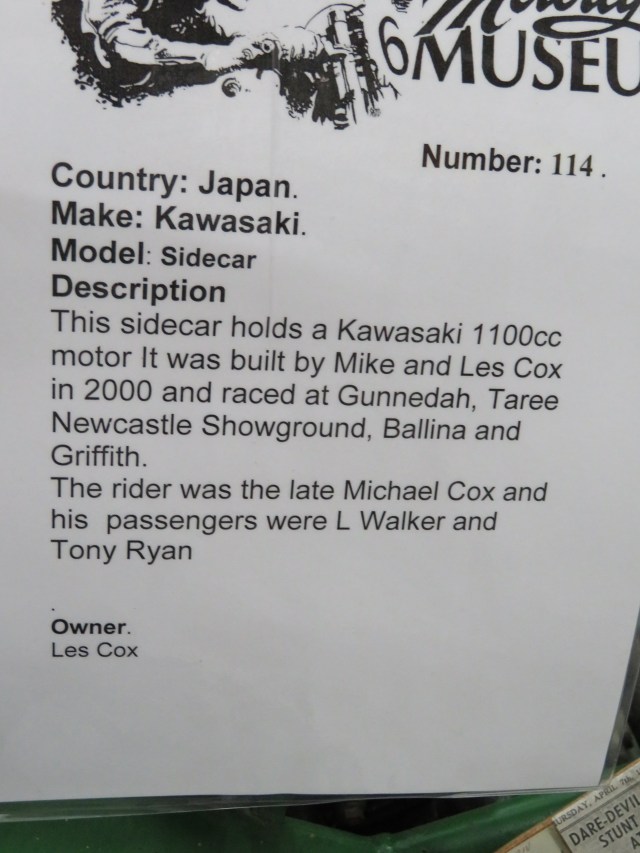
Crazy, in other words – though I will admit, some part of me thinks it would be a lot of fun to be the sidecar guy. These are a sample of the ones they had:
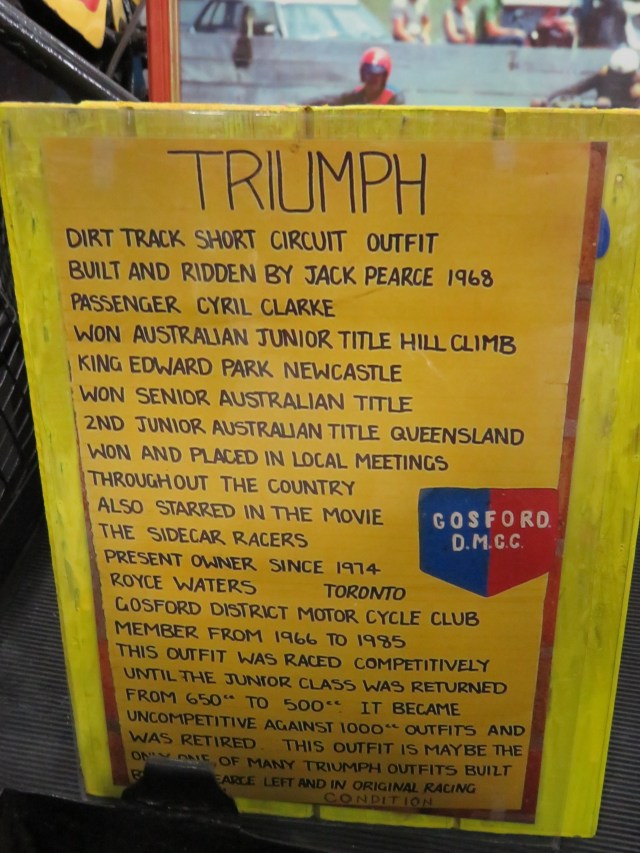
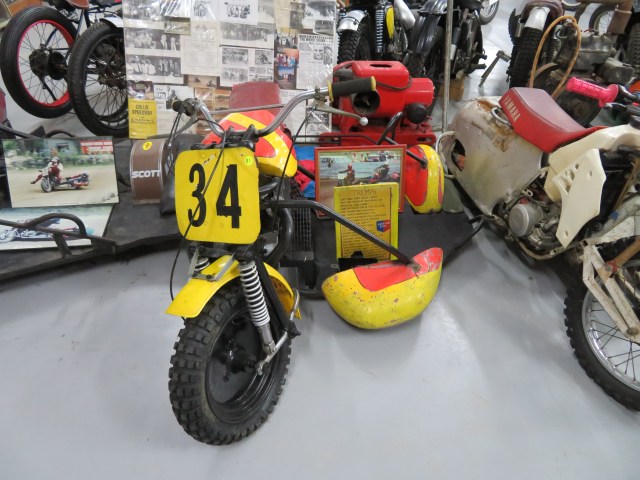
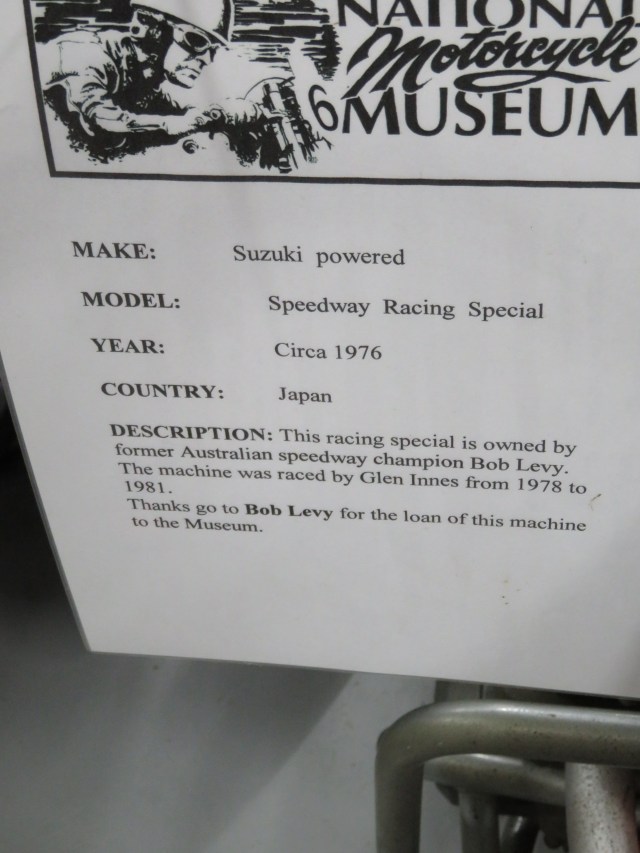
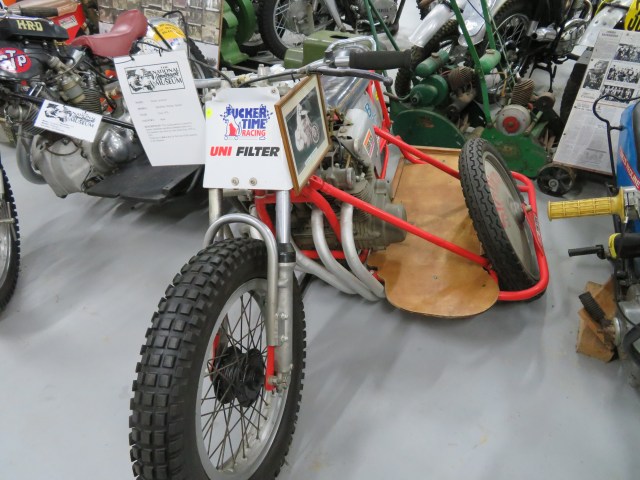
Now, back to the normal motorcycles; a 1931 Speedway:
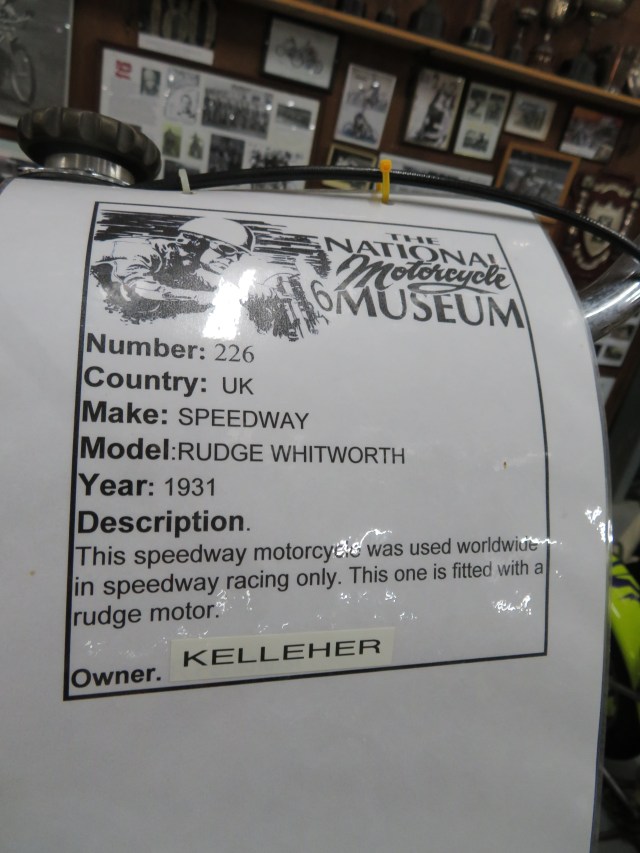
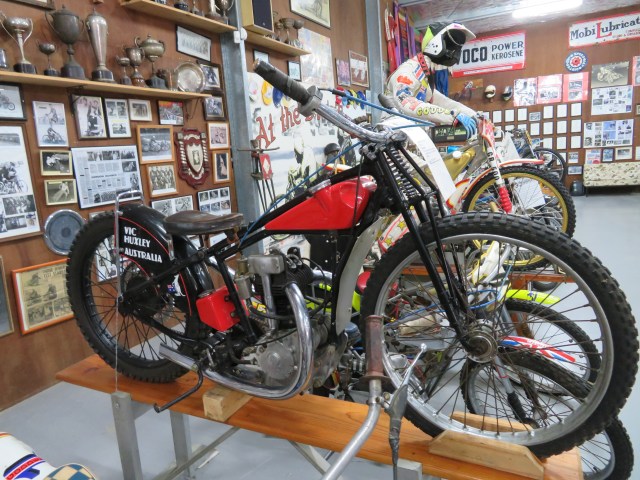
They had some cars as well. This one is a 1905 horseless carriage:
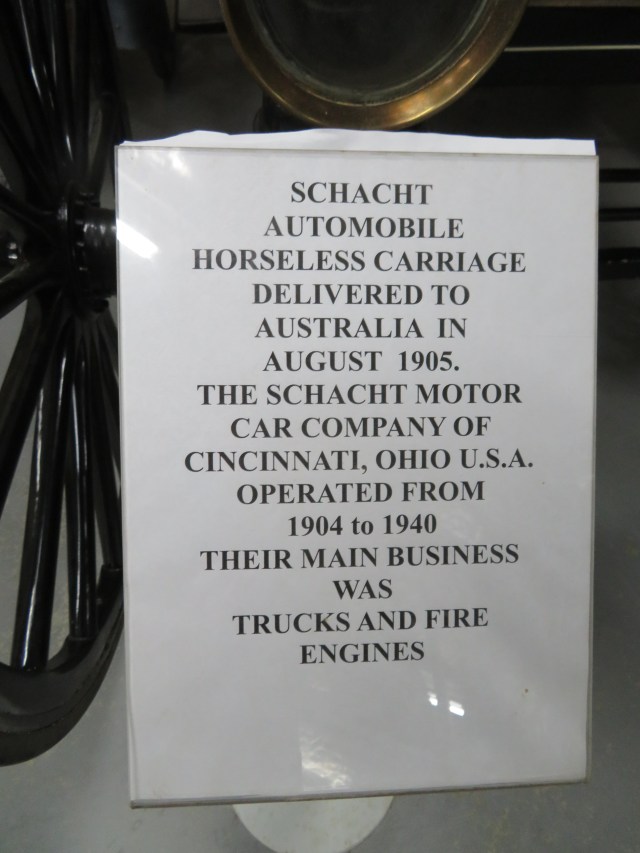
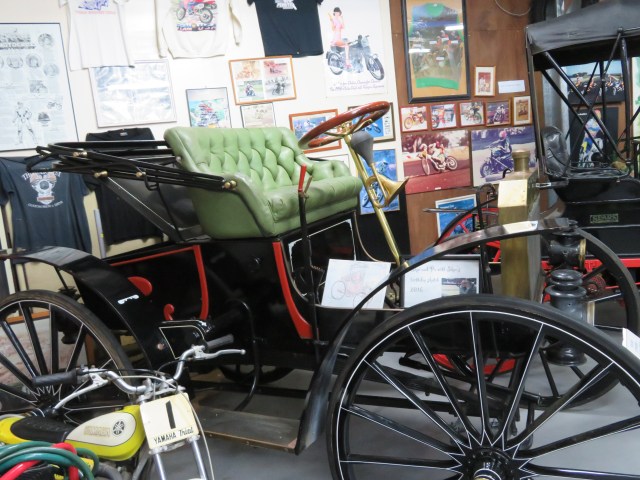
You can see how it got the name – it really does look like the kind of carriage a horse would pull, just without the horse. I like the horn attached to the steering wheel.
One without a steering wheel:
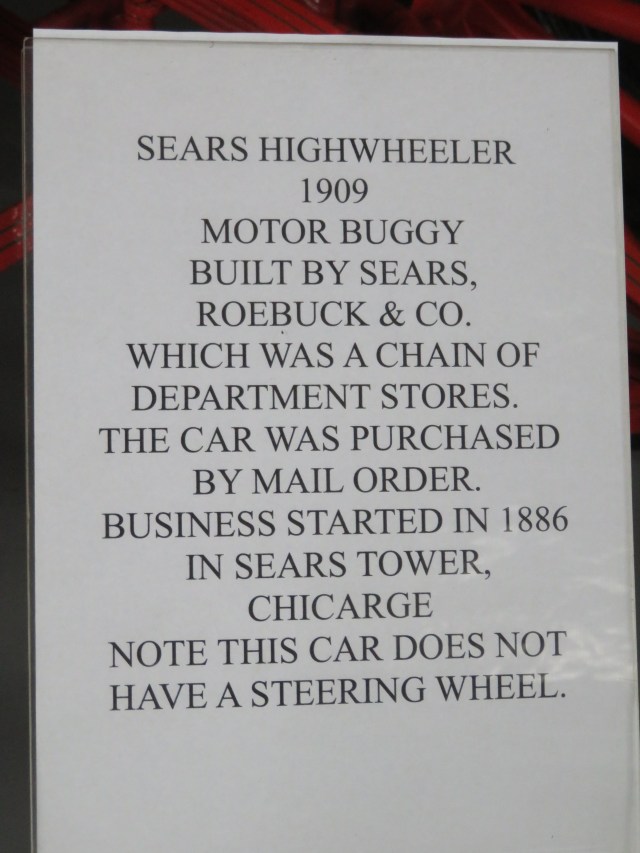
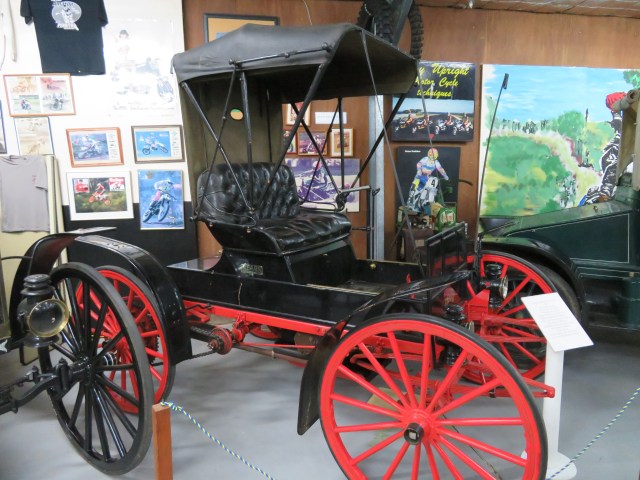
Instead, it had a steering bar:
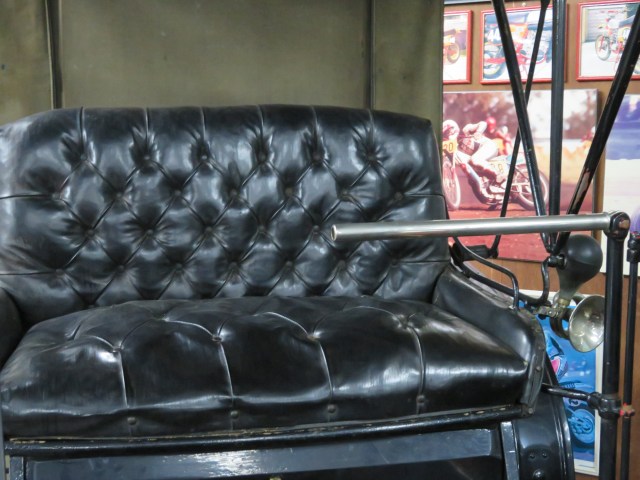
The would have been interesting to work. More like steering a canoe than a car.
This kind of car was the first made on an assembly line, which made them affordable to the working class:
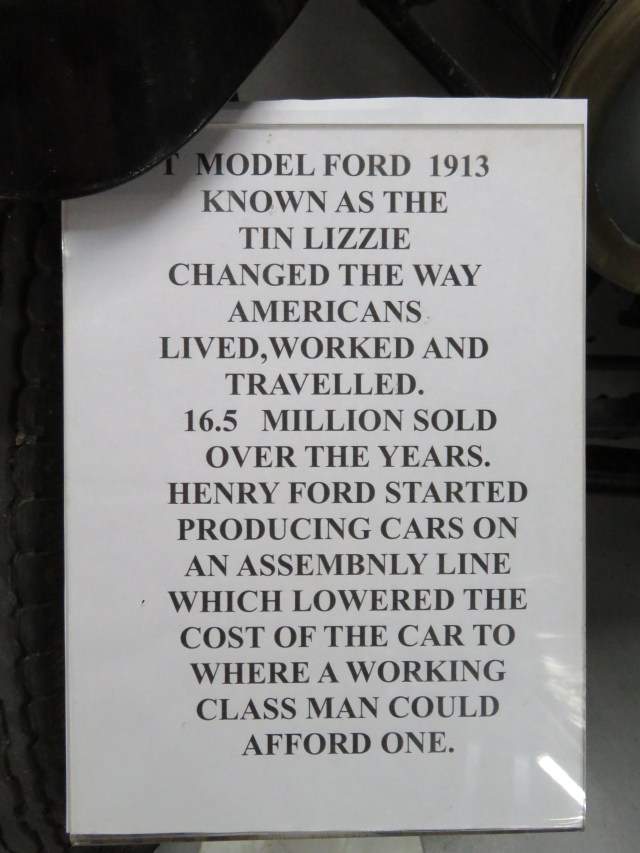
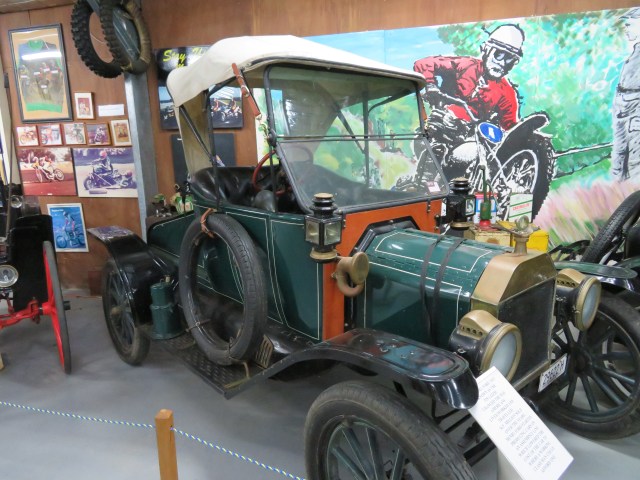
Basically, the assembly line is why everyone has a car, not just the filthy rich.
This one I included for the price:

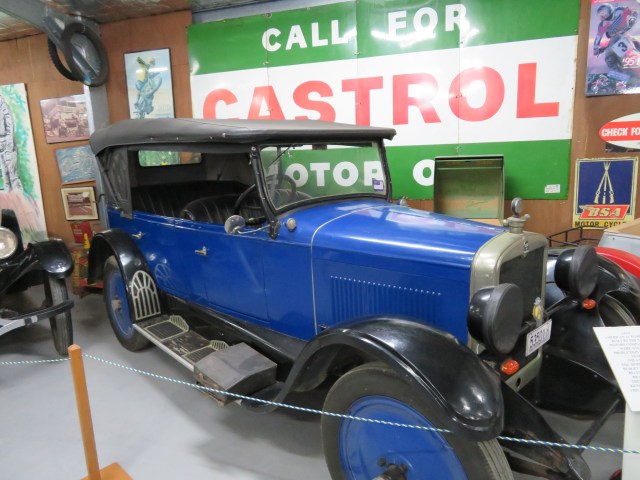
Inflation strikes again! Could you imagine buying a new car for less than a thousand dollars today?
Nash Coupe, 1935:
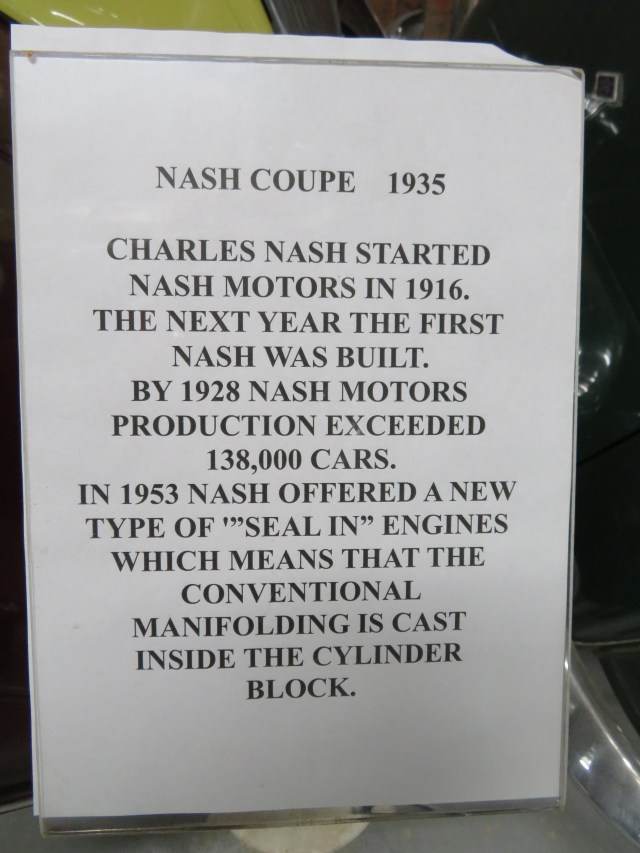
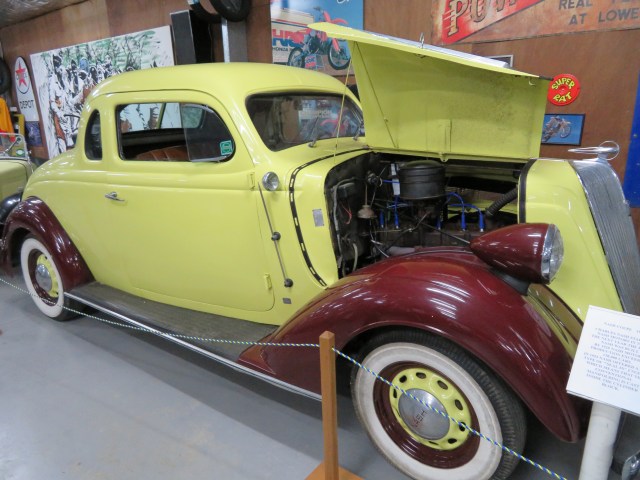
The ‘seal-in’ engine:
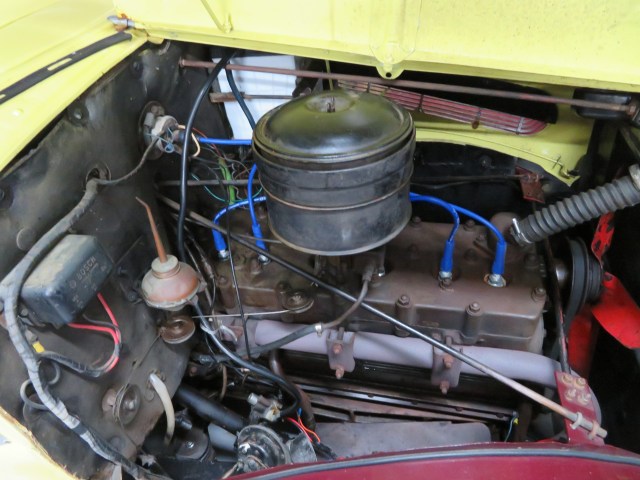
They also had some random petrol pumps scattered throughout the museum:


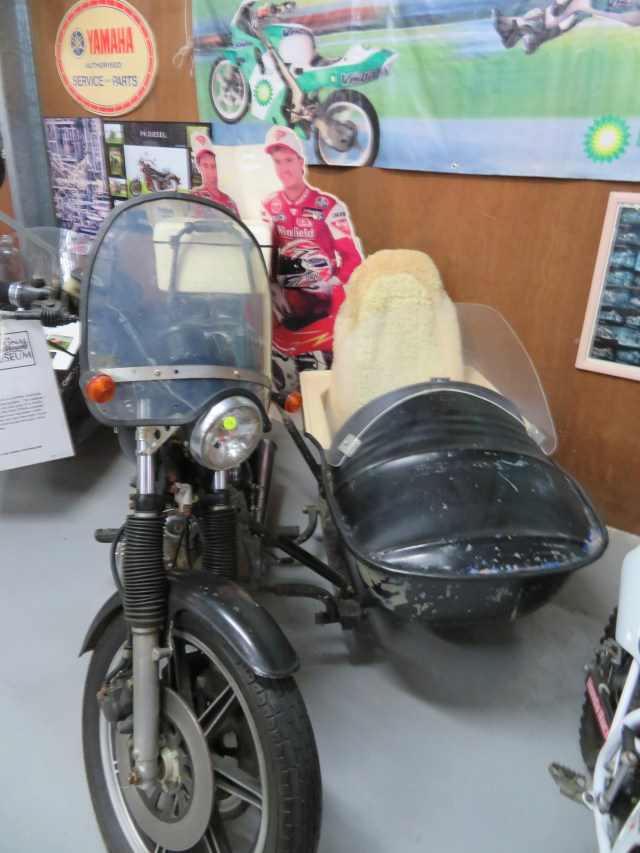
Yet another sidecar one, though this sidecar is a homemade one, constructed from a bathtub and a four-gallon drum:

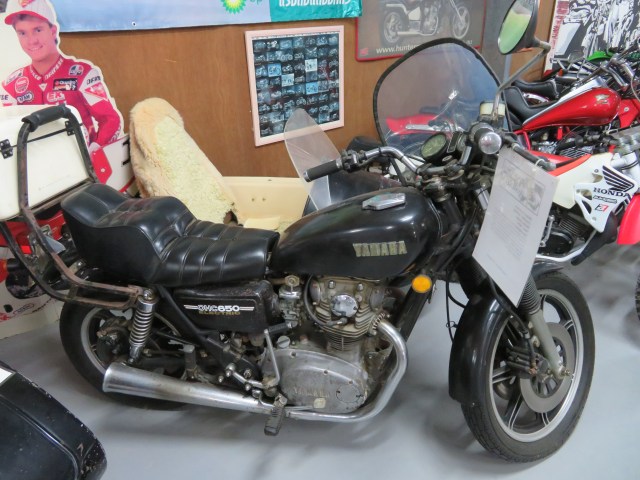
A close-up of the bathtub sidecar:
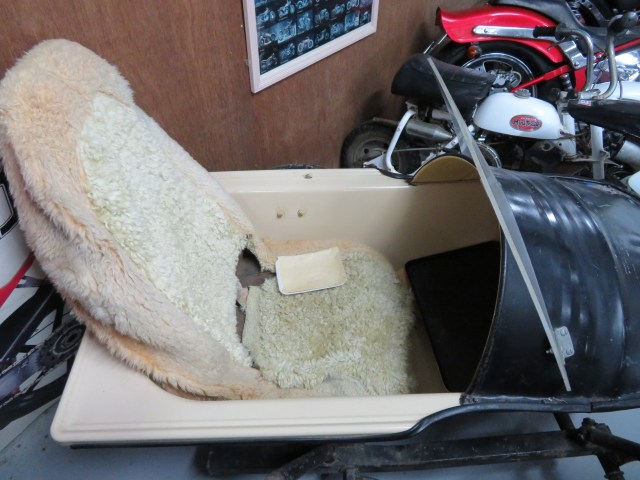
I think that’s really clever. A Puch Maxi moped:
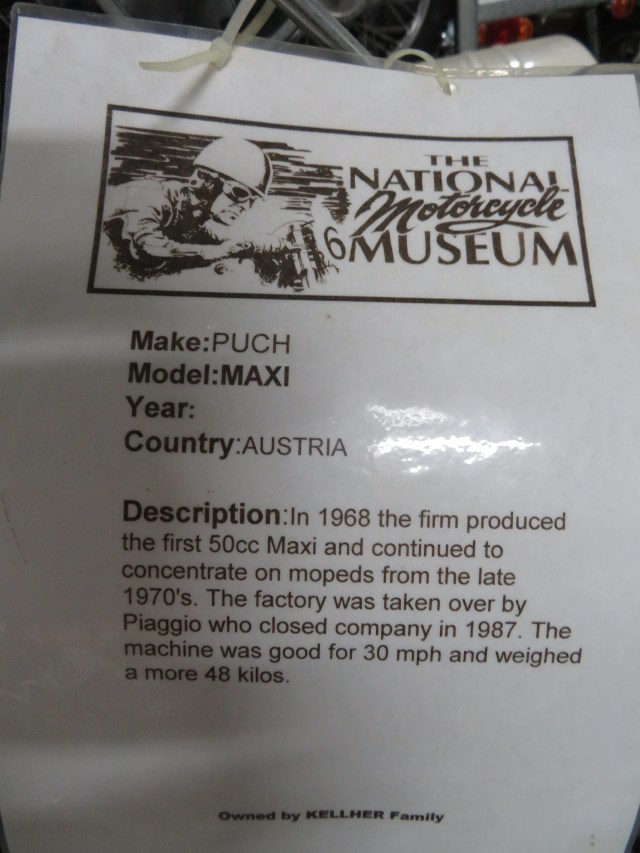
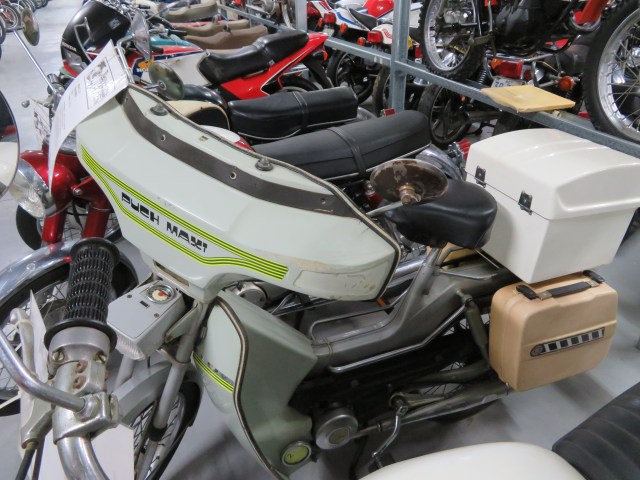
I have no idea why, but I find that huge covering on the handlebars funny.
A tiny Ariel (with me for scale), made in 1970:
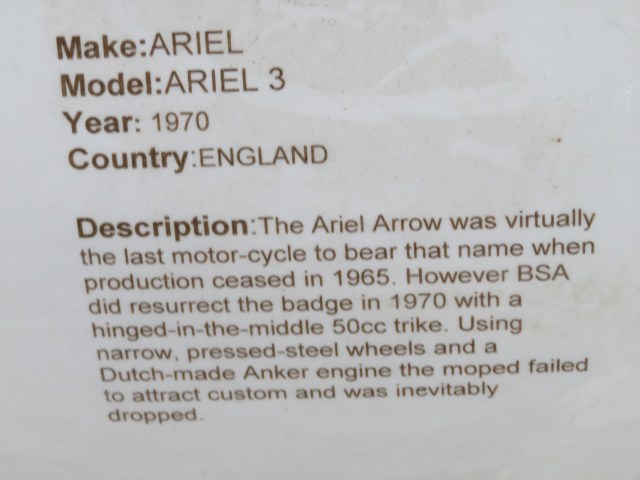
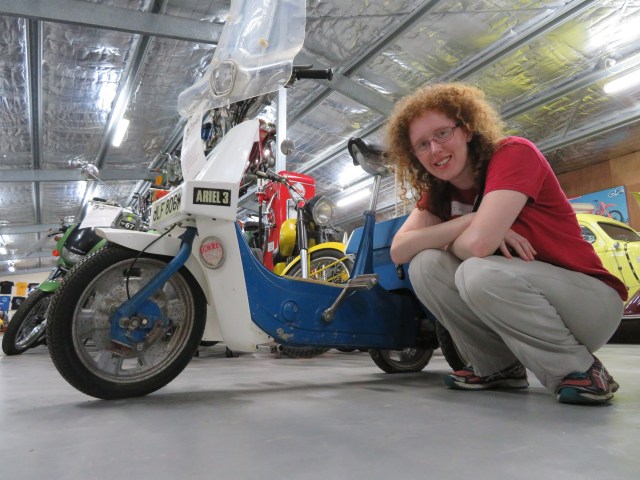
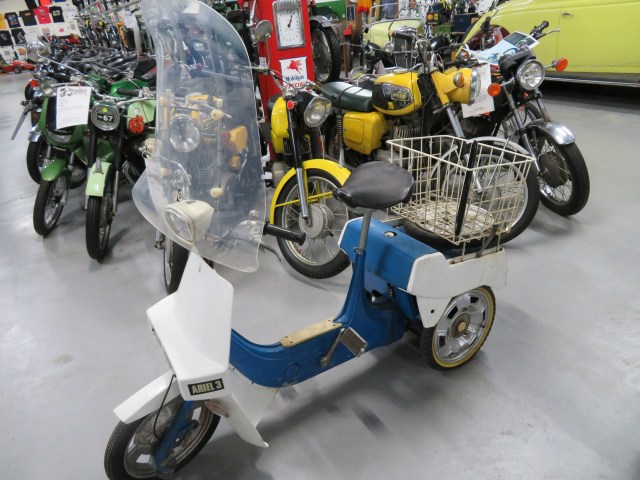
I love the giant plastic windscreen.
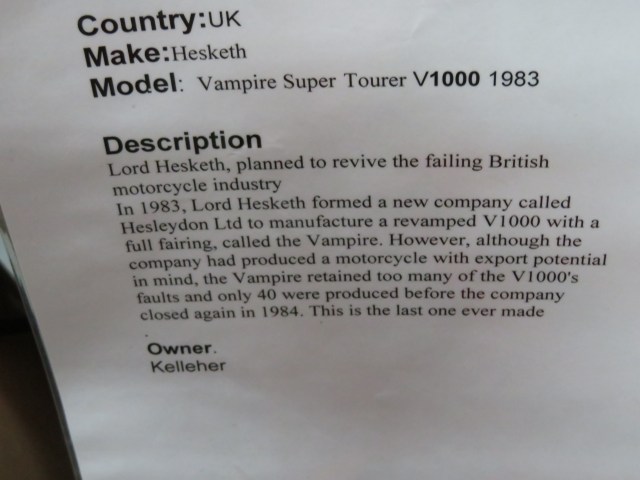
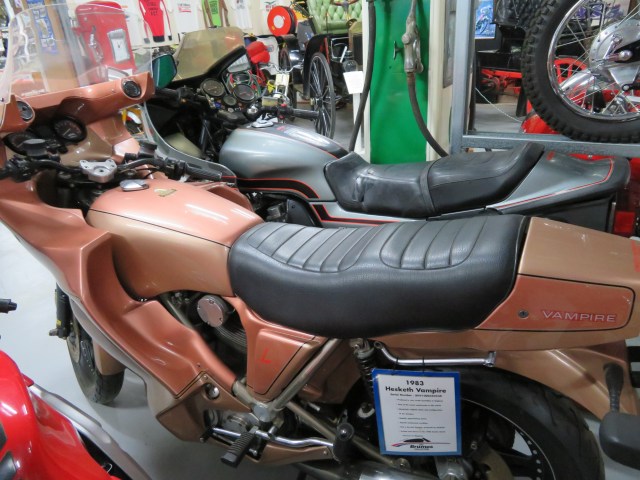
From dwarfs to giants, this next motorcycle – the 1983 Vampire Super Tourer – is very big:
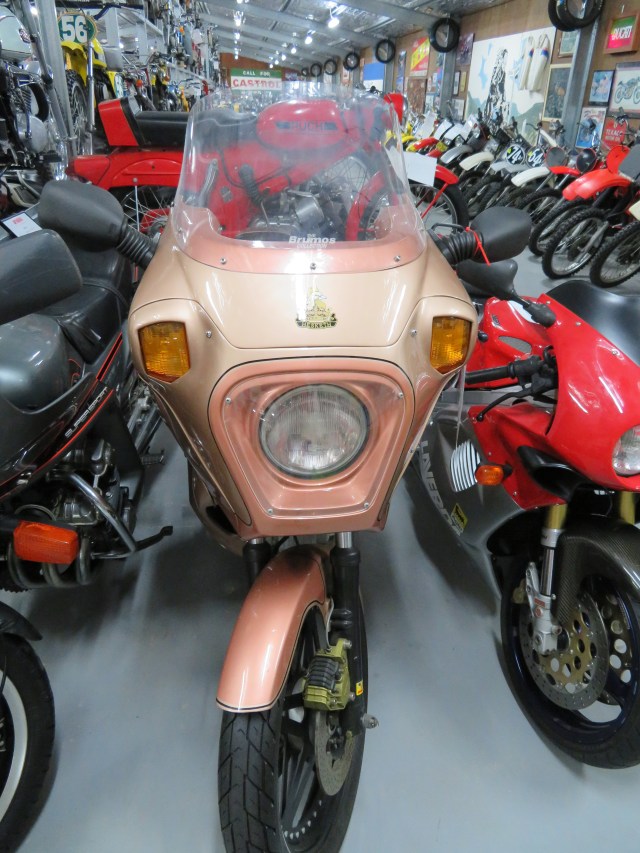
I also took a close-up of the crest on the front of the bike, because…well, look at it:
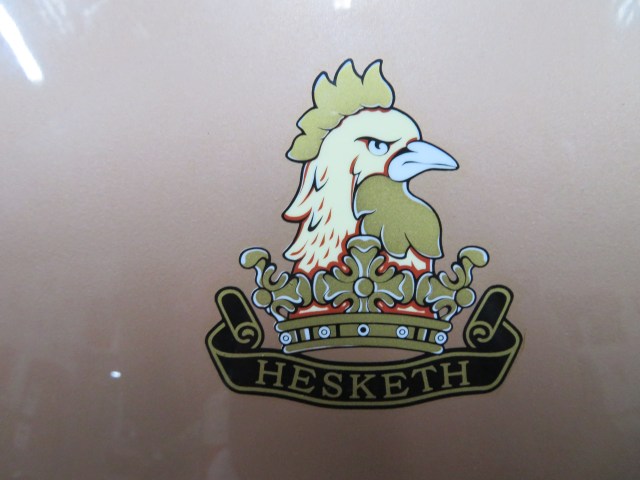
The angry chicken deserves to be commemorated.
1951 Sports:
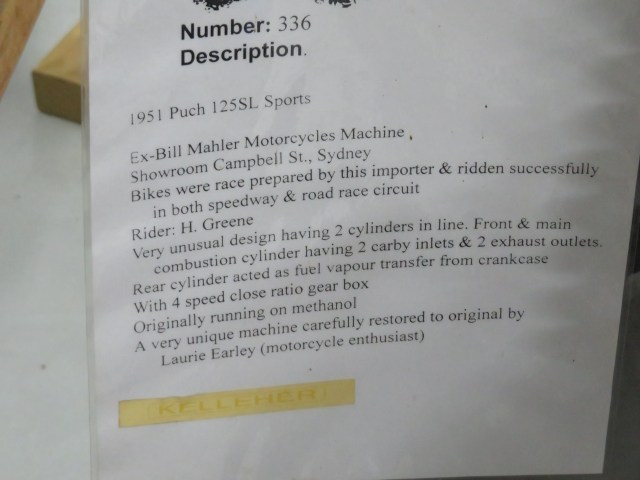
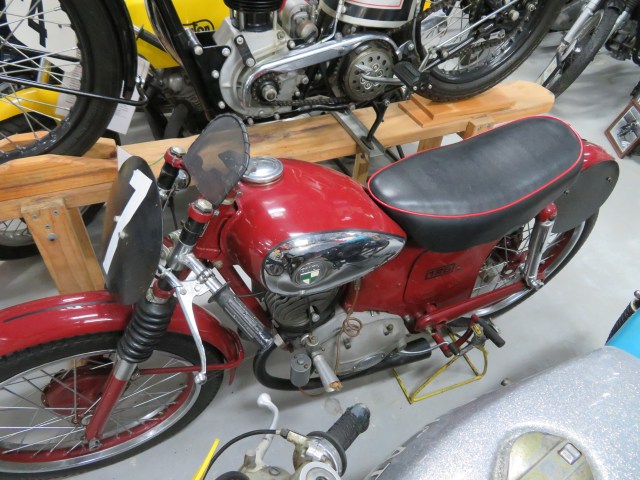
1948 Corgi, a folding scooter:
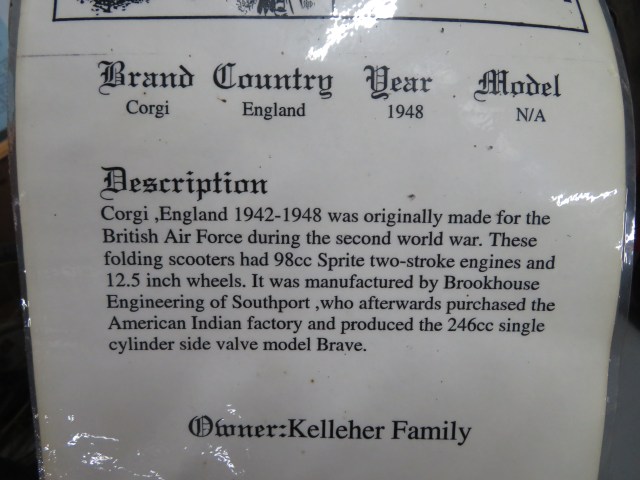
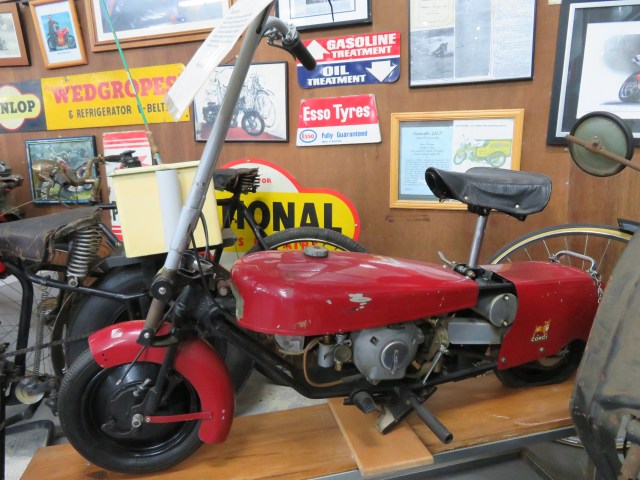
For scale:
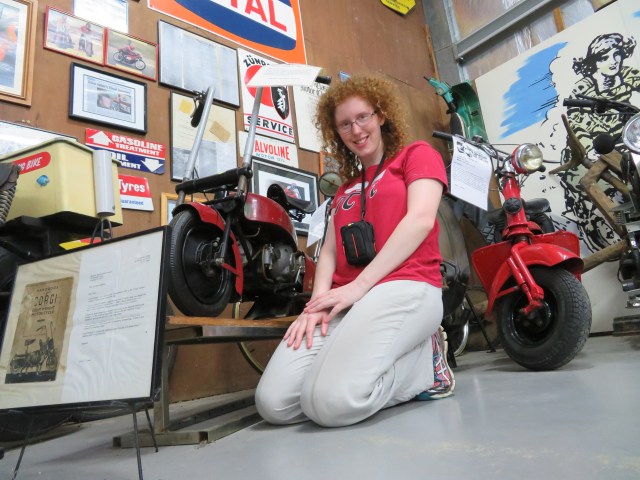
And remember, that’s on a little wooden, stand, not on the ground. This was seriously miniscule.
A wonderful name for a scooter – the Gadabout:
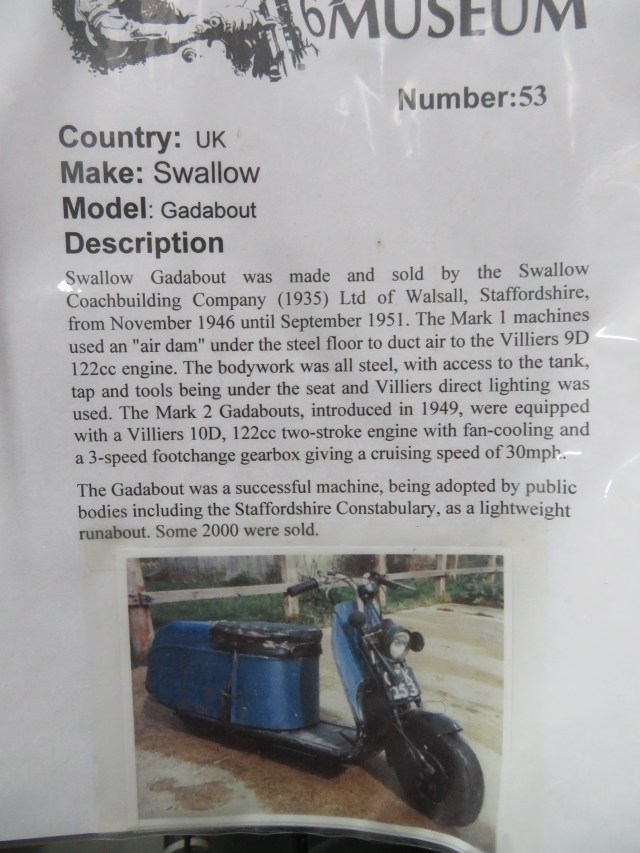

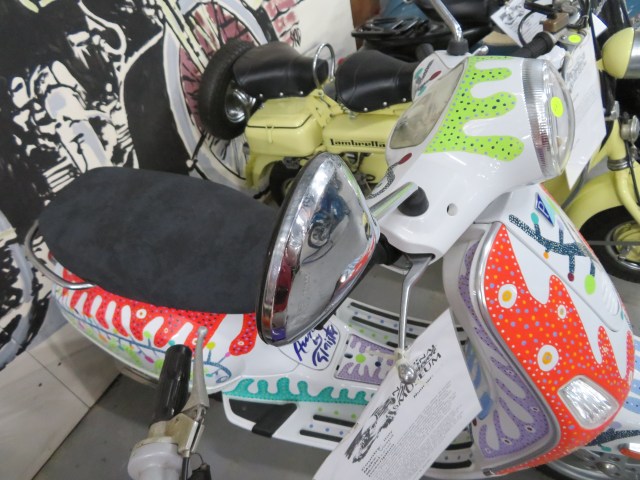
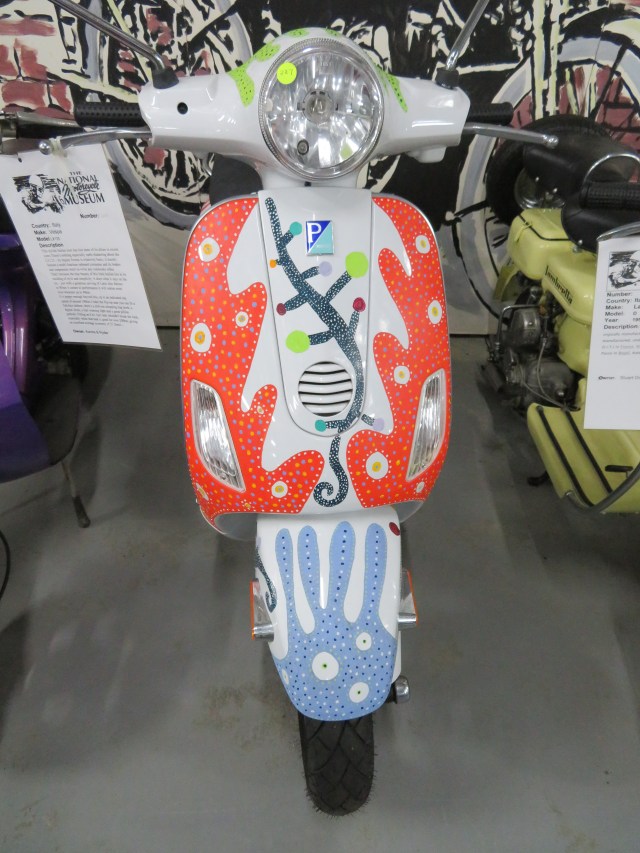
It really fits, doesn’t it? Now this name should be familiar – Vespa – but I took the photos because of its paint job:
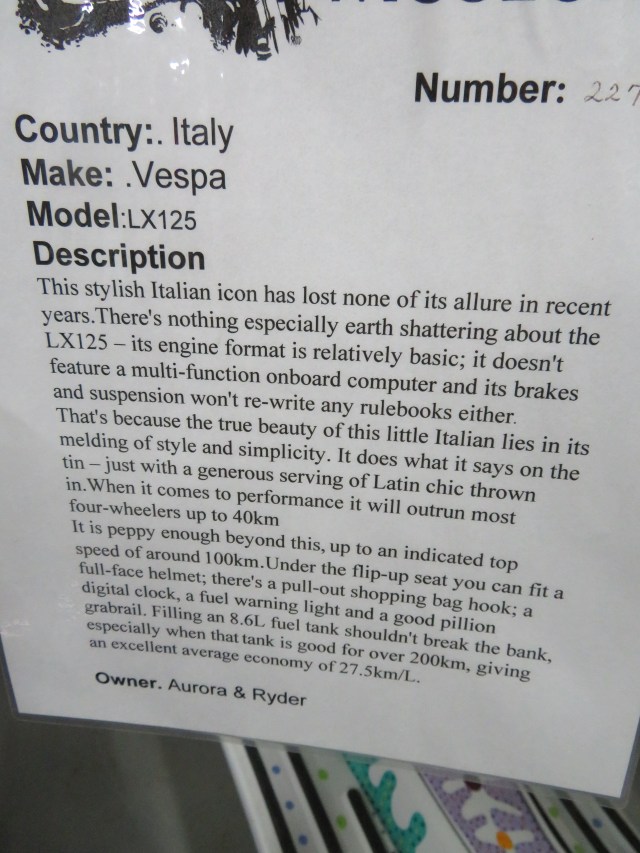
This kind of motorcycle was known as ‘Boy Racer’:

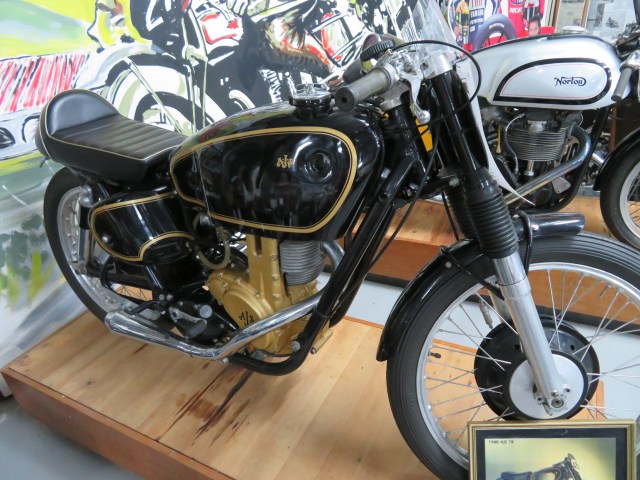
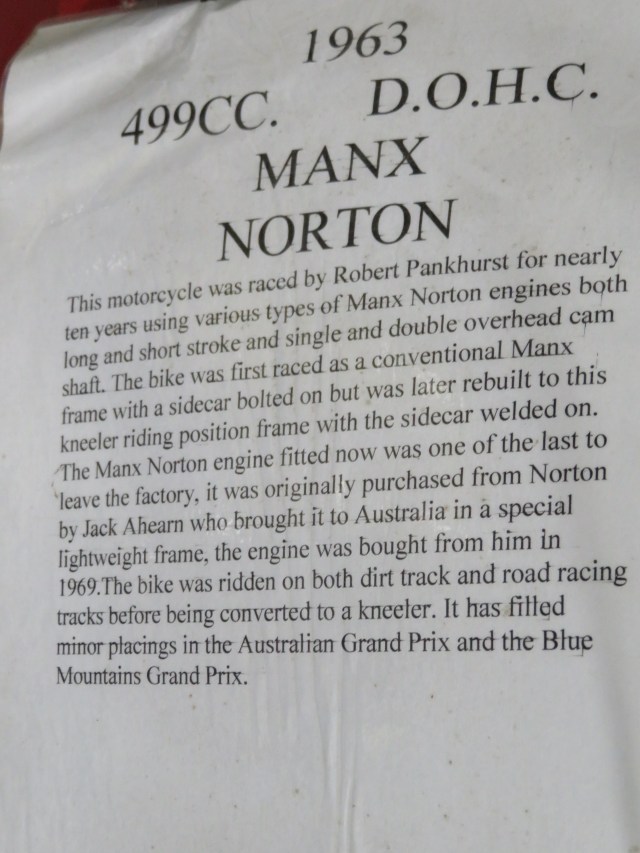
More sidecar racers, just because they look insane – a 1963 Manx Norton:
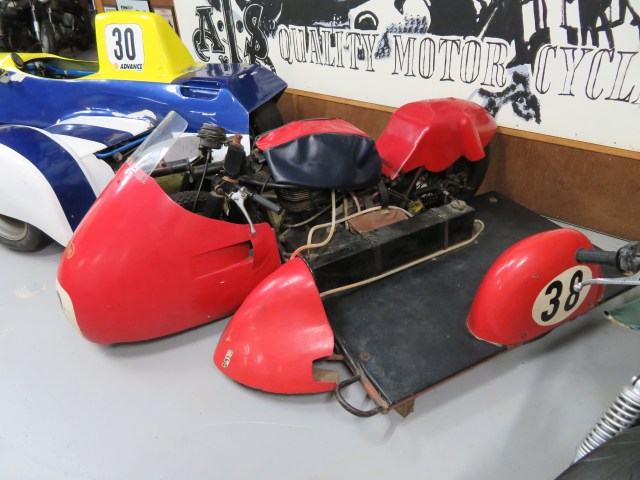
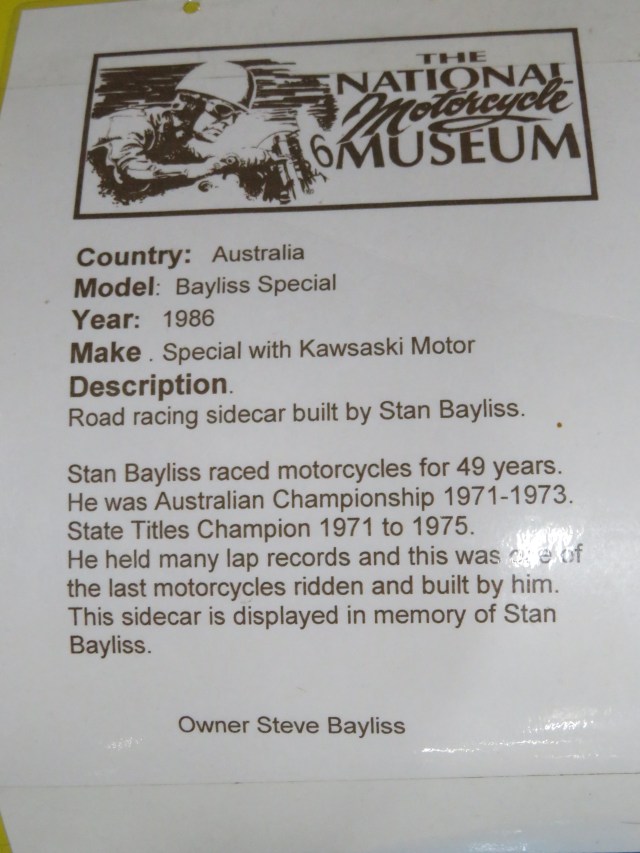
Bayliss Special, 1986:

Yes, that’s still a motorcycle, not a car. Technically.
Now, back to the regularly-scheduled motorcycles, with a 1960 Honda Benly:

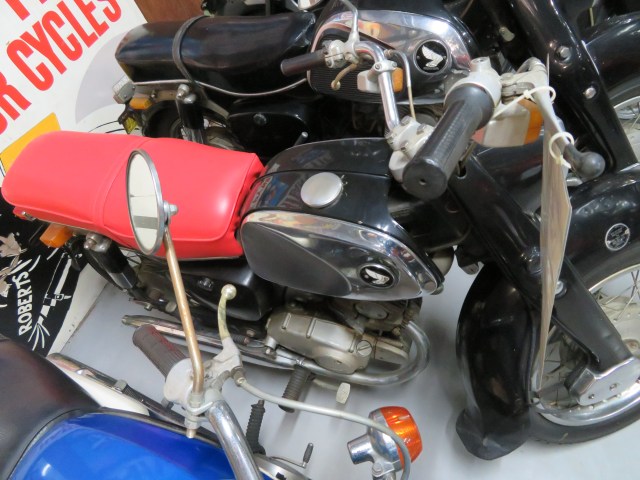
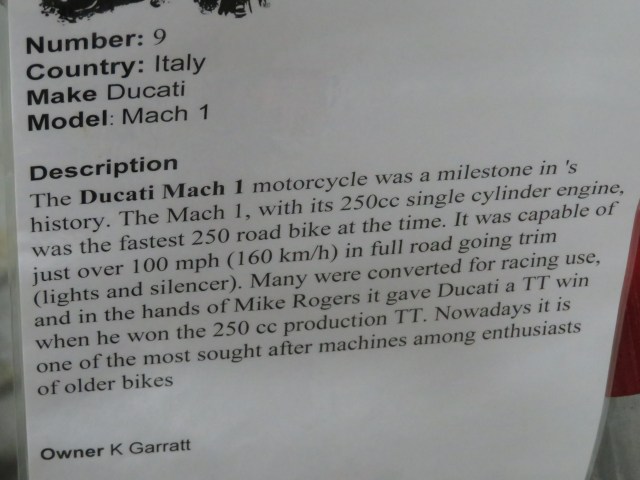
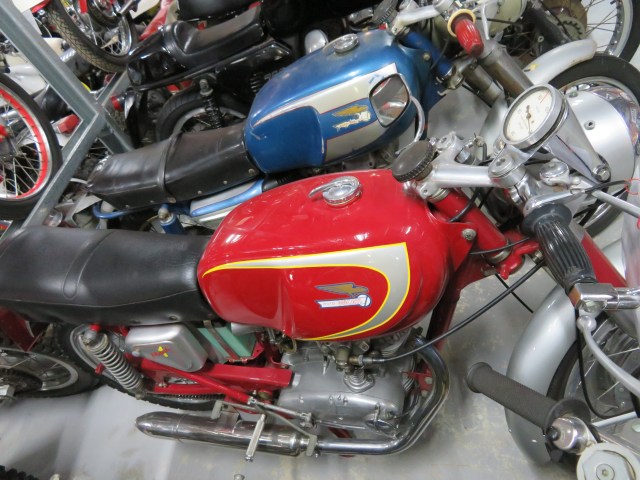
Ducati Mach 1:

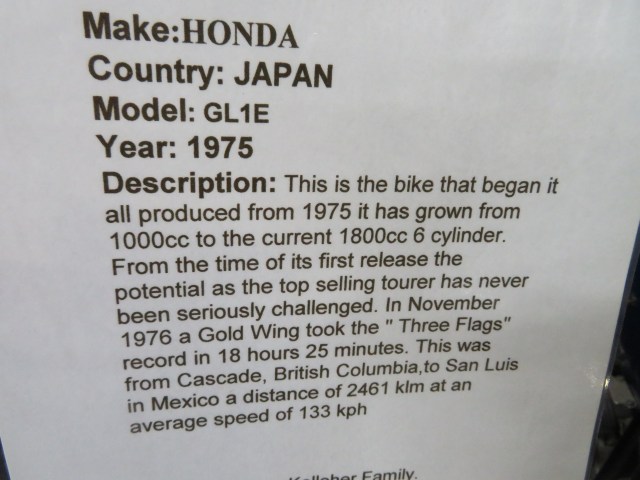
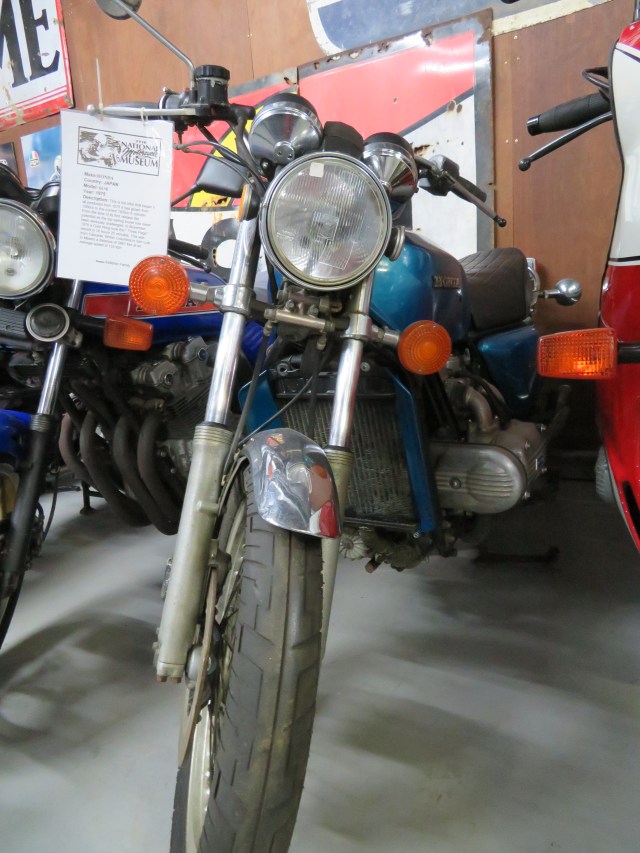
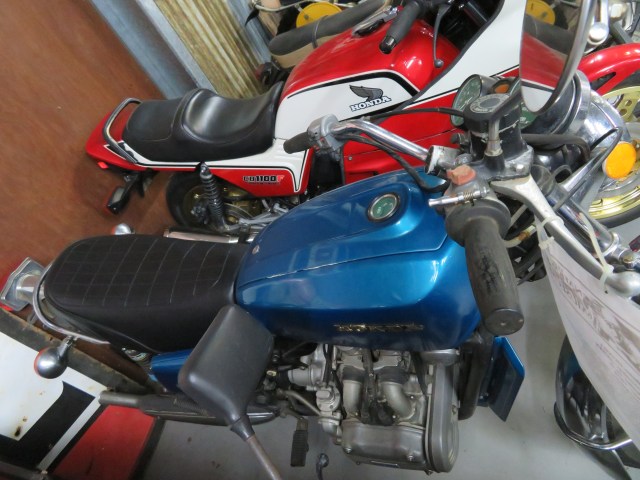
1975 Honda:
Another popular police bike, from BMW:
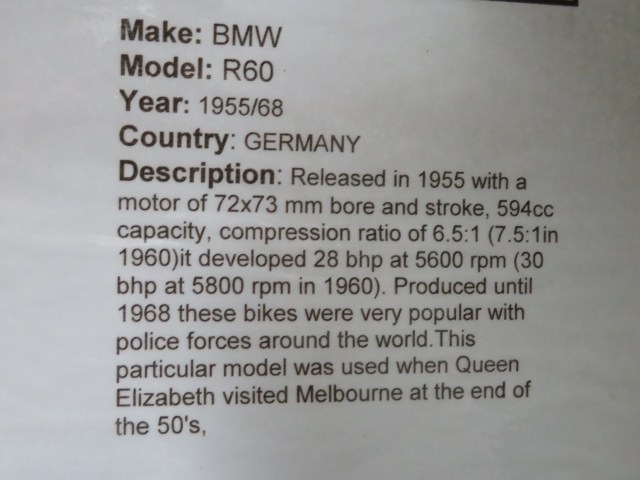
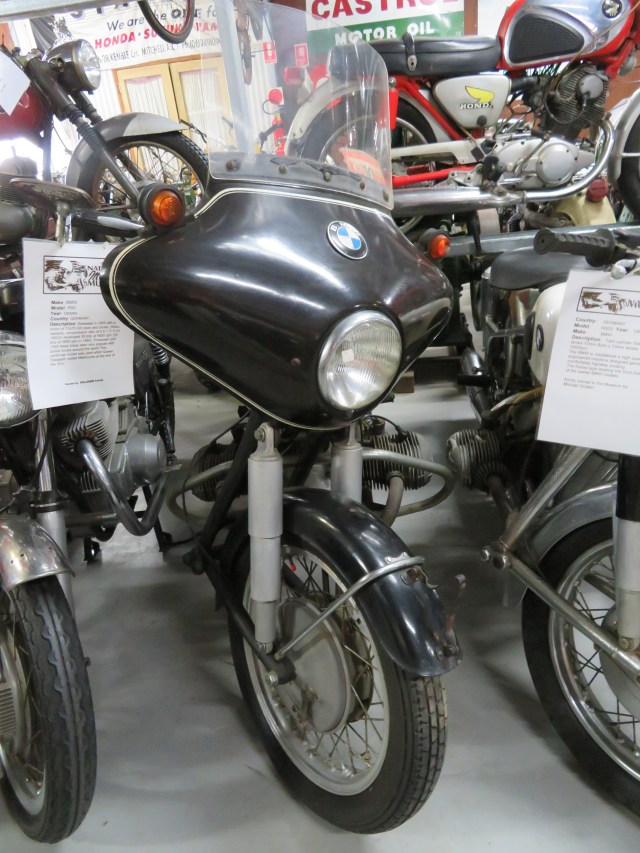
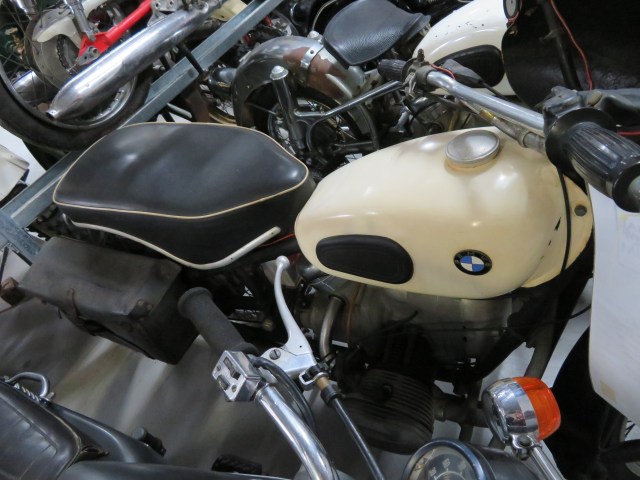
This is a 2007 Harley Davidson “Fatboy”, that went through the Maryville fire:
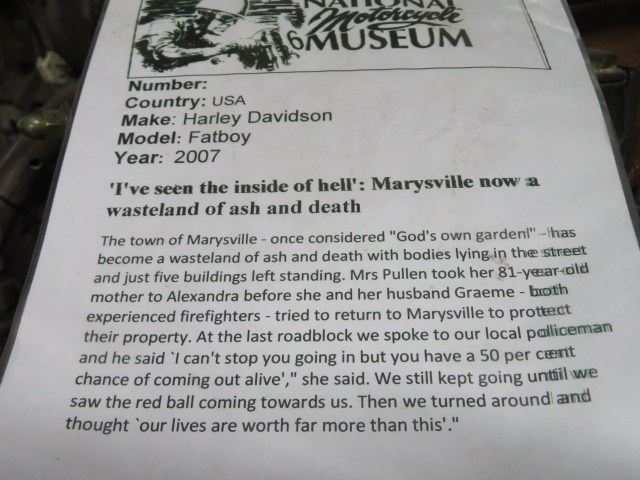
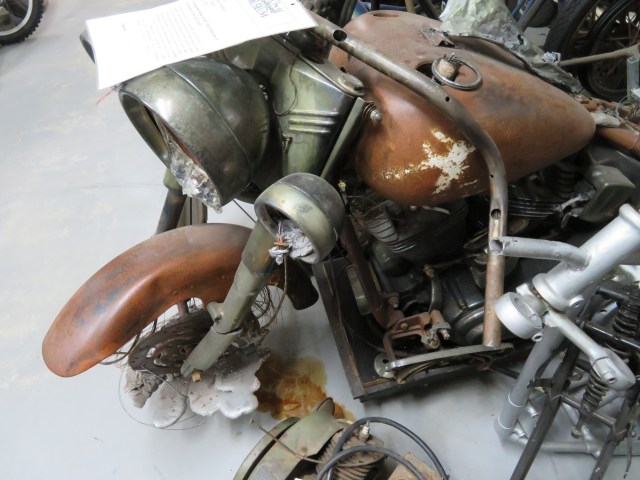
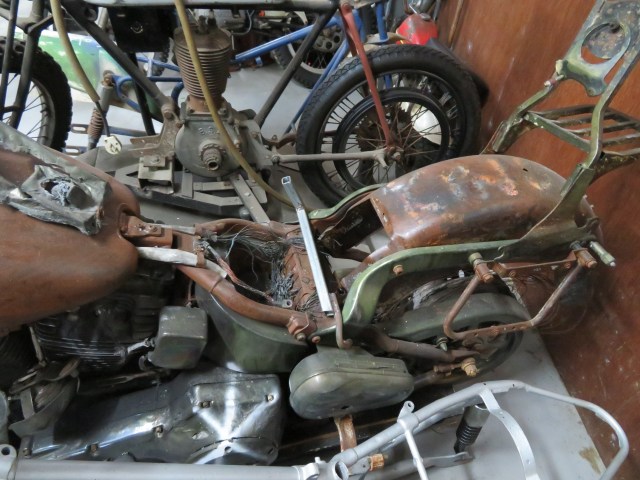
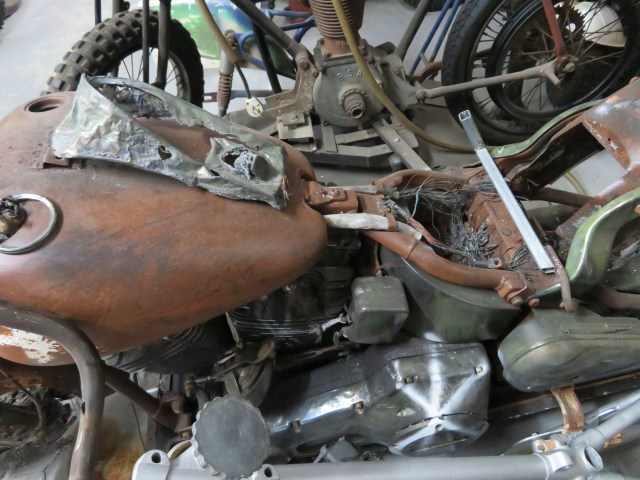
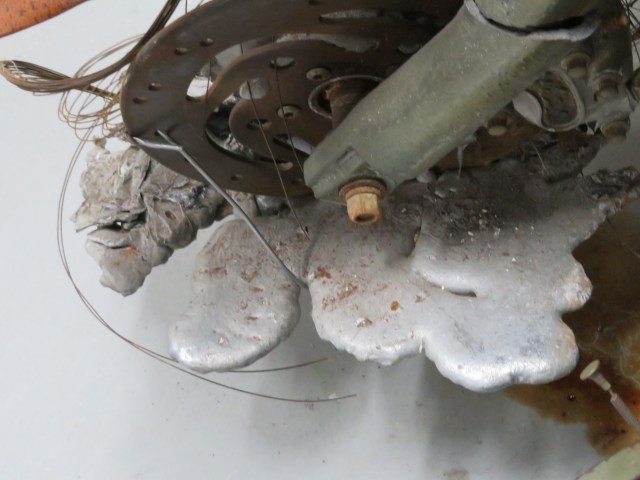
You can see where the alloy around the rims has melted and puddled underneath it:
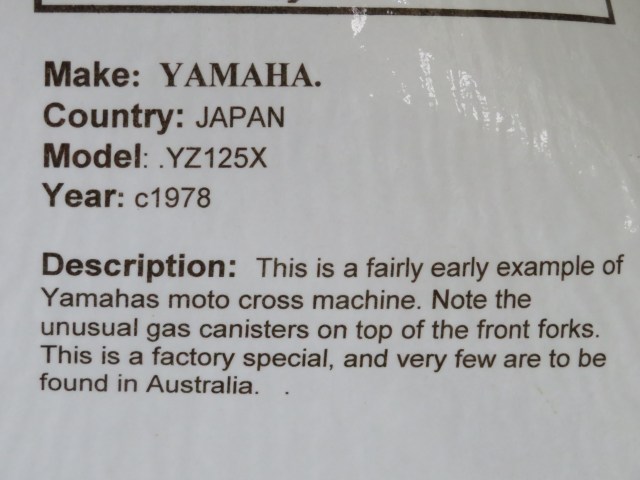
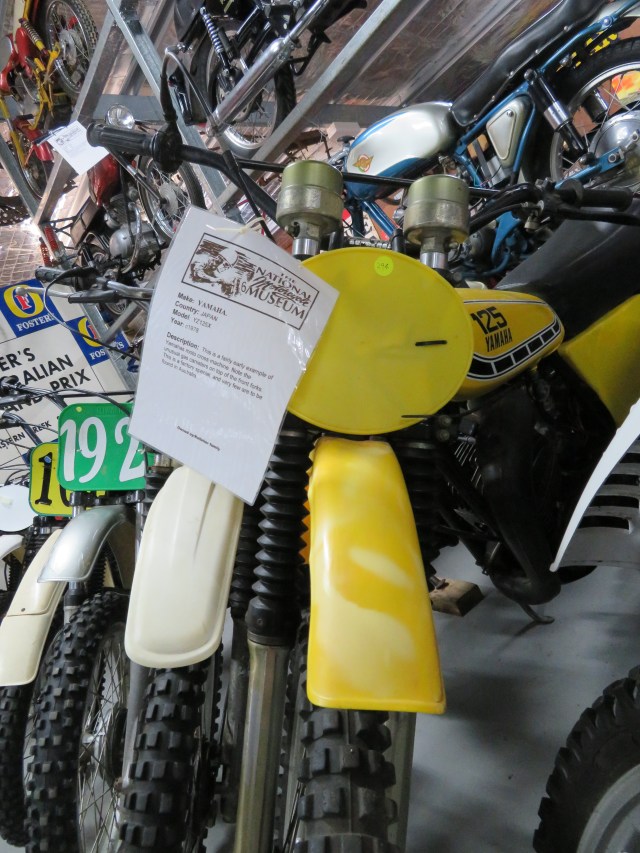
Yamaha motorcross machine:
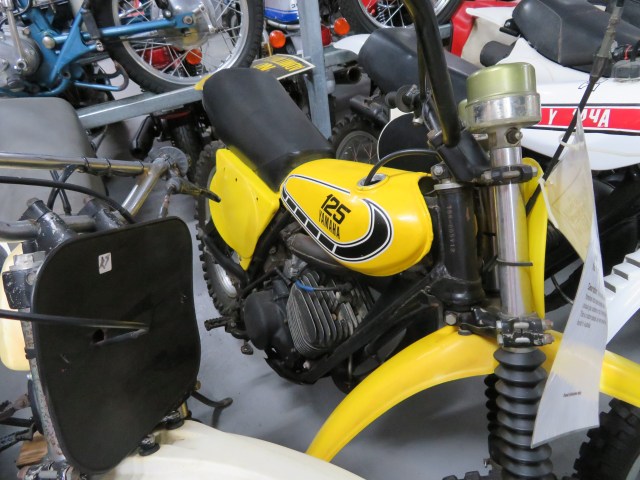
The front, with the gas cylinders on display:
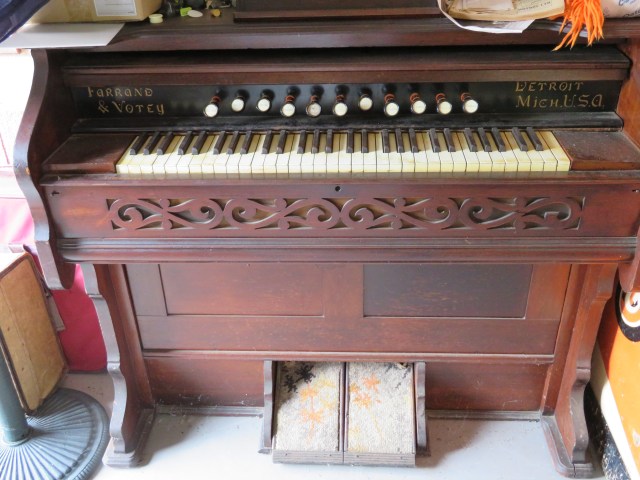
They also had a really old piano tucked away for some reason:
Right next to it was an old motorcycle arcade game: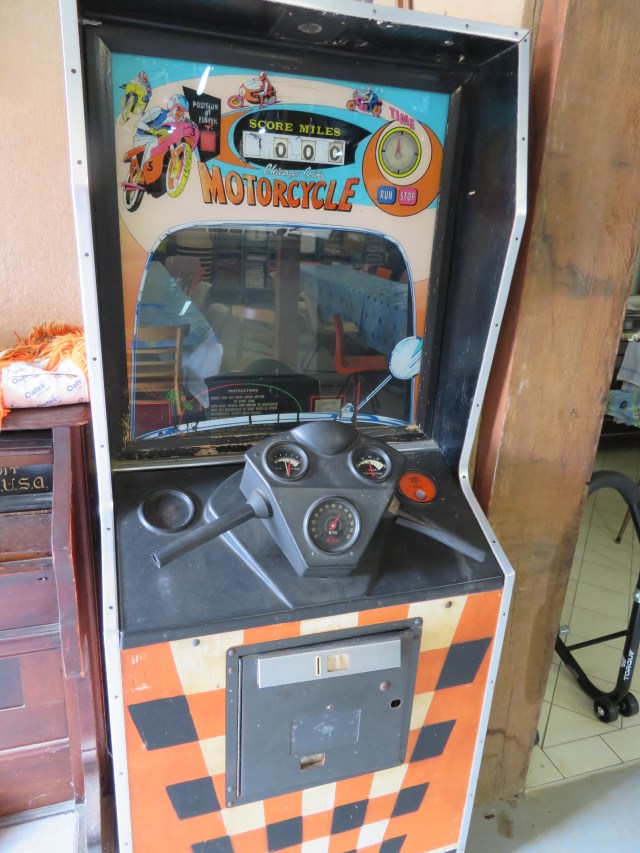
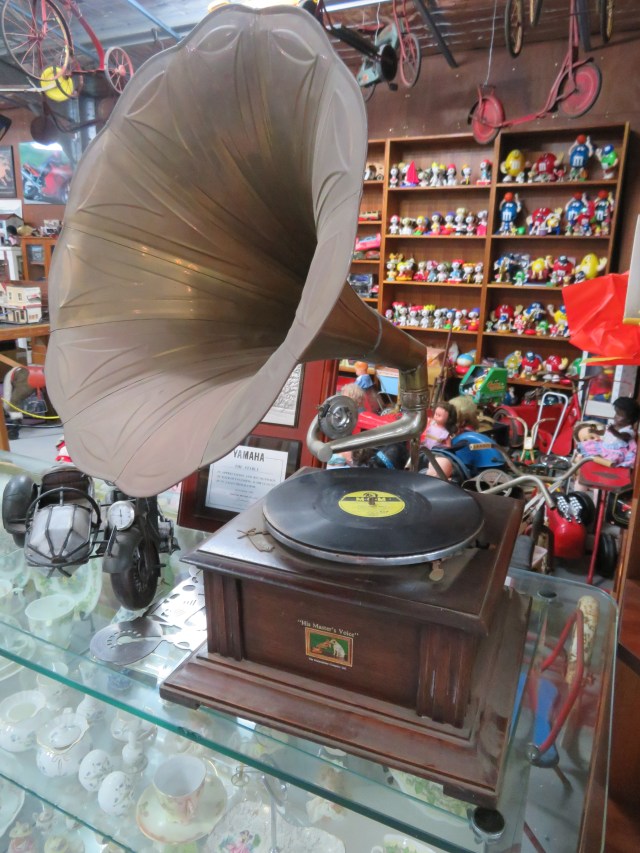
As I was leaving, I noticed a gramophone among the toys:
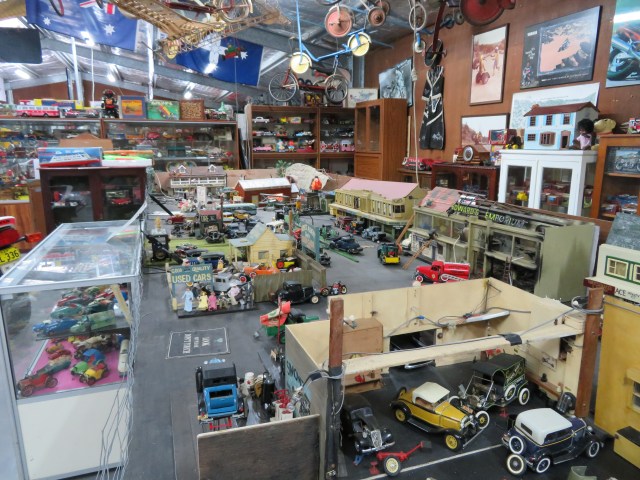
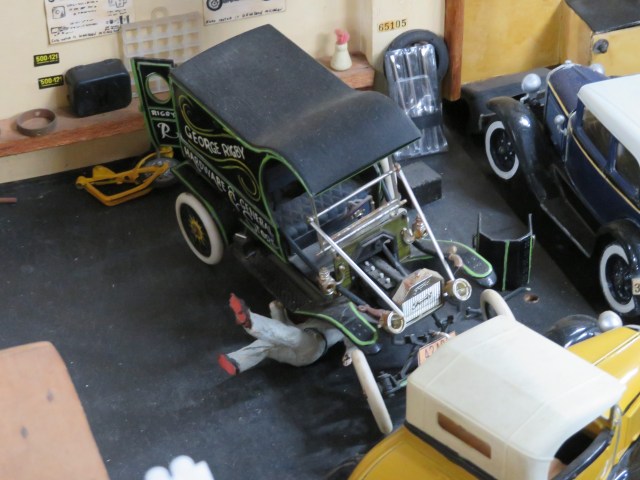
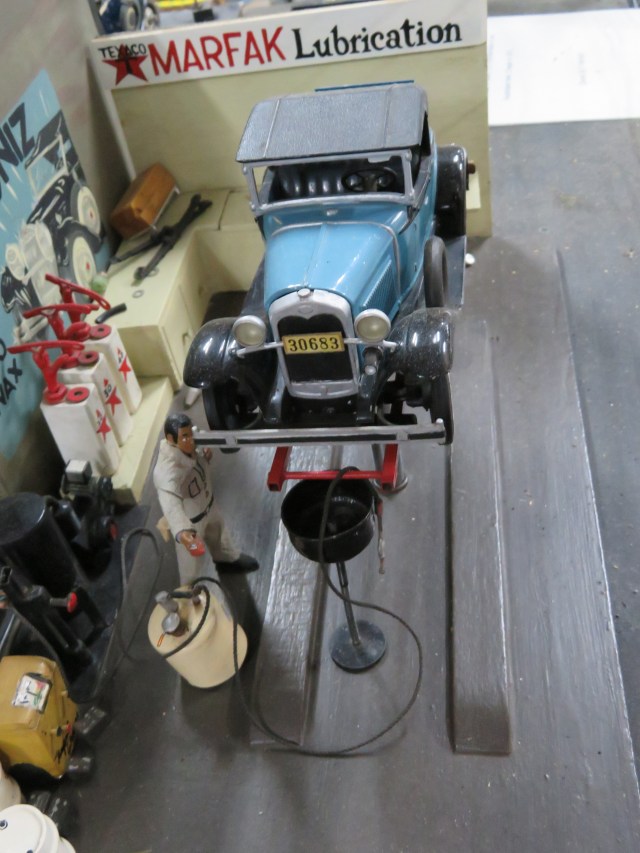
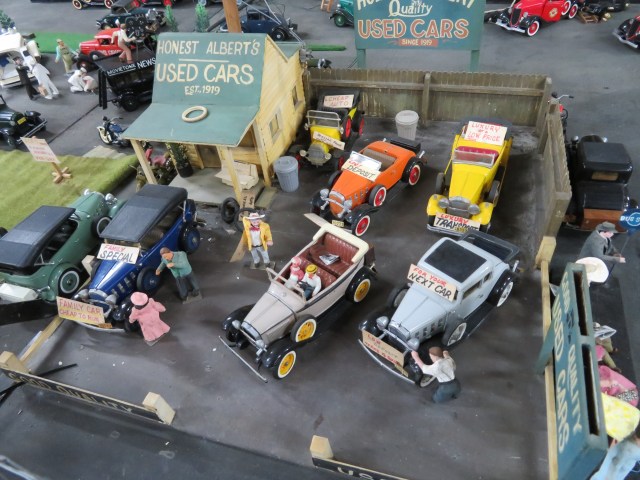
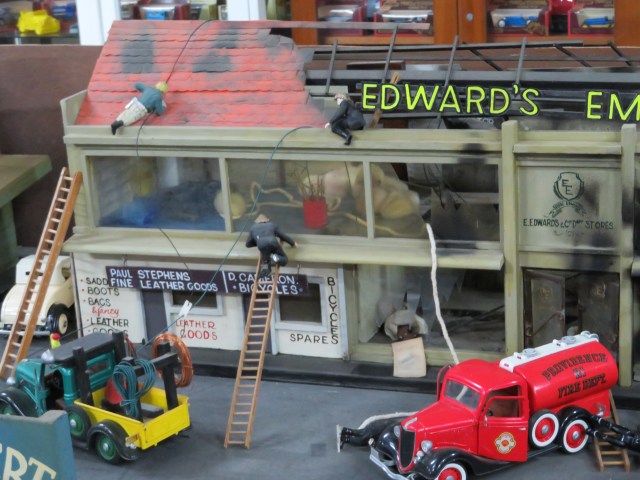
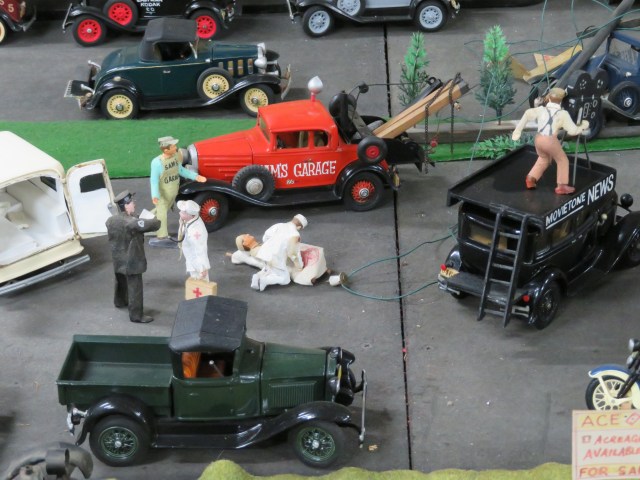
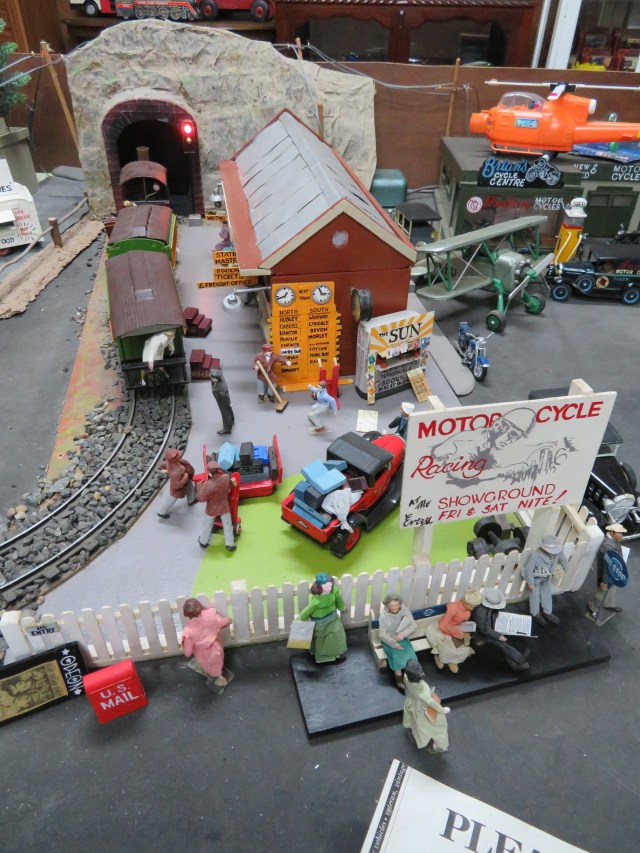
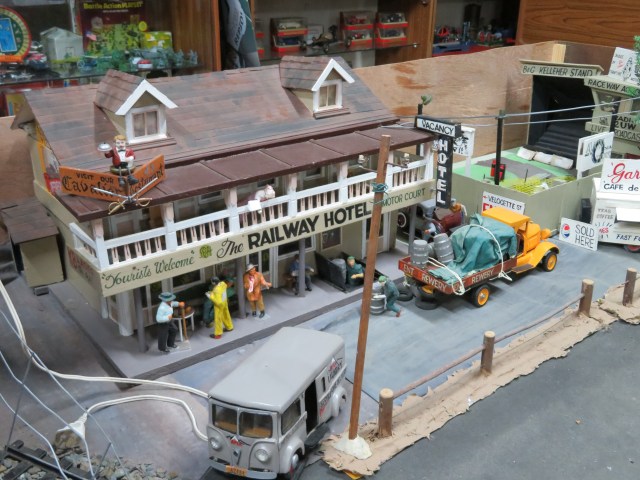
And this gorgeous model village:
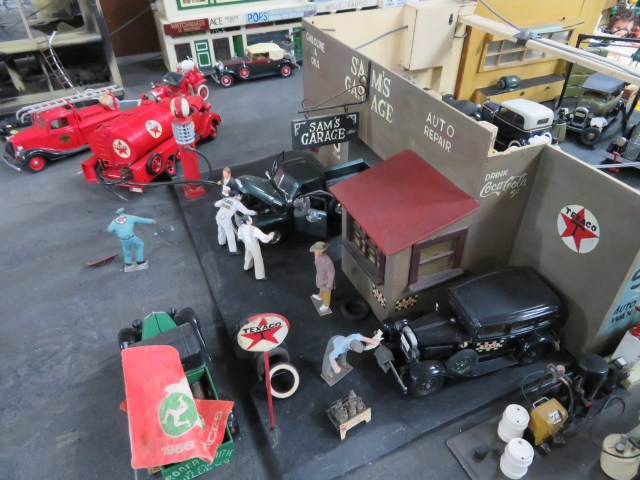
I took a lot of photos from various angles, to try to capture everything:
I also found some model cars made out of glass. Sadly, there was no informative sign about these – I found them very interesting:


On the way back to Turtle Shell, I stopped to take a picture of some ‘big’ things I passed. Australia’s known for these things – Big Pineapple, Big Banana – and I doubt I’ll photograph them all, but when it’s on the way…why not?
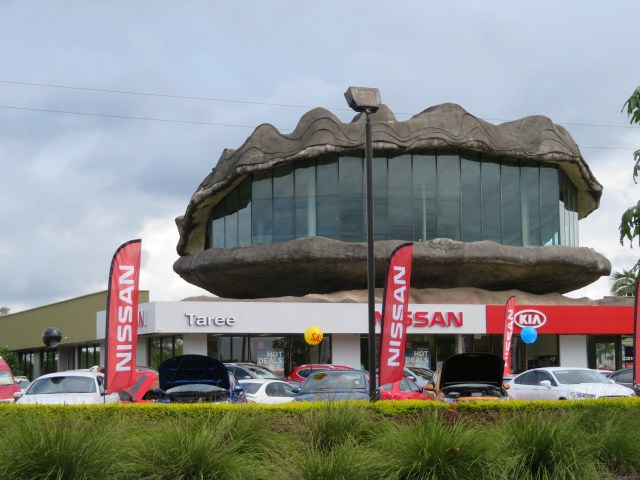
The Big Oyster, at Taree:
The Big Bowl, at Lake Cathie:
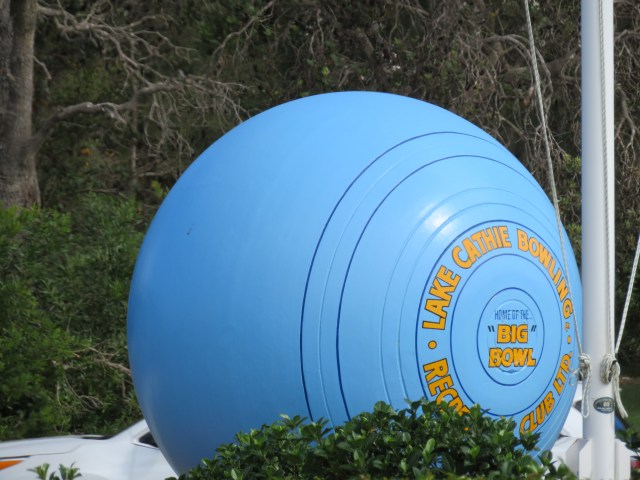
Yeah, when I heard ‘Big Bowl’ I thought it was an actual, kitchen-type bowl, too. But instead it’s a bowl, as in the sport of bowls, and it was erected right outside the Lake Cathie Bowls Club. Good advertising, that.
 Jenny's Adventures