It was raining pretty heavily this morning, but I set off for Nimbin anyway. I followed an armoured car up into the hills, and caught glimpses of clouds laying over the trees like smoke.
Just before reaching the town, I pulled up on the side of the road to get photos of Nimbin Rocks. Maybe I should have waited until it was clearer, but honestly, I kind of like the mist drifting around them – makes them look a bit eerie.


You can see why the Bundjalung consider them a sacred site. It’s supposedly the home of the Nmbngee, or Clever Men.
Going into the town, I parked the car on a side street so I could wander up the main drag, past all the different shops.
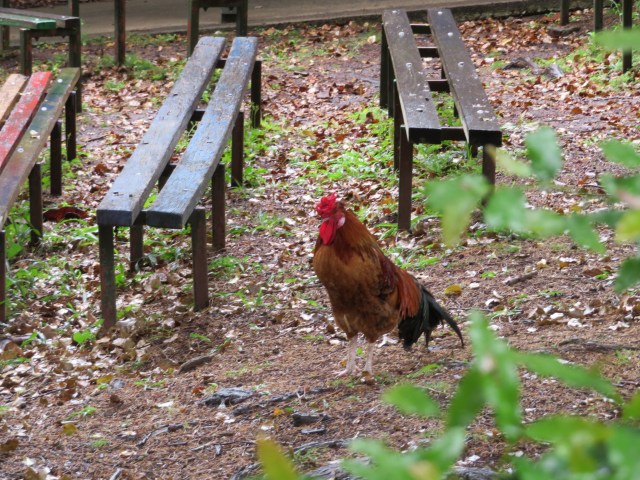
I saw this rooster in the community centre. There were chickens all over the town, just wandering through gardens and along the streets.
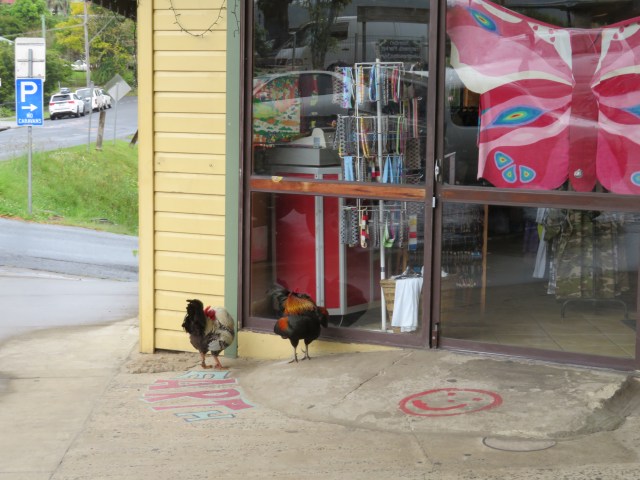
See!
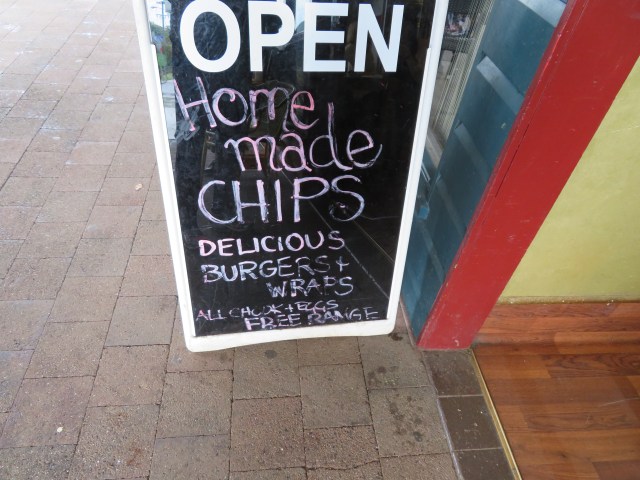
Yeah, they’re not kidding about that free range thing. I bought some chips from here, and they’re also not kidding about them being home-made – they still had potato skin on the ends. They were delicious and crispy, though, and made a lovely lunch.
I took some photos of the shops, just to give you guys an idea of what it was like:


There were also lots of street peddlers, selling art, fruit, whatever. It lives up to the name of ‘the hippie capital’ – lots of dreadlocks and tie-dye and handmade clothing and jewellery. I ducked into a store called Zee’s Book Exchange and bought three sci-fi/fantasy books for $10. And then I got out of there before I spent more money!
My first big destination was Djanbung Gardens, a permaculture education centre. Permaculture is defined as “the development of agricultural ecosystems intended to be sustainable and self-sufficient”, so basically its farms that are closed-loop systems, using animal by-products to sustain the plants, plants to sustain the animals, etc. If the nuclear apocalypse does come to pass, this is how the survivors will live.
Djanbung Gardens, specifically, is about 5 acres of land that you can walk around examining all the different aspects of the permaculture. I took a photo of the map they gave me:
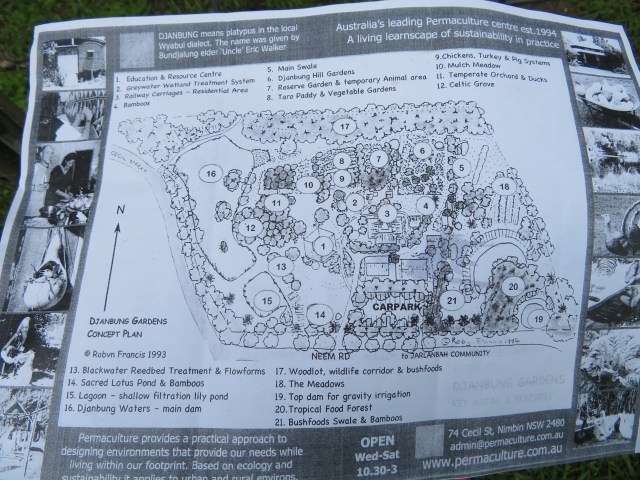
My first sight was of their main dam:
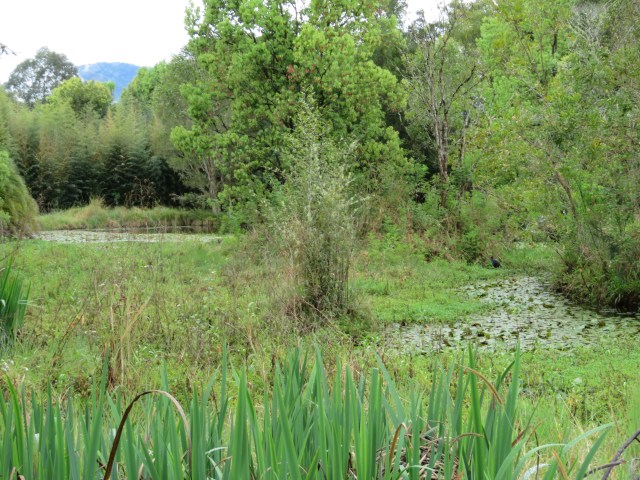
I also spotted a Purple Swamphen – can you see it in the picture of the dam? Doesn’t matter if you can’t, because here’s a close-up:

They had some beautiful flowers around the place:


I saw what I thought was a noisy miner land on a branch high above me, but I got the camera to zoom in anyway, just to check. It wasn’t a noisy miner – this is the Australasian Figbird:
It’s a male – the females are much drabber.
A pair of goslings wandering around:
Djanbung actually runs a program for people to study permaculture, and some students were living there – two of them were supervising the goslings.
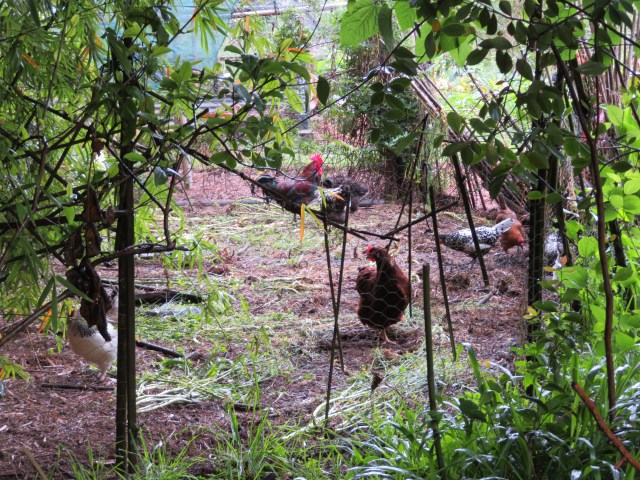
Free range chickens!
I took some photos of the gardens – most of what you see is either edible or useful in some other way:


They had a stretch of wilderness which they referred to as the wood lot (they harvest firewood from it), and is also used to cultivate mushrooms.
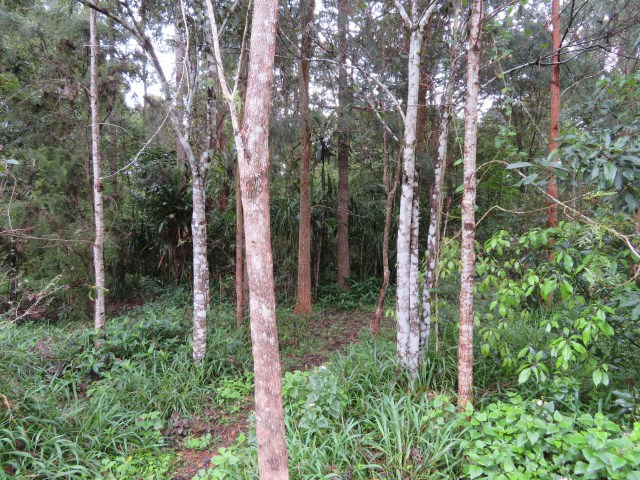
There were a lot of birds around here. Listen to them:
They had a lot of bamboo around the place, and a lot of structures were made out of bamboo.
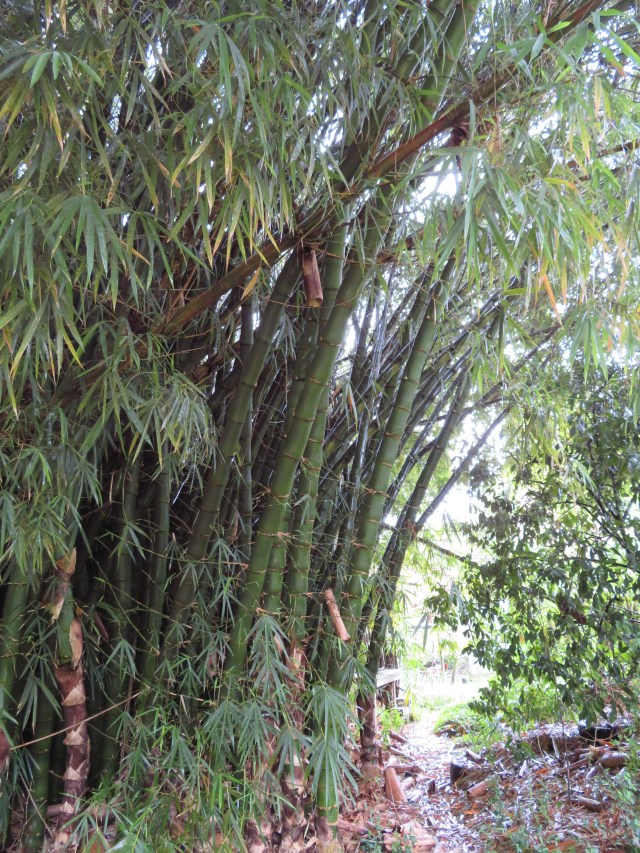
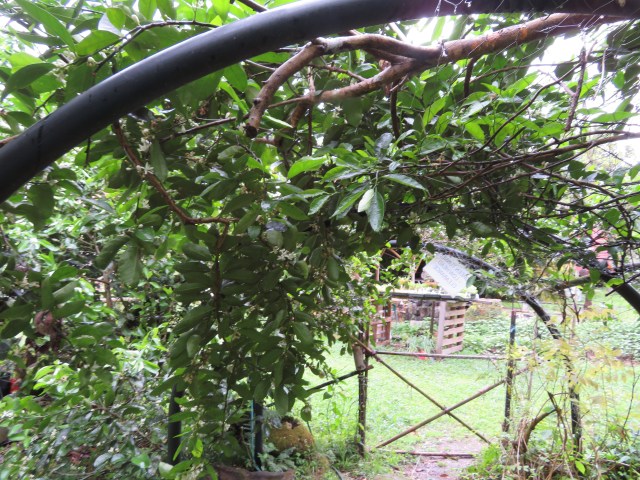
This was called the Green Tunnel.
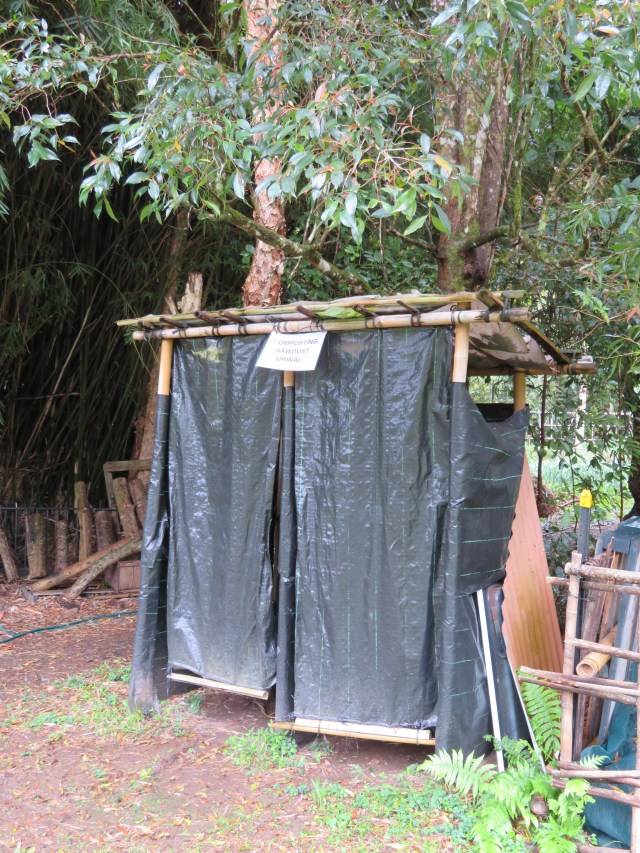
These are the composting urinals.
A bird fluttered by me, and I followed it with the camera. I had no idea what it was until a thorough Googling informed me this is a female Regent Bowerbird:
I spotted a familiar creature in one of the bamboo groves – the eastern yellow robin, yet again.

It is a much brighter yellow than the pale-yellow robin, isn’t it?
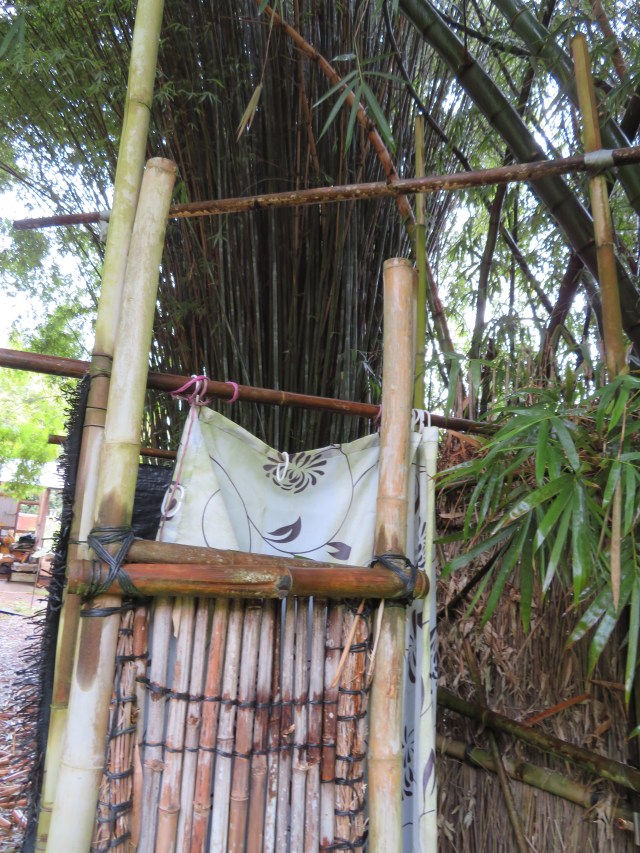
The shower
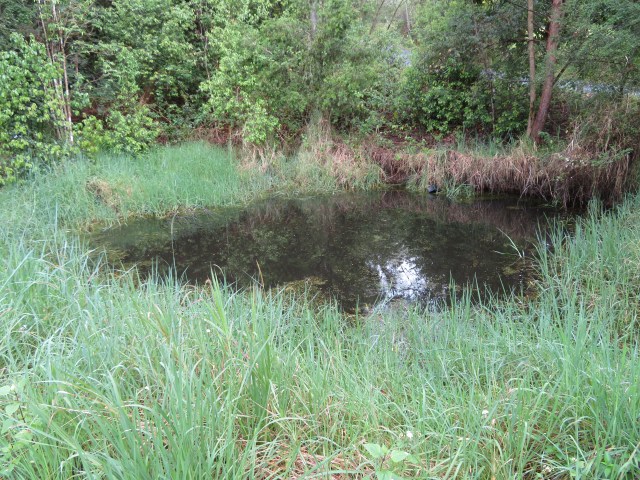
This dam was at the highest point on the farm, used for gravity-powered irrigation.
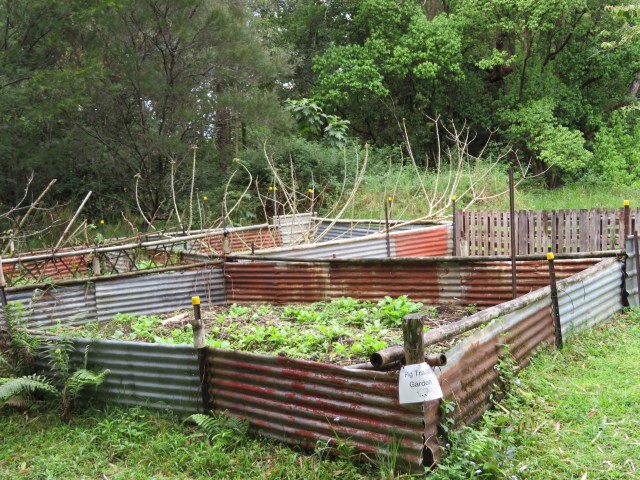
These pens used to house the pig, now they’re a garden. The pig cycles between pens, depending on how often the soil needs to be rested.
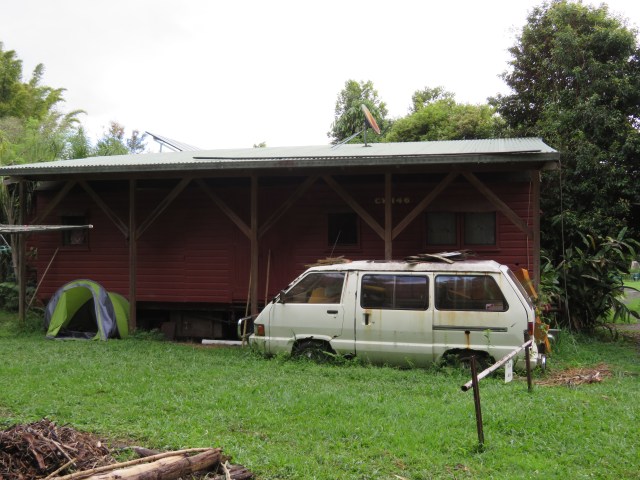
Repurposed railway cars serve as the students’ housing.
I couldn’t go near or into the housing – they were marked as private. But they had a cooking/community area that I could take a look at.
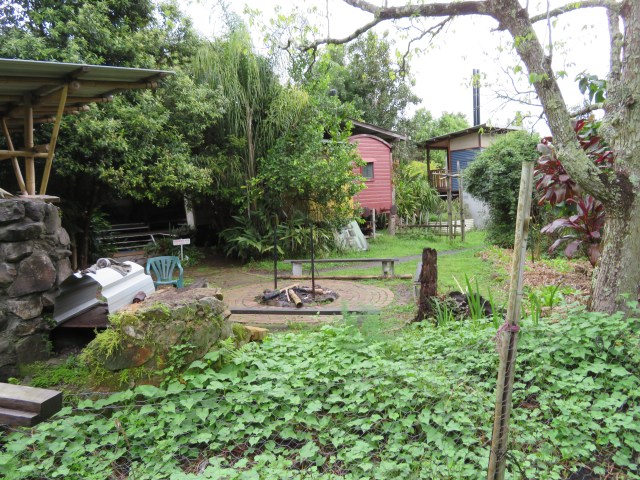
The fire pit
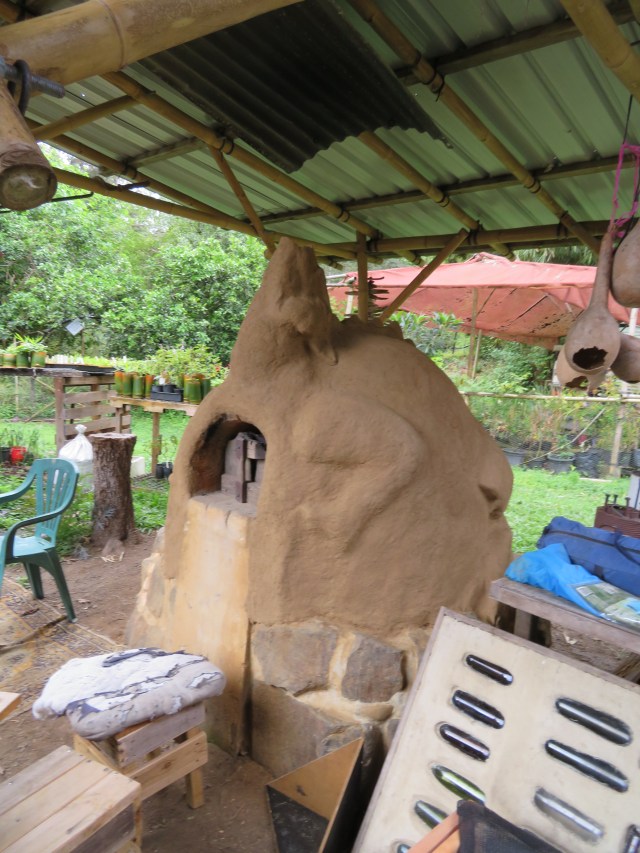
The clay oven. Yes, it has been sculpted into the shape of a dragon that would appear to breathe smoke when the oven was active.
Then I went to look at the animal pens – they had quite a few. I took a video of the pig grunting at me (probably thinking I had food).
And one of the rooster crowing:
I spotted a red-browed finch hopping around in the chicken pen. You can hear the rooster crowing in the background:
This area was the tropical garden, complete with taro paddy:


The tropical garden had some superb fairy-wrens flitting through it. I got a video of one of the males:
Adult geese, less cute than the little ones:
They’re quite loud, aren’t they? No wonder some places used geese in place of guard dogs.
These plants (and the ponds hidden within them) were part of the waste water management system:


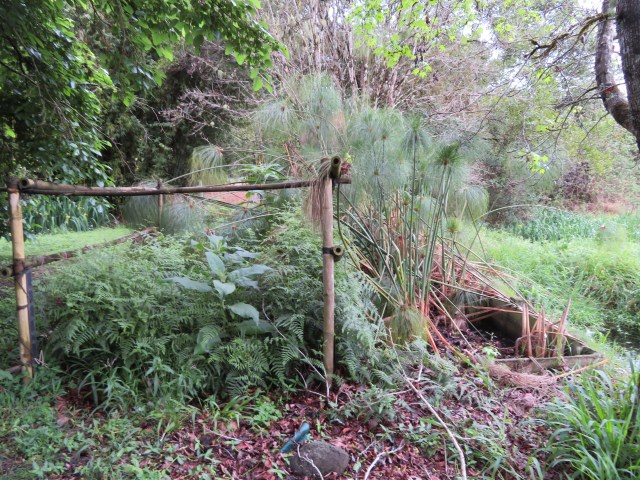
These troughs, and the plants inside, dealt with the septic from the main house.
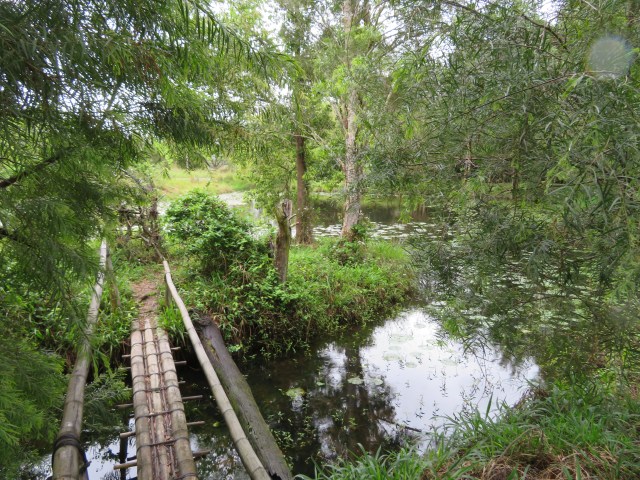
The main dam, from a different perspective.
There was a Dusky Moorhen on the opposite side:
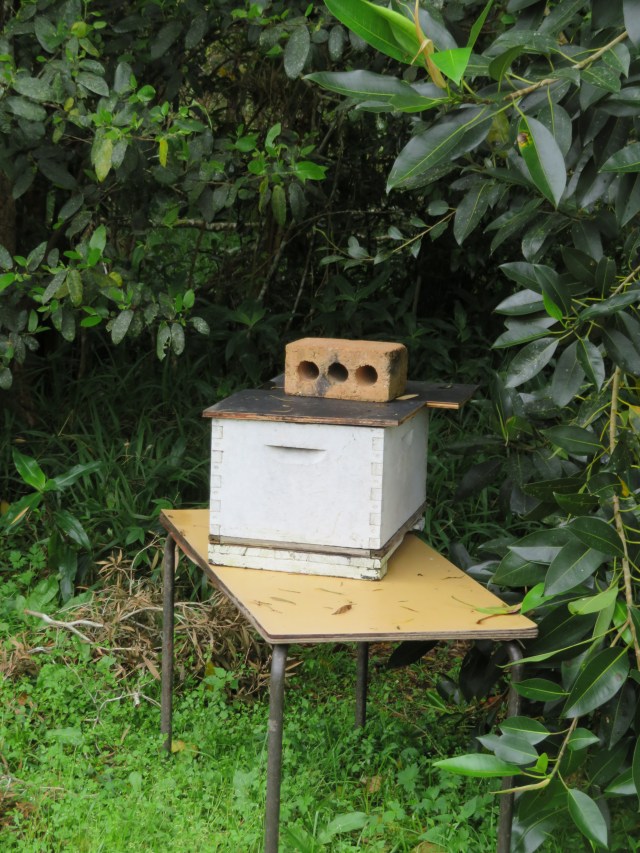
There were bees everywhere, and little beehives dotted all around the place:
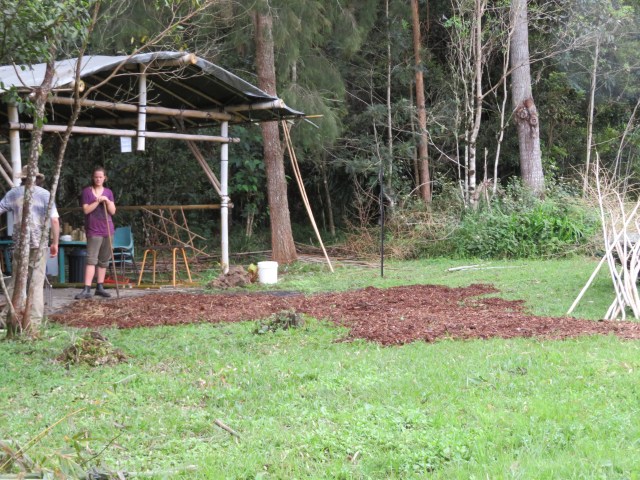
The mulch meadow
The large duck pen also had the orchard in it:


Funny-looking duck, huh? I’ve never seen one like that before.
I had a wander around the perimeter, and spotted some interesting birds. This one I couldn’t make out at first – I thought it was a sparrow, but took a video anyway. It was only when I got back to Turtle Shell and watched it on the computer that I realised it was much more exciting than a sparrow:
This is a Striated Pardalote. Clearly, I should always film birds whenever I can, no matter what I think they are. Also, I love my camera.
I spotted a Bar-shouldered Dove in one of the trees near the orchard:
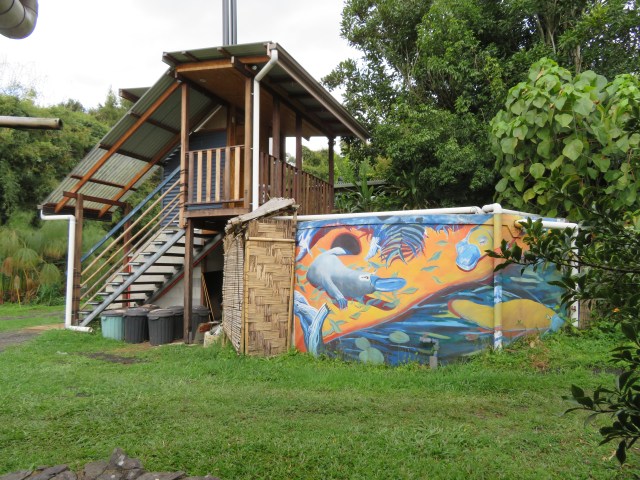
Another set of composting toilets, and their main water tank.
‘Djanbung’ is one of the Bundjalung names for platypus, which is why they feature so prominently.
After Djanbung, it was off to the Rainbow Power Company, one of the oldest renewable energy companies in Australia.
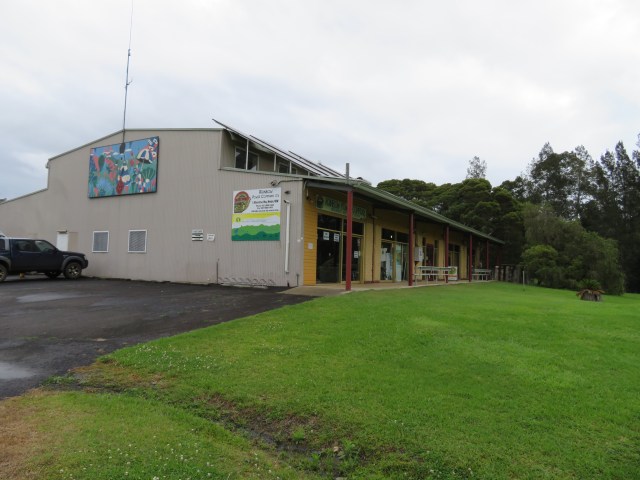
They mostly specialise in ‘off-grid’ systems, and I had a look through their solar panels and large, gas-powered fridges.
Finally, I dropped in on the Nimbin Candle Factory.
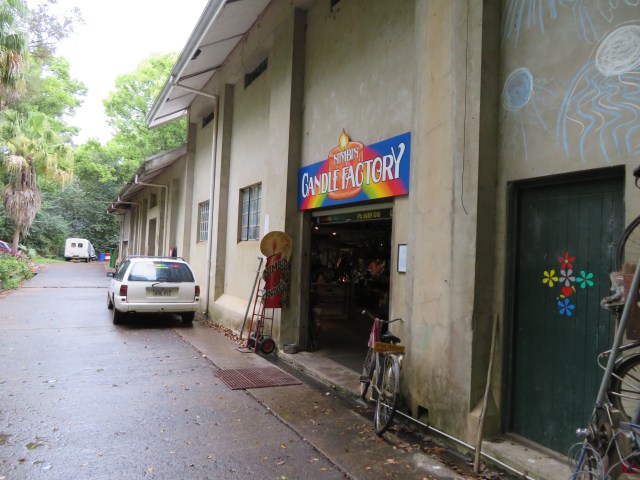
That name is no joke – you can buy candles, yeah, but the shop is among the vats of wax and racks of string they use to make them. The candles are made by dipping each individual wick continuously, and the wax they use is actually the same kind of wax used in food packaging (greaseproof paper, lolly wrappers, that kind of thing). And the dyes they use are vegetable dyes.
Racks of candles hanging up to dry:


Just as the sign said, I had to duck under that one to get to the shop.
The vats of wax:


You can see the strings on the racks, ready to be dipped:
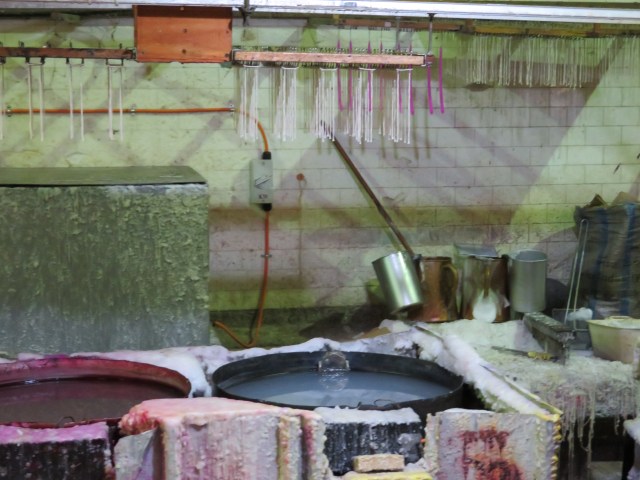
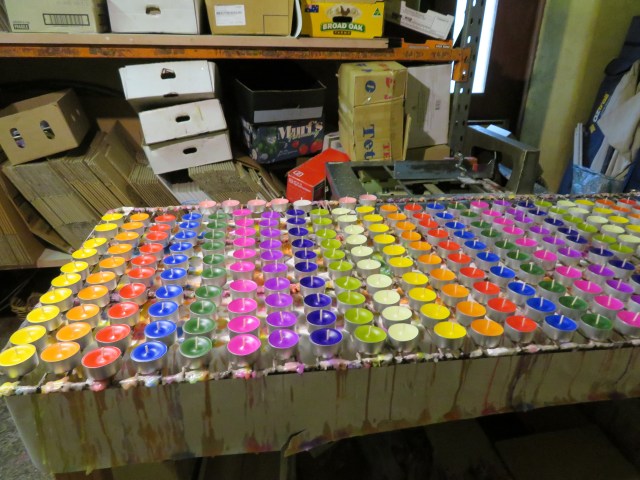
More candles drying.
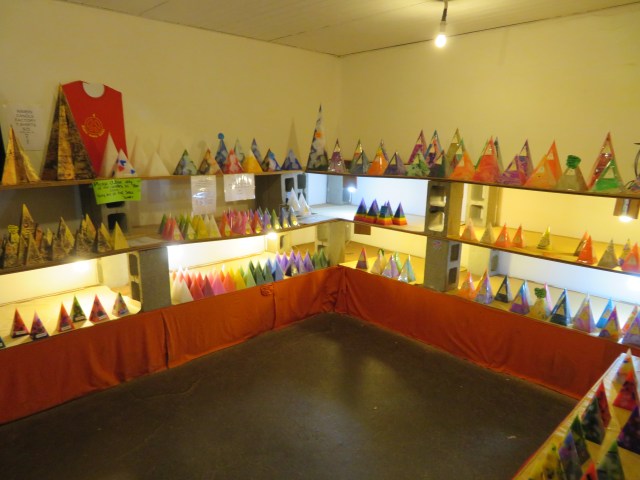
The pyramid room. Guess what kind of candles they sell in here?
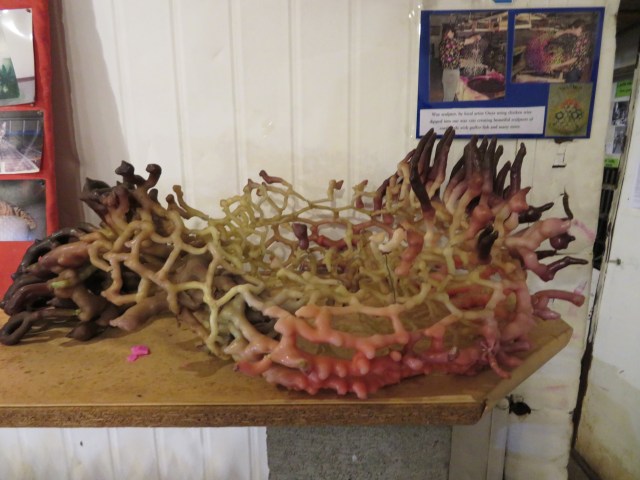
A wax sculpture by a local artist, Onya, who dips chicken wire frames into the wax vats to create her art.
Then it was time to head back to Turtle Shell. It was a long day, so I indulged in a little nap before dinner.
 Jenny's Adventures
Really enjoying your blog, Jen. It’s so relaxing! Must be the sounds of nature. This looks SO much fun!!
LikeLike
It really is a heap of fun. It was a bit surprising to see the chickens all around Nimbin – the thing you only learn when you get there, you know?
LikeLike